On February 28, 1983, more than 100 million Americans watched the final episode of MASH*, bringing an extraordinary eleven-year television journey to an end.
For audiences, it was an emotional farewell to the doctors, nurses, and soldiers of the 4077th Mobile Army Surgical Hospital.
For the performers, it marked the conclusion of one of the most successful and influential television productions in American history.
But behind the comedy, unforgettable characters, and antiwar storytelling lay a complicated financial story.
There were contract disagreements, unexpected departures, disputed creative decisions, and salaries that increased dramatically as the program became a national institution.
Some cast members became successful investors and businesspeople.
Others continued working in television, film, theater, and the arts.
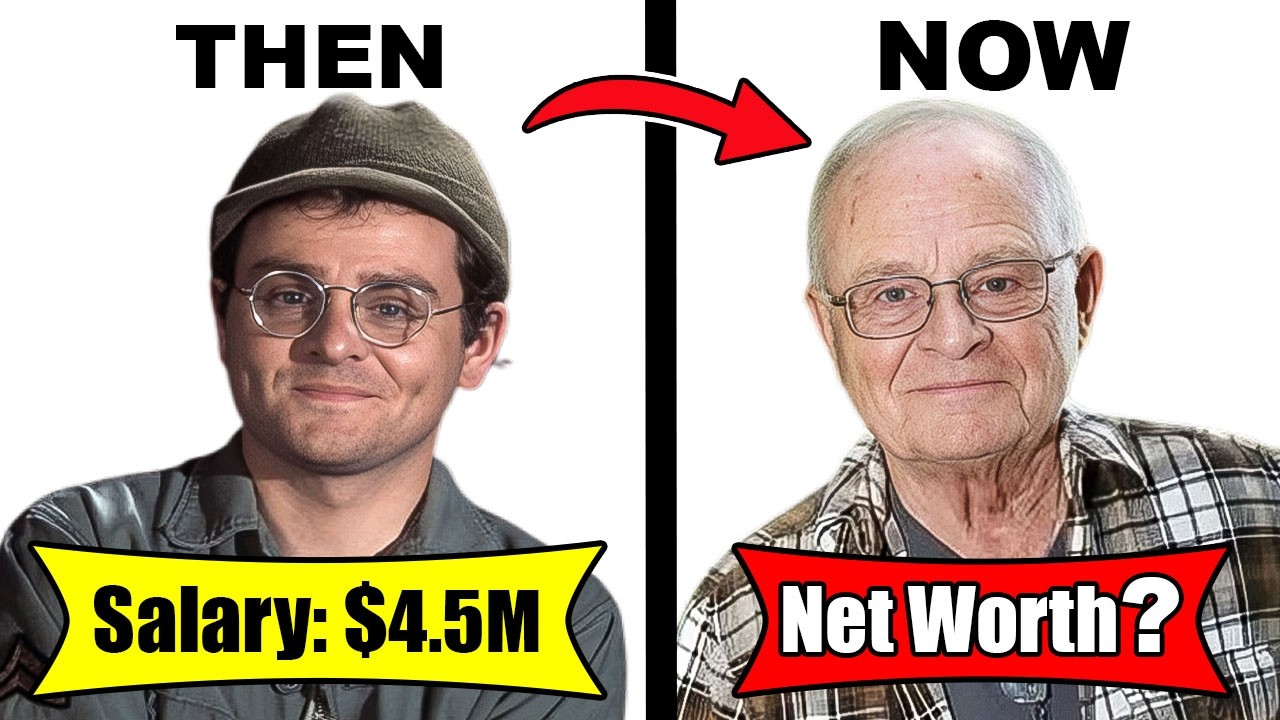
Several died after long careers, leaving behind performances that remain familiar to generations of viewers.
And some of the most widely circulated claims about their personal fortunes are far less certain than they appear.
The story of MASH* is not simply about how much money its stars earned.
It is about how a television series became a cultural phenomenon, how its performers negotiated fame, and how their lives changed after the cameras stopped rolling.
The financial figures associated with the cast require particular caution.
The accompanying transcript assigns exact salaries, syndication payments, residual income, and net worth estimates to thirteen performers.
Many of those numbers are not supported by publicly available contracts or verified financial disclosures.
A celebrity’s estimated net worth is not an audited statement of assets and liabilities.
Likewise, a reported episode salary does not establish how much an actor received through reruns, ownership arrangements, or later licensing agreements.
Those distinctions matter because the history of MASH* is extraordinary enough without treating speculative calculations as established facts.
The series premiered on CBS on September 17, 1972.
Developed by Larry Gelbart, it was based on the 1970 film directed by Robert Altman and the earlier novel by Richard Hooker.
The television adaptation followed the staff of a fictional American military surgical hospital during the Korean War.
Although the story took place in the early 1950s, the series arrived during the final years of America’s involvement in the Vietnam War.
That timing gave its mixture of humor, medical drama, and criticism of military bureaucracy a powerful contemporary relevance.
The show began as a comparatively broad comedy but gradually developed into a sophisticated examination of war, friendship, exhaustion, and moral responsibility.
Its characters used humor to cope with suffering they could not control.
The doctors performed difficult operations while confronting the absurdities of military life.
The nurses struggled to maintain professionalism under extraordinary conditions.
And the supporting personnel created a sense of community inside a camp constantly exposed to uncertainty.
The fictional unit was the 4077th, not the 477th as it is occasionally misidentified in transcripts.
That distinction matters because the 4077th became one of television’s most recognizable fictional settings.
Across eleven seasons and 256 episodes, MASH* established an extraordinary reputation.
Its final broadcast, Goodbye, Farewell and Amen, became one of the most watched scripted television events in American history.
The success brought fame and substantial earning opportunities to the ensemble.
But those opportunities were not distributed equally.
Some performers appeared in nearly every season.
Others joined later or departed while the show was still at its peak.
Recurring players had different contractual arrangements from principal cast members.
Writers and directors could receive compensation beyond their acting salaries.
And the long-term financial value of syndication depended on agreements that were rarely disclosed publicly.
The show’s smallest recurring roles therefore provide an important starting point for understanding its financial history.
Jeff Maxwell played Private Igor Straminsky, the camp’s frequently overwhelmed mess-hall cook.
Born on April 19, 1947, Maxwell joined the production as a young performer still establishing himself in the entertainment industry.
His character became associated with the everyday frustrations of camp life.
Igor was often responsible for serving meals that inspired more complaints than compliments.
The food was a recurring source of humor because it represented another hardship endured by people already living under difficult circumstances.
Maxwell’s performance turned a comparatively minor role into a familiar presence.
He did not possess the screen time of Alan Alda or the other leading performers.
Nevertheless, his appearances helped make the 4077th feel like a functioning community rather than a collection of principal characters.
The transcript claims Maxwell worked as Alan Alda’s camera stand-in and earned more from that assignment than from his acting role.
It also assigns him a precise total of approximately $400,000 in combined earnings.
Those financial details cannot be confirmed from the supplied material.
The transcript’s calculation is particularly difficult to evaluate because it mixes alleged episode payments with additional employment income.
Such arrangements may exist in television production, but a reliable accounting requires contracts or contemporaneous payroll records.
Maxwell later maintained his connection to the series through fan appearances, interviews, and writing.
He authored Secrets of the MASH Mess*, a cookbook inspired by his character and the show’s culinary humor.
The project allowed him to transform a memorable supporting role into a different kind of creative work.
His continued association with MASH* demonstrates the enduring value of a character who was never the central focus of the series.
The transcript estimates his net worth at approximately $300,000 in 2026.
That figure should be treated as speculation rather than a verified assessment.
His legacy is more securely established through the character he played and the role he occupied within the show’s ensemble.
Another recurring performer became one of the series’ most familiar nursing figures.
Kellye Nakahara played Nurse Kellye, often identified as Kellye Yamato.
Born on January 16, 1948, in Hawaii, Nakahara pursued artistic interests before becoming widely recognized as a television actress.
Her role on MASH* was significant because the series initially concentrated much of its attention on the male surgeons.
Nakahara helped give the nursing staff a more recognizable identity.
Her character appeared repeatedly across the series and contributed to the sense that the camp contained professionals with lives beyond the central doctors.
Nurse Kellye could be warm, humorous, and emotionally perceptive.
She also occasionally challenged the attitudes of male characters.
One memorable storyline gave her an opportunity to confront Hawkeye Pierce about his tendency to overlook women who did not fit his preferred romantic image.
The episode demonstrated the character’s dignity and the importance of treating the nursing staff as individuals.
Nakahara’s performance helped make that message convincing.
Her contribution was not limited to acting.
She also maintained a career as an artist and became known for her watercolor paintings.
Her artistic interests continued after the sitcom ended.
The transcript claims she appeared in 167 episodes but received only forty-three credits because executives deliberately manipulated her employment classification to avoid residual payments.
That is a serious allegation about contractual misconduct.
The supplied material does not establish the claim through union records, production documents, or verified testimony.
Differences between credited appearances, uncredited appearances, and recurring contracts do not by themselves prove an effort to evade compensation obligations.
The transcript also estimates that Nakahara earned approximately $300,000 from the series and left an estate worth $10 million.
Those figures cannot be independently verified from the information provided.
After MASH*, Nakahara appeared in other productions, including the 1985 comedy mystery Clue.
She continued painting and participated in charitable activities.
Nakahara died on February 16, 2020, at the age of seventy-two.
Her death was attributed to cancer.
Her passing prompted tributes from viewers who remembered the warmth and individuality she brought to the nursing staff.
She remains an important part of the show’s history because her recurring presence helped expand its fictional world.
The next major performer joined the series during a period of significant cast changes.
David Ogden Stiers portrayed Major Charles Emerson Winchester III.
Born on October 31, 1942, Stiers brought extensive theatrical training and a commanding presence to the role.
He joined MASH* in its sixth season following the departure of Larry Linville.
The producers faced a difficult creative challenge.
Frank Burns had been an exaggerated antagonist whose incompetence frequently made him the target of practical jokes.
Simply introducing another character with the same weaknesses could have made the series repetitive.
Winchester offered a different kind of opposition.
He was intelligent, highly educated, professionally skilled, and convinced of his own superiority.
His wealthy Boston background and refined cultural tastes contrasted sharply with the informal behavior of Hawkeye and B. J. Hunnicutt.
But unlike Frank Burns, Winchester was a capable surgeon.
He could challenge his colleagues intellectually and professionally.
That difference allowed the writers to create more complex conflicts.
Winchester could be arrogant, impatient, and socially condescending.
He could also demonstrate compassion, loyalty, and genuine moral courage.
Stiers gave the character enough emotional depth to make those contradictions believable.
His performance helped the series continue evolving after several original cast members had departed.
The transcript claims Stiers earned approximately $5 million from MASH*, including a substantial back-end arrangement.
That total is not established by verified contractual evidence in the supplied material.
The same caution applies to the transcript’s estimate of an $8 million estate.
Stiers’ later career, however, is well documented.
He became a highly recognizable voice actor, particularly through Disney animated productions.
He voiced Cogsworth in Beauty and the Beast and appeared in other major animated films.
His distinctive voice and precise delivery made him especially effective in roles requiring authority, sophistication, or comic irritation.
He also maintained a strong interest in classical music and worked as a conductor.
Those activities reflected intellectual and artistic interests extending beyond television comedy.
Stiers was private about his personal life for many years.
In 2009, he publicly discussed being gay and explained how concerns about professional opportunities had influenced his earlier decisions about disclosure.
His comments reflected the pressures that performers could face in an industry where casting decisions were often shaped by assumptions about sexuality.
Stiers died on March 3, 2018, at the age of seventy-five.
His death was attributed to bladder cancer.
He left behind a substantial body of work in television, film, animation, and music.
For MASH* viewers, he remains the performer who transformed Winchester from a potential replacement character into an indispensable part of the ensemble.
Before Winchester arrived, the show’s principal antagonist was Major Frank Burns.
Larry Linville played the character during the first five seasons.
Born on September 29, 1939, Linville had studied acting and developed a career in television before joining the series.
Frank Burns was pompous, insecure, frequently hypocritical, and often incapable of recognizing his own limitations.
He represented the kind of rigid military thinking that Hawkeye found intolerable.
His relationship with Margaret Houlihan also provided recurring comic and dramatic material.
The character’s exaggerated behavior made him one of the show’s most recognizable antagonists.
Linville’s performance required considerable skill because Frank was designed to be frustrating rather than admirable.
The actor had to make the character entertaining without demanding the audience’s sympathy.
By many accounts, Linville’s personality differed substantially from the unpleasant officer he portrayed.
Colleagues remembered him as professional and personable.
That contrast became part of his reputation.
After five seasons, Linville left the series.
The transcript attributes his departure primarily to restrictive financial arrangements and dissatisfaction with syndication income.
The more established explanation involves creative limitations and the conclusion of his contractual commitment.
Linville reportedly recognized that Frank Burns had become difficult to develop further.
The character’s weaknesses were so firmly established that meaningful change would have been challenging.
His departure allowed the writers to introduce Winchester and create a more intellectually credible source of conflict.
The transcript estimates Linville’s MASH* earnings at approximately $2.5 million.
It also assigns him a final estate worth $4 million.
Neither figure is verified by the supplied evidence.
After leaving the sitcom, Linville continued appearing in television and theater.
His credits included guest roles in established television programs and stage productions.
He remained recognizable to audiences who associated him with Frank Burns.
Linville died on April 10, 2000, at the age of sixty.
He had undergone treatment for cancer.
His death marked the loss of one of the performers most closely associated with the show’s original comedic identity.
Another early departure produced an even more dramatic moment in television history.
McLean Stevenson played Lieutenant Colonel Henry Blake, the original commanding officer of the 4077th.
Born on November 14, 1927, Stevenson had experience as a writer and performer before joining MASH*.
Henry Blake was a fundamentally decent but frequently overwhelmed commander.
He preferred fishing, relaxation, and ordinary comforts to military discipline.
His leadership style contrasted with the strict hierarchy represented by other officers.
The character’s informality helped establish the camp as a place where medical professionals struggled to maintain their humanity.
Stevenson’s comic timing made Henry’s confusion and frustration entertaining.
But the character also possessed warmth and genuine concern for the people under his command.
That combination made his eventual departure especially powerful.
Stevenson left after the third season.
His decision reflected dissatisfaction with his role and the desire to pursue other opportunities.
The show’s increasing emphasis on Hawkeye had contributed to the sense that other characters occupied secondary positions.
Stevenson hoped to establish himself as a leading performer elsewhere.
The producers responded to his departure with one of the most shocking developments in the series.
In the episode Abyssinia, Henry, Henry Blake received orders allowing him to return home.
The camp celebrated his departure.
He said goodbye to his colleagues and prepared to reunite with his family.
Then Radar entered the operating room with devastating news.
Henry’s plane had been shot down over the Sea of Japan.
There were no survivors.
The announcement transformed what might have been a conventional sitcom farewell into a statement about the randomness of war.
The scene became one of the most memorable moments in American television history.
The cast’s emotional reaction contributed to its lasting impact.
The decision also generated intense audience responses.
Some viewers were deeply upset that a beloved character had been killed after appearing to escape the war.
Others recognized the dramatic power of the choice.
The transcript claims Stevenson received a $1 million separation settlement and earned approximately $1.3 million in total compensation from the series.
Those figures are not established by the supplied source.
It also claims the production received a specific number of angry letters, which should not be repeated as a verified count without reliable documentation.
Stevenson later starred in other television projects, including Hello, Larry.
None achieved the enduring success of MASH*.
His departure became a frequently discussed example of the risks involved in leaving a popular ensemble series.
But it would be simplistic to describe his entire later career as a failure.
He continued working in entertainment and remained a recognizable television personality.
Stevenson died on February 15, 1996, at the age of sixty-eight.
His death followed complications associated with surgery.
His portrayal of Henry Blake remains one of the show’s defining early performances.
The other major departure after the third season involved Wayne Rogers.
Rogers played Captain John Francis Xavier McIntyre, better known as Trapper John.
Born on April 7, 1933, Rogers had developed an acting career before joining the sitcom.
His credits included the film Cool Hand Luke.
As Trapper John, he became Hawkeye’s closest companion during the show’s early seasons.
The two surgeons shared a tent known as the Swamp.
Their friendship was built around medical competence, practical jokes, irreverence, and resistance to military absurdity.
Rogers and Alda developed a lively comic partnership.
Their characters often worked together to challenge authority and protect patients.
But the relationship between the performers’ roles changed as the series developed.
Hawkeye increasingly became the central figure.
Rogers grew dissatisfied with Trapper’s limited opportunities for independent development.
He left after the third season.
The transcript describes a contract dispute in which the studio allegedly discovered that Rogers had never signed a binding agreement.
That account has appeared in discussions of his departure, but the precise legal details require reliable documentation.
It should not be treated as a fully established courtroom narrative solely on the basis of the transcript.
The same applies to the claimed $3.5 million lawsuit.
Rogers’ departure nevertheless became one of the show’s major turning points.
The writers introduced B. J. Hunnicutt as Hawkeye’s new friend and surgical partner.
The change altered the emotional dynamics of the series.
After leaving MASH*, Rogers continued acting.
He appeared in television and film projects while developing substantial business interests.
Unlike many performers whose financial lives remained tied primarily to acting, Rogers became involved in investment management and financial commentary.
He developed a reputation for business knowledge and appeared in media discussions of markets and investment strategy.
His professional activities extended beyond entertainment.
The transcript estimates that Rogers left an estate worth approximately $75 million.
That figure is not verified by the supplied material.
His financial career was real, but the exact value of his assets cannot be established through an unsupported celebrity wealth estimate.
Rogers died on December 31, 2015, at the age of eighty-two.
His death was attributed to complications from pneumonia.
He remains remembered for both his early MASH* partnership with Alda and his later business career.
Another performer gave the series a very different kind of emotional presence.
William Christopher played Father Francis Mulcahy, the camp’s Catholic chaplain.
Born on October 20, 1932, Christopher had appeared in television comedies before joining MASH*.
His credits included Gomer Pyle, U.S.M.C.
Father Mulcahy was gentle, thoughtful, and frequently concerned with the emotional and spiritual welfare of the camp.
He was not a surgeon, but he provided another essential form of care.
He listened to frightened soldiers, supported wounded patients, and attempted to maintain a sense of morality amid violence.
The character’s religious identity was important, but the writing generally emphasized compassion rather than doctrinal argument.
Mulcahy’s occasional frustrations made him more human.
He wanted to be useful and sometimes felt overlooked by the medical personnel.
Christopher’s understated performance gave the character warmth without making him sentimental.
The transcript claims Christopher’s employment was threatened after he developed hepatitis and that Alda intervened to preserve his medical benefits.
That account is not sufficiently supported by the supplied material to be presented as a verified behind-the-scenes event.
Christopher did experience health challenges during his career, but precise claims about network decisions and contractual motives require stronger evidence.
The transcript also assigns him approximately $5 million in MASH* earnings.
That total remains unverified.
Christopher’s personal life included a commitment to supporting people with autism.
His son Ned was autistic, and Christopher and his wife became involved in advocacy and public education.
That work formed an important part of his life beyond acting.
After the original series ended, Christopher reprised Father Mulcahy in AfterMASH.
The spin-off followed several characters as they adjusted to civilian life after the Korean War.
Although it did not achieve the lasting success of the original series, it extended the stories of familiar performers.
Christopher continued acting and participating in projects connected to his earlier work.
He died on December 31, 2016, at the age of eighty-four.
His death was attributed to small-cell carcinoma.
For viewers, Father Mulcahy remains one of the show’s clearest expressions of compassion.
The character demonstrated that courage could involve listening, comforting, and maintaining faith under difficult circumstances.
One of the show’s most unusual character transformations belonged to Jamie Farr.
Farr played Maxwell Q. Klinger, a soldier initially known for attempting to secure a discharge from the Army.
Born on July 1, 1934, in Toledo, Ohio, Farr brought his own military experience and comedic background to the role.
Klinger’s early appearances centered on elaborate efforts to convince military authorities that he should be sent home.
His unconventional clothing became a recurring visual joke.
But the character gradually evolved beyond that premise.
The writers began emphasizing Klinger’s intelligence, loyalty, resourcefulness, and ability to solve practical problems.
His schemes became less important than his relationships with other members of the camp.
After Radar’s departure, Klinger assumed greater administrative responsibilities.
The change gave Farr opportunities to portray a more mature and emotionally complex character.
Klinger eventually became an essential part of the camp’s daily operations.
His personal life also developed through storylines involving relationships, family, and the challenges of wartime service.
Farr’s performance helped transform a character originally designed for comic relief into a recognizable member of the ensemble.
The transcript claims he was initially hired for a single day at a salary of $250.
It also assigns him approximately $4.5 million in total earnings from the series.
The exact amounts are not established by the supplied evidence.
Accounts of Farr’s early involvement do support the broader point that Klinger began as a relatively limited role before becoming much more important.
The transcript also claims Farr asked to reduce the character’s use of dresses because his children experienced bullying.
That specific explanation should not be treated as confirmed without reliable testimony.
The character’s development can be understood through broader changes in the series’ writing and the desire to create more emotionally grounded storylines.
After MASH*, Farr appeared in AfterMASH.
He also continued performing in theater, television, and entertainment events.
His connection to Toledo remained important throughout his career.
He became associated with charitable activities and community initiatives.
His enduring public identity combined the warmth of his television character with a long professional career.
The transcript estimates Farr’s present-day fortune at approximately $6 million.
That amount is not verified.
His more securely documented achievement is the transformation of Klinger from a one-joke supporting role into one of television’s most familiar characters.
The series also included a performer whose character appeared in both the original film and the television adaptation.
Gary Burghoff played Corporal Walter Eugene O’Reilly, known as Radar.
Born on May 24, 1943, Burghoff had performed on stage before joining the film version of MASH*.
He originated the role of Charlie Brown in the off-Broadway production You’re a Good Man, Charlie Brown.
His experience in theater helped establish the timing and physical characterization that became central to Radar.
The character was young, observant, and remarkably capable of anticipating the needs of the camp.
Radar often knew what commanding officers wanted before they finished speaking.
His efficiency became a recurring source of humor.
But he also represented innocence within a setting defined by violence and exhaustion.
His affection for his mother and hometown helped remind viewers that the soldiers had lives beyond the war.
Burghoff’s performance gave Radar a distinctive combination of vulnerability and competence.
The character’s departure during the eighth season marked another important change in the series.
The transcript attributes his decision primarily to burnout and difficult relationships with colleagues.
Burghoff did experience professional pressures, but sensational accounts of specific confrontations require caution.
The transcript describes an incident involving Wayne Rogers throwing a chair.
Without reliable corroboration, that allegation should not be presented as established fact.
The same caution applies to the claim that Burghoff rejected a specific $4 million renewal agreement.
The broader historical fact is that he left the regular cast before the series ended.
His farewell storyline emphasized Radar’s growing maturity and the emotional significance of returning home.
After MASH*, Burghoff appeared in additional television projects and game shows.
He also pursued painting and wildlife art.
His artistic interests became an important part of his later life.
Burghoff has been open about the physical difference affecting his left hand, which he often concealed during filming.
That detail became part of public discussions of his performance.
But it did not prevent him from creating one of the most recognizable characters in television history.
The transcript estimates his MASH* earnings at approximately $4.5 million and his present-day net worth at approximately $6 million.
Those figures remain unverified estimates.
Burghoff’s lasting achievement lies in a character whose emotional importance extended beyond the show’s comedy.
Radar represented the ordinary young people whose lives were interrupted by war.
His departure reminded viewers that returning home could be both joyful and difficult.
Following Trapper John’s exit, the series introduced another central character.
Mike Farrell played Captain B. J. Hunnicutt.
Born on February 6, 1939, Farrell joined MASH* in its fourth season.
He had previously appeared in television dramas and other productions.
B. J. was introduced as Hawkeye’s new surgical partner and closest companion.
Unlike Trapper, he was strongly defined by his marriage and family life.
His longing for his wife Peg and their daughter Erin became an important emotional element.
That background allowed the writers to explore the personal costs of military separation.
B. J. could participate in Hawkeye’s jokes while maintaining a more reserved and conscientious personality.
His disagreements with Hawkeye occasionally revealed deeper questions about morality, loyalty, and the limits of humor.
Farrell’s performance helped the series develop a more reflective tone.
The character’s mustache became one of his most recognizable visual features.
The transcript describes a behind-the-scenes dispute involving a surgical scene and claims Farrell refused to participate on ethical grounds.
That specific account is not substantiated by the supplied evidence.
Similarly, claims of repeated physical confrontations with Alda should not be accepted without corroboration.
Farrell and Alda developed a successful professional partnership that sustained the series for its remaining seasons.
Their characters’ friendship became one of the emotional foundations of the later episodes.
The transcript estimates Farrell’s total MASH* earnings at approximately $4.5 million.
It also assigns him specific writing and directing royalties.
Those figures cannot be verified from the available material.
After the series ended, Farrell continued working in entertainment.
He starred in the television drama Providence and became involved in film production.
His producing credits included Patch Adams, the 1998 film starring Robin Williams.
Farrell also became known for political and humanitarian activism.
He supported human rights organizations and publicly opposed the death penalty.
His advocacy reflected long-standing concerns about justice, government policy, and the treatment of vulnerable people.
The transcript places his present-day net worth at approximately $6 million.
That amount should be regarded as an estimate rather than a documented financial total.
Farrell’s career illustrates how a performer can use television recognition as a foundation for later creative and civic work.
His portrayal of B. J. remains especially important because it helped preserve the show’s emotional balance after major cast changes.
Another performer brought decades of Hollywood experience to the 4077th.
Harry Morgan played Colonel Sherman T. Potter.
Born on April 10, 1915, Morgan had established a substantial career in film and television long before joining MASH*.
His credits included classic Hollywood productions and the television series Dragnet.
Morgan initially appeared on MASH* in a guest role as Major General Bartford Hamilton Steele.
The character was very different from the one he later made famous.
When the producers needed a replacement for Henry Blake, Morgan returned as Colonel Potter.
His arrival in the fourth season transformed the camp’s leadership.
Potter was a career Army officer who valued discipline, responsibility, and military tradition.
But he was also experienced, compassionate, and capable of recognizing the absurdities surrounding him.
Unlike Frank Burns, he possessed professional credibility.
Unlike Henry Blake, he understood military administration and command.
His authority allowed the writers to create conflicts without making the commanding officer incompetent.
Morgan’s performance gave Potter warmth and emotional depth.
His affection for his wife Mildred became a recurring element.
His experience as a veteran provided opportunities for reflection on military service and personal sacrifice.
Potter could be stern, humorous, sentimental, and deeply protective of his staff.
He became a paternal figure without losing his identity as a professional soldier.
The transcript claims Morgan earned approximately $10 million from the series.
It also assigns him a final net worth of approximately $10 million.
Those precise totals are not established by the supplied evidence.
The transcript additionally references a 1996 domestic battery case involving Morgan and his wife.
That episode has appeared in public reporting, but it should be described through documented legal outcomes rather than sensational language.
Morgan’s long career should neither erase serious personal controversies nor be reduced entirely to them.
After MASH*, he reprised Colonel Potter in AfterMASH.
He continued making television appearances and remained respected for his decades of professional work.
Morgan died on December 7, 2011, at the age of ninety-six.
His death was attributed to pneumonia.
He left behind an extraordinary career that spanned multiple generations of American entertainment.
For MASH* audiences, Colonel Potter remains one of television’s most convincing portrayals of compassionate authority.
The show’s principal female character underwent one of its most significant transformations.
Loretta Swit played Major Margaret Houlihan.
Born on November 4, 1937, Swit had worked in theater and television before joining the series.
Margaret initially appeared as a strict military nurse whose loyalty to regulations often placed her in conflict with Hawkeye and Trapper.
Her relationship with Frank Burns contributed to the show’s early comedic structure.
She was frequently identified by the nickname Hot Lips, inherited from the original film and source material.
But as the series developed, Swit became increasingly interested in portraying Margaret as a more complex professional.
The character was a skilled nurse and military officer working under extraordinary conditions.
Reducing her to a romantic stereotype limited the possibilities of the role.
Swit advocated for storylines that recognized Margaret’s competence, emotional vulnerability, and independence.
Over time, the writers expanded the character.
Margaret experienced difficult relationships, professional frustrations, and moments of genuine compassion.
Her friendship with other members of the camp became more nuanced.
She remained demanding, but the audience increasingly understood the reasons behind her behavior.
The transformation was important because MASH* had initially relied heavily on male perspectives.
Margaret’s development allowed the series to examine the experiences of women serving in military medical units.
Swit’s performance became central to that evolution.
Her work earned major industry recognition, including two Primetime Emmy Awards.
The transcript describes a contractual dispute involving the television project Cagney & Lacey.
Swit did appear in the original television movie that introduced the characters.
Her commitments to MASH* prevented her from continuing into the subsequent series.
The situation became one of the more recognizable examples of an actor being unable to pursue another opportunity because of an existing television contract.
But the transcript’s exact claims about salary demands and executive motives remain unsupported.
It estimates that Swit earned approximately $6.5 million from MASH*.
That figure should not be presented as a verified total.
After the series ended, Swit continued acting in theater and other productions.
She also pursued artistic interests, including painting and jewelry design.
Her commitment to animal welfare became an important part of her public life.
She supported organizations and projects devoted to protecting animals.
Her advocacy demonstrated interests that extended far beyond the character of Margaret Houlihan.
Swit died on May 30, 2025, at the age of eighty-seven.
Her death prompted tributes recognizing her television achievements and charitable work.
The transcript estimates her estate at approximately $4 million.
That figure is not independently verified.
Her lasting contribution to MASH* is more clearly established through the character she helped transform.
Margaret became a professional woman whose dignity and competence were increasingly central to the show’s storytelling.
Swit’s advocacy helped make that development possible.
The final and most influential performer in the series was Alan Alda.
Born on January 28, 1936, Alda grew up in a family connected to entertainment.
His father, Robert Alda, was an actor, and Alan developed an interest in performance from an early age.
He worked in theater and television before joining MASH*.
His role as Captain Benjamin Franklin Pierce, known as Hawkeye, became one of the defining performances in American television history.
Hawkeye was brilliant, sarcastic, compassionate, and deeply frustrated by the destruction surrounding him.
He used humor to resist authority and cope with the emotional consequences of surgery.
His jokes could be outrageous, but his professional commitment to patients was serious.
The contrast gave the character unusual depth.
Hawkeye could challenge military bureaucracy while recognizing the importance of saving lives.
He could be arrogant and impulsive while demonstrating profound concern for wounded soldiers.
Alda’s performance helped the series balance comedy with dramatic seriousness.
As the program continued, his creative influence expanded.
He became involved in writing and directing episodes.
His contributions helped shape the show’s increasingly reflective tone.
The transcript claims Alda required a contractual clause ensuring that every episode included an operating-room scene.
That exact contractual provision is not established by the supplied material.
However, Alda’s public comments and the show’s creative history support the broader point that he considered the medical realities of war essential to the series.
The operating room distinguished MASH* from a conventional workplace comedy.
It reminded viewers that the characters’ jokes existed alongside injury, fear, and death.
The medical setting gave the show its moral foundation.
Alda’s growing creative role also influenced the balance between comedy and drama.
Some viewers preferred the broader humor of the early seasons.
Others valued the later episodes’ exploration of social issues, psychological strain, and ethical conflict.
That debate continues among fans.
But the evolution was central to the show’s enduring reputation.
Alda wrote and directed the series finale, Goodbye, Farewell and Amen.
The episode followed the characters as the Korean War approached its conclusion.
It explored psychological trauma, separation, professional duty, and the difficulty of returning to ordinary life.
The finale’s emotional intensity reflected how far the series had traveled from its earliest episodes.
Its enormous audience demonstrated the connection viewers had developed with the characters.
The transcript assigns Alda approximately $75 million in total MASH* earnings.
It divides that figure into salary, syndication payments, and writing and directing royalties.
It also claims he earned as much as $300,000 per episode near the end of the series.
Those precise totals are not verified by the supplied source.
Alda was undoubtedly one of the show’s most important performers and creative contributors.
His compensation likely reflected that position.
But private financial arrangements cannot be reconstructed reliably through unsupported estimates.
The transcript also places his present-day net worth at approximately $50 million.
That figure remains an estimate.
After MASH*, Alda continued working across film, television, writing, and science communication.
He wrote and directed films, including The Four Seasons.
He appeared in acclaimed television dramas, including The West Wing.
His later performances demonstrated his ability to move beyond the role that had made him famous.
He also became closely associated with science communication.
As host of Scientific American Frontiers, he explored scientific research through conversations with researchers and specialists.
His curiosity and conversational style helped make complex subjects accessible.
The work reflected a genuine interest in communication and education.
Alda later founded initiatives devoted to improving how scientists communicate with the public.
He also wrote books about acting, personal experience, and communication.
His memoirs offered reflections on family, career, and the unusual circumstances of a life spent in entertainment.
In 2018, Alda publicly revealed that he had been diagnosed with Parkinson’s disease several years earlier.
He discussed the diagnosis while emphasizing his determination to remain active.
His openness contributed to public conversations about aging, neurological conditions, and life after diagnosis.
By 2026, Alda had reached ninety years of age.
His long career extended far beyond the eleven seasons that made him a television icon.
He became a performer, writer, director, educator, and advocate whose work influenced several generations.
His importance to MASH* is difficult to overstate.
But the series’ success was never his achievement alone.
The supporting performers created the relationships that gave Hawkeye’s story emotional meaning.
Wayne Rogers established the original partnership that defined the Swamp.
Mike Farrell brought a different kind of friendship and moral perspective.
Loretta Swit transformed Margaret into a complex professional.
Harry Morgan gave the camp a compassionate commanding officer.
Gary Burghoff provided innocence and vulnerability.
Jamie Farr developed Klinger into a fully realized character.
William Christopher offered spiritual reassurance.
Larry Linville and David Ogden Stiers created contrasting forms of conflict.
McLean Stevenson established the warmth of the original command structure.
And recurring performers such as Kellye Nakahara and Jeff Maxwell helped make the camp feel inhabited.
The show’s financial history therefore belongs to an ensemble rather than a single celebrity.
The enormous audience generated substantial commercial value.
That value created opportunities for salary negotiations, residual payments, and future employment.
But the distribution of income depended on contracts that varied from performer to performer.
The transcript presents those arrangements as though every actor’s total earnings can be calculated precisely.
In reality, the available evidence does not support such certainty.
A claimed syndication payment of several million dollars requires more than the fact that a series remained popular in reruns.
An alleged ownership interest requires documentation.
An exact final estate value requires probate or financial records.
And a present-day net worth estimate requires information about assets and liabilities that is rarely public.
Without those records, the figures remain speculative.
This does not diminish the cast’s professional success.
It simply separates established television history from unsupported financial storytelling.
The same distinction applies to behind-the-scenes controversies.
Some cast changes are well documented.
Stevenson and Rogers left after the third season.
Linville departed after the fifth.
Burghoff left during the eighth.
Other performers joined and helped the series evolve.
Those events changed the program’s creative direction.
But claims about secret settlements, physical confrontations, and deliberate contractual manipulation require independent corroboration.
The most dramatic version of a story is not necessarily the most accurate.
The performers’ later careers also complicate simple rankings of financial success.
Wayne Rogers pursued business and investment management.
David Ogden Stiers became an important voice actor and musician.
Loretta Swit supported animal welfare causes.
Mike Farrell became involved in human rights advocacy and film production.
Gary Burghoff pursued wildlife art.
Jamie Farr continued performing and participating in community activities.
Alan Alda developed a second major career in science communication.
Their achievements cannot be reduced to estimated fortunes.
Some found satisfaction through artistic work.
Others pursued activism, education, business, or family life.
Several continued working into old age.
Others died before they could participate in later celebrations of the show’s legacy.
By 2026, the surviving cast members represented an increasingly small group connected to the original production.
Their experiences spanned an era when network television could bring an entire country together around a single weekly program.
The show’s finale remains a reminder of that cultural power.
The broadcast was not merely the conclusion of a successful sitcom.
It was a national event that brought decades of American television storytelling into a shared moment of farewell.
Viewers had watched the characters confront suffering, celebrate friendship, and find humor in difficult circumstances.
The series had allowed its audience to consider war through the experiences of medical personnel rather than battlefield commanders.
That perspective gave the program unusual emotional force.
The doctors and nurses were not presented as invulnerable heroes.
They were exhausted people trying to preserve life under conditions they could not control.
Their jokes were often defensive responses to fear and frustration.
Their friendships provided stability in an environment defined by uncertainty.
And their mistakes reminded viewers that compassion did not require perfection.
Those themes helped the series remain relevant long after its original broadcast.
They also explain why the performers’ later lives continue attracting interest.
Audiences remember the characters as familiar companions.
They want to know what happened to the people who brought those characters to life.
Financial retrospectives attempt to answer part of that curiosity through salaries and net worth estimates.
But the most meaningful stories involve professional choices, personal challenges, and enduring achievements.
A performer who left early could still build a successful life.
A supporting actor could create an unforgettable character without becoming the highest-paid member of the ensemble.
A star could use television fame to pursue education or advocacy.
And a successful series could remain culturally important long after its original financial arrangements became impossible to reconstruct.
MASH* also offers a lesson about the changing economics of television.
During the 1970s and early 1980s, major network programs could attract audiences that would be extraordinary by modern standards.
The advertising value of those audiences made successful series important commercial properties.
Studios and networks could profit through original broadcasts, reruns, and distribution agreements.
Performers with substantial negotiating power could secure improved compensation.
But not every cast member possessed equal leverage.
Lead actors, recurring performers, guest stars, and creative contributors operated under different arrangements.
The financial differences reflected the industry’s contractual structure as much as individual talent.
That reality should be considered when comparing the alleged fortunes of the cast.
The transcript’s rankings suggest a clear hierarchy of financial winners and losers.
But its precise totals are not sufficiently documented to support that conclusion.
The established historical record supports a more nuanced interpretation.
Alan Alda became the show’s most influential performer and creative figure.
Wayne Rogers developed a substantial career outside acting.
Harry Morgan and Loretta Swit became essential members of the later ensemble.
Supporting actors contributed significantly to the show’s identity.
And the performers who left early helped shape the creative decisions that followed.
The series succeeded because those contributions worked together.
Its legacy also includes the people who were no longer alive by 2026.
McLean Stevenson died in 1996.
Larry Linville died in 2000.
Harry Morgan died in 2011.
Wayne Rogers died in 2015.
William Christopher died in 2016.
David Ogden Stiers died in 2018.
Kellye Nakahara died in 2020.
Loretta Swit died in 2025.
Their deaths remind viewers that the cast’s story continued long after the fictional Korean War ended.
Each performer left a different professional legacy.
Some were associated primarily with MASH*.
Others appeared in numerous productions before and after the series.
Several contributed to charitable causes, education, or the arts.
Their careers illustrate the range of lives that can exist behind a single television ensemble.
For the surviving performers, the show’s legacy remains an important part of their public identity.
But it is only one chapter of their lives.
The financial figures circulating online may change from one source to another.
The performances remain.
Hawkeye’s humor, Margaret’s determination, Potter’s compassion, Radar’s innocence, Klinger’s resourcefulness, and Winchester’s dignity continue defining the series.
The relationships among those characters created an emotional world that viewers still recognize.
And the final episode remains one of television’s most powerful examinations of separation and loss.
The true value of MASH* therefore cannot be captured by adding together speculative salaries.
Its commercial success was enormous.
Its cultural influence was greater.
For eleven seasons, it demonstrated that a comedy could confront serious subjects without abandoning humor.
It showed that characters could change, mature, and leave while the larger story continued.
It allowed audiences to laugh at absurdity while recognizing the human consequences of war.
And it created roles that remained meaningful long after the performers moved into different careers.
The cast’s financial histories may never be fully documented.
But their professional achievements are visible in every surviving episode.
The final farewell in 1983 marked the end of the production, not the end of its influence.
More than four decades later, viewers still return to the 4077th.
They remember the jokes, the friendships, the arguments, and the moments when laughter suddenly gave way to silence.
They remember the people who made the camp feel real.
And they remember a television series that transformed a fictional military hospital into one of the most enduring communities in American entertainment history.
The cast may have earned very different amounts during their careers.
But together, they created something that has outlasted every contract, salary negotiation, and speculative net worth estimate associated with the show.


