On November 25, 1963, Washington mourned John F. Kennedy while Lyndon Johnson confronted an unprecedented presidential leadership transition.
The funeral procession symbolized national unity, but behind White House doors, uncertainty surrounded political authority and administrative continuity.
Johnson had inherited a grieving administration, an unfinished legislative agenda, and considerable anxiety about America’s international standing.
Only three days earlier, Kennedy’s assassination had abruptly transferred presidential authority to a vice president frequently marginalized politically.
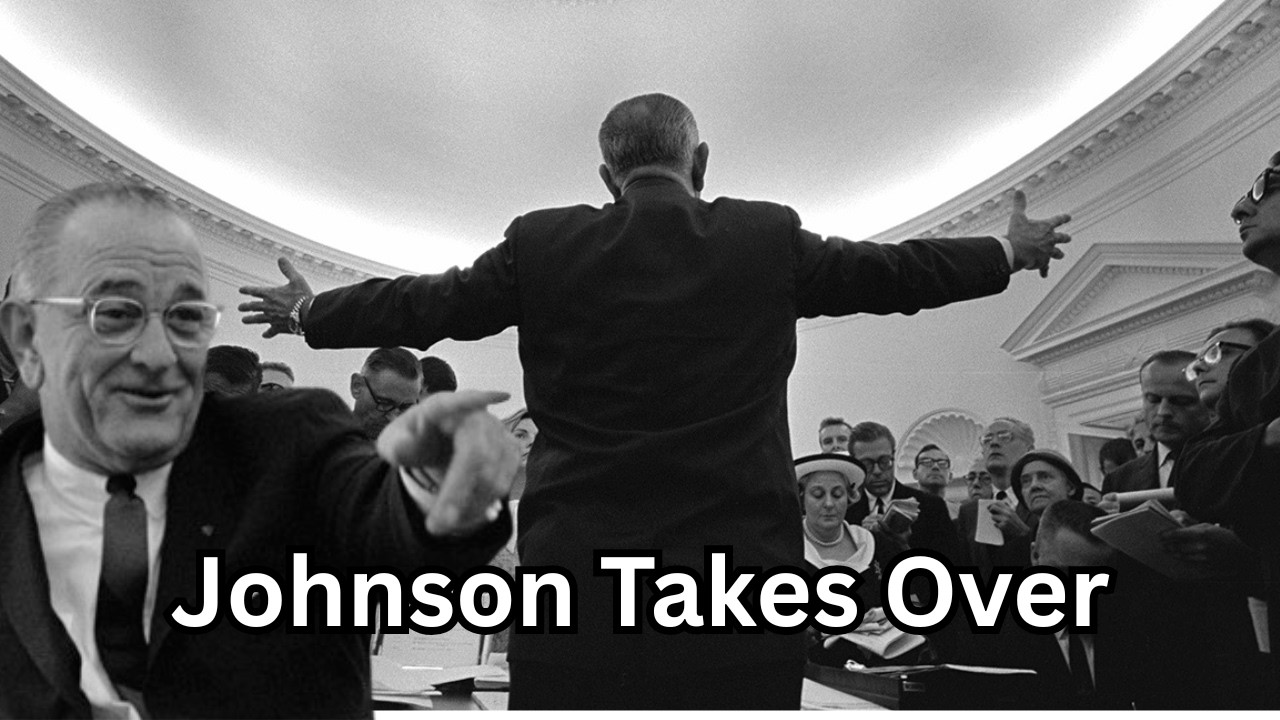
Johnson understood that replacing an administration’s leadership during national trauma could threaten confidence in the federal government’s stability.
His immediate response was not the sweeping dismissal of Kennedy loyalists that later political narratives sometimes suggested.
Instead, Johnson asked senior officials to remain, preserving institutional expertise while he established his own presidential authority.
That decision reflected political necessity, but it also carried significant implications for economic policy and financial confidence.
Although the historical account centers on personnel changes, its consequences extended into taxation, federal spending, and business expectations.
The transition ultimately helped shape America’s economic expansion, the Great Society, and the fiscal pressures accompanying Vietnam.
Johnson’s political circumstances were unusually difficult because Kennedy’s closest advisers had rarely treated him as an equal partner.
The former Senate majority leader possessed extraordinary legislative experience, yet his vice presidency had provided limited executive influence.
Many Kennedy advisers came from elite Northeastern political and academic circles, culturally distant from Johnson’s Texas background.
Their differences involved personal loyalties, governing styles, and conflicting assumptions about how presidential decisions should be made.
Kennedy had favored intellectual discussion and relatively informal exchanges among advisers who enjoyed his confidence and friendship.
Johnson preferred intense personal persuasion, detailed political calculations, and direct pressure on officials responsible for delivering results.
Those contrasting methods would eventually influence economic policymaking, congressional negotiations, and the management of federal spending priorities.
But during the immediate transition, Johnson recognized that institutional continuity mattered more than replacing ideological or personal opponents.
He retained Secretary of State Dean Rusk, whose experience was essential to maintaining America’s established diplomatic relationships.
Defense Secretary Robert McNamara also remained, preserving leadership continuity during an increasingly complicated period of Cold War confrontation.
National Security Adviser McGeorge Bundy continued serving, helping maintain access to intelligence assessments and established strategic planning.
These decisions reassured officials concerned that sudden personnel upheaval might disrupt foreign policy or weaken presidential decision-making capabilities.
Financial markets are especially sensitive to uncertainty surrounding executive authority, geopolitical stability, and the continuity of economic institutions.
The Kennedy assassination represented precisely the kind of unexpected political shock capable of disturbing investor expectations significantly.
American stock markets closed early on November 22 after news of the assassination disrupted normal trading activity.
The immediate market reaction reflected shock and uncertainty, although subsequent trading demonstrated the importance of institutional continuity.
Historical accounts describe a strong market rebound when trading resumed, suggesting investors distinguished tragedy from sustained economic disruption.
That recovery should not be interpreted as evidence that financial markets considered the assassination economically insignificant or harmless.
Rather, investors confronted an extraordinary political event while assessing whether established government policies would continue operating normally.
Johnson’s decision to retain Kennedy’s cabinet provided an important signal that executive functions would remain substantially uninterrupted.
The Federal Reserve’s institutional independence also helped separate immediate presidential succession from routine monetary policy implementation decisions.
Financial stability depended on more than presidential reassurance, including functioning banks, established payment systems, and predictable monetary institutions.
Nevertheless, confidence in political continuity remained important because businesses and investors needed clarity about the administration’s direction.
Johnson moved quickly to demonstrate that Kennedy’s unfinished legislative priorities would remain central to the new presidency.
On November 27, he addressed a joint session of Congress in a speech remembered as Let Us Continue.
The address connected national mourning with a determination to advance civil rights legislation and other pending presidential initiatives.
Ted Sorensen, Kennedy’s principal speechwriter, helped prepare the address despite his personal grief and uncertain political future.
Sorensen had developed an exceptionally close working relationship with Kennedy, shaping the administration’s speeches and broader political message.
His willingness to assist Johnson illustrated how professional obligations temporarily overcame personal loyalties and profound emotional distress.
Johnson understood that preserving Kennedy’s rhetorical legacy could strengthen his own legitimacy during an unusually vulnerable political transition.
The economic significance of that continuity became apparent in the administration’s approach to Kennedy’s proposed federal tax reductions.
Kennedy had advocated a major tax cut intended to stimulate economic activity, encourage investment, and strengthen employment growth.
The proposal reflected growing acceptance of demand-management economics among policymakers seeking to reduce unemployment and expand productive capacity.
Walter Heller, chairman of the Council of Economic Advisers, was among the economists supporting Kennedy’s expansionary fiscal strategy.
Johnson retained Heller initially, allowing the administration’s economic advisers to continue advocating the proposed tax legislation in Congress.
The Revenue Act of 1964 eventually reduced individual income tax rates and lowered the top marginal rate substantially.
Corporate income tax rates also declined, reflecting the administration’s broader effort to encourage investment and private-sector expansion.
The legislation represented one of the most consequential economic policy continuities between the Kennedy and Johnson administrations.
Its passage demonstrated Johnson’s ability to convert a predecessor’s economic proposal into enacted legislation through congressional negotiation.
That accomplishment required skills developed during his years as Senate majority leader, including bargaining across competing political factions.
Johnson’s legislative approach differed from Kennedy’s, but the economic objective remained broadly consistent with the inherited proposal.
The administration sought stronger growth through tax relief while maintaining confidence in the federal government’s fiscal management.
The early 1960s economy provided a favorable backdrop, with expansion underway following the recession of 1960–1961.
Unemployment remained an important concern, and policymakers believed additional demand could help utilize available labor and productive resources.
The tax reductions were intended to support household spending, improve business incentives, and reinforce the ongoing economic expansion.
They were not the sole cause of subsequent growth, which also reflected monetary conditions and broader economic developments.
Nevertheless, the legislation became a defining example of fiscal policy shaping business expectations and aggregate economic demand.
The transition’s importance therefore extended beyond personalities, affecting the timing and implementation of major national economic initiatives.
Johnson’s decision to retain Kennedy officials also helped preserve continuity in the government’s approach to international economic relations.
The United States operated under the Bretton Woods system, which linked major currencies to fixed exchange rate arrangements.
The dollar’s convertibility into gold for foreign monetary authorities remained central to international confidence in American financial leadership.
Maintaining confidence in the dollar required attention to external payments, gold reserves, and the sustainability of domestic economic policy.
Those pressures existed independently of the assassination, but political instability could have complicated their management considerably during transition.
Johnson inherited a system in which American fiscal and monetary decisions carried important consequences for allied economies.
His administration therefore needed experienced officials capable of managing diplomacy, trade, defense commitments, and economic coordination simultaneously.
Rusk and McNamara provided continuity on security matters, while economic advisers preserved familiarity with existing domestic policy priorities.
The resulting arrangement reduced the risk of abrupt institutional disruption during a period of considerable international financial sensitivity.
Yet Johnson’s initial embrace of Kennedy’s team did not eliminate the personal tensions that divided the White House.
Sorensen remained temporarily, but he struggled to imagine a long-term role under a president with different political instincts.
His departure in early 1964 reflected personal grief, professional considerations, and the difficulty of transferring presidential loyalty.
Arthur Schlesinger Jr., another prominent Kennedy adviser, also found his position increasingly uncomfortable under the new administration.
The Harvard historian had enjoyed intellectual access to Kennedy and occupied a distinctive place within his presidential circle.
Under Johnson, Schlesinger’s responsibilities diminished, illustrating how formal retention did not always translate into meaningful political influence.
He resigned in January 1964, later helping shape public understanding of Kennedy’s presidency through influential historical writing.
Such departures encouraged the impression that Johnson was systematically removing the former president’s most loyal and prominent advisers.
However, the available account supports a more complicated interpretation involving individual choices, institutional adjustments, and changing political relationships.
Some officials left because their principal connection had been personal friendship with Kennedy rather than attachment to particular offices.
Others encountered reduced influence as Johnson increasingly relied upon advisers whose judgment and loyalty he trusted personally.
These developments were politically significant, but they differed from an immediate coordinated dismissal of Kennedy’s entire governing team.
Pierre Salinger, Kennedy’s press secretary, provides another example of how the transition produced gradual rather than instantaneous change.
Salinger initially remained in office and helped Johnson manage communications during the emotionally charged first weeks of succession.
Johnson appreciated his assistance, but the two men approached journalists and public communication from substantially different perspectives politically.
Kennedy had cultivated an unusually sophisticated television presence, including live presidential press conferences and carefully managed public appearances.
Johnson was more suspicious of reporters and preferred communication strategies shaped by his own political instincts and relationships.
Salinger eventually left in March 1964 to pursue a political career, rather than disappearing during the funeral period.
His departure contributed to the gradual transformation of White House communications without demonstrating an immediate post-assassination personnel purge.
Robert F. Kennedy represented a much more serious political challenge because his relationship with Johnson was deeply antagonistic.
As attorney general, Robert Kennedy had been among his brother’s most influential advisers on national security and domestic policy.
His authority extended beyond the Justice Department because the president relied heavily upon his judgment and personal loyalty.
Johnson regarded that influence with suspicion, while Robert Kennedy questioned Johnson’s character, political instincts, and presidential suitability.
The assassination left Robert Kennedy grieving while simultaneously confronting a president with whom he shared little personal trust.
Nevertheless, he remained attorney general during the crucial months preceding passage of the Civil Rights Act of 1964.
His continued service reflected a combination of public duty, political considerations, and commitment to unfinished Kennedy administration priorities.
Johnson’s legislative efforts proved essential to securing civil rights legislation against determined opposition from Southern Democratic lawmakers.
The law prohibited major forms of discrimination and became one of the most consequential achievements of Johnson’s presidency.
Its immediate financial implications were not easily captured by stock market indexes or quarterly corporate earnings announcements.
However, its longer-term economic importance involved labor market access, commercial opportunity, and the federal enforcement of equal treatment.
Reducing discriminatory barriers could expand participation in employment, education, public accommodations, and other activities central to economic mobility.
Those effects developed unevenly over time, reflecting enforcement, local resistance, and broader structural inequalities across American society.
The legislation nevertheless demonstrated how political continuity after Kennedy’s death could produce substantial changes in economic institutions.
Johnson’s effectiveness depended partly on combining inherited policy objectives with his formidable ability to navigate congressional opposition.
That combination distinguished his administration from the simplified narrative of a president interested primarily in eliminating Kennedy loyalists.
Robert Kennedy ultimately resigned in September 1964 to pursue a United States Senate seat representing New York.
His departure reflected personal ambitions and political tensions rather than a dismissal immediately following his brother’s funeral ceremonies.
He won the Senate election that November, establishing an independent political base outside Johnson’s executive administration and influence.
Their rivalry continued, eventually becoming particularly pronounced over the escalating American military commitment in Vietnam during Johnson’s presidency.
The Vietnam conflict would also become central to the economic legacy of the transition between the two administrations.
Kennedy had expanded American advisory involvement in South Vietnam, but the subsequent trajectory remained contested among historians.
Johnson significantly escalated military operations, especially after 1964, committing increasing resources to an expensive and prolonged conflict.
That escalation coincided with ambitious domestic spending programs, creating mounting pressure on federal budgets and economic policy coordination.
The Great Society included Medicare, Medicaid, education initiatives, antipoverty programs, and other major expansions of federal government activity.
These measures addressed significant social needs, but their financing interacted with the growing costs of military operations abroad.
The combination complicated fiscal management during an economy already benefiting from tax reductions and sustained private-sector expansion.
As demand strengthened, policymakers faced increasing concern about inflationary pressures and the balance between growth and stability objectives.
The Federal Reserve had to evaluate how fiscal stimulus, employment gains, and rising spending affected monetary conditions nationally.
These challenges became more pronounced later in the decade as inflation accelerated and policymakers struggled to contain pressures.
The eventual economic consequences cannot be attributed solely to Johnson’s personnel decisions or the assassination-driven presidential transition.
They emerged from the interaction of fiscal choices, monetary policy, military commitments, productivity developments, and international monetary constraints.
Nevertheless, the administration’s evolution after November 1963 shaped the political environment in which those economic choices occurred.
Johnson’s initial retention of Kennedy officials preserved policy continuity, but his later governing priorities created different fiscal pressures.
Those developments illustrate why investors must distinguish short-term political stability from the longer-term consequences of government policy.
An orderly transfer of authority can support confidence without guaranteeing that subsequent fiscal decisions will remain economically sustainable.
The Johnson administration provides a historical example of both the benefits of continuity and the complexities of policy expansion.
Several senior Kennedy appointees remained influential long after the early departures that fueled speculation about a political purge.
Dean Rusk served as secretary of state throughout Johnson’s presidency, maintaining continuity across years of difficult international diplomacy.
Robert McNamara remained defense secretary until 1968, becoming deeply associated with the administration’s increasingly controversial Vietnam strategy decisions.
McGeorge Bundy continued as national security adviser until 1966, preserving substantial continuity in the White House’s foreign policy apparatus.
Stewart Udall remained interior secretary, while Orville Freeman continued leading the Agriculture Department through the Johnson administration years.
Labor Secretary Willard Wirtz also remained, providing continuity on employment policy and federal labor market administration during expansion.
These officials occupied positions of genuine authority, making the description of an immediate comprehensive purge historically difficult to sustain.
Lawrence O’Brien, previously a central Kennedy political operative, became a valuable member of Johnson’s administration and governing coalition.
His continued influence demonstrated that Johnson could work effectively with Kennedy associates when their political skills served administration objectives.
The relevant distinction was often personal compatibility and usefulness rather than a blanket determination to eliminate Kennedy’s appointments.
Johnson also brought trusted associates into more influential positions, including advisers familiar with his legislative and political methods.
Walter Jenkins, George Reedy, and Bill Moyers represented elements of the president’s established personal and professional network of advisers.
Their increasing prominence gradually changed White House operations, even while numerous Kennedy appointees continued occupying important federal offices.
This process was characteristic of presidential transitions, although the assassination made its emotional and political consequences unusually difficult.
A president naturally seeks advisers whose judgment he trusts, particularly when confronting crises requiring confidential and rapid decisions.
Johnson faced the additional challenge of doing so without appearing to reject the legacy of a recently assassinated predecessor.
That constraint encouraged initial restraint, followed by a gradual reorganization as political circumstances and personal relationships evolved over time.
The distinction between immediate continuity and eventual personnel turnover is essential to understanding the administration’s institutional development accurately.
It also helps explain why historical accounts written by different participants sometimes portray the same transition so differently.
Kennedy loyalists often remembered a White House transformed by grief, personal displacement, and the loss of intellectual companionship.
Johnson associates frequently emphasized the new president’s political effectiveness, legislative achievements, and responsibility for maintaining national stability.
Both perspectives illuminate aspects of the transition, but neither alone captures its complete political and institutional complexity adequately.
The economic consequences likewise resist a simple interpretation centered exclusively on presidential personality or staff loyalty and rivalry.
Johnson’s legislative achievements included measures that expanded social insurance, supported education, and strengthened federal antipoverty policy institutions nationwide.
Medicare and Medicaid, enacted in 1965, substantially changed the relationship between federal spending and American healthcare markets thereafter.
These programs created enduring federal financing commitments and influenced hospitals, physicians, insurers, and healthcare employment patterns across decades.
Their introduction also contributed to the long-term expansion of healthcare as a major component of national economic activity.
For investors and analysts, such policies demonstrate how government legislation can reshape entire industries beyond immediate market reactions.
Education and antipoverty initiatives similarly influenced public spending priorities, labor force development, and debates over economic opportunity nationally.
Environmental legislation created additional regulatory responsibilities and began shaping business decisions involving pollution control and resource management practices.
The scale of Johnson’s domestic agenda distinguished his presidency, despite the substantial policy continuity that initially characterized succession.
Kennedy had proposed important reforms, but Johnson used congressional relationships to enact measures that reshaped federal government responsibilities.
The political transformation therefore involved both continuation of inherited objectives and expansion into initiatives bearing Johnson’s own priorities.
That distinction matters when assessing whether the departure of Kennedy advisers represented institutional rupture or ordinary political evolution.
Many of the most consequential policy changes occurred while senior officials from both administrations continued working within government institutions.
Personnel turnover did not necessarily correspond to immediate abandonment of policy objectives or the replacement of governing philosophies entirely.
At the same time, Johnson’s personal methods influenced the speed, scale, and political compromises accompanying major legislative achievements.
His mastery of congressional relationships helped secure legislation that might otherwise have remained stalled amid entrenched political opposition.
The resulting economic effects were significant, although separating individual presidential contributions from broader historical forces remains analytically difficult.
Financial markets during the 1960s operated within a substantially different technological, regulatory, and international monetary environment than today’s.
The Dow Jones Industrial Average served as a prominent market benchmark, while the S&P 500 represented broader equity performance.
The Nasdaq Composite did not exist during Johnson’s presidency, having been introduced later in 1971 as markets evolved.
Consequently, any analysis comparing Johnson’s market environment with today’s major indexes must distinguish historical availability and methodology.
Modern mega-cap technology companies were not the dominant market forces that shape contemporary equity benchmarks and earnings expectations.
Instead, industrial manufacturers, telecommunications companies, energy producers, financial institutions, and consumer businesses occupied prominent positions in market analysis.
Corporate earnings expectations were influenced by domestic economic growth, capital spending, wage developments, and international commercial opportunities abroad.
The 1964 tax reductions affected those expectations by changing after-tax income, business incentives, and anticipated economic demand conditions.
However, the available historical script provides no verified company-level earnings figures or sector return measurements for this transition.
Assigning precise market gains to Johnson’s personnel decisions would therefore exceed what the supplied evidence can reasonably establish historically.
The same caution applies to Treasury yields, which reflected monetary conditions, inflation expectations, and federal borrowing requirements simultaneously.
As government spending expanded later in the decade, investors increasingly confronted questions about inflation and long-term fiscal sustainability.
Bond markets ultimately responded to broader economic conditions rather than simply the departure or retention of individual presidential advisers.
The Federal Reserve’s decisions also reflected concerns extending well beyond the immediate political circumstances surrounding Kennedy’s assassination period.
Monetary authorities had to balance domestic expansion with the international obligations imposed by the Bretton Woods monetary system.
The fixed exchange rate framework constrained policy choices because confidence in dollar convertibility remained essential to international stability.
Growing inflation and external pressures would eventually expose weaknesses in that arrangement, culminating in major changes after Johnson’s presidency.
Those later developments should not be projected backward as inevitable consequences of the 1963 presidential succession or transition.
They nevertheless illustrate how fiscal and monetary decisions can generate effects extending far beyond the administrations initiating them.
Commodity markets also operated within a different framework, particularly because official gold arrangements influenced international monetary expectations directly.
Gold’s official dollar relationship under Bretton Woods differed fundamentally from the freely traded investment market familiar to modern investors.
Oil prices and industrial commodity costs mattered to businesses, but their dynamics differed from subsequent decades’ market structures.
Currency markets likewise reflected fixed exchange arrangements rather than today’s broadly floating major exchange rates and speculative trading.
These distinctions limit direct comparisons between Johnson-era economic developments and contemporary stock, bond, commodity, and foreign exchange markets.
They also reinforce the importance of evaluating political transitions within the specific institutional conditions prevailing at the time.
The Johnson succession offers lessons for institutional investors assessing unexpected leadership changes and potential disruptions to economic policy.
The first analytical priority is determining whether core institutions remain operational and whether established policies retain political support.
Johnson’s cabinet retention addressed precisely those concerns by signaling that the federal government would continue functioning without interruption.
A second priority is assessing whether new leadership possesses sufficient political authority to implement pending legislative and budgetary decisions.
Johnson’s congressional experience gave him advantages in this area, particularly when negotiating tax reductions and civil rights legislation.
A third priority involves distinguishing symbolic personnel changes from substantive alterations in fiscal, regulatory, and international economic policy.
The departure of a prominent adviser can attract attention without necessarily changing the administration’s underlying economic policy direction.
Conversely, the retention of senior officials does not guarantee that future presidential priorities will remain unchanged over time.
Johnson demonstrated both patterns, initially preserving Kennedy’s team while gradually establishing a distinct and expansive governing agenda nationally.
His presidency eventually became associated with major social reforms and the substantial economic costs of the Vietnam War.
The combination produced an enduring debate over whether domestic achievements were undermined by military escalation and fiscal pressures.
Those debates remain relevant to contemporary analysis of government spending, defense commitments, inflation, and long-term public investment priorities.
They also demonstrate why historical political narratives require careful separation of documented events from retrospective judgments about motives.
The supplied account does not substantiate a secret meeting in which Johnson dismissed Kennedy’s staff immediately after the funeral.
Instead, it describes appeals for continued service, followed by departures unfolding across subsequent months and years of administration.
The distinction changes the story from a dramatic purge into a complex negotiation over loyalty, authority, and policy continuity.
That interpretation does not eliminate the possibility that some Kennedy advisers experienced deliberate marginalization within Johnson’s emerging political organization.
Schlesinger’s reduced responsibilities and the growing influence of Johnson loyalists demonstrate that informal power relationships changed substantially afterward.
However, marginalization, voluntary resignation, and formal dismissal represent different developments requiring separate historical treatment and supporting evidence individually.
The transition’s emotional dimension also mattered because grief shaped the decisions of advisers closely connected to Kennedy personally.
For Sorensen and Schlesinger, remaining in government meant serving a president who could not replace their former relationship.
Their departures therefore cannot be understood entirely through conventional calculations of influence, professional advancement, or political ideology alone.
Robert Kennedy’s situation was even more complicated because family grief intersected with an already antagonistic political relationship personally.
His eventual departure reflected a developing independent political career and conflicts that extended beyond the original transition period.
The Vietnam War later intensified those conflicts, creating divisions with substantial implications for Democratic politics and national policy.
By 1968, Johnson’s presidency faced enormous political pressure, while Robert Kennedy emerged as a prominent critic of escalation.
Their rivalry became part of the broader fragmentation of Democratic support during a deeply divisive period in American history.
The financial consequences of Vietnam extended beyond government budgets, influencing inflation expectations, monetary decisions, and international confidence levels.
Rising military expenditures complicated efforts to finance domestic programs without increasing fiscal or inflationary pressures on the economy.
These effects developed gradually and cannot be reduced to the political relationships established immediately after Kennedy’s funeral ceremonies.
Nevertheless, they underscore the importance of studying leadership transitions as evolving policy processes rather than isolated dramatic events.
A market analyst evaluating such transitions must consider both immediate confidence effects and subsequent shifts in economic policy.
In November 1963, the urgent question was whether the United States could preserve institutional stability after presidential assassination.
By the middle of the decade, attention increasingly shifted toward economic expansion, social spending, and the costs of war.
Those changing priorities affected investors, businesses, workers, taxpayers, and the long-term structure of federal financial commitments across sectors.
Johnson’s administration illustrates how political succession can preserve an inherited agenda while ultimately producing a substantially different legacy.
The transition also demonstrates the limitations of interpreting government effectiveness through personal relationships among elite political advisers alone.
Institutional capacity depends on legislative coalitions, administrative expertise, budget resources, public legitimacy, and changing economic conditions over time.
Johnson possessed extraordinary legislative skills, but his achievements also depended on political circumstances created before he assumed office.
Kennedy’s civil rights proposals and tax agenda provided important foundations for legislation enacted during the succeeding administration’s tenure.
The national response to Kennedy’s assassination also created political conditions that influenced congressional debates and presidential appeals afterward.
Yet those circumstances did not eliminate opposition or guarantee legislative success without sustained political negotiation and compromise efforts.
Johnson’s ability to navigate those challenges contributed significantly to the eventual passage of major domestic policy legislation nationally.
The economic record that followed combined strong expansion with emerging imbalances that became more difficult to manage later.
Evaluating that record requires distinguishing early fiscal stimulus from later spending pressures and the evolution of monetary policy.
It also requires recognizing that major social programs can generate economic benefits and fiscal obligations across different horizons.
Medicare and Medicaid, for example, expanded healthcare access while creating substantial long-term government financing responsibilities and commitments.
Civil rights legislation addressed discriminatory barriers whose economic consequences had constrained opportunity and market participation for generations previously.
Tax reductions supported disposable income and business incentives while affecting federal revenue relative to alternative policy scenarios afterward.
Military escalation generated immediate government demand but also imposed substantial financial, human, and international strategic costs over time.
These policies cannot be assessed accurately through a single measure of stock performance or short-term economic growth alone.
They reflect competing objectives involving prosperity, security, equality, public investment, and the sustainability of government finances over decades.
The historical script also offers a broader lesson about political storytelling and the incentives surrounding retrospective accounts of power.
Kennedy’s closest associates had strong reasons to preserve his reputation and emphasize the distinctive character of his administration.
Johnson’s defenders had equally strong reasons to highlight his legislative accomplishments and the burdens of unexpected presidential succession.
Their accounts helped shape competing interpretations of the transition, sometimes emphasizing personal conflict over institutional continuity and complexity.
For financial journalism, the appropriate approach is to examine documented policy outcomes rather than accepting simplified narratives about personalities.
The evidence shows Johnson initially retained numerous Kennedy officials, including individuals occupying some of the government’s most influential positions.
It also shows that several prominent Kennedy loyalists departed during 1964, for reasons involving grief, politics, and ambition.
These departures changed the White House’s culture without demonstrating a coordinated dismissal immediately after the November funeral ceremonies ended.
The economic implications were substantial because Johnson simultaneously preserved Kennedy’s tax agenda and expanded federal domestic policy ambitions.
The administration’s later challenges emerged as military commitments and social expenditures placed increasing pressure on fiscal management decisions.
A forward-looking assessment of this historical episode therefore focuses on enduring principles rather than an invented contemporary market forecast.
Political continuity can reduce uncertainty, but investors must still examine how new leaders intend to use governing authority.
Cabinet retention may reassure markets initially, while legislative decisions and budget priorities determine longer-term economic consequences more substantially.
Fiscal stimulus can support growth, although its effectiveness depends on economic capacity, inflation, financing conditions, and monetary responses.
Expanding public programs can improve economic opportunity while introducing financing obligations that must be evaluated over extended periods carefully.
Defense commitments can alter fiscal priorities and create risks that are not immediately visible in equity valuations alone.
Institutional investors should therefore distinguish headline political drama from the underlying mechanisms affecting earnings, interest rates, and currencies.
Those mechanisms include taxation, government expenditure, monetary policy, regulatory changes, international trade, and geopolitical developments affecting confidence.
In Johnson’s case, the historical record shows a government seeking stability before gradually pursuing a more distinctive agenda.
The first weeks after Kennedy’s death were characterized by continuity, reassurance, and the preservation of essential administrative expertise.
The following months brought personnel departures, changing political relationships, and the increasing influence of Johnson’s trusted advisers internally.
The subsequent years produced major domestic legislation, expanding military commitments, and a more complicated economic policy environment nationally.
None of those developments supports the claim that Johnson conducted an immediate wholesale purge following Kennedy’s funeral in Washington.
The more consequential story concerns how a new president consolidated authority while retaining enough institutional continuity to govern.
That process shaped the passage of tax legislation, civil rights reforms, healthcare programs, and other important federal initiatives.
It also established the political conditions under which escalating military commitments would challenge the administration’s economic priorities later.
For investors studying historical presidential transitions, the central lesson is that personnel changes matter through their policy consequences.
The departure of an adviser is important when it alters decisions affecting economic growth, corporate profitability, or financial stability.
The retention of an official matters when it preserves expertise, reassures institutions, and supports the implementation of established commitments.
Johnson’s first actions after Kennedy’s assassination reflected an understanding of those practical realities, even amid profound political grief.
His presidency subsequently demonstrated that continuity and transformation can occur simultaneously within the same administration and governing institutions.
The alleged purge after Kennedy’s funeral is therefore less revealing than the actual gradual reorganization of presidential power afterward.
What began as an emergency effort to preserve stability became a presidency that reshaped America’s domestic economic landscape profoundly.
Its achievements and costs continue informing debates about fiscal stimulus, public investment, inflation, and the responsibilities of government.
The historical evidence ultimately favors institutional complexity over dramatic simplicity, offering a more useful foundation for economic analysis.
Johnson did not inherit a blank slate, and he did not immediately discard the administration Kennedy had assembled.
He inherited unfinished legislation, experienced officials, personal rivalries, and a country demanding both reassurance and decisive national leadership.
His initial response was to preserve the machinery of government while beginning the difficult process of establishing authority.
The resulting transition helped define the economic and political direction of the United States throughout the remaining decade.
For financial historians and market analysts, that evolution remains more consequential than the unsupported image of an overnight purge.


