More than fifty years after its debut, Fawlty Towers remains one of the most celebrated comedies in television history.
The fictional hotel in Torquay became a place where ordinary requests triggered extraordinary disasters, misunderstandings, and unforgettable performances.
Behind its twelve episodes stood a remarkable ensemble whose careers stretched across British theater, international cinema, and television.
Many beloved performers have since passed away, leaving audiences with memories of characters who remain astonishingly familiar today.
Others are still alive in 2026, preserving direct connections to a comedy that transformed British television forever.
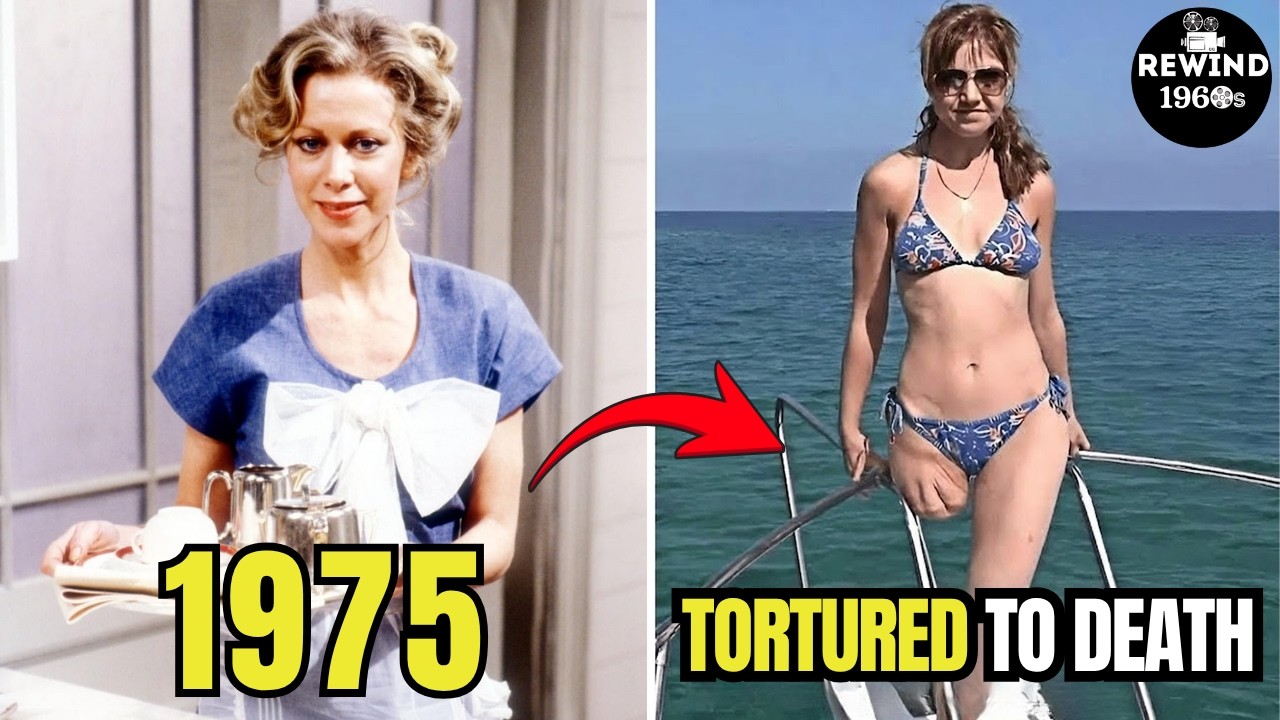
The contrast between their early appearances and later lives reveals an extraordinary story of creativity, loss, and endurance.
When Fawlty Towers premiered on BBC Two in September 1975, its eventual cultural importance was far from guaranteed.
The series followed Basil Fawlty, a deeply insecure hotel manager whose desperate pursuit of respectability repeatedly destroyed his judgment.
His establishment attracted guests expecting comfortable rooms, reasonable meals, and the basic courtesies of a functioning hospitality business.
Instead, they encountered a manager who interpreted routine inconvenience as a personal insult or threat to his status.
The show’s brilliance emerged from turning everyday service failures into elaborate sequences of escalating panic and social humiliation.
John Cleese and Connie Booth created a comedy where character flaws, rather than random accidents, generated nearly every catastrophe.
Their scripts combined carefully constructed farce with sharp observations about class anxiety, marriage, workplace authority, and human insecurity.
The result was a program that became internationally admired despite producing only two seasons and twelve episodes altogether.
Its extraordinary reputation also reflects the performances of actors who transformed supporting characters into essential parts of television history.
John Cleese was thirty-five when Fawlty Towers first aired, bringing considerable comedy experience to the role of Basil.
Born in Weston-super-Mare, Somerset, in 1939, Cleese had already achieved international recognition through the groundbreaking Monty Python phenomenon.
His background in sketch comedy helped establish the exaggerated physical movements and precise timing that defined Basil’s behavior.
Yet Basil differed from many earlier Cleese characters because his absurdity emerged from recognizable emotional weaknesses and fears.
He wanted admiration from wealthy guests while displaying open contempt for customers he considered socially insignificant or troublesome.
Every attempt to appear sophisticated exposed his inability to manage people, acknowledge mistakes, or tolerate ordinary embarrassment gracefully.
Cleese made Basil’s frustration physically visible through rigid posture, frantic gestures, explosive shouting, and suddenly collapsing composure.
His performance became particularly memorable when the hotel manager attempted to maintain dignity while circumstances made dignity impossible.
The famous episode The Germans demonstrated how Basil’s obsessive attempts to avoid embarrassment could produce spectacularly inappropriate behavior.
In The Hotel Inspectors, his fear of professional judgment caused him to mistreat guests and misunderstand their intentions.
The character’s defining contradiction was simple: he wanted authority without accepting the responsibilities that genuine authority required.
Cleese’s achievement was making that contradiction consistently entertaining without allowing Basil to become a straightforward sympathetic hero.
The audience frequently recognized his cruelty, snobbery, and dishonesty while still laughing at the disasters he created.
His performance also depended upon an ensemble capable of challenging his authority through radically different personalities and reactions.
Following the series, Cleese expanded his career through film, television, writing, and numerous international entertainment projects over decades.
His work included A Fish Called Wanda, the Harry Potter films, and major roles in successful Hollywood productions.
He also remained closely associated with Monty Python, whose influence helped reshape modern comedy across multiple generations worldwide.
By October 2026, Cleese is eighty-six, approaching his eighty-seventh birthday later in the month of October itself.
His continued public presence makes him one of the most recognizable surviving connections to the original Fawlty Towers.
Yet his legacy as Basil remains distinctive because the character captured the psychological comedy of social aspiration perfectly.
Prunella Scales provided the essential counterweight to Cleese through her commanding performance as Basil’s wife, Sybil Fawlty.
Born in 1932, Scales brought extensive theatrical experience and an extraordinary understanding of controlled comic delivery to television.
Sybil rarely needed Basil’s elaborate physical gestures because her authority emerged through timing, expression, and devastating verbal precision.
A single sharply delivered remark could dismantle Basil’s elaborate attempts to present himself as the hotel’s unquestioned leader.
Their marriage provided a recurring conflict between his obsession with appearances and her greater understanding of practical realities.
Basil resented Sybil’s criticism, yet he repeatedly depended upon her competence when his own decisions created chaos.
Scales also prevented the character from becoming merely a stereotypical domineering wife whose only purpose was humiliating her husband.
Sybil’s frustration usually had an obvious justification because Basil consistently endangered the business through arrogance and dishonesty alike.
Her memorable telephone conversations and dismissive reactions became essential ingredients in the show’s distinctive rhythm and character dynamics.
The relationship worked because both performers understood that marital conflict could reveal deeper truths about personality and insecurity.
Scales subsequently enjoyed a distinguished career across British television, film, and stage, earning admiration from several generations of audiences.
Her later work included memorable appearances in A Question of Attribution and numerous other respected British productions thereafter.
She also became familiar to viewers through Great Canal Journeys alongside her husband, the actor Timothy West.
Their television travels presented a gentler public image centered on companionship, waterways, and shared appreciation of Britain’s heritage.
In later life, Scales lived with dementia, a condition her family discussed publicly with sensitivity and dignity throughout.
She died in October 2025 at ninety-three, bringing an extraordinary performing career to its conclusion after many decades.
Her death removed one of the four central performers who had made the original series so memorable worldwide.
For generations of viewers, Sybil remains the person most capable of exposing Basil’s absurdity without raising her voice.
Andrew Sachs created another unforgettable character through Manuel, the Spanish waiter struggling to understand Basil’s constantly changing instructions.
Born in Berlin in 1930, Sachs came to Britain as a child after his family fled Nazi persecution.
His background and theatrical experience helped him develop a performance combining vulnerability, physical agility, and remarkable comic precision.
Manuel was eager to please, but his limited English frequently made him vulnerable to Basil’s impatience and aggression.
The comedy depended upon misunderstanding, yet Sachs ensured that Manuel remained recognizably human rather than simply a caricature.
His expressions conveyed confusion, determination, embarrassment, and occasional pride as he attempted to perform ordinary hospitality duties properly.
Basil frequently blamed Manuel for situations created by Basil’s own contradictory directions and unrealistic expectations at work.
The imbalance between them also exposed the hotel’s dysfunctional hierarchy, where authority rarely corresponded with competence or fairness.
Polly understood Manuel’s difficulties and often communicated more effectively with him than the manager responsible for supervising him.
Sachs made the character memorable because audiences could recognize his sincere desire to belong within an unpredictable workplace.
His physical performances required careful coordination, particularly during scenes involving falls, collisions, and Basil’s increasingly frantic movements.
The resulting comedy became internationally recognizable, with Manuel’s misunderstandings remaining among the show’s most frequently remembered moments.
Sachs continued working in radio, television, film, and voice performance after Fawlty Towers ended its original run.
Although he portrayed numerous characters, Manuel remained the role most closely associated with his name and public reputation.
He died in November 2016 at eighty-six, leaving behind a performance that remains central to British comedy history.
His contribution demonstrated how warmth and vulnerability could make a supporting character indispensable to an otherwise chaotic ensemble.
Ballard Berkeley portrayed Major Gowen, the elderly resident whose rambling conversations brought another distinctive form of confusion into the hotel.
Born in 1904, Berkeley had accumulated decades of theatrical and screen experience before joining the Fawlty Towers cast.
His character appeared to inhabit a fading social world filled with military memories, old assumptions, and wandering observations.
The Major’s apparent respectability appealed to Basil, who desperately wanted distinguished guests to validate his imagined social standing.
Yet the elderly officer’s confusion frequently undermined the sophistication Basil believed his establishment ought to represent publicly.
Berkeley played these moments with gentle eccentricity rather than the exaggerated aggression that characterized Basil’s own behavior.
The contrast gave the series breathing room between louder scenes while reinforcing its recurring themes of class.
Major Gowen became part of the hotel’s atmosphere, suggesting a permanent resident whose stories might never reach conclusions.
Berkeley died in January 1988 at eighty-three, after a long career spanning theater, cinema, and British television.
His character remains memorable because he made confusion appear almost comforting within an environment otherwise dominated by panic.
Brian Hall joined the second series as Terry, the chef whose practical attitude contrasted sharply with Basil’s pretensions.
Born in 1937, Hall brought a grounded working-class presence to the kitchen scenes and their recurring conflicts.
Terry understood that hospitality required food preparation, equipment, organization, and patience rather than theatrical displays of social superiority.
His exchanges with Basil exposed the gap between managerial authority and the practical knowledge needed to run operations.
The chef frequently recognized problems more clearly than his employer, whose interventions often made ordinary difficulties considerably worse.
Hall gave Terry a naturalistic personality that helped balance the increasingly elaborate farce surrounding the hotel’s dining room.
His sarcasm reflected the frustration of employees expected to repair problems created by their supervisors without adequate support.
That workplace realism made Terry recognizable to audiences familiar with unreasonable managers and impossible service expectations everywhere today.
Hall continued appearing in television and film, developing a reputation for convincing supporting performances across different productions.
He died in 1997 at fifty-nine, considerably younger than many of his colleagues from the celebrated series.
His relatively brief appearance nevertheless gave the hotel’s kitchen a memorable personality and a distinct social perspective.
Una Stubbs brought warmth and recognizable charm to her guest appearance as Alice during the show’s second season.
Born in Welwyn Garden City in 1937, Stubbs already possessed considerable experience in television and entertainment productions.
Her performance contrasted with Basil’s hostility by introducing a character whose friendliness exposed the manager’s emotional limitations.
The guest’s ordinary expectations emphasized that most hotel visitors simply wanted hospitality rather than confrontation or humiliation.
Stubbs excelled at creating believable personalities even when scripts gave her relatively limited time on the screen.
Her wider career included Till Death Us Do Part, stage performances, and numerous British television appearances over decades.
Later audiences discovered her through Sherlock, where she portrayed Mrs. Hudson with warmth, humor, and unmistakable personality throughout.
Her ability to connect with different generations reflected an unusually adaptable career spanning major changes in British entertainment.
Stubbs died in August 2021 at eighty-four, leaving a substantial body of work across multiple entertainment formats.
Her Fawlty Towers appearance remains a smaller but appealing example of her distinctive screen presence and timing.
Steve Plytas portrayed Kurt, the emotionally volatile chef whose difficulties complicated Basil’s ambitious plans for a gourmet evening.
Born in Constantinople in 1913, Plytas developed a long career portraying distinctive characters across British screen productions.
Kurt appeared in Gourmet Night, an episode built around Basil’s desperate attempt to impress supposedly sophisticated guests.
The manager imagined an evening of refined dining that would elevate his hotel’s reputation among desirable customers.
Instead, unpredictable human behavior disrupted the carefully arranged occasion, exposing the fragility of Basil’s social ambitions once again.
Plytas brought theatrical energy to Kurt, making the character’s emotional complications essential to the episode’s escalating disaster.
His performance also revealed that the kitchen possessed its own problems beyond those created by Basil upstairs.
The episode became an enduring example of how Fawlty Towers constructed catastrophe through intersecting personal weaknesses and misunderstandings.
Plytas died in 1994 at eighty-one, following a substantial career in film, theater, and British television.
His character remains associated with the disastrous evening that exposed Basil’s inability to manage unexpected complications calmly.
Terence Conoley played Mr. Johnston, a hotel guest whose reasonable complaints created another uncomfortable confrontation for Basil Fawlty.
Born in 1919, Conoley brought a measured performance that made ordinary customer frustration unusually effective comic material.
Johnston expected service standards that would have seemed unremarkable in a competent hotel operating under responsible management.
Basil responded as though the customer’s dissatisfaction threatened his personal dignity rather than identifying a solvable business problem.
Conoley’s restraint gave the scenes their effectiveness because the guest did not need to behave absurdly himself.
His frustration became increasingly understandable as Basil refused to acknowledge the obvious shortcomings of the establishment he managed.
Conoley died in 2016 at ninety-six, after a career that included extensive theatrical and television work throughout.
His performance illustrated the series’ recurring insight that reasonable people could become Basil’s most effective comic opponents.
Bernard Cribbins portrayed Mr. Hutchinson, a talkative guest whose persistence gradually overwhelmed Basil’s already fragile emotional control.
Born in Oldham in 1928, Cribbins became one of Britain’s most recognizable and versatile entertainers over several decades.
His career included comedy, children’s programming, musical recordings, radio performances, film appearances, and numerous television roles nationwide.
In Fawlty Towers, Hutchinson became memorable through his apparently harmless requests and tendency toward lengthy conversation with staff.
Basil interpreted the guest’s behavior through his own anxieties, creating complications that Hutchinson never intended to cause.
Cribbins gave the character warmth and cheerful determination, ensuring that the audience recognized Basil’s reaction as unreasonable.
The performance exemplified a fundamental principle of the series: ordinary conversation could become unbearable through Basil’s distorted perspective.
Cribbins later reached another generation through Doctor Who, portraying Wilfred Mott with exceptional emotional warmth and humor.
His career demonstrated unusual longevity, moving successfully between children’s entertainment, dramatic television, and sophisticated character comedy performances.
He died in July 2022 at ninety-three, leaving an enormous contribution to British popular entertainment and culture.
Hutchinson remains memorable because Cribbins transformed an ordinary guest into the catalyst for another classic hotel catastrophe.
Michael Gwynn portrayed Lord Melbury, the apparently aristocratic visitor whose arrival exposed Basil’s obsession with social status immediately.
Born in 1916, Gwynn possessed the dignified screen presence necessary to make the character’s deception initially convincing.
In the pilot episode, Basil treated the supposed nobleman with exaggerated courtesy while dismissing less prestigious guests.
The contrast established the central weakness that would repeatedly destroy his judgment throughout the entire television series.
Gwynn played Melbury with enough composure to allow Basil’s own imagination to complete the character’s false identity.
The resulting humiliation demonstrated how social ambition could make an otherwise suspicious person remarkably easy to manipulate.
His performance helped define the series’ tone from its earliest moments, giving Basil a revealing adversary immediately.
Gwynn died in January 1976 at fifty-nine, shortly after the show’s first season had reached British audiences.
His relatively brief contribution nevertheless remained foundational because the character exposed Basil’s defining flaw so effectively onscreen.
André Maranne appeared as André, a restaurant professional whose calm competence highlighted Basil’s fundamental misunderstanding of hospitality work.
Born in Toulouse in 1926, Maranne built a career appearing in British films and television productions extensively.
His screen persona frequently combined continental sophistication with the professional confidence that Basil desperately tried to imitate.
André demonstrated that genuine refinement required patience, courtesy, and competence rather than obsession with rank or appearance.
The character’s calmness made Basil appear increasingly unstable whenever the two men shared a difficult professional situation.
Maranne also appeared in the Pink Panther film series, developing a recognizable presence in international comedy productions.
He died in 2021 at ninety-five, following a career that stretched across several generations of screen entertainment.
His Fawlty Towers role remains a subtle reminder that Basil’s supposed superiority was frequently contradicted by reality.
Geoffrey Palmer portrayed Dr. Price, a guest whose straightforward breakfast expectations became another source of hotel disorder.
Born in London in 1927, Palmer developed a reputation for understated performances and exceptionally precise comic timing.
His expression could communicate complete disapproval without requiring an elaborate speech or exaggerated physical movement from him.
Dr. Price worked because the character remained reasonable while Basil transformed a simple request into escalating conflict.
The contrast demonstrated how effectively the series could generate comedy through one person’s refusal to become hysterical.
Palmer’s wider career included The Fall and Rise of Reginald Perrin and numerous other television productions afterward.
He became especially beloved as Lionel Hardcastle in As Time Goes By, opposite fellow performer Judi Dench.
His work combined dry humor with emotional credibility, making him an important figure in British television comedy.
Palmer died in November 2020 at ninety-three, leaving a legacy extending well beyond his hotel guest appearance.
His performance as Dr. Price remains memorable because ordinary irritation became devastating when directed toward Basil’s incompetence.
Nicky Henson played Mr. Johnson, the confident young guest whose relaxed attitude toward convention unsettled Basil’s moral authority.
Born in London in 1945, Henson developed a varied career across theater, television, and feature films internationally.
Johnson’s self-assurance frustrated Basil because the guest refused to recognize the manager’s assumed superiority or moral standing.
His casual behavior exposed the difference between Basil’s professed principles and his underlying desire for personal control.
Henson delivered the performance with understated charm, allowing Basil’s exaggerated indignation to provide much of the comedy.
The character’s refusal to feel intimidated became especially effective against a manager dependent upon visible obedience from others.
Henson died in December 2019 at seventy-four, following decades of work across several branches of entertainment production.
His portrayal remains a memorable example of how confidence could dismantle Basil’s fragile sense of managerial authority.
Bruce Boa portrayed Harry Hamilton, the outspoken American guest whose direct demands challenged Basil’s elaborate social expectations immediately.
Born in Calgary, Canada, in 1930, Boa became familiar through British and international screen appearances over decades.
Hamilton’s confrontational manner differed sharply from the indirect complaints and polite social conventions Basil expected from guests.
He wanted efficient service and saw little reason to tolerate excuses from a hotel charging for accommodation.
Boa gave the character a commanding presence that forced Basil into conflicts he could not easily avoid.
Their exchanges highlighted cultural differences while exposing the manager’s failure to understand the commercial purpose of hospitality.
The guest’s straightforward expectations became threatening because they prevented Basil from controlling the conversation through social performance.
Boa died in April 2004 at seventy-three, leaving numerous appearances across British television and major international films.
His role as Hamilton remains memorable because it exposed the absurdity of treating paying customers as enemies.
Joan Sanderson portrayed Mrs. Richards, the formidable guest whose hearing difficulties complicated her confrontations with the hotel staff.
Born in Bristol in 1912, Sanderson brought extensive theatrical experience and remarkable precision to her comic performances.
Mrs. Richards remained convinced of her own position even when misunderstandings made communication increasingly difficult for everyone involved.
Basil’s instinctive response was to raise his voice, despite the limited usefulness of that particular strategy here.
Sanderson played the character with immovable certainty, creating a formidable opponent for an equally stubborn hotel manager.
Their confrontations worked because neither participant was willing to surrender control of the conversation or acknowledge mistakes.
The resulting comedy depended upon timing, escalating frustration, and two characters whose personalities were fundamentally incompatible together.
Sanderson died in 1992 at seventy-nine, following a distinguished career in theater, film, and British television.
Her performance remains celebrated because she transformed ordinary communication difficulties into a spectacular contest of competing authority.
John Quarmby portrayed Mr. Carnegie, the health inspector whose arrival threatened to expose the hotel’s questionable operating conditions.
Born in Liverpool in 1929, Quarmby became a familiar supporting actor across British television and stage productions.
Carnegie possessed a form of authority that Basil could not easily manipulate through flattery or social pretension.
His professional responsibility was to examine conditions and identify shortcomings rather than accept the manager’s elaborate excuses.
Quarmby’s restrained delivery made the inspector increasingly intimidating as Basil recognized the seriousness of the approaching inspection.
The character also exposed the difference between Basil’s obsession with reputation and the actual condition of his establishment.
Every neglected detail became potentially consequential when subjected to independent scrutiny by someone trained to recognize deficiencies.
Quarmby died in 2019 at eighty-nine, after a long career featuring numerous recognizable supporting screen roles.
His portrayal remains effective because the inspector represented something Basil feared more than embarrassment: documented evidence of failure.
David Kelly portrayed O’Reilly, the unreliable builder whose apparent confidence persuaded Basil to make another disastrous management decision.
Born in Dublin in 1929, Kelly developed an extensive career across Irish and British film and television.
O’Reilly seemed reassuring precisely because he refused to acknowledge the seriousness of his own questionable workmanship and decisions.
Basil employed him partly because the arrangement appeared inexpensive and convenient compared with more responsible alternatives available.
The predictable consequences demonstrated how the manager’s desire for shortcuts repeatedly created the disasters he feared most.
Kelly gave O’Reilly an appealingly relaxed personality that contrasted with the practical consequences of his construction work.
His later appearances included Waking Ned and Charlie and the Chocolate Factory, introducing him to international audiences.
Kelly died in February 2012 at eighty-two, leaving behind a widely admired career in character acting.
His performance as O’Reilly remains memorable because cheerful incompetence became another irresistible temptation for the unfortunate hotelier.
James Cossins portrayed Mr. Walt, a guest whose ordinary behavior became suspicious through Basil’s increasingly paranoid interpretation.
Born in 1933, Cossins built a substantial career appearing in British television dramas and comedy productions alike.
His controlled performance allowed Basil to invent elaborate explanations for actions that required no unusual interpretation whatsoever.
The humor emerged from watching the hotel manager become trapped inside a story created by his imagination.
Cossins maintained a restrained presence, giving Cleese the freedom to escalate the surrounding comic disorder dramatically onscreen.
The character illustrated how suspicion could become self-perpetuating when someone refused to consider straightforward alternative explanations seriously.
Cossins died in 1997 at sixty-four, following many appearances across British film, television, and theater productions.
His contribution demonstrated that an apparently ordinary supporting character could become essential to an exceptionally elaborate comic misunderstanding.
Robin Ellis portrayed Danny Brown, a confident figure whose familiarity with Basil threatened the manager’s carefully constructed persona.
Born in London in 1942, Ellis became especially recognizable through his starring role in the drama Poldark.
Danny’s presence unsettled Basil because someone who knew his past could challenge the image he presented publicly.
Ellis played the character with relaxed confidence, allowing Basil’s insecurity to create most of the scene’s tension.
The role reflected another recurring theme: Basil feared that familiarity would reveal weaknesses concealed behind professional manners and status.
Ellis continued working in acting, writing, and other creative activities after achieving recognition through major television productions.
In October 2026, he is eighty-four and remains among the surviving performers connected with the original series.
His career illustrates how actors from the ensemble achieved recognition through productions extending far beyond the hotel.
Connie Booth provided the series with Polly Sherman, whose competence repeatedly prevented Basil’s mistakes from becoming even worse.
Born in Indianapolis in 1940, Booth brought an American background and distinctive comic intelligence to British television.
Polly understood the hotel’s operations more clearly than its manager and frequently anticipated the consequences of his decisions.
Her sarcasm remained controlled, allowing her to communicate disbelief without adopting Basil’s increasingly frantic emotional state herself.
She also treated Manuel with greater understanding, demonstrating how communication could succeed where intimidation consistently failed instead.
Booth’s contribution extended far beyond acting because she co-created and co-wrote the series with John Cleese.
Their writing partnership developed the intricate misunderstandings, carefully structured reversals, and escalating complications that distinguished Fawlty Towers.
The scripts demanded exceptional precision because small misunderstandings had to develop naturally into increasingly improbable situations onscreen.
Booth helped ensure that the supporting characters possessed independent personalities rather than functioning merely as obstacles for Basil.
Polly became especially important because she provided the audience with a practical perspective on the hotel’s dysfunction.
Her intelligence also prevented the series from becoming an uninterrupted display of Basil’s hostility and personal insecurity.
After her acting career, Booth pursued psychotherapy, moving into professional work far removed from television comedy production.
Her later life demonstrated a willingness to establish an identity independent of the entertainment success she helped create.
In October 2026, Booth is eighty-five, approaching her eighty-sixth birthday later in the calendar year ahead.
She remains one of the most important surviving figures associated with the program’s original creation and performance.
Her legacy includes both an unforgettable character and the creative architecture that made the entire series possible.
The extraordinary concentration of talent within Fawlty Towers becomes even clearer when considering its unusually limited episode count.
Many successful television comedies produce dozens or hundreds of installments before reaching the end of their original runs.
Fawlty Towers produced only twelve, with the first season airing in 1975 and the second in 1979.
That brevity helped preserve an unusually consistent standard of writing, performance, and carefully constructed comic escalation throughout.
Every episode required elaborate coordination between performers whose timing could determine whether a complicated sequence succeeded onscreen.
The supporting cast also reflected the strength of Britain’s theatrical tradition and its extensive character acting community.
Many performers arrived with decades of experience portraying eccentric, authoritative, vulnerable, or socially awkward individuals across different productions.
Their presence gave the fictional hotel a convincing population beyond its four principal characters and recurring employees.
The guests represented different social classes, generations, nationalities, and expectations about how a respectable establishment should operate.
Basil reacted to each according to his own prejudices, insecurities, and imagined position within British society then.
Those interactions transformed the hotel into a miniature social world where pretension repeatedly collided with ordinary reality.
The series also demonstrated the economic absurdity of a hospitality business whose manager actively resented serving customers.
Basil wanted the prestige associated with hotel ownership while rejecting the obligations necessary to satisfy paying guests.
His behavior contradicted the basic commercial principle that service quality influences customer satisfaction and repeat business performance.
The joke remained effective because viewers recognized similar managerial failures within real workplaces and service industries everywhere.
Competent employees often repaired the damage created by supervisors more concerned with appearance than operational effectiveness daily.
Polly, Sybil, Manuel, and Terry embodied different responses to this dysfunction, from practical competence to anxious obedience.
Their performances gave the series a recognizable workplace structure beneath its increasingly elaborate comic misunderstandings and disasters.
That realism helped the program remain accessible to audiences unfamiliar with the specific social conventions of 1970s Britain.
International viewers could understand Basil’s arrogance because insecurity and incompetent leadership transcend national and cultural boundaries easily.
The show’s influence extended into subsequent television comedies built around flawed authority figures and dysfunctional workplaces worldwide.
Its reputation also benefited from repeated broadcasts, home video releases, streaming availability, and continued critical discussion over decades.
New audiences encountered characters whose performances remained vivid despite changes in television production technology and audience expectations.
The actors’ deaths gradually transformed the program from a familiar comedy into an important archive of performance history.
Each loss prompted renewed appreciation of the craftsmanship required to make seemingly effortless comic exchanges work onscreen consistently.
Prunella Scales’ death in 2025 carried particular emotional significance because Sybil had been central to the show’s identity.
Andrew Sachs’ death in 2016 had similarly reminded audiences how essential Manuel’s vulnerability was to Basil’s comic characterization.
The losses of Bernard Cribbins, Una Stubbs, Geoffrey Palmer, and other guest performers also reflected broader changes.
Their careers connected Fawlty Towers with decades of British entertainment that preceded and followed its original broadcast years.
Many had performed in productions that remain important historical landmarks within theater, radio, television, and international cinema.
The program therefore serves as a meeting point for multiple generations of accomplished performers within British cultural history.
Its surviving figures continue to connect contemporary audiences with the creative conditions that produced this remarkable television achievement.
John Cleese remains its most immediately recognizable face, while Connie Booth represents its essential collaborative writing foundation.
Robin Ellis provides another living connection to the ensemble of guest performers who enriched the hotel’s fictional world.
Their continued recognition demonstrates how even relatively brief performances can become enduring parts of a cultural legacy.
The actors who have died remain equally present through recordings that preserve their voices, expressions, and comic timing.
Unlike theatrical performances experienced only by their original audiences, television allows later generations to revisit the same work.
That preservation creates a distinctive relationship between historical performers and viewers who were not alive during production.
A teenager discovering Fawlty Towers today can encounter Basil’s disasters almost exactly as viewers did in 1975.
The social context has changed, but the underlying comedy of vanity, embarrassment, and failed communication remains recognizable worldwide.
Some aspects of the series have also prompted contemporary debate about representation, stereotypes, and changing standards of humor.
Those discussions reflect broader reassessments of older entertainment rather than diminishing the show’s technical achievements in comic writing.
Understanding its historical context helps explain both its extraordinary influence and the questions raised by modern audiences.
The performers themselves worked within conventions that reflected the creative environment and social assumptions of their period.
Their best performances nevertheless transcended those circumstances through recognizable human behavior and exceptional attention to character detail.
The series’ continued appeal suggests that audiences remain fascinated by people whose greatest difficulties originate within themselves.
Basil’s enemies were rarely formidable villains; more often, they were ordinary customers, colleagues, and inconvenient realities themselves.
His failures emerged because he could not tolerate the possibility that other people might see him accurately.
That fear created a character whose desperate pursuit of dignity guaranteed an endless succession of humiliations and disasters.
The supporting cast made those humiliations meaningful by providing different forms of competence, resistance, confusion, and social confidence.
Sybil challenged him through experience, Polly through intelligence, Manuel through innocence, and guests through their reasonable expectations.
Together, the performers created a world where almost every interaction exposed another contradiction in Basil’s personality and judgment.
More than half a century later, the original hotel remains one of television’s most recognizable fictional workplaces worldwide.
Its cast now represents a mixture of enduring survivors and celebrated performers whose lives have reached their conclusions.
Their achievements cannot be measured solely through episode counts, screen time, or the size of individual roles.
Some appeared briefly yet contributed essential moments to scenes that became permanent fixtures of British comedy history.
Others shaped the entire production through writing, performance, and the development of characters recognized around the world.
The surviving performers preserve personal links to that creative period, while recordings ensure the complete ensemble remains accessible.
Fawlty Towers endures because its actors understood that comedy becomes memorable when absurd situations emerge from believable weaknesses.
The passage of fifty-one years has changed the cast, but it has not diminished their collective achievement onscreen.
Basil’s hotel may never have operated successfully, yet the fictional establishment became an extraordinary triumph of television craftsmanship.
For the performers who created it, those twelve episodes remain a lasting monument to timing, imagination, and collaboration.
For audiences, the doors of Fawlty Towers remain permanently open, welcoming another generation into the same glorious chaos.


