On May 19, 1962, Marilyn Monroe stepped onto the stage at Madison Square Garden and delivered an unforgettable performance.
Before thousands of spectators, the Hollywood actress sang a breathless birthday tribute to President John F. Kennedy.
The president watched from the audience, but one conspicuous figure was missing from the extraordinary celebrity-filled celebration.
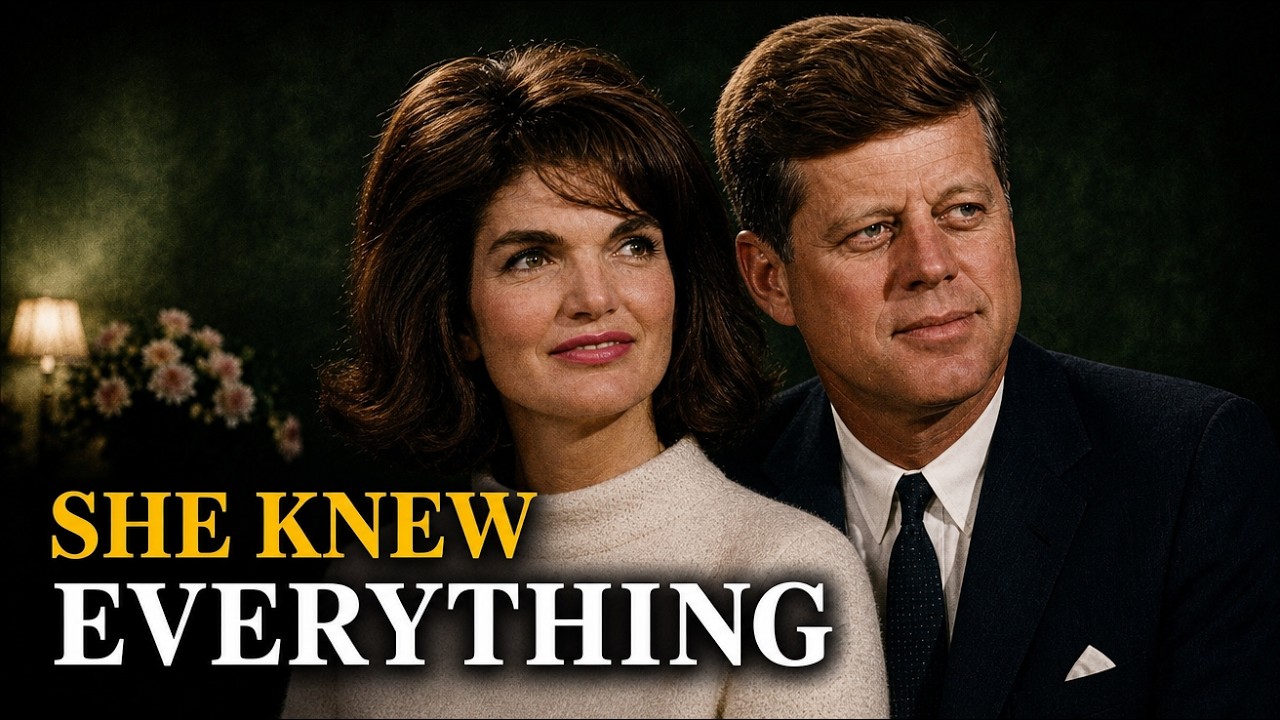
Jacqueline Kennedy, America’s glamorous first lady, had chosen to attend a horse show in Virginia instead of the gala.
Her absence would eventually become part of the enduring mythology surrounding Monroe, Kennedy, and their alleged romantic relationship.
For decades, commentators interpreted the empty seat as evidence of a humiliated wife avoiding her husband’s rumored mistress.
But the historical record does not establish that Jacqueline deliberately stayed away because of Monroe or the performance.
Her decision instead invites a more complicated examination of how she navigated marriage, political power, and public scrutiny.
By that evening, Jacqueline had already experienced nearly nine years of marriage within America’s increasingly influential Kennedy family.
She had endured serious medical emergencies, devastating pregnancy losses, and the demanding responsibilities of supporting an ambitious politician.
She had also become an international celebrity whose cultural influence sometimes rivaled her husband’s enormous political visibility.
The question of why Jacqueline never divorced Kennedy cannot be answered simply through allegations of infidelity or financial dependence.
It requires understanding her upbringing, religious environment, professional ambitions, and the extraordinary pressures surrounding presidential marriage.
It also requires distinguishing documented historical events from rumors repeated so frequently that they sometimes resemble established facts.
The marriage began publicly on September 12, 1953, at St. Mary’s Church in Newport, Rhode Island.
Jacqueline Lee Bouvier was twenty-four, while John Fitzgerald Kennedy was a thirty-six-year-old senator representing Massachusetts in Washington.
The ceremony attracted prominent political figures, influential families, and extensive press coverage of America’s newest society marriage.
Archbishop Richard Cushing celebrated the wedding Mass, and a papal blessing added religious significance to the occasion.
Hundreds attended the ceremony, while approximately twelve hundred guests gathered afterward at the Auchincloss family’s Hammersmith Farm estate.
The celebration presented a striking combination of Catholic tradition, American wealth, political ambition, and fashionable social prominence.
For Joseph P. Kennedy Sr., the marriage also strengthened the public image surrounding his son’s emerging political career.
The elder Kennedy had spent years cultivating family influence through business, diplomacy, political relationships, and ambitious expectations.
His son’s marriage to a sophisticated, educated Catholic woman complemented the family’s aspirations for national political leadership.
Yet Jacqueline entered that marriage with experiences that complicated any portrayal of her as an innocent society bride.
Born July 28, 1929, she had grown up surrounded by privilege, cultural expectations, and considerable family instability.
Her father, John Vernou Bouvier III, possessed charm and social confidence but struggled with financial and personal difficulties.
Known as Black Jack, he was associated with Wall Street and a lifestyle that frequently exceeded his resources.
His marriage to Janet Lee Bouvier ended in divorce, exposing Jacqueline to marital conflict during her childhood.
Janet subsequently married Hugh D. Auchincloss, introducing her daughters to another environment of established wealth and social expectations.
Jacqueline learned early that financial security, romantic attachment, and marital stability did not necessarily accompany one another.
She also developed interests that distinguished her from the conventional social expectations surrounding wealthy young American women.
Literature, art, history, foreign languages, and European culture became important parts of her intellectual and personal identity.
Her education included Vassar College and a period studying in France, where she developed lasting cultural interests.
She later graduated from George Washington University, demonstrating academic ambition alongside the social opportunities available through her family.
In 1951, Jacqueline won Vogue magazine’s Prix de Paris competition, an achievement recognizing her writing and intellectual promise.
The prize offered professional opportunities connected with publishing and time in New York and Paris.
She ultimately declined the opportunity, a decision later associated with family concerns about her future marriage prospects.
Whatever the precise balance of influences, the episode revealed tensions between her ambitions and contemporary expectations of women.
Jacqueline subsequently worked for the Washington Times-Herald as an Inquiring Camera Girl, interviewing residents and photographing their responses.
Her assignments placed her within Washington’s political environment while developing skills in journalism, observation, and public communication.
She earned a modest salary and established a professional identity before becoming part of the Kennedy political household.
That experience would later prove significant when she confronted the challenge of shaping a president’s historical legacy.
Before Kennedy, Jacqueline had also experienced an engagement that ended without marriage, demonstrating some independence in personal decisions.
In 1952, she became engaged to stockbroker John Husted Jr., but the relationship ended several months later.
Later accounts offered differing explanations, including questions about compatibility, expectations, and the financial realities surrounding the engagement.
Her subsequent relationship with Kennedy developed through Washington social connections, including journalist Charles Bartlett and his wife Martha.
Kennedy offered intelligence, charisma, ambition, family prominence, and a future that promised unusual access to American political life.
He also possessed a reputation for romantic relationships that would become increasingly controversial as his national prominence expanded.
Jacqueline’s awareness of that reputation remains difficult to reconstruct precisely because surviving private evidence is incomplete.
However, correspondence with an Irish priest offers important insight into her thinking before and during the marriage.
Jacqueline maintained a friendship with Father Joseph Leonard, a Vincentian priest she encountered during a visit to Ireland.
Letters attributed to their correspondence became public in 2014 amid controversy surrounding a proposed auction in Ireland.
Reports describing those letters indicated that Jacqueline questioned whether she loved Kennedy or the world he represented.
She also reportedly compared aspects of his romantic personality with her father’s tendency to pursue women.
Those reflections suggest she recognized potential difficulties before marriage, although they do not establish everything she knew.
They also complicate the familiar narrative of a trusting wife discovering her husband’s alleged infidelities only afterward.
Jacqueline’s choices emerged from a combination of personal affection, ambition, religious commitments, and contemporary social circumstances.
Marriage to Kennedy offered opportunities that her modest journalism salary could never independently have provided during that period.
But the relationship also demanded sacrifices that became visible almost immediately after their elaborate Newport wedding.
Kennedy suffered severe chronic back problems and other medical conditions that complicated his personal and professional life.
In October 1954, he underwent dangerous back surgery, followed by complications requiring prolonged treatment and recovery.
His medical difficulties were serious enough that he received last rites during a particularly critical period.
A second operation followed in 1955, extending the physical demands and uncertainty surrounding his recovery.
Jacqueline assisted her husband while he endured painful treatment and worked on projects supporting his political career.
One particularly important undertaking became Profiles in Courage, the book published under Kennedy’s name in 1956.
The work examined political figures who demonstrated independence and personal conviction under difficult historical circumstances.
It subsequently received the Pulitzer Prize for Biography, strengthening Kennedy’s reputation as a serious national political figure.
The precise contributions of Theodore Sorensen and other associates have remained subjects of extensive historical discussion.
Jacqueline also assisted with research and related tasks during the period when Kennedy was recovering from surgery.
Her involvement illustrates how the private labor of political spouses can contribute to achievements publicly associated with their husbands.
At the same time, the couple experienced reproductive tragedies that placed enormous emotional strain upon their marriage.
Jacqueline suffered a miscarriage in 1955, an experience that preceded an even more devastating loss the following year.
In August 1956, she delivered a stillborn daughter while Kennedy was traveling in the Mediterranean with friends.
The baby was later privately known as Arabella, although the name was not consistently recorded in contemporary documents.
Kennedy’s absence during the emergency became a recurring subject of criticism in later biographies and historical accounts.
Accounts differ concerning when he received the news and how quickly he arranged his return.
Nevertheless, the separation during Jacqueline’s medical crisis contributed to the enduring perception of a deeply troubled marriage.
The tragedy occurred when Kennedy’s political career was advancing and the family increasingly attracted national attention.
Some later accounts claimed Jacqueline considered divorce, but reliable documentation of any formal divorce negotiations remains lacking.
Another frequently repeated allegation suggested Joseph Kennedy offered her one million dollars to remain married to his son.
No verified agreement, payment record, or contemporary firsthand documentation has established that the alleged arrangement occurred.
The story nevertheless became popular because it appeared consistent with the elder Kennedy’s reputation for managing family affairs.
It also reflected assumptions that Jacqueline’s continued marriage required either financial compensation or complete emotional submission.
Neither explanation adequately accounts for the complicated social, personal, and political circumstances surrounding her decisions.
In November 1957, Jacqueline gave birth to Caroline Kennedy, bringing renewed happiness after the couple’s earlier losses.
Their son, John F. Kennedy Jr., arrived in November 1960, shortly after his father’s presidential election victory.
The children became central to Jacqueline’s life and to the increasingly powerful public image of the Kennedy family.
Meanwhile, another controversy emerged involving a supposed earlier marriage between Kennedy and a woman named Durie Malcolm.
The allegation centered on a genealogy published in 1957 by Lewis L. Blauvelt, documenting descendants of a colonial family.
An entry reportedly identified Kennedy as one of Malcolm’s husbands, despite the absence of corroborating marriage records.
The claim attracted attention because Malcolm and Kennedy had reportedly known each other socially during the 1940s.
Its significance extended beyond gossip because Kennedy’s Catholic marriage to Jacqueline depended upon his freedom to marry.
If a valid previous marriage had existed without dissolution, serious legal and religious questions could have followed.
However, no authenticated marriage license, certificate, or civil record has established that Kennedy married Malcolm.
The Kennedy family and representatives associated with the genealogy disputed the entry, describing it as erroneous.
Reports indicated that presidential associates examined the allegation as it circulated during the early 1960s.
The involvement of prominent legal advisers demonstrated the political sensitivity surrounding questions about Kennedy’s marital status.
But an investigated allegation does not become historical fact merely because officials considered it potentially damaging.
The distinction matters because claims concerning secret marriages can distort the documented history of Jacqueline’s relationship.
The genealogy episode illustrates the vulnerability of political families to rumors capable of challenging public legitimacy.
By 1961, Kennedy’s election had transformed Jacqueline from a senator’s wife into the first lady of the United States.
His narrow victory over Richard Nixon made him the country’s first Catholic president, increasing scrutiny of his religious identity.
The administration faced demanding international crises, domestic political conflicts, and extraordinary public expectations surrounding its youthful leadership.
Jacqueline’s responsibilities expanded dramatically, but she approached the White House as more than a ceremonial residence.
She believed the building should preserve the historical and artistic heritage associated with earlier American presidents.
Her restoration project brought historians, collectors, donors, and preservation specialists into an ambitious effort to improve its interiors.
The initiative included the establishment of professional curatorial practices and arrangements protecting historically important presidential furnishings.
Jacqueline also supported the White House Historical Association, helping institutionalize the preservation and interpretation of presidential history.
Her work established a lasting distinction between the residence as a temporary household and a national cultural institution.
On February 14, 1962, CBS broadcast her televised tour of the restored White House.
Millions watched as she explained the significance of rooms, furnishings, paintings, and objects connected to previous administrations.
Her poised presentation demonstrated historical knowledge and an understanding of television’s extraordinary power to influence public perception.
The program received widespread acclaim and an honorary Emmy, recognizing its contribution to educational television.
It also established Jacqueline as a cultural figure whose influence extended far beyond her husband’s political office.
Her international appearances reinforced that reputation, particularly during the Kennedys’ celebrated visit to Paris in 1961.
President Kennedy famously joked that he was the man accompanying Jacqueline Kennedy to Paris, acknowledging her popularity.
The remark captured a genuine feature of their public relationship: Jacqueline possessed considerable independent appeal.
While her husband exercised presidential authority, she contributed cultural prestige, diplomatic charm, and historical sophistication.
These achievements complicate portrayals of her as a powerless spouse defined entirely by her husband’s alleged infidelities.
Yet the White House years also brought renewed scrutiny of Kennedy’s relationships with women outside his marriage.
Accounts of his alleged affairs have appeared in biographies, memoirs, interviews, and later historical investigations.
Some claims are supported by substantial testimony, while others remain disputed or depend upon retrospective recollections.
The distinction is especially important when discussing Marilyn Monroe, whose association with Kennedy has generated extraordinary speculation.
Monroe’s birthday performance at Madison Square Garden became an enduring symbol of the rumors surrounding their relationship.
The gala occurred ten days before Kennedy’s forty-fifth birthday and attracted thousands of spectators and celebrities.
Monroe wore a sparkling, closely fitted dress and delivered a deliberately theatrical rendition of Happy Birthday.
Her performance was provocative and memorable, immediately becoming part of American entertainment and presidential history.
However, the performance itself does not establish the precise nature or duration of any private relationship.
Accounts alleging an affair between Monroe and Kennedy differ in their sources, details, and reliability.
Jacqueline’s absence also cannot independently establish whether she knew about or feared a particular relationship.
The first lady’s decision to attend another engagement may have reflected scheduling, preference, or several personal considerations.
No reliable contemporaneous evidence conclusively identifies humiliation as the reason she did not attend the birthday celebration.
The more historically useful question concerns how Jacqueline responded to the broader environment of presidential marital gossip.
Several accounts suggest she was aware of at least some allegations surrounding her husband’s private behavior.
One frequently repeated anecdote describes Jacqueline identifying a young female White House employee during a conversation in French.
Biographers have attributed a pointed remark to her, suggesting she understood the employee’s alleged relationship with Kennedy.
Because the account relies upon later recollections, its exact wording and circumstances should be treated cautiously.
Nevertheless, the story has contributed to interpretations of Jacqueline as perceptive, restrained, and unwilling to create public confrontation.
Other allegations concerned young women working within or around the White House during Kennedy’s presidency.
Mimi Alford later described an intimate relationship with Kennedy that began when she was a teenage White House intern.
Her memoir, published in 2012, presented an account of encounters and experiences during the administration.
The allegations raised questions about presidential conduct and the significant imbalance of authority within such relationships.
They also demonstrated how presidential privacy could depend upon the cooperation and silence of people surrounding the administration.
Yet the existence of these accounts does not reveal exactly how Jacqueline interpreted each relationship privately.
Historians must distinguish evidence of Kennedy’s conduct from assumptions about his wife’s emotional reactions or calculations.
Another frequently discussed figure was Mary Pinchot Meyer, an artist connected to Washington’s influential social and intellectual circles.
Meyer had been married to CIA official Cord Meyer and maintained relationships with prominent journalists and political figures.
Accounts of her association with Kennedy have received considerable attention because of her connections within Washington society.
Some biographers describe an intimate relationship between Meyer and the president during the early 1960s.
Her proximity to the Kennedys’ social environment distinguished her from younger women associated with White House employment.
But claims that Jacqueline considered Meyer uniquely threatening remain interpretations rather than established statements from the first lady.
Meyer’s life subsequently became the subject of intense speculation following her violent death in Washington.
On October 12, 1964, she was shot while walking along the Chesapeake and Ohio Canal towpath.
A suspect was prosecuted and acquitted, leaving her murder unresolved within the public historical record.
The later handling of her private diary generated further controversy involving family members and intelligence official James Jesus Angleton.
Accounts differ concerning the diary’s contents, custody, and destruction, limiting definitive conclusions about what it revealed.
Claims involving psychedelic drugs, intelligence conspiracies, or presidential secrets require particular caution because their supporting evidence varies considerably.
Meyer’s death was a tragedy, but speculation surrounding it should not be presented as proof of extraordinary conspiracies.
For Jacqueline, the larger reality was a marriage conducted under circumstances unlike those experienced by most American couples.
Her husband was the president, and any separation would have carried consequences beyond their immediate family.
A divorce could have affected political alliances, Catholic public opinion, the administration’s image, and their children’s lives.
Those considerations were particularly significant during a period when divorce carried greater social stigma in many communities.
Jacqueline also depended upon family resources to support a lifestyle that required considerable spending and public presentation.
However, financial dependence alone cannot explain her decisions after she became an internationally recognizable figure.
Her public influence increased through diplomatic appearances, restoration achievements, and the extraordinary attention surrounding her personal style.
She occupied a position that combined personal vulnerability with cultural authority and considerable symbolic importance.
Whether she consciously understood that position as bargaining power cannot be established without direct evidence of her intentions.
It is nevertheless clear that the presidency depended partly upon the appealing family image she helped create.
The marriage also involved two young children, whose stability and privacy were important considerations for their mother.
Religious belief added another dimension because Catholic teaching placed significant restrictions upon remarriage after civil divorce.
Yet Jacqueline’s own family history included divorce, and she later remarried after Kennedy’s assassination.
Her subsequent choices demonstrate that religious expectations did not permanently eliminate her capacity to pursue another marriage.
The evidence therefore supports a complex set of influences rather than one decisive explanation for remaining married.
In August 1963, another personal tragedy brought the president and first lady together under devastating circumstances.
Jacqueline delivered Patrick Bouvier Kennedy prematurely after experiencing complications during her pregnancy on Cape Cod.
The infant suffered serious respiratory difficulties associated with premature birth and required specialized medical care.
Doctors attempted treatment, but Patrick died approximately thirty-nine hours after his birth, devastating both parents.
Accounts from witnesses describe President Kennedy grieving openly during the crisis and its immediate aftermath.
The tragedy echoed the stillbirth of their daughter seven years earlier, renewing profound personal sorrow.
Several people close to the couple later suggested that Patrick’s death brought them emotionally closer.
Such recollections cannot establish every aspect of their private relationship, but they describe a meaningful change.
The final months of Kennedy’s life consequently included both personal grief and preparations for another presidential campaign.
Jacqueline spent time recovering from childbirth and mourning while attempting to regain emotional and physical strength.
During October 1963, she traveled aboard Aristotle Onassis’s yacht Christina, accompanied by her sister Lee Radziwill.
The trip generated controversy because Onassis was a wealthy international shipping magnate with a complicated public reputation.
Political advisers worried that the photographs and publicity could damage the administration’s image before the approaching election.
Jacqueline nevertheless undertook the journey, demonstrating that she maintained interests and relationships outside Washington’s political environment.
The trip has sometimes been interpreted as a response to marital conflict or an assertion of independence.
Those explanations remain possible interpretations, but the precise motivations behind her decision cannot be established conclusively.
After returning, Jacqueline agreed to accompany Kennedy on a political visit to Texas during November 1963.
Her participation was significant because she had generally avoided extensive campaigning during her husband’s earlier presidential election.
The trip was intended to strengthen Democratic relationships within Texas and prepare for the administration’s reelection efforts.
On November 22, the couple traveled through Dallas in an open limousine before large crowds.
Jacqueline wore a pink suit with navy trim, an outfit that would become permanently associated with tragedy.
As the presidential motorcade passed through Dealey Plaza, gunfire struck Kennedy, inflicting wounds that proved fatal.
Jacqueline accompanied him to Parkland Memorial Hospital, where physicians attempted emergency treatment before pronouncing the president dead.
Within hours, the first lady faced the sudden destruction of her marriage and the country’s political leadership.
Her actions that afternoon became some of the most recognizable images in twentieth-century American history.
Despite suggestions that she change, Jacqueline remained in the pink suit stained with her husband’s blood.
Her refusal has been associated with a desire for the public to confront the assassination’s brutality.
She stood beside Lyndon B. Johnson aboard Air Force One as he took the presidential oath.
The photograph captured constitutional continuity while revealing the immediate human consequences of a national catastrophe.
Jacqueline’s visible presence helped define the emotional atmosphere surrounding the transfer of presidential power.
During the following days, she became deeply involved in planning the ceremonies honoring her murdered husband.
Her decisions drew inspiration from the funeral of President Abraham Lincoln nearly a century earlier.
Historical research informed arrangements involving the Capitol, military procession, ceremonial decorations, and public mourning.
The funeral included a riderless horse, military honors, and a procession through Washington attended by international leaders.
Jacqueline walked behind her husband’s coffin, creating an enduring image of composure amid extraordinary personal grief.
She also supported the establishment of an eternal flame at Kennedy’s grave in Arlington National Cemetery.
The choice of Arlington placed the president’s burial within a national military cemetery rather than a family plot.
Her role in funeral planning reflected historical knowledge, attention to symbolism, and an understanding of public ceremony.
It also demonstrated her determination to preserve her husband’s memory through institutions and traditions extending beyond private mourning.
Their two deceased children were eventually buried alongside their parents at Arlington, uniting the immediate family in death.
The stillborn daughter and Patrick Kennedy thus became part of the memorial landscape associated with the president.
Jacqueline’s choices shaped how future generations would encounter the family tragedy through a permanent national memorial.
But her most influential contribution to Kennedy’s historical image emerged through a conversation with journalist Theodore H. White.
On November 29, 1963, she spoke with White while he prepared an article for Life magazine.
During their conversation, Jacqueline discussed the Broadway musical Camelot and its association with her husband’s presidency.
She connected the musical’s imagery of a fleeting golden age with the administration’s sudden and violent ending.
The resulting article helped popularize Camelot as a metaphor for Kennedy’s presidency and its unrealized possibilities.
The phrase transformed a complicated political administration into a widely recognizable story of youth, idealism, and tragedy.
Jacqueline’s involvement demonstrated an understanding of narrative construction that extended beyond ordinary presidential commemoration.
She recognized that cultural references could communicate emotional meaning more effectively than detailed accounts of political accomplishments.
The Camelot metaphor subsequently influenced journalism, biography, documentary filmmaking, and popular interpretations of the Kennedy years.
It also encouraged historians to examine the difference between the administration’s actual record and its romanticized memory.
Kennedy’s presidency included the Cuban Missile Crisis, civil rights disputes, Cold War tensions, and growing involvement in Vietnam.
Those developments cannot be fully understood through imagery emphasizing elegance, glamour, and a presidency interrupted by assassination.
Nevertheless, the metaphor remains influential because it captured a powerful emotional response to the president’s death.
Jacqueline’s contribution was therefore both personal and historical, combining mourning with deliberate decisions about public remembrance.
Her relationship with Kennedy had ended through violence rather than divorce, leaving many private questions permanently unresolved.
No established documentary record demonstrates that the couple had formally initiated divorce proceedings before November 1963.
Accounts describing alleged settlements, secret negotiations, or imminent separation should therefore be evaluated with considerable caution.
The absence of formal divorce documentation does not establish that the marriage was harmonious or free from serious conflict.
It simply limits the conclusions historians can draw about whether either spouse actively planned to end it.
After the assassination, Jacqueline continued protecting her husband’s memory while seeking greater control over her own future.
In 1964, she participated in recorded oral history interviews with historian Arthur M. Schlesinger Jr.
Those conversations remained restricted for decades before being released publicly in 2011 through arrangements involving Caroline Kennedy.
The interviews offered insight into Jacqueline’s experiences, political observations, and recollections of life within the administration.
They also demonstrated that her private assessments could differ from the polished image associated with her public appearances.
Her later decisions further complicated assumptions that she intended to remain permanently defined by widowhood.
In October 1968, Jacqueline married Aristotle Onassis, the Greek shipping magnate whose yacht had attracted controversy earlier.
The marriage followed Robert F. Kennedy’s assassination, another tragedy that intensified concerns about the family’s safety.
Her decision surprised admirers who continued viewing her primarily as the widow of the assassinated president.
Some reacted negatively because the marriage challenged the romanticized image of Jacqueline as Camelot’s permanent guardian.
For Jacqueline, however, the relationship offered a different personal environment and substantial financial security.
Onassis died in 1975, leaving her to confront another major transition in her adult life.
Rather than retreat permanently into society, Jacqueline pursued a professional career in publishing during her middle years.
She joined Viking Press and subsequently worked at Doubleday, developing relationships with authors and acquiring publishing projects.
Her editorial career drew upon interests in literature, history, art, and communication established before her first marriage.
Colleagues described her dedication to manuscripts and her willingness to undertake the practical responsibilities of editorial work.
The career represented an unexpected return to the professional ambitions visible during her early Washington journalism years.
The young woman who had once won Vogue’s Prix de Paris finally developed a sustained career in publishing.
She remained active professionally while preserving considerable privacy concerning her personal relationships and family history.
Jacqueline never published a comprehensive memoir explaining her marriage to Kennedy or revealing every private disagreement.
That decision left historians dependent upon correspondence, interviews, official records, memoirs, and the recollections of other witnesses.
It also allowed her to maintain boundaries around experiences that had already attracted extraordinary public attention.
Jacqueline died on May 19, 1994, following a battle with non-Hodgkin lymphoma, at sixty-four.
The date coincided with the anniversary of Monroe’s famous birthday performance thirty-two years earlier.
The coincidence has attracted attention in retrospective accounts, although it does not establish any meaningful historical connection.
Jacqueline was buried at Arlington National Cemetery beside President Kennedy and their two deceased children.
The gravesite remains a powerful symbol of the family’s losses and the national memory surrounding the assassination.
Her later professional achievements, however, demonstrate that her identity extended far beyond her first marriage and widowhood.
The question of why she never divorced Kennedy continues attracting attention because it appears to invite a simple answer.
Religion, financial security, motherhood, political expectations, and emotional attachment all provide relevant historical context.
Yet none can be identified as her definitive personal motivation without stronger evidence from Jacqueline herself.
Her reported awareness of Kennedy’s reputation does not prove that she accepted every alleged relationship without distress.
Her public composure does not establish emotional indifference, just as her marriage does not prove complete dependence.
Similarly, her cultural achievements should not be interpreted solely as attempts to compete with her husband’s alleged mistresses.
The White House restoration reflected genuine historical interests that existed long before Kennedy became president.
Her later publishing career reinforces the continuity of those intellectual ambitions throughout her adult life.
The Durie Malcolm genealogy allegation also illustrates how sensational claims can overshadow more thoroughly documented historical developments.
Without authenticated evidence of a prior marriage, it cannot establish that Kennedy’s marriage to Jacqueline was invalid.
The documented Newport wedding remains a central event in their personal history and America’s political culture.
The allegations surrounding Marilyn Monroe and Mary Pinchot Meyer likewise require distinctions between testimony, inference, and speculation.
They illuminate the intense scrutiny surrounding Kennedy’s private behavior but do not fully explain Jacqueline’s marital decisions.
What can be established is that Jacqueline developed substantial influence within an environment traditionally dominated by male political authority.
She transformed White House preservation, expanded the cultural expectations surrounding first ladies, and influenced presidential historical memory.
She also endured serious personal losses while raising children under conditions of extraordinary public visibility.
Her decisions after Dallas demonstrated a capacity to organize national ceremonies while confronting devastating private grief.
The Camelot narrative became a lasting expression of her influence, even as historians continued challenging its romantic implications.
Her life after Kennedy showed that she could establish professional independence without abandoning her connection to presidential history.
The image of an absent first lady during Monroe’s Madison Square Garden performance therefore tells only a fragment.
It captures a moment of celebrity spectacle but cannot explain the full complexity of Jacqueline Kennedy’s marriage.
The more revealing history lies in her documented choices across decades of political change, family tragedy, and professional reinvention.
She entered the Kennedy family with intellectual ambitions, social experience, and an understanding that marriages could be complicated.
She supported her husband’s career while confronting medical crises, pregnancy losses, and the pressures of public life.
She then developed cultural authority through preservation, diplomacy, and an unusually effective command of television and historical symbolism.
After his death, she helped establish the language through which millions would remember his unfinished presidency.
Later, she reclaimed a professional life that connected directly with the interests of her youth.
Those achievements resist any portrayal of Jacqueline as merely a passive victim or calculating political spouse.
They reveal a woman whose experiences involved both constraints and opportunities, sometimes operating simultaneously within the same marriage.
Her relationship with Kennedy remains historically important precisely because its private realities cannot be reduced to public mythology.
The available evidence supports neither a perfect Camelot romance nor a complete explanation based upon humiliation and financial dependence.
Instead, it reveals an unusually visible marriage shaped by affection, ambition, religion, political responsibility, and profound personal loss.
Jacqueline Kennedy’s legacy ultimately rests upon more than whether she chose to remain married to a powerful man.
It includes the institutions she strengthened, the history she preserved, and the independent career she eventually pursued.
The woman absent from Madison Square Garden in 1962 would later influence how an entire presidency was remembered.
That documented achievement is more enduring than any unverified explanation for the empty seat at Marilyn Monroe’s performance.


