Five days after President John F. Kennedy was assassinated in Dallas, the United States was still struggling to comprehend the sudden transfer of power. The country had buried a young president, watched his widow mourn before the world, and witnessed Lyndon Baines Johnson assume responsibility for a government facing enormous domestic and international challenges.
For foreign governments, Kennedy’s death raised an urgent question: Would the new president continue the policies of his predecessor, or would the change in leadership produce a different American approach?
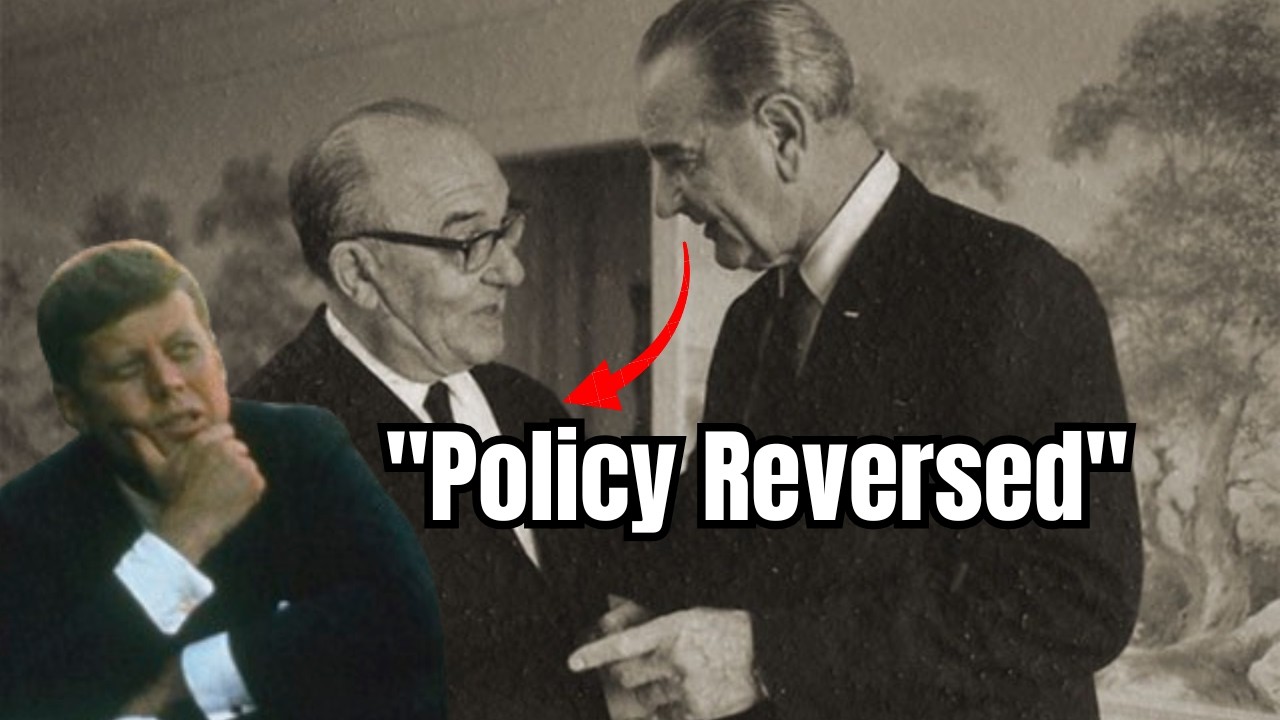
Few countries had more reason to examine that question carefully than Israel.
During Kennedy’s presidency, Washington had maintained a strong commitment to Israel’s security while simultaneously pressing its leaders on several sensitive issues. The most consequential concerned Israel’s nuclear research facility at Dimona, where American officials feared that a civilian nuclear program might conceal the development of nuclear weapons.
Kennedy had demanded credible assurances about the facility’s purpose. He had sought regular American visits and warned that unresolved concerns could damage the relationship between the two countries.
His administration had also pursued efforts to address the Palestinian refugee question, an issue that remained deeply contentious more than a decade after the 1948 Arab–Israeli war.
Israel valued American security assistance but resisted demands it considered intrusive or potentially threatening to its national interests.
Then Kennedy was killed.
On November 22, 1963, Johnson became the thirty-sixth president of the United States. His arrival in the White House brought a different political personality, a different network of relationships, and a different set of instincts about Israel.
Israeli ambassador Avraham Harman had strong reasons to seek reassurance from the new administration.
The relationship between Washington and Jerusalem was too important to leave uncertain.
What Johnson said to Israeli representatives during the transition, and how his administration subsequently approached Israel, would become part of a larger transformation in American Middle East policy.
But the historical story is more complicated than a single secret conversation or a sudden reversal of every Kennedy-era policy.
The shift developed through personal relationships, Cold War calculations, nuclear diplomacy, regional military crises, and decisions made over several years.
Understanding that evolution requires examining the world Kennedy left behind.
When Israel declared independence in May 1948, President Harry Truman recognized the new state almost immediately. The decision established an important diplomatic relationship, but it did not create the extensive military partnership that would emerge decades later.
During the 1950s, American policy attempted to balance support for Israel’s existence with broader strategic interests in the Arab world.
Washington was concerned about access to oil, the security of international waterways, the stability of friendly governments, and the expansion of Soviet influence.
American leaders also feared that appearing too closely aligned with Israel could undermine relations with Arab states.
The result was a cautious and sometimes contradictory policy.
The United States recognized Israel and supported its security in principle, but it was not yet the country’s principal supplier of advanced weapons.
France played an especially important role in Israel’s military development during the 1950s.
French assistance included aircraft, weapons, and cooperation connected to Israel’s emerging nuclear infrastructure.
The Dimona nuclear facility became one of the most sensitive elements of that relationship.
Located in the Negev Desert, the complex was publicly presented as part of Israel’s civilian nuclear research program.
American intelligence officials, however, questioned whether the installation might eventually support the production of nuclear weapons.
The issue carried extraordinary implications.
Israel regarded its security environment as dangerous and uncertain. Its leaders remembered the 1948 war and feared the possibility of another conflict involving neighboring Arab states.
Some Israeli policymakers believed that a nuclear capability could provide an ultimate deterrent against threats to the country’s survival.
American officials viewed the matter differently.
A nuclear-armed Israel could encourage regional proliferation, intensify military competition, and complicate Washington’s relationships with Arab governments.
The Soviet Union might exploit those tensions to expand its influence.
Kennedy was particularly concerned about the spread of nuclear weapons.
His administration sought to strengthen international safeguards and discourage additional countries from acquiring independent nuclear arsenals.
Those priorities shaped his approach to Dimona.
In 1963, Kennedy intensified pressure on Israeli leaders to permit credible American examinations of the facility.
His correspondence with Prime Minister David Ben-Gurion and later Prime Minister Levi Eshkol demonstrated that the issue was not merely a technical disagreement.
Kennedy considered it important to the future of the bilateral relationship.
In a letter to Ben-Gurion dated May 18, 1963, Kennedy emphasized the need for reliable information about Dimona and proposed regular visits by qualified American scientists.
The president wanted access sufficient to evaluate whether the installation was being used for peaceful purposes.
He was dissatisfied with arrangements that did not provide the level of confidence Washington required.
Ben-Gurion resisted aspects of the proposed inspection framework.
Israeli leaders argued that the facility was intended for peaceful research and sought to limit outside scrutiny.
The disagreement created an uncomfortable diplomatic situation.
Washington was supporting Israel’s security while questioning one of the country’s most sensitive strategic projects.
Kennedy was unwilling to treat those concerns as entirely separate.
In his correspondence, he warned that American commitment and support could be seriously jeopardized if Washington could not obtain reliable information about Israel’s nuclear intentions.
The language was unusually firm.
It reflected Kennedy’s belief that the nuclear issue could not simply be ignored for the sake of maintaining friendly relations.
In June 1963, Ben-Gurion resigned as prime minister.
The reasons for his resignation remain the subject of historical discussion, involving domestic political disputes, personal circumstances, and longstanding controversies within Israeli politics.
The pressure over Dimona formed part of the broader political environment, but the available evidence does not establish that Kennedy’s demands alone caused his departure.
Levi Eshkol succeeded him.
Kennedy continued pressing for inspections.
In July 1963, he wrote to Eshkol about the importance of regular visits to Dimona, indicating that the United States expected meaningful access.
The administration wanted inspections that would provide more than symbolic reassurance.
Kennedy understood that a visit conducted under tightly controlled conditions might fail to reveal the facility’s actual capabilities.
The difficulty was that Israel regarded nuclear ambiguity as a strategic advantage.
Israeli officials wanted to preserve their freedom of action without provoking an open confrontation with Washington.
The resulting diplomacy became a contest over access, assurances, and the meaning of peaceful nuclear development.
Kennedy’s pressure was significant, but it did not mean he was hostile to Israel.
His administration had also taken steps to strengthen Israeli security.
In 1962, the United States agreed to sell Hawk antiaircraft missiles to Israel, an important development in American military assistance.
The decision reflected growing recognition of Israel’s defense requirements.
Kennedy believed that supporting Israel’s security and preventing nuclear proliferation were compatible objectives.
He did not regard the country as an enemy.
Instead, he sought to reassure Israel about conventional defense while discouraging a nuclear weapons program that could destabilize the region.
That distinction is essential.
The Kennedy administration’s approach combined strategic support with diplomatic pressure.
It was neither unconditional endorsement nor outright confrontation.
The same balancing strategy influenced American policy toward Palestinian refugees.
The displacement of hundreds of thousands of Palestinians during the 1948 war had created a humanitarian and political crisis that remained unresolved.
United Nations General Assembly Resolution 194, adopted in December 1948, addressed the refugee question, including return and compensation under specified conditions.
Successive American administrations supported efforts to reach a settlement.
Kennedy’s government continued that diplomatic work.
Joseph E. Johnson, associated with the Carnegie Endowment for International Peace, developed proposals under the auspices of the Palestine Conciliation Commission.
The initiative sought a practical framework through which refugees could express preferences concerning return, resettlement, and compensation.
The proposals encountered serious opposition.
Israeli leaders feared that a large-scale return of Palestinian refugees could fundamentally alter the country’s demographic and political character.
Arab governments and Palestinian representatives had their own objections to arrangements that appeared to limit refugee rights or impose conditions inconsistent with their positions.
The negotiations demonstrated how difficult it was to reconcile competing national claims.
Kennedy believed progress could improve regional stability and reduce opportunities for Soviet influence.
But his administration struggled to secure agreement.
By late 1963, neither the nuclear question nor the refugee issue had been resolved.
Israel remained concerned about American pressure.
Washington remained concerned about proliferation and regional instability.
That was the diplomatic environment Johnson inherited when Kennedy was assassinated.
The transition was sudden and traumatic.
At approximately 12:30 p.m. Central Standard Time on November 22, 1963, Kennedy was shot while riding in a motorcade through Dallas.
He was pronounced dead at Parkland Memorial Hospital at 1:00 p.m.
Johnson, who had been traveling with the presidential party, assumed the presidency under extraordinary circumstances.
At 2:38 p.m., he took the oath of office aboard Air Force One.
Jacqueline Kennedy stood nearby, still wearing the clothing stained during the assassination.
The photograph of that ceremony became one of the defining images of American political history.
For Johnson, the moment brought responsibilities he had not expected to assume that day.
He needed to reassure the American public, preserve government continuity, manage the investigation into Kennedy’s death, and establish his authority over an administration largely assembled by his predecessor.
Foreign governments also needed reassurance.
Allies wanted to know whether American commitments remained intact.
Adversaries were evaluating the new president’s resolve.
Diplomatic missions in Washington sought guidance about how the administration would approach existing agreements and disputes.
Israel was among the countries closely watching the transition.
Its ambassador, Avraham Harman, had represented Israel in Washington since 1959.
He was familiar with the difficulties surrounding Dimona and the broader relationship.
He understood that Johnson’s personal attitudes might differ from Kennedy’s.
But personal sympathy did not automatically translate into policy.
Israel needed to determine whether the new administration would continue pressing for nuclear inspections, pursue the refugee initiative, and expand military cooperation.
Johnson’s political background offered reasons for optimism.
Unlike Kennedy, whose foreign policy team included numerous academically oriented advisers, Johnson had built his career through personal relationships, congressional negotiations, and the management of political coalitions.
He was known for direct persuasion and an intensely personal approach to politics.
His relationships with Jewish American leaders had developed over many years.
As a congressman and senator, Johnson had expressed sympathy for Jewish communities and support for Israel.
Accounts of his wartime activities describe assistance offered to people seeking refuge from Nazi persecution, although some dramatic stories about forged documents and clandestine rescue operations are difficult to establish in all their details.
The broader record supports the conclusion that Johnson possessed longstanding personal sympathy for Jewish causes.
That sympathy became part of his political identity.
He regarded Israel as a small nation facing serious security threats.
He also understood the importance of Jewish American political participation and the influence of pro-Israel advocates within Democratic politics.
These considerations did not make his Middle East policy automatic or unchanging.
But they shaped the environment in which he made decisions.
Johnson was a politician who placed great value on loyalty and personal relationships.
He often approached international leaders through the same instincts he had developed in domestic politics.
He wanted to establish trust.
He valued expressions of friendship.
He could be extraordinarily warm toward people he considered allies.
Those characteristics made him different from Kennedy in style, even when their governments pursued similar strategic objectives.
For Israeli officials, the difference mattered.
Johnson’s initial communications and subsequent dealings with Israeli representatives conveyed a strong personal commitment to Israel’s security.
The transcript underlying this account describes a November 27, 1963, meeting with Ambassador Harman and presents it as a decisive turning point.
That precise characterization requires caution.
A single meeting, even if documented in diplomatic records, cannot by itself establish that Johnson abandoned Kennedy’s nuclear policy or transformed the entire bilateral relationship within five days.
The larger historical record shows that the change in American policy unfolded over time.
Nevertheless, Johnson’s early expressions of friendship were consistent with the warmer personal relationship that developed between his administration and Israeli leaders.
The new president did not enter office seeking a public confrontation with Israel.
He faced enormous immediate challenges at home and abroad.
His first priority was preserving continuity and stability.
He also wanted to build support for major domestic legislation, including civil rights measures and programs that would later become central to his Great Society agenda.
A prolonged diplomatic dispute with Israel was not necessarily at the top of his immediate agenda.
But the absence of public confrontation should not be confused with the disappearance of American concern about Dimona.
The nuclear issue remained active during Johnson’s presidency.
American officials continued seeking information about Israel’s nuclear capabilities.
Visits to Dimona took place, and Washington continued evaluating whether Israeli assurances were credible.
The effectiveness of those visits became a matter of serious historical debate.
Researchers examining declassified records have argued that Israeli authorities controlled what American visitors could see and limited their ability to determine the full extent of the nuclear program.
The inspections therefore provided incomplete reassurance.
Yet it would be inaccurate to say that Johnson simply ended all American attention to the issue immediately after Kennedy’s death.
The distinction is important because it separates a broad policy trend from an overly dramatic narrative.
Kennedy had pursued the nuclear issue with unusual personal intensity.
Johnson did not maintain the same level of direct presidential pressure.
But the bureaucratic and intelligence concerns continued.
The change involved the degree of presidential emphasis, the methods of diplomacy, and the administration’s willingness to escalate disagreement.
It was not an instantaneous disappearance of the subject.
During the mid-1960s, American officials increasingly suspected that Israel was moving toward a nuclear weapons capability.
Intelligence assessments became more serious as information accumulated.
The Johnson administration faced a difficult strategic choice.
Pressuring Israel aggressively could damage a relationship that Washington increasingly considered valuable.
Avoiding confrontation could allow nuclear proliferation to proceed despite American objections.
Johnson’s approach reflected that tension.
He did not publicly accuse Israel of developing nuclear weapons.
Nor did he establish the kind of intrusive verification system that would have been necessary to resolve American doubts completely.
The resulting ambiguity became a lasting feature of the relationship.
Israel maintained a policy of nuclear opacity, declining to confirm or deny possession of nuclear weapons.
The United States gradually adapted to that ambiguity.
But the full development of this arrangement extended beyond Johnson’s presidency.
It cannot be reduced to a single conversation with an ambassador in November 1963.
Military cooperation followed a similarly gradual trajectory.
Kennedy had already approved the sale of Hawk missiles, demonstrating that American arms transfers to Israel did not begin with Johnson.
During Johnson’s presidency, however, the relationship expanded significantly.
The United States agreed to supply additional advanced military equipment, including tanks and aircraft.
The decision to sell A-4 Skyhawk aircraft in 1966 represented an important step toward a more extensive American role in Israel’s military modernization.
These transfers reflected several developments.
Israel faced conventional military threats from neighboring states.
France, previously a major supplier, was becoming a less dependable long-term source of weapons.
The Soviet Union supplied military equipment to several Arab governments.
American policymakers increasingly viewed Israel as a strategically important regional partner.
The Cold War context was central.
Egyptian President Gamal Abdel Nasser had cultivated close military and political ties with Moscow while pursuing Arab nationalism and regional influence.
Syria also developed significant connections with the Soviet bloc.
American officials worried that Soviet weapons and advisers could alter the regional balance.
Supporting Israel’s conventional military capabilities offered one means of limiting that influence.
But Washington also wanted to avoid alienating Arab governments unnecessarily.
Johnson’s administration therefore continued balancing competing interests.
It was more sympathetic to Israel in important respects, but it did not abandon all diplomatic relationships with Arab states.
The region remained strategically complicated.
Oil supplies, shipping routes, political instability, and the Arab–Israeli conflict all influenced American calculations.
Johnson’s personal friendship with Israel operated within that larger environment.
Domestic politics also mattered.
The president depended on a broad Democratic coalition.
Jewish American leaders participated in that coalition, as did many groups with different views about Middle East policy.
Johnson understood the political importance of maintaining relationships with influential supporters.
But attributing his policy primarily to financial or electoral pressure would oversimplify the evidence.
His support for Israel had roots extending back decades.
Cold War strategy also provided reasons for strengthening the relationship.
And Israel’s security concerns were real.
The resulting policy reflected overlapping moral, political, and strategic considerations.
It is difficult to assign a precise weight to each factor.
What can be established is that Johnson’s administration gradually deepened military cooperation with Israel while continuing to manage diplomatic disagreements.
The most dramatic test came in June 1967.
Tensions between Israel and neighboring Arab states had intensified over several months.
Border incidents, military deployments, threats, and regional political rivalries contributed to an increasingly dangerous situation.
Egypt moved troops into the Sinai Peninsula and demanded the withdrawal of United Nations emergency forces.
Egypt also closed the Straits of Tiran to Israeli shipping, a move Israel regarded as a serious threat.
The crisis placed Johnson in a difficult position.
Israel feared that it might face a coordinated attack by neighboring Arab armies.
Arab governments accused Israel of aggressive intentions.
The United States wanted to prevent war while preserving its regional relationships.
Washington attempted diplomatic efforts to ease the crisis.
Johnson cautioned against unilateral military action and sought alternatives to confrontation.
Those efforts failed.
On June 5, 1967, Israel launched airstrikes against Egypt, beginning the Six-Day War.
The conflict expanded to include Jordan and Syria.
Within six days, Israel achieved a decisive military victory.
Its forces captured the Sinai Peninsula and Gaza Strip from Egypt, the West Bank and East Jerusalem from Jordan, and the Golan Heights from Syria.
The territorial changes transformed the Middle East.
They created new security realities and intensified disputes that remain central to regional politics.
Johnson’s response to the war reflected both sympathy for Israel and concern about the consequences of the conflict.
His administration did not simply give Israel unlimited freedom to act.
American officials had attempted to discourage the outbreak of war.
During the conflict, Washington also confronted the danger of Soviet involvement.
The possibility that the superpowers might become directly entangled in the fighting created serious concern.
Johnson sought to prevent escalation while supporting diplomatic arrangements that addressed Israel’s security.
After the war, the administration opposed a return to the unstable conditions that had preceded the fighting without broader political guarantees.
But it also did not endorse permanent Israeli control over every territory captured.
American policy emphasized the need for a negotiated settlement.
That approach became central to the development of United Nations Security Council Resolution 242.
Adopted unanimously on November 22, 1967, the resolution established principles that would influence Arab–Israeli diplomacy for decades.
It called for withdrawal of Israeli armed forces from territories occupied in the recent conflict and for the termination of belligerency and respect for the sovereignty, territorial integrity, and political independence of states in the region.
The wording became the subject of extensive diplomatic interpretation.
Different governments disagreed about how withdrawal should be implemented and how the resolution related to borders, security arrangements, and recognition.
The United States played an important role in the negotiations.
Johnson’s administration sought language that linked territorial questions to the establishment of a durable peace.
The resolution did not settle the conflict.
But it became a foundational diplomatic reference.
Its adoption demonstrated that American support for Israel operated alongside broader efforts to establish a regional political framework.
Johnson did not simply replace diplomacy with unconditional military backing.
His government continued attempting to shape the terms of peace.
Nevertheless, the consequences of the 1967 war accelerated the transformation of the U.S.–Israel relationship.
Israel emerged as a major regional military power.
Its victory changed American assessments of its strategic value.
The limitations of Soviet-supported Arab forces became more visible.
Washington increasingly recognized Israel’s military capabilities as an important factor in the regional balance.
The relationship deepened further in the years that followed.
American arms transfers expanded, and Israel gradually became a major recipient of U.S. military assistance.
That development was not completed during Johnson’s presidency.
The most extensive military aid arrangements emerged under later administrations.
But Johnson’s decisions helped establish the direction of the partnership.
His presidency therefore occupies an important position between the cautious relationship of the 1950s and the much closer strategic alliance that developed in subsequent decades.
The shift was substantial.
Yet it was not absolute.
Johnson’s administration continued to disagree with Israel on certain issues.
American officials remained concerned about nuclear proliferation.
Washington continued pursuing diplomatic settlements after the 1967 war.
And the president had to consider relations with Arab governments and the Soviet Union.
The historical record therefore supports a more nuanced interpretation than the idea of an immediate and complete policy reversal.
Kennedy had combined security cooperation with unusually forceful pressure over Dimona.
Johnson emphasized personal friendship and expanded military cooperation, while the intensity of presidential pressure over the nuclear issue diminished.
The refugee question also lost some of the attention it had received during Kennedy’s earlier diplomatic efforts.
But those developments reflected a changing strategic environment as well as the personalities of the two presidents.
The Palestinian refugee problem remained unresolved.
The failure to reach a settlement had consequences extending far beyond either administration.
Millions of Palestinians and their descendants continued to live with the political and humanitarian effects of displacement and statelessness.
Israeli leaders continued to regard large-scale refugee return as incompatible with their understanding of national self-determination and security.
Arab governments and Palestinian representatives continued pressing claims involving return, compensation, and political rights.
American administrations struggled to reconcile these positions.
Johnson’s government did not resolve the issue.
But neither had Kennedy’s.
The refugee initiative had encountered formidable obstacles before the assassination.
Its failure cannot be attributed solely to Johnson’s change in emphasis.
The same caution applies to the nuclear question.
Kennedy’s pressure might have produced more extensive inspections if he had lived.
It is also possible that Israeli leaders would have continued resisting intrusive access.
The historical record cannot establish which outcome would have occurred.
Claims that Kennedy would certainly have prevented Israel from developing a nuclear weapons capability go beyond what the evidence can demonstrate.
Likewise, claims that Johnson deliberately authorized such a program through a private understanding require stronger documentation than the mere absence of public confrontation.
The distinction between evidence and speculation is essential.
Historical analysis can identify changes in diplomatic tone, arms transfers, inspection practices, and strategic priorities.
It can examine correspondence and memoranda.
It can compare decisions made by different administrations.
But it cannot reliably reconstruct an alternative history in which Kennedy survived and pursued every unresolved dispute to a different conclusion.
The assassination changed the leadership of the United States.
It did not provide a controlled experiment showing how every foreign policy question would otherwise have developed.
Johnson inherited the same international system Kennedy had confronted.
The Soviet Union remained a superpower.
Arab nationalism continued reshaping the Middle East.
Israel remained concerned about its security.
The Palestinian refugee question remained unresolved.
And nuclear proliferation remained a serious American concern.
What changed was the president responsible for balancing those interests.
Johnson approached relationships differently.
He placed considerable importance on personal loyalty and reassurance.
He was often more comfortable expressing emotional support than Kennedy’s more analytical diplomatic style suggested.
Israeli leaders responded positively to those characteristics.
They recognized that Johnson possessed longstanding sympathy for Israel.
But the relationship also evolved because of events neither president fully controlled.
The Six-Day War fundamentally changed the regional military balance.
French arms policy became less favorable to Israel.
Soviet support for Arab states continued influencing American calculations.
And the political significance of Israel within American foreign policy grew.
The combined effect was a gradual strategic realignment.
Johnson’s personal convictions helped shape it, but they did not act alone.
The importance of Avraham Harman’s role lies within this broader history.
As Israel’s ambassador, Harman was responsible for interpreting the new administration’s intentions and communicating them to his government.
His assessments helped Israeli leaders understand how Johnson differed from Kennedy.
Diplomatic reassurance mattered because it influenced expectations.
A government that believes an ally is supportive may approach negotiations differently from one expecting sustained pressure.
But expectations are not the same as formal commitments.
A warm conversation does not automatically constitute a binding agreement.
Nor does silence on a particular subject prove that an entire policy has been abandoned.
To establish such conclusions, historians must examine subsequent decisions and official records.
Those records show that Johnson’s administration became increasingly supportive of Israel’s conventional military strength.
They also show continuing American concern about the nuclear question, even as Washington struggled to obtain decisive verification.
The relationship became closer without becoming entirely free of disagreement.
That complexity is part of what makes the transition historically significant.
Johnson did not merely inherit Kennedy’s Middle East policy unchanged.
He also did not create the modern U.S.–Israel partnership through a single Oval Office conversation.
Instead, he accelerated and reshaped a relationship already moving toward deeper security cooperation.
His administration made decisions that later presidents would build upon.
Those decisions helped establish patterns of military assistance and diplomatic consultation that became increasingly important.
At the same time, unresolved disputes over nuclear capabilities, Palestinian rights, occupied territories, and regional security continued.
The partnership developed alongside those problems rather than replacing them.
The contrast between Kennedy and Johnson therefore reveals two different approaches to managing an ally whose policies sometimes conflicted with American objectives.
Kennedy placed unusual personal emphasis on preventing nuclear proliferation.
He was willing to use diplomatic pressure even when doing so created friction with Israel.
Johnson placed greater emphasis on maintaining a supportive relationship and strengthening Israel’s conventional defense capabilities.
Neither approach eliminated the underlying strategic dilemmas.
Kennedy’s pressure did not resolve the Dimona question before his death.
Johnson’s support did not produce a comprehensive Arab–Israeli peace settlement.
Both administrations operated within constraints imposed by regional politics and Cold War competition.
The larger transformation continued long after Johnson left office in January 1969.
During the administrations of Richard Nixon, Gerald Ford, Jimmy Carter, Ronald Reagan, and their successors, American military and diplomatic cooperation with Israel developed further.
The 1973 Arab–Israeli War became another major turning point.
American military resupply during that conflict demonstrated the growing importance of Israel within U.S. strategic planning.
The subsequent peace process between Egypt and Israel produced the Camp David Accords of 1978 and the Egyptian–Israeli peace treaty of 1979.
Those developments reshaped regional diplomacy.
They also demonstrated that American support for Israel could coexist with negotiations involving Arab governments.
The modern relationship emerged from decades of decisions rather than one administration alone.
Johnson’s presidency was nevertheless crucial.
It strengthened the military relationship during a period of major regional change.
It contributed to Israel’s growing role in American Cold War strategy.
And it established a warmer political atmosphere than the nuclear disagreements of Kennedy’s final months had sometimes permitted.
The significance of Johnson’s early assurances to Israeli representatives is therefore best understood as part of a developing relationship.
His words reflected personal convictions that were already well established.
His policies gradually translated those convictions into closer cooperation.
The 1967 war accelerated the process.
And later administrations institutionalized many aspects of the partnership.
The story also illustrates the difficulty of interpreting private diplomacy.
Official memoranda may preserve what participants said, but they do not always reveal every intention behind those statements.
An ambassador may report a conversation optimistically because reassurance serves his government’s interests.
A president may express friendship without intending to surrender leverage over every disputed issue.
A government may avoid public confrontation while continuing private negotiations.
Historians must distinguish among those possibilities.
The most dramatic interpretation is not always the most accurate.
A single conversation may symbolize a policy change without being its sole cause.
That distinction matters particularly when discussing events following a presidential assassination.
Kennedy’s death created a moment of profound uncertainty.
It also encouraged later generations to search for hidden turning points and dramatic explanations.
The contrast between his pressure over Dimona and Johnson’s warmer relationship with Israel can appear especially striking when placed immediately after November 22, 1963.
But chronology alone does not prove causation.
The fact that Johnson became president after Kennedy’s death does not establish that every subsequent change in Middle East policy resulted directly from the assassination.
Nor does the existence of policy differences establish any connection between Israel and Kennedy’s murder.
No such conclusion follows from the diplomatic record described here.
The historically supported question is how the new administration approached issues inherited from Kennedy.
On that question, the evidence reveals meaningful differences.
Kennedy had made nuclear inspections a personal priority.
Johnson did not sustain the same level of presidential confrontation over Dimona.
Kennedy had supported efforts to advance a Palestinian refugee settlement.
Johnson’s administration placed greater emphasis on other regional concerns as the political environment changed.
Kennedy had begun strengthening Israel’s conventional defenses.
Johnson expanded that cooperation substantially.
These developments form a coherent historical pattern.
But they remain part of a longer process shaped by events, institutions, and competing strategic interests.
Johnson’s personal sympathy for Israel was genuine.
His commitment to American national interests was also genuine.
Those commitments could reinforce each other, but they could also create tensions.
Supporting Israel’s security might complicate relations with Arab governments.
Preventing nuclear proliferation might require confronting a friendly state.
Seeking peace after the 1967 war might demand compromises neither side was prepared to make.
The president had to navigate those conflicts.
His decisions reflected political judgment rather than a single uncomplicated principle.
The same was true of Kennedy.
He supported Israel’s existence and defense while pressing for nuclear transparency.
He sought improved relations with Arab states while maintaining American commitments to Israel.
He wanted to prevent nuclear proliferation without triggering a diplomatic rupture.
Neither president possessed a simple solution.
Their contrasting styles influenced how they pursued these objectives.
The broader historical lesson concerns the power and limits of personal diplomacy.
Johnson’s warmth mattered.
His relationships mattered.
His willingness to reassure Israeli officials mattered.
But policy outcomes also depended on military events, congressional decisions, intelligence assessments, regional politics, and international negotiations.
The presidency can redirect foreign policy.
It cannot completely control the circumstances in which that policy operates.
The events between November 1963 and January 1969 demonstrate that reality.
Johnson entered office after a national tragedy.
He inherited unresolved disagreements with Israel.
He gradually strengthened the bilateral relationship.
He confronted a major regional war.
And he left office with the United States more deeply involved in Israel’s security than it had been at the beginning of the decade.
That transformation was historically important.
Its consequences continued influencing American foreign policy for generations.
Yet the unresolved issues also endured.
The nuclear question remained sensitive.
The Palestinian refugee problem remained unsettled.
The territories captured in 1967 became central to subsequent conflicts and negotiations.
American policymakers continued debating how to balance support for Israel with broader regional stability.
Those challenges were not created by Johnson alone.
Nor could they have been solved through a single diplomatic exchange.
They reflected conflicts with roots extending far beyond the Kennedy and Johnson administrations.
The question of what Johnson told Israel’s ambassador after Kennedy’s assassination therefore leads to a larger understanding of American foreign policy.
The new president wanted Israel to know that the United States remained committed to its security.
His personal sympathy encouraged a warmer relationship.
His administration subsequently expanded military cooperation and approached some disputes differently from Kennedy.
But the transition was gradual, contested, and shaped by events beyond Washington’s control.
The most enduring significance lies not in a hidden sentence that supposedly changed everything overnight.
It lies in the cumulative decisions through which a longstanding diplomatic relationship became a central American strategic partnership.
Five days after Kennedy’s death, Israel was seeking reassurance about the future.
By the end of Johnson’s presidency, the relationship had changed substantially.
The distance between those two moments was filled with diplomatic negotiations, intelligence disputes, military sales, regional crises, and political calculations.
Johnson’s words helped establish a tone.
His administration’s decisions gave that tone practical meaning.
And the events of the 1960s ensured that the United States and Israel would enter a new phase of their relationship.
The transformation did not begin with a single promise, and it did not end with Johnson’s departure from office.
But his presidency marked a decisive period in the emergence of the partnership that would become one of the most consequential relationships in American foreign policy.


