In March 1964, just four months after President John F. Kennedy was assassinated in Dallas, Jacqueline Kennedy sat down inside her Georgetown home in Washington, D.C., and began speaking into a tape recorder.
She was thirty-four years old.
She was raising two young children without their father.
And she was still living with the devastating consequences of an assassination that had shocked the entire world.
For millions of Americans, Jacqueline Kennedy had become the embodiment of dignity under unimaginable pressure.
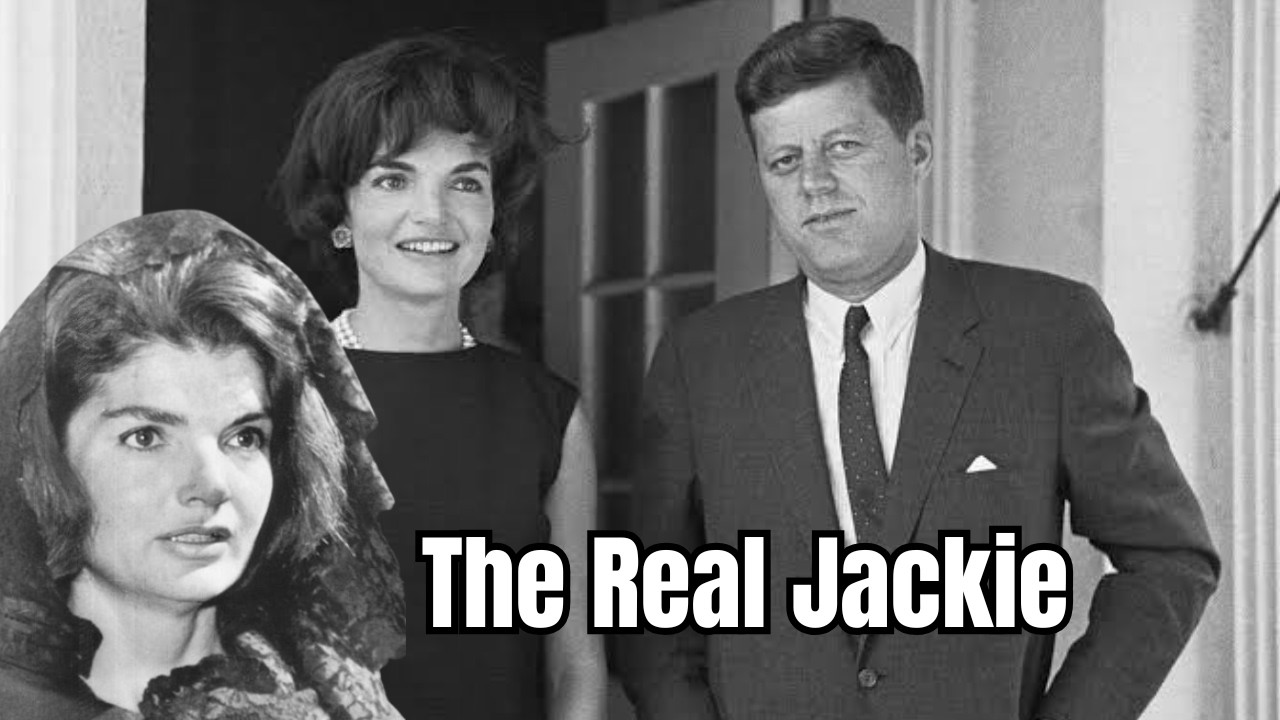
They remembered the young widow standing beside her husband’s coffin.
They remembered her bloodstained pink suit.
They remembered her walking behind the funeral procession with extraordinary composure.
They remembered the image of her children saying goodbye to their father.
But behind that carefully maintained public image was a woman with strong opinions, private frustrations, unexpected prejudices, and complicated feelings about the marriage that had placed her at the center of American history.
In the spring of 1964, she agreed to reveal some of those feelings to historian Arthur M. Schlesinger Jr.
The conversations were recorded over seven sessions, totaling more than eight hours.
They were intended for an oral history project preserving firsthand recollections of the Kennedy presidency.
But Jacqueline Kennedy imposed an extraordinary condition.
The recordings would remain sealed.
She did not want the public listening to her private reflections while she was alive.
For decades, the tapes remained largely inaccessible.
Then, in September 2011, forty-seven years after the conversations took place, the recordings were released with the cooperation of her daughter, Caroline Kennedy.
The publication of Jacqueline Kennedy: Historic Conversations on Life with John F. Kennedy introduced the world to a side of the former first lady that few people had ever encountered.
Her voice was unmistakable.
But her words were startling.
She described her marriage in terms that seemed almost unimaginable for a woman celebrated as an international cultural icon.
She expressed traditional views about the role of wives.
She made cutting observations about Lyndon B. Johnson, Lady Bird Johnson, Charles de Gaulle, and Indira Gandhi.
She recalled intimate conversations with her husband about politics, history, and the possibility of nuclear war.
And she revealed a depth of emotional attachment to Kennedy that contrasted sharply with the cool, controlled image she had maintained in public.
The tapes did not simply expose a hidden personality.
They revealed how Jacqueline Kennedy understood herself, her husband, and the extraordinary world they had inhabited.
To appreciate why the recordings caused such a reaction, it is necessary to understand the public image she had spent years constructing.
Jacqueline Lee Bouvier was born on July 28, 1929, in Southampton, New York.
She grew up in a socially prominent family and received an education shaped by literature, languages, art, and European culture.
Her interests distinguished her from many of the political figures she would later encounter.
She loved books.
She appreciated architecture and historical preservation.
She spoke French and developed a sophisticated understanding of European cultural traditions.
Before marrying Kennedy, she worked as a photographer and journalist for the Washington Times-Herald.
Her assignment involved interviewing people and photographing them for a newspaper feature.
The work required curiosity, confidence, and the ability to engage strangers in conversation.
These qualities would later become valuable during her years in the White House.
She met John F. Kennedy in the early 1950s.
He was then an ambitious young politician from Massachusetts.
He had served in the Navy during the Second World War, survived the sinking of PT-109, and entered Congress after the war.
By the time their relationship developed, he was pursuing a career in the United States Senate.
Kennedy was charismatic, wealthy, politically connected, and already accustomed to public attention.
Jacqueline was intelligent, socially sophisticated, and deeply interested in literature and history.
Their backgrounds were different in important ways, but they shared an appreciation for intellectual conversation and public life.
They married on September 12, 1953, in Newport, Rhode Island.
The wedding attracted extensive media coverage.
It united two prominent families and helped establish Jacqueline as a figure of national interest.
But marriage to Kennedy also meant entering a political world with demanding expectations.
The Kennedy family was ambitious, competitive, and accustomed to intense public scrutiny.
John Kennedy’s career required constant travel, campaigning, and political negotiation.
Jacqueline was expected to support those ambitions while maintaining the social responsibilities associated with a politician’s wife.
Their marriage unfolded during a period when American society generally placed strong expectations upon married women.
The ideal wife was often portrayed as someone who supported her husband’s career, managed the household, raised children, and provided emotional stability.
Women certainly pursued professional and political careers during the 1950s, but prevailing cultural expectations remained restrictive.
Jacqueline’s own understanding of marriage reflected some of those assumptions.
That became clear when she spoke with Schlesinger in 1964.
She described her relationship with Kennedy as a rather Victorian or Asiatic marriage.
The comparison was striking.
It suggested a domestic arrangement organized around traditional ideas of masculine leadership and feminine accommodation.
She explained that she had not entered the marriage expecting complete independence.
Instead, she understood her role as creating an atmosphere of affection, comfort, and emotional peace for her husband.
Kennedy’s political life was demanding.
He faced constant pressure from advisers, opponents, journalists, and government officials.
Jacqueline believed that home should offer something different.
She wanted to provide a place where he could escape political conflict.
Her description of marriage emphasized adaptation.
She suggested that a young woman often shaped herself around the kind of wife her husband wanted.
For modern audiences, those remarks were surprising.
Jacqueline Kennedy had become an international symbol of elegance, intelligence, and sophistication.
She had traveled abroad, met world leaders, restored the White House, and demonstrated considerable independence in cultural matters.
Yet her private account of marriage seemed to accept a highly traditional division of roles.
When the tapes were released in 2011, even members of her family reacted with surprise.
Caroline Kennedy discussed the recordings publicly and acknowledged that her daughters found some of their grandmother’s views difficult to understand.
The reaction reflected the enormous social changes that had occurred since 1964.
Ideas about marriage, women’s independence, and political participation had evolved dramatically.
What Jacqueline had described as an ordinary marital arrangement now sounded restrictive to younger generations.
But the recordings also reveal the danger of interpreting her comments too simply.
Jacqueline was not an unintelligent woman who lacked independent interests.
Her life demonstrated the opposite.
She possessed strong artistic judgment, intellectual curiosity, and a sophisticated understanding of public presentation.
Her remarks reflected how she chose to describe her role within a particular marriage at a particular historical moment.
They did not necessarily capture every dimension of her private identity.
The distinction matters because Jacqueline’s public achievements were substantial.
During Kennedy’s presidency, she transformed the cultural presentation of the White House.
She believed the presidential residence should reflect American history rather than simply serve as a comfortable home for the current occupants.
She supported the preservation and restoration of historically significant furniture, artwork, and decorative objects.
She worked with advisers and preservation specialists to create rooms that better represented the building’s heritage.
The project required organization, fundraising, diplomacy, and sustained attention to detail.
It also reflected her conviction that the White House belonged to the American people.
In February 1962, she conducted a televised tour of the restored residence.
The broadcast attracted an enormous audience and became one of the defining television events of the Kennedy presidency.
Millions of viewers watched the first lady explain the history and significance of the rooms.
Her presentation was calm, knowledgeable, and carefully prepared.
The broadcast helped establish her as a cultural figure whose influence extended beyond fashion and social ceremony.
Yet the woman who had exercised such influence privately described herself as someone who adapted to her husband’s expectations.
That contradiction became one of the most discussed aspects of the 2011 recordings.
Her comments about women in politics were even more surprising.
During the conversations, Jacqueline expressed the belief that women were not suited to political life.
The remark seemed difficult to reconcile with her own experience.
She had been closely involved in the public presentation of a presidential administration.
She understood political personalities and campaign pressures.
She had witnessed major diplomatic encounters.
She had developed relationships with influential figures around the world.
And her presence had helped shape the international image of the Kennedy presidency.
Nevertheless, she distinguished her own responsibilities from formal political leadership.
Her comments reflected a traditional understanding of gender roles that many later listeners found uncomfortable.
Caroline Kennedy suggested that the tapes should be understood within the historical context in which they were recorded.
Her mother was speaking in 1964, not in the twenty-first century.
She was also recalling a marriage that had ended suddenly and violently.
The emotional circumstances of the interviews may have influenced how she described her relationship with Kennedy.
Grief can intensify idealization.
It can also encourage people to organize memories around the qualities they most want to preserve.
Jacqueline had lost her husband only months earlier.
She was speaking to a historian who had served in his administration and shared her desire to preserve his legacy.
The interviews were therefore candid, but they were not emotionally neutral.
They were shaped by mourning, memory, and loyalty.
That context is essential when examining the recordings.
Jacqueline’s remarks about her marriage were revealing, but they were not a complete account of every private difficulty the couple experienced.
The Kennedy marriage has long attracted historical scrutiny.
Biographers have examined the president’s health problems, his demanding political career, and reports of extramarital relationships.
Those subjects form part of the broader historical discussion.
But the 1964 oral history interviews were not


