On November 22, 1963, Fidel Castro was sitting with a French journalist in Cuba when news arrived that President John F. Kennedy had been shot in Dallas, Texas.
The timing was extraordinary.
Only moments earlier, the Cuban leader had been discussing the possibility of a new relationship between two countries that had spent years confronting one another.
The United States and Cuba were bitter Cold War adversaries. Their relationship had deteriorated through revolution, economic sanctions, military confrontation, covert operations, and the terrifying possibility of nuclear war.
Yet behind the public hostility, an unexpected diplomatic opening had begun to emerge.
Kennedy was cautiously exploring whether Washington could establish a less confrontational relationship with Havana.
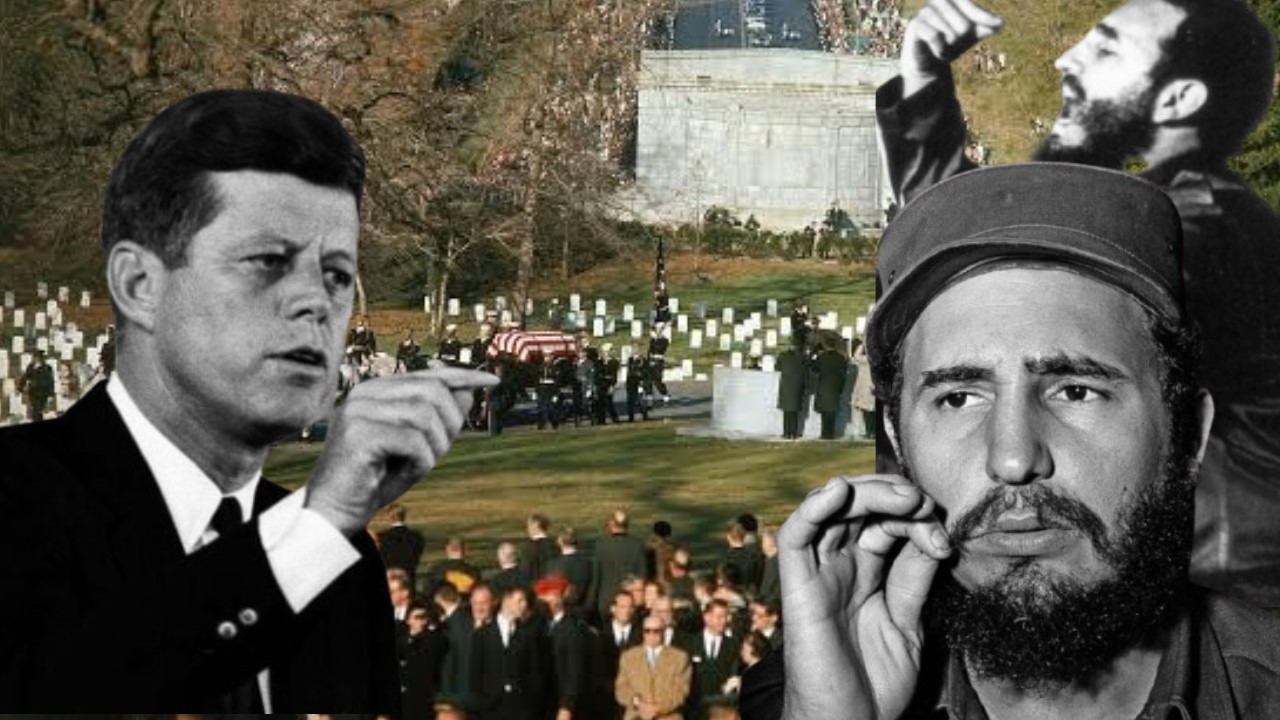
Castro, despite his long history of denouncing American policy, had indicated that he was willing to listen.
The conversation taking place in Cuba that afternoon was therefore more than an ordinary interview.
It was connected to a delicate diplomatic effort that very few people knew existed.
Then the telephone rang.
According to French journalist Jean Daniel, who witnessed the moment, Castro reacted with alarm when he learned that Kennedy had been attacked.
As reports arrived suggesting that the American president had been seriously wounded, Castro began considering the political consequences.
When the news of Kennedy’s death was confirmed, Daniel recalled the Cuban leader repeating a simple expression of dismay.
“This is bad news.”
Castro understood that the assassination could destroy the fragile diplomatic opening that had only recently begun.
He also feared that Cuba might be blamed for the killing.
Within hours, those concerns would become part of the international controversy surrounding the assassination.
The story of Castro’s reaction reveals a little-known dimension of the Kennedy presidency.
It is a story about two enemies who were beginning to explore the possibility of dialogue, even while the machinery of Cold War confrontation continued operating around them.
And it raises one of the most intriguing questions of the period: how different might American-Cuban relations have become if Kennedy had survived?
To understand the significance of that afternoon, it is necessary to return to the events that had brought Washington and Havana into direct confrontation.
Fidel Castro came to power in January 1959 after the Cuban Revolution overthrew the government of Fulgencio Batista.
Initially, the future direction of relations between Cuba and the United States remained uncertain.
But tensions intensified as Castro’s government introduced sweeping economic and political changes.
American-owned properties were nationalized, diplomatic relations deteriorated, and Cuba increasingly aligned itself with the Soviet Union.
For Washington, the emergence of a revolutionary government so close to American territory created an enormous strategic concern.
For Castro, American hostility reinforced the belief that Cuba needed protection against outside intervention.
The conflict escalated dramatically during Kennedy’s presidency.
In April 1961, the United States supported the Bay of Pigs invasion, an unsuccessful attempt by Cuban exiles to overthrow Castro.
The operation ended in defeat and became one of the earliest major foreign policy embarrassments of Kennedy’s administration.
For Castro, the invasion confirmed that Washington was willing to support military action against his government.
For Kennedy, the failure demonstrated the dangers of poorly planned covert intervention.
Rather than producing a change of government, the invasion strengthened Castro’s political position and deepened Cuba’s dependence upon the Soviet Union.
The confrontation became even more dangerous in October 1962.
American intelligence discovered Soviet nuclear missile installations under construction in Cuba.
Kennedy responded by announcing a naval quarantine and demanding the removal of the weapons.
For thirteen days, the world watched as Washington and Moscow confronted the possibility of nuclear conflict.
The Cuban Missile Crisis became one of the most dangerous episodes of the Cold War.
A negotiated settlement eventually ended the immediate confrontation.
Soviet leader Nikita Khrushchev agreed to remove the missiles from Cuba, while Kennedy publicly pledged that the United States would not invade the island.
A separate understanding also involved the eventual removal of American Jupiter missiles from Turkey.
But the settlement did not resolve the fundamental hostility between Cuba and the United States.
Castro was particularly frustrated that the Soviet leadership had negotiated major aspects of the agreement without fully consulting him.
The episode revealed the limitations of Cuba’s relationship with Moscow.
Although Soviet support provided military and economic protection, it also exposed Havana to decisions made according to Soviet strategic interests.
This tension would later become relevant to the possibility of American-Cuban dialogue.
By 1963, Kennedy had experienced the consequences of military confrontation with Cuba.
The Bay of Pigs had failed.
The missile crisis had nearly produced catastrophe.
And the continued isolation of Castro’s government had not removed him from power.
The president’s administration therefore began considering whether diplomatic contact might offer another approach.
That possibility remained politically sensitive.
Castro was still an adversary, and the American government continued pursuing policies intended to weaken his regime.
Any suggestion of reconciliation risked provoking opposition from Cuban exile organizations, intelligence officials, and political figures who believed that negotiations would legitimize a communist government.
For that reason, the emerging diplomatic effort operated through unofficial channels.
One of the individuals who helped create an opening was American television journalist Lisa Howard.
In April 1963, Howard interviewed Castro in Cuba.
She came away believing that the Cuban leader might be genuinely interested in improving relations with Washington.
Howard communicated her impressions to officials within the Kennedy administration.
Her role became significant because she helped connect individuals who otherwise had limited opportunities for direct communication.
Among those involved was William Attwood, a former magazine editor serving as an adviser to the United States mission at the United Nations.
Attwood had experience with international affairs and became an important participant in exploratory contacts with Cuban representatives.
The Cuban side included Ambassador Carlos Lechuga, who represented Havana at the United Nations.
The exchanges were cautious and unofficial.
Neither government had committed itself to a negotiated settlement.
Instead, officials were attempting to determine whether a serious conversation was possible.
That distinction is important.
The diplomatic contacts did not constitute a completed peace agreement or a detailed plan for restoring relations.
They were preliminary discussions intended to establish whether the two governments possessed enough common ground to justify further negotiations.
Nevertheless, their existence represented a notable development.
Only a year after the missile crisis, representatives of the two adversaries were quietly examining alternatives to confrontation.
The discussions gained additional significance through the involvement of Jean Daniel.
Daniel was a French journalist associated with L’Express and The New Republic.
He had arranged to visit Cuba and hoped to interview Castro.
Before traveling to the island, he also obtained an opportunity to meet Kennedy.
The American president knew that Daniel intended to speak with the Cuban leader.
That circumstance made the journalist an unusually useful intermediary.
Daniel could carry impressions and messages between two leaders who were not communicating through normal diplomatic channels.
During their conversation, Kennedy discussed the historical background of American-Cuban relations.
According to Daniel’s subsequent account, Kennedy acknowledged that the United States had contributed to grievances that helped produce the Cuban Revolution.
American policy toward Cuba before 1959 had involved support for the Batista government and significant economic influence over the island.
Kennedy recognized that these circumstances had shaped Cuban attitudes toward the United States.
But he also emphasized a central American concern.
Washington might be able to tolerate an independent Cuba with a communist political system.
A Cuba functioning as a strategic extension of Soviet power, however, presented a different problem.
That distinction reflected the administration’s larger Cold War priorities.
Kennedy’s concern was not limited to Castro’s domestic ideology.
It also involved the military and geopolitical consequences of Soviet influence in the Caribbean.
Daniel understood that Kennedy’s remarks were intended to reach Castro.
The journalist was not a formally appointed ambassador, and he did not possess authority to negotiate on behalf of the United States.
Nevertheless, his conversation with the president provided an opening for an indirect exchange.
When Daniel traveled to Cuba, he carried more than the questions of a reporter.
He carried information about the American president’s thinking.
Castro was interested.
During their conversations in November 1963, the Cuban leader reportedly interpreted Daniel’s visit as a gesture toward establishing communication.
The possibility was remarkable because Castro had spent years presenting Kennedy as the leader of a hostile government determined to destroy the Cuban Revolution.
Yet he was now considering whether that same president might become a partner in reducing tensions.
According to Daniel’s account, Castro spoke favorably about Kennedy’s potential historical significance.
He suggested that Kennedy might become one of the greatest American presidents if he could recognize the possibility of coexistence between different political systems.
The statement did not mean that Castro had abandoned communism or accepted American foreign policy.
Nor did it mean that Cuba was prepared to sever its relationship with the Soviet Union.
Rather, it indicated that Castro saw potential value in exploring a different relationship with Washington.
The distinction between ideological disagreement and permanent hostility was central to the discussion.
Two governments could maintain different political systems while attempting to avoid military confrontation.
For Castro, that possibility offered an alternative to dependence upon Moscow and continued pressure from Washington.
For Kennedy, it suggested a possible way to reduce Soviet strategic influence in the Western Hemisphere.
Both leaders had reasons to remain suspicious.
The United States had supported an invasion of Cuba and continued conducting covert operations.
Cuba remained aligned with the Soviet Union and supported revolutionary movements abroad.
Neither side had reason to assume that the other would suddenly abandon its established policies.
Yet both had experienced the dangers of confrontation.
That shared experience created a narrow opening.
By November 1963, the diplomatic contacts involving Attwood and Cuban representatives were moving forward.
Officials within the Kennedy administration had considered possible arrangements for further communication.
The process remained preliminary, but it was no longer merely an abstract idea.
The possibility of dialogue had entered official discussions.
Then came November 22.
Daniel and Castro were together in the Cuban resort area of Varadero.
They were continuing their conversation about Kennedy and the possibility of improving relations between Cuba and the United States.
The atmosphere, according to Daniel’s recollection, was serious but not hopeless.
Castro appeared engaged by the discussion.
He was considering what Kennedy’s remarks might mean and whether the American president could genuinely pursue a new approach.
Then an urgent telephone call interrupted the meeting.
News had arrived from Dallas.
Kennedy had been shot while traveling in a presidential motorcade.
The first reports were incomplete.
It was not immediately clear whether the president would survive.
Castro reacted by asking about the seriousness of Kennedy’s injuries.
Daniel later described the Cuban leader’s growing concern as additional information arrived.
At one point, while Kennedy’s condition remained uncertain, Castro reportedly observed that if the president survived, the attack might strengthen his political position.
The assassination attempt could produce a wave of public sympathy and reinforce Kennedy’s standing.
But that possibility disappeared when the reports confirmed that the president had died.
The news transformed the conversation.
Castro had been considering the future of American-Cuban relations with an intermediary who had recently spoken to Kennedy.
Now the man who had authorized the opening was dead.
According to Daniel, Castro repeated that the news was bad.
He also observed that everything had changed.
The statement reflected more than personal surprise.
Kennedy’s death created immediate uncertainty about the direction of American foreign policy.
The next president might not share Kennedy’s willingness to explore dialogue.
Officials involved in the contacts could lose authorization.
Political pressures might make reconciliation impossible.
And the assassination itself could intensify American hostility toward Cuba.
Castro quickly recognized another danger.
He feared that the killing might be attributed to his government.
According to Daniel’s account, the Cuban leader warned that American authorities would need to identify the assassin quickly.
Otherwise, he believed, suspicion might fall upon Havana.
This concern became particularly significant after Lee Harvey Oswald emerged as the accused assassin.
Oswald had a documented history of expressing support for Castro’s Cuba.
During the summer of 1963, he distributed literature associated with the Fair Play for Cuba Committee in New Orleans.
The organization publicly opposed American hostility toward the Cuban Revolution.
Oswald also traveled to Mexico City in September 1963.
During that visit, he contacted the Cuban consulate and sought permission to travel to Cuba.
Those activities became important elements of the subsequent investigation.
They also created an obvious political problem for Castro.
An accused assassin with visible pro-Castro associations could generate suspicion that the Cuban government had encouraged or supported the attack.
But political sympathy and operational responsibility are not the same thing.
Oswald’s public support for Cuba did not, by itself, establish that he was acting under instructions from Havana.
Investigators would need evidence connecting his actions to the Cuban government.
The available historical record does not establish that Castro ordered Kennedy’s assassination.
Castro publicly denied Cuban involvement.
He also argued that killing Kennedy would have been contrary to Cuba’s interests.
His reasoning reflected the diplomatic contacts that had been underway.
If Kennedy was willing to explore improved relations, his assassination could eliminate a potential opportunity.
A new administration might adopt a more hostile position.
The resulting political instability could increase the danger of confrontation.
From that perspective, Castro had practical reasons to regard the assassination as a damaging development.
Nevertheless, his own statements must be understood within their political context.
Castro had an obvious interest in denying Cuban responsibility and preventing American retaliation.
His reaction, as reported by Daniel, provides valuable evidence about his immediate behavior and expressed concerns.
It does not establish everything he privately knew or believed.
The significance of Daniel’s account lies in its timing and detail.
He was present when the news arrived.
He had recently met Kennedy.
And he had been discussing the American president’s diplomatic opening with Castro immediately before the assassination.
His observations therefore connect two important historical developments that are often examined separately.
One was the killing of Kennedy in Dallas.
The other was the emerging possibility of American-Cuban dialogue.
The assassination interrupted that diplomatic process at a moment when its future remained uncertain.
The story becomes even more complicated when another event from November 22, 1963, is considered.
While Kennedy’s administration was exploring possible communication with Castro, the CIA remained involved in covert efforts directed against the Cuban leader.
One important operation involved Rolando Cubela, a Cuban official associated with the CIA under the cryptonym AM/LASH.
The operation became the subject of later congressional investigation.
Records examined by the House Select Committee on Assassinations documented CIA contacts with Cubela and discussions involving efforts against Castro.
The timing was extraordinary.
On the same day Kennedy was assassinated, CIA personnel were engaged in activity connected to an operation against the Cuban leader.
The existence of that operation illustrated the contradictions within American policy.
One part of the government was considering whether improved relations might be possible.
Another was involved in covert efforts intended to undermine or remove the Cuban leadership.
Those approaches were not necessarily coordinated.
The distinction matters because it would be misleading to describe the Kennedy administration as having adopted a single, consistent policy of reconciliation.
Its actions reflected competing strategic objectives, bureaucratic activities, and unresolved questions about Cuba.
Kennedy’s exploratory diplomacy existed alongside continuing hostility.
The CIA operation also became a subject of historical controversy because of its proximity to the assassination.
However, the simultaneous existence of covert operations against Castro and Kennedy’s assassination does not establish a causal connection between them.
The documented fact is that the United States was pursuing contradictory approaches toward Cuba during the same period.
That contradiction reveals how difficult the diplomatic opening would have been even if Kennedy had survived.
Any attempt to normalize relations would have required overcoming powerful institutional and political resistance.
The president would have needed to reconcile intelligence activities, military concerns, domestic opposition, and the broader Cold War relationship with Moscow.
Castro would have faced comparable difficulties.
His government depended upon Soviet support, and any movement toward Washington could have created tensions with its principal international ally.
Cuba also had its own revolutionary commitments and political priorities.
A successful agreement would therefore have required more than a favorable conversation between two leaders.
It would have demanded difficult negotiations and meaningful changes in policy.
That process had barely begun when Kennedy was killed.
After the assassination, the American-Cuban contacts did not disappear immediately.
William Attwood and other participants continued exploring the possibility of communication.
The Kennedy administration’s existing discussions had created channels that could potentially remain useful.
But the political environment changed rapidly.
Lyndon B. Johnson became president under extraordinary circumstances.
His immediate responsibilities included reassuring the American public, maintaining government stability, and managing the international consequences of Kennedy’s death.
The possibility of a diplomatic opening with Castro was not among the administration’s most urgent priorities.
Johnson also faced significant domestic political constraints.
Any suggestion of reconciliation with Cuba could have become controversial, particularly while questions surrounding Oswald’s political associations remained prominent.
The new administration did not pursue the exploratory contacts with the same apparent interest.
By the end of 1963, the diplomatic effort had effectively stalled.
The opportunity that Kennedy and Castro had been cautiously examining was no longer moving forward.
That outcome has encouraged historians to ask whether the assassination destroyed a genuine possibility of reconciliation.
The answer remains uncertain.
The evidence demonstrates that Kennedy authorized exploratory contacts and that Castro expressed interest in dialogue.
It also shows that the two governments had not reached a substantive agreement.
No completed settlement existed.
No formal normalization process had begun.
The most difficult questions remained unresolved.
Washington still opposed Cuba’s close military relationship with the Soviet Union.
Havana still rejected American attempts to dictate its political and foreign policy choices.
Economic sanctions, covert operations, and ideological conflict continued shaping the relationship.
Even if Kennedy had survived, those obstacles might have prevented an agreement.
Yet the possibility of a different outcome cannot be dismissed.
Kennedy had already demonstrated a willingness to reconsider policies after major failures.
His experience during the missile crisis reinforced the dangers of uncontrolled escalation.
By 1963, he had also become increasingly interested in reducing certain Cold War tensions.
His American University speech in June emphasized the need to pursue peace despite profound differences between political systems.
The Limited Nuclear Test Ban Treaty, signed later that summer, represented another effort to reduce the dangers of confrontation.
Those developments provide context for his willingness to explore communication with Cuba.
They do not prove that he would have normalized relations.
But they suggest that the diplomatic opening was consistent with a broader interest in managing Cold War risks.
Castro’s position was similarly complicated.
He remained committed to the Cuban Revolution and his government’s socialist orientation.
He had no intention of surrendering political independence in exchange for American approval.
Yet the missile crisis had demonstrated that Soviet protection carried limitations.
The possibility of reducing American hostility could offer strategic advantages without requiring Cuba to abandon its political system.
Daniel’s conversations suggested that Castro was willing to consider such an arrangement.
That willingness was historically significant because public rhetoric often concealed the possibility of private compromise.
During the Cold War, governments frequently presented their adversaries as permanently hostile and incapable of negotiation.
But diplomatic history reveals repeated efforts to communicate across ideological divisions.
The Kennedy-Castro contacts belonged to that tradition.
They were tentative, secretive, and vulnerable to political disruption.
Their very existence challenged the assumption that confrontation was the only possible relationship between Washington and Havana.
Daniel later published his account of the conversations in The New Republic.
His reporting became an important contemporary source for understanding the Cuban leader’s response to the assassination.
The House Select Committee on Assassinations subsequently examined the episode as part of its broader investigation.
The committee considered Daniel’s observations relevant to assessing Castro’s reaction and the surrounding diplomatic circumstances.
Later releases of government records provided additional evidence about the contacts involving Attwood, Lechuga, and officials within the Kennedy administration.
Historians examining these documents have been able to reconstruct aspects of a diplomatic process that remained largely hidden from the public in 1963.
The National Security Archive and the John F. Kennedy Presidential Library have preserved important materials related to the episode.
Scholars studying American-Cuban relations have used those records to examine how the exploratory contacts developed and why they failed to produce a lasting diplomatic breakthrough.
The documents reveal an administration simultaneously confronting Castro and considering whether coexistence might be possible.
They also show that the initiative was still at an early stage when Kennedy died.
That combination of evidence and uncertainty makes the story especially compelling.
It is tempting to imagine a dramatic alternative history in which Kennedy and Castro reached an agreement and transformed the political future of the Caribbean.
But the historical record does not justify treating that outcome as inevitable.
The two governments remained deeply suspicious of one another.
Their strategic interests diverged in important ways.
And the domestic political costs of reconciliation were considerable.
The significance of the November 1963 contacts lies not in proving that peace was imminent, but in demonstrating that both sides were willing to explore alternatives.
Castro’s immediate reaction to Kennedy’s assassination becomes more understandable within that context.
He was not merely responding to the death of an enemy.
He was confronting the sudden disappearance of a leader who had recently signaled interest in communication.
He could not know whether Kennedy’s successor would continue the process.
He could not know how the assassination would affect American public opinion.
And he could not know whether the accused assassin’s pro-Castro associations would lead to accusations against Cuba.
His expressions of concern reflected those uncertainties.
The assassination also created a lasting problem for historians.
Kennedy’s intentions can be reconstructed only from the decisions he made, the instructions he authorized, and the statements recorded by those who spoke with him.
His future choices remain unknowable.
Castro’s later recollections provide additional perspective, but they must be considered alongside contemporary records.
Political leaders often interpret earlier events through the experiences and controversies that follow them.
For that reason, Daniel’s firsthand reporting remains particularly important.
He documented Castro’s reaction close to the time it occurred.
His account captured the Cuban leader’s surprise, concern, and immediate recognition that the political situation had changed.
It also preserved the extraordinary setting.
A French journalist who had recently spoken with the American president was sitting with Cuba’s revolutionary leader when news of the assassination arrived.
The conversation concerned the possibility of improving relations between the two countries.
The telephone interrupted that discussion with news that would dominate world history.
Few diplomatic encounters have been overtaken by events so abruptly.
The contrast between the conversation and the announcement was almost unimaginable.
Moments earlier, the participants had been considering the future.
Suddenly, they were confronting an event that made their assumptions uncertain.
Kennedy’s death did not immediately resolve the Cold War.
It did not end American hostility toward Castro.
And it did not produce a fundamental change in Cuba’s political system.
The relationship between Washington and Havana remained deeply troubled for decades.
Economic sanctions, diplomatic isolation, intelligence activities, and competing regional policies continued shaping the conflict.
The two countries would not announce a major diplomatic normalization initiative until the presidency of Barack Obama in December 2014.
Formal diplomatic relations were restored in 2015, more than half a century after Kennedy’s assassination.
That later development demonstrated how long the consequences of the earlier confrontation endured.
It also gave renewed historical interest to the contacts of 1963.
The idea of American-Cuban dialogue had not begun in the twenty-first century.
It had existed, in a much more tentative form, during the final months of Kennedy’s presidency.
The central difference was that the 1963 effort never reached the stage of formal diplomatic transformation.
It remained a possibility rather than an accomplishment.
For Castro, Kennedy’s assassination represented the sudden loss of that possibility.
For historians, the episode reveals the complicated relationship between public confrontation and private diplomacy.
For the wider world, it offers a reminder that international conflicts are not always as fixed as official rhetoric suggests.
Adversaries may continue exploring communication even while publicly condemning one another.
Governments may pursue contradictory policies through different institutions.
And a diplomatic opportunity can disappear before the public ever learns that it existed.
The most memorable detail remains the reaction Daniel described at the lunch table.
Castro had been discussing a possible opening with the United States.
Then he learned that Kennedy had been shot.
He asked about the president’s condition.
He followed the reports as the situation became clearer.
And when Kennedy’s death was confirmed, he recognized that the political future had changed.
His concern did not erase the hostility that had existed between the two leaders.
It did not transform Castro into an admirer of American policy.
Nor did it establish that a diplomatic breakthrough was certain.
But it revealed that the relationship was more complicated than the familiar image of two irreconcilable enemies.
The public history of Kennedy and Castro is dominated by the Bay of Pigs, the missile crisis, and the danger of nuclear confrontation.
The private history includes intermediaries, cautious messages, and conversations about whether coexistence might be possible.
Both histories are necessary to understand the final months of Kennedy’s presidency.
On November 22, 1963, one of those histories ended in Dallas.
The other was interrupted at a lunch table in Cuba.
Fidel Castro did not celebrate the assassination of John F. Kennedy.
According to the journalist who witnessed his reaction, he expressed alarm, regret, and concern about what would happen next.
He understood that the killing could eliminate a diplomatic opportunity and create new dangers for Cuba.
The secret contacts that had been developing through the autumn of 1963 soon lost momentum.
The possibility of a different relationship between the United States and Cuba remained unresolved.
And the world was left with a historical question that no surviving document can answer with certainty.
What might have happened if Kennedy had lived long enough to continue the conversation?
The significance of that question is not that peace was guaranteed.
It is that, for a brief moment before the assassination, two governments that had approached nuclear confrontation were quietly testing whether another future was possible.
That fragile possibility was what Castro recognized when the telephone rang.
And it was what disappeared into uncertainty when the news from Dallas was confirmed.


