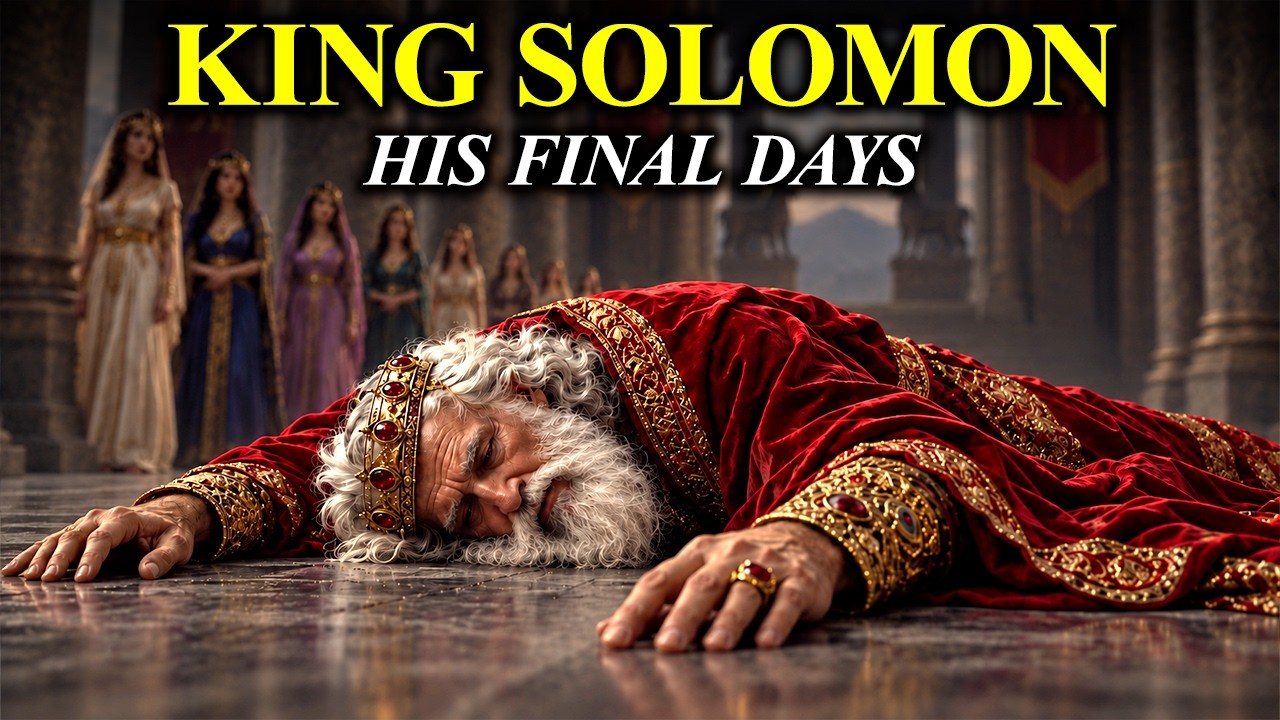
The final years of King Solomon are remembered very differently from the beginning.
The young ruler of biblical tradition asks for wisdom.
He builds the Jerusalem Temple.
Foreign rulers marvel at his wealth.
Trade routes pour luxury goods toward his capital.
His kingdom appears secure.
Then the story changes.
Foreign marriages multiply.
Taxes and royal labor weigh heavily on the population.
Political enemies rise.
And on the heights directly opposite Jerusalem, the biblical narrator says Solomon built sanctuaries for gods his own religious tradition condemned.
It is one of the most dramatic reversals in the Hebrew Bible.
And unlike the newest viral version, it does not require leaked treasury books, underground blueprints or palace whistleblowers to become disturbing.
The biblical accusation is already severe.
According to 1 Kings 11, Solomon’s foreign wives turned his allegiance toward other gods, including Ashtoreth of Sidon, Chemosh of Moab and Molek or Milcom associated with Ammon.
The text then makes a remarkably specific geographical claim.
Solomon built a “high place” for Chemosh and another for Molek on the mountain or hill east of Jerusalem, and similar facilities were provided for his foreign wives to offer incense and sacrifices.
That geographical detail is why the story has fascinated readers for centuries.
Stand in ancient Jerusalem and look east across the Kidron Valley.
The ridge rising opposite the city is the Mount of Olives.
Later translations and traditions identify the biblical location with that ridge or its southern extension.
In other words, the biblical authors were not describing hidden shrines somewhere beyond the edge of Solomon’s territory.
They pictured foreign cult sites standing directly across from the sacred capital.
Visible.
Near Jerusalem.
Near the city associated with Israel’s God.
That contrast is the theological shock at the center of the story.
But the alleged “leaked stone blueprints” do not exist.
Archaeologists have not recovered architectural drawings signed by Solomon ordering giant pagan altars.
No hidden royal archive has produced plans bearing his seal.
There is also no known collection of private treasury ledgers proving Solomon diverted temple taxes into estates owned by foreign wives.
Those details belong to modern sensational retellings rather than authenticated ancient evidence.
In fact, the archaeological reality is far more uncertain.
No contemporary inscription naming Solomon has yet been discovered, and the archaeological scale of tenth-century Jerusalem remains the subject of long-running scholarly debate.
Researchers disagree about how much of the biblical portrayal of Solomon’s kingdom reflects tenth-century reality and how much reflects later literary and theological interpretation.
That uncertainty matters.
The Book of Kings was composed and edited centuries after the period traditionally assigned to Solomon.
Its authors were not simply recording royal gossip.
They were interpreting Israel’s political disasters through a religious framework.
Why did a kingdom associated with David and Solomon eventually fracture?
Why did foreign enemies appear?
Why did northern Israel separate from Jerusalem?
Why did later generations experience catastrophe?
The biblical answer begins turning Solomon’s religious compromise into the explanation.
According to that narrative, the ruler renowned for wisdom became the man whose divided loyalties prepared the way for a divided kingdom.
The story therefore works on two levels.
Politically, Solomon’s kingdom was accumulating tensions.
Theologically, Solomon had violated the exclusive loyalty demanded by Israel’s God.
Then those two failures converge.
The viral version claims Solomon’s kingdom shattered only hours after secret documents escaped the palace.
The biblical chronology is different.
The kingdom did not divide during Solomon’s lifetime.
According to 1 Kings, God tells Solomon that the kingdom will be torn away, but not until the reign of his son.
The text then introduces political enemies, including Jeroboam, one of Solomon’s own officials.
Jeroboam eventually flees to Egypt after Solomon attempts to kill him.
Only after Solomon dies and his son Rehoboam inherits the throne does the political break occur.
That distinction is important.
The biblical story is not describing a palace collapsing overnight because somebody exposed corruption.
It describes long-term structural failure.
Religion.
Forced labor.
Royal centralization.
Regional resentment.
Dynastic arrogance.
Then succession crisis.
The fracture comes when Rehoboam meets representatives of the northern tribes.
They ask him to reduce the burden imposed under Solomon.
Instead of easing it, Rehoboam threatens to make it heavier.
The northern tribes revolt.
Jeroboam returns.
The monarchy associated with David and Solomon splits into competing kingdoms.
That is a political sequence.
Yet the author of Kings presents Solomon’s religious behavior as the deeper cause behind it.
The pagan shrines therefore become symbols of something larger than ritual.
They represent the point where Solomon’s celebrated internationalism becomes, in the eyes of the biblical narrator, betrayal.
Foreign marriages had political logic in the ancient Near East.
Kings married into royal families to strengthen alliances.
Marriage could stabilize trade relationships, secure borders and create diplomatic networks.
The Bible itself presents Solomon as deeply involved in international trade and diplomacy.
So foreign wives would not have been unusual merely because they were foreign.
The controversy emerges from worship.
Royal wives arriving from neighboring kingdoms would bring religious traditions with them.
A Moabite princess might worship Chemosh.
An Ammonite woman might worship Milcom.
A Sidonian woman might worship Ashtoreth.
A ruler attempting to accommodate those elites might provide shrines where they could continue their religious practices.
That scenario is historically plausible as a general pattern in ancient monarchies.
But plausibility is not archaeological proof that Solomon personally commissioned the particular shrines described in Kings.
That distinction has to remain clear.
The biblical text says he did.
Archaeology has not produced a construction inscription reading:
“Solomon, king of Israel, built this altar for Chemosh.”
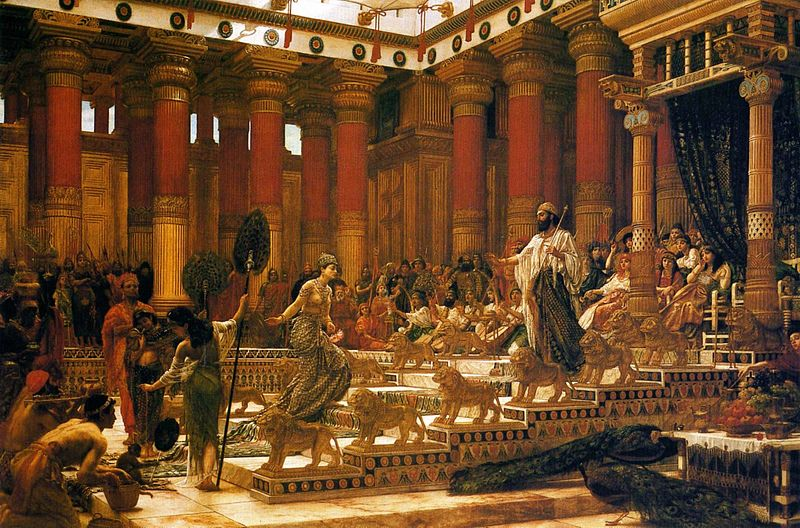
No such object is known.
What makes the biblical account particularly intriguing is that another biblical text returns to the same locations centuries later.
2 Kings 23 describes King Josiah’s religious reforms and says he desecrated high places east of Jerusalem that Solomon had built for Ashtoreth of Sidon, Chemosh of Moab and Milcom of Ammon.
Within the biblical narrative, that is extraordinary continuity.
The author imagines shrines associated with Solomon’s apostasy surviving in some recognizable form until the late seventh century BCE, when Josiah attempts to eradicate unauthorized worship.
If taken literally, that would mean cultic installations attributed to Solomon lasted for centuries.
But again, the archaeological question remains unresolved.
No excavated monument on the Mount of Olives has been securely identified as one of Solomon’s shrines.
And identifying religious architecture in Jerusalem is extraordinarily difficult.
Even the First Temple traditionally attributed to Solomon presents archaeological problems.
Because of the political and religious sensitivity of the Temple Mount, archaeologists cannot simply excavate the entire area as they might an ordinary ancient site.
No structural feature of Solomon’s original Temple has been positively identified archaeologically.
That does not prove the Temple never existed.
It means archaeology cannot currently demonstrate the building in the direct way it can demonstrate many other ancient structures.
The same caution applies to the eastern shrines.
The Bible preserves the tradition.
Material confirmation remains elusive.
There are, however, genuine discoveries showing that ancient Jerusalem contained a more complicated religious landscape than a simple picture of one temple and one uniform form of worship.
Archaeologists working in the City of David have identified a rock-cut cultic complex from the First Temple period containing ritual installations including an altar and standing stone.
Researchers have debated how it functioned and how it fits into the religious history of Jerusalem.
That does not make it Solomon’s pagan sanctuary.
It does show why archaeologists are cautious about assuming ancient Jerusalem always practiced one perfectly centralized religious system.
The Hebrew Bible itself repeatedly complains about unauthorized “high places.”
Those complaints probably preserve memories of a much more diverse ritual landscape.
That makes Solomon’s alleged shrines historically interesting even when archaeology cannot verify their ownership.
But the claim about secret treasury money requires even more caution.
The Bible certainly portrays Solomon as enormously wealthy.
1 Kings describes gold, international commerce, taxation, monumental building and an expensive royal household.
It also describes labor obligations imposed on the population.
Modern scholars debate the historical scale of all this, especially because direct evidence specifically naming Solomon remains absent.
What the text does not give us is an accounting scandal in which accountants discover Solomon quietly stealing temple taxes to finance private pagan estates.
There is no surviving spreadsheet of diverted offerings.
No ledger lists payments to foreign wives.
No archaeological cache proves millions in equivalent wealth disappeared into private sanctuaries.
Even using “millions” introduces a modern financial framework that does not map cleanly onto tenth-century BCE economics.
Ancient wealth was measured through land, agricultural production, labor, livestock, precious metals, tribute and controlled trade.
A royal economy was not a modern bank account.
The sharper historical question is whether Solomon’s projects demanded resources from subjects in ways that created resentment.
Here the biblical narrative itself provides something significant.
When Solomon dies, representatives of Israel approach Rehoboam and complain about the heavy burden imposed by his father.
Rehoboam rejects their request for relief.
That response contributes directly to the northern revolt.
So the biblical tradition already contains an economic grievance.
It does not need fabricated treasury leaks.
People remembered Solomon’s reign not only as wealthy but also as demanding.
That tension is one reason the Solomon tradition remains so powerful.
His greatness and his failure are woven together.
The king builds.
But building requires labor.
The king expands international connections.
But foreign alliances bring foreign religious influences.
The king accumulates wealth.
But royal wealth creates burdens.
The king becomes famous for wisdom.
Yet the final chapters of his story portray him making decisions the narrator considers catastrophically unwise.
The irony is intentional.
The same ruler who supposedly understood everything fails to govern his own loyalties.
And then comes Jeroboam.
He is not introduced as an outside invader.
He comes from Solomon’s own administrative system.
1 Kings describes him as an able official whom Solomon placed over labor forces associated with the house of Joseph.
Then the prophet Ahijah meets Jeroboam and symbolically tears a cloak into twelve pieces.
Ten pieces go to Jeroboam.
The image anticipates the coming fragmentation of the kingdom.
That scene is perhaps more dramatic than any fabricated whistleblower.
A royal servant becomes the future rival king.
Solomon tries to have him killed.
Jeroboam escapes to Egypt.
Solomon dies.
Rehoboam takes the throne.
The northern tribes revolt.
Then the political geography of Israel changes for generations.
The kingdom of Israel emerges in the north.
Judah remains centered on Jerusalem in the south.
The united monarchy never returns.
Within Kings, Solomon’s altars are therefore not merely embarrassing monuments.
They function as theological evidence presented by the author to explain why the golden age could not last.
The king compromised.
The kingdom fractured.
Whether modern historians accept that theological cause is another matter.
Political historians can point to taxation, labor demands, tribal differences, regional power and succession problems.
Archaeologists can debate whether the united kingdom described in the Bible was as large or wealthy as later tradition claimed.
Biblical scholars can analyze how later editors shaped Solomon into a cautionary figure.
Those perspectives do not have to produce one simple answer.
Ancient history rarely does.
And that is precisely why alleged “leaked blueprints” would be so extraordinary.
If archaeologists genuinely discovered a tenth-century BCE architectural archive identifying Solomon, his builders and named sanctuaries for Chemosh or Milcom, it would become one of the most important discoveries in biblical archaeology.
Scholars worldwide would analyze the script.
Material.
Provenance.
Dating.
Language.
Stoneworking.
Context.
There would be peer-reviewed papers.
Museums.
Conferences.
Debate.
Not merely an anonymous palace-whistleblower narrative.
The same would apply to royal accounting tablets.
Authenticated financial records bearing Solomon’s name could transform scholarly understanding of the tenth-century kingdom.
None are currently known.
The real evidence remains uneven.
There is archaeological evidence for complex societies and monumental construction during the period.
There are disputed finds potentially relevant to trade networks.
There are remains from ancient Jerusalem.
There is extensive literary tradition.
But direct extrabiblical evidence for Solomon himself remains elusive, and scholars continue debating how much historical memory lies underneath the later literary portrait.
That uncertainty does not weaken the story.
It makes it more interesting.
Because the greatest “leak” about Solomon may have happened thousands of years ago.
It is the Book of Kings itself.
The text does something ancient royal propaganda almost never does.
It takes a legendary ruler associated with wisdom, wealth and divine favor—and allows the story to end in failure.
Solomon does not ride into old age as the flawless architect of Israel’s golden era.
His heart turns.
Enemies emerge.
A former official becomes a rebel.
The future kingdom is condemned to division.
And across the valley from Jerusalem, the author places monuments representing the compromise that supposedly brought everything down.
Chemosh.
Molek or Milcom.
Ashtoreth.
Shrines facing the city of the Temple.
That image is devastating enough without a single leaked blueprint.
Centuries later, according to 2 Kings, Josiah would attack those same high places during his religious reforms.
Whether archaeologists will ever identify their physical remains is unknown.
Jerusalem has been rebuilt, destroyed and transformed repeatedly.
The Mount of Olives has experienced centuries of occupation, burial, religious construction and landscape alteration.
A tenth-century cult site could be extraordinarily difficult to isolate.
But the literary memory survived.
And perhaps that is what made Solomon’s ending so powerful.
The Bible remembers the richest king as a man whose wealth could not protect his dynasty from division.
It remembers the wisest king as a man whose final religious choices were condemned as foolish.
It remembers the builder of the Temple as the ruler who also built sanctuaries to foreign gods.
And it remembers the kingdom collapsing not because an archaeologist exposed a secret account book—but because political resentment and religious betrayal had already been accumulating beneath the surface.
There are no verified secret treasury ledgers.
No recovered stone blueprint proves the exact dimensions of Solomon’s pagan altars.
No known exiled priest smuggled royal documents from Jerusalem.
No palace whistleblower has suddenly reopened a three-thousand-year-old conspiracy.
But one haunting accusation really has survived.
According to the ancient authors of Kings, Solomon looked across from Jerusalem and ordered sanctuaries raised for gods his own religious tradition rejected.
Then, after his death, the kingdom his wisdom was supposed to secure broke in two.
Whether that sequence is theological interpretation, historical memory, or a combination of both remains one of the great debates of biblical history.
And unlike the fabricated leak, that mystery has survived for nearly three thousand years.


