A sensational headline claims federal agents arrested A’ja Wilson after she attacked Caitlin Clark during an awards banquet.
According to the story, Wilson became enraged when Clark received an unspecified prize declaring her America’s number-one athlete.
She supposedly launched a physical attack on live television before armed agents immediately stormed the stage.
Viewers are promised uncensored footage showing Wilson screaming while officers drag her away in steel handcuffs.
However, no authenticated broadcast, law-enforcement announcement, eyewitness report, or credible news article confirms this incident happened.
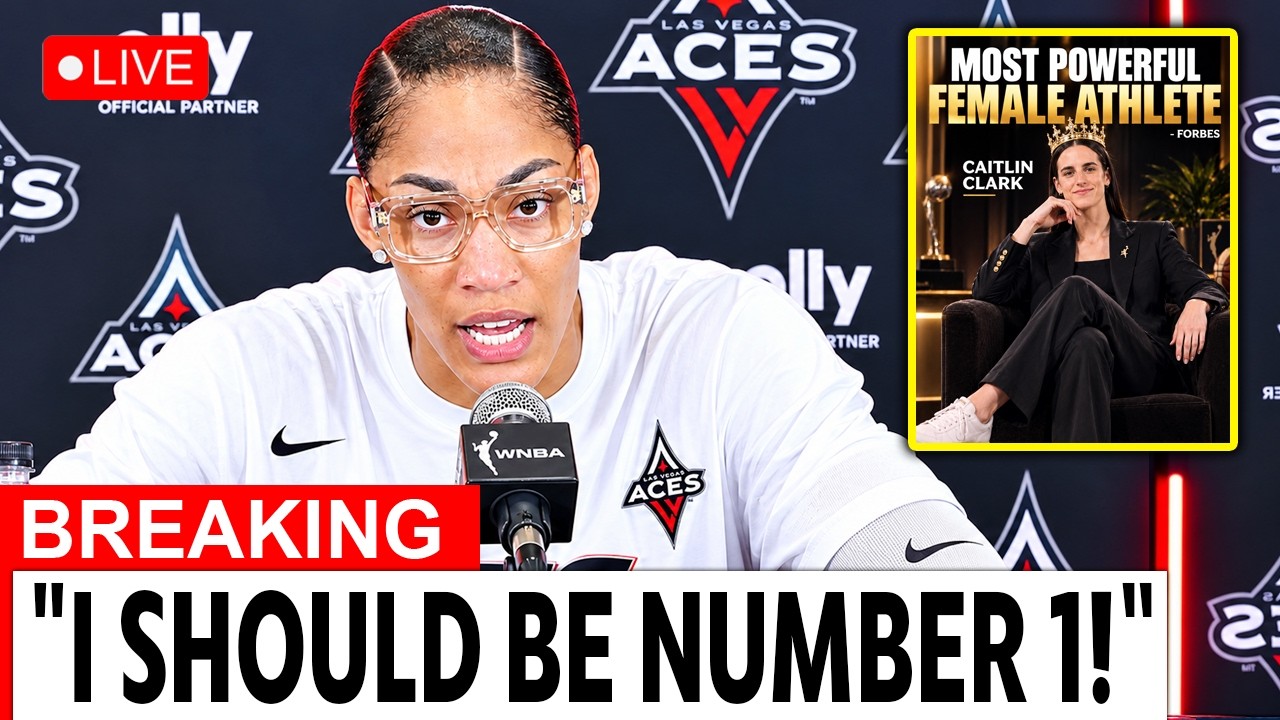
There is no identified banquet matching the described ceremony, despite claims that prestigious figures attended the event.
There is no named organization explaining what the supposed “number-one athlete award” actually represents or measures.
There is no original network footage showing Clark receiving that award while Wilson sits nearby and becomes violent.
There is no FBI or Justice Department announcement stating federal agents arrested Wilson following any televised assault.
There is no verified booking record, criminal complaint, attorney statement, league suspension, or court appearance supporting the allegation.
The story combines real athletes and genuine awards history with a completely unsupported scene of violence and arrest.
That construction appears convincing because Clark and Wilson have both earned major honors throughout their extraordinary basketball careers.
Yet they have often received different awards during different ceremonies, sometimes without appearing together inside one venue.
The viral narrative collapses those separate achievements into a fictional confrontation offering instant humiliation, punishment, and emotional revenge.
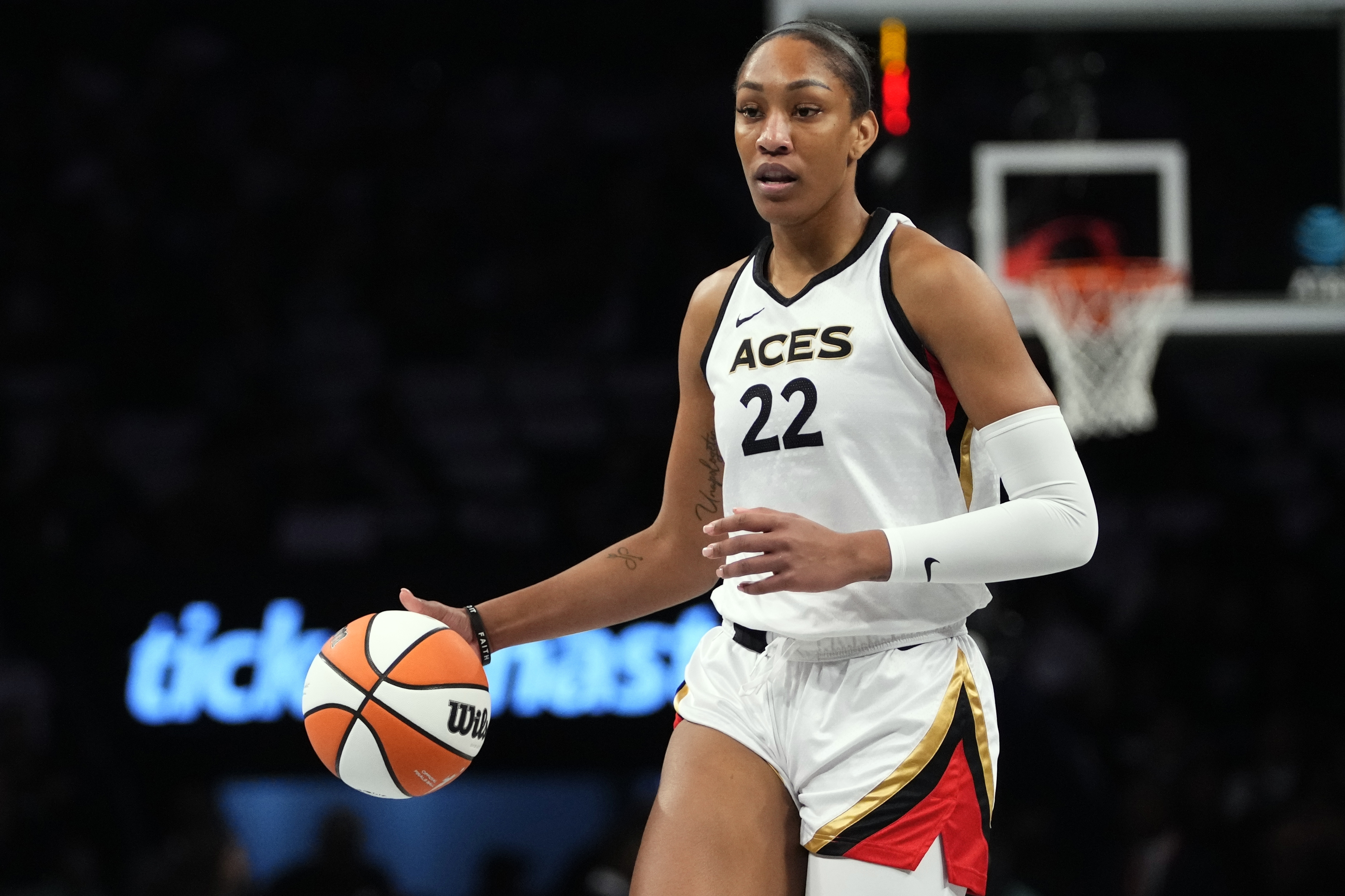
The first important question concerns which award Clark supposedly received before Wilson’s alleged attack onstage.
The headline calls it a “number-one athlete award,” but no official award title or presenting organization appears.
Major honors generally have recognizable names, selection processes, categories, nominees, presenters, and public lists of previous winners.
A legitimate report would identify whether the award came from ESPN, TIME, the Associated Press, or another institution.
Without that information, audiences cannot verify the venue, nominees, broadcast schedule, voting method, or ceremony footage.
The vague label appears designed to summarize Clark’s cultural status rather than describe one specific current award.
Clark has genuinely received several honors capable of being distorted into the fictional “number-one athlete” storyline.
The Associated Press named Clark its Female Athlete of the Year following her transformative 2024 basketball season.
A panel of sports journalists voted on that award, with Clark finishing ahead of Simone Biles and Imane Khelif.
The AP recognized Clark’s college scoring record, WNBA rookie success, audience impact, and unprecedented commercial influence.
That award was reported publicly in December 2024, not delivered during a recent banquet ending with Wilson’s arrest.
The Associated Press report contains no confrontation, attack, handcuffs, or federal intervention involving Wilson.
TIME also named Clark its 2024 Athlete of the Year after her arrival transformed ordinary WNBA games.
That recognition emphasized ticket demand, national broadcasts, merchandise growth, cultural impact, and record-setting basketball performances.
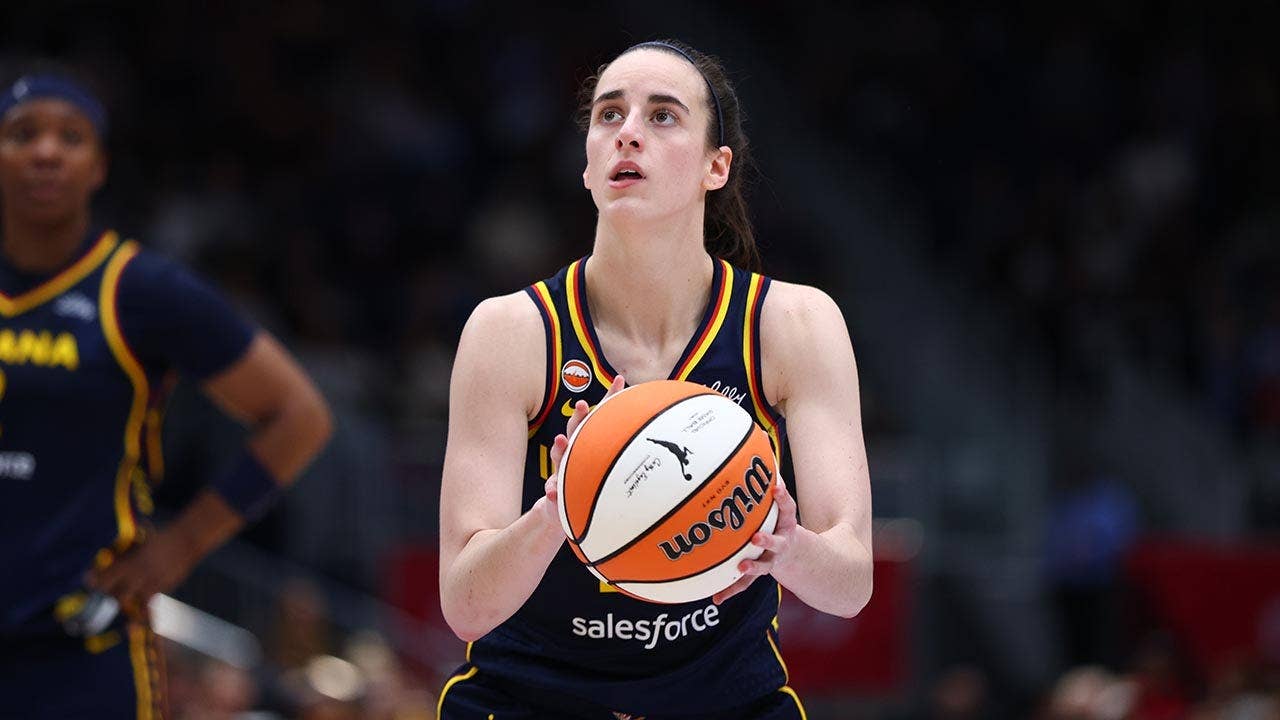
Again, it did not involve Wilson attacking Clark during a televised ceremony or being removed by federal agents.
TIME’s award was an editorial recognition supported through a profile, not the violent public banquet described online.
Clark also won Best Record-Breaking Performance at the 2024 ESPYs after becoming college basketball’s all-time leading scorer.
Yet Wilson received the larger ESPY category for Best Athlete in Women’s Sports during that same awards cycle.
Reuters reported that Wilson defeated Clark, Nelly Korda, and Coco Gauff for the prestigious women’s athlete honor.
Wilson was not physically present but sent a video expressing appreciation toward supporters who helped shape her career.
That documented ESPYs report directly contradicts the image of Wilson attacking Clark after losing an award.
Rather than being humiliated by Clark’s recognition, Wilson won the top women’s athlete category herself that evening.
The ceremony also honored Clark separately, demonstrating that awards can recognize multiple achievements without requiring personal hostility.
This history may explain how misinformation creators assembled their fictional scene from several disconnected pieces.
They took Clark’s AP award, her TIME recognition, her ESPY victory, and Wilson’s separate ESPY success.
They then combined those honors into one imaginary ceremony where only one athlete could survive emotionally.
The resulting story feels familiar because audiences remember both women receiving awards but may not recall exact dates.
That uncertainty creates enough space for a dramatic narrator to invent an assault between real historical achievements.
The second critical question concerns who supposedly arrested Wilson and why federal agents would be present.
The headline describes the banquet as becoming a “federal crime scene,” but provides no jurisdictional explanation.
Most physical assaults would initially involve local police or venue security rather than instantly appearing as federal cases.
Federal jurisdiction could theoretically arise under particular circumstances, but a stage altercation alone does not automatically trigger it.
A responsible report would identify the agency, relevant statute, arresting officers, federal district, and alleged criminal charge.
It would explain why federal agents attended the ceremony and possessed immediate authority regarding the supposed incident.
None of those details appears because the claim uses “federal” primarily to make the punishment sound more terrifying.
Law-enforcement language gives ordinary clickbait an appearance of institutional confirmation even when no agency has spoken.
The FBI does not materialize instantly whenever celebrities argue, shove, or fight during entertainment events.
Agents investigate potential federal violations through established procedures rather than serving as general security for award banquets.
A real arrest would generate records, legal representation, court scheduling, organizational responses, and extensive independent reporting.
Wilson’s fame would guarantee immediate attention from national sports outlets, Las Vegas media, and South Carolina publications.
The WNBA, Las Vegas Aces, Nike, Wilson’s representatives, and players’ union would face urgent requests for comment.
No such wave of confirmed reporting followed the supposed attack because no credible evidence shows it occurred.
The third question concerns the alleged live broadcast that networks supposedly tried desperately to cut.
A broadcast cannot simultaneously be witnessed live nationwide and remain available only through anonymous “leaked” descriptions.
Thousands of viewers could preserve clips, while journalists and attendees would produce additional angles through personal devices.
Network schedules would identify the ceremony and allow researchers to obtain the original program through official archives.
The viral headline never identifies the network, presenter, venue, date, or exact moment the supposed attack occurred.
Those omissions prevent independent verification while preserving the emotional impression that censorship erased an obvious public event.
If the network truly interrupted coverage, witnesses could still describe everything occurring after cameras stopped broadcasting.
Instead, no named attendee reports seeing Wilson approach Clark, become restrained, or leave wearing handcuffs.
No venue confirms law enforcement responded to a violent disturbance involving two internationally recognizable basketball stars.
The alleged uncensored version remains permanently promised and conveniently unavailable through accountable original sources.
This pattern frequently appears within fabricated sports stories involving supposedly deleted interviews or forbidden locker-room footage.
The claim creates curiosity, attributes missing evidence to suppression, and rewards viewers who continue searching for resolution.
Yet deletion does not erase every recording of a national broadcast, particularly during a prestigious celebrity awards ceremony.
Independent archives, television employees, photographers, spectators, nominees, and production contractors would preserve extensive evidence.
The absence of all those materials makes the censorship explanation much less plausible than simple fabrication.
The fourth question concerns Wilson’s supposed motive, described entirely through exaggerated assumptions about jealousy and emotional instability.
The headline labels the alleged attack “psychotic,” using mental-health language as an insult without diagnosis or evidence.
That wording is irresponsible because it stigmatizes mental illness while instructing viewers to see Wilson as uncontrollably dangerous.
Competitive disappointment does not establish psychosis, violent intent, hatred, or inability to respect another athlete’s achievement.
Wilson and Clark compete for attention, awards, sponsorship recognition, and basketball success within the same professional marketplace.
Competition can produce frustration, but frustration alone cannot prove someone launched a physical attack during a public ceremony.
Wilson possesses an extensive résumé that gives her little reason to treat Clark’s recognition as personal annihilation.
She has accumulated WNBA Most Valuable Player awards, championships, defensive honors, scoring records, and international gold medals.
In 2024, Wilson became the first WNBA player to exceed one thousand points during a regular season.
She averaged 26.9 points, collected 451 rebounds, and led the league with ninety-eight blocked shots.
Wilson became unanimous AP Player of the Year while Clark became unanimous AP Rookie of the Year.
The Associated Press therefore recognized both women after historic seasons without presenting their accomplishments as mutually exclusive.
Wilson also earned unanimous WNBA Most Valuable Player recognition after receiving every available first-place vote.
Clark broke rookie scoring and league assist records while carrying Indiana into its first postseason appearance since 2016.
Those parallel achievements helped women’s basketball expand because audiences could appreciate established dominance and emerging brilliance simultaneously.
Reducing their careers into jealous hatred ignores how different their roles, positions, and professional timelines remain.
Wilson dominates inside through strength, footwork, rebounding, defense, and efficient scoring across multiple levels.
Clark transforms offenses through exceptional passing, transition pace, perimeter gravity, and historically ambitious shooting range.
A team could theoretically build around both without asking either athlete to surrender her individual identity.
Their success does not operate like a single trophy that one player permanently steals from another.
The fifth question concerns Wilson’s actual status during recent international and professional basketball events.
Wilson withdrew shortly before the 2026 Women’s World Cup because of publicly cited health concerns.
Reuters described her absence as a major setback for America while noting Team USA remained exceptionally talented.
The report focused on her health withdrawal, Kara Lawson’s preparation, and America’s challenge against improving international opponents.
It contained no arrest, award-banquet incident, violent attack, suspension, or federal criminal investigation.
Health privacy left some supporters requesting additional details, but limited information does not prove hidden criminal conduct.
Wilson’s absence from Berlin also created space for fictional narratives claiming she resented Clark’s growing national-team importance.
Yet no verified interview shows Wilson attacking Clark’s selection, popularity, playing time, or cultural influence.
Clark later helped America win the World Cup while Wilson remained absent for documented health reasons.
That result may intensify fan comparisons, but it does not create evidence of an off-court personal confrontation.
The sixth question concerns the commercial relationship connecting Clark and Wilson rather than supposedly dividing them completely.
Both women are prominent Nike athletes with individual signature basketball footwear and major marketing value.
The Associated Press recently reported Clark will become the fifth active player possessing a signature shoe.
Wilson was explicitly identified among the Nike athletes already holding that distinction before Clark’s October launch.
Nike benefits from marketing both stars because different players attract overlapping audiences and expand women’s basketball sales.
A company does not need one athlete erased for another athlete’s product line to become commercially successful.
Their signature programs can coexist just as Sabrina Ionescu, Angel Reese, and Breanna Stewart maintain separate footwear identities.
That shared marketplace undermines claims that Clark receiving recognition automatically destroys Wilson’s status or earning potential.
Clark’s success can attract new consumers who eventually engage with Wilson’s achievements, apparel, shoes, and team.
Wilson’s excellence similarly strengthens the competitive credibility of the league where Clark continues building her legacy.
The viral story rejects this economic reality because cooperation produces less emotional engagement than imagined personal warfare.
Its narrative requires Wilson to view Clark’s award as a direct and unbearable assault upon her identity.
That motive is asserted without a quotation, private message, named source, or visible interaction supporting it.
The headline simply describes Wilson as enraged, expecting audiences to accept the diagnosis before examining any evidence.
The seventh issue concerns video manipulation and how unrelated images can manufacture a convincing stage confrontation.
Awards footage may show Clark walking toward a podium while Wilson appears elsewhere during another completely separate event.
Editors can place those images together, add sirens, insert officers from stock footage, and create artificial continuity.
A still photograph of Wilson shouting during basketball can become evidence that she screamed inside a banquet hall.
A clip of security moving through another venue can appear connected once dramatic narration establishes the desired sequence.
Artificial voices can imitate presenters, athletes, commentators, or officers without any original speaker delivering those words.
Generated images can place handcuffs, microphones, trophies, and recognizable faces together inside imaginary award settings.
Modern visual tools make surface realism insufficient, requiring audiences to locate original files and complete surrounding footage.
Viewers should examine lip synchronization, lighting direction, clothing changes, background continuity, and inconsistent camera resolution.
They should search whether the same police footage appears inside unrelated news stories or entertainment productions.
They should identify whether Wilson and Clark wore the displayed outfits during the same event and year.
They should also compare the supposed award name against official nominee and winner lists from credible organizations.
If every search leads back to channels repeating identical narration, independent confirmation probably does not exist.
Ten videos copying one fabricated sequence remain one unsupported claim rather than ten separate witnesses.
The eighth issue concerns how Clark’s fans are encouraged to interpret every other successful player as an enemy.
Clark’s extraordinary popularity produces genuine economic value, historic audiences, and intense emotional attachment among supporters.
Some creators exploit that attachment by repeatedly introducing new villains supposedly attempting to undermine or attack her.
Coaches become saboteurs, veteran teammates become jealous, opponents become criminals, and league officials become corrupt conspirators.
Each story concludes with Clark delivering perfect revenge while the accused person suffers public humiliation and punishment.
That structure resembles serialized drama more than professional sports reporting grounded in evidence and uncertainty.
Wilson becomes an especially useful villain because her awards and accomplishments predate Clark’s professional arrival.
Fans can be encouraged to see established excellence as resistance against the new attention Clark generates.
Yet recognition for Wilson does not reduce Clark’s accomplishments, just as recognition for Clark does not erase Wilson.
The league requires multiple stars because sustainable growth cannot depend entirely upon one athlete’s health and availability.
Clark’s injury-shortened 2025 season already demonstrated why broader talent and storytelling remain essential throughout the WNBA.
Wilson’s dominance, Stewart’s championships, Collier’s versatility, Reese’s rebounding, and Bueckers’ emergence all expand league interest.
Clark remains uniquely influential, but her influence becomes stronger within a credible league filled with elite competitors.
Turning those competitors into imaginary attackers undermines the sporting environment that gives Clark’s achievements meaning.
A record requires worthy opposition, and a championship requires defeating teams capable of producing genuine resistance.
The ninth issue concerns what responsible reporting would look like if a real awards altercation occurred.
Journalists would identify the event, quote the presenter, describe the sequence, and seek statements from both representatives.
They would confirm whether security or police intervened and distinguish detention from an actual custodial arrest.
They would identify potential charges carefully, avoiding declarations of guilt before prosecutors or courts evaluated available evidence.
Video outlets would publish complete contextual footage rather than repeatedly promising material that never appears unedited.
Medical claims would remain limited because reporters cannot diagnose someone through dramatic behavior captured during one incident.
Organizations would announce disciplinary reviews, safety measures, or cooperation with authorities where appropriate.
None of those expected reporting elements appears within the Wilson arrest story circulating through sensational posts.
Instead, the audience receives undefined awards, unnamed agents, missing footage, and emotionally loaded descriptions of mental instability.
Those are hallmarks of a story designed to maximize reaction while minimizing factual accountability.
The tenth issue concerns Clark’s actual response toward hatred and abuse directed at other WNBA players.
Clark has previously condemned racist or hateful behavior from people attempting to use her name against competitors.
She has emphasized that nobody should experience harassment, dehumanization, or abuse merely because fans prefer another athlete.
That stance conflicts with content encouraging viewers to celebrate Wilson screaming while agents allegedly drag her away.
Clark’s achievements do not require supporters to invent crimes or enjoy imaginary punishment inflicted upon another Black athlete.
She can remain the preferred player while audiences evaluate Wilson’s career with fairness and factual accuracy.
Supporting Clark should mean celebrating her passing, shooting, leadership, competitive resilience, and expanding professional impact.
It should not mean accepting every allegation that portrays established rivals as violent, jealous, or psychologically unstable.
The same principle protects Clark whenever fabricated stories accuse her of revenge schemes, leaked documents, or secret ultimatums.
Evidence standards should remain consistent regardless of whether an allegation favors or attacks someone’s preferred athlete.
The eleventh issue concerns the continuing tendency to misrepresent awards as definitive rankings across every athletic discipline.
AP Female Athlete of the Year reflects votes from journalists considering impact across women’s sports during one year.
TIME Athlete of the Year represents editorial judgment regarding cultural significance, achievement, and influence within broader society.
An ESPY award reflects another selection and voting structure involving designated categories and nominated candidates.
None establishes a permanent, scientific ranking declaring one athlete objectively superior across every sport and generation.
Clark can receive one honor while Wilson receives another because organizations apply different criteria and timelines.
Simone Biles, Nelly Korda, Coco Gauff, and other women also remain extraordinary athletes with distinct achievements.
The phrase “undeniable number-one crown” exaggerates a subjective award into universal judgment designed to provoke resentment.
That exaggeration provides the imaginary motive required for Wilson’s alleged loss of control during the fictional ceremony.
In reality, elite athletes regularly attend events where other competitors receive honors without producing violent confrontations.
They understand voting results depend upon narratives, timing, media panels, performance periods, and award-specific eligibility.
Disappointment may occur privately, but disappointment should never be converted into assault allegations without credible evidence.
The twelfth issue concerns Wilson’s historical response to receiving recognition herself and acknowledging those supporting her.
When Wilson won the 2024 ESPY, she thanked her fans and reflected upon her unexpected basketball journey.
She described the honor as special because she once had not even wanted to play basketball.
That response revealed gratitude and perspective rather than obsession with personally destroying every competing nominee.
Clark was among those nominees, yet no report described Wilson mocking, threatening, or physically confronting her.
Their shared presence within award conversations has therefore produced documented professional recognition rather than verified violence.
The fictional banquet reverses that history by presenting Wilson as incapable of tolerating Clark receiving comparable praise.
That reversal is emotionally effective but evidentially unsupported by the actual awards record involving both women.
The strongest available conclusion therefore remains simple despite the headline’s promise of federal chaos and uncensored footage.
No Arrest Was Verified.
Those four words separate confirmed awards history from a fabricated event combining assault, mental-health stigma, and law enforcement.
As of September 20, 2026, no credible source reports Wilson being arrested during any awards ceremony.
No verified video shows her physically attacking Clark, screaming at presenters, or being restrained onstage.
No official award organization identifies the supposed number-one athlete banquet described within the circulating story.
No federal agency explains why its agents were present or which federal offense Wilson allegedly committed.
No court filing, booking information, disciplinary announcement, or representative statement supports the allegation.
The verified record instead shows Clark and Wilson receiving different major honors after historic individual seasons.
It shows Wilson winning the 2024 ESPY category that included Clark among its distinguished nominees.
It shows Clark earning AP and TIME Athlete of the Year recognition for her transformative 2024 impact.
It shows both women receiving unanimous AP awards for separate professional achievements during the same WNBA season.
It shows both becoming major Nike signature athletes capable of expanding basketball’s commercial reach together.
It shows Wilson missing the recent World Cup because of reported health concerns, not criminal detention.
It shows Clark continuing to build her professional legacy while Wilson’s established accomplishments remain historically significant.
Those facts provide plenty of material for debate without inventing handcuffs, screaming, federal agents, or televised violence.
Readers should demand the full original broadcast before believing any cropped video presented as uncensored evidence.
They should identify the ceremony, network, date, venue, presenter, nominees, and exact official award title.
They should search law-enforcement records for named agencies, charges, court districts, and verified public documentation.
They should avoid interpreting unrelated basketball shouting as proof someone became violent inside a formal banquet.
They should reject stigmatizing language pretending a narrator can diagnose psychiatric conditions through nonexistent or edited footage.
Most importantly, they should recognize when authentic awards history has been rearranged into fictional revenge entertainment.
Clark’s recognition remains impressive without another athlete being arrested, humiliated, or portrayed as psychologically dangerous.
Wilson’s legacy remains secure without minimizing Clark’s cultural influence, historic passing, and rapidly expanding commercial power.
Their careers should be compared through basketball, leadership, records, championships, and verified professional achievements.
The next meaningful confrontation belongs on the court, where performance provides evidence everyone can evaluate independently.
Anything more serious requires documentation capable of surviving scrutiny beyond one headline and one dramatic thumbnail.
Watch the official awards footage, compare the verified winner lists, and uncover how separate honors became a fabricated arrest below… 👇


