THE OLD WEST WASN’T WHAT HOLLYWOOD SHOWED YOU — THE LEDGERS TELL A DARKER STORY
Everything you think you know about the Old West may have come from a movie set.
The streets were not clean.
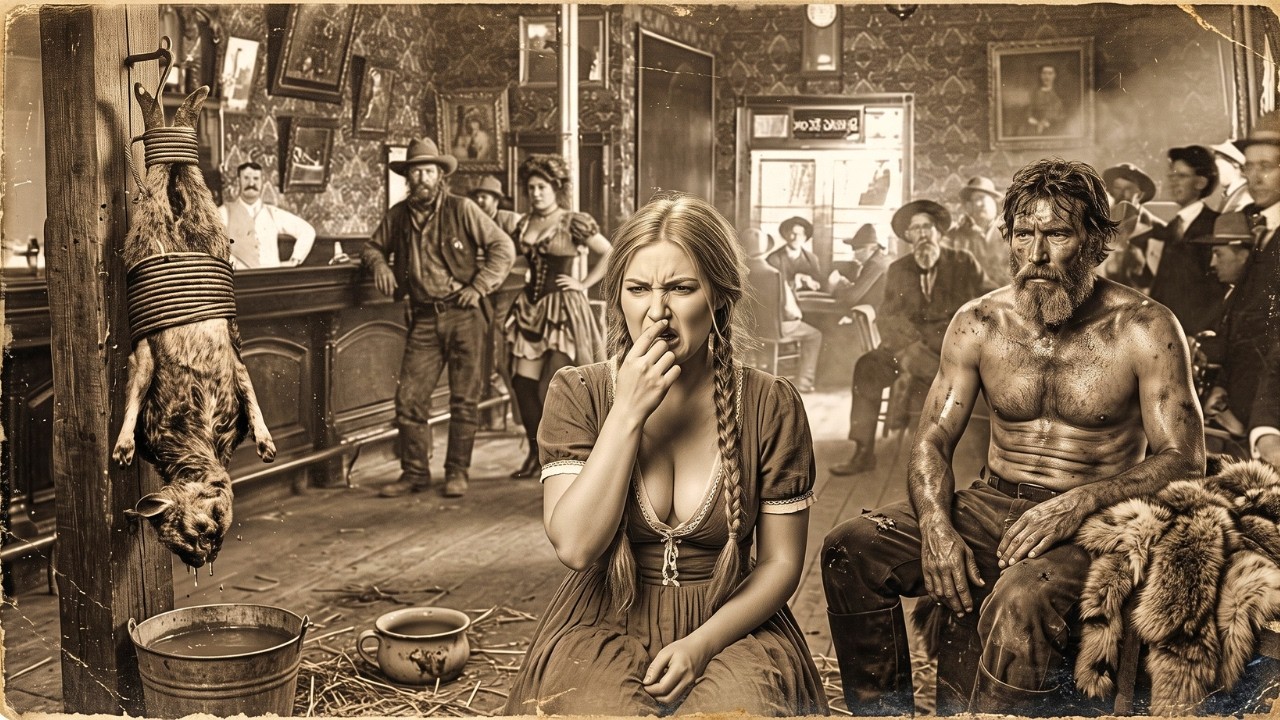
They were mud, manure, garbage, sewage, and rainwater mixed together beneath the boots of thousands of people and animals.
Hotels could turn a single mattress into a three-person business.
The town well could sit downhill from a stable and an outhouse.
And somewhere on an insurance map, an entire district could be reduced to two letters because nobody wanted to write down what actually happened there.
FB.
Female boarding.
The Old West did not always record its secrets in dramatic language.
Sometimes it recorded them as fines.
Receipts.
Licenses.
Court costs.
Property valuations.
And monthly payments.
Not legend. Ledgers.
Here are 18 stops through a frontier town as the paperwork tells the story.
1. THE STREET WASN’T REALLY A STREET
Imagine stepping off a stagecoach in a Kansas cattle town around 1880.
Before you look at the buildings, look down.
The street beneath your boots could be a mixture of mud, manure, trash, and rainwater, churned constantly by horses, wagons, cattle, and people.
That is why town governments required property owners to build wooden sidewalks.
The boards lifted pedestrians above the mud and created a narrow dry path between businesses, hotels, saloons, offices, and homes.
And if the owner refused?
There was a fine.
The sidewalk was not merely a convenience.
It was infrastructure.
It had an owner.
It had a cost.
And when the boards rotted or someone was injured because of a dangerous section, the paperwork could become a lawsuit.
The romantic frontier street had a very unromantic accounting system.
Someone had to pay for every plank.
2. THE RAISED SIDEWALK WAS ENGINEERING AGAINST THE MUD
Those wooden boards were not raised because frontier towns wanted their streets to look charming.
They were an answer to a problem.
Heavy rain turned dirt roads into mud.
Hundreds of horses added manure.
Wagons cut deep tracks through the ground.
And every doorway became an obstacle course.
Town ordinances could specify the required height and width of a sidewalk and place responsibility directly on the property owner.
The sidewalk therefore became a strange hybrid.
Private property serving a public purpose.
Every foot of it had someone responsible for it.
And when it failed, the records could show exactly who was supposed to fix it.
3. THE WELL COULD BE DOWNHILL FROM THE OUTHOUSE
Now walk twenty steps toward the public well.
Look at the slope.
That was sometimes more important than the distance.
A stable.
An outhouse.
A drainage ditch.
And a water source could exist within the same small section of town.
Rain did not care about property boundaries.
Waste washed downhill.
Manure washed downhill.
Everything eventually followed gravity.
The transcript’s records describe officials ordering changes around contaminated water sources, imposing fines for dumping waste nearby, and paying for water wagons when wells became unreliable.
The doctor’s records added another layer.
Cholera.
Typhoid.
Summer outbreaks.
The conclusion was brutally simple.
Sometimes the difference between health and disease was not medicine.
It was where the town had been built.
4. ONE BED. THREE STRANGERS.
In a mining town, even sleep could become a business calculation.
The story from Leadville describes beds being rented in shifts rather than by the traditional overnight room.
One worker finished his shift.
Another took the same space.
Then another.
The mattress stayed.
The customer changed.
Frontier hotels existed under enormous pressure because workers arrived faster than buildings could be constructed.
Space was money.
Beds were inventory.
Blankets were assets.
And cleanliness competed against economics.
The romantic hotel from a Western movie becomes much less romantic when the same mattress is part of three separate transactions in one day.
5. THE BARBER COULD ALSO BE YOUR DENTIST
The barber shop was not simply a place to trim a beard.
In frontier communities, barbering and minor medical procedures could overlap.
The same shop could contain razors, sharpening equipment, dental instruments, lancets, and other tools.
A beard might cost a few cents.
A tooth could cost more.
An abscess might become another transaction.
The familiar striped barber pole came from the older European barber-surgeon tradition, where barbers historically performed bloodletting and other procedures.
Eventually, public-health regulations pushed the profession toward greater licensing and sanitation.
The transformation was visible in the paperwork.
Instruments.
Inspections.
Fees.
Rules.
Fines.
The barber shop was becoming regulated because the consequences of poor hygiene could move from one customer to the next.
6. THE GENERAL STORE DIDN’T NEED A GUN
If you wanted to understand power in a frontier town, you might instinctively look for the bank.
But sometimes the more revealing place was the general store.
Cash was scarce.
Families needed flour, coffee, tools, wire, seeds, and other necessities.
So merchants extended credit.
The customer’s signature became currency.
The future harvest became collateral.
And through crop-lien arrangements, merchants could obtain legal claims against future agricultural production.
The storekeeper therefore knew something extremely valuable.
Who owed money.
How much they owed.
What they were planting.
And whether they could afford another season.
He did not need to threaten anyone.
He had a ledger.
7. THE NEWSPAPER COULD TURN A SECRET INTO PUBLIC RECORD
A frontier newspaper might contain only a few pages.
Stagecoach schedules.
Livestock prices.
Advertisements.
Local announcements.
And then came the notes about town business.
Fines.
Court proceedings.
Municipal revenue.
Names.
Dates.
Amounts.
The newspaper did not necessarily have to investigate a scandal.
Sometimes it only had to copy the government’s own paperwork.
That was enough.
Publishing uncomfortable information could bring lawsuits, financial pressure, violence, or threats.
The printing press therefore became something more dangerous than entertainment.
It became a public version of the ledger.
8. ONE BUILDING COULD BE THREE INSTITUTIONS
The frontier did not always have enough money to build separate buildings for every public function.
So one structure could serve multiple purposes.
School during the week.
Church on Sunday.
Courtroom when the judge arrived.
The same stove heated the room.
The same benches served different audiences.
The same building could appear in school records, county records, church inventories, and court expenses.
And when it burned?
The town did not lose one institution.
It could lose three at once.
The frontier was not built from endless resources.
It was built from whatever could be reused.
9. THE DOCTOR’S DIPLOMA DIDN’T ALWAYS TELL THE WHOLE STORY
A framed medical diploma could look impressive.
But the transcript points to the diploma-selling scandals of the nineteenth century, including the case of John Buchanan and the American University of Philadelphia.
Documents could be purchased.
Certificates could travel hundreds or thousands of miles.
And a frontier community desperate for professionals could have difficulty determining who was genuinely trained and who simply possessed convincing paperwork.
Meanwhile, drugstores sold substances that modern consumers would recognize as dangerous.
Laudanum.
Mercury compounds.
Alcohol-heavy tonics.
The medical world was changing, but regulation was moving slowly.
The paper on the wall said one thing.
The medicine on the shelf could tell another story.
10. THE JAIL WAS ALSO A FINANCIAL PROBLEM
A frontier jail did not have to look like the massive prisons seen in later American cities.
Sometimes it was a small room.
A chain.
An iron ring.
A padlock.
And a county bill.
Every prisoner cost money.
Food cost money.
Fuel cost money.
Guards cost money.
Keeping someone locked up was therefore an expense that officials had to justify.
Fines offered a different calculation.
Arrest someone.
Record the offense.
Collect the fine.
Release them.
The paperwork transformed punishment into revenue.
And in the ledger, the distinction between justice and municipal finance could become surprisingly difficult to see.
11. THE PHOTOGRAPHER COULD MAKE MONEY FROM DEATH
Open the books of a frontier photography studio and you might find ordinary portraits alongside house calls.
A family portrait.
A traveling photographer.
A photograph taken after death.
The technology was expensive.
Glass plates had value.
Developing required time and materials.
And some images of notorious crimes became commercial objects.
After the Dalton gang shootout in Coffeyville in 1892, photographs of the dead became part of the public fascination surrounding the event.
The bodies were not only evidence.
They became images.
The images became merchandise.
And the merchandise entered the photographer’s inventory.
The frontier had discovered something modern America would later perfect.
A tragedy could become a product.
12. TWO LETTERS ON A MAP
Then there was the district that the map did not really name.
On some Sanborn fire insurance maps, the transcript points to the abbreviation FB, meaning female boarding.
Two letters.
That was enough.
Insurance companies needed to understand the buildings they were insuring.
But local communities often preferred discretion.
City records could describe disorderly-conduct fines without explicitly describing the underlying business.
Money entered the treasury.
Police were paid.
Streets were maintained.
And the district continued to exist.
The address was real.
The building was real.
The taxes were real.
But the name could disappear behind two letters.
13. THE SLAUGHTERHOUSE COULD CHANGE THE VALUE OF A STREET
Cattle towns lived by livestock.
They also lived with the consequences.
Thousands of animals could pass through stockyards.
Slaughterhouses generated waste.
Manure accumulated.
The smell moved with the wind.
And suddenly geography became economics.
A property positioned toward the worst odors could become harder to rent.
A few blocks away, the same kind of property could command more money.
The records described fines for waste, standing water, carcasses, and manure.
Businesses purchased screens, flypaper, lime, and disinfectants.
The smell was not just unpleasant.
It had a price.
14. BOOT HILL WAS AN ACCOUNTING PROBLEM
Every growing town needed somewhere to put its dead.
On Boot Hill, the paperwork could be brutally simple.
Name.
Date.
Cause of death.
Cost of burial.
Coffin.
Grave.
If nobody paid, the county paid.
That meant death entered the municipal budget.
The poor dead were not invisible.
They became expenses.
Some graves had wooden markers.
Some had no permanent marker at all.
And as towns expanded, cemeteries themselves became obstacles to development.
Eventually, land that had been used for graves could become valuable enough for officials to order removals.
The frontier could bury its dead.
Then the frontier could move on top of them.
15. WHERE THE MARSHAL’S AUTHORITY ENDED
Now walk beyond the city limits.
That invisible line could matter more than any gunfight.
Inside town?
The marshal had authority.
Outside?
The county sheriff might have jurisdiction.
A few steps could change who was responsible for investigating a killing.
The transcript describes cases recorded with painfully vague conclusions.
Unknown person.
Unknown circumstances.
No indictment.
Case closed.
Outside the municipal boundary, responsibility became easier to pass.
Jurisdiction.
Distance.
Expense.
Denial.
The law did not always disappear.
Sometimes it simply stopped walking.
16. THREE THINGS HOLLYWOOD LEFT OUT
The first was the bank robbery.
The second was the high-noon duel.
The third was the heroic sheriff.
The paperwork offers a less cinematic picture.
Bank robberies were not necessarily happening every week.
There is no universal city record of two gunmen slowly walking ten paces apart before drawing simultaneously in the middle of Main Street.
And sheriffs were not necessarily wealthy men living above the law.
Payroll records could show modest salaries.
Some officials had mortgages.
Some supplemented their income through fees.
The real frontier was not a movie poster.
It was an administrative system.
License.
Fine.
Receipt.
Payroll.
Court order.
17. THE TOWN COULD DIE WHEN THE RAILROAD MOVED
Look at Rhyolite.
The Cook Bank cost enormous amounts to construct in 1908.
Years later, the town was collapsing.
The pattern appears again and again across frontier communities.
A mine opens.
Workers arrive.
Businesses appear.
Hotels fill.
Stores extend credit.
Licenses generate revenue.
Property becomes valuable.
Then the mine fails.
Or the railroad moves.
And suddenly the same paperwork that once documented prosperity begins documenting decline.
Buildings remain.
People leave.
Revenue disappears.
And eventually the town becomes a ghost.
The real business was never simply the town.
It was the economic connection that made the town necessary.
18. THE TOWN HOLLYWOOD BUILT OVER
Now return to that first street.
It is dusk.
The mud is still there.
The sewage still smells.
The wooden sidewalk still creaks beneath your boots.
But now you know what to look for.
The $10 fine.
The property valuation.
The hotel inventory.
The burial expense.
The store ledger.
The police receipt.
The insurance map.
The court order.
The signature.
Hollywood rebuilt the Old West with clean streets, perfect saloons, dramatic gunfights, and heroic silhouettes against the sunset.
The real town was messier.
It smelled worse.
It was poorer.
More improvised.
More bureaucratic.
And in some ways, much darker.
Because the most revealing evidence is not always a photograph of a gunfighter.
Sometimes it is a single line in a municipal ledger.
A payment made every month.
A fine collected on the same date.
A building quietly identified by two letters.
A body buried for $1.50.
A property sold after its owner died.
A debt transferred to a bank.
The Old West did not disappear because Hollywood changed the story.
It disappeared because the people who built it left behind paperwork.
And that paperwork is still there.
The legend was written in movies.
The real story was written in ink.


