More than six decades after its release, The Great Escape remains one of the most unforgettable war films ever made. Released in 1963, the movie brought together an extraordinary international cast to tell a story of courage, friendship, sacrifice, and the desperate pursuit of freedom. Its daring tunnel operation, unforgettable characters, and spectacular motorcycle chase helped secure its place in cinema history. Yet behind those performances were actors whose real lives were often just as extraordinary as the characters they portrayed.
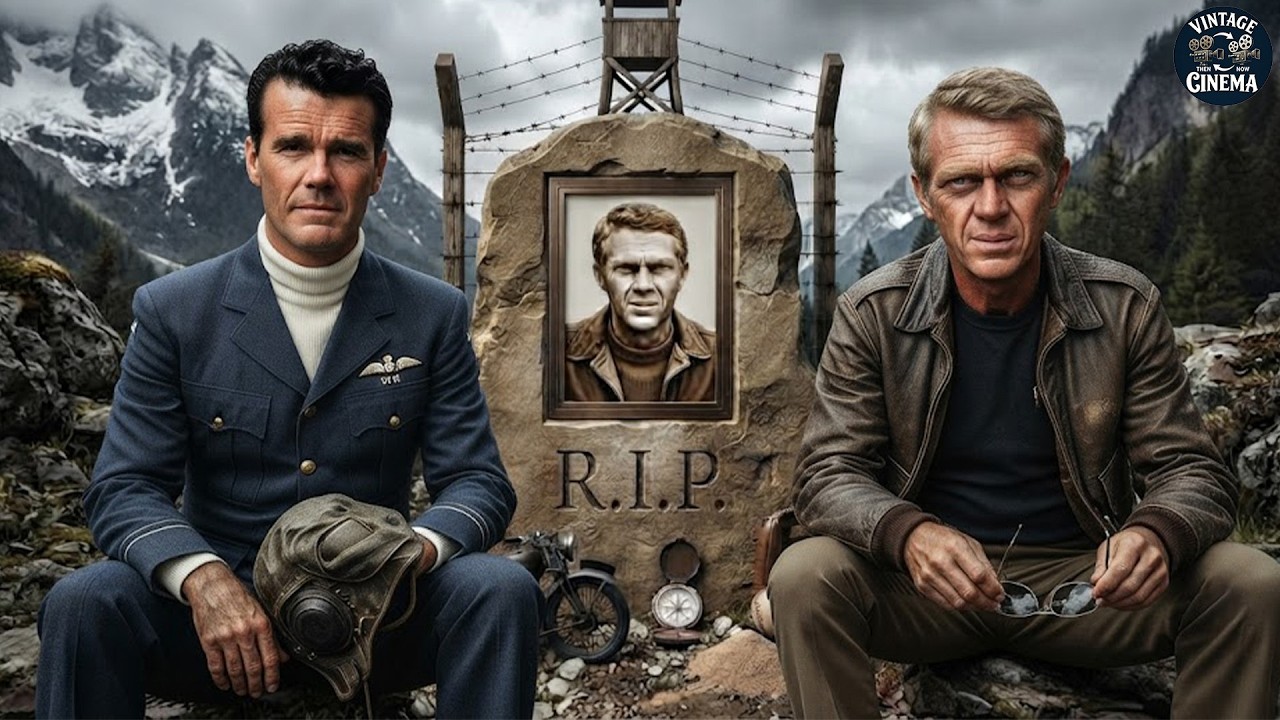
By 2026, most of the film’s principal performers had passed away. Some enjoyed decades of fame, while others faced serious illness, personal hardship, or careers that ended far too soon. Several had experienced war and captivity themselves, giving their performances an authenticity that audiences could feel even without knowing their personal histories. Looking back at the cast reveals a remarkable collection of lives connected by one enduring film.
Richard Attenborough portrayed Roger Bartlett, the determined prisoner known as Big X, whose leadership drives the escape operation. Born on August 29, 1923, in Cambridge, England, Attenborough was thirty-eight when filming began in 1962. His portrayal of Bartlett combined intelligence, urgency, and quiet authority, making the character one of the film’s emotional anchors. Every decision carried consequences, and Attenborough made viewers understand the terrible responsibility of leading men toward freedom when failure could mean death.
His career eventually extended far beyond acting. Attenborough became one of Britain’s most celebrated filmmakers, directing and producing Gandhi, which won major Academy Awards, including Best Picture and Best Director. Decades later, younger audiences discovered him as John Hammond in Jurassic Park, where his warmth and unmistakable presence helped bring another cinematic classic to life. He died on August 24, 2014, at ninety, just five days before his ninety-first birthday. His family did not publicly announce a specific cause of death.
James Donald brought a different kind of strength to the film as Group Captain Ramsey, the senior British officer responsible for maintaining discipline and protecting his fellow prisoners. Born on May 18, 1917, in Aberdeen, Scotland, Donald was forty-five during production. His restrained performance offered an important contrast to the more impulsive personalities surrounding him. Ramsey understood that courage required judgment, especially when the lives of other prisoners depended upon decisions made in secrecy.
Donald had already delivered a memorable performance as Major Clipton in The Bridge on the River Kwai. He also portrayed Theo van Gogh in Lust for Life, demonstrating his ability to communicate intelligence and compassion without theatrical excess. Later, severe asthma contributed to his withdrawal from acting. He spent part of his later life growing grapes and making wine on a Hampshire farm. Donald died from stomach cancer on August 3, 1993, aged seventy-six. His performance as Ramsey remains a reminder that leadership can be expressed through composure rather than spectacle.
Charles Bronson portrayed Danny, the Tunnel King, one of the prisoners responsible for constructing the underground escape routes. Born on November 3, 1921, in Pennsylvania, Bronson was forty during the early stages of filming. Before becoming a Hollywood star, he had worked in coal mines, giving him firsthand familiarity with the physically demanding environment reflected in Danny’s work beneath the prison camp.
Although Bronson later became famous for playing exceptionally tough characters, The Great Escape revealed a more vulnerable side of his screen personality. Danny’s claustrophobia threatens to overwhelm him as the escape approaches, and his dependence upon his friend Willie creates one of the film’s most affecting relationships. Bronson subsequently appeared in Once Upon a Time in the West and became a major box-office attraction through Death Wish. He died on August 30, 2003, aged eighty-one, with respiratory failure associated with metastatic lung cancer recorded among the medical circumstances of his death.
Donald Pleasence portrayed Colin Blythe, the mild-mannered forger whose deteriorating eyesight threatens his chances of escape. Born on October 5, 1919, in Worksop, England, Pleasence was forty-two when filming began. His performance carried unusual emotional weight because he had experienced imprisonment during the Second World War. Serving in the Royal Air Force, he was shot down over occupied Europe and held as a prisoner of war.
That personal history made his portrayal of captivity especially poignant. Blythe’s friendship with James Garner’s character, Hendley, became one of the film’s most memorable emotional threads. Pleasence later portrayed the villain Ernst Stavro Blofeld in You Only Live Twice and achieved lasting horror fame as Dr. Sam Loomis in Halloween. His ability to move between tenderness and menace made him one of Britain’s most versatile character actors. He died on February 2, 1995, aged seventy-five, following complications associated with heart surgery.
James Coburn appeared as Louis Sedgwick, the resourceful Australian prisoner known as the Manufacturer. Born on August 31, 1928, in Laurel, Nebraska, Coburn was thirty-three when production began. His relaxed manner and distinctive smile made Sedgwick appear almost effortlessly confident, even while helping organize a dangerous escape operation.
Coburn had already attracted attention in The Magnificent Seven and later became a leading man through Our Man Flint and In Like Flint. However, severe rheumatoid arthritis disrupted his career during the 1980s, limiting his ability to work and causing considerable physical pain. His eventual return was remarkable. In 1999, he won the Academy Award for Best Supporting Actor for Affliction, demonstrating that his dramatic abilities extended far beyond the effortless charm of his earlier performances. Coburn died of a heart attack on November 18, 2002, aged seventy-four.
Hannes Messemer portrayed Colonel von Luger, the German camp commandant whose authority becomes increasingly fragile as the escape operation develops. Born on May 17, 1924, in Dillingen an der Donau, Germany, Messemer was thirty-eight during filming. His performance avoided reducing the commandant to a simplistic villain. Instead, he portrayed an officer whose professional confidence could not protect him from the larger political forces controlling the prison system.
Messemer’s own career had developed through theater and German cinema after wartime service and captivity. He appeared in acclaimed productions, including The Devil Strikes at Night and General Della Rovere. His distinctive voice also made him familiar to audiences through radio and television. Later, a throat condition forced him to reduce his professional activities. Messemer died on November 2, 1991, aged sixty-seven, from heart and circulatory failure. His portrayal of von Luger remains an important part of the film’s moral complexity.
David McCallum played Eric Ashley-Pitt, the prisoner known as Dispersal, whose role involves secretly removing soil from the escape tunnels. Born on September 19, 1933, in Glasgow, Scotland, McCallum was twenty-eight when filming began. Although Ashley-Pitt has limited screen time, his actions become crucial during one of the story’s most dangerous moments.
McCallum’s subsequent career brought him international fame as Illya Kuryakin in The Man from U.N.C.L.E. He later appeared in Colditz and Sapphire & Steel before finding extraordinary renewed popularity as Dr. Donald “Ducky” Mallard on NCIS. His involvement with that series lasted across twenty seasons, introducing his work to viewers who had never seen his early films. McCallum died of natural causes on September 25, 2023, aged ninety. His career connected several generations of television audiences, while The Great Escape preserved his youthful intensity.
Gordon Jackson portrayed Sandy MacDonald, the intelligence specialist whose devastating mistake becomes one of the film’s most memorable scenes. Born on December 19, 1923, in Glasgow, Jackson was thirty-eight during production. His character understands the importance of maintaining a convincing identity, yet a seemingly harmless response exposes him at a critical moment.
Jackson’s ability to communicate intelligence and vulnerability made the scene especially painful. He later became internationally famous as Hudson, the disciplined butler in Upstairs, Downstairs, earning an Emmy Award in 1976. He also portrayed George Cowley in The Professionals, bringing authority and precision to another beloved television series. Jackson died from bone cancer on January 15, 1990, aged sixty-six. His performance as MacDonald continues to demonstrate how a single ordinary human reflex can become unforgettable cinematic tragedy.
John Leyton portrayed Willie, Danny’s loyal companion and one of the film’s most sympathetic prisoners. Born on February 17, 1936, in Frinton-on-Sea, England, Leyton was twenty-six when filming began. Before joining the cast, he had already become a successful recording artist. His 1961 single Johnny Remember Me reached number one on the British charts, followed by another major hit, Wild Wind.
In The Great Escape, Leyton’s character refuses to abandon Danny when fear threatens to prevent him from entering the tunnel. Their friendship offers a rare moment of emotional relief within a story dominated by danger and loss. Leyton later appeared in Guns at Batasi and Von Ryan’s Express, building a film career alongside his musical success. At ninety in 2026, he represents a living connection to both the British pop music scene of the early 1960s and one of cinema’s greatest wartime adventures.
Angus Lennie portrayed Archibald Ives, the prisoner nicknamed the Mole, whose friendship with Steve McQueen’s character initially brings humor and warmth to the story. Born on April 18, 1930, in Glasgow, Lennie was thirty-two during filming. His character’s deteriorating emotional condition reveals the psychological cost of prolonged imprisonment, making his eventual fate especially disturbing.
Before becoming an actor, Lennie worked as a dancer and comedian. He later appeared in 633 Squadron and became familiar to British television audiences through Crossroads and other productions. Doctor Who viewers also recognized him from The Ice Warriors and Terror of the Zygons. Lennie died on September 14, 2014, aged eighty-four. No specific cause of death was publicly established. His performance as Ives remains a reminder that captivity could destroy hope long before an escape attempt began.
Nigel Stock portrayed Dennis Cavendish, the Surveyor, whose technical knowledge helps transform the prisoners’ ambitious plan into a practical operation. Born on September 21, 1919, in Malta, Stock was forty-two when production began. His military background included service with the Indian Army during the Second World War, providing valuable experience for his portrayal of disciplined wartime characters.
Stock had previously appeared in The Dam Busters and later became widely recognized as Dr. Watson in the BBC’s Sherlock Holmes television adaptations. He worked opposite both Douglas Wilmer and Peter Cushing, bringing warmth and intelligence to the famous detective’s companion. He also appeared in Young Sherlock Holmes, creating another connection to the fictional detective’s world. Stock died on June 22, 1986, aged sixty-six, reportedly after a heart attack. His understated performance as Cavendish demonstrates how essential supporting characters are to a film built around collective effort.
Robert Graf portrayed Werner, the German guard nicknamed the Ferret, whose interactions with James Garner’s Hendley become an important part of the escape preparations. Born on November 18, 1923, in Witten, Germany, Graf was thirty-eight during filming. His performance captured the uncertainty of a guard gradually manipulated by a prisoner who understood how to exploit personal weaknesses.
Graf had already established himself as a respected German actor through performances in films such as Aren’t We Wonderful and Jonas. His career appeared positioned for further international recognition following The Great Escape. Tragically, he died of cancer in Munich on February 4, 1966, aged only forty-two. His son, filmmaker Dominik Graf, later explored his father’s life and legacy through documentary work. The film


