In September 1987, a new starship sailed into American television history. Its name was the USS Enterprise-D, and its mission was to explore strange new worlds, seek out new life, and boldly carry a legendary science-fiction franchise into an entirely new generation.
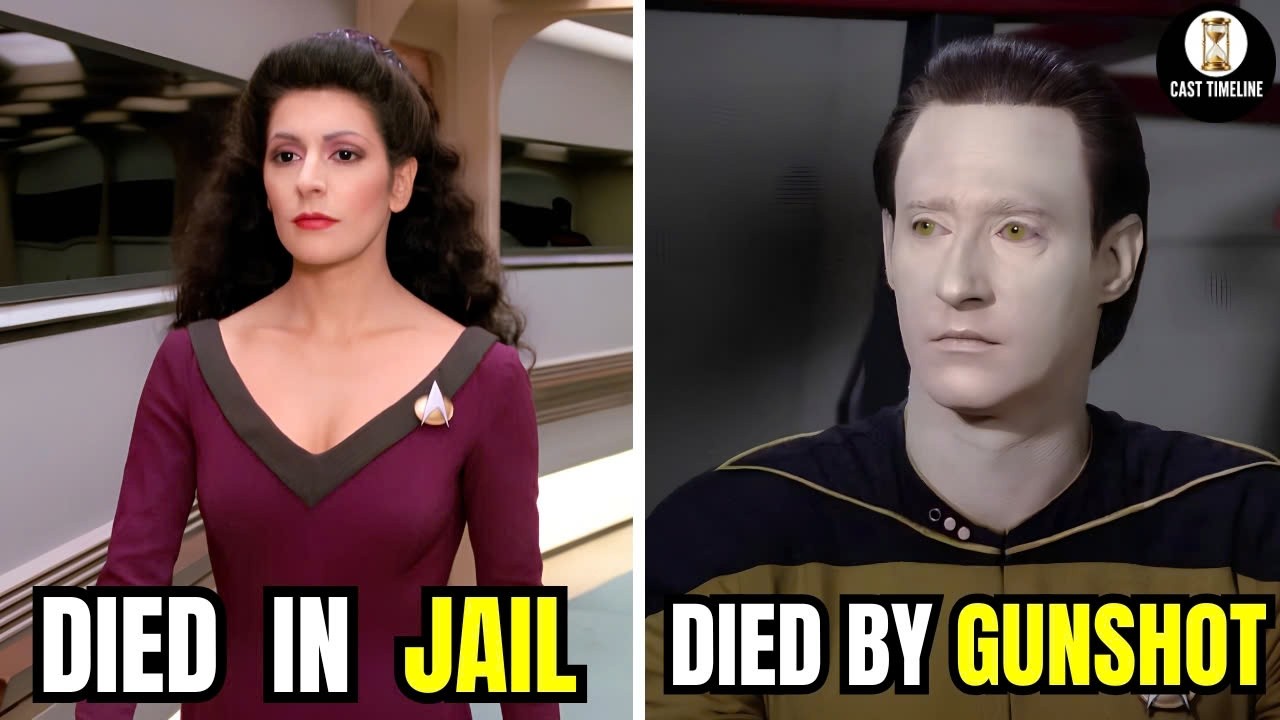
Few could have predicted that Star Trek: The Next Generation would become one of the most influential television series of its era.
The original Star Trek had already established a devoted audience. But this new series faced a daunting challenge: creating a different crew, a different captain, and a future that could stand independently of the adventures of James T. Kirk and Spock.
At the center was Patrick Stewart, a classically trained British actor whose commanding performance as Captain Jean-Luc Picard transformed him into an international star.
Around him stood a remarkable ensemble.
Jonathan Frakes brought confidence and humor to Commander William Riker. Brent Spiner made the emotionless android Data one of television’s most emotionally compelling characters. Michael Dorn transformed Worf into a symbol of honor and cultural conflict. LeVar Burton gave Geordi La Forge intelligence and warmth.
Marina Sirtis and Gates McFadden added emotional depth through Counselor Deanna Troi and Dr. Beverly Crusher.
Together, they created a fictional family whose relationships became as important as the extraordinary worlds they explored.
But the actors’ real lives unfolded in very different directions.
Some became Hollywood legends. Others found success as directors, writers, educators, and voice performers. Several experienced career setbacks or chose quieter lives away from the spotlight.
And some beloved members of the wider Next Generation family are no longer alive.
Leonard Nimoy, Majel Barrett-Roddenberry, Tony Todd, David Warner, Andreas Katsulas, and Patty Yasutake left behind performances that remain deeply meaningful to science-fiction audiences.
Thirty-nine years after the series premiered, the Enterprise crew continues to occupy a unique place in popular culture.
Their stories reveal what happened after the final television mission and how the people behind Starfleet’s most recognizable characters shaped entertainment history.
Patrick Stewart: From Shakespearean Actor to Captain Jean-Luc Picard
Patrick Stewart was born on July 13, 1940, in Mirfield, Yorkshire, England.
He was 47 when Star Trek: The Next Generation premiered in 1987.
As Captain Jean-Luc Picard, Stewart created a commander who relied on intelligence, diplomacy, and moral conviction rather than aggression.
Picard rarely needed to raise his voice.
His authority came from confidence, experience, and an unwavering belief in the principles of Starfleet.
The character’s famous command, “Make it so,” became one of science fiction’s most recognizable expressions.
Before joining the Enterprise, Stewart had spent decades working in classical theater.
He performed Shakespeare with the Royal Shakespeare Company and established himself as a respected dramatic actor.
Moving into an American science-fiction television series was an unexpected career decision.
But the role changed his life.
Over seven seasons, Stewart transformed Picard into one of television’s most admired captains.
He continued portraying the character in four feature films.
His performance also helped establish The Next Generation as a serious dramatic series capable of exploring politics, ethics, philosophy, and human relationships.
Stewart later achieved another major success as Professor Charles Xavier in the X-Men films.
The role introduced him to a new generation of movie audiences.
Decades after the original series ended, he returned to Starfleet through Star Trek: Picard.
The streaming series explored an older captain confronting personal regrets, complicated relationships, and the consequences of his earlier decisions.
Stewart married singer Sunny Ozell in 2013.
As of October 2026, he is 86 years old.
His extraordinary career has connected Shakespearean theater, blockbuster cinema, and one of television’s most influential science-fiction franchises.
Brent Spiner: The Android Who Became More Human Than Anyone Expected
Brent Spiner was born on February 2, 1949, in Houston, Texas.
He was 38 when he began portraying Lieutenant Commander Data.
Data was an android with extraordinary intelligence and physical abilities.
He could perform complex calculations instantly, process enormous amounts of information, and solve technical problems that challenged the rest of the crew.
Yet he struggled to understand ordinary human emotions.
Humor, friendship, affection, and social conventions often confused him.
That contrast became one of the show’s most powerful storytelling elements.
Spiner’s controlled movements, distinctive voice, and subtle facial expressions gave Data a personality that was simultaneously mechanical and deeply sympathetic.
The character’s attempts to understand humanity frequently produced both comedy and emotional drama.
Before joining Star Trek, Spiner had worked in theater and television.
But Data became his defining role.
He appeared throughout all seven seasons and in the franchise’s feature films.
Outside Star Trek, Spiner demonstrated his comedic range in Independence Day, portraying the eccentric scientist Dr. Brackish Okun.
He later returned to the Star Trek universe through Star Trek: Picard.
The series allowed him to revisit Data while portraying other characters connected to the Soong family.
As of October 2026, Spiner is 77 years old.
His performance remains one of science fiction’s most memorable explorations of what it means to be human.
Jonathan Frakes: The First Officer Who Became a Major Television Director
Jonathan Frakes was born on August 19, 1952, in Bellefonte, Pennsylvania.
He was 35 when he began portraying Commander William T. Riker.
Riker was Picard’s confident first officer.
He combined professional discipline with humor, charm, and a willingness to take risks.
His friendship with Picard became one of the series’ strongest relationships.
Riker could command the Enterprise during a crisis while maintaining a relaxed connection with the crew.
Frakes also developed an unexpected talent while working on the series.
He became interested in directing.
After directing episodes of The Next Generation, he demonstrated that his abilities extended well beyond acting.
He went on to direct Star Trek: First Contact, one of the franchise’s most acclaimed feature films.
He also directed Star Trek: Insurrection.
His television directing career continued across numerous productions, including Leverage, NCIS: Los Angeles, The Orville, and Star Trek: Discovery.
Frakes later returned as Riker in Star Trek: Picard.
His reunion with Patrick Stewart and other cast members became one of the streaming series’ most celebrated developments.
Frakes married actress Genie Francis in 1988.
They have two children.
As of October 2026, he is 74 years old.
His career illustrates how an actor can use an iconic television role as the foundation for a successful second career behind the camera.
Michael Dorn: Worf and the Warrior Who Redefined Klingon Identity
Michael Dorn was born on December 9, 1952, in Luling, Texas.
He was 34 when The Next Generation premiered.
Dorn portrayed Worf, a Klingon officer serving aboard a Federation starship.
The character represented a major development in Star Trek storytelling.
Klingons had previously been portrayed primarily as adversaries.
Worf offered a more complicated perspective.
He was disciplined, honorable, and deeply committed to Klingon traditions.
Yet he had been raised by human parents.
His struggle to reconcile those identities became central to his character.
Dorn’s commanding voice and physical presence made Worf instantly recognizable.
But his performance also revealed vulnerability beneath the warrior’s intimidating appearance.
Worf eventually became one of the longest-serving characters in the franchise.
After The Next Generation, Dorn joined Star Trek: Deep Space Nine.
He also appeared in the feature films.
Outside the franchise, Dorn built an extensive voice-acting career.
His credits included animated productions such as Gargoyles and Invincible.
He later returned as Worf in Star Trek: Picard.
The older version of the character displayed greater emotional restraint while retaining his formidable abilities.
As of October 2026, Dorn is 73 years old.
His portrayal of Worf remains one of the franchise’s most significant character achievements.
LeVar Burton: The Actor Who Became Part of Three Television Generations
LeVar Burton was born on February 16, 1957, in Landstuhl, West Germany.
He was 30 when he began playing Lieutenant Commander Geordi La Forge.
Geordi was the Enterprise’s brilliant engineer.
His distinctive VISOR allowed him to perceive information beyond ordinary human sight.
He became the crew member responsible for solving some of the ship’s most difficult technical problems.
But Burton’s career was already remarkable before Star Trek.
He achieved national recognition through the landmark television miniseries Roots.
His performance introduced him to audiences across the United States.
He also became the host of Reading Rainbow.
For more than two decades, Burton encouraged children to discover books and develop a love of reading.
That educational work became one of his most important cultural contributions.
Meanwhile, his portrayal of Geordi made him a favorite among science-fiction audiences.
Burton also pursued directing.
His credits included episodes of Star Trek, Charmed, and NCIS.
He later returned as Geordi in Star Trek: Picard.
The character’s reunion with his former crewmates gave fans an opportunity to see how his life had developed after the Enterprise-D.
Burton married Stephanie Cozart Burton in 1992.
As of October 2026, he is 69 years old.
Few television performers have influenced such different audiences through education, historical drama, and science fiction.
Wil Wheaton: The Teenage Prodigy Who Reinvented Himself
Wil Wheaton was born on July 29, 1972, in Burbank, California.
He was 15 when The Next Generation premiered.
Wheaton portrayed Wesley Crusher, the gifted teenage son of Dr. Beverly Crusher.
Wesley possessed extraordinary technical abilities.
He frequently understood complicated ship systems and scientific problems despite his young age.
The character attracted mixed reactions from audiences.
Some admired his intelligence and curiosity.
Others felt that his abilities occasionally overshadowed the experienced officers.
Wheaton had already appeared in the acclaimed film Stand by Me before joining Star Trek.
He eventually left the series as a regular performer.
His career later developed in unexpected directions.
Wheaton became a writer, blogger, voice actor, and television host.
He built a strong connection with science-fiction and gaming communities.
He also appeared as a fictionalized version of himself on The Big Bang Theory.
The recurring role humorously explored his reputation among science-fiction fans.
Wheaton married Anne Prince in 1999.
As of October 2026, he is 54 years old.
His transformation from teenage television star to writer and popular culture personality reflects a career built around reinvention.
Whoopi Goldberg: The Hollywood Superstar Who Wanted to Join Star Trek
Whoopi Goldberg was born on November 13, 1955, in New York City.
She was 32 when she first appeared as Guinan in 1988.
Guinan was the mysterious bartender aboard the Enterprise-D.
She worked in Ten Forward, the ship’s social gathering place.
Although she did not hold a command position, she possessed extraordinary wisdom and emotional insight.
Picard frequently sought her advice.
Guinan understood people in ways that even the ship’s most advanced technology could not.
Goldberg’s decision to join Star Trek surprised some observers.
She was already a major star following her acclaimed performance in The Color Purple.
But she had admired the original series and the significance of Nichelle Nichols’ portrayal of Uhura.
Goldberg wanted to become part of that legacy.
Her career continued expanding through films including Ghost and Sister Act.
She eventually became one of the rare performers to achieve EGOT status, winning Emmy, Grammy, Oscar, and Tony awards.
Goldberg later returned as Guinan in Star Trek: Picard.
As of October 2026, she is 70 years old.
Her character remains one of the most beloved supporting figures in the franchise.
Denise Crosby: The Security Chief Who Left Early but Never Disappeared
Denise Crosby was born on November 24, 1957, in Hollywood, California.
She was 29 when The Next Generation premiered.
Crosby portrayed Lieutenant Tasha Yar, the Enterprise’s chief of security.
Tasha had survived a difficult childhood.
Her experiences gave her a direct, disciplined, and sometimes emotionally guarded personality.
She brought a different kind of intensity to the bridge.
But Crosby became dissatisfied with the limited development of her character.
She decided to leave the series during its first season.
The decision was controversial.
Leaving a successful television production carried considerable professional risk.
Yet Crosby’s relationship with the franchise did not end.
She later returned in alternate-timeline storylines.
She also portrayed Sela, the half-Romulan daughter of Tasha Yar.
Outside Star Trek, Crosby appeared in films including Pet Sematary and Deep Impact.
She also worked in television productions such as Ray Donovan.
Crosby produced and appeared in the documentary Trekkies, which explored the passionate fan culture surrounding the franchise.
As of October 2026, she is 68 years old.
Her experience demonstrates how even a relatively brief role can leave a lasting impact on television history.
Colm Meaney: From Transporter Chief to International Film Star
Colm Meaney was born on May 30, 1953, in Dublin, Ireland.
He was 34 when he first appeared as Miles O’Brien.
O’Brien initially occupied a relatively small role aboard the Enterprise.
He became familiar to audiences as the ship’s transporter operator.
Unlike many of Starfleet’s senior officers, O’Brien seemed like an ordinary working professional.
He was practical, loyal, and occasionally frustrated by the demands of his job.
That realism made him appealing.
His role expanded significantly when he joined Star Trek: Deep Space Nine.
There, O’Brien became a central character with a family, personal struggles, and increasingly complicated responsibilities.
Meaney’s career outside Star Trek was equally successful.
He appeared in acclaimed films including The Commitments, The Snapper, Under Siege, Layer Cake, and Law Abiding Citizen.
His ability to portray ordinary men, authority figures, and complex dramatic characters helped him avoid being defined exclusively by science fiction.
As of October 2026, Meaney is 73 years old.
O’Brien remains one of the franchise’s most relatable characters.
John de Lancie: The Actor Who Made Q Unforgettable
John de Lancie was born on March 20, 1948, in Philadelphia, Pennsylvania.
He was 39 when he first portrayed Q.
Q was an extraordinarily powerful being capable of manipulating reality.
He could alter time, create impossible situations, and challenge the Enterprise crew with seemingly unlimited authority.
But his greatest pleasure often appeared to be irritating Captain Picard.
De Lancie’s performance combined arrogance, humor, intelligence, and unpredictability.
Q became one of the franchise’s most memorable recurring characters.
Before joining Star Trek, de Lancie had worked extensively in television.
His credits included Days of Our Lives.
He later appeared in Breaking Bad and developed a successful voice-acting career.
His voice work included My Little Pony: Friendship Is Magic.
He also collaborated with Leonard Nimoy on Alien Voices, an audio project adapting classic science-fiction stories.
De Lancie returned as Q in multiple Star Trek series and later in Star Trek: Picard.
As of October 2026, he is 78 years old.
His portrayal of Q remains one of television’s most entertaining combinations of villainy and philosophical curiosity.
Diana Muldaur: The Doctor Who Challenged the Enterprise Crew
Diana Muldaur was born on August 19, 1938, in Brooklyn, New York.
She was 50 when she joined The Next Generation as Dr. Katherine Pulaski.
Pulaski replaced Beverly Crusher as the ship’s chief medical officer during the second season.
She was experienced, confident, and outspoken.
Unlike many other crew members, she initially approached Data with skepticism.
That created tension and made her a controversial character among some fans.
Muldaur was already familiar with Star Trek.
She had appeared in two episodes of the original series during the 1960s.
After leaving The Next Generation, she achieved another major television success.
She portrayed Rosalind Shays on L.A. Law.
The performance earned her Emmy nominations and established another memorable television identity.
Muldaur later stepped away from regular acting.
As of October 2026, she is 88 years old.
Her single season aboard the Enterprise remains a subject of discussion among fans.
Leonard Nimoy: Spock’s Emotional Return to the Next Generation
Leonard Nimoy was born on March 26, 1931, in Boston, Massachusetts.
He was 60 when he appeared as Spock in The Next Generation.
His return connected the original Star Trek with its successor.
Spock had become one of science fiction’s most recognizable characters through his logical thinking, emotional restraint, and distinctive Vulcan identity.
In The Next Generation, he appeared as an older ambassador pursuing diplomatic objectives.
His reunion with the franchise carried enormous emotional significance.
Nimoy had spent decades navigating his relationship with the character.
He published books titled I Am Not Spock and I Am Spock, reflecting the changing nature of that relationship.
He also directed Star Trek III: The Search for Spock and Star Trek IV: The Voyage Home.
Outside acting, Nimoy pursued photography, poetry, and other artistic interests.
He returned as Spock Prime in the 2009 Star Trek film, helping connect another generation of performers with the original franchise.
Nimoy died on February 27, 2015, at age 83, following complications from chronic obstructive pulmonary disease.
His legacy remains inseparable from the phrase “Live long and prosper.”
Majel Barrett-Roddenberry: The First Lady of Star Trek
Majel Barrett was born on February 23, 1932, in Columbus, Ohio.
She was 55 when The Next Generation premiered.
Her connection to Star Trek began long before the Enterprise-D.
She portrayed Number One in the original pilot and Nurse Christine Chapel in the classic series.
In The Next Generation, she became the voice of the Enterprise computer.
Her calm delivery became one of the most familiar sounds in the franchise.
She also portrayed Lwaxana Troi, Deanna’s flamboyant mother.
Lwaxana’s dramatic personality frequently created uncomfortable situations for Picard.
Barrett’s performances connected multiple generations of Star Trek storytelling.
She was married to franchise creator Gene Roddenberry.
After his death, she remained involved in preserving and expanding his creative legacy.
Barrett died on December 18, 2008, at age 76, following leukemia.
Her voice continued appearing through archived recordings.
Few performers became as deeply embedded in the identity of a fictional universe.
Tony Todd: The Klingon Warrior Who Became a Horror Legend
Tony Todd was born on December 4, 1954, in Washington, D.C.
He portrayed Kurn, Worf’s long-lost Klingon brother.
Kurn brought new complications to Worf’s understanding of his family and cultural identity.
Todd’s towering physical presence and distinctive voice made the character immediately memorable.
Outside Star Trek, Todd achieved major recognition through the horror film Candyman.
His performance transformed him into a horror icon.
He also appeared in The Crow, The Rock, and the Final Destination franchise.
Todd returned to the Star Trek universe in other roles.
He portrayed an older Jake Sisko in the celebrated Deep Space Nine episode The Visitor.
He also appeared in Star Trek: Voyager.
His career included extensive stage work and more than 200 screen credits.
Todd died on November 6, 2024, at age 69.
His performances remain celebrated by both science-fiction and horror audiences.
Andreas Katsulas: The Romulan Commander Who Became a Science-Fiction Legend
Andreas Katsulas was born on May 18, 1946, in St. Louis, Missouri.
He was 43 when he first portrayed Commander Tomalak.
Tomalak was a Romulan officer whose encounters with Picard frequently involved political tension and strategic threats.
Katsulas gave the character a controlled, intimidating presence.
He could create tension through subtle expressions and measured dialogue.
Outside Star Trek, Katsulas appeared in The Fugitive as the one-armed man.
But science-fiction audiences also remember him for portraying G’Kar on Babylon 5.
That role allowed him to explore a character of extraordinary emotional and political complexity.
He later returned to the Star Trek universe through Enterprise.
Katsulas died on February 13, 2006, at age 59, following lung cancer.
His work remains highly respected among science-fiction fans.
Patty Yasutake: The Quietly Essential Nurse Alyssa Ogawa
Patty Yasutake was born on September 6, 1953, in Gardena, California.
She portrayed Nurse Alyssa Ogawa.
Ogawa worked alongside Dr. Beverly Crusher in the Enterprise’s sickbay.
Although she was not a principal character, her recurring presence helped make the medical department feel believable.
She was competent, professional, and dependable.
Yasutake appeared in multiple seasons and continued portraying Ogawa in the feature films.
Outside Star Trek, she worked in theater, film, and television.
Her later credits included Netflix’s Beef.
That role introduced her to another generation of viewers.
Yasutake died on August 5, 2024, at age 70, following cancer.
Her performance remains an example of how a recurring supporting character can become an essential part of a television ensemble.
David Warner: The Interrogator Behind One of Picard’s Darkest Stories
David Warner was born on July 29, 1941, in Manchester, England.
He portrayed Gul Madred, the Cardassian interrogator who subjected Picard to psychological and physical torment.
The character appeared in the celebrated two-part episode Chain of Command.
Madred was terrifying because of his restraint.
He rarely needed dramatic gestures.
His methods relied on manipulation, intimidation, and the calculated destruction of personal certainty.
Warner’s performance created one of Picard’s most memorable adversaries.
Before The Next Generation, Warner had already enjoyed a distinguished career.
His credits included The Omen, Tron, and multiple Star Trek films.
He later appeared in Titanic as Spicer Lovejoy.
Warner died on July 24, 2022, at age 80.
His brief appearance in The Next Generation remains one of the franchise’s most powerful guest performances.
Georgia Brown: The Actress Who Gave Worf’s Family Story Emotional Warmth
Georgia Brown was born on October 21, 1933, in London, England.
She portrayed Helena Rozhenko, Worf’s adoptive mother.
Helena brought warmth and humor to a character whose identity was frequently defined by duty and Klingon tradition.
Her presence reminded audiences that Worf was not only a warrior.
He was also someone’s son.
Brown was already a celebrated theatrical performer.
She achieved major recognition for portraying Nancy in the musical Oliver!
Her career included Broadway, London theater, film, and television.
She died on July 5, 1992, at age 58.
Her portrayal of Helena remains a touching part of Worf’s personal story.
Marina Sirtis: The Counselor Who Brought Empathy to the Enterprise
Marina Sirtis was born on March 29, 1955, in London, England.
She was 32 when she began portraying Counselor Deanna Troi.
Troi was half-Betazoid and possessed empathic abilities.
She could sense emotions, helping Picard understand the intentions and feelings of people encountered during missions.
Her role emphasized the importance of emotional intelligence.
While other officers focused on tactical or technical solutions, Troi considered psychological consequences and personal relationships.
Sirtis remained with the series throughout its seven seasons.
She also appeared in the feature films.
Outside Star Trek, she worked in television and voice acting.
Her credits included NCIS and Grey’s Anatomy.
She later returned as Troi in Star Trek: Picard.
As of October 2026, Sirtis is 71 years old.
Her portrayal helped establish empathy as an essential part of leadership aboard the Enterprise.
Gates McFadden: The Doctor Who Became One of Picard’s Closest Allies
Gates McFadden was born on March 2, 1949, in Cuyahoga Falls, Ohio.
She was 38 when The Next Generation premiered.
McFadden portrayed Dr. Beverly Crusher, the Enterprise’s chief medical officer.
Beverly was intelligent, compassionate, and willing to challenge Picard when she believed he was wrong.
Her professional authority made her an essential member of the senior staff.
Her complicated personal relationship with Picard also became an important part of the series.
Before joining Star Trek, McFadden had worked as a choreographer and movement coach.
Her experience included projects connected to Jim Henson’s productions.
She left the series during its second season but returned for the third.
Her character remained central through the rest of the show’s original run and the feature films.
McFadden also directed an episode of The Next Generation.
She continued working in theater and education.
Years later, she returned as Beverly Crusher in Star Trek: Picard.
The series gave her character an important new chapter.
As of October 2026, McFadden is 77 years old.
Her portrayal remains one of the franchise’s most recognizable depictions of a strong, independent medical professional.
The Real Lives Behind Starfleet’s Most Famous Crew
Star Trek: The Next Generation presented a hopeful vision of the future.
Its characters lived in a society that valued exploration, scientific knowledge, cooperation, and diplomacy.
But the actors behind those characters experienced ordinary human challenges.
Some struggled to escape the roles that made them famous.
Others discovered new professional opportunities.
Jonathan Frakes became a successful director.
LeVar Burton combined acting with education.
Wil Wheaton developed a career in writing and popular culture.
Brent Spiner continued exploring comedy and drama.
Michael Dorn became a prolific voice actor.
Patrick Stewart achieved international recognition through multiple iconic franchises.
Meanwhile, several supporting performers left behind remarkable careers before their deaths.
Their lives demonstrate that an ensemble television series can become the foundation for many different professional journeys.
Remembering the Stars Who Are No Longer With Us
The wider Next Generation family has experienced painful losses.
Leonard Nimoy died in 2015.
Majel Barrett-Roddenberry died in 2008.
Tony Todd died in 2024.
Andreas Katsulas died in 2006.
David Warner died in 2022.
Georgia Brown died in 1992.
Patty Yasutake died in 2024.
Their performances remain part of the franchise’s enduring history.
Spock continues representing logic and compassion.
Lwaxana Troi remains unforgettable for her dramatic personality.
Kurn embodies Klingon honor and family conflict.
Tomalak remains one of Picard’s most memorable Romulan adversaries.
Gul Madred continues haunting viewers through one of the series’ darkest stories.
And Nurse Ogawa remains a familiar presence in the Enterprise’s sickbay.
Although the performers are gone, their characters continue reaching audiences through the series.
Why Star Trek: The Next Generation Still Matters in 2026
When The Next Generation premiered in 1987, it faced skepticism.
Many viewers wondered whether a new captain and crew could successfully follow the original series.
But the production gradually established its own identity.
Its stories explored artificial intelligence, prejudice, political conflict, personal freedom, scientific responsibility, and the meaning of humanity.
Data’s search for emotions raised questions about consciousness.
Worf’s cultural struggles explored identity and belonging.
Troi’s empathy emphasized the importance of understanding others.
Picard’s leadership demonstrated the value of reason and diplomacy.
The Enterprise became more than a fictional spacecraft.
It represented a community of individuals who respected their differences while working toward shared goals.
Those themes helped the series remain relevant long after its original run ended.
Later productions, including Star Trek: Picard, introduced the characters to new audiences.
Their reunions demonstrated how deeply viewers remained attached to the original ensemble.
The Enterprise Crew in 2026: A Legacy That Continues Across Generations
Thirty-nine years after its premiere, Star Trek: The Next Generation remains one of the most influential science-fiction series ever produced.
The surviving principal actors are now in their seventies and eighties, with Wil Wheaton representing a younger generation of the original ensemble.
Their careers have extended across film, television, theater, directing, education, writing, and voice acting.
Some remain closely associated with the franchise.
Others have achieved success in entirely different creative fields.
The performers who have passed away remain part of its history through unforgettable guest roles and recurring characters.
For fans, however, the Enterprise-D remains suspended in a familiar moment.
Picard is sitting in the captain’s chair.
Riker stands ready to take command.
Data is studying another puzzling aspect of human behavior.
Geordi is working to keep the ship functioning.
Worf is monitoring the tactical situation.
Troi is sensing emotions that others cannot detect.
And Beverly Crusher is prepared to help anyone who needs her.
The actors have grown older.
Some have retired.
Others have died.
But the fictional crew continues exploring the universe through stories that audiences revisit again and again.
That is the enduring achievement of Star Trek: The Next Generation.
It did more than introduce a new starship.
It created characters who encouraged generations to imagine a future built on curiosity, courage, understanding, and hope.
And nearly four decades later, the Enterprise’s mission still feels unfinished.


