When Star Trek: Deep Space Nine premiered in 1993, it immediately felt different.
This was not simply another crew traveling from planet to planet in search of the unknown.
Deep Space Nine stayed in one place and forced its characters to live with the consequences.
War came to the station.
Religion collided with Starfleet rationalism.
Old enemies became uneasy allies.
Friends betrayed each other.
Heroes compromised.
Families tried to survive while entire civilizations moved toward conflict.
At the center was Benjamin Sisko, a widowed father who arrived carrying grief and eventually became a wartime commander, religious figure and one of the most complicated captains in Star Trek history.
But Sisko was only one part of an extraordinary ensemble.
Kira Nerys carried the scars of occupation.
Odo searched for belonging.
Quark chased profit while repeatedly revealing a heart he preferred to hide.
Miles O’Brien became an ordinary working man trapped inside extraordinary events.
Julian Bashir grew from an overconfident young doctor into someone forced to confront war, secrecy and his own identity.
Worf found his ideas about honor tested more brutally than ever.
Jadzia Dax carried lifetimes of memories while refusing to stop enjoying the present.
Nog went from mischievous Ferengi teenager to Starfleet officer and wounded veteran.
And Garak turned the words “plain, simple tailor” into one of the most suspicious descriptions ever spoken on television.
More than three decades later, some members of this remarkable cast are still working, others have chosen quieter lives, and several beloved performers are sadly gone.
This is the cast of Star Trek: Deep Space Nine then and now in 2026.
Avery Brooks — Captain Benjamin Sisko
Benjamin Sisko entered Deep Space Nine as a man who did not even want to be there.
He was grieving his wife Jennifer, raising his son Jake and taking command of a damaged station beside one of the most politically sensitive locations in the quadrant.
That immediately separated him from the captains who had come before.
Sisko was not simply an explorer.
He was a father.
And Avery Brooks made that distinction matter.
His scenes with Jake became one of the emotional foundations of the entire series. Brooks could move from command authority to tenderness without making either side of Sisko feel artificial.
Then Bajor changed everything.
Sisko became the Emissary to the Prophets, a spiritual responsibility that placed a Starfleet officer trained in reason inside a religious tradition that saw him as something far greater.
And then came war.
As the Dominion conflict intensified, Sisko became increasingly pragmatic.
Leadership demanded decisions that could not always fit comfortably beside Starfleet’s ideals.
Brooks gave those contradictions extraordinary weight.
Sometimes Sisko was quiet and controlled.
Sometimes he exploded.
At other moments, he seemed almost mythic.
Outside Star Trek, Brooks was already recognized through Spenser: For Hire and A Man Called Hawk. After DS9, his career increasingly included theater, music and education rather than constant mainstream Hollywood visibility.
In the source’s 2026 framing, Avery Brooks is 77.
Sisko remains unforgettable because he carried command, fatherhood, grief, faith, war and sacrifice simultaneously.
He was never merely the man sitting in the captain’s chair.
He was the man forced to discover what that chair could eventually demand from him.
Cirroc Lofton — Jake Sisko
Jake Sisko did something unusual in Star Trek.
He grew up.
Cirroc Lofton was only 15 when Deep Space Nine premiered.
Instead of sending Jake toward Starfleet, the series allowed him to develop another identity.
He wanted to become a writer.
That decision made him essential.
While officers fought wars and commanded starships, Jake represented the civilian watching history unfold.
His friendship with Nog became one of DS9’s most rewarding relationships.
The two boys began together and moved toward completely different futures.
Nog chose Starfleet.
Jake chose writing.
Neither path was treated as less meaningful.
But Jake’s defining relationship was always with his father.
Benjamin and Jake cooked together.
They argued.
They worried about each other.
They talked.
They behaved like family even when enormous events were unfolding around them.
After the series, Lofton continued acting and later participated in podcasts and fan discussions surrounding the show’s legacy.
In 2026, the source places him at 47.
Jake remains one of Star Trek’s rare civilian heroes.
He did not need command, rank or a phaser to matter.
Sometimes witnessing history—and remembering it—is its own form of courage.
Alexander Siddig — Dr. Julian Bashir
Julian Bashir arrived on Deep Space Nine convinced he was ready for adventure.
The station had other plans.
Alexander Siddig was 27 when the series began.
Early Bashir is brilliant, ambitious, enthusiastic and sometimes painfully confident in his own abilities.
But DS9 gradually dismantled that certainty.
Medicine became complicated by war.
Enemies became patients.
Friendships collided with espionage.
And Bashir’s own identity became more complicated when his genetic enhancement was revealed.
That revelation transformed him.
His intelligence was no longer simply an achievement.
It became part of a larger question about identity, ethics and how much of a person’s ability truly belongs to them.
His friendship with Miles O’Brien became another defining part of the character.
The two men seemed almost designed to irritate each other.
Eventually, they became inseparable.
After Star Trek, Siddig built a substantial international career that, according to the source, included projects such as Syriana, Game of Thrones and Gotham.
In 2026, he is 60.
Bashir endures because viewers watched him lose certainty without losing compassion.
The young doctor wanted adventure.
The older Bashir learned what adventure could cost.
Colm Meaney — Chief Miles O’Brien
Miles O’Brien never needed to be extraordinary.
That was his strength.
Colm Meaney was already familiar to Star Trek viewers through The Next Generation before O’Brien moved to Deep Space Nine.
On the station, however, the character finally received room to become fully human.
O’Brien fixed things.
He complained.
He worked.
He worried about his family.
He argued with Bashir.
He survived trauma.
And then he went back to work because somebody still had to keep the station running.
That ordinary quality became remarkable.
Deep Space Nine repeatedly put O’Brien through imprisonment, psychological trauma, war and loss.
Because he felt so grounded, those stories often became more disturbing.
The audience did not see a mythic hero suffering.
They saw someone who felt like a person they knew.
Meaney continued a respected career outside Star Trek, with the source highlighting projects including The Commitments, The Snapper, Layer Cake and Hell on Wheels.
In 2026, he is 72.
O’Brien remains one of Star Trek’s most human characters because he was tired, stubborn, loyal and frequently unlucky.
But something was always broken.
And Miles O’Brien kept fixing it.
Nana Visitor — Major Kira Nerys
Kira Nerys arrived angry.
Deep Space Nine never pretended that anger was irrational.
Nana Visitor was 35 when the series premiered.
Kira had survived the Cardassian occupation of Bajor as a resistance fighter.
Violence, oppression, faith and political betrayal were not theoretical concepts to her.
They were memories.
That made her suspicious of Starfleet and deeply resistant to easy diplomatic answers.
Visitor gave Kira enormous intensity, but also vulnerability.
The series gradually forced Kira to confront what happens after resistance succeeds.
How do you deal with former enemies?
Collaborators?
Political compromise?
Forgiveness?
What happens when the hatred that helped you survive becomes something you no longer know how to carry?
Her faith and her relationship with Sisko added another dimension, while her slow emotional connection with Odo revealed tenderness without diminishing her strength.
Visitor remained active in television and theater and stayed connected to discussions surrounding women in Star Trek and the legacy of DS9.
In 2026, the source places her at 68.
Kira remains powerful because her strength never required pretending the wounds were gone.
Armin Shimerman — Quark
Quark talks about profit constantly.
Yet money never completely explains him.
Armin Shimerman was 43 when Deep Space Nine began.
As proprietor of the station’s bar, Quark occupied the center of social life on the Promenade.
Gambling.
Deals.
Rumors.
Schemes.
Negotiations.
Latinum.
At first, Quark appears to be comic relief.
But Shimerman gradually revealed something far richer.
Quark loves Ferengi culture even while recognizing some of its absurdities.
He loves his family despite constantly complaining about them.
And his relationship with Odo becomes one of the strangest friendships in the series.
They chase each other.
Insult each other.
Distrust each other.
And somehow depend on each other.
Through Quark and his family, DS9 expanded Ferengi society beyond earlier caricature and explored economics, tradition, gender inequality and social change.
Shimerman continued acting, voice work, writing and teaching after the series.
In 2026, the source places him at 76.
Quark remains unforgettable because underneath all the talk about profit, he understands people remarkably well.
Sometimes better than Starfleet does.
Michael Dorn — Worf
Worf arrived on Deep Space Nine carrying years of Star Trek history.
The station gave him something new.
Consequences.
Michael Dorn joined DS9 in 1995 after making Worf one of The Next Generation’s most popular characters.
On Deep Space Nine, Worf’s ideas about Klingon honor were tested through politics, war, loyalty and love.
Then he met Jadzia Dax.
Their relationship forced Worf into emotional territory that combat never could.
Love.
Jealousy.
Marriage.
Compromise.
And eventually devastating grief.
His connection with Martok also gave Worf a form of Klingon brotherhood built through shared hardship rather than blood.
The Dominion War then forced him to balance Starfleet obligations against Klingon loyalty.
Dorn continued acting and extensive voice work after DS9.
In 2026, the source places him at 73.
Deep Space Nine transformed Worf from a cultural outsider into something more complete.
Warrior.
Officer.
Husband.
Friend.
Survivor.
His honor stopped being something he talked about.
It became something life repeatedly tested.
Aaron Eisenberg — Nog
Nog began as comic relief.
He became one of Deep Space Nine’s most emotional characters.
Aaron Eisenberg was 24 when the series premiered.
Early Nog seems destined to follow Ferengi expectations.
Instead, he chooses Starfleet.
The decision matters because it is not simply ambition.
Nog sees a future he does not want and consciously decides to build another one.
His friendship with Jake makes the transformation even more interesting.
The Starfleet captain’s son rejects Starfleet.
The Ferengi boy fights desperately to join it.
Then the Dominion War changes Nog forever.
He loses a leg and must confront psychological trauma after returning from battle.
The storyline turns his journey from one of achievement into one of recovery.
Eisenberg gave those scenes remarkable vulnerability.
He later remained closely connected with fans and co-hosted a podcast with Cirroc Lofton.
Aaron Eisenberg died in 2019 at only 50.
Nog’s story feels even more emotional now.
The mischievous teenager became an officer, a veteran and proof that the future does not have to resemble the role society assigned you.
Andrew Robinson — Elim Garak
Plain.
Simple.
Tailor.
Almost nobody believed Garak.
That was the fun.
Andrew Robinson was 51 when Garak first appeared.
From the beginning, Garak was charming, intelligent, amusing and obviously dangerous.
Former spy?
Exile?
Patriot?
Traitor?
Victim?
Manipulator?
Probably all of them.
Robinson gave the character such controlled ambiguity that an ordinary lunch conversation could feel like an interrogation.
His relationship with Bashir became especially important.
What begins as curiosity develops into friendship, intellectual competition and something far harder to define.
Through Garak, DS9 explored exile, torture, authoritarianism, shame and the complicated relationship between a person and a homeland capable of terrible things.
Robinson had already made a major impression in Dirty Harry before DS9.
He later continued acting, directing and teaching and wrote the Garak-centered novel A Stitch in Time.
In 2026, the source places him at 84.
Garak remains one of Star Trek’s greatest creations because even after years of watching him, certainty remains impossible.
Sometimes his lies reveal more truth than anyone else’s honesty.
Max Grodénchik — Rom
Rom begins as Quark’s nervous, unsuccessful brother.
By the end, everything has changed.
Max Grodénchik was 40 when DS9 began.
Rom initially appears almost designed to be underestimated.
He is awkward.
He lacks Quark’s instinct for profit.
And by traditional Ferengi standards, he seems unsuccessful.
But those supposed weaknesses eventually reveal his strengths.
He is kind.
Mechanically gifted.
Loyal.
A devoted father.
And increasingly willing to challenge an unfair system.
His support for Nog becomes particularly important.
Instead of forcing his son into Ferengi tradition, Rom helps Nog pursue Starfleet.
Rom later becomes involved in labor organization, develops his relationship with Leeta and eventually rises to Grand Nagus.
The brother everyone underestimated becomes a leader.
In 2026, the source places Grodénchik at 73.
Rom’s journey demonstrates that leadership does not always begin with confidence.
Sometimes it begins with kindness.
Mark Alaimo — Gul Dukat
Gul Dukat is terrifying because he rarely believes he has done anything wrong.
Mark Alaimo was 50 when Deep Space Nine began.
Dukat is intelligent, charismatic and deeply invested in his own mythology.
He participated in a system responsible for enormous suffering during the occupation of Bajor.
Yet he continually seeks recognition for what he considers his restraint and enlightened leadership.
That contradiction defines him.
Dukat does not simply want power.
He wants gratitude.
He wants admiration.
He especially wants Kira and the Bajorans to acknowledge the heroic version of himself that exists inside his own mind.
His rivalry with Sisko eventually takes on increasingly spiritual dimensions as Dukat’s self-image grows more extreme.
Alaimo gave him charm without allowing audiences to forget the cruelty underneath it.
In 2026, the source places him at 83.
Dukat remains one of DS9’s strongest antagonists because he embodies a disturbing form of evil.
The person capable of terrible acts while remaining completely convinced that history has misunderstood him.
Jeffrey Combs — Weyoun
Weyoun could smile while threatening an entire civilization.
That was precisely what made him unsettling.
Jeffrey Combs first appeared as Weyoun in 1994.
As a Vorta devoted to the Founders, Weyoun combines diplomacy with absolute acceptance of authoritarian power.
He is polite.
Articulate.
Charming.
And morally certain.
Combs made courtesy itself feel threatening.
The character’s cloned nature also created one of DS9’s strangest recurring jokes.
Kill Weyoun?
Another Weyoun can arrive.
Combs became one of Star Trek’s most beloved recurring performers, appearing in multiple roles including Brunt and, elsewhere in the franchise, Shran.
His wider genre career also includes Re-Animator and The Frighteners.
In 2026, the source places him at 71.
Weyoun remains memorable because he proves that tyranny does not always shout.
Sometimes it smiles politely while explaining why resistance is unreasonable.
J.G. Hertzler — Martok
Martok made Klingon honor feel earned.
J.G. Hertzler gave the character battle scars, humor, anger and enormous physical presence.
But underneath all that aggression was warmth.
Martok’s relationship with Worf gradually becomes almost familial.
He accepts Worf as a Klingon whose identity has been proven through actions rather than birthplace.
That gives Worf a sense of belonging he had struggled to find.
Martok’s eventual rise to Chancellor also reinforces the character’s central appeal.
He understands soldiers because he has been one.
He understands suffering because he has experienced it.
In 2026, the source places Hertzler at 76.
Martok remains one of DS9’s most beloved Klingons because he combines tradition with humanity.
He is powerful without pretending pain cannot touch him.
Nicole de Boer — Ezri Dax
Ezri Dax entered Deep Space Nine in one of the most difficult positions imaginable.
The audience was still grieving Jadzia.
And Ezri arrived carrying her memories.
Nicole de Boer joined the series in 1998.
The show wisely refused to pretend Ezri could simply replace Jadzia.
She is younger.
Less confident.
And unprepared for the joined existence suddenly inside her mind.
Her story becomes one of identity.
Which emotions belong to Ezri?
Which belong to Dax?
What happens when multiple lifetimes enter someone before she has fully understood her own?
Her relationship with Worf becomes especially painful because Ezri remembers Jadzia’s love for him without actually being Jadzia.
In 2026, the source places de Boer at 55.
Ezri succeeds because she eventually stops trying to justify herself as someone else’s replacement.
Her story is about learning to carry other lives without surrendering her own.
Casey Biggs — Damar
Damar began as someone else’s subordinate.
He ended as something completely different.
Casey Biggs first appeared in 1996.
Early Damar is loyal to Cardassia and participates in a brutal political system without deeply questioning what that system has done.
Then the Dominion begins tightening its control over Cardassia.
Suddenly, domination is no longer abstract.
Damar experiences from the other side something his own society once imposed on Bajor.
His awakening is not clean.
He does not suddenly become innocent.
That is what makes the arc work.
Guilt, anger and exhaustion gradually push him toward resistance.
Eventually he becomes willing to fight the system he once served.
In 2026, the source places Biggs at 71.
Damar’s story asks one of DS9’s most difficult questions.
Can someone become better after helping build something terrible?
His past cannot disappear.
What changes is what he chooses to do after finally understanding it.
Rosalind Chao — Keiko O’Brien
Keiko O’Brien gave Deep Space Nine something easy to overlook.
Domestic reality.
Rosalind Chao was 35 when DS9 began.
Keiko entered the station with her own career and expectations.
She was not simply Miles O’Brien’s wife.
And that mattered.
Life on Deep Space Nine required compromises.
Careers competed.
Children needed stability.
Miles disappeared on dangerous assignments.
Keiko had to decide repeatedly whether the station was truly a place where their family could build a life.
Their marriage felt unusually believable because love did not magically eliminate practical disagreements.
Chao continued a long career outside Star Trek, with the source highlighting The Joy Luck Club, Mulan and What Dreams May Come.
In 2026, she is 68.
Keiko helped remind viewers that Starfleet adventure for one person could become sacrifice for everyone waiting at home.
Chase Masterson — Leeta
Leeta began near the edge of the frame.
She did not stay there.
Chase Masterson first appeared in 1995.
Initially associated with Quark’s bar and the Dabo tables, Leeta gradually develops into a character with independence, loyalty and self-respect.
Her eventual relationship with Rom becomes especially important.
Both characters are underestimated.
Together, they grow.
According to the source, Masterson later continued acting, singing and voice work while also becoming involved in anti-bullying advocacy.
In 2026, she is 63.
Leeta’s journey reflects one of DS9’s recurring ideas.
The role society first gives you does not have to become the person you remain.
Penny Johnson Jerald — Kasidy Yates
Kasidy Yates gave Benjamin Sisko something precious.
A future.
Penny Johnson Jerald joined DS9 in 1995.
Kasidy had her own ship, career, beliefs and independence.
She could love Sisko without becoming merely an extension of him.
Her involvement with the Maquis complicated their relationship because love did not erase political or legal consequences.
Their eventual marriage then gave Sisko something tangible to lose.
Not simply command.
Not prophecy.
A home.
A partner.
A life after war.
Jerald later built a substantial television career, including work highlighted by the source in 24, Castle and The Orville.
In 2026, she is 65.
Kasidy makes Sisko’s sacrifices hurt because she represents the life he genuinely wants to return to.
Salome Jens — The Female Changeling
The Female Changeling rarely needs to raise her voice.
She already believes history belongs to her.
Salome Jens brought icy restraint to the face of Dominion authority.
The Founders view solids as dangerous and chaotic.
From that fear comes an ideology of control.
The Female Changeling does not describe domination as cruelty.
She describes it as order.
That certainty makes her terrifying.
Her relationship with Odo is particularly effective because she offers him something he desperately wants.
Belonging.
For someone who has spent his life wondering where he came from, that invitation is extraordinarily powerful.
But belonging comes with conditions.
In 2026, the source places Jens at 90.
The Female Changeling remains disturbing because she represents authoritarianism without hysteria.
Everything is calm.
Everything is rational.
Everything is justified.
At least to her.
Louise Fletcher — Kai Winn
Kai Winn could make two words sound threatening.
“My child.”
Louise Fletcher brought extraordinary restraint to one of DS9’s most memorable antagonists.
Winn speaks the language of faith and humility.
Underneath it sits an enormous hunger for recognition.
Her conflict with Kira works because both women care deeply about Bajoran spirituality.
But they experience faith differently.
Kira’s faith exists alongside humility.
Winn repeatedly seeks confirmation that she is important.
Sisko’s status as Emissary intensifies that resentment.
An outsider receives the spiritual significance Winn desperately wants.
Fletcher had already won an Academy Award for playing Nurse Ratched in One Flew Over the Cuckoo’s Nest, and her ability to create quiet menace translated perfectly into Kai Winn.
Louise Fletcher died in 2022 at the age of 88.
Kai Winn remains frightening because she demonstrates how ambition can learn to speak the language of holiness.
Barry Jenner — Admiral William Ross
Admiral Ross represents Starfleet after idealism meets war.
Barry Jenner first appeared in the role in 1997.
Ross is not simply a bureaucrat issuing orders from somewhere safe.
He works directly within the Dominion War’s strategic leadership.
That means choosing between outcomes where every option may involve casualties.
Jenner plays him as a professional officer rather than a grand heroic figure.
That restraint matters.
Ross represents a central DS9 question.
What happens to an institution built around peaceful ideals when survival requires military thinking?
Barry Jenner died in 2016 at the age of 75.
Ross remains important because he represents leadership without glamour.
Someone still has to read the casualty reports after the starships disappear into battle.
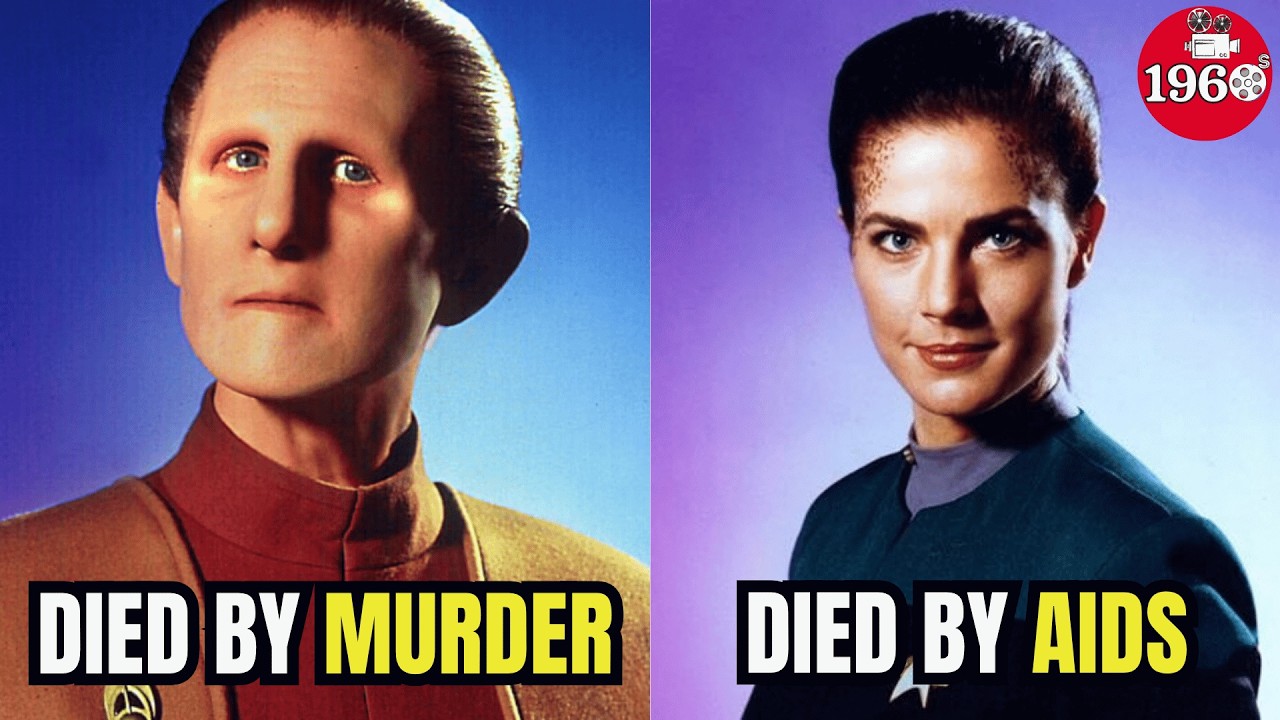
Terry Farrell — Jadzia Dax
Jadzia Dax was young and ancient at the same time.
That contradiction made her extraordinary.
Terry Farrell was 29 when Deep Space Nine began.
As a joined Trill, Jadzia carries memories from previous Dax hosts.
She possesses centuries of experience without behaving as though life has become predictable.
Farrell gave her warmth, intelligence and curiosity.
Jadzia could discuss science, remember past relationships, joke with friends and throw herself enthusiastically into something completely new.
Her friendship with Sisko carries the strange intimacy of a relationship continuing across different bodies.
Her romance and marriage with Worf became one of the show’s defining relationships.
Then came her sudden death.
The loss after season six remains painful precisely because Jadzia was a character defined by life.
Farrell later starred in Becker and eventually stepped away from Hollywood for a quieter life before returning to fan events, according to the source.
In 2026, she is 62.
Jadzia remains beloved because carrying memories never stopped her from creating new ones.
That is why her ending still feels cruel.
Someone who contained so many lifetimes seemed as though she should have been given more time.
René Auberjonois — Odo
Odo spent much of Deep Space Nine pretending he did not need anyone.
René Auberjonois made audiences understand that he did.
Odo begins as an outsider.
A Changeling raised among solids.
He has no clear understanding of his origin, so he builds his identity around order.
Rules are predictable.
Relationships are not.
As station security chief, he uses discipline to protect himself from uncertainty.
But underneath that rigid exterior is profound loneliness.
His relationship with Kira gradually forces those hidden emotions into the open.
Then Odo discovers the Founders.
For the first time, he has found his own people.
And they are responsible for the Dominion.
That creates one of DS9’s deepest conflicts.
Odo must choose between biological belonging and the people who became his home.
Auberjonois brought extraordinary restraint to that struggle.
Outside Star Trek, his career stretched across theater, television, film and voice acting, with the source noting work including Benson, MASH and The Little Mermaid.
René Auberjonois died in 2019 at the age of 79 from metastatic lung cancer.
His absence makes revisiting Odo especially emotional.
Because beneath the shapeshifting, suspicion and obsession with order, Odo’s story was always painfully human.
He wanted to know where he belonged.
And perhaps that is why Deep Space Nine itself has endured.
The station was filled with outsiders.
Sisko belonged to Starfleet but became part of Bajoran prophecy.
Kira survived occupation and had to learn how to live after resistance.
Worf belonged to Klingon culture while repeatedly standing outside it.
Garak loved Cardassia despite knowing exactly what Cardassia had done.
Odo found his species only to discover that his true home might be somewhere else.
Nog rejected the future assigned to him.
Dax carried many identities inside one life.
Quark constantly criticized the Federation while becoming inseparable from the community living around him.
Deep Space Nine was never merely a story about exploring space.
It was about people trapped together long enough to discover who they really were.
Some of the actors who built that world are no longer here.
Aaron Eisenberg is gone.
René Auberjonois is gone.
Louise Fletcher is gone.
Barry Jenner is gone.
But turn on Deep Space Nine and the Promenade fills again.
Quark starts another scheme.
Odo watches him suspiciously.
Bashir annoys O’Brien.
Kira challenges someone who underestimated her.
Garak smiles while saying something that probably isn’t true.
Worf talks about honor.
Jadzia laughs.
Nog dreams about becoming something nobody expected.
Jake writes.
And Benjamin Sisko stands at the center of the station carrying the weight of a future he never asked to inherit.
More than three decades later, Deep Space Nine remains one of Star Trek’s most complicated worlds because it understood something surprisingly simple.
Exploring the galaxy is difficult.
Living with each other can be harder.


