Sensational digital commentary channels and automated sports media accounts have recently flooded video platforms with dramatic headlines claiming that Dallas Wings star Paige Bueckers has “shocked the WNBA” and ignited an explosive debate over her standing alongside Caitlin Clark and A’ja Wilson.
Extravagant social media titles featuring capitalized phrases like SHOCKS THE WNBA and ELITE DEBATE EXPLODES spread rapidly across digital algorithms, capitalizing on intense fan passion and driving user engagement through artificial rivalry narratives.
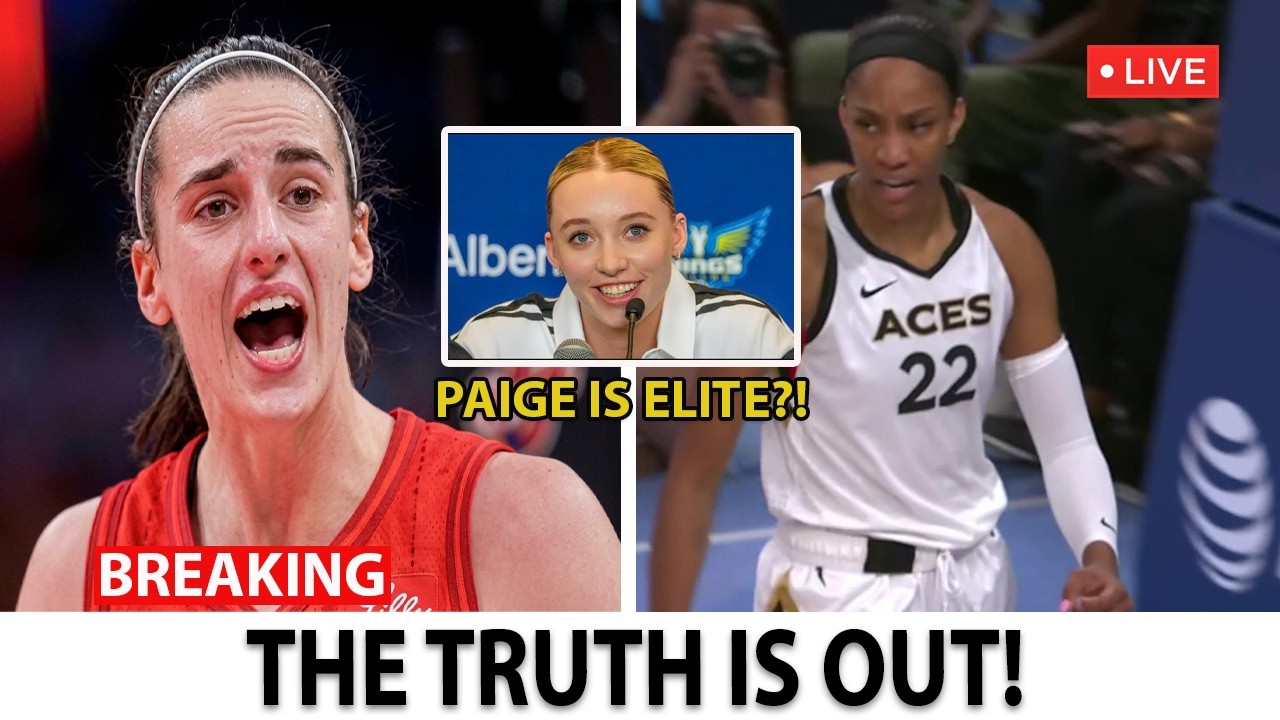
Engagement-driven content networks publish sensationalized breakdown essays alleging league-wide panic, sudden positional displacement, and personal feuds whenever top-tier stars put together exceptional individual performances on the court.
Objective sports analysts and basketball purists quickly recognize these dramatic framing tactics as classic online rage-bait, engineered specifically to harvest clicks, drive comment-section arguments, and monetize high-volume search traffic.
In reality, Paige Bueckers’ stellar transition to the professional level with the Dallas Wings comes as no surprise to anyone who followed her decorated collegiate career and elite basketball trajectory.
Far from being a sudden “shock,” Bueckers’ seamless adaptation to professional pace, physical defensive coverage, and high-stakes execution represents the fulfillment of years of high-level preparation and generational talent.
Framing Bueckers’ individual brilliance as a disruptive force that “invalidates” or “overshadows” established superstars like Caitlin Clark or two-way titan A’ja Wilson completely misrepresents how professional sports hierarchies function.
Unverified media channels exploit the massive global audience surrounding modern women’s basketball, turning routine star comparisons and statistical milestones into exaggerated organizational and personal crises.
These clickbait operations rely on heavily edited thumbnail graphics, dramatic synthetic voiceovers, and selective game highlights to trick casual sports fans into clicking.
Channel creators profit directly from advertising revenue generated by user debate in comment sections, creating a clear financial incentive to constantly push divisive and hyperbolic narratives.
Evaluating the actual landscape of the WNBA reveals an unprecedented era of talent convergence, where multiple generational players across different positions elevate the sport’s global profile simultaneously.
Rather than competing in a zero-sum popularity contest, stars like A’ja Wilson, Caitlin Clark, and Paige Bueckers represent distinct athletic archetypes that enrich the league’s overall competitive product.
A’ja Wilson remains the gold standard of interior dominance, elite rim protection, and MVP-caliber two-way leadership, serving as the foundational anchor for championship basketball.
Caitlin Clark continues to redefine perimeter offensive gravity, shattering passing and deep-shooting records while acting as a high-octane offensive engine that drives record-breaking attendance nationwide.
Paige Bueckers brings a uniquely fluid, high-efficiency scoring package combined with uncanny court vision, mid-range mastery, and defensive instincts that make the Dallas Wings an increasingly formidable contender.
The desire of digital clickbait channels to force a simplified “who is better” debate ignores the fundamental tactical differences in how these elite athletes impact winning.
Basketball execution cannot be reduced to viral hot takes or superficial stat comparisons; it depends on roster construction, offensive system fit, defensive scheme execution, and situational leadership.
Discerning sports consumers must learn to separate algorithmic outrage and engagement bait from genuine, nuanced basketball analysis when evaluating league dynamics.
The rise of Bueckers alongside Clark and Wilson is not a source of league tension or panic, but rather the cornerstone of the WNBA’s commercial and athletic boom.
Executive leaders, network partners, and franchise managers view this multi-star dynamic as an ideal scenario that guarantees high-rated prime-time broadcasts and sustained fan interest for years to come.
Constructing a competitive franchise in the modern WNBA requires strategic roster management, tactical coaching flexibility, and long-term asset development around core superstar pieces.
The Dallas Wings’ commitment to building a cohesive tactical framework around Bueckers highlights how front offices maximize generational talent without bowing to external digital media pressure.
Surrounding Bueckers with complementary perimeter shooters and physical interior defenders allows her natural playmaking IQ to flourish in half-court and transition sets alike.
Her ability to dictate game tempo, manipulate defensive coverages with subtle eye movement, and score efficiently at all three levels elevates the performance of everyone on the roster.
Practices inside team facilities focus on perfecting pick-and-roll timing, defensive switching communication, and secondary ball-handling responsibilities away from social media noise.
Coaching staff members emphasize continuous mechanical refinement, physical conditioning, and film analysis to prepare players for grueling back-to-back league schedules.
The technical development of young superstars is an ongoing, multi-year process that thrives on organizational stability, clear communication, and internal trust.
Knee-jerk reactions from internet commentators after single games or statistical spikes hold zero weight within professional locker rooms and coaching meetings.
Front-office executives evaluate team progress using long-term analytical frameworks, tracking metrics like line-up efficiency ratings, defensive floor spacing, and high-value shot creation.
These internal data points confirm that having multiple marquee talents spread across different franchises elevates the competitive parity and overall quality of play across the entire league.
The dramatic influx of national media attention and corporate sponsorship reflects a permanent cultural shift toward widespread appreciation of women’s professional sports.
Lucrative corporate partnerships, expanded broadcast coverage, and upgraded charter travel standards represent direct, tangible outcomes of this player-driven commercial growth.
As Paige Bueckers, Caitlin Clark, and A’ja Wilson continue to deliver historic performances on the hardwood, sensationalized online rumor campaigns will lose their ability to distract from real athletic achievement.
The WNBA remains on a firm, sustainable trajectory of economic expansion and athletic excellence, propelled by an unprecedented collection of world-class talent and a passionate, rapidly growing global fanbase.


