Sammy Gravano Escaped the Mob, Then Built an Arizona Ecstasy Empire That Destroyed His Chance
Sammy “The Bull” Gravano had already survived something few major Mafia figures ever managed to escape.
He had turned against one of the most feared crime bosses in America, testified for the government, entered federal witness protection, and walked away from the Gambino crime family alive.
The government had given him something extraordinary.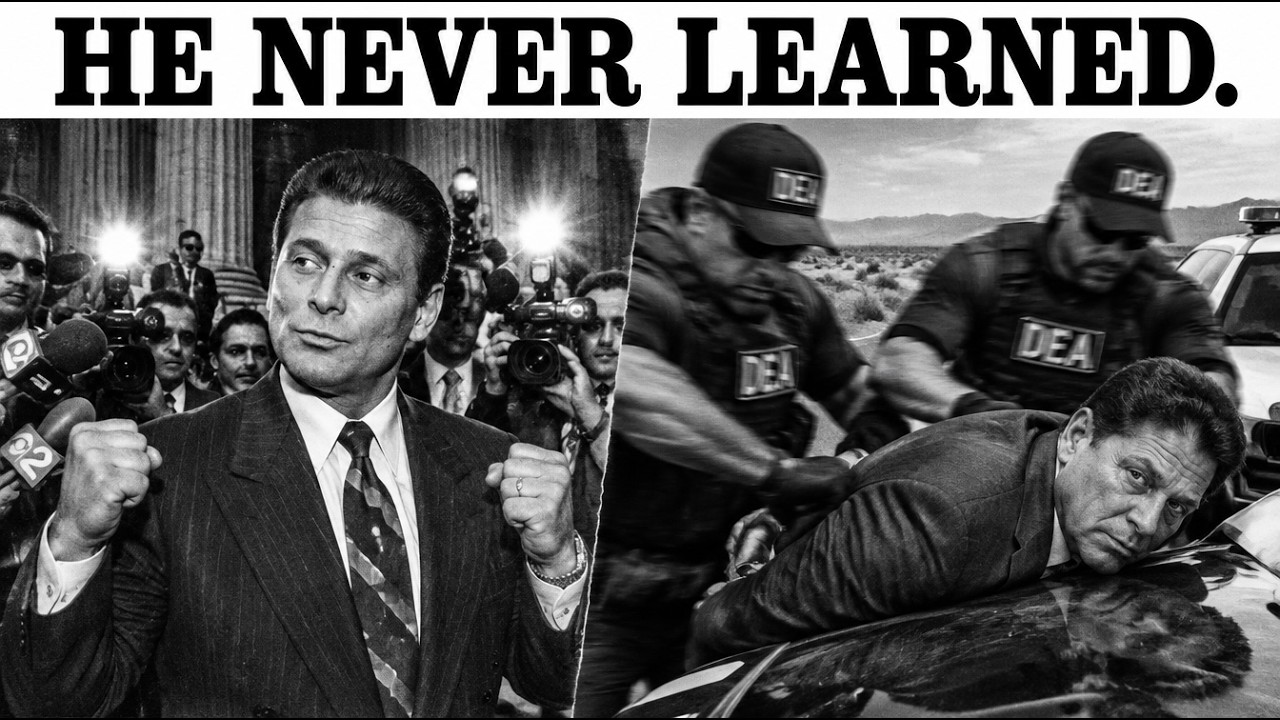
A second life.
Instead of disappearing permanently into anonymity, Gravano eventually rebuilt himself in Arizona and became involved in another enormous criminal enterprise.
This time, the commodity was not extortion, gambling, murder contracts, or traditional Mafia rackets.
It was Ecstasy.
By the time federal agents and Arizona authorities moved against him in February 2000, investigators said Gravano had become involved in what the Drug Enforcement Administration later described as the largest Ecstasy organization dismantled in Arizona at that time.
The story has become even more remarkable because Gravano’s transformation from Mafia informant to Arizona drug trafficker is no longer merely a piece of underworld legend.
Government records, court decisions, contemporary reporting, and DEA historical material document the basic architecture of the operation.
Gravano had once been underboss of New York’s Gambino crime family.
In 1991, he pleaded guilty to federal racketeering charges and agreed to cooperate against John Gotti and other organized-crime figures.
His testimony became crucial to the government’s prosecution of Gotti.
Gotti was convicted in 1992 and sentenced to life imprisonment.
Gravano’s cooperation also helped prosecutors convict numerous other Mafia figures.
The scale of that cooperation made him one of the most consequential organized-crime informants in modern American history.
Gravano had admitted involvement in 19 murders.
Yet because of his cooperation, he received a dramatically reduced federal sentence.
He served approximately five years before entering the federal witness protection system.
Under that program, Gravano was relocated to Arizona.
TIME reported that he arrived using the name Jimmy Moran and attempted to create an entirely new life far from Brooklyn and the Gambino organization.
The objective of witness protection was straightforward.
Remove him from the environment that had created him.
Give him anonymity.
Keep him alive.
Allow him to disappear.
For a man whose testimony had helped imprison some of the most dangerous organized-crime figures in America, disappearing was not merely convenient.
It could have been essential to survival.
But Gravano did not remain hidden indefinitely.
He became frustrated with the restrictions surrounding witness protection and ultimately left the program.
Contemporary AP reporting said he dropped out in 1997 because he wanted to live more openly and was tired of constantly looking over his shoulder.
That decision marked the beginning of a remarkable second chapter.
By the late 1990s, Gravano was living in the Phoenix metropolitan area.
He had businesses.
He had property.
He had money.
And he increasingly stopped behaving like someone desperate to remain invisible.
TIME described an expansive lifestyle that included a large Arizona home with multiple bedrooms, a swimming pool, stables, a garage, and other signs that Gravano had rebuilt considerable personal comfort after leaving prison.
Yet another enterprise was developing beneath that new suburban life.
Ecstasy, or MDMA, had become increasingly popular within rave culture and among younger users during the late 1990s.
Authorities said a distribution organization centered in the Phoenix area began moving enormous quantities of the drug.
And Gravano became deeply connected to it.
On February 24, 2000, federal and local law-enforcement agencies moved.
The Drug Enforcement Administration, Phoenix police, Arizona authorities, and Customs personnel participated in a large series of raids.
Thirty-five people were arrested.
Among them were Gravano and members of his family.
His daughter Karen was arrested.
His son Gerard was arrested.
Contemporary reporting also identified his wife or former wife, Debra, among those caught in the wider operation.
The arrests immediately transformed the case from another drug investigation into national news.
The man whom the federal government had once protected because he testified against John Gotti was now accused of helping construct an enormous Arizona narcotics operation.
Authorities said the organization supplied Ecstasy to rave clubs and young customers throughout the Phoenix area.
Early law-enforcement estimates suggested the ring was distributing tens of thousands of tablets on a regular basis.
Some reports put the figure at approximately 20,000 to 30,000 pills during the organization’s peak distribution periods.
The precise frequency of those numbers differed among early reports.
But there was little dispute about the overall scale.
The enterprise was large.
It was profitable.
And investigators believed Gravano played a significant role.
Phoenix police initially characterized him as a financial backer or mentor within the organization.
The Washington Post reported that investigators accused his group of using Creative Pools, a construction company, to launder proceeds from drug sales.
Other contemporary reporting described Gravano as helping finance and oversee the network rather than personally standing on street corners selling pills.
That distinction did little to protect him legally.
The government’s case focused on participation in the larger criminal enterprise.
Authorities also alleged that the organization imported Ecstasy from Europe.
DEA historical material later described the Gravano organization as bringing substantial quantities of the drug directly from Europe and called it the largest Ecstasy organization dismantled in Arizona at the time.
The Arizona operation also carried an unexpected connection.
Investigators said some members of the distribution network were associated with a local white-supremacist youth group known as the Devil Dogs.
That relationship gave the story another strange dimension.
A former Gambino underboss who had betrayed the Mafia was now linked through his drug enterprise with a completely different criminal subculture in suburban Arizona.
Law enforcement portrayed Gravano as someone who had brought organizational experience and financial knowledge into the network.
The enterprise itself was not described as an extension of the Gambino family.
Authorities specifically distinguished the Arizona ring from Gravano’s former Mafia organization.
But the operational pattern was familiar.
Hierarchy.
Financing.
Distribution.
Money laundering.
Trusted associates.
Family involvement.
And an enormous emphasis on profit.
The court record later made the family component even clearer.
An Arizona appellate decision involving Debra Gravano described the organization as the “Southwest Ecstacy Enterprise.”
The court said its members included Salvatore Gravano, son Gerard, daughter Karen, and David Seabrook, the father of Karen’s child.
The decision also described Debra as functioning as a banker for the family enterprise.
That official court language is important because it moves the story beyond sensational newspaper descriptions.
The criminal enterprise was not merely an allegation preserved in headlines.
Its structure became part of subsequent judicial findings and litigation.
The Arizona Attorney General’s office also pursued extensive civil forfeiture proceedings.
A state annual report later said property belonging to Gravano, his family, and associates had been seized after the February 2000 arrests.
The state eventually obtained judgments involving approximately $1 million in income tied to Ecstasy distribution, as well as proceeds from Gravano’s book and other assets.
Arizona authorities also targeted homes, businesses, vehicles, and other property.
The financial dismantling of Gravano’s Arizona life became nearly as dramatic as the criminal case itself.
The government had once helped build his new identity.
Now government agencies were systematically dismantling the wealth and businesses that accompanied it.
The irony was impossible to ignore.
Gravano had once received leniency precisely because he helped law enforcement destroy a major criminal organization.
Years later, another law-enforcement operation targeted him as an organizer within a major narcotics network.
Arizona Attorney General Janet Napolitano captured that contradiction bluntly when discussing the case.
Gravano’s earlier cooperation against the Mafia, she made clear, did not give him lifelong immunity for later crimes.
Gravano ultimately pleaded guilty.
In June 2001, he admitted guilt to multiple criminal counts connected to the Ecstasy organization.
He also faced federal charges connected to the drug enterprise.
The DEA historical account says Gravano pleaded guilty to both Arizona and New York federal drug charges and received a 20-year concurrent sentence.
By 2002, reporting described him as already serving a federal 20-year sentence while awaiting additional Arizona sentencing proceedings.
The second chance was effectively over.
The man who had escaped the Mafia’s internal justice system by becoming a government witness was back behind bars because of an entirely new criminal enterprise.
His fall also demonstrated the limits of witness protection.
The Witness Security Program can relocate someone.
It can provide a new identity.
It can attempt to protect a witness from former associates.
What it cannot do is erase personality, ambition, criminal experience, or personal choices.
Gravano had survived perhaps the most dangerous transition imaginable.
He had gone from Gambino underboss to government witness.
His testimony helped destroy John Gotti’s freedom.
That made Gravano a marked man in organized crime.
Yet the threat that ultimately returned him to prison did not come from a Mafia assassination squad.
It came from his own decision to participate in another criminal operation.
The phrase “the most protected rat in American history” is dramatic, but it captures why Gravano’s story still fascinates audiences.
Few informants had been as important.
Few had testified against someone as notorious as Gotti.
Few admitted involvement in so much violence while receiving such substantial sentencing leniency.
And few later squandered their government-provided escape by becoming involved in another large criminal enterprise.
The claim that his Arizona operation was worth multiple millions also requires some precision.
Contemporary reporting routinely described the organization as extremely lucrative.
Authorities alleged sales of tens of thousands of tablets.
The Arizona forfeiture record identified approximately $1 million in Ecstasy-distribution income subject to judgment, while other assets and racketeering proceeds pushed the financial consequences significantly higher.
Some contemporary news reports therefore characterized the operation as multimillion-dollar in scale.
But there is no single declassified DEA accounting ledger establishing one definitive total lifetime revenue number for the organization.
The scale was undeniably substantial.
The exact total remains less precise than many viral accounts imply.
The same caution applies to the phrase “declassified files.”
The DEA has published historical material discussing the Gravano investigation.
Court opinions and Arizona government records also document the organization.
Those sources are public.
But they are not all newly declassified secret files.
Much of the essential story has been publicly documented for more than two decades.
Gravano’s downfall therefore does not depend on a hidden government vault.
The public record is already devastating.
A former Gambino underboss confessed to participating in 19 murders.
He cooperated with federal authorities.
His testimony helped put John Gotti away for life.
He received a dramatically reduced sentence.
He entered witness protection.
He moved to Arizona.
He left the program.
He rebuilt his life.
Then investigators said he became involved in one of the largest Ecstasy distribution networks Arizona had encountered.
His family became part of the operation.
Authorities raided the network.
Thirty-five people were arrested.
Assets were seized.
Gravano pleaded guilty.
And he returned to prison for years.
The Arizona case also destroyed any simplistic idea that Gravano had become a conventional law-abiding citizen after turning against the Gambino family.
His cooperation with prosecutors had been enormously valuable.
That fact remains true.
His testimony helped dismantle a powerful criminal organization.
But cooperation with law enforcement did not necessarily represent a complete personal rejection of crime.
His later conduct complicated that narrative dramatically.
Gravano himself has long argued that his decision to cooperate against Gotti was driven by betrayal inside the Mafia rather than a sudden moral conversion.
He believed Gotti was preparing to make him the scapegoat for criminal conduct.
Federal recordings contributed to that perception.
Gravano then chose self-preservation and cooperation.
That background makes the Arizona chapter easier to understand.
The government may have changed his location.
It did not necessarily change the worldview that had governed his adult life.
His later prosecution suggested that criminal organization, money, loyalty to a smaller trusted circle, and willingness to operate outside the law had remained familiar tools.
The drug ring also involved the very people closest to him.
That makes the story darker.
His son.
His daughter.
Family associates.
Business connections.
Instead of using Arizona to distance his family from organized criminal life, prosecutors said Gravano helped create another enterprise around them.
The appellate record describing the Southwest Ecstacy Enterprise confirms that family members occupied meaningful positions inside the operation.
The ending was almost inevitable once investigators penetrated the organization.
A man with Gravano’s history could not expect routine treatment if arrested again.
His identity guaranteed national attention.
His prior cooperation guaranteed political scrutiny.
His admitted murders guaranteed public anger.
And his witness-protection history made the new drug case appear almost unbelievable.
The same federal government that had once spent resources keeping him alive now participated in prosecuting him again.
There is another irony.
Gravano’s testimony against Gotti helped establish his reputation as one of America’s most infamous informants.
But his Arizona conviction ensured that his story would never be remembered solely as that of a Mafia turncoat.
He became something more complicated.
A killer who cooperated.
A protected witness who rejected anonymity.
A former underboss who rebuilt wealth.
A suburban businessman who returned to organized crime.
And eventually, a convicted Ecstasy trafficker serving a lengthy prison sentence.
His downfall was not caused by the Gambino family discovering his hiding place.
It was not caused by a revenge killing.
It was not caused by John Gotti escaping prison.
It was not even caused by a failure of witness protection.
It was caused by Gravano returning voluntarily to criminal conduct.
That may be the most striking part of the story.
He had already survived the consequences that should have been impossible to survive.
He had confessed to murders.
He had betrayed the Mafia.
He had testified against Gotti.
He had escaped with his life.
He had received a new identity.
He had been given an opportunity to disappear.
Yet years later, officers arrived at dawn in Arizona and placed him in handcuffs again.
This time, the government did not need Sammy Gravano as a witness.
It wanted him as a defendant.
And the official record leaves little mystery about what happened afterward.
Gravano pleaded guilty.
His organization was dismantled.
His assets were targeted.
His family enterprise collapsed.
And the former Gambino underboss went back to prison for decades.
The viral version says Gravano could never outrun his own greed.
That description is interpretation rather than a finding contained in any DEA report.
But the historical sequence behind it is real.
Sammy “The Bull” Gravano escaped the Gambino underworld by becoming one of the government’s most valuable organized-crime witnesses.
He was given protection, relocation, and another opportunity at life.
Then, in Arizona, he entered the drug business.
The federal protection that once separated him from his old criminal world could not protect him from the consequences of building a new one.


