Christa Pike was supposed to die on September 30, 2026.
Instead, Tennessee ended the night loading her into an ambulance.
The fifty-year-old death-row prisoner had already received not one but two rounds of pentobarbital, the drug Tennessee uses to carry out lethal injections.
She was still breathing.
Witnesses could hear it.
At times, they described the sound as snoring.
Earlier, Pike had lifted her head, looked around the execution chamber and complained that one area of her arm was burning.
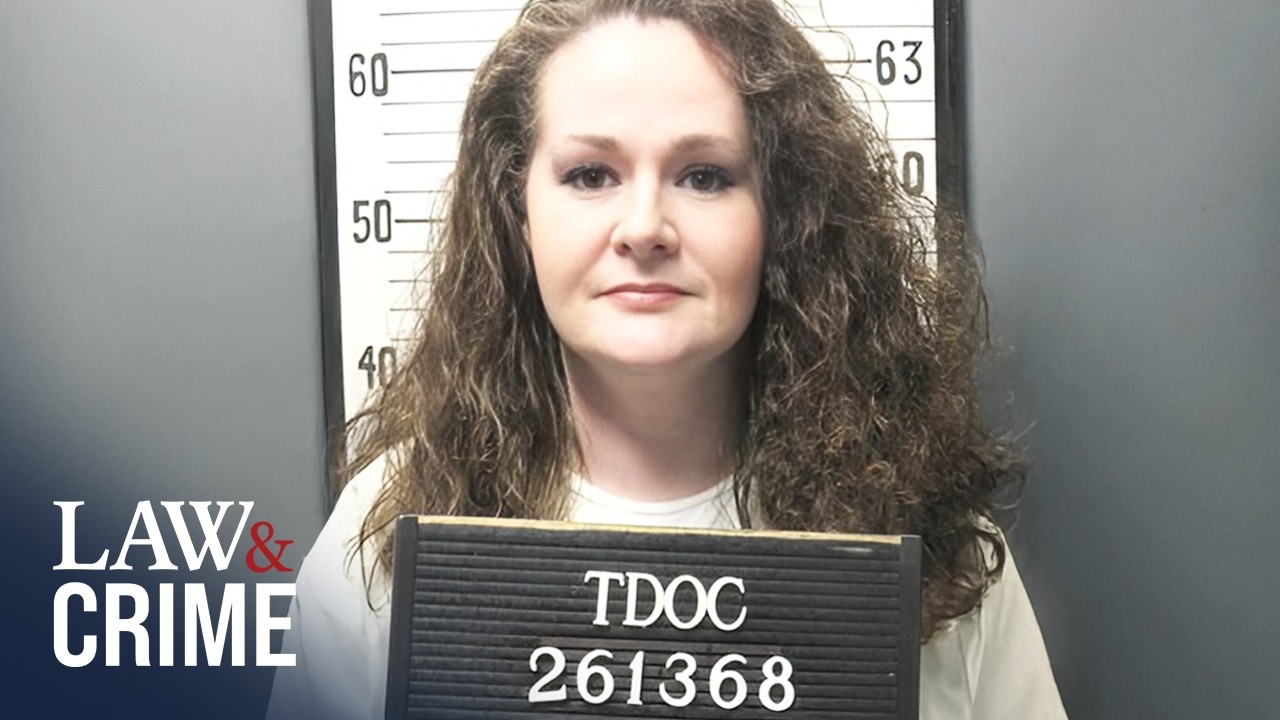
Then she said her arm felt as though it might burst.
The curtains closed.
They opened again.
She was still alive.
Eventually they closed for the final time. [PodScripts](https://podscripts.co/podcasts/crime-fix-with-angenette-levy/sadistic-teen-murderers-execution-botched-everything-we-know)
By the following day, the execution had become one of the most extraordinary failures in the modern history of American capital punishment.
And by October 3, the story had become even more serious.
Pike’s lawyers said she was unconscious, intubated and on a mechanical ventilator.
Both arms were swollen, burned and blistered.
Hospital doctors were attempting to save her life while dealing with the same chemical the state had intended to use to kill her. [Reuters](https://www.reuters.com/legal/government/tennessee-execution-survivor-christa-pike-ventilator-attorneys-say-2026-10-02/?utm_source=chatgpt.com)
Governor Bill Lee halted Tennessee’s remaining executions for 2026 and ordered an independent investigation.
Then Tennessee Department of Correction Commissioner Frank Strada resigned.
Strada maintained that officials had followed the state’s approved protocol, but said his departure was appropriate while the state examined what had happened. [Reuters](https://www.reuters.com/world/us/tennessee-prison-chief-resigns-after-failed-execution-2026-10-03/?utm_source=chatgpt.com)
The central question is now brutally simple:
**How could a woman receive two execution doses of pentobarbital and survive?**
Law&Crime’s Angenette Levy tried to answer that question only hours after the failed execution.
Her October 1 episode of *Crime Fix* brought in forensic chemist Bethany Pridgen and former judge and prosecutor Fanon Rucker.
At that point, there were far more questions than answers.
Pridgen explained that pentobarbital is a powerful barbiturate capable of producing profound sedation and, in sufficiently high doses, respiratory depression and death.
The execution dose is meant to be far beyond the amount normally used for sedation.
So Pike’s survival immediately raised possibilities.
Was the drug too weak?
Was the concentration wrong?
Had the solution degraded?
Was there a preparation problem?
Or had the chemical failed to enter Pike’s bloodstream correctly? [PodScripts](https://podscripts.co/podcasts/crime-fix-with-angenette-levy/sadistic-teen-murderers-execution-botched-everything-we-know)
Pridgen emphasized that she was working with incomplete information.
Her early instinct was that either the actual dose reaching Pike was lower than intended or something about the drug itself had gone wrong.
But later medical evidence shifted attention dramatically toward another possibility.
The IV lines.
Pike’s attorneys had warned about them months before September 30.
They said Pike had repeatedly experienced difficulty with blood draws.
They also cited thrombocytosis, a blood disorder involving an unusually high platelet count, and argued that establishing reliable intravenous access would be unusually difficult.
Their concern was not abstract.
Tennessee had already experienced another failed execution attempt earlier in 2026 when officials could not establish usable IV access for Tony Carruthers. [Reuters](https://www.reuters.com/world/us/tennessee-prison-chief-resigns-after-failed-execution-2026-10-03/?utm_source=chatgpt.com)
During Pike’s preparation, according to her attorneys, those warnings appeared to become reality.
Her legal team said execution personnel spent roughly an hour attempting to establish access.
One lawyer counted at least seven needles used on Pike’s left arm alone.
One reportedly came out visibly bent.
Pike herself allegedly tried to tell members of the execution team where they might have better luck finding a vein. [PodScripts](https://podscripts.co/podcasts/crime-fix-with-angenette-levy/sadistic-teen-murderers-execution-botched-everything-we-know)
Then the execution proceeded anyway.
At approximately 7:26 p.m., witnesses were allowed to view the chamber.
Minutes later, Pike was still responsive.
She complained that a spot on her arm was burning and hurting.
Around 7:34, according to the account replayed by Law&Crime, she described her arm as feeling as though it could burst.
At 7:46, the curtains closed.
Witnesses could still hear her breathing. [PodScripts](https://podscripts.co/podcasts/crime-fix-with-angenette-levy/sadistic-teen-murderers-execution-botched-everything-we-know)
When the curtains reopened, she remained alive.
Reporters described breathing, heavy exhalations and sounds resembling snoring.
Tennessee’s protocol allows a backup administration if the first pentobarbital dose fails to produce death.
Officials used it.
Still, Pike remained alive.
The curtains eventually closed and did not reopen.
The state later announced that it had completed every procedure authorized by the protocol and that no additional execution step was permitted.
Pike was transported to an off-site medical facility. [Tennessee State Government](https://www.tn.gov/correction/news/2026/9/30/media-advisory–christa-pike–261368.html?utm_source=chatgpt.com)
That official statement is significant.
Tennessee did not initially say that staff had abandoned the execution because they had discovered a specific medical error.
Instead, the Department of Correction said it had followed the lawful protocol to its endpoint.
The protocol simply ended with Pike still alive. [Tennessee State Government](https://www.tn.gov/correction/news/2026/9/30/media-advisory–christa-pike–261368.html?utm_source=chatgpt.com)
What doctors saw afterward may explain why.
According to the emergency filing from Pike’s attorneys, both arms were seriously injured.
They were swollen.
Burned.
Blistered.
The filing alleges that pentobarbital—a chemically alkaline substance—had leaked into the tissues beneath her skin because the IV access had not been properly maintained.
In medicine, that type of event is generally called infiltration or extravasation.
A drug intended to travel directly through a vein instead enters surrounding tissue. [Reuters](https://www.reuters.com/legal/government/tennessee-execution-survivor-christa-pike-ventilator-attorneys-say-2026-10-02/?utm_source=chatgpt.com)
That could potentially explain two things at once.
First, the arm pain.
If concentrated pentobarbital was entering soft tissue rather than flowing cleanly through the bloodstream, it could produce severe local irritation and injury.
Second, survival.
If a substantial portion of the drug failed to enter Pike’s circulation rapidly, then simply pushing a nominally lethal amount through the tubing would not necessarily mean a lethal amount reached the brain, lungs and heart in the intended manner.
That remains an allegation and working explanation, not the final official determination.
But it is now one of the central issues investigators must examine. [AP News](https://apnews.com/article/1b9adb0b192dd5851567af5a87f84563?utm_source=chatgpt.com)
This is where the early Law&Crime analysis becomes particularly interesting.
When Angenette Levy asked Pridgen whether the pentobarbital itself might have been defective, Pridgen considered several possibilities.
Wrong strength.
Poor preparation.
Degradation.
Perhaps even some kind of mix-up.
At that stage, she said there simply was not enough information.
But she also acknowledged that if the drug missed the vein, that would fundamentally alter what happened inside Pike’s body. [PodScripts](https://podscripts.co/podcasts/crime-fix-with-angenette-levy/sadistic-teen-murderers-execution-botched-everything-we-know)
Later evidence makes it dangerous to choose one explanation too early.
It is possible that IV placement was the dominant problem.
Investigators still must verify drug concentration.
Preparation.
Storage.
Handling.
Timing.
Chain of custody.
And whether the pentobarbital remained chemically suitable by the time the delayed execution actually proceeded.
Pike’s attorneys specifically asked the court to preserve evidence precisely because those questions remain unanswered. [Reuters](https://www.reuters.com/legal/government/tennessee-execution-survivor-christa-pike-ventilator-attorneys-say-2026-10-02/?utm_source=chatgpt.com)
That emergency preservation motion may become one of the most consequential documents in the entire case.
The lawyers are seeking to prevent Tennessee from destroying or losing anything capable of reconstructing September 30.
Drug records.
IV equipment.
Needles.
Execution logs.
Electronic communications.
Information about when the pentobarbital was prepared.
Information about storage.
Potentially every item necessary to show what happened between the moment Pike entered the execution area and the moment an ambulance carried her away. [Reuters](https://www.reuters.com/legal/government/tennessee-execution-survivor-christa-pike-ventilator-attorneys-say-2026-10-02/?utm_source=chatgpt.com)
Former judge and prosecutor Fanon Rucker told Law&Crime that the review would likely need to examine every stage almost like an evidentiary chain-of-custody investigation.
Who handled the drug?
Who prepared it?
How was it transported?
Was it stored correctly?
What did execution personnel know?
When did they know something had gone wrong?
Rucker said the mere fact that a condemned person had committed a horrific crime did not eliminate constitutional limits on what the state itself could do.
His broader point was straightforward:
The government is not legally authorized to torture a prisoner simply because the prisoner once caused terrible suffering to someone else. [PodScripts](https://podscripts.co/podcasts/crime-fix-with-angenette-levy/sadistic-teen-murderers-execution-botched-everything-we-know)
That distinction is essential in Pike’s case.
Pike was eighteen when she participated in the 1995 murder of nineteen-year-old Colleen Slemmer, a fellow student at the Knoxville Job Corps.
Pike was convicted of first-degree murder and sentenced to death in 1996.
The crime involved prolonged violence and became notorious partly because Pike later possessed a fragment of Slemmer’s skull.
Her conviction and death sentence survived decades of litigation. [Reuters](https://www.reuters.com/world/us/tennessee-due-execute-woman-first-time-two-centuries-2026-09-30/?utm_source=chatgpt.com)
Nothing about September 30 changes what happened to Slemmer.
Her mother, May Martinez, supported Pike’s execution and was present to witness it.
Instead of seeing the decades-long case end, she watched the state fail.
Martinez later described what happened as a mess.
The botched execution therefore produced another painful paradox.
Pike’s attorneys argue that their client suffered a constitutionally unacceptable procedure.
Slemmer’s family is now being forced through more uncertainty after waiting more than thirty years for the sentence to be carried out. [AP News](https://apnews.com/article/8a834e15b8f2d5397b7620bc33d0ec10?utm_source=chatgpt.com)
And the uncertainty is growing.
The October 1 Law&Crime episode ended with Pike’s attorneys saying she was alive and capable of speaking.
That information quickly became outdated.
A later court filing reported that Pike was unconscious, intubated and mechanically ventilated.
Doctors were trying to clear pentobarbital from her system.
Her long-term neurological and physical prognosis had not yet been publicly established. [Reuters](https://www.reuters.com/legal/government/tennessee-execution-survivor-christa-pike-ventilator-attorneys-say-2026-10-02/?utm_source=chatgpt.com)
That means even the basic question of what Pike remembers cannot yet be answered.
If she recovers and can communicate, her account could become unusually important.
Most people subjected to a completed lethal injection never have the opportunity to describe what they experienced after the drug began flowing.
Pike may eventually be able to say when she lost consciousness, what the burning sensation felt like and whether she remembers the second administration.
But as of the latest confirmed reporting, her medical survival remains the immediate issue. [Reuters](https://www.reuters.com/legal/government/tennessee-execution-survivor-christa-pike-ventilator-attorneys-say-2026-10-02/?utm_source=chatgpt.com)
The political consequences have already reached the highest levels of Tennessee’s correctional system.
Governor Lee described the failed execution as requiring a comprehensive third-party review and halted further executions for the remainder of the year.
Then Commissioner Frank Strada resigned on October 3.
AP and Reuters reported that the episode has renewed scrutiny of Tennessee’s long-running execution problems, including previous failures involving drug testing, preparation and IV access. [AP News](https://apnews.com/article/1b9adb0b192dd5851567af5a87f84563?utm_source=chatgpt.com)
That history makes Pike’s failure harder for the state to describe as an isolated accident.
In 2022, Governor Lee halted executions after discovering problems with lethal-injection procedures, including failures involving drug testing and protocol compliance.
Tennessee later replaced its previous three-drug approach with the current single-drug pentobarbital protocol.
The new procedure was supposed to provide a more reliable system.
Then Tony Carruthers’ execution was abandoned in 2026 because officials could not establish IV access.
Months later, Pike received the drug but survived. [AP News](https://apnews.com/article/1b9adb0b192dd5851567af5a87f84563?utm_source=chatgpt.com)
The state now faces two distinct questions.
One is technical.
**What physically went wrong?**
The second is legal.
**What happens after a state administers execution drugs and the prisoner survives?**
Pike’s death sentence did not automatically disappear.
American precedent generally does not establish a one-attempt-only rule for executions.
But her lawyers are expected to argue that forcing her through another procedure after the severe injuries of September 30 would raise profound Eighth Amendment questions.
That fight has not yet been resolved.
There is currently no second execution date. [AP News](https://apnews.com/article/8a834e15b8f2d5397b7620bc33d0ec10?utm_source=chatgpt.com)
For now, the official investigation must answer what Law&Crime was asking from the first hours after the failure.
Was the pentobarbital itself defective?
Was its concentration incorrect?
Was it prepared too early?
Was it stored improperly?
Did the execution team lose IV access?
Did the drug infiltrate Pike’s tissue?
Did officials recognize that problem before administering the backup dose?
And why did a risk Pike’s lawyers specifically warned about appear to materialize inside the execution chamber?
Those are no longer theoretical questions.
There are burned arms.
A ventilator.
A resignation.
A halted execution calendar.
And an independent investigation that now has to explain how Tennessee reached the end of its execution protocol without accomplishing the one result the protocol was designed to guarantee.
One fact, however, is already established.
This was not merely an execution that took longer than expected.
Tennessee administered both authorized rounds of pentobarbital.
Christa Pike remained alive.
The Department of Correction acknowledged that its written protocol contained nothing further officials were permitted to do.
Then the state that had spent decades trying to end Pike’s life had to send her to doctors whose job was suddenly to save it. [Tennessee State Government](https://www.tn.gov/correction/news/2026/9/30/media-advisory–christa-pike–261368.html?utm_source=chatgpt.com)
That contradiction is what makes the case historically extraordinary.
The execution chamber was supposed to be the final room in Christa Pike’s case.
Instead, it opened an entirely new one.
Now doctors must determine what damage was done.
Investigators must determine why the drugs failed.
Courts may have to determine whether Tennessee can ever try again.
And Colleen Slemmer’s family must wait once more.
Law&Crime’s episode began with a deceptively simple question:
How could two lethal doses fail?
Three days later, Tennessee still does not have the final answer.
But the evidence emerging from Pike’s arms, the IV attempts and the hospital points increasingly toward the possibility that the most important failure happened before the pentobarbital ever reached the place it was supposed to go.


