Richard Winters’ Men Finally Revealed What He Was REALLY Like
Millions of people know Richard Winters through Stephen Ambrose’s Band of Brothers and the HBO miniseries that followed it.
They remember the quiet young lieutenant played by Damian Lewis, the officer who stepped onto the chaos of Normandy and somehow helped hold Easy Company together through some of the hardest fighting of the European war.
Over time, that image became almost inseparable from the man himself.
Winters became a symbol of battlefield leadership, studied in military institutions, discussed in leadership seminars, and remembered as one of the most recognizable American officers of the Second World War.
But the most revealing picture of Richard Winters does not come from Hollywood.
It comes from the men who actually followed him.
They watched him during training at Camp Toccoa, followed him into the fields of Normandy, endured the frozen woods of Bastogne beside him, and lived through the same brutal campaigns that eventually transformed Winters into a legend.
And decades later, their descriptions of him remained remarkably consistent.
They did not primarily describe a charismatic officer who dominated every room.
They described someone quieter.
More reserved.
Sometimes even shy.
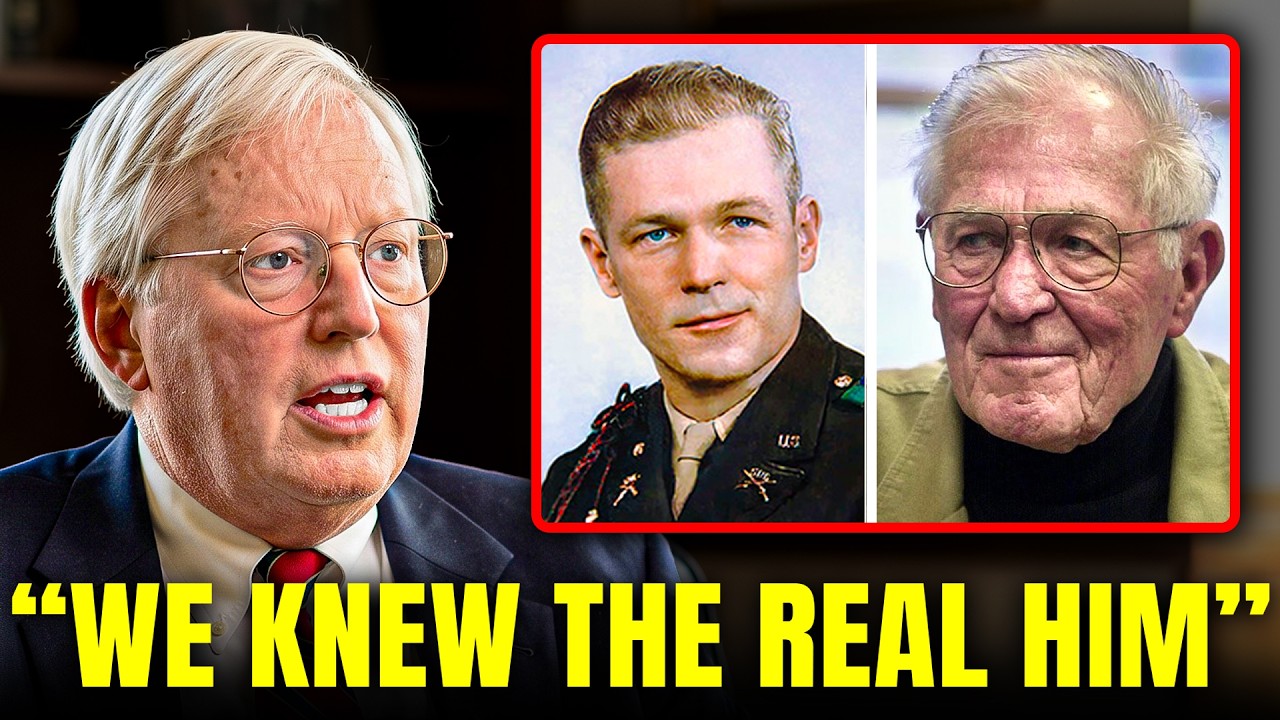
But also disciplined, demanding, fair, and willing to share the same dangers he expected his men to face.
That distinction is important because it reveals something the television version could never completely capture.
Richard Winters was not simply a fearless hero.
He was a complicated human being whose authority was built slowly, through years of discipline, competence, and trust.
Richard Davis Winters was born on January 21, 1918, in Lancaster, Pennsylvania, and grew up in a hardworking Pennsylvania Dutch household where discipline and straightforwardness were valued more than outward displays of status.
He attended Franklin and Marshall College and graduated in 1941 with a degree in economics.
That same year, he enlisted in the United States Army.
After volunteering for the paratroopers, Winters became part of a highly demanding military organization where physical endurance, discipline, and willingness to accept risk were fundamental requirements.
In 1942, he arrived at Camp Toccoa, Georgia, as part of the newly forming Easy Company of the 506th Parachute Infantry Regiment.
The training was deliberately brutal.
The men repeatedly ran the mountain known as Currahee, pushing themselves through exhaustion in an environment designed to separate those who were merely interested in becoming paratroopers from those prepared to endure what the job actually required.
Winters consistently performed near the front of physical evaluations.
His fellow soldiers noticed.
But physical ability alone did not explain why the men eventually trusted him.
The real difference became clearer during the company’s difficult relationship with Captain Herbert Sobel.
Sobel’s leadership style was widely remembered by the men as harsh, arbitrary, and sometimes vindictive.
Winters was demanding too.
But there was an important difference.
The men saw Winters holding himself to the same standards he expected from them.
He did not appear to demand sacrifice simply because he possessed the authority to demand it.
That distinction gradually created something more valuable than obedience.
It created credibility.
The conflict between Winters and Sobel eventually became serious enough that Winters requested that a disputed punishment be reviewed through formal proceedings rather than simply accepting what he considered unjust treatment.
The punishment was eventually set aside.
The broader conflict inside Easy Company continued, and Sobel was ultimately removed from direct command before the unit entered combat.
The precise details and motivations behind that internal struggle have been remembered differently by different veterans.
The historical record does not justify pretending that every aspect of the dispute is completely settled.
But one point remains remarkably consistent.
By the time Easy Company went overseas, the enlisted men had already developed considerable confidence in Winters.
And that confidence had not been handed to him because of his rank.
He had earned it.
One of the most revealing descriptions came from Private Robert Rader, whose later written account provided an enlisted soldier’s perspective on the officers who commanded Easy Company.
Rader remembered Winters as approachable and almost shy.
That quiet personality did not weaken his authority.
In some ways, it strengthened it.
Winters did not need to dominate a room with theatrical speeches or aggressive displays of power.
His authority developed through behavior.
He was physically disciplined.
He was serious.
He expected his men to perform.
But they had already seen that he expected at least as much from himself.
That mattered enormously.
Soldiers could distinguish between an officer who simply gave orders and an officer whose actions gave those orders credibility.
Winters belonged to the second category.
Then came Normandy.
On June 6, 1944, Easy Company jumped into France as part of the Allied invasion.
The airborne drop quickly became chaotic.
Paratroopers were scattered across the countryside, units were separated, communications were confused, and officers had to make decisions without the clean information available on a planning map.
In that chaos, Winters found himself effectively commanding Easy Company in combat.
That morning would become one of the defining moments of his military career.
At Brécourt Manor, a German artillery battery consisting of four 105-millimeter guns was firing toward the causeways leading from Utah Beach.
Winters assembled a small force of roughly a dozen men from scattered elements of the company.
They faced a position that outnumbered them.
Rather than attacking blindly, Winters organized the assault around fire and maneuver.
The guns were systematically neutralized.
The position was cleared.
German prisoners were captured.
The engagement later became a celebrated example of small-unit tactics and was studied at military institutions, including West Point.
But for the men who were there, the significance was simpler.
They had seen their lieutenant lead from the front.
Not from a comfortable distance.
Not merely pointing toward danger.
He was exposed to the same danger as the men following him.
William Guarnere later remembered Winters as the man who was out in front during the assault, calling for his men to follow.
That detail became part of a much larger pattern.
The men did not follow Winters because they believed he was incapable of fear.
They followed because they believed he would not ask them to face something he was unwilling to face himself.
That distinction became even more important during the months that followed.
Easy Company fought through the Netherlands during Operation Market Garden.
The campaign became a prolonged struggle against determined German resistance.
The men were increasingly exhausted.
Combat was no longer the dramatic beginning of an invasion.
It was becoming a grinding routine of movement, exhaustion, uncertainty, and danger.
Veteran recollections from this period continue to describe Winters as someone who combined personal exposure to danger with deliberate decision-making.
He was not simply reckless.
He was willing to expose himself when necessary, but his leadership was built around maintaining control when circumstances became chaotic.
Then came Bastogne.
The winter of 1944 brought some of the most miserable conditions Easy Company experienced during the war.
The 101st Airborne Division was rushed into the defense of Bastogne during the opening stages of the Battle of the Bulge.
The men faced freezing temperatures, inadequate winter equipment, limited shelter, artillery fire, and prolonged exposure.
Trench foot became a serious problem.
For soldiers already exhausted by months of combat, the conditions were physically devastating.
Winters did not pretend that he was somehow immune to the misery.
He experienced the same cold.
The same shortages.
The same artillery threat.
And perhaps most importantly, he did not describe fear as something that only happened to weak soldiers.
He considered fear a normal human response to combat.
The responsibility of leadership, in his understanding, was not to eliminate fear.
It was to prevent fear from paralyzing the unit when action became necessary.
That philosophy reveals something important about the real Winters.
The myth presents a man who simply never became afraid.
The testimony suggests something more human.
He understood fear.
He experienced danger.
But he learned how to function despite it.
That is a very different definition of courage.
When the accounts of the men who served under Winters are placed beside his own later reflections, a surprisingly consistent personality begins to emerge.
He was quiet.
He was reserved.
He could be shy.
He was not naturally theatrical.
He did not need to dominate conversations.
Yet he was also intensely disciplined and demanding.
The combination might seem contradictory.
It was not.
His authority came from consistency.
The men knew what he expected because they had watched him live by the same standards.
They knew he would demand effort.
But they also knew he would not casually waste their lives.
And they knew that when danger came, he was willing to be exposed alongside them.
That is why the simplest description of Winters may also be one of the most powerful.
He earned trust.
Winters himself later offered an explanation for why that trust mattered.
His leadership philosophy emphasized fairness, inner confidence, and the ability to transfer a sense of steadiness to the people around him.
He did not believe that effective leadership required an officer to become the personal friend of every soldier.
The distinction between officer and enlisted man still mattered.
Authority still mattered.
Discipline still mattered.
But respect could exist alongside that hierarchy.
In fact, Winters believed genuine respect was essential to making authority effective.
That philosophy also helps explain why he repeatedly resisted the idea that he alone had made Easy Company successful.
In his later memoir, Beyond Band of Brothers, written with historian Cole Kingseed, Winters emphasized the collective nature of the company.
The company belonged to the men.
Its officers, including Winters himself, were caretakers of something the soldiers had built together through training, hardship, combat, loss, and mutual dependence.
That idea runs directly against the traditional great-man version of military history.
The legend wants one extraordinary commander.
Winters kept pointing toward the group.
The men.
The company.
The shared experience.
And when people later asked whether he considered himself a hero, he repeatedly resisted the label.
Instead, he echoed the sentiment of fellow Easy Company veteran Mike Ranney, who famously described himself not as a hero but as someone who had served in a company full of them.
That answer says almost as much about Winters as any battlefield story.
The man who became famous for leadership did not seem particularly interested in making himself the center of the story.
After the war, Winters returned to civilian life in Pennsylvania.
He married Ethel Estep in 1948 and worked outside the military world, including a period in animal feed manufacturing.
For years, his life remained relatively private.
He did not immediately become the public symbol that later generations would recognize.
That transformation came decades later.
Historian Stephen Ambrose interviewed Winters extensively while researching Band of Brothers, published in 1992.
Winters became one of Ambrose’s important sources for reconstructing Easy Company’s wartime experience.
Then the 2001 HBO miniseries introduced that story to millions of viewers around the world.
Richard Winters was no longer simply a former paratrooper.
He had become a cultural symbol.
But fame did not appear to change his basic relationship with the men.
He remained connected to Easy Company veterans, attending reunions and maintaining relationships that continued long after the war.
The men who had followed him decades earlier did not simply remember him as an officer from their past.
Many remained genuinely connected to him.
That relationship continued until the final years of his life.
Richard Winters died on January 2, 2011, at the age of 92.
Even then, his instinct for privacy remained.
News of his death was intentionally withheld until after his funeral.
It was a remarkably fitting final detail for a man whose public reputation had become enormous despite his own apparent reluctance to seek attention.
After his death, surviving members of Easy Company spoke about the commander they had followed nearly seven decades earlier.
William Guarnere offered perhaps the simplest description of all.
He remembered Winters for his leadership.
And when Winters ordered his men to move, Guarnere remembered him being out in front.
That sentence contains the essence of why Winters remained respected.
Not because he was portrayed as fearless on television.
Not because military historians eventually turned Brécourt Manor into a tactical case study.
Not because Band of Brothers transformed him into an international icon.
His men respected him because, when the moment came, he shared the danger.
The testimony of those soldiers also reveals why the real Richard Winters was more interesting than the legend.
He was not simply the perfectly composed officer portrayed on screen.
He was not simply a shy Pennsylvania farm boy uncomfortable with fame.
He was not simply a tactical genius.
He was a combination of all those things, but none of them alone explains his influence.
What emerges from the veterans’ accounts is a leader whose authority was earned slowly.
Through discipline.
Through fairness.
Through competence.
Through personal example.
And above all, through consistency.
Rank could make a soldier obey an order.
But rank alone could not make a man willingly follow an officer into a place where the bullets were coming from.
That required trust.
And trust had to be earned.
Richard Winters spent years earning it.
His men remembered that.
They remembered the officer who expected much from them because he expected even more from himself.
They remembered the quiet man who did not need to shout to command attention.
They remembered someone who understood that fear was human rather than shameful.
And they remembered a commander who, when he told his men to move toward danger, was willing to move first.
Perhaps that is why the most revealing story about Richard Winters was never really about the legend at all.
It was about the men who knew him before the cameras arrived.
They knew him before Band of Brothers.
Before the leadership seminars.
Before the books and documentaries turned his name into history.
And when those men looked back after decades had passed, their memories repeatedly returned to the same qualities.
Quiet.
Demanding.
Fair.
Competent.
Courageous.
And unwilling to take all the credit for himself.
Winters spent much of his later life directing attention away from his own accomplishments and toward the soldiers who had stood beside him.
In the end, that refusal may have been one of the clearest demonstrations of the leadership his men had trusted all along.
The legend remembers Richard Winters as the officer who led Easy Company through the war.
His men remembered something more personal.
They remembered the man who led from the front.


