No Verified Fever Locker-Room Revolt Against Stephanie White — Sophie Cunningham Has Publicly Backed Her Coach
The Indiana Fever are entering one of the most important offseasons in franchise history.
Their championship expectations were not met.
Their playoff run ended in the first round.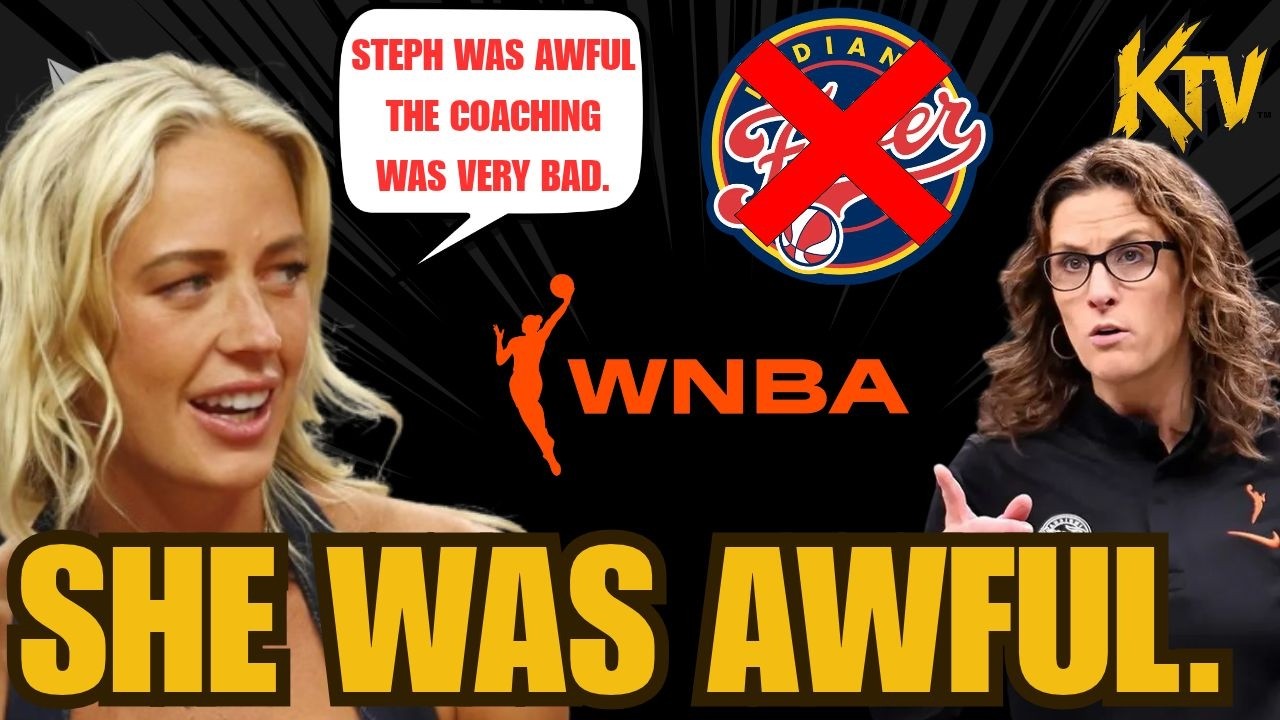
Questions remain about roster construction, free agency, defense and the future of head coach Stephanie White.
Those issues are real.
But a new viral story claims something far more explosive happened behind closed doors.
It says Sophie Cunningham brutally attacked White’s coaching during a private locker-room confrontation.
It says players rallied behind Cunningham.
It says they openly demanded White be removed.
It says ownership entered emergency damage-control mode.
And it claims a hidden hallway microphone captured the revolt outside the coach’s office.
There is currently no credible evidence supporting that account.
No authenticated audio has surfaced.
No verified transcript has been published.
No Fever player has publicly demanded that White be fired.
No team executive has acknowledged such a confrontation.
And recent public statements from Cunningham, Caitlin Clark and Fever leadership point in a very different direction.
The actual situation is more complicated.
Indiana’s 2026 season ended with disappointment.
The Fever were eliminated by the Las Vegas Aces in Game 3 of their first-round playoff series.
Las Vegas won 94–83.
A’ja Wilson scored 36 points and grabbed 10 rebounds.
Clark finished with 18 points.
Indiana left the postseason earlier than it had hoped.
That result immediately created pressure.
The Fever had entered the season with legitimate championship ambitions.
They had Clark.
Aliyah Boston.
Kelsey Mitchell.
Sophie Cunningham.
A roster talented enough to expect a deeper postseason run.
Instead, Indiana was eliminated in the first round for the second consecutive season by Las Vegas.
That naturally produced questions about coaching.
White knew those questions were coming.
At Indiana’s October 3 exit interviews, she directly addressed whether she expected to return.
White said she still felt supported by the organization.
She also said the ultimate decision belonged to the Fever.
“I hope to continue to be the coach,” White told reporters.
That statement does not sound like a coach who has just been overthrown by her locker room.
General manager Amber Cox also discussed the future.
While explaining how Indiana needed to improve, Cox specifically included White and the coaching staff in the organization’s planning.
“And that includes Steph and the coaching staff,” Cox said.
That does not guarantee White will return.
Coaching decisions can change.
Organizations can evaluate performance.
Front offices can decide after further meetings that a change is needed.
But as of October 5, there is no verified evidence that Fever ownership has already decided White is finished.
There is even less evidence that Cunningham organized a player revolt against her.
Cunningham’s actual public history with White is important.
Earlier in the season, White came under heavy criticism after DiJonai Carrington committed a hard foul against Cunningham.
White initially said she did not believe Carrington intentionally targeted Cunningham.
Some Fever fans were furious.
White was booed.
Critics accused her of failing to defend her own player strongly enough.
That moment would have been the perfect opportunity for Cunningham to turn on her coach publicly.
She did the opposite.
Cunningham defended White.
She said the Fever locker room was tight.
She said the players had each other’s backs.
She said White loved them.
And she specifically said:
“Me and Steph are great.”
She also said White was “great with all of us.”
That is one of the clearest available public statements about their relationship.
It directly conflicts with the new story portraying Cunningham as secretly leading an effort to remove White.
Cunningham also described outside controversy as noise.
She suggested the people trying to portray the Fever as divided were misunderstanding what was happening inside the team.
That does not mean every player agrees with every coaching decision.
Professional locker rooms contain disagreement.
Players can argue with coaches.
Coaches can challenge players.
People can become frustrated after losses.
But disagreement is not automatically mutiny.
The difference matters.
Cunningham has also recently been described by Fever leadership in very positive internal terms.
On October 5, IndyStar reported that Fever GM Amber Cox viewed Cunningham as a “leader in the locker room.”
That report focused on Cunningham’s upcoming unrestricted free agency.
Indiana must decide whether to bring her back.
Cox indicated that Cunningham’s off-court controversies would not automatically determine that decision.
The larger evaluation would involve basketball fit, leadership and roster construction.
That is significant.
If Cunningham had just led a toxic revolt against White, describing her publicly as a locker-room leader without addressing the alleged confrontation would be extremely unusual.
No such confrontation appeared in the current reporting.
The viral claim also says players “rallied behind the revolt.”
No credible source identifies those players.
No names.
No quotes.
No text messages.
No meeting notes.
No agents.
No coaches.
No executives.
Nothing.
That is a major evidentiary problem.
Indiana has several prominent veterans.
Mitchell.
Boston.
Clark.
Cunningham.
If multiple players had openly demanded a coaching change, that would be one of the biggest WNBA stories of the offseason.
Yet current exit-interview coverage does not describe such a movement.
Instead, Indiana’s public offseason messaging is focused on roster continuity.
Cox has said keeping the core together is a priority.
The Fever want to retain Mitchell.
They expect extension discussions involving Clark.
They want to continue building around Clark, Boston and Mitchell.
That is the center of the current organizational conversation.
Not a secret locker-room coup.
Caitlin Clark’s relationship with White is also relevant.
Clark and White have had visible disagreements.
One of the most prominent came earlier this season when cameras captured an animated sideline exchange.
Clark gestured toward White.
White challenged Clark defensively.
The moment spread rapidly online.
People immediately began speculating that Clark wanted White fired.
Clark rejected that interpretation.
She said the exchange involved “two people being competitive.”
She said commentators claiming deeper problems were “blatantly wrong.”
And she added:
“I ride for Steph.”
Clark also said White had her back.
Those remarks do not prove the relationship is perfect.
They do show that Clark has publicly rejected the narrative that visible disagreements equal a broken relationship.
That context matters now.
A viral story can take one genuine frustration and turn it into an organizational purge.
Indiana really is evaluating its future.
White really is under pressure.
The season really was disappointing.
But none of those facts establishes a secret revolt.
The timing of the claim is also suspicious.
The Fever’s season has already ended.
The viral caption says management is trying to silence the controversy “before tipoff.”
There is no upcoming Indiana playoff tipoff.
Indiana was eliminated October 1.
The team is now in offseason mode.
That language appears recycled from an in-season drama format rather than grounded in the current calendar.
The alleged hallway recording is even less supported.
No original audio file has surfaced.
No television network has authenticated it.
No reporter has published it.
No player has acknowledged being recorded.
No team employee has admitted the hallway conversation occurred.
No location inside Gainbridge Fieldhouse has been independently established.
No date or time has been verified.
No metadata has been published.
And no credible sports outlet has quoted the supposed recording.
Calling something a “wiretap” also creates a misleading impression.
A wiretap typically implies covert interception.
There is no evidence law enforcement was monitoring Fever coaches or players.
There is no public indication that Indiana management secretly bugged the coach’s office.
There is no criminal investigation tied to the alleged recording.
Without provenance, “wiretap” is simply a dramatic label.
The supposed “unredacted showdown transcript” has the same problem.
No authenticated document exists publicly.
No outlet has published a transcript.
No reporter has cited one.
No team source has supplied one.
No legal filing contains one.
The viral CTA makes the document sound official.
That does not make it real.
What is real is the pressure surrounding White.
Indiana’s 2026 season was expected to produce more.
The Fever finished sixth.
They failed to make the kind of postseason run many expected.
Their defense remained a problem.
The roster still has questions.
White has acknowledged those shortcomings.
Cox has acknowledged them too.
Those are legitimate reasons for the organization to evaluate coaching.
A coach does not need to face a locker-room rebellion to have her job reviewed.
Professional sports organizations routinely examine coaching after disappointing seasons.
Indiana could ultimately retain White.
Indiana could eventually make a change.
Both are possible organizational decisions.
The key point is that no current evidence shows Cunningham has forced that decision.
There is also no evidence ownership is in “full-blown panic.”
Indiana’s exit interviews appeared structured and public.
White appeared before reporters.
Cox appeared before reporters.
Players appeared before reporters.
The Fever posted those interviews through their official channels.
That is not what an organization completely paralyzed by a secret revolt usually looks like.
Again, that does not mean there are no difficult private conversations.
There certainly are.
Teams always conduct internal evaluations after elimination.
Coaches meet with executives.
Players discuss roles.
Agents speak with front offices.
Contracts are reviewed.
Free-agent decisions are made.
Those meetings can be tense.
But private offseason evaluation is not evidence of a mutiny.
Cunningham’s status creates its own uncertainty.
She is an unrestricted free agent.
Indiana must decide whether her production, leadership and personality fit the organization’s future.
Cunningham has become one of the league’s most polarizing players.
She has generated headlines beyond basketball.
But Cox’s October 5 comments suggest Indiana is evaluating her as a meaningful locker-room presence rather than someone the organization views as toxic.
That makes the viral “betrayal” narrative even harder to support.
There is another useful comparison.
When Cunningham actually disagrees publicly, she does not necessarily hide it.
She criticized A’ja Wilson openly.
She mocked Wilson’s fan confrontation online.
She discussed controversial league topics publicly.
She has developed a reputation for speaking bluntly.
If Cunningham genuinely wanted White removed, there is currently no evidence she has said so publicly.
The claim therefore depends entirely on anonymous alleged audio.
That is not enough.
Public criticism involving White has existed before.
White was booed by some Fever fans.
Indiana political figures criticized her.
Fans questioned her handling of the Cunningham-Carrington incident.
But Fever players responded by defending her.
Boston and Mitchell both pushed back against the boos.
Cunningham defended her.
Clark had already defended her after their sideline disagreement.
That pattern matters.
White has unquestionably faced outside pressure.
The documented evidence repeatedly shows players separating that outside criticism from their internal relationship with the coach.
The strongest factual breakdown therefore looks very different from the viral story.
Indiana had a disappointing playoff exit.
Verified.
White’s job has become a legitimate offseason question.
Verified by current exit-interview coverage.
White wants to return.
Verified.
White says she still feels supported by the organization.
Verified.
Amber Cox publicly included White and her coaching staff in Indiana’s offseason improvement plans.
Verified.
Cunningham previously said she and White were “great.”
Verified.
Cunningham previously said the Fever locker room was tight.
Verified.
Cox currently views Cunningham as a locker-room leader.
Reported October 5.
Clark has publicly said she rides for White.
Verified.
Clark has publicly said White has her back.
Verified.
Cunningham brutally attacked White in a closed-door locker-room meeting.
Not verified.
Players rallied behind Cunningham and demanded White be fired.
Not verified.
Players demanded that White be “stripped of her whistle.”
Not verified.
Ownership entered emergency damage-control mode because of a player revolt.
Not established.
A hallway wiretap captured players discussing the revolt.
Not authenticated.
A transcript proves the alleged confrontation.
No credible current evidence.
Management is desperately trying to suppress a secret betrayal.
Not verified.
The reality is more conventional and more consequential.
The Fever are evaluating a season that ended earlier than expected.
White is under legitimate pressure because Indiana did not meet its goals.
Cunningham is entering free agency.
Mitchell’s future is unresolved.
Clark is expected to become central to major contract discussions.
The roster needs defensive improvement.
The front office has difficult decisions ahead.
That is the real offseason drama.
White herself appears to understand that her position is not guaranteed.
She openly said the decision belongs to the organization.
That is not the same as admitting she has lost the locker room.
Cox’s current comments suggest the Fever have not publicly abandoned her.
And the available player statements do not reveal an organized campaign against her.
The relationship between Cunningham and White has undoubtedly experienced stressful moments.
Every player-coach relationship does.
But the strongest documented Cunningham statement about White remains supportive.
“Our locker room in there, it’s tight.”
“Coach loves us.”
“Me and Steph are great.”
Until credible reporting establishes otherwise, those public statements carry considerably more evidentiary weight than an anonymous supposed wiretap.
The Fever may still make major changes.
White may still face a difficult organizational review.
Cunningham may still leave in free agency.
But as of October 5, 2026, there is no authenticated evidence of a Sophie Cunningham-led locker-room revolt, no verified player demand to fire Stephanie White, no credible secret hallway recording, and no unredacted showdown transcript proving a behind-the-scenes betrayal.
The Fever’s offseason is tense.
The alleged coup is not established.


