An extraordinary Caitlin Clark story is spreading online, alleging Larry Bird secretly revealed a contractual mechanism capable of reshaping basketball.
The viral narrative describes a clandestine midnight meeting between Clark and Bird somewhere inside an Indiana basketball facility.
According to the claim, photographs supposedly taken by a stadium employee captured both basketball icons discussing confidential league documents privately.
The story escalates dramatically by alleging Bird placed a fifty-page legal document directly onto the table before Clark.
That purported document supposedly contains a hidden ownership provision allowing Clark to circumvent the WNBA’s collective bargaining agreement entirely.
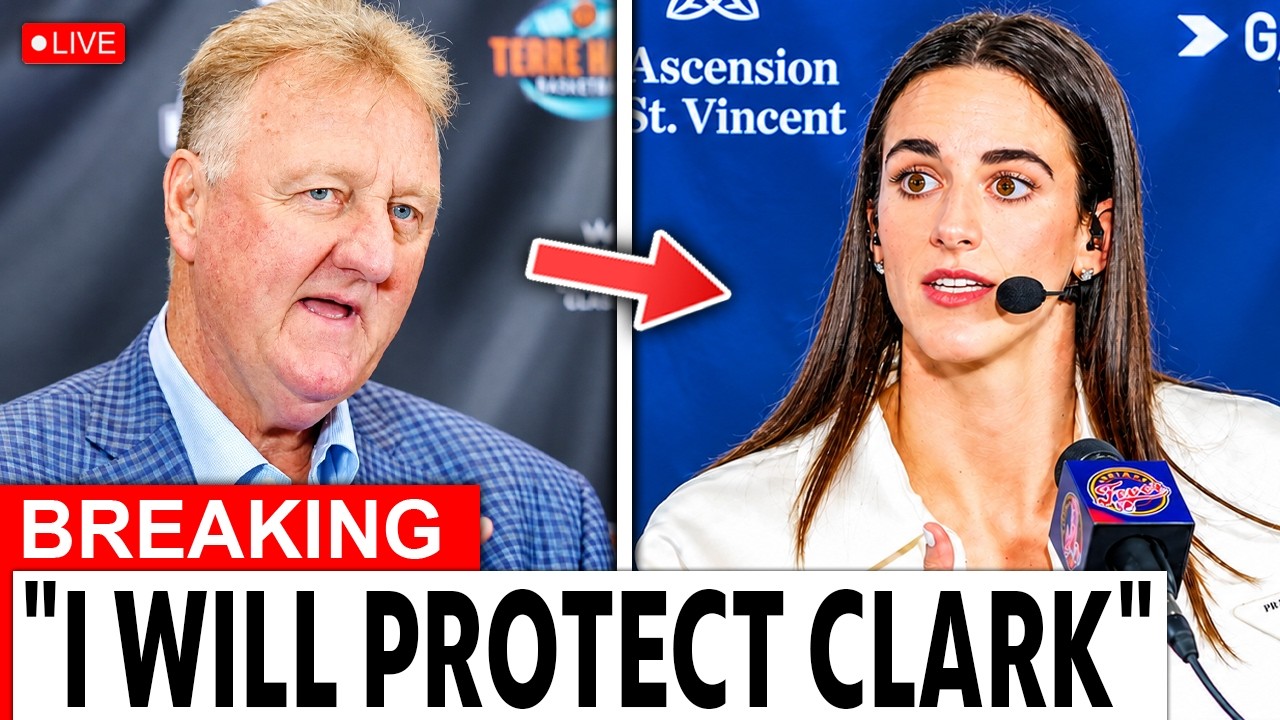
The narrative then claims arena security interrupted proceedings, confiscating phones just as Bird identified an undisclosed television-rights loophole.
No credible reporting located supports the alleged midnight meeting, confiscated phones, leaked photographs, or Bird-authored fifty-page legal document.
More importantly, publicly available information about the WNBA’s actual labor framework directly complicates the supposed “shadow ownership” allegation.
The WNBA and Women’s National Basketball Players Association completed and signed their new long-form collective bargaining agreement in May 2026.
That agreement followed player ratification on March 23 and approval by the league’s Board of Governors one day later.
The seven-year agreement covers the 2026 through 2032 seasons and substantially transforms compensation throughout women’s professional basketball.
The new structure established comprehensive revenue sharing while projecting more than $1 billion in player salaries and benefits.
It also raised the 2026 salary cap to $7 million, representing a dramatic increase from approximately $1.5 million previously.
Maximum-contract players can earn $1.4 million during 2026, with projected maximum compensation exceeding $2.4 million by 2032.
Average salary was projected around $583,000 during 2026, while minimum salaries increased substantially depending upon individual service time.
Those changes provide important context because Clark’s commercial importance exists inside an economic system already undergoing historic structural transformation.
The supposed ownership loophole, however, faces an even more fundamental problem under the publicly available collective bargaining language.
Article XLI states that no WNBA player may directly or indirectly hold an ownership interest in the league or teams.
The language acknowledges potential future discussions concerning limited player investment, but explicitly creates no current entitlement to ownership.
Any future waiver or modification remains within the WNBA’s discretion according to the publicly available text of that provision.
That framework is substantially different from a hidden clause allowing one superstar to independently bypass collectively negotiated labor restrictions.
Nothing found in credible reporting establishes that Clark possesses a private contractual mechanism superseding the agreement governing WNBA player employment.
Likewise, nothing located establishes that Bird drafted such a mechanism or privately presented one to Clark during midnight negotiations.
Bird’s Indiana basketball legacy makes him particularly effective material for a viral narrative centered around Clark’s rapidly expanding influence.
He represents basketball authority, Indiana identity, championship credibility, front-office experience, and an unmistakable connection to the state’s sporting culture.
Clark represents the modern counterpart: enormous audience growth, commercial leverage, unprecedented attention, and transformative significance for women’s basketball.
Putting those figures together naturally creates a compelling story, particularly when secrecy and supposed institutional conflict are added afterward.
Compelling storytelling, however, cannot substitute for authenticated photographs, identifiable sources, complete documents, or independent corroboration from credible reporters.
The alleged involvement of an unnamed stadium janitor should therefore increase demands for verification rather than automatically establishing insider credibility.
Anonymous sources can absolutely produce important journalism, but reputable reporting requires journalists to verify their identity and supporting information.
An anonymous social-media attribution provides audiences none of those protections when the original evidence cannot be independently examined or authenticated.
The supposed security intervention similarly demands verification because confiscating personal phones would raise significant legal, contractual, and organizational questions.
Who authorized the confiscation, whose phones were taken, what security policy permitted it, and what happened to those devices afterward?
Without answers supported by identifiable evidence, the security component functions primarily as another dramatic mechanism reinforcing the secrecy narrative.
The alleged television loophole deserves particular scrutiny because the WNBA’s media environment genuinely changed significantly beginning with the 2026 season.
New national media arrangements expanded distribution across Disney platforms, Amazon Prime Video, NBCUniversal, CBS, Paramount+, ION, and USA Network.
The league previously announced long-term arrangements with Disney, Amazon, and NBCUniversal extending from 2026 through the 2036 season.
Those agreements provide national distribution for more than 125 regular-season and playoff games annually across participating platforms.
A subsequent agreement also positioned USA Network to carry at least fifty WNBA games annually beginning during 2026.
That genuine transformation makes media rights fertile territory for fictional or unsupported claims about supposedly hidden contractual opportunities available to Clark.
The actual collective bargaining agreement addresses broadcast and telecast rights directly rather than leaving them outside the negotiated labor framework.
Its broadcast provisions grant the WNBA and designees exclusive rights involving distribution of player performances covered under the agreement.
Those provisions encompass television and other distribution mechanisms while establishing corresponding obligations involving players and their representative association.
That does not mean sophisticated lawyers could never identify disputed interpretations or negotiate entirely new commercial structures around athletes.
Contracts regularly generate disagreement over definitions, scope, rights, exceptions, and interactions with separate endorsement or licensing agreements.
But identifying contractual ambiguity is fundamentally different from possessing a secret provision that automatically allows Clark to bypass the CBA.
Collective bargaining agreements exist precisely because individual employment relationships operate within rules negotiated between management and organized player representation.
A single player generally cannot simply nullify collectively bargained restrictions through a privately drafted document presented outside the bargaining process.
Any extraordinary exception involving ownership, compensation, licensing, or broadcast rights would require careful analysis of governing contractual provisions.
It could also potentially involve league rules, team agreements, employment law, competition considerations, and obligations owed to other players.
The viral story instead compresses all that complexity into a cinematic moment involving Bird dramatically pointing toward one supposedly hidden sentence.
That storytelling device makes difficult legal issues feel simple while avoiding the evidentiary work necessary to demonstrate the underlying interpretation.
Clark’s commercial significance nevertheless makes the broader economic question surrounding her extremely interesting even without an alleged secret contract.
Few athletes have entered professional women’s basketball carrying comparable attention from broadcasters, sponsors, ticket buyers, merchandise consumers, and casual viewers.
That commercial influence naturally generates debate about whether conventional salary structures adequately compensate transformative athletes for value they generate.
The new CBA directly addresses portions of that debate through expanded salaries, increased revenue sharing, and improved economic opportunities.
The agreement’s revenue-sharing architecture is especially significant because it connects player economics more directly with continued league and team growth.
That framework creates considerably more upside than earlier compensation structures while preserving collectively negotiated rules governing player contracts and league economics.
Clark could therefore benefit substantially from industry growth without needing any clandestine ownership clause secretly drafted outside normal labor negotiations.
Her endorsement opportunities also exist alongside league arrangements, though commercial agreements remain subject to restrictions established through player contracts and bargaining.
The publicly available CBA language addresses licensing, player marketing, commercial appearances, and relationships between individual endorsements and league rights.
Player sponsorship agreements cannot simply override conflicting provisions contained within the CBA, license agreement, or standard player contract.
That provision again undermines the simplistic idea that an independently drafted agreement could automatically make collectively negotiated restrictions disappear.
None of this means Clark lacks leverage because economic leverage extends far beyond the technical boundaries of contractual ownership rights.
A superstar can influence negotiations through audience demand, sponsorship value, ticket sales, merchandise, broadcasting interest, and broader cultural visibility.
Those forces can encourage leagues and teams to reconsider economic structures without requiring the athlete to secretly circumvent existing agreements.
Indeed, collective bargaining itself represents the formal mechanism through which players can convert expanding economic importance into improved contractual conditions.
The 2026 agreement demonstrates exactly that dynamic, delivering dramatically higher salaries and broader revenue participation after extended negotiations.
Clark’s rise occurred during this broader transformation, making her both beneficiary and prominent symbol of the league’s accelerating commercial trajectory.
But attributing the entire transformation to one player would overlook decades of work by WNBA athletes, executives, owners, broadcasters, and supporters.
The league’s economic expansion reflects numerous interconnected factors, including stronger audiences, sponsorship growth, investment, expansion franchises, and improved media distribution.
Clark undeniably contributes enormous attention, yet the league’s contractual structure remains collective rather than individually controlled by its biggest attraction.
That distinction explains why a supposed mechanism allowing Clark alone to bypass bargaining rules would carry potentially enormous labor implications.
Other players and the union would reasonably examine whether such treatment affected competitive balance, compensation structures, or collectively negotiated protections.
Teams would similarly need clarity regarding salary-cap treatment, ownership restrictions, revenue allocation, and potential advantages created through special arrangements.
Broadcast partners could become involved if the purported mechanism somehow affected media rights already covered through long-term distribution contracts.
Those consequences demonstrate why an authentic loophole of this magnitude would likely generate extensive legal reporting rather than anonymous social posts.
A fifty-page draft would itself provide numerous opportunities for authentication through document metadata, legal language, authorship, and corroborating participants.
Photographs showing pages could potentially be compared against known agreements while lawyers examined whether cited provisions genuinely existed.
No such independently authenticated documentation emerged from the searches supporting this article, making declarative claims inappropriate at this stage.
The instruction encouraging audiences to comment “CONTRACT” for unredacted photographs should also be treated cautiously as an engagement mechanism.
Requests for comments frequently increase distribution because social platforms interpret interaction as evidence that audiences find content compelling.
Promising hidden evidence privately can therefore generate engagement without requiring publishers to expose their claims immediately to public scrutiny.
That does not automatically prove the underlying material false, but it provides no independent reason for believing the material authentic.
Credible documentation becomes more persuasive when qualified independent observers can inspect originals rather than receiving selectively cropped images through private messages.
Legal documents require particularly careful handling because isolated clauses can acquire completely different meanings when separated from definitions and surrounding provisions.
A sentence appearing to permit certain conduct might be limited elsewhere through another article, exception, definition, schedule, or incorporated agreement.
Therefore, even authentic photographs of contractual language would not automatically validate the dramatic interpretation assigned by a viral caption.
The supposed connection to television rights illustrates exactly why complete contractual context matters when evaluating sophisticated sports-business arrangements.
Media agreements determine distribution relationships between leagues and broadcasters, while collective bargaining determines employment economics and numerous player-related rights.
Licensing agreements add another layer, governing commercial usage of player identities and associated intellectual property under negotiated circumstances.
Individual endorsement agreements create additional rights while remaining subject to contractual limitations preventing conflicts with existing league and employment obligations.
Ownership introduces yet another legal category involving equity, governance, investment rights, fiduciary considerations, and potentially league approval requirements.
A viral narrative can collapse those separate categories into one word, “loophole,” while sophisticated legal analysis must keep them distinct.
Bird’s hypothetical involvement would also require clarity regarding what capacity he supposedly occupied during such an extraordinary legal consultation.
Basketball expertise does not automatically confer authority to modify league contracts, collective bargaining agreements, ownership structures, or broadcasting arrangements.
Even a legendary executive could offer strategic advice without possessing unilateral authority over the WNBA’s negotiated contractual and governance systems.
For the alleged document to matter, audiences would need to know who drafted it and what legal authority supported its conclusions.
They would need to know whether Clark requested the analysis, whether attorneys reviewed it, and whether Indiana participated officially.
They would also need evidence establishing that any proposed mechanism complied with the collective bargaining agreement rather than contradicting it.
Without those answers, Bird’s inclusion provides narrative authority while doing little to establish whether the supposed legal theory actually exists.
There is nevertheless a genuine sports-business conversation underneath the sensational framing that deserves substantially more attention from financial analysts.
Clark’s commercial influence raises important questions about how rapidly growing leagues distribute newly generated revenue among athletes, teams, and investors.
Those questions become particularly important as media agreements lock distribution arrangements across long periods while audience economics continue changing quickly.
A superstar-driven surge can dramatically alter assumptions underlying contracts negotiated before the full extent of future demand became apparent.
Leagues consequently face pressure to design economic systems flexible enough to reward players when revenues outperform expectations substantially.
The WNBA’s new revenue-sharing model represents a major response to precisely those concerns surrounding growth and player economic participation.
Its structure provides players greater upside as league and team revenues expand rather than relying exclusively upon predetermined salary increases.
That mechanism is considerably more important financially than an unsupported rumor about a private ownership loophole supposedly discovered after midnight.
Revenue sharing changes how economic growth reaches the broader player population while preserving collective bargaining as the governing institutional framework.
Ownership would be different because equity can carry long-term appreciation, governance implications, and potentially enduring financial participation beyond salaries.
The current public CBA language explicitly prohibits WNBA players from holding direct or indirect ownership interests in teams or league.
It simultaneously leaves open the possibility that the league could consider limited player investment opportunities sometime in the future.
That language could eventually become important as women’s basketball valuations increase and players seek participation beyond traditional employment compensation.
But describing that future possibility as a current “shadow ownership clause” materially misrepresents what the publicly available language actually says.
The agreement provides no obligation requiring the WNBA to permit such investment and leaves potential modification within league discretion.
Therefore, Clark cannot simply point toward that provision and automatically compel ownership participation under the publicly available contractual framework.
Could Clark’s commercial leverage influence future negotiations about player equity opportunities? That remains an interesting strategic question for league economics.
But leverage should not be confused with an enforceable contractual right already existing secretly within a negotiated collective bargaining agreement.
Similarly, increased media value could strengthen future player demands without creating an automatic mechanism for bypassing existing labor rules.
The new broadcast era itself represents an important structural catalyst because expanded distribution places WNBA games before larger potential audiences.
More exposure can support advertising revenue, sponsorship opportunities, merchandise sales, franchise valuations, and stronger negotiating positions during future commercial discussions.
Those gains can ultimately flow toward players through compensation mechanisms established under the collective bargaining system rather than outside it.
Clark’s value therefore matters profoundly even if every detail of the midnight-meeting narrative proves unsupported or entirely fictional.
She represents a powerful case study in how superstar economics can accelerate the commercialization of an already rapidly developing sports property.
Bird’s career similarly provides historical perspective because basketball stars have long influenced league economics far beyond their formal contractual salaries.
But influence does not mean legal exemption, and celebrity does not transform speculative contractual theories into enforceable ownership rights automatically.
The distinction between commercial power and contractual authority remains central to understanding professional sports economics in any major American league.
Clark can possess extraordinary commercial power while remaining governed by collectively bargained rules applicable throughout the WNBA player population.
She can also negotiate significant outside endorsements while those arrangements remain subject to relevant contractual and licensing restrictions where applicable.
Future agreements may change those boundaries dramatically as women’s basketball continues attracting capital and strengthening its position across American sports.
That evolution could eventually include new equity structures, revised revenue sharing, expanded licensing rights, or alternative commercial participation for players.
None of those possibilities validates claims that Bird already uncovered a hidden route allowing Clark to force immediate structural change.
The responsible interpretation therefore separates the compelling underlying economics from unsupported claims about secret meetings and confiscated phones.
The WNBA genuinely entered a transformative financial era during 2026 through its new labor agreement and expanded broadcasting arrangements.
Clark genuinely sits near the center of the league’s unprecedented attention and represents enormous commercial importance for women’s professional basketball.
Bird genuinely carries extraordinary stature within Indiana basketball history, making any authentic collaboration between them naturally newsworthy across American sports.
But those truths do not authenticate a midnight meeting, fifty-page document, ownership loophole, security raid, or supposedly suppressed photographs.
Until verifiable evidence appears, those elements should remain described as unsubstantiated claims rather than established events or documented negotiations.
The most consequential real story may ultimately prove less cinematic but substantially more important for investors, players, and sports executives.
Women’s professional basketball is developing economic structures capable of translating rapidly expanding audiences into increasingly meaningful player compensation and enterprise value.
The league’s new CBA demonstrates how quickly that transformation has accelerated, particularly compared with compensation structures existing only recently.
Its long-term media agreements provide another foundation for growth while simultaneously increasing pressure to maximize audiences across numerous distribution platforms.
Clark’s popularity strengthens that equation because stars capable of attracting nontraditional viewers become extraordinarily valuable within fragmented media markets.
Such athletes can help broadcasters acquire subscribers, advertisers reach new demographics, and leagues convert casual attention into recurring consumption.
Those effects can influence future negotiations without requiring secret contractual mechanisms or legally dubious attempts to circumvent collective bargaining.
If player ownership eventually becomes part of WNBA economics, it would represent a genuinely important development deserving rigorous financial analysis.
The existing agreement already contemplates possible future discussion while clearly stopping short of granting players an ownership entitlement today.
That documented language is more informative than anonymous claims promising photographs of an agreement nobody credible has independently authenticated.
Likewise, the league’s broadcast provisions offer concrete information about how player performances interact with negotiated distribution rights under the CBA.
Those provisions demonstrate that television economics are embedded within an established contractual architecture rather than sitting inside an unexplored legal vacuum.
Any attempt to restructure that architecture would likely require sophisticated negotiations involving considerably more participants than Clark and Bird alone.
The WNBPA, league, teams, broadcasters, attorneys, owners, and potentially commercial partners could all possess interests affected by substantial structural changes.
That complexity makes the alleged instant commissioner-forcing loophole especially difficult to accept without seeing independently authenticated underlying legal analysis.
Extraordinary contractual claims require extraordinary documentation, particularly when they supposedly overturn fundamental ownership restrictions negotiated only months earlier.
For now, no such documentation has been credibly established through the reporting and official materials reviewed for this article.
What has been established is a transformed WNBA economic landscape featuring unprecedented compensation and increasingly valuable national media distribution.
That reality makes Clark’s future negotiating power worth watching closely even without attaching unsupported secrecy narratives to legitimate business developments.
The biggest question is not whether Bird secretly handed Clark a document capable of overriding the league overnight.
It is how Clark’s enormous commercial influence will interact with revenue sharing, endorsements, broadcasting growth, and future player economic demands.
Those forces could reshape women’s professional basketball gradually through bargaining, investment, competition, and increasingly sophisticated commercial structures over coming years.
That transformation is already underway publicly, and its documented financial implications are substantial enough without inventing a midnight conspiracy.
Until authenticated photographs or documents emerge, the alleged Bird-Clark meeting should therefore remain categorized as an unsupported viral claim.
The real contract story is considerably clearer: players negotiated dramatically stronger economics while ownership remains restricted under existing CBA language.
And if that ownership restriction changes someday, the consequences could genuinely reshape professional women’s basketball without requiring any secret loophole.


