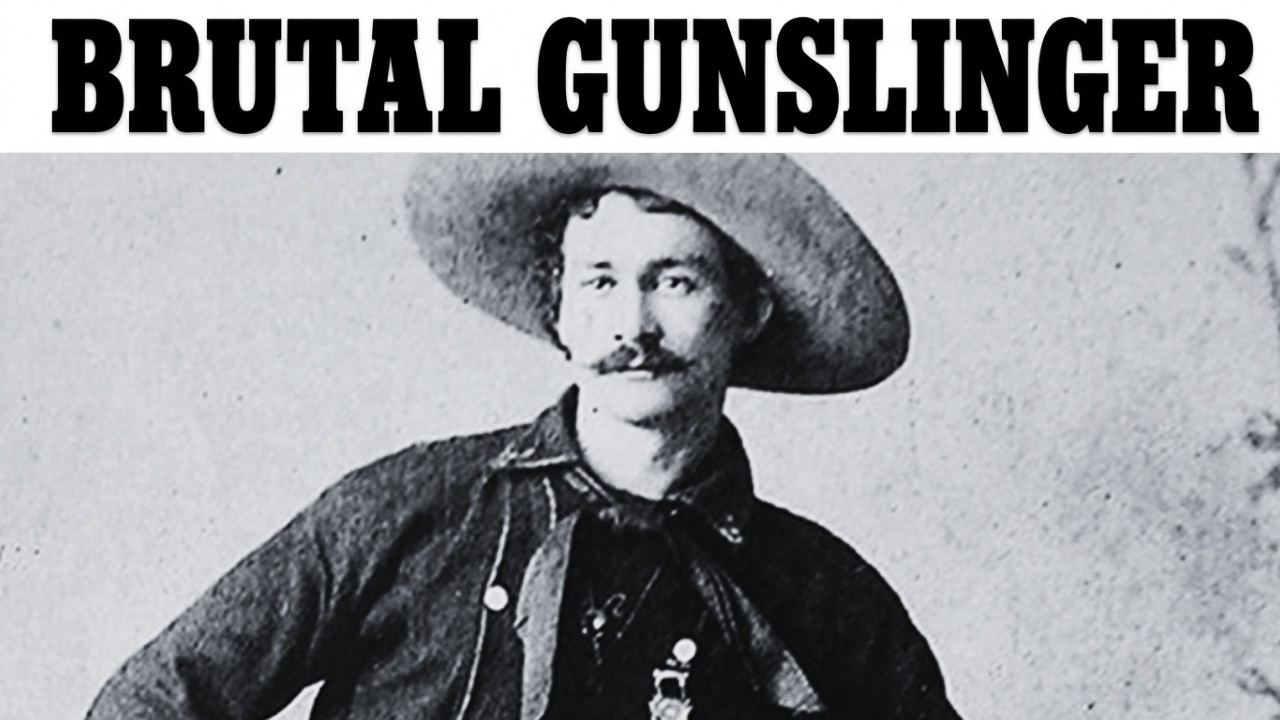
# Johnny Ringo: The Most Dangerous Man In Tombstone
On January 17, 1882, two armed men stood in the middle of Allen Street in Tombstone with their hands near their revolvers.
One was Doc Holliday.
The other was Johnny Ringo.
Both men were sick.
Both were angry.
Both had been drinking.
And both belonged to rival factions that had spent months moving steadily toward open war.
Three months earlier, the gunfight near the O.K. Corral had left three Cowboys dead.
Virgil Earp had since been ambushed and badly wounded.
Morgan Earp would soon be murdered.
And Ringo, a hard-drinking Texas gunman with a reputation for violence, had become one of the most feared men associated with the Cochise County Cowboys.
That January afternoon, however, nobody died.
Chief of Police James Flynn reportedly grabbed Ringo before the confrontation became a gunfight.
Wyatt Earp helped calm Holliday.
Both men ended up before a judge.
They were fined.
Then they returned to a town that increasingly looked incapable of containing either side.
Johnny Ringo would be dead six months later.
He was thirty-two years old.
His body would be found sitting against a tree in the Chiricahua foothills with a bullet wound through his head, his boots missing, his revolver hanging from his hand, and enough strange details around the scene to create a mystery that has survived for more than 140 years.
Hollywood eventually turned Ringo into a master gunfighter.
The surviving record presents something different.
A violent man.
A heavy drinker.
A factional enforcer.
A killer.
And, perhaps most importantly, a product of two frontier legal systems that repeatedly failed to produce justice.
## The First Death Johnny Ringo Ever Saw Was His Father’s
John Peters Ringo was born on May 3, 1850, in Indiana.
His family was not part of the criminal underworld.
His father, Martin Ringo, farmed.
His mother, Mary, raised their children.
They moved west gradually, first into Missouri and eventually toward California.
Then came July 30, 1864.
The family was traveling through Wyoming as part of a wagon train.
Martin Ringo stepped down from the wagon with a shotgun.
The weapon discharged accidentally.
The blast struck him in the head.
Johnny was fourteen.
He was close enough to witness what happened.
The family buried Martin beside the trail and continued west.
There was no formal cemetery waiting.
No elaborate funeral.
No stable community where the family could stop and mourn.
The source presents that moment as the first major fracture in Johnny Ringo’s life.
It would be too simple to claim that witnessing his father’s accidental death automatically created the violent man he later became.
Millions of people suffered childhood tragedy without becoming killers.
But it mattered.
Ringo became the eldest son in a fatherless household while still a teenager.
Five years later, he left California.
Eventually he went to Texas.
And that is where the historical record begins attaching his name to violence.
## His First Recorded Trouble Was Almost Pointless
By Christmas Day 1874, Ringo was in Burnet, Texas.
According to the source, he fired a pistol across the town square without any documented justification.
He was fined seventy-five dollars.
Nobody died.
Nothing legendary happened.
It was simply reckless behavior.
But it placed his name into official records.
Soon afterward, Ringo entered Mason County.
That decision put him inside one of the ugliest local conflicts in Texas frontier history.
## Mason County Was Already at War
The Mason County conflict, later remembered as the Mason County War or Hoodoo War, grew out of disputes involving cattle theft, ethnicity, political power, and revenge.
German immigrant settlers had built a strong presence in the county.
Native-born cattlemen accused some Germans of controlling local government.
German settlers accused cattlemen of rustling.
Violence escalated.
Sheriff John Clark was regarded by Ringo’s faction as aligned with the German side.
In 1874, prisoners accused of cattle theft were dragged from jail by a mob.
Several were killed.
No meaningful punishment followed.
To Ringo and the men around him, the lesson was obvious:
The legal system would not necessarily protect them.
But once men decide that courts no longer matter, revenge becomes its own system.
That is exactly what happened.
## Scott Cooley Gave Ringo a Side
One of the most important figures in Ringo’s early outlaw life was Scott Cooley.
Cooley had once served as a Texas Ranger.
As a child, he had reportedly been rescued and raised by rancher Tim Williamson and his wife.
The relationship was profound.
When Ringo entered Cooley’s circle, he found something he apparently had lacked for years:
A leader.
A faction.
A sense of belonging.
Then Tim Williamson was murdered.
On May 13, 1875, Deputy Sheriff John Worley took Williamson into custody on a cattle-related charge.
During the trip back to Mason, a group of armed men with blackened faces intercepted them.
Williamson was shot and killed while still in the deputy’s custody.
The source identifies rancher Peter Bader as leading the attackers.
Questions remain about Worley’s role.
Did he cooperate?
Did he simply fail to resist?
Whatever the answer, Williamson died while legally detained.
The grand jury produced no indictments.
Nothing happened.
For Scott Cooley, that appears to have ended whatever faith he still had in legal justice.
## Cooley Answered Murder With Murder
On August 10, 1875, Cooley went to Deputy Worley’s home.
He shot Worley in the head.
Then he scalped him.
The act was revenge presented as a message.
By then, Ringo was aligned with Cooley.
The violence spread.
When another supporter of their faction was killed, Ringo crossed a line that would follow him for the rest of his life.
## Ringo’s First Killing Was Not a Duel
Hollywood prefers the honorable face-to-face gunfight.
Ringo’s first documented killing did not look like that.
On September 25, 1875, Ringo and Bill Williams rode to the home of James Cheyney.
They blamed Cheyney for helping lure one of their allies into an ambush.
Cheyney came onto his porch.
He was unarmed.
Ringo shot him dead.
The source is blunt about what happened.
It was not self-defense.
It was not a fair gunfight.
It was a killing carried out against an unarmed man.
That matters because so much of Ringo’s later legend depends on imagining him as an elite gunfighter living by some frontier code.
The earliest confirmed killing connected to him does not support that image.
## The Law Failed Again
Ringo and Cooley were eventually arrested.
Friends helped them escape.
Ringo was recaptured and spent roughly a year and a half moving through Texas jails while authorities attempted to prosecute cases arising from the Hoodoo War.
But the system collapsed under its own factionalism.
Witnesses disappeared.
Cases weakened.
Charges were dismissed.
Men on both sides escaped serious legal consequences.
Ringo did not walk free because a jury declared him innocent.
The state simply failed to produce a conviction.
Cooley died around 1876 under circumstances that generated their own rumors.
Officially, the cause was described as illness.
Later stories suggested poisoning.
Whatever happened, Ringo lost the man who had given him a faction and identity.
He briefly worked as a constable.
Then he drifted west again.
By 1879, he had reached Arizona Territory.
## Tombstone Was Waiting for a Man Like Ringo
Tombstone was a silver boomtown.
It was also a political battlefield.
The conflict is often simplified into heroes and villains.
The Earps on one side.
The Cowboys on the other.
The actual structure was messier.
Wyatt, Virgil, and Morgan Earp were associated with federal law enforcement interests and Republican business networks.
Cochise County Sheriff Johnny Behan was tied to Democratic political forces and ranching interests.
The loosely organized Cowboys included cattle thieves, smugglers, stage robbers, ranch hands, and men who moved between legitimate and criminal work.
Ringo aligned himself with men such as Curly Bill Brocius and Ike Clanton.
The transcript calls him the “king of the Cowboys.”
But it also makes an important correction to the legend.
There is little solid documentation showing Ringo winning spectacular fast-draw duels.
His reputation came instead from menace.
Alcohol.
Factional loyalty.
And his willingness to threaten violence.
## He Was Dangerous Because People Believed He Might Shoot
That distinction matters.
The most dangerous gunman in a frontier town was not necessarily the fastest.
Sometimes he was the man nobody trusted to stay calm.
Ringo developed that reputation.
He drank heavily.
He carried firearms.
He associated with dangerous men.
He had already killed.
And when drunk, he could become unpredictable.
That made his presence powerful.
Fear did part of the work before his revolver ever left its holster.
## The Allen Street Confrontation Nearly Changed Everything
The January 1882 confrontation with Doc Holliday brought Ringo’s reputation into direct contact with the Earp faction.
The two men reportedly exchanged insults.
Hands moved toward guns.
Police intervened.
It ended without bloodshed.
But Tombstone understood what the confrontation represented.
Ringo and Holliday were not simply two angry drinkers.
They symbolized two camps already preparing for violence.
Three days later, Ringo was arrested again after trouble involving an outstanding charge.
According to the source, James Earp filed an affidavit alleging Ringo intended to interfere with Wyatt Earp’s efforts against the Clantons.
The conflict had moved far beyond saloon insults.
It was becoming open factional warfare.
## Virgil Earp Was Ambushed
On December 28, 1881, assailants armed with shotguns attacked Virgil Earp on a Tombstone street.
The blast shattered his arm.
He survived.
But the wound permanently disabled him.
Cowboys were suspected.
No successful prosecution followed.
Then the violence escalated again.
## Morgan Earp Was Murdered
On March 18, 1882, Morgan Earp was playing billiards when someone fired through a doorway or window from outside.
A bullet struck him in the spine.
Another round passed close to Wyatt.
Morgan died.
Ringo became one of several Cowboys suspected of involvement.
But no proof established that he fired the fatal shot.
That distinction should remain clear.
Association is not evidence.
Hatred between factions is not proof of a specific murder.
Ringo had plenty of documented violence in his past.
Morgan Earp’s murder is not one of the killings that can confidently be assigned to him.
## Then Wyatt Earp Stopped Waiting for Courts
Two days after Morgan’s murder, Wyatt Earp killed Frank Stilwell in Tucson.
Then the Earp Vendetta Ride began.
Wyatt.
Doc Holliday.
Warren Earp.
Sherman McMasters.
Turkey Creek Jack Johnson.
Texas Jack Vermillion.
They rode through southeastern Arizona seeking the men they held responsible for attacks on the Earp family.
Sheriff Johnny Behan responded by forming his own posse.
Ringo rode with that group.
The situation had become absurd by modern legal standards.
One posse carried federal authority.
Another carried county authority.
Both were armed.
Both regarded the other as criminal.
Both were operating in the same territory.
The distinction between law enforcement and factional revenge had almost disappeared.
## Curly Bill Died
On March 24, Wyatt Earp’s posse encountered Cowboys near Iron Springs.
Curly Bill Brocius was killed.
For Ringo, this was another collapse of his world.
Cooley was dead.
Curly Bill was dead.
The Clantons were scattered.
The Earps eventually left Arizona.
The Cowboy faction lost cohesion.
And Tombstone itself began changing.
## By July 1882, Ringo Was Falling Apart
The silver economy had weakened.
Fire damaged Tombstone.
Old alliances were disappearing.
The source says Ringo entered what the *Tombstone Epitaph* described as an extended drinking spree.
He left town intoxicated.
Then he vanished into the Chiricahua foothills.
On July 13, people near B.F. Smith’s ranch reportedly heard a gunshot.
Nobody investigated.
The next day, teamster James Yoast found a body sitting among blackjack oak trees.
It was Johnny Ringo.
## The Death Scene Created a Mystery
Ringo sat upright against a tree.
A revolver was near his right hand.
There was a gunshot wound to the right temple.
The bullet exited the rear of the skull.
The cartridge belt was reportedly buckled upside down.
His boots were gone.
Cloth torn from his shirt had been wrapped around his feet.
His horse was later found roughly two miles away.
The boots were tied to the saddle.
The source also mentions a piece of scalp allegedly missing from the body.
The coroner ruled the death a suicide.
Ringo was thirty-two.
The verdict has never stopped people from asking questions.
## Was Johnny Ringo Murdered?
Several names have been attached to theories about Ringo’s death.
Wyatt Earp.
Doc Holliday.
Buckskin Frank Leslie.
Michael O’Rourke.
Others.
The problem is that suspicion repeatedly outruns evidence.
Later accounts claimed Wyatt secretly returned and killed Ringo.
Evidence for that story is thin.
Doc Holliday had motive, but evidence places him elsewhere around the relevant period.
Frank Leslie has appeared in theories largely because he was an experienced gunman and may have been in the region.
None of these theories has produced definitive proof.
The strange details around the body invite speculation.
The boots.
The belt.
The horse.
The scalp.
But unexplained does not mean homicide.
Ringo had been drinking heavily.
He had lost allies.
His faction was collapsing.
Suicide remains entirely plausible.
Murder remains possible.
The record cannot settle it.
## The Greatest Ringo Myth Is His Gunfighting Skill
Popular culture transformed Ringo into an almost supernatural pistol fighter.
A dark mirror of Doc Holliday.
An intellectual killer.
A man everyone feared because no one could beat him with a revolver.
The historical record does not strongly support that portrait.
His documented violence shows willingness to kill.
It does not establish extraordinary quick-draw ability.
He shot James Cheyney while Cheyney was unarmed.
His most famous confrontation with Holliday ended before either man fired.
He participated in factional violence.
He threatened people.
He carried a reputation.
But the undefeated duel specialist belongs mostly to later storytelling.
The real Johnny Ringo was dangerous enough without inventing additional gunfights.
## Johnny Behan Survived the World That Destroyed Ringo
There is an irony in what happened afterward.
Sheriff Johnny Behan lost political power.
He faced allegations of corruption.
But he survived.
He later held other government jobs.
Wyatt Earp survived too.
He left Arizona, moved through mining camps and business ventures, and eventually died in Los Angeles in 1929.
Doc Holliday died from tuberculosis in Colorado in 1887.
Ike Clanton was shot and killed while resisting arrest that same year.
Ringo survived none of them.
His body remained near the tree where he was found.
## The System Around Him Matters
The transcript’s strongest argument is not that Johnny Ringo was secretly innocent.
He was not presented that way.
It explicitly acknowledges his killing of James Cheyney.
His violent temper.
His drinking.
His association with criminals.
Instead, it asks what kind of institutions surrounded him.
In Mason County, prisoners were lynched.
Williamson was murdered while under arrest.
Grand juries produced nothing.
Revenge replaced prosecution.
Then Ringo arrived in Arizona.
There, county politics, federal law enforcement, ranching interests, tax collection, gambling, newspapers, and outlaw networks became intertwined.
Badges did not eliminate factionalism.
Sometimes the badge became another factional weapon.
That environment did not absolve Ringo.
But it helped create the world in which he operated.
## Tombstone Eventually Turned the Violence Into Entertainment
Today, Tombstone remembers this period differently.
Gunfights are reenacted.
Actors wear period clothing.
Replica revolvers fill gift shops.
Tourists walk Allen Street.
The same town once unable to control rival armed factions now sells that violence as historical entertainment.
Ringo’s grave survives roughly fifty miles from Tombstone in the Turkey Creek area.
Visitors can still see the site associated with his death.
The historical marker tells them where Johnny Ringo ended.
But no marker can definitively explain how.
That uncertainty may be the most appropriate ending possible.
## The Most Dangerous Man in Tombstone?
Johnny Ringo may not have been Tombstone’s fastest gun.
He may not have killed nearly as many men as later legends claimed.
He was never proven responsible for Morgan Earp’s murder.
And the circumstances of his own death remain unresolved.
But dangerous?
That description fits.
He had already killed an unarmed man.
He had survived the Hoodoo War.
He rode with violent Cowboys.
He drank heavily.
He repeatedly placed himself inside conflicts where guns replaced courts.
His real danger was not cinematic skill.
It was his willingness to participate in a world where violence had become ordinary.
That makes the final image more revealing than any duel.
Not Ringo standing against Doc Holliday on Allen Street.
Not Ringo drawing faster than another gunman.
Not the “king of the Cowboys.”
Johnny Ringo sitting alone beneath a tree.
His revolver in his hand.
His boots miles away on a horse.
A bullet through his skull.
A legal system that called it suicide.
And more than a century of storytellers insisting there must have been something more.
Perhaps there was.
Perhaps there was not.
The same historical record that helped build Johnny Ringo’s legend also prevents us from resolving it completely.
What it does show is darker than the myth.
He was not simply a gunfighter who became dangerous because he could draw quickly.
He came out of communities where courts repeatedly failed, law enforcement belonged to factions, revenge was normalized, and men learned that violence often carried fewer consequences than waiting for justice.
Johnny Ringo did not become a legend because history knew everything about him.
He became a legend because history left enough empty space for everyone else to finish the story.


