Frank Strada Resigns as Court Orders Tennessee to Preserve Evidence From Christa Pike’s Failed Execution
Tennessee’s failed attempt to execute Christa Pike has now produced something far larger than another argument over lethal injection.
The state’s top corrections official is leaving.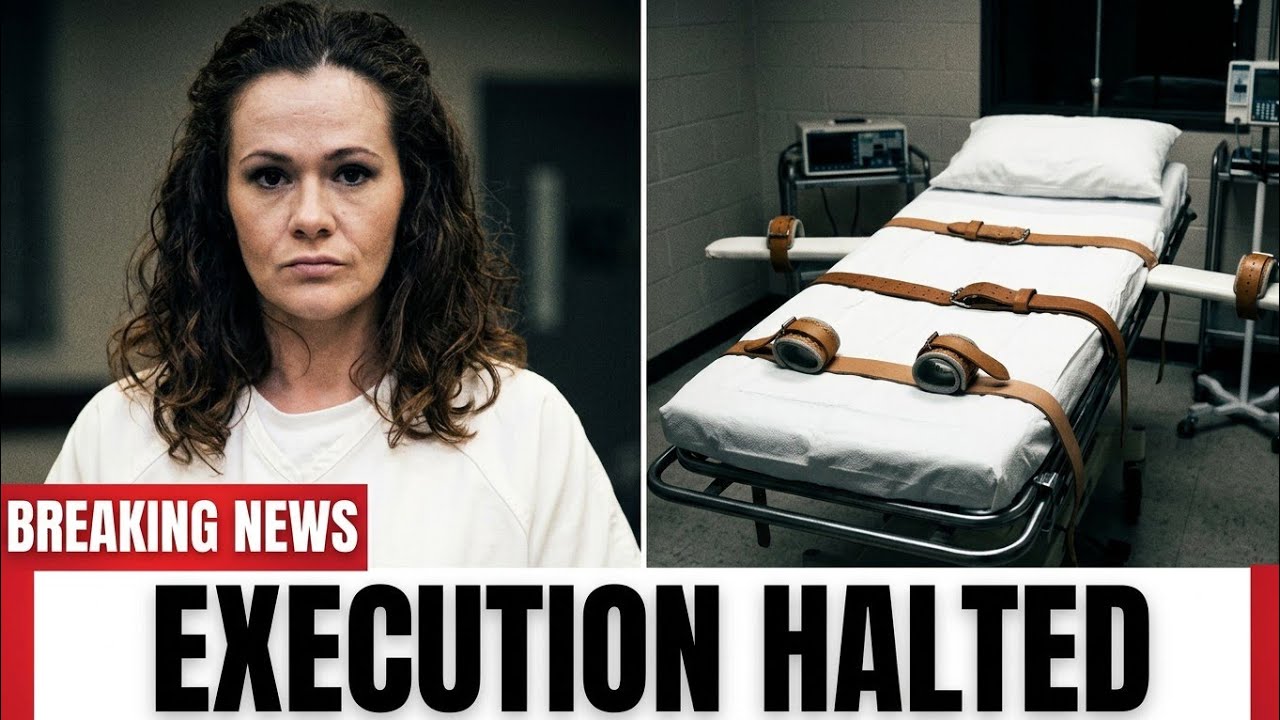
A judge has ordered Tennessee to preserve virtually every category of evidence connected to the procedure.
Governor Bill Lee has stopped further executions for the remainder of 2026.
An independent investigation is underway.
And Pike, who initially appeared unlikely to survive the medical catastrophe, has now regained consciousness and begun walking with assistance.
Those developments are verified.
But a growing collection of viral claims goes further.
They portray Frank Strada’s resignation as proof that Tennessee officials were caught destroying evidence.
They claim hidden Department of Correction files document a coordinated cover-up.
They suggest execution-room recordings and surveillance footage were moments away from being erased before lawyers intervened.
And they characterize the legal dispute as an already-proven federal conspiracy involving chemical torture.
The actual record is both more complicated and, in several respects, more consequential.
Frank Strada really is leaving his position as commissioner of the Tennessee Department of Correction.
Governor Bill Lee announced on October 3 that Strada had offered his resignation and that Lee accepted it.
Strada is expected to step down later in October rather than disappearing immediately from office.
The timing is impossible to ignore.
Three days earlier, Tennessee attempted to execute Pike at Riverbend Maximum Security Institution.
The procedure failed after two administrations of pentobarbital.
Pike survived.
She was transported to a hospital unconscious, intubated and dependent on a ventilator.
The event became Tennessee’s second failed execution of 2026.
Strada was the official ultimately responsible for the correction department overseeing those executions.
Yet neither Lee nor Strada publicly described the resignation as an admission of misconduct.
Lee said Strada had served “with integrity.”
Strada himself said he continued to believe TDOC personnel carried out their responsibilities according to the established protocol.
He said stepping aside was in Tennessee’s interest while the independent review proceeded.
That language matters.
It does not absolve the department.
It also does not prove a cover-up.
The resignation creates accountability questions.
It does not answer them.
Those questions intensified on October 7.
Davidson County Chancellor I’Ashea Myles ordered Tennessee officials to preserve all evidence related to Pike’s failed execution.
The scope of that order is striking.
According to the Death Penalty Information Center, it covers drugs used during the procedure, syringes, IV lines, medical equipment, photographs, videos, audio recordings, witness accounts, emails and documentation concerning delays, complications or equipment failures.
The Washington Post reported that Pike’s attorneys specifically sought preservation of logbooks, surveillance footage, equipment, medical records and other information documenting events before and after the execution attempt.
Myles made clear that she wanted relevant evidence protected from accidental loss.
She instructed the state to take care that potentially important information was not misplaced or deleted.
She also ordered officials to attempt to retrieve materials that might already have been discarded.
That is significant.
It means the concern about disappearing evidence is not imaginary.
Pike’s lawyers considered the threat serious enough to seek emergency judicial intervention.
A Tennessee judge considered preservation important enough to issue a broad order.
But there is still a crucial difference between ordering evidence preservation and proving deliberate evidence destruction.
No current court finding says TDOC intentionally erased execution footage.
No judge has found that officials destroyed audio to conceal misconduct.
No criminal charge alleges obstruction.
No authenticated internal memo orders employees to delete records.
And no public filing establishes a coordinated conspiracy to hide what happened.
In fact, a state attorney told the court that officials had already begun preserving evidence because of separate federal litigation involving Tennessee’s execution protocol.
That statement does not settle whether every relevant item remains intact.
It simply means the evidence dispute is more nuanced than the phrase “state officials are destroying everything.”
Pike’s attorneys remain deeply distrustful of Tennessee’s handling of the case.
Attorney Randy Spivey has accused the state of excessive secrecy surrounding executions.
Following the October 7 hearing, Pike’s lawyers continued pressing for transparency about what happened inside Riverbend and what records exist.
Their concern is understandable.
Large portions of Tennessee’s execution procedures are shielded from public view.
The identities of some execution personnel remain protected.
Witnesses could not see everything that occurred after curtains were closed.
And the failed procedure involved enough uncertainty that even days later, major questions remained unanswered.
One question concerns Pike’s intravenous lines.
Her attorneys have alleged that execution personnel failed to recognize that the IV lines were not correctly positioned or that Pike’s veins had blown.
Their theory is that pentobarbital entered surrounding tissue rather than flowing properly through her bloodstream.
That theory could explain two otherwise extraordinary facts.
First, Pike survived two rounds of a drug intended to kill her.
Second, she suffered severe injuries to her arms.
Her attorneys initially described both arms as swollen, burned and blistered.
Witnesses had already reported significant difficulty establishing IV access and severe pain during the procedure.
Strada’s resignation came while those allegations were rapidly gaining attention.
It also came as scrutiny turned toward changes made to Tennessee’s lethal-injection protocol during his tenure.
WSMV reported that an attorney with the Federal Public Defender’s Office pointed to Strada’s removal of a previous requirement that IV-team members practice establishing intravenous lines.
That change is now being examined in light of both Pike’s execution and an earlier failed Tennessee execution attempt.
That does not prove the protocol change caused Pike’s injuries.
It does make the decision relevant to the independent investigation.
The governor has selected former U.S. Attorney Ed Stanton to lead that review.
Lee has also paused Tennessee executions for the remainder of 2026.
Those actions demonstrate that the state itself recognizes the seriousness of what happened.
But another part of the viral narrative is already outdated.
Early reports described doctors trying to remove pentobarbital from Pike’s body.
That was accurate during the immediate aftermath.
By October 2, Pike’s attorneys said she was unconscious, intubated and on a ventilator while hospital personnel worked to clear the lethal drug from her system.
That is no longer her latest condition.
By October 6, Pike had regained consciousness and was speaking.
By October 9, her lawyers said she had begun walking short distances with assistance and eating normal food.
She had also regained use of her limbs, although serious medical and psychological complications remained.
Her recovery has therefore moved beyond the initial ventilator stage.
That does not mean she has fully recovered.
Pike’s lawyers say she continues experiencing cognitive difficulties.
She reportedly remains mentally foggy.
Her arms continue to cause problems.
She has suffered pneumonia and a blood clot.
Her legal team describes profound psychological trauma following the execution attempt.
Long-term consequences remain uncertain.
But the claim that the state is currently racing to “flush lethal poison” from an unconscious Pike no longer reflects the latest available information.
The preservation order has become more important precisely because Pike survived.
If she had died, the failed procedure still would have generated scrutiny.
Because she lived, she may now personally participate in future litigation challenging what Tennessee did to her.
Her lawyers are already using the failed execution as part of renewed efforts to obtain clemency.
They argue that forcing her through another execution after what happened on September 30 would raise profound constitutional issues.
That makes the preserved evidence potentially critical.
The IV lines could help determine whether they were properly placed.
Unused or remaining drugs could potentially be tested.
Execution logs could establish exact timing.
Surveillance footage might show staff movements and procedures.
Emails could reveal what officials knew before the execution.
Medical documentation could establish when problems became apparent.
Witness statements could clarify what personnel saw and heard.
Audio might capture communications not visible through the witness glass.
The eventual factual reconstruction may depend on all of those categories.
That explains why Pike’s lawyers moved quickly.
Preservation does not automatically mean wrongdoing occurred.
It means future litigation could depend upon evidence that cannot be recreated once destroyed.
The phrase “hidden chamber tapes” therefore requires careful treatment.
The judge’s order covers audio and video material if such material exists.
That does not establish that Tennessee possesses a dramatic secret recording of execution personnel admitting wrongdoing.
No authenticated recording of that sort has surfaced.
Likewise, there is no verified “suppressed resignation file” proving Strada left because investigators discovered deliberate torture.
The public resignation statement says something different.
Strada maintained that TDOC followed its protocol.
He said he was stepping aside so the investigation could move forward.
Lee publicly praised his service while accepting the resignation.
The timing invites scrutiny.
It does not establish hidden guilt.
Pike’s attorneys take a far more critical view.
They said Strada’s resignation was justified but argued that removing one official does nothing to repair what happened to Pike.
They described the failed execution as a systemic failure larger than any one individual.
That difference in framing is important.
The governor portrays the transition as part of an independent review.
Strada says protocol was followed.
Pike’s lawyers allege fundamental systemic failure.
The investigation has not yet resolved that dispute.
The word “chemical torture” also remains an allegation rather than an official finding.
Pike’s lawyers have characterized what happened as cruel and torturous.
Attorney Randy Spivey, who witnessed the execution, has publicly used severe language describing the process.
But no court has yet issued a final ruling declaring that Tennessee deliberately tortured Pike.
The Eighth Amendment question will likely become central to future litigation.
What matters legally will include not only the injuries but what officials knew, what safeguards existed, whether warning signs were ignored, and whether any future execution would expose Pike to an unconstitutional risk of severe pain.
The preserved evidence may help answer those questions.
Another viral phrase says “federal lawsuits drop.”
That is broader than the public record currently supports.
There is existing federal litigation concerning Tennessee’s execution procedures, and Pike’s legal team is actively litigating preservation, access, clemency and potential future constitutional claims.
But there is not yet a publicly authenticated blockbuster federal damages complaint proving a cover-up by Strada and other officials.
That distinction matters.
Future Section 1983 litigation is conceivable.
A constitutional challenge to another execution appears highly likely.
But possible lawsuits should not be described as completed judgments.
The October 7 evidence order itself came from Davidson County Chancery Court, a Tennessee state court, not from a federal judge.
The case also contains a new dispute over Pike’s treatment at the hospital.
Her attorneys said correctional officers continued keeping her handcuffed and shackled to the hospital bed despite her injuries.
They alleged medical staff objected.
Judge Myles did not immediately rule on the restraint issue and instead sought additional medical documentation.
Pike’s attorneys also complained about limitations on their access to her.
TDOC disputed that it had improperly restricted access.
These conflicts demonstrate how rapidly the legal battlefield has expanded.
The case is no longer merely about whether Tennessee carried out its written protocol.
It now involves preservation of evidence.
Attorney access.
Hospital restraints.
Clemency.
Potential Eighth Amendment claims.
Execution transparency.
Protocol design.
Training.
And whether Tennessee could constitutionally attempt to execute Pike again.
Meanwhile, Pike’s death sentence remains legally intact.
The failed execution did not automatically commute it.
No court has declared her legally immune from another attempt.
No new execution date has been set.
And Tennessee’s current statewide pause only extends through the remainder of 2026.
That uncertainty makes the independent review crucial.
The state must determine why two doses of pentobarbital failed.
It must determine whether IV access was defective.
It must determine whether staff recognized problems.
It must determine whether safeguards were adequate.
And it must determine whether its current protocol can be used again.
Strada’s departure guarantees that those questions will be examined without the same commissioner remaining at the head of the department.
But his resignation does not itself answer them.
The most accurate factual breakdown is now unusually dramatic even without unsupported additions.
Frank Strada offered his resignation.
Verified.
Governor Bill Lee accepted it.
Verified.
Strada will leave his position later in October.
Verified.
His resignation came days after Pike survived Tennessee’s execution attempt.
Verified.
Lee ordered an independent investigation.
Verified.
Tennessee executions have been paused for the remainder of 2026.
Verified.
Pike received two doses of pentobarbital and survived.
Verified.
Her attorneys allege IV problems allowed the drug to enter surrounding tissue.
Verified as their allegation.
Pike suffered significant arm injuries.
Verified through her lawyers’ descriptions and subsequent reporting.
She was initially unconscious, intubated and ventilated.
Verified.
She later regained consciousness.
Verified.
She can now speak, eat and walk short distances with assistance.
Verified as of October 9.
A Tennessee judge ordered preservation of evidence relating to the execution.
Verified.
That order includes physical equipment, records, communications, photographs, audio and video.
Verified.
The court expressed concern that relevant information should not be accidentally lost or deleted.
Verified.
The court ordered efforts to retrieve materials that may already have been discarded.
Verified.
Officials intentionally destroyed chamber recordings.
Not established.
Strada resigned because he was caught covering up evidence.
Not established.
An internal resignation dossier proves a conspiracy.
Not authenticated.
Officials deliberately ordered pentobarbital into known blown veins.
Alleged IV failure is documented, but deliberate instruction has not been proven.
A court has ruled that Tennessee committed “chemical torture.”
Not established.
Federal courts have found a criminal cover-up.
Not established.
A secret TDOC vault contains suppressed resignation documents proving wrongdoing.
No authenticated evidence.
What Tennessee does have now is an accountability crisis grounded in real events.
Its execution protocol failed.
A prisoner survived two lethal drug administrations.
She sustained serious injuries.
Its corrections commissioner announced his resignation.
Its governor halted executions.
An outside review has been ordered.
And a judge has now taken the unusual step of ordering the state to preserve a sweeping range of evidence so that the full story can eventually be reconstructed.
Those are not rumors.
They are now part of the official record.
Whether that record eventually proves negligence, systemic incompetence, constitutional violations, individual liability, or something even more serious remains unresolved.
But one thing has changed decisively since the night Pike was removed from Riverbend.
Tennessee can no longer treat what happened inside that chamber as merely an internal corrections matter.
The evidence is now being preserved under court order.
The commissioner responsible for the prison system is leaving.
Pike is alive and increasingly able to communicate with her lawyers.
And every preserved email, IV line, surveillance frame, medical record and execution log may eventually become evidence in the constitutional battle over what happened on September 30—and whether Tennessee should ever be allowed to attempt it again.


