Fire Her Immediately: The Truth Behind Charles Barkley, Kara Lawson And Caitlin Clark
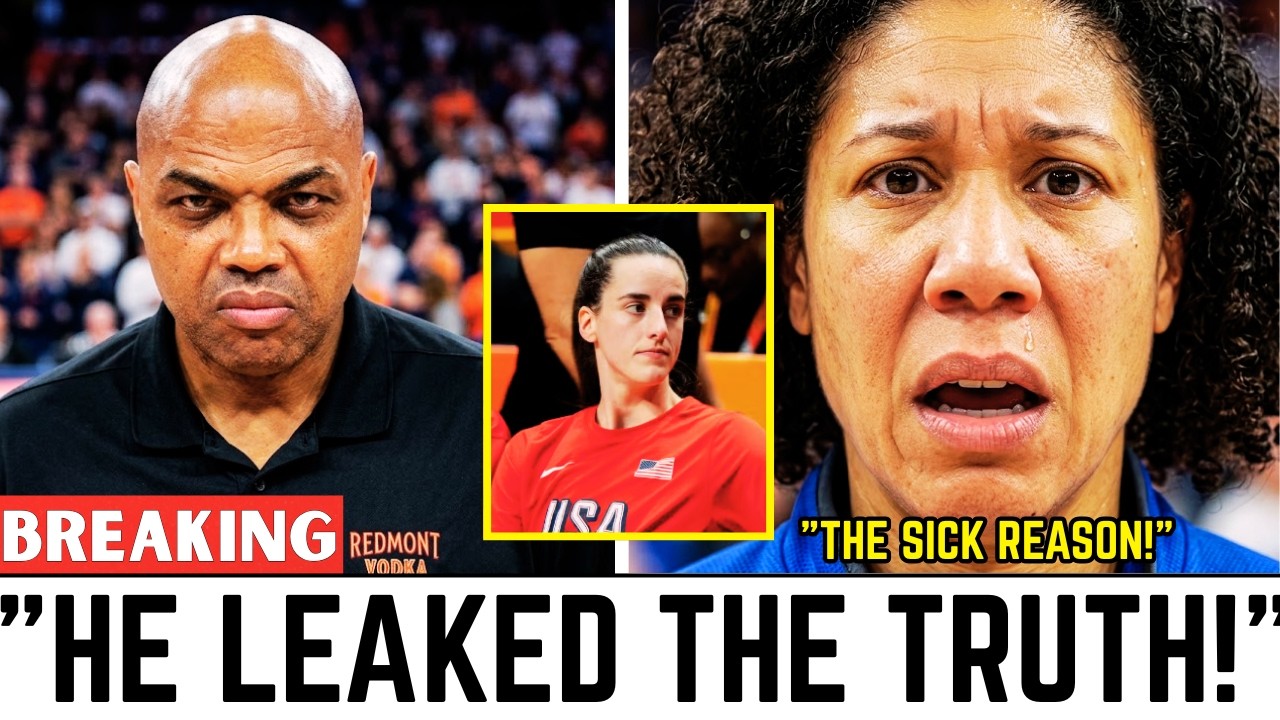
The internet exploded after posts claimed Charles Barkley interrupted live television and demanded Kara Lawson’s immediate termination.
According to those posts, Barkley supposedly exposed a jealous conspiracy designed to destroy Caitlin Clark’s international basketball career.
The descriptions promised an uncensored recording, a career-ending secret, and an investigation capable of bringing down Team USA.
There is only one problem: no authenticated broadcast currently supports the extraordinary story spreading across social media.
No complete ESPN segment shows Barkley accusing Lawson of sabotage, demanding her dismissal, or revealing any secret evidence.
Neither USA Basketball nor FIBA has announced an investigation involving Lawson’s treatment of Clark during the World Cup.
That does not mean every criticism surrounding Lawson’s decisions is automatically unfair, dishonest, or motivated by Clark’s popularity.
It means tactical criticism must remain separated from accusations alleging jealousy, corruption, retaliation, or deliberate professional destruction.
Those allegations require evidence, including complete footage, attributable reporting, verified documents, or statements from involved organizations.
Without those materials, a dramatic headline cannot transform speculation into a legitimate scandal involving real people.
The genuine basketball story was already compelling enough without manufacturing a secret war between Clark and Lawson.
Clark entered her first senior World Cup carrying unprecedented expectations from American supporters and international basketball audiences.
Every substitution became a referendum, every missed shot became ammunition, and every successful pass generated louder demands.
Lawson faced the difficult responsibility of balancing established champions with younger players who represented Team USA’s future.
She consistently started a veteran group featuring Breanna Stewart, Napheesa Collier, Jackie Young, Kahleah Copper, and Chelsea Gray.
Clark generally entered from the bench, receiving responsibility as a secondary creator rather than controlling every opening possession.
That choice frustrated many fans accustomed to watching Indiana’s offense revolve around Clark’s extraordinary passing and shooting range.
However, frustration with a rotation does not demonstrate that the coach secretly wanted one particular player to fail.
Clark’s official tournament statistics actually reveal meaningful responsibility, uneven shooting, valuable playmaking, and several important momentum-changing performances.
She averaged 7.8 points, 5.3 assists, and 2.2 rebounds across six appearances for the undefeated Americans.
Most importantly, Clark led Team USA in assists despite averaging only 19.3 minutes during her World Cup debut.
Those numbers come directly from her official FIBA player profile, not anonymous insiders or recycled social posts.
Her opening performance against China immediately demonstrated why supporters wanted Lawson to give her considerably greater offensive control.

Clark recorded fourteen points and eleven assists without committing a turnover during a dazzling introduction to international competition.
FIBA reported that eleven assists represented the highest total by an American player making a Women’s World Cup debut.
Lawson publicly praised Clark afterward, describing her tempo-changing contribution and playmaking as terrific during the postgame press conference.
That documented praise directly conflicts with claims that Lawson entered the tournament determined to embarrass or destroy Clark.
The performance also established a difficult standard that Clark could not reproduce consistently throughout every subsequent international matchup.
Against Italy, Clark missed all six field-goal attempts and finished with one point in nineteen minutes.
Against the Czech Republic, she delivered nine points and seven assists while helping America maintain its perfect record.
Her quarterfinal performance against Hungary produced ten points, nine assists, two steals, and another convincing American victory.
Then Clark struggled again against Spain, scoring one point and missing all three attempts from three-point range.
Those contrasting performances created a legitimate coaching conversation about rhythm, responsibility, confidence, and lineup combinations under tournament pressure.
Fans could reasonably argue Clark needed additional minutes to overcome difficult shooting stretches and establish stronger offensive continuity.
Others could reasonably believe Lawson prioritized defensive versatility, physical experience, and combinations already tested against elite international opponents.
Neither interpretation proves malicious intent, because strategic disagreement remains fundamentally different from evidence of purposeful professional sabotage.
The final against France illustrated both Lawson’s vulnerabilities and the enormous depth available throughout the American roster.
France attacked aggressively, built a fourteen-point advantage, and briefly made the reigning champions appear unusually disorganized.
The slow opening strengthened criticism that Lawson’s preferred starting combination sometimes lacked urgency and creative offensive movement.
It also gave Clark’s supporters another understandable reason to demand earlier minutes for the team’s most imaginative passer.
When Clark entered, her shooting helped accelerate the comeback and changed the emotional temperature surrounding the American offense.
She finished with twelve points on four-of-five shooting, including two successful three-pointers, despite playing thirteen minutes.
One of those three-pointers arrived before halftime, helping America reduce France’s dangerous advantage to only two points.
Team USA then overwhelmed France after halftime, eventually completing a 97–79 victory for another world championship.
Breanna Stewart led the comeback with twenty-two points, while Jackie Young and Kahleah Copper provided decisive veteran production.
Reuters documented the fourteen-point recovery and Clark’s important contribution during the World Cup final.
The result gave America its fifth consecutive World Cup crown and twelfth championship across the tournament’s history.
FIBA’s official team profile records six victories, zero defeats, and first place under Lawson.
A coach supposedly committed to destroying her roster’s most famous player still completed an undefeated championship campaign.
That outcome does not make Lawson immune from scrutiny, because winning coaches can still make questionable rotation decisions.
However, it substantially weakens claims describing the tournament as an apocalypse, collapse, disaster, or deliberate campaign of destruction.
The real debate concerns whether Lawson maximized Clark’s distinctive abilities while protecting the structure of a championship roster.
Clark creates advantages differently from traditional guards because defenders must respect her shooting several steps beyond the arc.
Her passing punishes defensive rotations immediately, especially when teammates sprint in transition or cut decisively behind aggressive coverage.
Those qualities can transform a stagnant offense before Clark scores, explaining why her impact exceeds traditional point totals.
Yet international basketball also presents challenges involving physical contact, compact spacing, unfamiliar officiating, and rapidly changing defensive schemes.
Clark committed four turnovers and four personal fouls during the final, demonstrating both her brilliance and continued adjustment.
Acknowledging those mistakes is not an attack, just as celebrating her comeback contribution is not blind celebrity worship.
Lawson’s responsibility involved assessing both sides while managing a roster overflowing with accomplished scorers, defenders, and veteran leaders.
Her decision to use Clark from the bench may have been conservative, but conservatism alone does not establish jealousy.
Furthermore, USA Basketball selected Lawson because of an extensive international résumé developed across playing, assisting, and coaching roles.
She won Olympic gold as a player, coached America’s 3×3 team successfully, and served on championship staffs.
FIBA reported Lawson would lead the national program through 2028 after years of involvement with USA Basketball.
The organization publicly emphasized her leadership, experience, basketball intelligence, and longstanding respect throughout the national-team system.
That background does not prove every decision was correct, but it contradicts portrayals of an irrational outsider seizing control.
Likewise, Barkley’s history explains why audiences might initially believe he delivered another passionate defense of Clark.
In May 2024, Barkley criticized what he considered petty reactions toward Clark during TNT’s basketball coverage.
He argued that players should appreciate the attention, money, private travel, and visibility accompanying Clark’s enormous popularity.
That genuine commentary was widely reported, including by People, and generated responses from several WNBA players.
Barkley’s blunt delivery, recognizable voice, and established support for Clark make fabricated follow-up clips appear superficially believable.
Creators can combine authentic older remarks with new narration, unrelated Lawson footage, and misleading captions suggesting recent confrontation.
A thumbnail showing Barkley shouting beside Lawson’s photograph does not prove both moments occurred during the same broadcast.
Even apparently convincing audio can be rearranged, stripped from its original context, or generated through modern cloning technology.
The absence of a complete segment becomes especially suspicious when posts repeatedly promise footage without identifying its program.
A credible television report normally includes a broadcast date, network, episode, interviewer, and uninterrupted video showing surrounding context.
The viral claims provide none of those essentials while relying upon emotionally loaded words like disgusting, twisted, and horrifying.
They also describe unspecified insiders and investigations without naming investigators, organizations, documents, witnesses, or accountable reporters.
That structure is designed to maximize curiosity rather than provide readers enough information to independently confirm anything.
The promised “career-ending secret” functions as a narrative hook, always positioned beyond the headline and never properly documented.
Similarly, demanding viewers watch “below” encourages engagement before they can examine whether the supposed evidence actually exists.
This pattern exploits the intense emotional investment surrounding Clark, whose supporters remain understandably protective after years of controversy.
It also reduces Lawson into a convenient villain instead of examining her tactics, priorities, and tournament decisions responsibly.
The most compelling criticism of Lawson does not require pretending she secretly hated Clark or plotted her downfall.
America’s recurring slow starts against Italy, Spain, and France created legitimate questions about preparation and starting-unit balance.
Clark’s ability to increase tempo presented an obvious alternative whenever the offense became predictable or overly dependent upon isolation.
Giving her earlier opportunities might have produced cleaner transition chances and prevented opponents from establishing confidence and defensive rhythm.
Lawson could also have experimented with Clark beside Gray, allowing two elite decision-makers to share initiation responsibilities.
Another option involved pairing Clark more frequently with mobile frontcourt players prepared to screen, roll, and finish quickly.
Those are concrete basketball arguments supported by observable possessions, official minutes, shooting results, and lineup behavior.
They remain stronger than psychological claims pretending strangers can confidently diagnose Lawson’s jealousy through substitution patterns alone.
Coaches frequently prioritize familiarity during elimination tournaments because preparation time is limited and mistakes carry immediate consequences.
Veterans frequently receive greater trust because they understand defensive communication, physical matchups, and late-game international pressure.
Clark’s supporters may dislike that hierarchy, but established sporting logic explains it without requiring a hidden conspiracy.
At the same time, championship success should not erase the importance of modernizing America’s offensive identity around emerging talent.
Clark, Paige Bueckers, Angel Reese, and other younger contributors represent a generation capable of extending American dominance.
Integrating those players meaningfully before the 2028 Olympics should remain among Lawson’s most important long-term responsibilities.
Clark’s World Cup experience offered evidence that she can influence elite competition without dominating possession or starting games.
Her eleven-assist debut displayed unprecedented control, while her final performance showed resilience following an extremely difficult semifinal.
Those achievements deserve more attention than a fictional confrontation that transforms athletic development into personalized hatred and revenge.
The championship also demonstrated that Clark can coexist with celebrated veterans rather than threatening their identities or accomplishments.
She contributed alongside Stewart, Young, Gray, Copper, Collier, Reese, Bueckers, and other players performing specialized responsibilities.
America succeeded because different contributors answered different moments, even when particular rotations remained open to reasonable criticism.
Clark did not need Lawson to fail for her own importance to become obvious throughout the international tournament.
Lawson did not need Clark diminished for her coaching decisions to receive recognition after winning an undefeated championship.
Their relationship should be evaluated through documented comments, observable decisions, and performances rather than invented locker-room conversations.
Nothing currently verifies that Barkley uncovered recordings, confidential messages, secret meetings, or instructions intended to damage Clark.
Nothing verifies that he demanded Lawson’s dismissal during a recent broadcast discussing the Women’s World Cup final.
Nothing verifies that USA Basketball opened an internal investigation because of any alleged revelation delivered by Barkley.
And nothing verifies the existence of an uncensored video containing the “horrifying truth” promised by sensational social posts.
Until original footage emerges, presenting those assertions as established facts would mislead audiences and unfairly damage reputations.
Responsible viewers should request the complete broadcast instead of accepting cropped reactions, synthetic narration, and dramatic background music.
They should search the network’s official archive and confirm whether reputable journalists independently reported the same allegations.
They should examine whether quoted words synchronize naturally with Barkley’s mouth throughout an uninterrupted high-resolution recording.
They should also check whether Lawson’s alleged comments appear in transcripts, press conferences, or official tournament coverage.
If every trail returns only to anonymous channels repeating identical language, that pattern strongly suggests manufactured content.
The truth remains dramatic, although it lacks the imagined termination demand and supposedly devastating secret recording.
Lawson made debatable rotation choices, Clark endured inconsistent production, and America repeatedly recovered from unexpectedly dangerous situations.
Clark nevertheless led the champions in assists and produced her most efficient scoring performance during the biggest game.
Lawson nevertheless completed the tournament undefeated and delivered another gold medal despite growing international competition and enormous scrutiny.
Barkley previously defended Clark forcefully, but that history cannot authenticate words nobody has demonstrated he recently spoke.
No Scheme Was Proven.
The responsible verdict is therefore straightforward: question Lawson’s rotations, celebrate Clark’s impact, and reject unsupported character assassination.
Basketball analysis becomes more persuasive when it explains specific decisions instead of assigning secret motives without supporting evidence.
Clark’s best response was not a revenge speech, leaked recording, or theatrical confrontation manufactured for social-media engagement.
Her strongest response occurred on the court when she buried crucial shots and helped America complete its comeback.
That moment communicated everything necessary about her toughness, adaptability, and readiness for increasingly important international responsibilities.
The next major question is not whether Lawson should be fired because of an imaginary Barkley television explosion.
It is whether Lawson will expand Clark’s role as Team USA prepares for the 2028 Los Angeles Olympics.
If she does, America could combine its traditional physical superiority with unprecedented passing range and perimeter pressure.
If she does not, the tactical debate will intensify, especially whenever established lineups begin another important game slowly.
That debate deserves evidence, detailed film study, official statistics, and honest disagreement without fictional conspiracies driving the conversation.
For now, the alleged television apocalypse exists only within headlines that offer outrage first and verification afterward.
The actual record shows a championship coach, a historically influential guard, and an outspoken commentator surrounded by manufactured conflict.
Watch the verified highlights, compare the official statistics, and discover how manufactured outrage replaced the real basketball debate below… 👇


