FBI Files Expose John Gotti’s Downfall, but Secret Government Wire Betrayal Remains Unsupported
John Gotti built one of the most carefully cultivated public images in the history of American organized crime.
Expensive suits.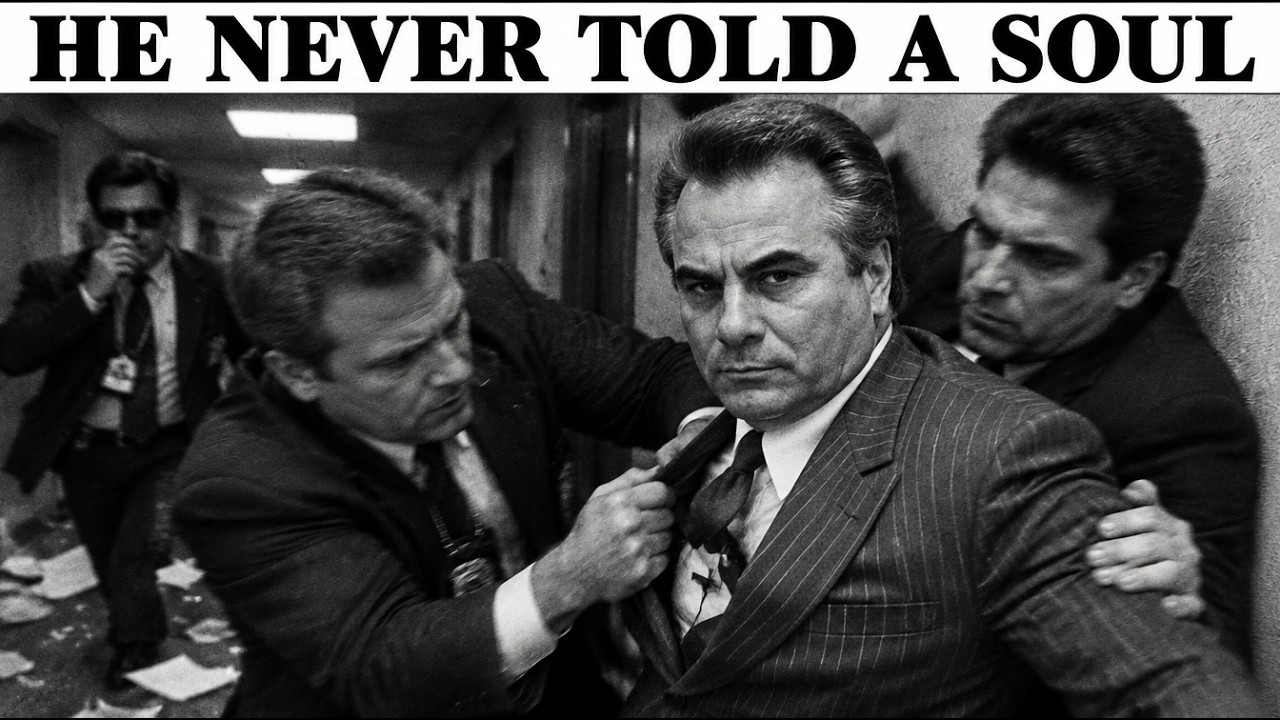
Perfectly combed hair.
Confident courthouse appearances.
Crowds outside federal buildings.
Television cameras following every step.
And a nickname that seemed to turn repeated acquittals into mythology.
The “Teflon Don.”
For years, charges appeared to slide off him.
Then everything changed.
In December 1990, federal agents arrested Gotti again.
This time, prosecutors had something much more dangerous than reputation.
They had electronic surveillance.
They had internal Mafia conversations.
They had cooperating witnesses.
And eventually they had Salvatore “Sammy the Bull” Gravano, one of Gotti’s highest-ranking associates, agreeing to testify against him.
The result was devastating.
On April 2, 1992, Gotti was convicted on all 13 counts against him, including racketeering and charges connected to the murders of Paul Castellano and Thomas Bilotti.
The man who had built a legend around surviving prosecution was finished.
But a newer viral story adds another layer.
According to the claim, declassified FBI interrogation logs supposedly reveal that Gotti himself secretly became a government informant.
It says he wore a covert wire.
It says he hid that betrayal from his Mafia crew.
And it claims federal agents later confronted him with the secret recordings during an interrogation, causing him to turn visibly pale as he realized the government had trapped him.
That would fundamentally rewrite one of the most famous organized-crime prosecutions in American history.
There is just one problem.
I found no credible evidence that John Gotti himself secretly wore a government wire.
The FBI’s own historical account tells a very different story.
The Bureau says investigators used court-authorized electronic surveillance, mob informants and undercover work to penetrate the Gambino crime family.
Eventually, Gravano’s cooperation helped provide the testimony necessary to make the case against Gotti stick.
The FBI Vault contains ten large sections of records concerning John Joseph Gotti Jr.
Those records document years of investigation.
They contain administrative material.
Interviews.
Surveillance information.
Investigative summaries.
Court-related records.
And extensive material concerning the federal pursuit of Gotti and the Gambino organization.
But the public archive does not establish the explosive scenario described in the viral caption.
There is no authenticated FBI record showing Gotti agreeing to cooperate against his own organization.
No public document identifies Gotti as secretly becoming a government source.
No reliable historical account says he strapped a recorder to his body and returned to Gambino meetings on behalf of federal agents.
And no authenticated interrogation transcript has surfaced showing agents dramatically confronting him with recordings he personally made.
The confusion may come from a different man.
Anthony Rampino.
Rampino was a longtime Gotti associate.
In 1987, federal authorities arrested him on heroin charges.
According to prosecutors quoted by the Associated Press in 1992, Rampino feared Gotti would kill him if the arrest became known.
He allegedly told agents that he would cooperate if they could keep the arrest secret.
Prosecutors said Rampino was even willing to wear a hidden recording device inside the Bergin Hunt and Fish Club, Gotti’s Queens headquarters.
That is real.
But Rampino was not Gotti.
This distinction is crucial.
A story about one of Gotti’s associates offering to wear a recorder can easily mutate online into a far more sensational claim that Gotti himself secretly betrayed the Gambino family.
The historical record does not support that leap.
The real surveillance operation against Gotti was already remarkable.
By the early 1980s, according to the FBI, federal investigators were using Title III court-authorized wiretaps, informants and undercover agents to build a clearer picture of Gambino leadership and criminal activity.
Those investigative tools mattered because Mafia organizations were designed around secrecy.
Members were expected to avoid discussing sensitive business with outsiders.
Hierarchy mattered.
Loyalty mattered.
Silence mattered.
A criminal case against a boss therefore required more than street rumors.
Investigators needed conversations.
Witnesses.
Financial evidence.
Physical surveillance.
And insiders willing to explain what the government was hearing.
Gotti had already survived several prosecutions.
That history helped create his public image as someone authorities could not convict.
The FBI’s own retrospective notes that he had spent years moving in and out of prison before rising within the Gambino family.
He was arrested in 1968 in connection with cargo theft.
He later returned to prison following another serious prosecution.
By the late 1970s and early 1980s, he was established inside the Gambino organization.
His rise accelerated after the December 1985 killings of Gambino boss Paul Castellano and Thomas Bilotti outside Sparks Steak House in Manhattan.
Prosecutors later argued that Gotti orchestrated the murders in order to seize control of the family.
He soon became one of the most visible Mafia figures in America.
Unlike bosses who avoided photographers, Gotti appeared comfortable with attention.
He wore expensive Brioni suits.
He interacted with reporters.
He appeared outside courtrooms looking composed even when facing serious charges.
His image became part of the story.
But publicity also made investigators more determined.
The FBI and NYPD expanded surveillance around Gotti and his inner circle.
Federal agents monitored meetings.
They tracked associates.
They used electronic surveillance.
And they accumulated evidence that would eventually become devastating.
The Bureau’s public history says investigators used extensive court-authorized electronic surveillance before Gotti’s 1990 arrest.
One of the most damaging developments came from conversations that Gotti believed were private.
Recorded discussions helped federal prosecutors portray him not as a glamorous celebrity gangster but as the directing force behind a criminal enterprise.
That difference mattered before a jury.
Gotti’s own words helped prosecutors establish hierarchy.
They helped explain internal decisions.
They helped connect him to criminal activity.
They also created tension within the Gambino leadership.
One person particularly damaged by the recordings was Gravano.
Gravano had risen to become underboss.
He was one of Gotti’s most important subordinates.
But conversations recorded by investigators allegedly included Gotti placing responsibility for multiple killings on Gravano.
When prosecutors later confronted Gravano with the government’s evidence, the relationship fractured.
Gravano decided to cooperate.
That decision changed the case.
The FBI describes Gravano’s cooperation as one of the central factors that allowed authorities finally to build an airtight prosecution against Gotti.
This is the real betrayal at the center of the Gotti story.
Not Gotti wearing a wire.
Gravano turning government witness.
The distinction is dramatic.
A Mafia underboss testifying against his own boss represented a catastrophic violation of organized-crime loyalty.
Gravano eventually described internal Gambino operations and linked Gotti to murders, racketeering and other crimes.
His testimony gave jurors context for conversations investigators had already recorded.
It explained who held power.
Who issued orders.
How decisions were made.
And what language inside the organization meant.
That combination made the government’s case much stronger.
The mythology of the “Teflon Don” began to collapse.
The December 1990 arrest therefore did not result from one miraculous secret recording.
It resulted from years of surveillance, informant work, law-enforcement investigation and ultimately cooperation from someone close enough to Gotti to explain the organization from inside.
The April 1992 verdict ended the legend.
Gotti was convicted on all 13 counts.
The charges included racketeering, obstruction-related offenses and murder-related allegations.
According to the FBI, the conviction included findings connected to the killings of Castellano and Bilotti.
Afterward, the head of the FBI’s New York office famously joked that the Don was no longer coated in Teflon.
Instead, every charge had stuck.
The image was effective because it reversed years of media mythology.
Gotti had become famous for walking out of courtrooms.
Now he was going to prison for life.
He never regained freedom.
Gotti died in federal custody in June 2002.
The FBI later released surveillance footage showing him walking New York streets with associates between 1988 and 1990.
The footage has no audio.
But it remains an official visual record of the period when investigators were systematically building the case that ultimately destroyed his power.
The existence of those recordings and surveillance files may explain why new sensational claims continue appearing.
There really are FBI files.
There really were wiretaps.
There really were confidential sources.
There really were insiders willing to cooperate.
There really were tapes that helped prosecutors.
That makes a fabricated detail easier to believe.
But each element still needs to be separated carefully.
Court-authorized wiretap?
Verified.
FBI electronic surveillance?
Verified.
Mob associates offering to record conversations?
Verified.
Gravano cooperating?
Verified.
Gotti secretly wearing a government wire?
Not established.
A declassified interrogation transcript proving Gotti betrayed his crew?
Not established.
Agents slamming his own secret recordings onto an interrogation table?
Not verified.
A suppressed audio file showing him turning pale?
No authenticated evidence.
That last image is especially cinematic.
It is easy to imagine.
Federal agents close the interrogation-room door.
A recorder is placed on the table.
Gotti hears his own voice.
He realizes the government knows everything.
His expression changes.
The swagger disappears.
It sounds like a crime movie.
But history should not be rewritten simply because a scene feels plausible.
There is no reliable evidence that such an interrogation occurred in the dramatic form described.
The FBI’s released files should also not automatically be called “declassified interrogation logs.”
The FBI Vault primarily contains records released under Freedom of Information Act procedures.
Those documents may include interviews, administrative forms, investigative reports and other materials.
Release under FOIA does not mean every document was a secret intelligence file later “declassified.”
The terminology matters.
Calling something “declassified” makes it sound more explosive than it may actually be.
Likewise, calling a routine FBI interview an “interrogation” can distort what happened.
The Vault’s Gotti collection is substantial.
Its existence is documented.
But quantity does not prove the specific viral claim.
One FBI file from February 1992, for example, involves an administrative inquiry into information reportedly leaked to the New York Daily News.
The document discusses knowledge concerning Gravano, Gotti and the Castellano-Bilotti murders.
It illustrates the depth of internal investigative activity surrounding the prosecution.
But it does not reveal Gotti wearing a wire.
This is often how misleading stories develop.
A real document is discovered.
A real name appears.
A real recording program existed.
Then unrelated facts are combined into one supposedly explosive revelation.
The result sounds credible because each individual ingredient resembles something real.
Yet the final story can still be false.
In Gotti’s case, the authentic surveillance story is actually more interesting than the viral version.
The federal government did not need Gotti to betray himself as an informant.
Investigators turned his own organization against him.
Court-authorized surveillance captured sensitive conversations.
Associates became vulnerable.
Prosecutors pressured insiders.
Gravano finally crossed the line Mafia culture considered unforgivable.
And once that happened, the myth surrounding Gotti became almost impossible to sustain.
Gravano’s testimony also exposed a major weakness in Gotti’s leadership style.
Gotti loved attention.
He spoke openly.
He enjoyed displaying control.
Those habits may have strengthened his street reputation.
But they also created investigative opportunities.
Bosses who speak create evidence.
Associates who hear those conversations become witnesses.
Rooms assumed to be private can contain microphones.
Cars can be monitored.
Clubs can be penetrated.
Friends can become informants.
The government repeatedly exploited those vulnerabilities.
By the time Gotti entered his 1992 trial, prosecutors were no longer presenting one isolated allegation.
They were presenting a structure.
They had recordings.
They had witnesses.
They had organization charts.
They had Gravano.
They had years of accumulated evidence.
And the jury convicted.
That is why the image of agents finally “springing a trap” is not entirely wrong in spirit.
The trap was real.
It was simply much larger than one secret recorder.
The FBI and NYPD spent years tightening it.
Gotti’s own words were captured through surveillance.
His associates became sources of information.
And his underboss eventually became the government’s star witness.
The machine that destroyed Gotti was institutional, patient and methodical.
Not theatrical.
The story of Anthony Rampino also demonstrates how fear operated inside Gotti’s circle.
According to prosecutors, Rampino was terrified after his drug arrest because he believed Gotti would kill him if the situation became known.
That fear allegedly drove him to discuss cooperation and wearing a recording device.
That fact says something important about Gotti’s real power.
People close to him reportedly believed betrayal could mean death.
For an associate to offer cooperation therefore represented enormous risk.
This makes the viral claim that Gotti himself secretly became a wired government source even more extraordinary.
Such an act would have contradicted the very image and internal authority that sustained his position.
Extraordinary claims require extraordinary evidence.
No such evidence has surfaced here.
There is also no credible indication that historians have suddenly discovered a suppressed tape changing the accepted story of Gotti’s downfall.
The standard historical account remains consistent.
Investigators used electronic surveillance.
The government arrested Gotti in December 1990.
Gravano cooperated.
Gotti went to trial.
He was convicted in April 1992.
He received a life sentence.
He died in prison in 2002.
Those facts have been known for decades.
The FBI Vault adds documentary depth.
It does not reverse the central narrative.
The claim that Gotti was secretly a government wire-wearing informant would require evidence such as an FBI source number.
A cooperation agreement.
Agent reports documenting deployment of the device.
A surveillance authorization.
A transcript identifying Gotti as the consenting recorder.
Or corroborated testimony from agents involved.
None of those elements appears in the credible material reviewed here.
The “suppressed audio tape” claim has the same problem.
No recording identifier is supplied.
No date.
No agent.
No interview room.
No file number.
No audio provenance.
No court exhibit.
No journalist who independently authenticated it.
Without those details, the supposed tape remains a story rather than evidence.
What the record does establish is that wiretaps were central to the campaign against organized crime.
The FBI’s official historical account explicitly cites Title III wiretaps as one of the tools that allowed investigators to understand Gambino hierarchy and operations.
That distinction should remain at the center of the story.
The government listened to Gotti.
Gotti was not shown to be secretly listening for the government.
That is the crucial correction.
The authentic betrayal came from men around him.
Some offered information.
Some considered recording conversations.
And Gravano ultimately testified.
Those developments destroyed the culture of silence that had protected Mafia leadership for generations.
In the end, Gotti’s downfall was not caused by one secret moment of hypocrisy.
It was caused by accumulated evidence.
Electronic surveillance.
Years of investigative work.
Internal betrayal.
And a criminal organization that became vulnerable once its private conversations stopped being private.
John Gotti did live with contradictions.
He cultivated a glamorous public persona while leading a violent criminal enterprise.
He demanded loyalty inside an organization where betrayal was always possible.
He projected confidence while federal investigators steadily surrounded him.
Those contradictions are documented.
But the claim that he personally wore a government wire is not.
The FBI files do reveal how completely investigators penetrated his world.
They show the scale of federal interest.
They show how surveillance shaped the case.
They show how information moved through law enforcement.
And they help explain how the man once called untouchable was finally convicted.
But they do not establish the dramatic secret betrayal described in the viral caption.
There is no verified evidence that John Gotti strapped on a covert government recorder.
No authenticated FBI interrogation tape shows agents exposing him as a secret informant.
No reliable source confirms he turned “bone-white” after hearing suppressed recordings of his own cooperation.
The real story is different.
And in many ways, it is more devastating.
Gotti did not need to betray the Gambino family himself.
His own words, captured through surveillance, helped weaken him.
His own associates became liabilities.
And his own underboss ultimately walked into federal court and helped end the legend of the Teflon Don.


