Few partnerships in American entertainment history have been as celebrated, and as closely scrutinized, as the friendship between Dean Martin and Frank Sinatra. Together, the two men stood at the center of the Rat Pack, the loose circle of performers that also included Sammy Davis Jr., Joey Bishop, and Peter Lawford, and that helped turn Las Vegas into the entertainment capital of the world.
On stage, Sinatra’s powerful voice complemented Martin’s smooth, relaxed style.
Offstage, they appeared inseparable, sharing parties, vacations, late-night dinners, and countless laughs. To fans, they seemed like brothers whose bond could never be broken.
That is precisely why the apparent end of their friendship became one of the most talked-about stories in show business, and why, decades later, people are still trying to understand what really happened.
To understand the rupture, it helps to understand who Dean Martin was long before the tuxedos and the sold-out casinos. He was born Dino Paul Crocetti on June 7, 1917, in Steubenville, Ohio, into a hardworking Italian-American family where money was scarce.
Nothing about his childhood suggested he would one day become one of America’s biggest stars.
He grew up in a tough neighborhood where standing your ground was a necessity, and at just fifteen he entered boxing rings as Kid Crochet, fighting bare-knuckled because he could not afford proper equipment.
Years later, he joked that he had won all but eleven of his twelve fights, a line that perfectly captured the self-deprecating humor that would later define him.
Chasing bigger dreams, he moved to New York, where he shared a tiny apartment with aspiring singer Sonny King. Desperate for money, the two even charged spectators to watch them fight bare-knuckled inside their apartment.
It was a risky way to survive, but it reflected Dino’s determination.
After boxing, he worked in an illegal gambling casino behind a tobacco shop, eventually becoming a roulette dealer. Yet he never gave up on music.
Performing as Dino Martini, he developed a smooth vocal style that soon earned him opportunities with local bands and the Ernie Mackey Orchestra. Then came the advice that changed everything.
While singing with Sammy Watkins in 1940, he was told to change his name. Dino Paul Crocetti became Dean Martin, a name that would soon be known around the world.
By 1943, Dean was building a strong reputation in New York before briefly serving in the army during World War II.
After receiving a medical discharge, he returned to singing more determined than ever.
His personal life was also moving forward. In 1941, he married Elizabeth “Betty” Ann McDonald, and together they had four children before divorcing in 1949.
Despite his growing popularity, major record labels and film studios still passed him by.
Night after night, Dean performed in small New York clubs, waiting for the opportunity that never seemed to come.

Then, in August 1944, fate stepped in. While performing at the Glass Hat Club in New York’s Belmont Plaza Hotel, Dean met a young comedian named Jerry Lewis.
Their personalities could not have been more different, but that unlikely meeting was about to change both of their lives forever.
After watching Jerry perform, Dean simply told him, “You’re a funny kid.” That small compliment became the beginning of one of entertainment’s greatest partnerships.
At first, they were just two struggling performers chasing the same dream, but whenever they shared a stage, their chemistry was undeniable. Dean’s calm confidence perfectly balanced Jerry’s wild, unpredictable energy.
Everything changed on July 24, 1946, when Dean and Jerry made their official debut as a comedy team at the famous 500 Club in Atlantic City. Their first performance was a disaster.
The audience barely laughed, and club owner Skinny D’Amato warned them to fix the act immediately or never return. Backstage, with nothing to lose, they reinvented everything.
Dean stayed the smooth, unshakable singer while Jerry became complete chaos, interrupting songs, crashing into furniture, and creating non-stop mayhem. Dean never broke character, making every interruption even funnier. The audience erupted with laughter. In a single night, they discovered the formula that made them stars.
Martin and Lewis quickly became one of America’s hottest acts, selling out clubs and theaters with a unique mix of music, comedy, and improvisation. Their success soon reached television.
In 1948, they appeared on Toast of the Town, later known as the Ed Sullivan Show, performing alongside some of the biggest names in entertainment.
To keep their act fresh, they hired talented young comedy writers, including future television legends Norman Lear and Ed Simmons.
Their material helped sharpen an already remarkable partnership and introduced Dean and Jerry to an even larger national audience. Success came quickly.
By 1949, Martin and Lewis had their own radio show and signed with Paramount Pictures.
Their first film, My Friend Irma, made them movie stars, and smart business deals gave them unusual creative control over their films, television appearances, and recordings. Despite the growing fortune, their partnership had never been built on money.
It was built on friendship. That bond seemed undeniable when Jerry Lewis stood beside Dean as best man at his 1949 wedding. On stage, they were unstoppable, and offstage, they looked like family.
But behind the laughter, cracks were beginning to appear.
Dean increasingly felt he had become little more than the setup for Jerry’s comedy. While Jerry received most of the attention, Dean’s musical talent often went overlooked. Small creative disagreements slowly turned into resentment.
Conversations became tense, and the friendship that had once seemed unbreakable began falling apart.
Then, on July 25, 1956, almost exactly ten years after their breakthrough at the 500 Club, Dean Martin and Jerry Lewis performed together for the final time. There was no dramatic public fight. Their partnership simply ended.
Even so, their legacy was secure. Together, they had transformed comedy and inspired generations of entertainers. For Dean, though, it was only the beginning of a new chapter.
Many believed he could not succeed without Jerry. Instead, Dean became an even bigger solo star. His records topped the charts, film offers kept coming, and audiences embraced his effortless style and unmistakable voice.
Around that same time, another legendary friendship was beginning, with Frank Sinatra.

Everything changed in 1958. What followed was a period in which Dean Martin and Frank Sinatra became one of the most famous duos in American popular culture.
Their chemistry carried over from nightclub stages to television specials and to a string of films, most memorably the original Ocean’s Eleven in 1960, which showcased the Rat Pack at the height of its collective cool.
The group’s informal style, its blend of music and comedy, and its air of effortless glamour made it a defining symbol of early 1960s entertainment.
For a time, the two men seemed to operate as a single unit.
They traded jokes on stage, appeared at each other’s shows, and moved through Hollywood and Las Vegas with a confidence that audiences found irresistible. It was precisely this closeness that made the later distance between them so shocking.
According to the accounts that circulated afterward, the calls stopped, the invitations ended, and the two men who had once been inseparable became distant strangers. Hollywood was stunned.
What could have happened to destroy one of show business’ greatest friendships?
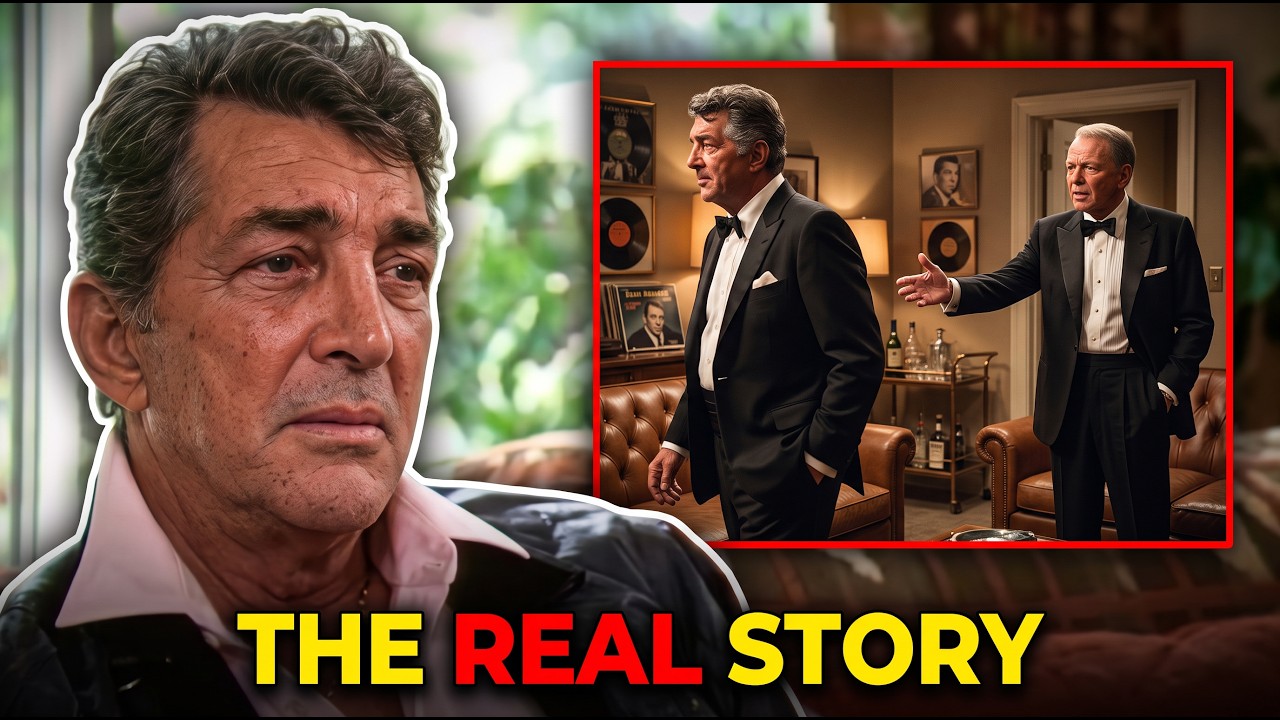
Those closest to them insisted it was not a slow drift apart. As the story is often told, everything came down to one explosive moment that Dean Martin could never forgive.
The details of that moment have been repeated so many times that they have taken on the quality of legend, and it is important to treat them with the caution that any widely repeated anecdote deserves.
The central claim, as it has been reported over the years, involves a planned appearance, a change of plans, and a decision that left Dean feeling publicly embarrassed and personally betrayed.
In the most common version of the story, Sinatra either canceled or altered arrangements for a performance or a gathering in a way that put Dean in an awkward and humiliating position, and Dean, who was known for his easygoing demeanor but also for a quiet pride, decided he had had enough.
Whether the precise details are accurate in every respect is difficult to confirm, but the broader point, that a single incident rather than a gradual falling-out ended the friendship, has been repeated by multiple people who knew both men.

What makes the story so enduring is that it fits the personalities involved. Frank Sinatra was famously loyal to those he considered family, but he was also known for a temper and for a tendency to make decisions abruptly.
Dean Martin, by contrast, cultivated an image of relaxed indifference, but those who knew him described a man who valued dignity and who did not easily forgive a public slight.
The contrast between Sinatra’s intensity and Martin’s calm was part of what made their partnership work on stage, and it may also have been what made a serious disagreement so difficult to repair.
Friends of both men have suggested that neither was particularly inclined to apologize first, and that once the distance set in, pride on both sides made reconciliation unlikely. The result was a silence that lasted far longer than anyone expected.
It is worth noting that the two men did not remain permanently estranged in every sense. Over the years, there were occasional reports of contact, and Sinatra is said to have reached out at various points.
In 1988, when Sinatra embarked on a concert tour, he invited Dean to join him for a series of shows, and the two men did appear together again, to the delight of audiences who had long hoped for a reunion.
Some observers interpreted those appearances as a sign that the rift had healed, at least partially.
Others suggested that the reunion was professional rather than personal, and that the old closeness was never fully restored. What is clear is that the friendship that had once seemed unbreakable was, in the end, more complicated than the public image suggested.
The men who had defined an era together did not spend their final years as the inseparable pair their fans remembered.
Dean Martin died on December 25, 1995, at his home in Beverly Hills.
Frank Sinatra died on May 14, 1998. Neither man ever gave a detailed public account of what ended their friendship, and those who were closest to them have offered differing versions of events.
That absence of a definitive explanation is part of why the question continues to fascinate. In the decades since, the Rat Pack has only grown in cultural stature, and the image of Dean and Frank together, laughing and singing, remains one of the most recognizable in American entertainment.
The story of their falling-out serves as a reminder that even the most glamorous friendships are subject to the same pressures, misunderstandings, and wounded pride that affect everyone else.

Ultimately, the reported reason for the end of the friendship between Dean Martin and Frank Sinatra may never be known with certainty.
What is known is that two men who helped shape American popular culture, who made audiences laugh and listen for years, and who seemed to share an unbreakable bond, found themselves distant from one another for a long stretch of their lives.
Whether the cause was a single explosive moment, as many accounts suggest, or a combination of smaller grievances that finally became too much, the result was the same. One of show business’ greatest friendships came to an end, and the entertainment world was left to wonder what might have been.
For fans, the music and the films remain, capturing a time when two friends stood together at the center of the spotlight, and for a while, made it look effortless.


