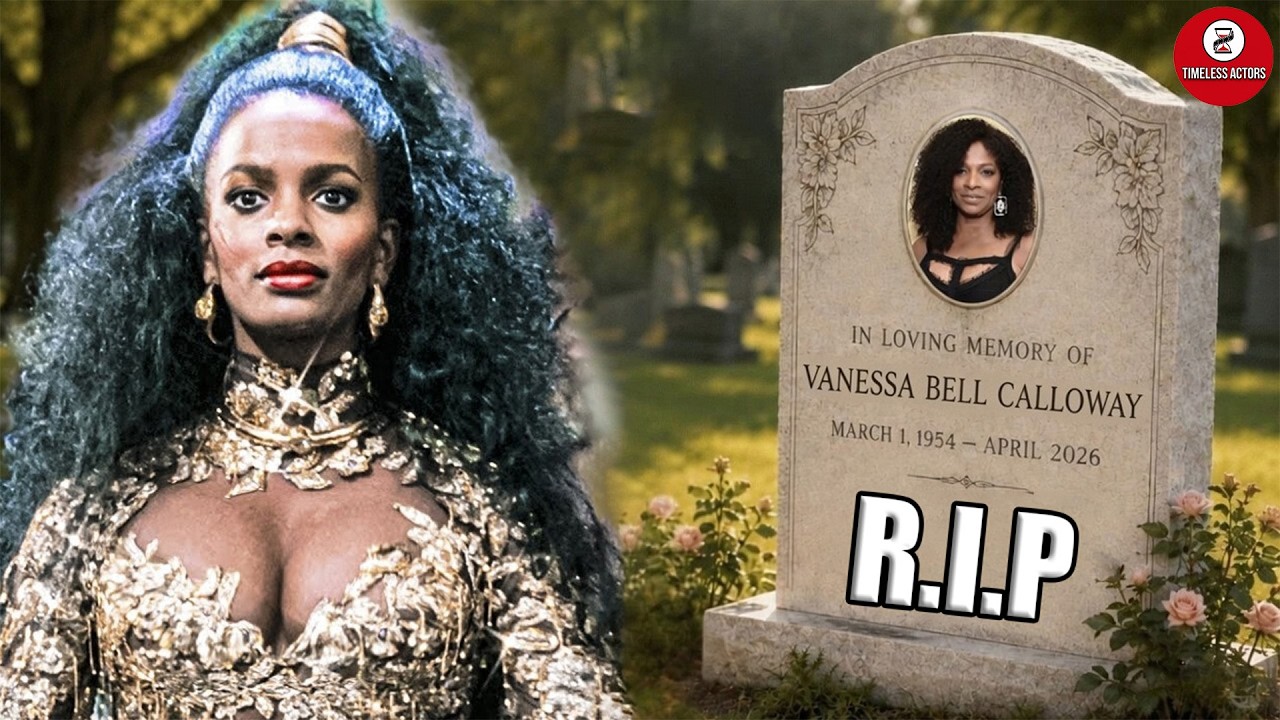
But behind the laughter lies another story, one that has become increasingly emotional as the years have passed. Some of the actors who helped create this beloved movie went on to extraordinary success, winning Academy Awards, dominating television, and becoming internationally recognized entertainers. Others continued working quietly in theater and television, building respected careers without always receiving the attention enjoyed by the film’s biggest stars. And several of the performers whose faces and voices remain permanently associated with Coming to America are no longer alive.
By 2026, the passage of time has transformed the experience of watching the movie. King Jaffe Joffer’s commanding presence carries a different emotional weight after the death of James Earl Jones. Cleo McDowell’s hilarious determination feels especially nostalgic following the passing of John Amos. The elegance of Madge Sinclair, the unmistakable warmth of Louie Anderson, and the contributions of several Hollywood veterans have become reminders of an extraordinary generation of performers.
At the same time, Eddie Murphy, Arsenio Hall, Shari Headley, Vanessa Bell Calloway, and other surviving cast members remain connected to a film that continues reaching new audiences. Their careers reveal how a single comedy can become a defining chapter in the lives of actors whose professional journeys took dramatically different directions.
The film’s enduring appeal begins with a deceptively simple idea. Prince Akeem Joffer, heir to the throne of the fictional kingdom of Zamunda, appears to possess everything imaginable. He lives in a magnificent palace, enjoys the privileges of royalty, and is surrounded by servants eager to satisfy his every request. Yet he is dissatisfied with a future in which even his marriage has been arranged for him.
Akeem wants something money and status cannot guarantee. He wants a woman who loves him for his character rather than his title.
Accompanied by his loyal companion Semmi, he travels to Queens, New York, believing that a borough with such a name must offer a suitable place to find his future queen. The resulting collision between royal expectations and ordinary American life provides the foundation for the film’s comedy.
Directed by John Landis and built around Murphy’s enormous popularity, Coming to America combined romantic storytelling with elaborate character performances. Murphy and Hall portrayed multiple roles, while a remarkable supporting cast gave the film emotional credibility and comic variety.
At the center of the royal household stood James Earl Jones, who played King Jaffe Joffer with the authority of a man who never needed to raise his voice to command attention.
Born on January 17, 1931, Jones was already one of America’s most respected actors when Coming to America was released. His career had developed through theater, film, and television, and his distinctive voice had become internationally famous.
For millions of moviegoers, Jones was the voice of Darth Vader in the Star Wars franchise. His vocal performance gave one of cinema’s most recognizable villains a terrifying combination of power, control, and emotional complexity.
But Jones was far more than a celebrated voice actor.
His achievements included major theatrical performances, particularly his work in The Great White Hope, which earned him a Tony Award and an Academy Award nomination when he reprised the role on film.
He brought that formidable dramatic background to the fictional kingdom of Zamunda.
King Jaffe could easily have become a one-dimensional symbol of royal arrogance. Instead, Jones portrayed him as a father whose affection for his son was complicated by tradition, pride, and an absolute belief in the responsibilities of monarchy.
His interactions with Eddie Murphy provided some of the movie’s most memorable contrasts. Akeem’s curiosity about ordinary life repeatedly collided with his father’s expectations of royal behavior.
Jones understood that the comedy worked best when the king treated the absurdities surrounding him with complete seriousness.
His commanding presence made Zamunda feel like a functioning kingdom rather than merely an elaborate movie set.
When King Jaffe arrived in Queens, the collision between royal dignity and American everyday life became even funnier because Jones never abandoned the character’s authority.
After Coming to America, Jones continued an extraordinary career.
He voiced Mufasa in Disney’s The Lion King, appeared in numerous films, and remained a major figure in American theater. His accomplishments brought him some of the entertainment industry’s highest honors.
On September 9, 2024, James Earl Jones died at the age of 93.
His passing marked the loss of a performer whose influence extended across generations and genres. Yet for fans of Coming to America, King Jaffe Joffer remains an especially affectionate part of his legacy.
The character combined dignity, stubbornness, humor, and parental love in a way that few actors could have achieved so effortlessly.
Standing beside him in Zamunda’s royal household was Madge Sinclair, who portrayed Queen Aoleon Joffer.
Born on April 28, 1938, in Jamaica, Sinclair possessed an elegance that made her a natural choice for the role. Her performance balanced the king’s authority with maternal warmth, creating a believable relationship between two people who understood the responsibilities of royal life differently.
Queen Aoleon was not simply a decorative figure in the palace.
She recognized her son’s unhappiness and demonstrated greater sympathy for his desire to choose his own future.
Sinclair expressed that understanding through subtle facial reactions, measured dialogue, and a calm presence that contrasted beautifully with the film’s more extravagant comedy.
Her career before Coming to America included important work in television and film.
She appeared in the landmark television miniseries Roots and became known to audiences through dramatic performances that demonstrated both emotional depth and authority.
Her collaboration with James Earl Jones in Coming to America later acquired an additional layer of nostalgia because both actors also contributed their voices to Disney’s The Lion King.
Jones voiced Mufasa, while Sinclair voiced Sarabi, Simba’s mother.
The connection remains one of the most memorable intersections between two beloved entertainment classics.
Sadly, Sinclair’s life ended much earlier than that of her royal co-star.
She died on December 20, 1995, at the age of 57, following a battle with leukemia.
Her death deprived Hollywood of an actress whose talent and screen presence had already earned widespread admiration.
Watching her as Queen Aoleon today is a reminder of how much emotional strength a performer can bring to a comedy without dominating every scene.
If Zamunda represented privilege and tradition, McDowell’s restaurant represented the ordinary American world Akeem was determined to experience.
The restaurant’s owner, Cleo McDowell, was played by John Amos, an actor whose ability to combine humor with dignity made him one of the film’s most important supporting performers.
Born on December 27, 1939, Amos had already established a distinguished career before joining the production.
He was widely recognized for playing James Evans Sr. on the television sitcom Good Times, where his portrayal of a hardworking father became one of the most memorable performances in American television history.
He also appeared in Roots, demonstrating his range as a dramatic actor.
In Coming to America, Amos transformed Cleo McDowell into a character who was simultaneously ambitious, protective, stubborn, and irresistibly funny.
Cleo’s restaurant bears a suspicious resemblance to a famous American fast-food chain, but he insists that his establishment is entirely different.
The running joke works because Amos portrays Cleo as a businessman who genuinely believes in his own ingenuity.
His confidence remains unshaken even when the similarities are impossible to ignore.
Yet Cleo is more than a source of comic relief.
He is also a father deeply concerned about the future of his daughters, Lisa and Patrice.
He wants Lisa to enjoy financial security and believes her wealthy boyfriend, Darryl Jenks, offers an attractive path toward that future.
His assumptions create tension when the apparently ordinary Akeem enters Lisa’s life.
Amos gives Cleo enough warmth to prevent him from becoming merely an obstacle in the romance.
The audience understands his concerns even while laughing at his decisions.
After the film, Amos continued appearing in television and movies, maintaining a career that extended across several generations of American entertainment.
He died on August 21, 2024, at the age of 84.
His passing came only weeks before that of James Earl Jones, making 2024 an especially emotional year for admirers of Coming to America.
Two of the film’s most recognizable father figures were gone, leaving behind performances that continue to define its humor and heart.
Another beloved performer whose appearance remains unforgettable is Louie Anderson.
Born on March 24, 1953, Anderson played Maurice, an employee at McDowell’s restaurant.
His role was comparatively small, but his relaxed comic personality fitted naturally into the film’s lively workplace scenes.
Maurice belonged to the world Akeem had never experienced.
For the prince, working in a fast-food restaurant was an opportunity to understand ordinary life. For Maurice and the other employees, it was simply a job filled with everyday frustrations and responsibilities.
That contrast made the workplace scenes especially entertaining.
Anderson was already building a reputation as a stand-up comedian when the film appeared.
His distinctive delivery, self-deprecating humor, and ability to transform personal experiences into comedy made him popular with audiences.
He later achieved substantial success in television.
His animated series Life with Louie drew upon memories of his childhood, while his performance as Christine Baskets in the television series Baskets brought him an Emmy Award.
That role demonstrated a dramatic and emotional range that went far beyond conventional stand-up comedy.
Anderson could portray vulnerability, disappointment, affection, and resilience with extraordinary sensitivity.
He died on January 21, 2022, at the age of 68, following complications from diffuse large B-cell lymphoma.
For fans revisiting Coming to America, his brief appearance now carries the warmth of a performer whose later career revealed remarkable depth.
At the heart of the entire movie, of course, was Eddie Murphy.
Born on April 3, 1961, Murphy was only 27 when Coming to America reached theaters.
By then, he had already become one of Hollywood’s most commercially successful comedians.
His rise began with Saturday Night Live, where his energetic performances and memorable characters helped revitalize the program during the early 1980s.
His transition into movies produced major successes, including 48 Hrs., Trading Places, and Beverly Hills Cop.
Murphy possessed a rare combination of verbal speed, physical comedy, charisma, and the ability to create characters that audiences immediately recognized.
In Coming to America, he demonstrated those qualities through a performance that was more emotionally restrained than some of his earlier roles.
Prince Akeem was not simply another wisecracking comedian.
He was sincere, idealistic, curious, and occasionally naive.
Murphy understood that the character’s innocence was essential to the story.
Akeem’s willingness to abandon luxury in search of genuine affection gave the movie its romantic foundation.
The prince did not want to impress Lisa with wealth.
He wanted her to appreciate him as an ordinary man.
That decision created a series of misunderstandings that became increasingly entertaining as the story unfolded.
Murphy also portrayed several additional characters, including figures in the famous barbershop scenes.
The elaborate makeup and sharply differentiated performances allowed him to disappear into personalities far removed from Prince Akeem.
The barbershop sequences became a showcase for his versatility.
Each character possessed a distinct voice, rhythm, and worldview.
The scenes felt spontaneous, even though they required careful writing, makeup, timing, and coordination.
Murphy’s willingness to portray multiple characters became a recurring feature of his career.
He later expanded the approach in films such as The Nutty Professor and Norbit.
His career also moved beyond live-action comedy.
He became the voice of Donkey in the Shrek franchise, bringing his recognizable energy to one of animation’s most successful series.
He received an Academy Award nomination for his performance in Dreamgirls, demonstrating his ability to handle more dramatic material.
In 2021, Murphy returned to Prince Akeem in the sequel Coming 2 America.
The film reunited several members of the original cast and revisited Zamunda decades after the first adventure.
For longtime fans, the reunion offered an opportunity to see familiar characters confronting a new generation of royal responsibilities.
As of October 2026, Murphy is 65 years old.
His career has experienced commercial highs, critical disappointments, reinventions, and successful returns, but Coming to America remains one of his most enduring achievements.
Its appeal depends on something deeper than jokes.
Murphy created a prince whose wealth could not satisfy his desire for love, freedom, and personal identity.
That emotional sincerity helped the film survive changing comedy trends.
Murphy’s principal partner throughout the story was Arsenio Hall, who played Semmi, Akeem’s loyal friend and royal companion.
Born on February 12, 1956, Hall was 32 when the movie premiered.
Semmi was the perfect counterweight to Akeem.
While the prince enthusiastically embraced ordinary life, Semmi remained deeply attached to the comforts of royalty.
He could not understand why someone with access to extraordinary luxury would voluntarily live in a modest apartment and work at a fast-food restaurant.
His frustration became one of the movie’s most reliable sources of comedy.
Hall portrayed Semmi as loyal but frequently exasperated.
He wanted to support his friend, yet he also wanted the comforts he believed were appropriate to their status.
The chemistry between Hall and Murphy gave the movie much of its momentum.
Their exchanges felt like conversations between longtime friends who understood each other’s weaknesses.
Hall also portrayed additional characters, including participants in the barbershop scenes.
Like Murphy, he demonstrated an ability to transform his voice, appearance, and mannerisms.
After Coming to America, Hall became a major television personality.
The Arsenio Hall Show debuted in 1989 and quickly developed a distinctive identity within American late-night entertainment.
Hall’s energetic interviewing style and connection with younger audiences helped make the program culturally influential.
The show became especially important for Black entertainers, musicians, and public figures who did not always receive comparable exposure on traditional late-night television.
Its interviews and performances reflected major developments in popular culture during the early 1990s.
Hall later returned to television hosting and continued appearing in entertainment projects.
He reunited with Murphy for Coming 2 America, reviving a partnership that had helped define the original movie.
In 2026, Hall is 70 years old.
For audiences who remember the first film, Semmi remains one of the most entertaining examples of a comic sidekick whose personality is just as important as the hero’s.
The woman at the center of Akeem’s romantic journey was Lisa McDowell, played by Shari Headley.
Born on July 15, 1963, Headley was 24 when Coming to America premiered.
Her performance was essential because the film’s central romance depended on Lisa being more than an attractive woman whom the prince wished to marry.
Lisa needed to represent the values Akeem was searching for.
She was independent, compassionate, intelligent, and unwilling to make major personal decisions solely for financial advantage.
Headley portrayed her with warmth and natural confidence.
Lisa’s relationship with Darryl Jenks initially appears to offer stability and material comfort.
But Darryl’s arrogance gradually reveals the difference between wealth and genuine affection.
Akeem, by contrast, treats Lisa with respect and shows interest in her thoughts and ambitions.
The developing relationship allows the film to explore a familiar romantic theme through an unusual premise.
A prince who could marry almost anyone discovers that the most meaningful relationship is one he cannot simply purchase or command.
Headley’s performance gives that idea credibility.
She never allows Lisa to become merely a reward awaiting the hero.
Instead, Lisa makes decisions based on her own understanding of honesty and love.
Following the film, Headley continued working in television and film.
She became known for her work in the daytime drama All My Children and appeared in numerous other productions.
Her return in Coming 2 America allowed audiences to see Lisa as a queen and mother, expanding the character’s story beyond the original romantic ending.
In October 2026, Headley is 63 years old.
Her portrayal remains central to the film’s enduring appeal because the romance would not work without Lisa’s emotional credibility.
Another important member of the McDowell family was Patrice, Lisa’s younger sister, portrayed by Allison Dean.
Born on April 19, 1956, Dean brought energy and confidence to the character.
Patrice added another dimension to the family’s interactions, particularly through her reactions to the men who entered their lives.
Her personality contrasted with Lisa’s more reserved manner.
That difference helped the McDowell household feel like a real family rather than simply a setting for the prince’s romantic adventure.
Dean’s performance was lively without overwhelming the surrounding story.
She contributed to the movie’s atmosphere through timing, expression, and natural interaction with the other actors.
Although she did not achieve the same international celebrity as Murphy or Hall, her work remains recognizable to viewers who have watched the film repeatedly.
As of October 2026, Dean is 70 years old.
Her place in the cast demonstrates how an effective supporting performance can remain memorable even without extensive screen time.
Lisa’s wealthy boyfriend, Darryl Jenks, was portrayed by Eriq La Salle.
Born on July 23, 1962, La Salle was 25 when the movie was released.
Darryl was confident, fashionable, privileged, and thoroughly convinced of his own desirability.
His family connections and financial advantages made him an attractive prospect in Cleo McDowell’s eyes.
But the character’s behavior repeatedly exposed his lack of humility.
La Salle played Darryl with exaggerated confidence while retaining enough realism to make him recognizable.
Darryl was not a traditional movie villain.
He represented a particular kind of entitlement, the assumption that money and status should determine the outcome of personal relationships.
His interactions with Lisa and Akeem created some of the movie’s most entertaining romantic tension.
La Salle later achieved major success through his portrayal of Dr. Peter Benton on the medical drama ER.
The role demonstrated a very different side of his talent.
Benton was disciplined, ambitious, emotionally guarded, and deeply committed to his profession.
La Salle’s performance became one of the defining elements of the long-running series.
He also developed a career as a director and producer, working across television drama.
By 2026, La Salle is 64 years old.
His journey from the flamboyant Darryl Jenks to one of television’s most respected dramatic actors illustrates the extraordinary range of careers represented within the original Coming to America cast.
The film’s royal storyline also depended on the character of Imani Izzi, the woman selected to become Prince Akeem’s bride.
Vanessa Bell Calloway portrayed Imani with a combination of elegance, composure, and perfectly controlled comedic timing.
Born on March 20, 1957, Calloway was 31 when the film premiered.
Imani’s introduction became one of the movie’s defining scenes.
She appeared to represent everything expected of a royal bride: beauty, obedience, and complete willingness to satisfy the prince’s wishes.
But Akeem found that unquestioning obedience troubling.
He wanted a partner with independent opinions and desires.
The increasingly absurd exchange between them revealed why he was dissatisfied with the arranged marriage.
Calloway understood that the comedy required absolute seriousness.
Imani responded to the prince’s instructions without recognizing how ridiculous they had become.
The result was an unforgettable performance that helped establish the central conflict of the film.
Calloway continued building a successful acting career in film and television.
Her work included dramatic roles that demonstrated emotional complexity far removed from Imani’s exaggerated obedience.
She returned for Coming 2 America, reconnecting audiences with a character whose original appearance had become a classic comic moment.
In October 2026, Calloway is 69 years old.
Her performance remains a reminder that one brilliantly executed scene can secure a permanent place in movie history.
Imani’s father, Colonel Izzi, was portrayed by Calvin Lockhart.
Born on October 18, 1934, Lockhart possessed the commanding presence required for a character associated with military authority and royal tradition.
His performance helped establish the political and ceremonial world surrounding Akeem’s arranged marriage.
Lockhart had enjoyed an international career before joining the film.
He appeared in productions across film, television, and theater, becoming particularly recognizable during the 1970s.
His distinguished appearance and controlled delivery made him well suited to roles involving authority, sophistication, or intimidation.
In Coming to America, he contributed to the sense that Zamunda existed within a larger fictional world of neighboring kingdoms and elaborate diplomatic customs.
Lockhart died on March 29, 2007, at the age of 72, following complications associated with a stroke.
His contribution to the film remains part of the impressive collection of veteran performers who gave the royal sequences their distinctive atmosphere.
One of the most entertaining supporting characters in Zamunda was Oha, the royal servant portrayed by Paul Bates.
Born on December 24, 1950, Bates brought musical enthusiasm and theatrical energy to the role.
Oha’s exuberant performance during Akeem’s morning routine became an unforgettable expression of the prince’s extravagant lifestyle.
The scene works because the ceremony is treated as completely ordinary within the palace.
For Akeem, however, the elaborate attention has become exhausting.
Bates embraced the absurdity with a performance that combined singing, physical expression, and impeccable comic timing.
His background in theater helped him deliver a memorable moment with relatively little screen time.
He continued working across stage and screen, and his return in Coming 2 America delighted fans who remembered the original palace scenes.
In October 2026, Bates is 75 years old.
His portrayal of Oha demonstrates how a small role can become one of a movie’s most recognizable comic highlights.
The film also featured several performers whose careers extended far beyond their brief appearances.
Frankie Faison, born on June 10, 1949, portrayed the landlord connected to Akeem and Semmi’s modest apartment in Queens.
The character helped establish the sharp contrast between the luxury of Zamunda and the everyday realities of New York.
Faison brought credibility to the role through his natural acting style.
He later became familiar to audiences through numerous television and film performances, including work associated with the Hannibal Lecter films and the acclaimed television drama The Wire.
His ability to portray authority, vulnerability, and ordinary human complexity made him one of the industry’s most dependable character actors.
As of October 2026, Faison is 77 years old.
His presence in Coming to America is a reminder of the remarkable talent assembled even for relatively small parts.
Another actor whose career developed in unexpected directions was Vondie Curtis-Hall.
Born on September 30, 1950, Curtis-Hall appeared briefly as a vendor during the basketball game sequence.
His role was small, but his later achievements made the appearance interesting to viewers familiar with his broader work.
Curtis-Hall developed a substantial career as an actor, writer, and director.
He appeared in film and television projects that demonstrated his range, and he became associated with dramatic performances far removed from the comic atmosphere of Coming to America.
In October 2026, he is 76 years old.
His appearance illustrates how the film captured performers at different stages of their professional development.
For some, it represented an established career.
For others, it was an early opportunity before greater recognition arrived.
Few examples are more striking than Cuba Gooding Jr.
Born on January 2, 1968, Gooding was 20 when Coming to America premiered.
He appeared briefly as a young customer in the famous barbershop sequence.
At the time, audiences had little reason to imagine that the young performer would later become an Academy Award winner.
Gooding achieved major recognition through his role in Boyz n the Hood, the influential 1991 drama directed by John Singleton.
His performance introduced him to a much wider audience.
He subsequently appeared in numerous films, but his defining breakthrough came with Jerry Maguire in 1996.
Playing professional football player Rod Tidwell opposite Tom Cruise, Gooding delivered an energetic and emotionally engaging performance.
The role earned him the Academy Award for Best Supporting Actor.
His career later included both acclaimed work and significant personal and legal controversies.
Those developments complicated his public reputation, but his early appearance in Coming to America remains a notable part of his filmography.
In October 2026, Gooding is 58 years old.
Watching the barbershop scene today offers the unusual experience of seeing a future Oscar winner before the performance that made him internationally famous.
Another future Hollywood superstar appeared in an even more explosive scene.
Samuel L. Jackson played the armed robber who attempts to hold up McDowell’s restaurant.
Born on December 21, 1948, Jackson was 39 when the film premiered.
His appearance lasted only a short time, but it became one of the movie’s most memorable sequences.
The robber enters the restaurant expecting to intimidate the employees and customers.
Instead, he encounters Prince Akeem, whose royal upbringing has apparently included extensive training in self-defense.
The resulting confrontation allows Murphy to reveal another unexpected aspect of Akeem’s abilities.
Jackson’s intense delivery and physical commitment make the scene especially funny.
His performance is deliberately aggressive, providing the perfect contrast to Akeem’s calm confidence.
At the time, Jackson had already been working in theater and film, but his major Hollywood breakthrough was still ahead.
His career accelerated through collaborations with filmmaker Spike Lee and other directors.
He later achieved international recognition through Quentin Tarantino’s Pulp Fiction, earning an Academy Award nomination for his portrayal of Jules Winnfield.
His subsequent filmography became extraordinary in both scale and commercial success.
He appeared in major franchises, including Star Wars and the Marvel Cinematic Universe, and became one of the most recognizable actors in the world.
Jackson’s voice, screen presence, and ability to combine menace with humor helped define his distinctive acting identity.
As of October 2026, he is 77 years old.
His appearance in Coming to America remains a fascinating example of how a future superstar can make an unforgettable impression in only a few minutes.
The film’s supporting cast also included Moses Gunn, a distinguished actor whose career had already earned widespread respect.
Born on October 2, 1929, Gunn was known for powerful performances across theater, television, and film.
His work included important dramatic roles that demonstrated his commanding voice and ability to convey authority.
The supplied retrospective identifies his appearance in Coming to America as a brief portrayal of Idi Amin.
Although the cameo is not among the film’s central storylines, Gunn’s inclusion reflects the production’s willingness to draw upon accomplished performers for small appearances.
He died on December 16, 1993, at the age of 64.
His passing came only five years after the film’s release.
For viewers familiar with his broader career, his presence recalls an actor whose achievements extended well beyond any single comedy.
Perhaps the most delightful surprise for fans of classic Hollywood appears through the return of two elderly businessmen who had already become memorable characters in another Eddie Murphy film.
Don Ameche and Ralph Bellamy reprised their roles as the Duke brothers from Trading Places.
The cameo created a playful connection between two films associated with Murphy and director John Landis.
In Trading Places, the wealthy Duke brothers manipulate the lives of others as part of an elaborate wager.
By the time they appear in Coming to America, their fortunes have changed dramatically.
Their unexpected encounter with Akeem provides a humorous reward for viewers who recognize the connection.
Don Ameche, born on May 31, 1908, had enjoyed a career stretching back to Hollywood’s classical era.
He became a major film star during the 1930s and 1940s, appearing in numerous productions that established his reputation for charm and sophistication.
His career experienced a notable revival in the 1980s.
His performance in Cocoon earned him the Academy Award for Best Supporting Actor, introducing his talent to another generation of moviegoers.
By the time Coming to America appeared, Ameche was 80 years old.
His brief cameo demonstrated the ease and professionalism of a performer who had spent decades mastering screen comedy.
He died on December 6, 1993, at the age of 85.
Ralph Bellamy, born on June 17, 1904, had an equally remarkable career.
He appeared in films, television productions, and stage performances over many decades, earning respect for his versatility and distinctive screen presence.
Bellamy had portrayed politicians, businessmen, authority figures, and romantic characters throughout his career.
His appearance alongside Ameche in Trading Places introduced the pair to younger audiences who may not have known their earlier work.
Their reunion in Coming to America became one of the movie’s most enjoyable inside jokes.
Bellamy died on November 29, 1991, at the age of 87.
His death made him one of the earliest members of the film’s prominent ensemble to pass away.
The Duke brothers’ cameo now carries a nostalgic significance beyond its original joke.
It connects Coming to America not only to another 1980s comedy but also to the long history of American cinema.
Two performers whose careers began decades before Eddie Murphy was born appeared in a film that would help define his generation.
That intergenerational connection is one of the movie’s most remarkable qualities.
Another name included in retrospective discussions of the cast is Sheila Johnson, whose later achievements in business and philanthropy are substantial.
Born on January 25, 1949, Johnson became known as a co-founder of Black Entertainment Television and later developed an extensive portfolio of business and philanthropic interests.
Her influence in media, hospitality, sports ownership, and charitable work made her an important figure in American business.
The source transcript identifies her as a lady-in-waiting in Coming to America. That particular casting identification should be treated cautiously without independent confirmation, especially because her widely documented career centers on entrepreneurship rather than acting.
Her inclusion nevertheless illustrates a broader challenge associated with cast retrospectives.
Large films often contain dozens of small appearances, and names can become confused through incomplete credits, secondary databases, or repeated online accounts.
A responsible look back should distinguish clearly documented performances from claims that remain uncertain.
The same principle applies to details such as exact ages, character names, and causes of death.
A film released in 1988 can generate decades of trivia, but repetition does not automatically make every detail accurate.
What is beyond doubt is the extraordinary range of talent represented in the movie.
Some performers were established legends.
Others were rising comedians.
Several would become major dramatic actors.
And some remained best known for the memorable characters they created within Zamunda and Queens.
The production’s success depended on the interaction of those different talents.
Murphy’s performance alone could not have supplied the film’s emotional and comic variety.
James Earl Jones gave the royal household authority.
Madge Sinclair gave it warmth.
Arsenio Hall supplied companionship and comic frustration.
Shari Headley provided the emotional foundation of the romance.
John Amos brought humor and humanity to the McDowell family.
Eriq La Salle created an entertaining romantic rival.
Vanessa Bell Calloway made the arranged-marriage storyline unforgettable.
Paul Bates turned a brief musical appearance into a signature moment.
And performers such as Samuel L. Jackson, Louie Anderson, and Cuba Gooding Jr. contributed scenes that gained additional significance as their careers developed.
The film’s success also reflected the importance of its fictional settings.
Zamunda represented an extravagant fantasy of African royalty.
The palace was filled with elaborate costumes, ceremonial traditions, and seemingly limitless wealth.
Queens represented the opposite environment.
Its streets, apartment buildings, restaurants, and barbershops offered Akeem an unfamiliar world in which status mattered less than personal interaction.
The comedy emerged from the prince’s attempt to move between those environments.
But the story also explored a more universal question.
What happens when someone rejects the future that has been chosen for them?
Akeem’s rebellion was gentle compared with the conflicts found in dramatic films.
He did not want to overthrow his father or abandon his country permanently.
He simply wanted the freedom to choose a partner.
That desire made the character relatable despite his extraordinary circumstances.
The supporting cast reinforced the theme.
King Jaffe represented tradition.
Queen Aoleon represented understanding.
Semmi represented the temptation to remain comfortable.
Cleo McDowell represented ambition and parental expectations.
Darryl Jenks represented wealth without humility.
Lisa represented the possibility of affection based on character.
Each role contributed to the larger emotional structure.
The film’s humor could be outrageous, but its central message remained sincere.
That sincerity helps explain why audiences continued returning to it.
The movie was not simply a collection of jokes.
It offered a romantic fantasy in which a powerful man chose to become ordinary so that he could discover whether someone truly loved him.
Nearly four decades later, that premise remains appealing.
The release of Coming 2 America in 2021 demonstrated the enduring affection surrounding the original.
The sequel reunited Murphy, Hall, Headley, Jones, Amos, and several other performers while introducing new characters.
It revisited Zamunda at a different moment in Akeem’s life.
The prince had become a ruler and father, confronting responsibilities similar to those his own father had once imposed upon him.
The return of familiar faces created a powerful sense of continuity.
For audiences who had first encountered the characters in 1988, seeing them decades later was an emotional experience.
The performers had aged, and the world around them had changed.
But their relationships remained recognizable.
The sequel also acquired additional poignancy after the deaths of James Earl Jones and John Amos in 2024.
Both actors had been able to revisit characters closely associated with their careers before their passing.
Their appearances now function as part of a final chapter in the history of the original ensemble.
For fans, the experience of watching the two films together has become more reflective.
The younger Akeem of 1988 represents possibility and rebellion.
The older Akeem of 2021 represents responsibility and the passage of time.
The actors themselves embody that passage.
Some continued working.
Others retired or reduced their public appearances.
Several died before the reunion could occur.
The changing cast mirrors the experience of audiences who grew older alongside the movie.
In 1988, many viewers encountered Coming to America as a contemporary comedy.
In 2026, those same viewers may watch it as a reminder of childhood, adolescence, or an earlier period of their adult lives.
The clothes, music, hairstyles, and visual style evoke the late 1980s.
But the performances continue to feel energetic.
That combination of nostalgia and enduring humor gives the film its unusual longevity.
It also makes the deaths of cast members especially affecting.
James Earl Jones was not merely an actor who appeared in the film.
He represented an entire tradition of American dramatic performance.
John Amos embodied decades of television history and the portrayal of hardworking families.
Madge Sinclair brought dignity to roles at a time when opportunities for Black actresses were often limited.
Louie Anderson connected stand-up comedy, animation, and acclaimed television acting.
Don Ameche and Ralph Bellamy linked the film to Hollywood’s classical era.
Moses Gunn and Calvin Lockhart represented accomplished performers whose careers helped expand opportunities and visibility for Black actors.
Their collective contribution was far greater than the minutes they appeared on screen.
The film preserved their talents in a form that remains accessible to future generations.
That is one of cinema’s most extraordinary qualities.
A performance recorded decades earlier can continue creating laughter long after the actor has died.
The audience may know that the performer is gone, but the character remains alive within the story.
King Jaffe can still express outrage at his son’s decisions.
Cleo McDowell can still defend his restaurant’s questionable similarities to a famous competitor.
Maurice can still appear behind the counter.
The Duke brothers can still deliver their unexpected joke.
And Queen Aoleon can still offer her son a moment of understanding.
Those performances are unchanged even as the world surrounding them moves forward.
For surviving cast members, the movie remains an important part of their professional identities.
Eddie Murphy’s career includes numerous commercially successful films, but Prince Akeem continues to occupy a special place in his legacy.
Arsenio Hall remains closely associated with Semmi and the characters he created through elaborate makeup.
Shari Headley’s Lisa McDowell remains a defining romantic heroine.
Vanessa Bell Calloway’s Imani Izzi continues to generate laughter through one of the film’s most memorable scenes.
Eriq La Salle’s Darryl Jenks offers a humorous contrast to the disciplined dramatic characters he later portrayed.
Samuel L. Jackson’s robber remains a fascinating early example of the intensity that would become his trademark.
Cuba Gooding Jr.’s barbershop appearance reminds audiences how unpredictable the path to stardom can be.
And Frankie Faison, Vondie Curtis-Hall, Allison Dean, and Paul Bates demonstrate the importance of performers whose contributions may be smaller in duration but not in value.
The film’s legacy also extends into the broader history of Black representation in mainstream Hollywood.
During the 1980s, Eddie Murphy became one of the industry’s most commercially powerful stars.
His success challenged assumptions about the kinds of films that could attract large audiences.
Coming to America placed a predominantly Black ensemble at the center of an expensive, internationally successful romantic comedy.
The film’s fictional African kingdom offered an unusual vision of Black royalty, wealth, and political authority within a major Hollywood production.
That representation was not without limitations.
The movie relied on fantasy, exaggeration, and broad comedy.
Its portrayal of African royalty was not intended as a realistic depiction of any particular country.
Nevertheless, the spectacle of a powerful Black royal family occupying the center of a mainstream comedy carried cultural significance.
The cast approached the material with confidence.
Their performances helped make Zamunda feel like a place audiences wanted to revisit.
The film also celebrated Black American urban culture through its Queens setting.
The barbershop scenes, neighborhood interactions, and restaurant sequences created a lively portrait of community life.
Those scenes were essential to the film’s personality.
They provided humor grounded in recognizable social interactions rather than royal fantasy.
The contrast between the two environments made the story distinctive.
Akeem’s journey was not simply geographical.
It was a movement between different ideas of status, freedom, and personal identity.
The film’s supporting performers made that journey believable.
Without them, the royal palace would have felt empty and the New York neighborhood would have lacked character.
Their work transformed an unusual premise into a memorable cinematic world.
By October 2026, Coming to America is more than thirty-eight years old.
Many of its performers have reached their seventies, while some of its most distinguished cast members are no longer alive.
The passage of time has changed how audiences understand the movie.
Its comedy remains familiar, but its cast now represents several generations of entertainment history.
James Earl Jones and Madge Sinclair recall the power of classical dramatic acting.
John Amos recalls the emotional honesty of influential television performances.
Louie Anderson represents a tradition of personal, character-driven comedy.
Don Ameche and Ralph Bellamy recall Hollywood’s earlier decades.
Murphy and Hall represent the explosive energy of 1980s entertainment.
Headley, Calloway, La Salle, Jackson, and Gooding demonstrate the varied careers that emerged from the film’s ensemble.
Each performer contributed something different.
Together, they created a movie whose appeal proved stronger than changing fashions.
The original Coming to America was a story about a prince searching for a life beyond the expectations imposed upon him.
Its cast members followed their own unpredictable paths after the cameras stopped rolling.
Some became global superstars.
Some earned acclaim in dramatic television.
Some built careers behind the camera.
Some remained beloved character actors.
And others left the world far too soon.
Their stories remind us that a film’s lasting success cannot be measured only by box office revenue or critical recognition.
It can also be measured by the affection audiences retain for its characters decades later.
When viewers return to Zamunda, they are not simply revisiting a comedy from 1988.
They are revisiting performances that preserve the voices, expressions, and talents of actors who helped define an era.
For those who remember seeing the film when it was new, the experience can be deeply nostalgic.
For younger audiences discovering it for the first time, the comedy offers an introduction to extraordinary performers whose influence continues throughout modern entertainment.
That is the lasting achievement of Coming to America.
The movie brought together an exceptional cast at a particular moment in Hollywood history.
Their careers subsequently moved in different directions, but the film preserved their collaboration.
Nearly four decades later, Prince Akeem still arrives in Queens hoping to find someone who loves him for who he truly is.
Semmi still struggles to understand why his friend would abandon luxury.
Cleo McDowell still dreams of business success.
Lisa still insists on honesty.
King Jaffe still expects obedience.
And Queen Aoleon still recognizes that love cannot be arranged through royal authority alone.
The actors who created those characters have experienced the full passage of time, with all its triumphs, disappointments, and losses.
Yet their performances remain.
That is why Coming to America continues to matter in 2026.
It is a reminder of the extraordinary talents who helped make the film, a celebration of the stars who continue carrying its legacy, and a tribute to those whose work still brings joy long after their final curtain.
The royal adventure may have begun in 1988, but for audiences around the world, the journey to Zamunda has never truly ended.


