Christa Pike’s Recovery Is Uncertain—and Surviving the Execution Does Not Automatically Bar Tennessee From Ever Trying Again
Christa Pike’s failed execution has created an extraordinary medical and constitutional situation.
But two of the newest viral claims go well beyond the evidence.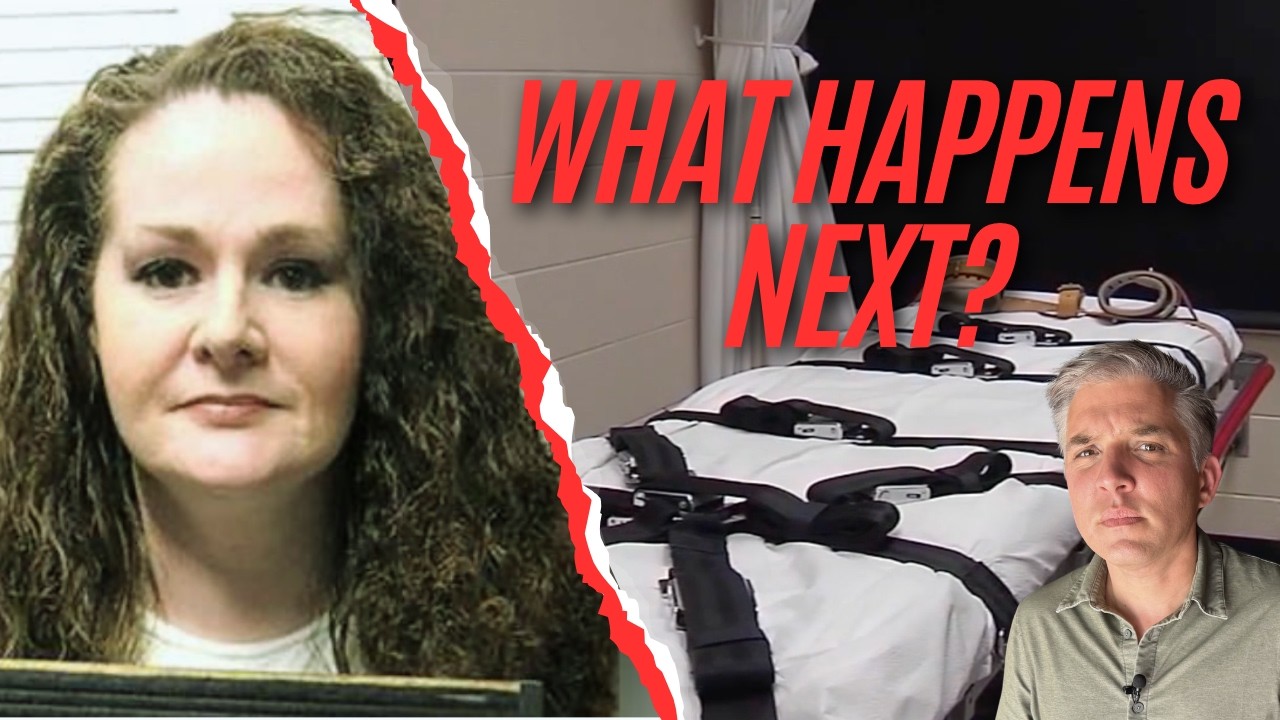
The first says top specialists have confirmed Pike will make a complete recovery.
The second says Tennessee prosecutors privately admit that if she wakes up, the Constitution permanently prevents the state from attempting another execution.
Neither claim is established.
As of October 3, 2026, Pike remains critically ill after Tennessee’s September 30 attempt to execute her.
Her attorneys say she is unconscious.
She is intubated.
She remains on a ventilator.
And she is receiving lifesaving medical care after two doses of pentobarbital failed to kill her.
That is the latest documented condition.
There is no credible medical report predicting a 100 percent recovery.
There is no public neurologist statement saying she will regain full cognitive and physical function.
There is no rehabilitation prognosis.
No discharge estimate.
No confirmed neurological recovery.
And no treating physician has said she will return completely to her pre-execution baseline.
In fact, the current concerns point in the opposite direction.
Pike’s lawyers fear she may have suffered neurological injury during the prolonged procedure.
They have specifically raised the possibility of brain damage related to oxygen deprivation.
Defense-retained anesthesiologist Dr. Joel Zivot has also warned that the apparent IV infiltration could produce significant tissue injury and potentially affect other organs.
He has not said Pike will definitely suffer permanent damage.
But he also has not guaranteed recovery.
The prognosis therefore remains uncertain.
That distinction is crucial.
Survival does not equal recovery.
Being alive two or three days after a catastrophic medical event does not establish future neurological function.
Pike may improve.
She may regain consciousness.
She may suffer lasting complications.
Or doctors may eventually determine that her injuries are less severe than currently feared.
The public does not yet know.
The viral phrase “100% full recovery” turns uncertainty into certainty without medical evidence.
The second claim involves constitutional law.
It says that if Pike recovers, Tennessee would automatically be barred from executing her again because of double jeopardy.
That is not the governing legal rule.
The most important precedent is Louisiana ex rel. Francis v. Resweber.
In that 1947 case, Willie Francis survived an attempted execution in Louisiana after the electric chair malfunctioned.
The state then planned to try again.
Francis argued that a second execution would violate constitutional protections.
The U.S. Supreme Court allowed the second attempt.
The Court did not treat the failed execution as equivalent to an acquittal or a completed punishment that automatically erased the sentence.
That is important because double jeopardy protects against repeated prosecution or punishment in specific legal circumstances.
It does not generally mean that a death sentence vanishes simply because equipment or procedures failed during the first execution attempt.
Later courts have continued relying on Resweber.
A federal court discussing the precedent recently summarized the rule as allowing another execution attempt provided the state did not intentionally or maliciously inflict unnecessary suffering during the first attempt and would not inflict unconstitutional unnecessary suffering during another.
That does not mean Tennessee can simply schedule Pike tomorrow and try again without legal obstacles.
Far from it.
Pike’s circumstances are highly unusual.
She received the lethal drugs.
She suffered documented injuries.
She required emergency hospitalization.
Her attorneys say she remains unconscious and ventilated.
And Tennessee has already halted further executions in 2026 while an independent review proceeds.
A future execution attempt would almost certainly trigger extensive litigation.
Pike’s attorneys could argue that another attempt would violate the Eighth Amendment’s prohibition on cruel and unusual punishment.
They could argue that the suffering caused by the first attempt matters constitutionally.
They could challenge Tennessee’s execution protocol.
They could challenge IV procedures.
They could raise her medical condition.
They could argue that another attempt would create an unacceptable risk of severe pain.
Those arguments could be powerful.
But they are not the same as an automatic double-jeopardy prohibition.
The Supreme Court precedent does not create a simple rule saying:
One failed execution equals permanent immunity from execution.
No such rule currently exists.
The viral claim also says Tennessee prosecutors are in “total panic.”
That is not something the public evidence can establish.
Tennessee officials are clearly concerned.
Governor Bill Lee has ordered an independent investigation.
He has halted executions for the remainder of 2026.
Attorney General Jonathan Skrmetti has publicly said the state needs to determine what went wrong.
Those are concrete actions.
They demonstrate institutional concern.
They do not prove prosecutors are secretly screaming that Pike can never legally be executed again.
The alleged ten-second prosecutor recording has no authenticated provenance.
No named prosecutor has acknowledged the statement.
No original recording has been released by a reliable source.
No complete conversation has surfaced.
No timestamp has been independently established.
No voice-authentication analysis has been published.
And no court filing quotes such an admission.
The supposed phrase that Tennessee will be “legally barred from ever putting her to death again” is especially questionable because it conflicts with longstanding Supreme Court precedent.
A state prosecutor familiar with capital litigation would know that Resweber exists.
The actual legal discussion would be much more nuanced.
Lawyers would likely ask whether Pike’s first execution inflicted unconstitutional suffering.
They would examine whether the state acted negligently, recklessly, intentionally, or maliciously.
They would consider whether the same protocol could be used again safely.
They would examine whether her current medical condition changes the constitutional analysis.
They would also litigate whether another attempt would create a substantial risk of severe pain.
That is an Eighth Amendment debate.
It is not a simple double-jeopardy switch.
Pike’s existing Supreme Court litigation also shows how complicated her case already was before the failed execution.
The Supreme Court denied one of her stay applications and her petition for certiorari on September 29.
Then, on September 30, separate litigation led to a temporary Sixth Circuit stay before Tennessee successfully asked the Supreme Court to vacate it.
That dispute concerned habeas procedure and mitigation issues.
It did not decide the new constitutional questions created by the failed execution.
Those questions now remain open.
Pike’s attorneys have already filed emergency motions seeking preservation of evidence.
They want records connected to the execution maintained for future litigation.
That makes sense.
Future legal proceedings may depend on exactly what happened.
How many IV attempts were made?
Where were the lines placed?
How much pentobarbital entered her bloodstream?
How much entered surrounding tissue?
How long was she inadequately oxygenated, if at all?
What monitoring occurred?
When did officials realize the execution was failing?
Why was a second dose administered?
What instructions did the medical team receive?
Those facts could shape any Eighth Amendment challenge to a future attempt.
They could also affect civil litigation.
Pike may potentially bring claims related to the injuries she suffered.
But surviving an execution does not transform her case into a straightforward double-jeopardy claim.
That is not how the precedent works.
The historical comparison with Willie Francis is important but not identical.
Francis survived an electric-chair failure in 1946.
Pike survived administration of lethal drugs in 2026.
The methods differ.
The duration differs.
The medical injuries may differ.
The modern Eighth Amendment framework has evolved.
Those distinctions could matter in future litigation.
Still, Resweber remains the foundational precedent against the claim that a failed execution automatically bars another attempt.
Later federal litigation involving other failed execution attempts has also treated that principle as still controlling.
That means the real legal question is not simply:
“Did Tennessee already try once?”
It is closer to:
“Given exactly what Tennessee did during the first attempt and Pike’s resulting injuries, would another attempt create unconstitutional pain or punishment?”
That question does not yet have a final answer.
No federal judge has permanently barred Tennessee from trying again.
No Supreme Court ruling specific to Pike has said another execution would be unconstitutional.
No new execution date has been announced.
And Tennessee has paused executions while investigators examine the failed procedure.
The medical claim also remains unresolved.
The latest reporting describes Pike as unconscious and critically ill.
Reuters says she is on life support.
AP says hospital staff are trying to remove pentobarbital from her system.
Her lawyers fear brain injury.
Experts warn about tissue and possible organ damage.
None of that supports a guaranteed full recovery.
A genuine specialist prognosis would require clinical data.
Neurological examinations.
Imaging.
Respiratory progress.
Cardiac stability.
Organ-function tests.
Medication clearance.
And observation over time.
Those details have not been released.
The viral story therefore creates two opposite certainties out of one unresolved situation.
One certainty says Pike will recover completely.
The other says prosecutors already know she can never be executed again.
Neither is established.
The strongest factual summary is narrower.
Pike survived two administrations of pentobarbital.
Verified.
She remains hospitalized.
Verified.
Her attorneys say she is critically ill.
Verified as their statement.
She is unconscious and on a ventilator.
Verified as their statement.
Her attorneys fear possible brain injury.
Verified as their concern.
Experts have raised concerns about serious tissue and possible organ injury.
Verified as expert analysis.
Doctors have guaranteed a 100 percent recovery.
Not established.
Specialists have publicly predicted full neurological recovery.
Not established.
Tennessee has permanently abandoned Pike’s death sentence.
Not established.
Double jeopardy automatically prohibits another execution attempt.
Not correct under existing Supreme Court precedent.
The Supreme Court has previously permitted another execution after a failed first attempt.
Verified.
A second attempt could still face serious Eighth Amendment challenges.
Supported by subsequent court treatment of Resweber.
Prosecutors were secretly recorded admitting Pike can never legally be executed again.
Not authenticated.
An unredacted double-jeopardy brief proves that claim.
No credible current source identifies such a document.
The actual situation is more consequential precisely because it remains unresolved.
Pike’s medical future is uncertain.
Her lawyers are preserving evidence.
Tennessee is investigating its execution protocol.
And any effort to execute Pike again would almost certainly produce a major constitutional fight.
But current law does not automatically turn survival into legal immunity from the death sentence.
And current medicine does not support a promised 100 percent recovery.


