CHRISTA PIKE’S EXECUTION FAILED. COULD TENNESSEE TRY AGAIN?
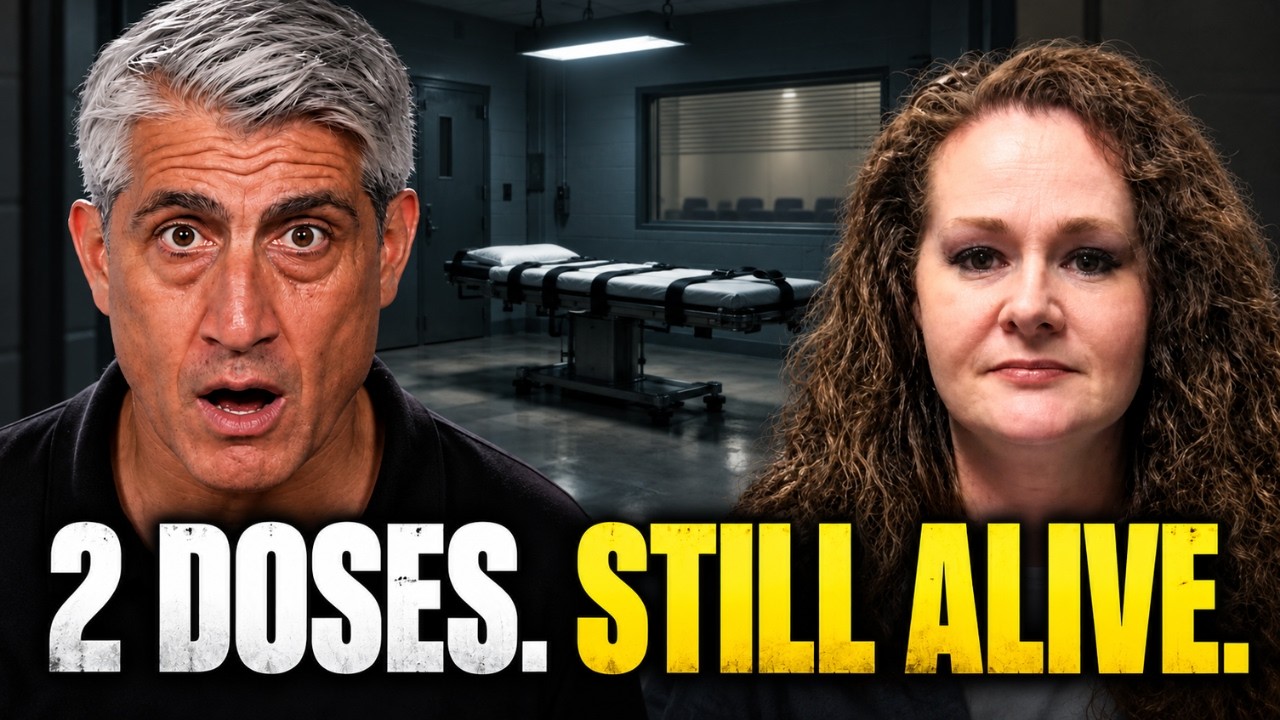
On the last night of September, Tennessee tried to execute Christa Pike.
Twice.
Two doses of lethal injection were administered, but Pike did not die.
Instead, the 50-year-old death-row inmate was taken from the prison by ambulance and transported to a hospital, where she was eventually placed on a ventilator.
The state had prepared for an execution.
What Tennessee got instead was a medical emergency, a legal crisis, and a question that had suddenly become impossible to avoid:
Could the state try again?
To understand why that question exists at all, you have to go back more than three decades to Knoxville, Tennessee, and a 19-year-old woman named Colleen Slemmer.
Colleen had grown up in Florida and had a talent for computers.
Her grandfather encouraged her to consider Job Corps, a federal program that gave young people opportunities for education and vocational training.
In January 1995, she was living at a Job Corps facility near the University of Tennessee campus.
That was where she met Christa Pike and Tadaryl Ship.
Pike was 18.
Ship was 17.
They were dating.
According to the account presented in the transcript, Pike believed Colleen was interested in Ship and wanted to take him away from her.
There was no evidence presented that Colleen actually had such a relationship with Ship.
But Pike decided that Colleen needed to be taught a lesson.
On January 12, 1995, Pike, Ship and another young woman, Shadala Peterson, persuaded Colleen to leave the Job Corps facility with them.
They reportedly told her they wanted to settle their differences while smoking marijuana.
Pike carried a box cutter and a small meat cleaver.
The group walked toward a wooded area near an abandoned steam plant.
Peterson remained nearby as a lookout.
Once they were away from the dorms, the confrontation escalated.
Pike accused Colleen of trying to get involved with Ship.
Colleen denied it.
What followed became one of the most brutal murders in Tennessee’s history.
According to the transcript, the attack lasted roughly 30 to 40 minutes.
Colleen was beaten, cut and repeatedly attacked while pleading for her life.
She reportedly tried to escape, but Ship chased her down, tackled her and brought her back.
The violence continued.
Eventually, a pentagram was carved into Colleen’s chest.
The transcript emphasizes an important detail that has sometimes been confused in accounts of the case: Ship later admitted in court that he was the person who carved the pentagram.
Colleen continued begging them to stop.
She reportedly promised that she would return to Florida and never tell anyone what had happened.
But the attack continued.
Eventually, Pike took a piece of asphalt and struck Colleen in the head repeatedly.
The injuries killed her.
Afterward, according to the account, Pike removed a piece of Colleen’s skull and kept it as a grisly souvenir.
The three returned to the Job Corps facility.
They signed back in.
But Colleen did not.
That missing signature became one of the crucial pieces of evidence investigators used to reconstruct what had happened.
The investigation moved quickly.
A groundskeeper discovered blood near the area where Colleen had been killed and followed the trail to her body.
Investigators then connected the missing sign-in record to the people who had left with her.
Within roughly 36 hours, all three suspects had been arrested.
Evidence found during the investigation included Colleen’s blood on Ship’s clothing and the piece of skull reportedly found in Pike’s jacket.
The case was horrifying enough to shock investigators who had seen violent crimes before.
And the murder would eventually send one teenager to death row while giving another the possibility of parole.
That difference came down, in part, to something as simple as a birthday.
Christa Pike had already turned 18.
Tadaryl Ship was still 17.
Under Tennessee law at the time, Ship could not receive a death sentence because he was under 18.
Pike was legally an adult.
That distinction would shape the next three decades of their lives.
Pike went to trial first.
In March 1996, prosecutors presented the evidence against her, including the actual fragment of Colleen’s skull.
According to the transcript, a University of Tennessee anthropologist showed the jury how the fragment fit into Colleen’s skull.
Before trial, prosecutors had reportedly offered Pike an alternative.
If she pleaded guilty, she could spend the rest of her life in prison without the possibility of parole.
She rejected the deal.
The jury convicted her of first-degree murder and conspiracy.
After approximately two and a half hours of deliberation, her fate was decided.
On March 30, 1996, at the age of 20, Christa Pike was sentenced to death by electrocution.
Her original execution date was set for January 1997.
But she was not executed then.
Instead, nearly three decades passed.
During those years, Pike remained on death row while her attorneys pursued appeals and legal challenges.
Her defense later emphasized a traumatic personal history that included childhood sexual abuse, rape, reported neurological problems and mental-health conditions.
According to her legal team, some of those conditions were not diagnosed or treated until years after she had already been sentenced to death.
Pike spent much of those decades under highly restrictive prison conditions.
But her time in prison was not without further controversy.
In 2001, during a fire evacuation, she attacked another inmate, Patricia Jones, and attempted to strangle her with a shoestring.
Pike was later convicted of attempted first-degree murder and received another 25-year sentence.
Then, in 2012, investigators uncovered what the state described as a possible escape plan involving a corrections officer and a visitor.
Pike was never charged in that matter, and authorities said the escape never came close to occurring.
By the time 2025 arrived, however, the legal road protecting Pike from execution had narrowed considerably.
The state scheduled her execution for September 30, 2026.
She was given a choice between electrocution and lethal injection.
According to the transcript, Pike did not select either method because of her Buddhist religious beliefs.
The state therefore proceeded with lethal injection.
Her lawyers fought the execution.
They argued that Pike had a blood-clotting condition and small veins that could make IV placement difficult.
They also argued that being restrained and surrounded by a mostly male execution team could trigger memories associated with her history of sexual abuse.
The legal battle continued until the very last hours.
About an hour before the scheduled execution, a federal appeals court issued a stay over concerns about whether Pike’s history of childhood sexual abuse and rape had been adequately considered when she received her death sentence.
But the United States Supreme Court overturned that stay.
Tennessee was allowed to proceed.
The witnesses entered the execution chamber.
Among them were members of Colleen Slemmer’s family.
Colleen’s mother had waited for decades for this moment.
Then the blinds opened.
Christa Pike was lying on the gurney.
An IV line had been placed in her arm.
She delivered her final statement.
And according to the account, her final words centered on love.
She said she intended to leave the world with love.
She expressed love for both the people who supported her and those who hated her.
She said she was at peace.
Then she sang with her spiritual adviser.
And the execution began.
Almost immediately, something appeared to be wrong.
Pike reportedly complained that the vein in her arm felt as though it were about to burst.
She blinked.
She smiled.
She laughed.
She lifted her head.
She looked toward her left arm.
Then she kicked the sheets away.
A signal appeared in the small window observed by witnesses, indicating that the drugs had been administered.
The blinds closed.
Then they opened again.
Pike was still moving.
According to her attorneys, the execution team had used at least seven needles while attempting to establish intravenous access.
They said Pike could be heard crying, whimpering and breathing heavily.
Their central allegation was that the IV line had failed, allowing the pentobarbital to enter tissue surrounding the vein instead of entering her bloodstream correctly.
Her right arm reportedly became purple.
Both arms became swollen and blistered.
And yet Pike remained alive.
Under the execution protocol described in the transcript, if a person remained alive five minutes after the first dose, a second dose would be administered.
That is what happened.
A second dose was given.
It still did not stop her heart.
Pike was alive.
The state had attempted to execute her twice.
Neither attempt had worked.
She was removed from the prison by ambulance and taken to a hospital.
According to her attorney, she was reportedly alive and snoring loudly during the ambulance ride.
But her condition later became critical.
She was intubated.
She was placed on a ventilator.
For days, nobody knew whether she would wake up.
Then the execution became something much larger than a failed procedure.
The governor halted executions in Tennessee for the remainder of the year.
A third-party review was ordered.
The head of Tennessee’s prison system announced his departure.
Pike’s lawyers began seeking a commutation of her death sentence to life imprisonment.
And one question remained hanging over the entire case.
Could Tennessee legally try to execute her again?
The transcript points to an important legal reality: the United States Supreme Court has previously allowed states to make another attempt at carrying out a death sentence after an unsuccessful execution.
That means the failed execution did not automatically mean Pike’s death sentence disappeared.
But her situation was extraordinary.
She had survived.
She had suffered serious medical consequences.
Her attorneys were challenging the execution process.
And the exact circumstances surrounding the failed IV access would become central to any future legal fight.
At the same time, another person from the same murder remained alive in prison.
Tadaryl Ship.
The boy who was 17 when he walked into the woods with Colleen Slemmer was now a middle-aged man.
He had been convicted of the same murder.
But because he was a juvenile when the crime occurred, he could not receive the death penalty.
His punishment was life imprisonment with the possibility of parole, followed by a consecutive 25-year sentence for conspiracy.
His first meaningful opportunity for parole therefore came decades later.
According to the transcript, the Tennessee parole board denied him in October 2025 because of the seriousness of the offense.
His case is scheduled to return for consideration in October 2031.
That creates one of the strangest contrasts in the entire story.
Christa Pike was an adult by only a matter of months when she committed the crime.
Ship was still 17.
That difference helped determine everything that followed.
One received a death sentence.
The other received a sentence that left open the possibility of eventually walking free.
Then there was Shadala Peterson.
She was the third teenager who went into the woods with Pike and Ship.
Instead of receiving the same punishment as the other two, she pleaded guilty to being an accessory after the fact and received probation.
She later disappeared from public view.
Three young people.
One victim.
One night.
Three radically different futures.
And now, after more than 30 years, the case has entered another extraordinary chapter.
Christa Pike survived the execution intended to end her life.
Her lawyers are asking the state to commute her sentence.
Her medical condition became part of a constitutional and legal battle.
Tennessee has not, according to the transcript, announced whether it intends to attempt another execution.
And the state now has to confront a problem it never expected to face when the execution date was set.
If a condemned prisoner survives an execution attempt, where does the legal process go from there?
Can the state simply try again?
Does the failed execution itself create constitutional problems?
Does the medical damage change the equation?
And what happens when the person who survived the execution is the same person convicted of a murder that has haunted another family for more than three decades?
There is no simple answer in this case.
For Colleen Slemmer’s family, the story began with a 19-year-old woman who left a Job Corps facility and never came home.
For Christa Pike, it continued with a death sentence, decades on death row, and an execution that failed twice.
For Tadaryl Ship, it became a life sentence with a future parole hearing.
For Shadala Peterson, it became a guilty plea followed by probation and a private life away from the public eye.
Same murder.
Same night.
Same victim.
Three completely different consequences.
And now Tennessee faces a question that nobody inside that execution chamber could have answered when the blinds closed:
If Christa Pike survived the state’s attempt to kill her, will the state get another chance?


