Christa Pike was supposed to die inside a Tennessee execution chamber. Instead, after two rounds of lethal-injection drugs, witnesses reported that she was still breathing, moving, and making audible sounds. Hours later, the woman sentenced to death for the brutal murder of 19-year-old Colleen Slemmer was receiving life-saving treatment at a hospital.
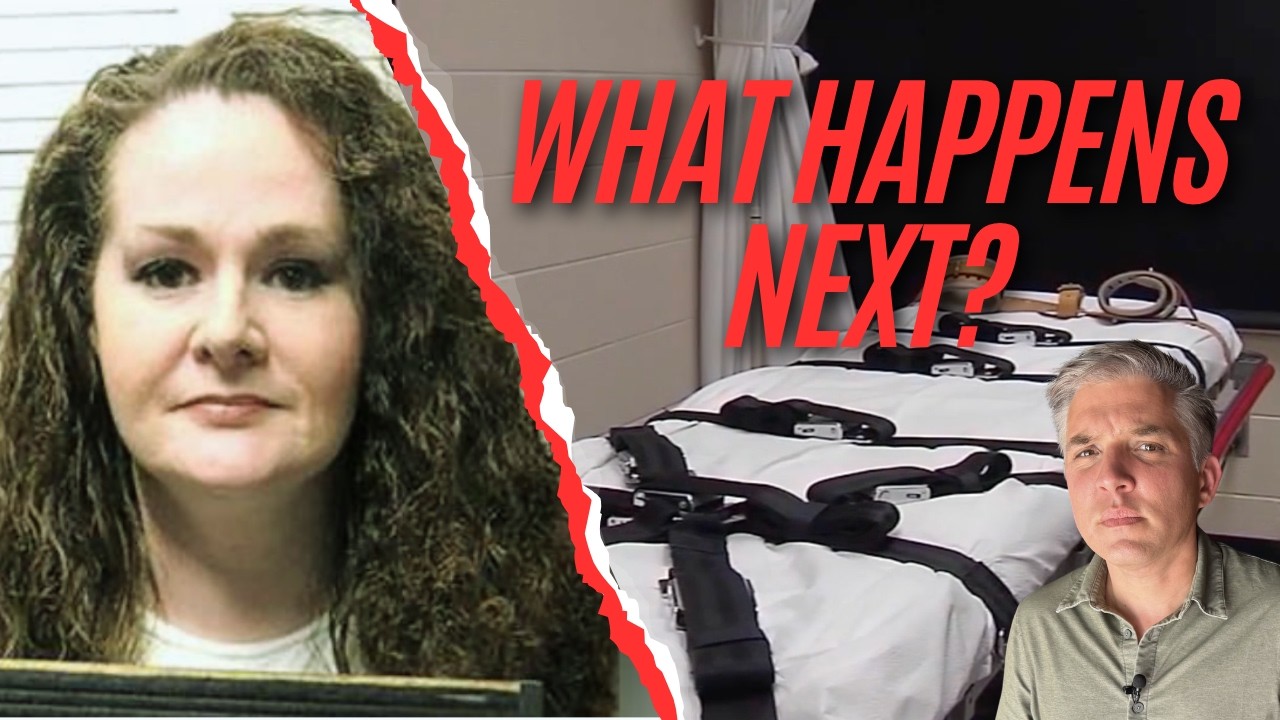
The extraordinary sequence of events has raised urgent questions about what happened inside the execution chamber, whether Tennessee’s lethal-injection protocol failed, and whether the state could legally attempt to execute Pike again.
According to accounts presented in an investigative report by journalist Brian Entin, media witnesses described an execution that departed dramatically from what they had previously observed. Pike reportedly complained of severe pain in her arm, remained conscious during portions of the procedure, and continued breathing after the state administered a second round of pentobarbital.
Her attorneys condemned the procedure, alleging that Tennessee had subjected their client to unnecessary suffering. Medical experts interviewed for the report suggested several possible explanations for the failure, including problems with intravenous access.
Tennessee Governor Bill Lee subsequently announced an independent review and suspended the remaining executions scheduled for the year, according to the report.
Meanwhile, the Tennessee Department of Correction maintained that officials had followed the state’s established execution protocol.
Those competing accounts have placed the state at the center of a profound controversy over capital punishment, medical ethics, and constitutional protections.
Witnesses Describe an Execution That Did Not Proceed as Expected
The most immediate questions concern what media witnesses saw and heard during Pike’s attempted execution.
Several reporters who attended the procedure described a series of troubling events.
One witness said Pike remained alive after two rounds of medication and continued breathing heavily.
Another recalled that she raised her head and looked around during the procedure.
The journalists also described periods when the viewing curtains were closed, preventing them from seeing what was happening inside the execution chamber.
Those interruptions have become an important part of the controversy.
Witnesses said they could still hear Pike breathing after they lost visual access to the room.
One reporter described the breathing as rhythmic at times and labored at others.
Another said Pike appeared to snore loudly.
The reporters emphasized that they had never witnessed an execution unfold in quite this manner.
Their descriptions do not establish precisely why the procedure failed. They do, however, provide firsthand accounts of events that appeared inconsistent with the expected progression of the execution.
For investigators, the witness testimony may become especially important when compared with official records and medical evidence.
Pike Reportedly Complained That Her Arm Was Burning
One of the most disturbing details emerged from witness accounts of Pike’s statements during the procedure.
A reporter recalled that Pike complained of intense discomfort in her arm.
At approximately 7:34 p.m., according to the witness, Pike said her arm felt as though it might burst open.
She later reportedly described a particular area as throbbing.
Another witness said she questioned whether the burning sensation was normal.
These statements have drawn attention to the possibility that the execution team encountered problems administering the drug intravenously.
Pentobarbital was the medication identified in the report.
When properly administered intravenously, the drug enters the bloodstream and produces profound central nervous system depression.
If intravenous access fails, however, medication may enter surrounding tissue instead.
That possibility became one of the leading explanations discussed by the medical experts interviewed.
The witness accounts alone cannot establish that an intravenous line failed.
Nor do they demonstrate how much medication, if any, entered surrounding tissue.
Those questions would require medical records, equipment examination, and a detailed reconstruction of the procedure.
Nevertheless, Pike’s reported complaints of localized burning and pain are potentially significant.
Curtains Closed While Witnesses Could Still Hear Breathing
The timing of the viewing curtains became another major concern.
According to one witness, the curtains first closed at approximately 7:46 p.m.
At that point, Pike was reportedly still breathing.
The curtains reopened several minutes later, and witnesses said they could hear loud snoring.
They closed again at approximately 8:05 p.m.
According to the journalists, they remained closed while Pike’s breathing could still be heard.
Some witnesses said they asked whether the curtains could be reopened.
They reported receiving no clear explanation about what was happening behind them.
The interruptions limited the witnesses’ ability to provide a continuous account of the execution.
That matters because independent witnesses serve an important public accountability function.
Their observations help document whether an execution proceeds according to the state’s announced procedures.
When portions of the process occur outside their view, uncertainty increases.
The transcript does not establish whether closing the curtains violated Tennessee’s written rules.
It does, however, show that witnesses considered the circumstances unusual and wanted further answers.
Two Rounds of Pentobarbital Failed to Cause Death
The central event remains Pike’s reported survival after receiving two rounds of pentobarbital.
Pentobarbital is a barbiturate capable of causing profound sedation and respiratory depression.
At sufficiently high systemic concentrations, it can be fatal.
But the effectiveness of intravenous administration depends on several factors, including the medication reaching the bloodstream as intended.
The report did not provide laboratory results showing how much pentobarbital entered Pike’s circulation.
It also did not provide a complete record of the doses, timing, or intravenous access procedures.
Those missing details are critical.
Without them, it is impossible to determine whether the failure resulted from drug delivery, medication preparation, individual physiology, or another complication.
The fact that a second round was reportedly administered also raises questions about what Tennessee’s protocol authorized.
According to the Department of Correction’s statement quoted in the report, the protocol did not permit additional procedures beyond those already performed.
That limitation became especially consequential when Pike remained alive.
Officials could not simply improvise an unlimited series of interventions.
The execution attempt ended without the state achieving its intended result.
An Ambulance Arrives as Witnesses Seek Answers
The report described an extraordinary moment during the media briefing that followed the execution attempt.
As reporters discussed what they had witnessed, an ambulance arrived to transport Pike.
The scene captured the unusual circumstances created by the failed procedure.
The state had attempted to carry out a death sentence.
But Pike remained alive and required emergency medical attention.
She was subsequently transported to an outside medical facility.
Her attorneys later reported that she was receiving life-saving treatment.
At the time of this particular report, the full extent of her condition remained uncertain.
Her legal team described blistering and burning near injection sites but declined to speculate about the long-term consequences.
There were also reports that she was not in a coma.
The transcript does not contain a complete medical evaluation.
It therefore cannot establish whether Pike would recover fully, experience lasting neurological complications, or require prolonged treatment for her injuries.
What was clear from the account was that the attempted execution had become a medical emergency.
Governor Bill Lee Orders Independent Review
Following the failed execution, Governor Bill Lee announced that Tennessee would conduct a comprehensive third-party review.
According to the statement quoted in the report, the review would examine what occurred during the procedure.
Lee also suspended the remaining executions scheduled for the year.
The decision acknowledged the seriousness of the failure without, in the quoted material, assigning responsibility for it.
The governor emphasized that carrying out a lawfully imposed sentence is among the state’s most serious responsibilities.
He also stressed the public’s expectation that executions be conducted legally, constitutionally, and effectively.
The announcement created an immediate pause in Tennessee’s execution schedule.
But it did not resolve Pike’s individual legal status.
Her death sentence remained a separate question from the suspension of future procedures.
Nor did the review announcement establish whether any official had violated the execution protocol.
Those conclusions would depend on the findings of the investigation.
Department of Correction Defends Its Procedures
The Tennessee Department of Correction offered a different emphasis in its public response.
According to the statement quoted in the report, officials followed every step of the state’s established execution protocol.
The department said the procedure had been approved by the attorney general’s office.
It also maintained that the chemical specified in the protocol had previously been effective.
The department explained that the protocol did not authorize additional measures beyond those carried out that evening.
This statement did not explain why Pike survived.
Instead, it asserted that the execution team had acted within the established framework.
That distinction is important.
A procedure may be followed as written yet still produce an unexpected outcome.
Conversely, an unexpected outcome does not by itself establish that personnel complied with every requirement.
Determining what happened requires evidence beyond the initial statements of either the department or Pike’s attorneys.
The governor’s independent review could help clarify those questions.
Emergency Physician Discusses Possible Medical Explanations
The report included an interview with emergency physician Dr. James Williams, who discussed several potential reasons the execution might have failed.
He identified intravenous access as a particularly important issue.
Pike’s reported burning sensation, he suggested, could be consistent with medication entering tissue outside a vein.
However, he did not examine Pike and did not have access to her complete medical records.
His explanation was therefore a clinical hypothesis rather than a diagnosis.
Williams also raised other possibilities.
These included questions about medication quality, storage conditions, and dosage.
He regarded some explanations as less likely than others.
But he acknowledged that the available information was insufficient to determine the cause.
The interview also discussed Tennessee’s use of a single-drug execution protocol.
Williams expressed concerns about the reliability of such procedures.
Those concerns reflected his professional opinion and should not be confused with an official finding about Tennessee’s particular execution attempt.
Could Pike Recover From the Medication?
Williams explained that severe barbiturate intoxication can sometimes be survivable with intensive supportive care.
Treatment may involve protecting the airway, supporting breathing, and maintaining circulation while the body metabolizes the medication.
In some cases, patients recover after a period of profound sedation.
However, the outcome depends on the severity of the exposure and whether complications occur.
One especially important concern is inadequate oxygen delivery to the brain.
Prolonged oxygen deprivation can produce serious neurological injury.
Williams said that, without knowing what happened during the execution, he could not reliably predict Pike’s neurological outcome.
He described a range of possibilities, from substantial recovery to lasting impairment.
The interview did not establish that Pike had suffered permanent brain damage.
Nor did it establish that she would make a complete recovery.
Those possibilities remained uncertain at the time of the report.
The medical discussion underscored a fundamental distinction between surviving an overdose and escaping its consequences.
A person may remain alive while still facing significant injuries.
Lawyers Accuse Tennessee of Inflicting Unnecessary Suffering
Pike’s attorneys responded to the failed execution with sharp criticism.
During a press conference, they accused Tennessee of failing to conduct the procedure in a manner consistent with basic human dignity.
They described the experience as cruel and torturous.
The attorneys also raised concerns about what Pike may have endured during periods when witnesses could not observe the procedure.
They acknowledged uncertainty about the extent of her injuries and the psychological effects of the experience.
Their statements reflected the defense team’s legal position.
They were not findings made by a court.
Nevertheless, the allegations could become important in future constitutional litigation.
The Eighth Amendment prohibits cruel and unusual punishments.
Claims involving execution methods frequently require courts to examine the risk of severe pain and the state’s procedures.
Pike’s attorneys may argue that the reported pain, prolonged process, and unsuccessful administration distinguish her case from ordinary challenges to lethal injection.
Whether such arguments succeed would depend on the evidence and applicable legal precedent.
Could Tennessee Attempt to Execute Pike Again?
The most consequential legal question is whether Tennessee could schedule a second execution attempt.
The report addressed that issue through an interview with Temple University law professor Jules Epstein.
Epstein identified several possible avenues of litigation.
One concerned earlier claims about whether Pike received constitutionally adequate legal representation during the proceedings that led to her death sentence.
Another involved her medical condition following the execution attempt.
A third concerned whether attempting to execute her again would violate constitutional protections.
A fourth possibility involved challenges to the execution method itself.
Finally, her lawyers could seek clemency from the governor.
Epstein emphasized that these were potential legal strategies, not guaranteed outcomes.
The report did not establish that any court had permanently barred Tennessee from carrying out Pike’s sentence.
A Historic Supreme Court Case Could Become Central
One of the most important precedents discussed was Louisiana ex rel. Francis v. Resweber, a 1947 Supreme Court decision.
The case involved Willie Francis, who survived an attempted execution in Louisiana’s electric chair.
The Supreme Court allowed the state to proceed with another execution attempt.
But the circumstances of that case differed from those reported in Pike’s situation.
Epstein suggested that the degree of suffering and the nature of the failed procedure could become legally significant.
He also noted that constitutional doctrine has developed since the 1940s.
A future court might examine whether Pike’s reported injuries distinguish her case from the Francis precedent.
That does not mean the precedent would necessarily be overturned or disregarded.
It means the factual differences could become central to the legal arguments.
The ultimate decision would rest with the courts.
Mental Competency Could Also Become an Issue
Epstein discussed another potential legal question involving Pike’s mental condition.
Under Supreme Court precedent, the state cannot execute a prisoner who lacks the legally required understanding of the punishment and the reason for it.
The discussion referenced Ford v. Wainwright, a major case concerning competency for execution.
If Pike suffered neurological damage that significantly impaired her understanding, her attorneys might seek a competency evaluation.
However, the transcript provided no medical evidence establishing that she had sustained such an injury.
The possibility was discussed conditionally.
It would become relevant only if her condition supported the claim.
The legal standard is also more specific than simply having a cognitive impairment.
A court would need to assess her actual understanding under the governing constitutional rules.
Clemency Remains Another Possible Outcome
Beyond litigation, Pike’s lawyers could ask Governor Lee to commute her death sentence.
A commutation would replace the death penalty with a different punishment.
It would not overturn her murder conviction.
Epstein suggested that the failed execution and any resulting suffering could form part of a renewed clemency argument.
Such a request might also revisit mitigation evidence concerning Pike’s background.
The defense has argued that traumatic experiences during her childhood were not adequately presented during earlier proceedings.
Mitigation evidence can be relevant when a jury decides whether to impose a death sentence.
But its existence does not excuse the underlying crime.
Nor does it automatically require commutation.
The governor would have to decide whether the circumstances justified changing the sentence.
At the time of the report, no such decision had been announced.
Colleen Slemmer’s Family Endures Another Painful Chapter
Amid the attention surrounding Pike’s survival, the report returned repeatedly to the victim whose murder led to the death sentence.
Colleen Slemmer was 19 years old when she was killed in Knoxville in January 1995.
She was participating in the Job Corps program when she was lured away and attacked.
The murder involved prolonged violence and severe injuries.
Pike was convicted and sentenced to death in 1996.
The report said Slemmer’s mother attended the scheduled execution.
According to the account attributed to her, family witnesses were eventually told to leave.
They later learned that the execution had failed and that Pike was being transported to a hospital.
The experience added another layer of uncertainty to a case that had already lasted decades.
The report emphasized that the victim’s family had expected the long legal process to reach a decisive moment.
Instead, they faced renewed questions about what would happen next.
The Debate Over Justice and Closure
The failed execution has intensified disagreement about what justice requires.
Supporters of capital punishment may argue that Pike’s conviction and sentence should ultimately be enforced.
Opponents may argue that the failed procedure demonstrates the risks inherent in state-administered executions.
Others may distinguish between supporting a death sentence in principle and questioning whether Tennessee can carry one out constitutionally.
Epstein expressed opposition to the death penalty while acknowledging the suffering of Slemmer’s family.
He questioned whether executions necessarily provide emotional closure.
He also discussed the prolonged appeals and uncertainty that frequently accompany capital cases.
Those observations reflect a broader debate rather than a conclusion about how Slemmer’s relatives personally experience grief.
Their feelings cannot be reduced to a single political or legal position.
What remains beyond dispute is that Slemmer’s murder caused devastating harm.
No outcome in Pike’s case can undo that loss.
Why the State Had to Provide Medical Care
The report repeatedly returned to the unusual sequence in which Tennessee attempted to execute Pike and then transported her for life-saving treatment.
The apparent contradiction has a legal explanation.
A prisoner who remains alive continues to be a person in state custody.
The state retains constitutional obligations concerning necessary medical care.
Once the authorized execution procedure ended without causing death, officials could not simply improvise additional punishment outside the governing protocol.
Pike’s medical condition required assessment and treatment.
That obligation did not erase her conviction or sentence.
It reflected the limits on how the government may exercise its authority.
The transition from execution chamber to emergency treatment therefore illustrates the boundaries separating punishment from medical care.
The Firing Squad Debate Returns
The second half of the report examined renewed discussion of firing squads as an alternative execution method.
Williams argued that a firing squad could, under some circumstances, cause death more rapidly than lethal injection.
Other capital punishment commentators have made similar arguments.
But describing any execution method as the most humane is contested.
The available evidence does not establish that firing squads are uniformly painless or free from complications.
The report itself presented examples that complicated claims of reliability.
Journalist Ted Clifford described witnessing the firing-squad execution of Steven Bryant in South Carolina.
He recalled the highly controlled environment, the presence of witnesses, and the speed with which the procedure concluded.
He also discussed controversies surrounding other firing-squad executions.
Those accounts demonstrate why the debate cannot be resolved simply by comparing the apparent duration of different procedures.
A Reporter Describes Witnessing a South Carolina Firing Squad
Clifford’s account offered a firsthand perspective on a method that has received renewed attention.
He described entering a small witness room separated from the execution chamber by protective glass.
Bryant was restrained in a chair.
The witness area remained quiet as officials prepared to carry out the sentence.
Clifford recalled that Bryant looked ahead and did not make a final statement.
The procedure itself unfolded quickly.
After the shots were fired, a medical professional examined Bryant.
Officials subsequently announced that he had been pronounced dead.
Clifford said the entire witnessed process lasted only several minutes.
But he also described the experience as disturbing.
Even though the state had carefully controlled the presentation, witnessing a person being killed left a lasting impression.
His account challenged the idea that a procedure becomes emotionally or ethically uncomplicated merely because it is brief.
Previous Firing-Squad Controversies Complicate the Comparison
Clifford also discussed concerns arising from another South Carolina execution.
According to his account, questions had emerged about bullet placement and whether the procedure had unfolded as intended.
He described disputes surrounding autopsy findings and the number of visible bullet wounds.
Those concerns undermined any assumption that firing squads are immune to procedural failures.
The report did not provide a comprehensive medical comparison of execution methods.
It presented expert opinions, witness accounts, and examples of controversy.
Those sources support the conclusion that different methods carry different risks.
They do not establish that one method is always more humane.
The question also involves legal and ethical judgments that cannot be answered through physiology alone.
The Larger Crisis Facing Lethal Injection
Pike’s reported survival adds to a longstanding debate about lethal injection in the United States.
Execution protocols have faced scrutiny over drug availability, intravenous access, personnel qualifications, and the risk of prolonged suffering.
States have adopted different combinations of drugs and different procedural safeguards.
Some have also authorized alternative execution methods.
The controversy is not limited to whether a particular chemical can cause death.
It concerns whether a state can administer the punishment consistently with constitutional requirements.
The reported failure in Pike’s case has made that question immediate for Tennessee.
The governor’s review may examine whether the state’s existing protocol remains suitable.
But the supplied transcript does not establish what changes, if any, the review will recommend.
What Happens Next for Christa Pike?
The immediate priorities involve medical treatment, fact-finding, and legal review.
Pike’s condition will determine whether she faces lasting physical or neurological consequences.
Her attorneys may seek additional medical records and evidence concerning the execution attempt.
Tennessee’s independent review could produce findings about the procedure and its implementation.
Further litigation could address whether another execution attempt is constitutional.
The governor could also consider clemency.
Each possibility remains uncertain.
The report captures a developing story rather than a final legal resolution.
Its medical interviews offer possible explanations, but not definitive findings.
Its legal interviews identify potential challenges, but not assured victories.
And its witness accounts document a disturbing sequence without fully explaining why it occurred.
An Execution That Ended With More Questions Than Answers
Christa Pike entered Tennessee’s execution chamber under a death sentence imposed for the murder of Colleen Slemmer.
According to the report, the state administered two rounds of pentobarbital.
Pike remained alive.
Witnesses described breathing, movement, and complaints of pain.
Officials eventually ended the procedure, and Pike was transported to a hospital.
Her attorneys condemned the experience.
The Department of Correction defended its adherence to protocol.
Governor Bill Lee ordered an independent review and halted the year’s remaining executions.
The extraordinary outcome has created a new legal dispute over whether Tennessee may attempt to carry out the sentence again.
It has also forced renewed attention on the family of Colleen Slemmer, whose death remains the reason the case exists.
For the state, the unresolved question is whether its execution system can meet the constitutional standards it is required to uphold.
For Pike, the immediate questions concern her medical recovery and legal future.
For Slemmer’s family, the failed execution has extended a painful history that began more than three decades ago.
And for the broader American justice system, the case raises a question that cannot be answered by the administration of another dose or the selection of another execution method.
What happens when the government attempts to carry out its most irreversible punishment—and the person survives?


