Two days after Tennessee attempted to execute Christa Pike, the death row prisoner remained alive in a Nashville-area hospital, unconscious, dependent on a ventilator, and reportedly suffering severe injuries to both arms. What was supposed to be the final act in a decades-long capital punishment case has instead developed into a medical emergency, a new legal battle, and an increasingly serious controversy over Tennessee’s lethal injection procedures.
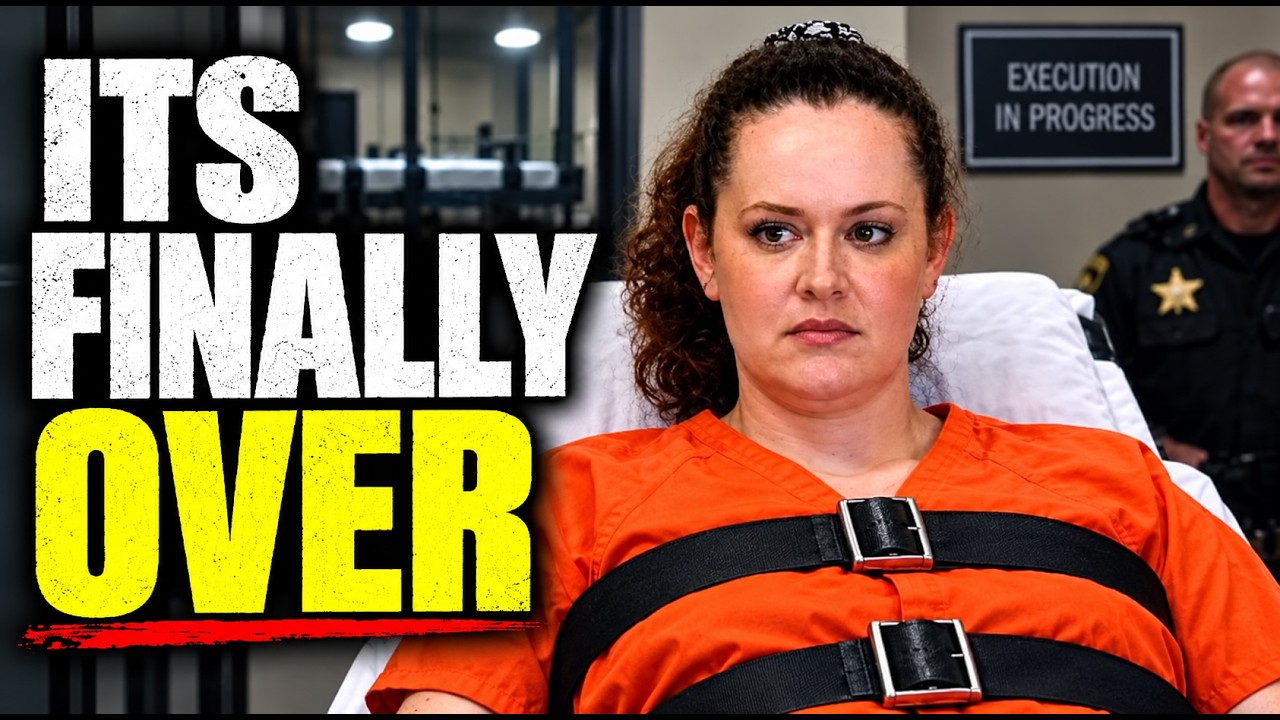
According to statements and court filings described in the latest reporting, Pike’s attorneys believe the execution team may have failed to place intravenous lines correctly, allowing some of the lethal injection drug to enter the surrounding tissue rather than circulate through her bloodstream. The allegations raise a disturbing possibility: the apparent failure of two doses of pentobarbital may have resulted not from an unusual resistance to the drug, but from a breakdown in the method used to administer it.
The Tennessee Department of Correction has maintained that its personnel followed the state’s execution protocol. Pike’s attorneys dispute whether compliance with that protocol can explain or justify what happened inside the execution chamber on September 30, 2026.
The dispute now extends beyond the immediate question of why Pike survived. Her legal team is seeking an emergency order requiring the state to preserve evidence from the execution attempt, while Tennessee Governor Bill Lee has ordered an independent review and suspended further executions for the remainder of the year.
For Pike’s attorneys, the failed procedure represents the culmination of medical warnings they say were repeatedly presented to state officials and the courts. For the family of Colleen Slemmer, the young woman Pike was convicted of murdering, it represents another devastating interruption in a case that has already lasted more than three decades.
The events have left both families confronting an outcome neither expected, while Tennessee faces difficult questions about its ability to administer capital punishment safely, lawfully, and transparently.
The most immediate concern remains Pike’s medical condition.
In a statement accompanying their emergency legal filing, her attorneys said she was critically ill, unconscious, and intubated. She was reportedly receiving mechanical ventilation while medical personnel treated complications associated with the pentobarbital administered during the execution attempt.
Her lawyers also described significant injuries to both arms.
According to the filing, Pike arrived at the hospital with swelling, burns, and blistering affecting the areas where intravenous access had been attempted.
Those injuries have become central to the emerging explanation for why the execution failed.
Pentobarbital is a powerful barbiturate that Tennessee uses in its lethal injection procedure. When administered intravenously, the drug enters the circulation and acts on the central nervous system, producing profound sedation and potentially fatal respiratory suppression at sufficiently high doses.
But the location of the injection matters.
If an intravenous line is incorrectly positioned or a vein is damaged, some medication can escape into the surrounding tissue. This complication, known as extravasation, can cause significant local injury, depending on the medication and the amount involved.
Pentobarbital solutions can be highly alkaline, making tissue exposure particularly concerning.
The attorneys’ filing cites medical expertise suggesting that the injuries to Pike’s arms were consistent with the drug entering tissue outside the intended veins.
NBC News also interviewed physician Natalie Azar, who reportedly explained that pentobarbital entering surrounding tissue could produce exceptional discomfort because of the drug solution’s chemical properties.
The medical concern is not limited to the immediate pain of an unsuccessful injection.
Extravasation can damage blood vessels and surrounding tissue, potentially producing swelling, inflammation, and more serious injuries.
Pike’s lawyers contend that the physical condition of her arms supports their theory that at least some of the drug failed to enter her circulation as intended.
That conclusion, however, remains an allegation requiring medical and forensic examination.
The precise amount of pentobarbital that entered Pike’s bloodstream has not been independently established in the supplied reporting.
Nor does the available account provide a complete clinical explanation of her current condition.
Those uncertainties are important because the distinction between a properly administered dose and a dose delivered into surrounding tissue could become central to both the medical investigation and future litigation.
According to Pike’s attorneys, the execution team administered what appeared to be two full doses of the lethal drug.
Yet Pike continued breathing.
The lawyers allege that personnel did not recognize that the intravenous lines had failed or that medication was escaping into tissue rather than entering the bloodstream.
They further contend that the team proceeded with a second set of syringes instead of identifying and correcting the underlying problem.
If those allegations are substantiated, the failure would raise questions about the execution team’s training, monitoring, and ability to recognize complications during the procedure.
It would also challenge the state’s assertion that following its written protocol was sufficient to ensure a properly conducted execution.
A protocol can specify the sequence of actions personnel must perform. Whether those actions were medically effective, and whether complications were recognized promptly, are separate questions.
The distinction could become critical as investigators reconstruct the events of September 30.
The attorneys’ account describes substantial difficulties even before the lethal drug was administered.
According to a lawyer who witnessed the procedure, the execution team spent approximately an hour attempting to establish intravenous access.
The witness reported counting at least seven needles used in Pike’s left arm alone.
One needle, the attorney alleged, appeared bent when it was withdrawn following an unsuccessful attempt.
The same account describes Pike as cooperative throughout the process.
She reportedly suggested locations where personnel might have better success establishing access, including areas higher on her arm or shoulder.
Her attorney said she repeatedly tried to help the team identify possible veins and thanked personnel when they believed they had established a line.
These details matter because the defense argues that the difficulties were foreseeable.
Pike’s attorneys say they had warned state officials and courts months before the execution that her medical history could complicate intravenous access.
They described a blood disorder and a history of difficult blood draws.
The lawyers maintained that inserting an intravenous line for lethal injection could be more challenging than performing a routine blood draw.
According to their account, they began pursuing legal protections in January 2026, seeking a method that would avoid a prolonged and painful procedure.
Their stated objective was not initially to prevent the execution through an indefinite delay.
Instead, they said they wanted safeguards ensuring that the procedure, if carried out, would be as rapid and humane as possible.
The legal effort ultimately reached the Tennessee Supreme Court, which appointed a special master to examine the concerns.
Medical experts presented testimony regarding the anticipated difficulty of obtaining intravenous access.
Pike’s attorneys contend that their warnings were rejected or insufficiently addressed.
They now argue that the problems experienced inside the execution chamber closely resembled the complications they had predicted.
That sequence of events may become one of the most consequential aspects of the case.
An unexpected medical complication raises one set of legal and ethical questions.
A complication that officials were warned about months in advance raises another.
The attorneys are likely to focus on what information Tennessee possessed before the execution, how officials evaluated it, and whether alternative procedures or safeguards were considered.
The account of what happened after the injections is equally troubling.
According to the legal team, Pike continued showing signs of life after the first dose and again after the second.
Witnesses reportedly heard her breathing heavily and struggling.
The filing describes her crying or whimpering and complaining of severe discomfort in her arm.
At one point, she allegedly asked whether the procedure was supposed to feel that way.
Her lawyers characterize those moments as evidence of prolonged suffering during an execution that failed to achieve its intended result.
The state has not, in the supplied material, provided a detailed public explanation addressing every allegation about Pike’s physical reactions.
An independent reconstruction will need to distinguish between what witnesses directly observed, what medical records establish, and what can reasonably be inferred about the delivery of the drug.
The question of pain is particularly difficult.
A patient’s outward reactions can provide important evidence, but the exact degree of suffering cannot be determined from witness descriptions alone.
Pike’s attorneys nevertheless argue that the combination of repeated needle attempts, reported chemical injuries, and continued breathing after the injections supports their claim that the procedure was cruel and unnecessarily prolonged.
The execution also exposed serious concerns about communication between the chamber, the legal team, and the courts.
One attorney described being unable to contact colleagues promptly while events unfolded.
According to his account, witnesses were placed in a darkened room after curtains were closed, limiting their ability to observe what was happening.
Pike’s spiritual adviser was reportedly removed from her side during portions of the procedure.
The attorney said he requested telephone access to alert the legal team that Pike remained alive.
He described passing through six locked doors and taking approximately seven minutes to reach a telephone.
By his account, the call occurred around 8:22 p.m., approximately 40 minutes after the first administration of chemicals.
He subsequently demanded that the execution be stopped and that Pike receive emergency medical treatment.
The attorney said he did not receive confirmation that an ambulance was coming until approximately 8:50 p.m.
His colleagues outside the prison described further delays in contacting state officials and obtaining emergency judicial review.
They said calls to an emergency number provided for the Tennessee Supreme Court initially reached voicemail.
The legal team ultimately filed an emergency motion electronically and obtained additional contact information through the court clerk.
According to the attorneys, those obstacles consumed valuable time while Pike remained inside the execution facility.
The sequence raises questions about the effectiveness of emergency communication procedures during executions.
Capital punishment litigation can involve urgent requests for judicial intervention, particularly when unexpected complications occur.
For such intervention to be meaningful, attorneys must be able to communicate with courts quickly enough for a judge to consider the circumstances.
Pike’s lawyers argue that Tennessee’s procedures failed to provide that access.
They also claim that similar problems had been identified during an earlier failed execution attempt.
The transcript references the case of Tony Kurthers, whose execution attempt in May reportedly prompted further concerns about access to legal counsel and emergency communication.
According to the supplied account, Governor Lee subsequently granted a one-year reprieve in that case.
Pike’s attorneys contend that Tennessee was already aware of problems involving telephone access and the ability of legal representatives to observe unfolding events.
They say those problems persisted despite warnings.
This aspect of the controversy is not merely administrative.
It goes to whether an inmate’s legal rights can be protected while a state carries out an irreversible punishment.
The attorneys argue that an execution procedure becomes particularly dangerous when the state controls nearly every source of information and outside representatives cannot promptly determine what is happening.
Eventually, according to the account, emergency medical personnel arrived.
Pike was transported from the prison to a hospital in the Nashville area.
The attempted execution ended without her death being confirmed.
Instead, the state was confronted with an extraordinary situation: a condemned prisoner who had undergone lethal injection and now required emergency treatment to survive.
Her attorneys say doctors have been working to support her recovery from the drug’s effects.
The supplied reporting describes her condition as critical two days after the attempt.
The exact prognosis remains unknown.
The legal consequences, however, are already becoming clearer.
On Friday, Pike’s attorneys filed an emergency motion in Davidson County Chancery Court seeking an order to preserve evidence connected to the failed execution.
The request includes materials that could help establish precisely what happened.
Potentially relevant evidence includes intravenous equipment, syringes, unused medication, drug preparation records, execution logs, personnel records, communications, and any available recordings or medical documentation.
The attorneys want to prevent the destruction, alteration, or loss of material that may later become essential to litigation.
Their request reflects a basic concern in investigations involving state-controlled procedures.
When an execution goes wrong, the government typically possesses most of the physical evidence and operational records.
Without a preservation order, disputes can arise over whether materials were retained, discarded, or documented adequately.
The defense argues that protecting those records is necessary for accountability and for Pike’s ability to pursue legal remedies.
The supplied reporting indicates that an emergency hearing on the motion had been granted.
It does not establish the final outcome of that hearing.
A preservation order would not, by itself, determine whether Tennessee acted unlawfully.
Nor would it prove that the attorneys’ explanation of the failed injection is correct.
Its purpose would be to ensure that investigators and courts have access to the evidence needed to answer those questions.
The case also raises broader concerns about the transparency of Tennessee’s execution system.
Pike’s attorneys say they have repeatedly encountered difficulty obtaining information about the procedures used by the Department of Correction.
They argue that previous reviews of failed executions did not produce sufficient transparency or meaningful safeguards.
One attorney criticized the state’s earlier response to execution problems, alleging that subsequent changes resulted in less detailed procedures and greater secrecy.
Those claims will require examination alongside the state’s records and the findings of the new independent review.
Nevertheless, the central issue is straightforward.
A system that carries out capital punishment must be able to explain what occurred when its procedures fail.
That explanation cannot depend solely upon a general statement that personnel followed established instructions.
Investigators will need to determine whether intravenous lines were properly positioned, whether the drug entered the intended circulation, how staff monitored the procedure, and what steps were taken when Pike continued breathing.
They will also need to establish when emergency medical assistance was requested and what information was available to officials making decisions during the attempt.
Governor Bill Lee’s response has added a new dimension to the controversy.
According to the supplied account, the governor suspended Tennessee executions for the remainder of 2026 and ordered an independent review.
The decision reflects the seriousness of a second reported execution problem within the same year.
The review may examine the state’s lethal injection protocol, personnel training, emergency procedures, and the circumstances surrounding Pike’s injuries.
Its credibility will depend partly upon the independence of the investigators and the completeness of the evidence available to them.
Pike’s attorneys have argued that a review alone is insufficient.
They are demanding that the governor commute her death sentence.
Their position is that Pike has already endured an attempted execution that inflicted severe suffering and that subjecting her to another attempt would be unconstitutional.
The governor had previously declined clemency, according to the transcript.
As of the reporting described in the uploaded material, there had been no announcement reversing that decision.
The possibility of a second execution attempt could become the next major legal battle.
American courts have previously considered whether a state may repeat an execution after an initial attempt fails.
One important precedent is Louisiana ex rel. Francis v. Resweber, a 1947 Supreme Court case involving a failed electrocution.
In that case, the Court permitted Louisiana to proceed with another attempt, with the outcome shaped by the circumstances and constitutional arguments before it.
But the existence of that precedent does not automatically settle Pike’s case.
Her attorneys may argue that the alleged warnings, prolonged intravenous difficulties, possible chemical injuries, and communication failures distinguish her circumstances from an unforeseeable accident.
Tennessee may respond that a failed execution does not, by itself, eliminate a lawfully imposed sentence.
The outcome would depend upon the evidence, the legal claims presented, and the courts’ interpretation of constitutional protections against cruel and unusual punishment.
The distinction between an accidental failure and an allegedly preventable one may prove especially important.
Pike’s lawyers maintain that officials knew intravenous access could be difficult.
They say they warned the state that an extended procedure could produce unnecessary suffering.
They also argue that the execution team failed to recognize complications after administering the drug.
If supported by evidence, those claims could form the foundation of an argument that another attempt would expose Pike to an unacceptable risk of repeated suffering.
The state, meanwhile, will likely emphasize its obligation to enforce the criminal judgment and the procedures it maintains were followed.
The legal dispute will require courts to consider competing interests in a case already marked by decades of litigation.
Yet there is another family whose experience cannot be separated from the events.
Colleen Slemmer was 19 years old when she was murdered in Tennessee in 1995.
Pike was convicted in connection with that killing and sentenced to death.
For Slemmer’s relatives, the case has remained a source of grief for more than 30 years.
Family members were reportedly present to witness the attempted execution on September 30.
Instead of seeing the sentence carried out, they witnessed a prolonged procedure that ended with Pike being taken to a hospital.
According to the supplied reporting, Slemmer’s stepfather publicly expressed the family’s anguish and his desire for the sentence to be completed.
His comments reflected a family that believed the long legal process was finally approaching its conclusion.
The failed execution left that expectation unresolved.
The family of the victim and Pike’s legal representatives now approach the controversy from profoundly different perspectives.
Pike’s attorneys emphasize the constitutional limits on punishment and the suffering they allege she endured.
Slemmer’s relatives continue to confront the loss of a young woman whose life ended violently more than three decades ago.
Acknowledging one family’s suffering does not require dismissing the other’s concerns.
The state’s responsibility to administer lawful punishment exists alongside its responsibility to protect constitutional rights.
Those obligations become especially difficult to reconcile when the punishment itself produces an unexpected medical emergency.
The controversy has also revived wider questions about lethal injection in the United States.
The method was introduced partly because it was presented as a more controlled and less visibly violent alternative to earlier execution methods.
But lethal injection depends upon reliable drug delivery, competent intravenous access, appropriate monitoring, and effective emergency decision-making.
When those elements fail, the consequences can be severe.
A drug intended to enter the bloodstream may instead damage surrounding tissue.
A procedure expected to last minutes may become prolonged.
And witnesses may struggle to determine whether the inmate is unconscious, experiencing distress, or receiving appropriate medical attention.
Pike’s case illustrates why these questions cannot be answered simply by describing the drug or the written protocol.
The actual conditions inside the execution chamber matter.
So do the qualifications of the people administering the procedure and their ability to respond when something unexpected occurs.
The new allegations also demonstrate the importance of distinguishing between reported facts and unresolved claims.
It is established within the supplied account that Pike survived the attempted execution and was hospitalized.
Her attorneys reported that she was unconscious, intubated, and critically ill two days later.
They alleged serious injuries to both arms and improper placement of intravenous lines.
NBC News reportedly obtained information from a source inside the chamber suggesting that at least some of the drug entered Pike’s arm rather than a vein.
The Department of Correction maintained that its protocol had been followed.
Those accounts do not yet amount to a complete, independently established explanation.
Medical records, physical evidence, expert assessments, and official findings will be needed to determine precisely what happened.
The same caution applies to claims about the pain Pike experienced.
Witness descriptions and the alleged injuries raise serious concerns.
But investigators must establish what can be demonstrated through medical evidence rather than relying solely upon competing interpretations.
The legal system will also need to examine how decisions were made once the execution failed to proceed as expected.
When did officials first recognize a serious problem?
Who had authority to stop the procedure?
What medical assistance was immediately available?
Why was a second dose administered?
And how quickly could attorneys obtain emergency judicial review?
Each question may reveal whether the failure resulted from an isolated technical complication or deeper problems within Tennessee’s execution system.
For now, the most urgent issue remains Pike’s survival.
According to her attorneys’ account, she was receiving intensive medical treatment while the legal team sought to preserve evidence and prevent another execution attempt.
Her condition was described as critical, and the long-term consequences of the reported injuries remained uncertain.
The next developments will likely center on three areas: her medical prognosis, the court’s response to the preservation request, and the state’s explanation of the failed procedure.
Governor Lee’s independent review may provide additional findings, but its scope, methodology, and access to evidence will be closely scrutinized.
The question of clemency may also return to the forefront if Pike survives her injuries.
Her attorneys are pressing the governor to commute her sentence.
The state has not, in the supplied reporting, announced that it intends to grant that request.
Any future effort to schedule another execution would almost certainly intensify the constitutional dispute.
The case now stands at the intersection of criminal justice, medical responsibility, and the limits of government power.
For Colleen Slemmer’s family, it remains rooted in a murder committed more than three decades ago and a sentence they have waited years to see enforced.
For Pike’s attorneys, it has become a question of whether the state can lawfully attempt another execution after a procedure they describe as prolonged, painful, and preventable.
For Tennessee officials, it is a test of whether the state can provide a credible account of what happened under its authority.
And for the public, it raises a question extending beyond the fate of one prisoner.
When a government carries out the most irreversible punishment available under law, what level of preparation, transparency, and accountability must it demonstrate?
The events of September 30 have made that question impossible to avoid.
Christa Pike survived an execution that was intended to end her life.
Two days later, according to her lawyers, she remained unconscious in intensive care, while the state faced demands to preserve evidence and explain how its lethal injection procedure had failed.
The next chapter will depend upon what medical records reveal, what investigators establish, and what Tennessee’s courts decide.
Until those answers emerge, the central facts remain deeply troubling: a woman was subjected to an attempted execution, the procedure failed, serious injuries were alleged, and the state now faces a legal and public reckoning over what happened inside its execution chamber.


