Christa Pike Awakens After Failed Execution, Intensifying Tennessee’s Unprecedented Constitutional Battle Over Her Death Sentence
Christa Pike has done something Tennessee officials never expected to confront.
She survived an execution.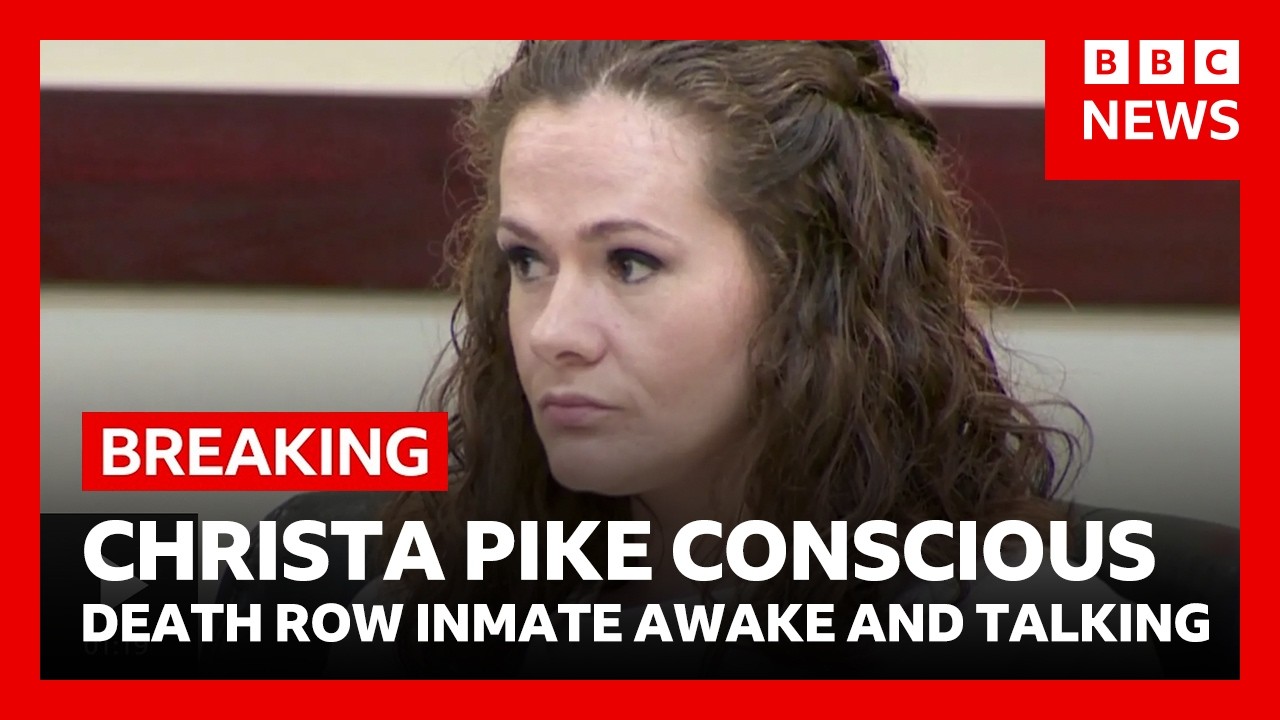
Then, after spending days unconscious and dependent on intensive medical treatment, she woke up.
And now she is speaking.
Attorneys representing Pike confirmed on October 6 that the 50-year-old Tennessee death-row prisoner had regained consciousness six days after the state attempted to execute her at Riverbend Maximum Security Institution.
Her lawyers said Pike was “conscious, speaking, and continues to receive critical medical care.”
They also cautioned that her prognosis remains uncertain and that they expect, at minimum, a long recovery.
That development dramatically changes the legal and medical landscape surrounding one of the most extraordinary failed executions in modern American history.
But it does not yet prove the most explosive claim now circulating online.
There is no court ruling saying Pike can never be executed again.
There is no verified hospital-room recording in which constitutional lawyers declare her permanently immune from capital punishment.
And there is no judicial order converting her death sentence into life imprisonment.
What exists instead is a deeply complicated constitutional fight that may take months or years to resolve.
Pike was sentenced to death for the 1995 murder of 19-year-old Colleen Slemmer.
Tennessee attempted to execute Pike on September 30 using pentobarbital, the single drug authorized under the state’s lethal-injection protocol.
The execution team administered two rounds.
Neither killed her.
Pike remained alive after both administrations and was ultimately removed from Riverbend by ambulance.
Her survival was extraordinary because execution drugs had already entered her body.
Reuters described her as the first known person in the United States to survive after execution drugs were actually administered as part of a completed lethal-injection sequence.
The immediate aftermath was medically severe.
Pike was unconscious.
She was intubated.
She required mechanical ventilation.
Her lawyers said her arms were swollen, burned and blistered after apparent complications involving intravenous access.
They alleged that pentobarbital entered surrounding tissue rather than properly circulating through her veins.
For several days, even Pike’s lawyers did not know whether she would regain consciousness.
On October 5, her attorney was still telling CBS that it remained unclear whether she would wake up.
He was simultaneously urging Tennessee to remove execution from consideration and commute her sentence.
Then the situation changed.
By October 6, Pike was awake.
She could communicate.
Her attorneys said she was speaking from her hospital bed while continuing to receive critical medical care.
That fact alone will almost certainly become central to everything that happens next.
Pike can now potentially describe what she remembers from the execution chamber.
She can speak with her attorneys directly.
She may eventually provide evidence about pain, awareness, the IV attempts, and what she experienced after pentobarbital began flowing.
Those statements could become important in future litigation.
But the public has not yet received a detailed account from Pike herself.
There is no authenticated hospital-room recording showing her giving a dramatic first statement.
No verified audio leak has surfaced.
No medical transcript has been publicly released.
Her lawyers have simply confirmed that she is conscious and speaking.
That distinction matters.
The real development is significant enough without attaching an unverified secret recording to it.
Pike’s awakening also strengthens her legal team’s ability to argue that the September 30 procedure must be investigated before Tennessee is allowed to attempt another execution.
Her attorneys are already demanding preservation of physical and documentary evidence.
They want information about the needles.
The IV equipment.
The pentobarbital.
Drug batch numbers.
Execution logs.
Internal communications.
And other records documenting exactly what happened inside Riverbend.
The Tennessee Attorney General’s office has said evidence will be preserved according to legal requirements.
But Pike’s attorneys have sought a judicial order because they do not want crucial evidence destroyed, altered or lost while investigations are underway.
The reason is obvious.
If Tennessee ever tries to execute Pike again, the legality of the second attempt could depend heavily on what investigators conclude about the first one.
Was the IV line properly inserted?
Did the veins fail?
Did execution personnel recognize warning signs?
How much pentobarbital reached Pike’s bloodstream?
How much entered surrounding tissue?
Why did both drug administrations fail?
How long did she remain conscious?
How much pain did she experience?
Could the state reasonably guarantee that the same thing would not happen again?
Those questions could shape a major Eighth Amendment case.
The Eighth Amendment prohibits cruel and unusual punishment.
It does not categorically prohibit capital punishment.
The Supreme Court has repeatedly held that states may carry out executions if constitutional safeguards are satisfied.
But execution methods cannot create an objectively intolerable risk of severe and unnecessary suffering.
Pike’s lawyers now have a uniquely powerful factual argument.
They do not have to speculate about what might happen to her under Tennessee’s protocol.
The state already used that protocol on her.
It already failed.
She already suffered serious physical injuries.
She already required emergency hospitalization afterward.
Her attorneys can therefore argue that another execution would not involve a theoretical risk.
It would involve asking the state to repeat punishment after a documented catastrophic failure.
That argument could be stronger than the claims Pike made before September 30.
Before the execution, she had already challenged Tennessee’s lethal-injection protocol.
Her lawyers had warned about risks connected to intravenous access and her medical condition.
Court documents show Pike pursued Eighth Amendment challenges to the state’s procedure before her execution date.
Those challenges did not prevent Tennessee from proceeding.
The Supreme Court denied one request for relief on September 29.
Then, on September 30, the Sixth Circuit temporarily stayed the execution while it considered separate legal issues.
The Supreme Court later vacated that stay, allowing Tennessee to move forward.
Tennessee did move forward.
The execution failed.
That creates a factual record that did not exist when courts rejected Pike’s earlier challenges.
Her attorneys can now argue that their warnings were not hypothetical.
The actual execution produced exactly the kind of medical complications they feared.
This does not automatically mean Pike wins.
Courts will still have to determine whether the state violated the Constitution.
They will have to examine intent, procedure, risk, medical evidence and whatever execution method Tennessee might propose in the future.
But Pike’s position is now materially different from where it stood before September 30.
The state itself has already responded dramatically.
Governor Bill Lee halted further executions for the remainder of 2026 and ordered an independent third-party investigation into what happened.
Tennessee Department of Correction Commissioner Frank Strada also resigned following the failed execution.
Reuters reported that Strada said he believed execution protocols had been followed but concluded that stepping aside was in the public interest and would allow the investigation to proceed without interference.
Those developments show how seriously Tennessee is treating the failure.
But they do not mean the state has abandoned Pike’s death sentence.
No new execution date has been announced.
No official has publicly committed to trying again.
And Governor Lee has not commuted Pike’s sentence.
Her legal status therefore remains unsettled.
This is where some online claims go too far.
One version says constitutional lawyers have determined that the failed execution permanently protects Pike from another attempt.
That is not current law.
There is an old Supreme Court precedent pointing in the opposite direction.
In 1947, the Supreme Court decided Louisiana ex rel. Francis v. Resweber.
Willie Francis had survived an attempted execution in Louisiana after the electric chair malfunctioned.
Louisiana planned to execute him again.
Francis argued that another attempt would violate constitutional protections.
The Supreme Court allowed the state to proceed.
That case remains important because it rejects the simple proposition that surviving one execution automatically erases a death sentence.
But Pike’s case is not identical to Francis.
Her lawyers will almost certainly argue that modern Eighth Amendment doctrine, the physical injuries she suffered, and the extraordinary nature of receiving two lethal-drug administrations distinguish her case.
The question therefore is not merely whether Tennessee is technically permitted to try again.
The deeper question is whether trying again after what happened on September 30 would create an unconstitutional risk of severe suffering.
That issue has not been decided.
Double jeopardy is also unlikely to operate the way many viral captions suggest.
The Double Jeopardy Clause generally protects people from being prosecuted or punished multiple times for the same offense under specific circumstances.
An execution attempt that fails because the procedure malfunctions does not automatically function as an acquittal or erase the underlying sentence.
Existing precedent gives Tennessee arguments for why another attempt could theoretically be lawful.
But Pike’s lawyers now have strong new Eighth Amendment arguments against that possibility.
Another important question concerns Pike’s medical competency.
Her awakening makes that question more complicated.
When she was unconscious and ventilated, it was impossible to know what her long-term neurological condition would be.
Now she is speaking.
That strongly suggests at least some neurological recovery.
But her lawyers still say her prognosis remains unclear.
No complete neurological report has been released.
No MRI findings have been published.
No treating physician has issued a full long-term prognosis.
No public medical evidence establishes whether she will have permanent cognitive, respiratory, muscular or nerve damage.
That means it would be premature to describe Pike as fully recovered.
Awake does not mean healed.
Speaking does not mean medically stable.
Consciousness does not erase the severe injuries her lawyers say she sustained.
Pike reportedly remains hospitalized and is receiving critical care.
AP reported that she remains shackled to her hospital bed while lawyers seek more information about what occurred.
The contrast is remarkable.
Days earlier, Pike’s attorneys did not know whether she would ever regain consciousness.
Now she can speak.
But she remains a death-row prisoner under state custody.
She remains medically fragile.
And the government responsible for the failed execution is simultaneously investigating its own procedures.
That combination creates an extraordinary legal environment.
Pike’s attorneys are now asking Governor Lee to “take death off the table.”
They want her sentence commuted to life imprisonment.
Their argument is both legal and moral.
They say Tennessee already subjected Pike to an execution process that inflicted severe injuries and nearly killed her without completing the sentence.
They contend requiring her to face another execution would compound the suffering she already endured.
The state has not accepted that argument.
Nor has a court ordered Lee to commute the sentence.
This distinction is crucial.
Pike’s lawyers are advocating for permanent protection from another execution.
They have not yet obtained it.
The political response may also shape what happens next.
The failed execution has already reopened debate in Tennessee about execution methods.
Some political leaders have discussed alternatives to lethal injection.
Others are demanding greater transparency and investigation before any execution resumes.
The state therefore faces several overlapping decisions.
Whether to continue using pentobarbital.
Whether to modify its protocol.
Whether to adopt or expand alternative execution methods.
Whether to attempt another execution of Pike.
And whether the political cost of another failure is acceptable.
Those questions will likely remain unresolved until the independent investigation produces findings.
For Pike, the central issue is personal and immediate.
She survived.
That survival is now confirmed.
Her consciousness is now confirmed.
Her ability to speak is now confirmed.
But the condition of her body, her long-term prognosis and her future sentence remain uncertain.
The phrase “fully conscious” is reasonably supported by her attorneys’ statement that she is conscious and speaking.
The claim that she is completely recovered is not.
The claim that the Constitution permanently protects her from execution is also not established.
There is no final ruling.
There is no permanent injunction.
There is no commutation.
There is no new Supreme Court precedent addressing what happened to Pike.
What exists is something potentially more significant.
A factual situation unlike almost anything American courts have confronted in the modern lethal-injection era.
Tennessee tried to execute Pike.
The state administered its lethal drugs.
The drugs failed to kill her.
She suffered severe injuries.
She became unconscious.
She required ventilation.
She spent days in critical care.
Then she woke up.
Now the same state that attempted to end her life must decide whether it will ever try again.
And if Tennessee does, Pike’s lawyers will likely ask federal courts to decide whether forcing her back into an execution chamber after what happened on September 30 violates the Eighth Amendment.
That litigation could become one of the most important execution-method cases in decades.
Not because of an alleged secret hospital leak.
Not because prosecutors have publicly admitted defeat.
And not because Pike has already won permanent immunity.
But because the factual record is extraordinary.
For years, death-row prisoners have argued about the risk that lethal-injection procedures could fail.
Pike can now point to what happened to her own body.
Her lawyers do not have to imagine a failed IV.
They can document one.
They do not have to imagine prolonged suffering.
They can present witness accounts and medical evidence.
They do not have to speculate about surviving an execution attempt.
Pike survived it.
That does not automatically cancel the death sentence.
But it gives her legal team evidence few capital defendants have ever possessed.
And Pike’s awakening makes the coming fight even more consequential.
A week ago, Tennessee expected Christa Pike to be dead.
Today, she is conscious.
She is speaking.
She remains hospitalized.
Her attorneys are preparing for litigation.
The state’s corrections chief has resigned.
Governor Bill Lee has halted executions and ordered an independent review.
And Tennessee has no publicly announced plan for what comes next.
The most dramatic question therefore remains unanswered.
Can the state legally put Christa Pike on an execution gurney again?
Tennessee may argue that existing precedent leaves that possibility open.
Pike’s attorneys will argue that what she already endured crossed a constitutional line that cannot simply be repeated.
A court will eventually have to decide.
Until then, one fact has moved beyond rumor.
Christa Pike survived Tennessee’s lethal injection.
And now she is awake to challenge what the state did to her.


