A sensational headline claims Caitlin Clark and Sophie Cunningham accepted a billion-dollar offer to abandon the WNBA permanently.
League executives supposedly cried on television while Clark slammed her resignation letter upon the commissioner’s desk.
The story promises a leaked European contract powerful enough to destroy America’s entire professional basketball economy overnight.
However, no verified announcement, resignation letter, contract, or credible report supports that extraordinary version of events.
Clark has not announced she is leaving Indiana, withdrawing from the WNBA, or joining any European basketball league.
Cunningham has committed to an international competition, but her arrangement does not require abandoning the Indiana Fever.
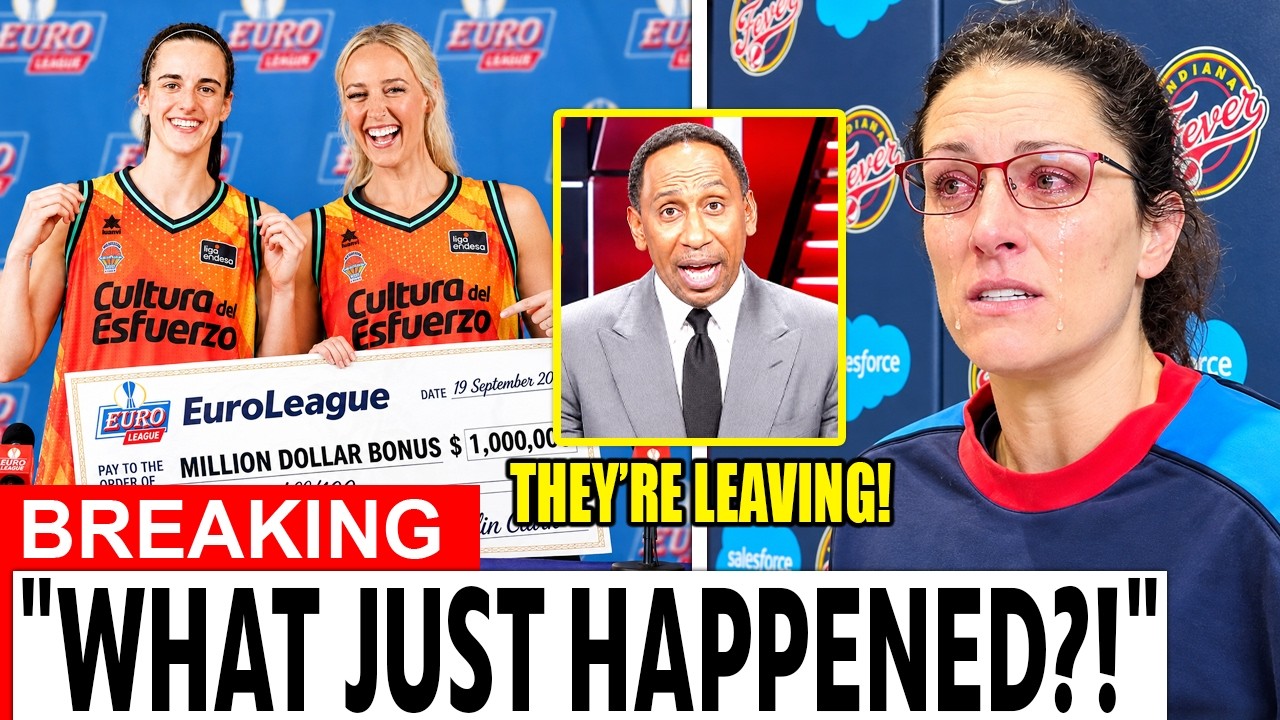
The actual story involves Project B, offseason flexibility, improved player salaries, and growing competition throughout women’s basketball.
Those developments are significant, but they do not represent an irreversible American collapse or billion-dollar player buyout.
The first major error involves identifying Clark as someone who accepted the same international opportunity as Cunningham.
Available reporting indicates Clark has not joined Project B and publicly declined to follow Cunningham into that competition.
The Fever teammates connected with Cunningham’s Project B commitment are Kelsey Mitchell and several other established WNBA stars.
Reuters reported that Cunningham and Mitchell remained committed despite major salary improvements under the WNBA’s collective agreement.
Project B reportedly offers seven-figure compensation beginning around two million dollars, signing bonuses, and ownership equity opportunities.
That money is substantial, especially within a sport where athletes historically pursued overseas contracts for additional financial security.
However, two million dollars is not one billion dollars, and exaggerating the amount changes the story completely.
A billion-dollar individual playing contract would exceed established compensation structures across virtually every professional women’s basketball competition.
Such an agreement would require extraordinary financing, extensive documentation, and immediate coverage throughout international business and sports media.
No credible outlet has reported Clark or Cunningham receiving anything remotely approaching that amount from European organizations.
The verified Project B figures concern multimillion-dollar compensation packages, not a billion-dollar buyout of Fever contracts.
The second major error involves describing Project B as simply another traditional European domestic basketball league.
Project B is designed as a touring international competition operating across Europe, Asia, and Latin America.
Its planned schedule includes seven short tournaments running from November 2026 through April 2027 in different locations.
Players can return to America between events rather than remaining overseas continuously for seven or eight months.
That flexibility distinguishes Project B from traditional overseas club arrangements demanding long seasons inside one national league.
Mitchell specifically emphasized that the touring format allows players to participate internationally while maintaining greater personal flexibility.
Reuters described the Project B structure and Cunningham’s continuing commitment in its
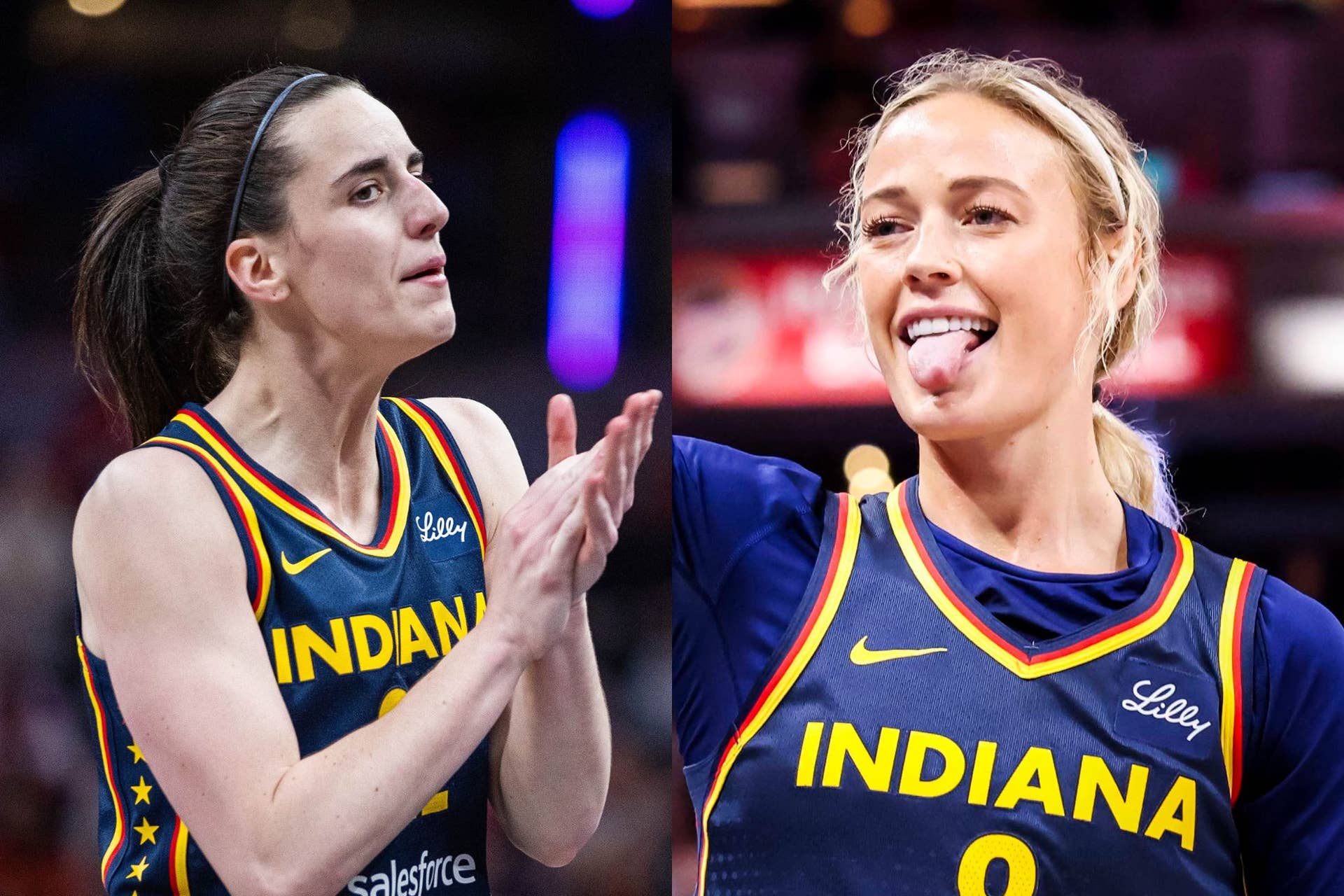
Nothing about that structure requires Cunningham to terminate her WNBA career or renounce her relationship with Indiana.
Project B operates during the WNBA offseason, allowing participating athletes to compete within both basketball environments.
Cunningham joined partly because uncertainty surrounding collective bargaining made additional security extremely attractive before the 2026 season.
Her decision represented financial planning, not a declaration that she hated Indiana or wanted American basketball destroyed.
She described the money, bonus, and equity combination as compelling when evaluating her professional and financial future.
That statement can sound ruthless when isolated, but elite athletes routinely compare compensation across available employment opportunities.
Basketball careers are short, injuries are unpredictable, and players must maximize earnings before their physical windows close.
Cunningham suffered significant injury adversity previously, making guaranteed financial security particularly important within her career planning.
She also signed a one-year Fever contract, expressing frustration because she wanted greater long-term stability in Indiana.
That concern actually weakens claims that she desperately wanted to escape the organization and America forever.
Cunningham reportedly wanted enough security to establish roots and bring important parts of her personal life toward Indianapolis.
A player seeking a longer Indiana commitment is not behaving like someone already determined to permanently abandon the league.
Project B gives her an additional earning platform without automatically eliminating her Fever responsibilities during the summer.
The third error concerns Clark’s supposed participation within Cunningham’s decision and their alleged joint resignation.
Clark has praised increasing investment throughout women’s basketball, recognizing that new leagues create opportunities for professional players.
However, welcoming investment does not mean she personally signed every contract offered by emerging international competitions.
Reporting from Spain’s El País stated that Clark would not follow Cunningham into Project B despite speculation surrounding offers.
Clark emphasized that outside investment demonstrates growing belief in women’s basketball after decades of insufficient financial support.
That position supports athlete opportunity while remaining entirely compatible with continuing her Indiana and WNBA career.
No Project B roster announcement currently identifies Clark among participating stars committed to its traveling competition.
Reported participants include Cunningham, Mitchell, Nneka Ogwumike, Jonquel Jones, Alyssa Thomas, and Jewell Loyd.
Russell Westbrook also became a Project B co-founder, further strengthening its visibility and basketball credibility.

Clark’s absence from those announcements is especially important because signing her would generate enormous global attention.
An organization acquiring basketball’s most visible American player would publicize that achievement rather than conceal it secretly.
Sponsors, investors, venues, broadcasters, and ticketing partners would all benefit from announcing Clark’s participation immediately.
The idea that only anonymous channels discovered her supposed billion-dollar agreement is therefore highly implausible.
A genuine contract involving that amount could not remain supported solely through thumbnails, narration, and unavailable leaked paperwork.
The supposed document would need identifiable parties, signatures, dates, governing law, payment terms, and professional representation.
It would also explain how Clark could exit existing contractual commitments and whether any league restrictions applied.
The viral description provides none of those details while declaring the WNBA destroyed before anyone verifies the paper.
A screenshot displaying logos and dramatic numbers does not become authentic merely because viewers want the story confirmed.
Digital contracts are easily fabricated by combining official branding, generic legal language, copied signatures, and invented payment figures.
Responsible authentication requires confirmation from involved parties, agents, league officials, attorneys, or reliably sourced business reporters.
No such confirmation currently establishes a Clark–Cunningham billion-dollar European agreement or permanent WNBA withdrawal.
The fourth error concerns the claim that Clark formally resigned by confronting the league commissioner personally.
WNBA players work through contracts, collective bargaining rules, team management, representatives, and established league procedures.
A resignation letter dramatically slammed on a commissioner’s desk would not automatically terminate Clark’s Fever contract.
The commissioner does not personally employ each player as though the league were one centralized basketball team.
Clark’s contractual relationship primarily involves the Indiana Fever, subject to league rules and collective bargaining obligations.
Any attempted departure would produce negotiations involving Indiana, Clark’s representation, the WNBA, and potentially another competition.
It would not be resolved through one theatrical document delivered before crying executives and television cameras.
No credible report identifies a date, office, witness, broadcaster, or complete recording of this alleged resignation scene.
No representative for Clark has confirmed preparing, delivering, or discussing any resignation letter with WNBA leadership.
No Fever statement announces that its franchise centerpiece requested release to sign an exclusive European basketball agreement.
The absence of those confirmations matters because Clark’s departure would become one of American sports’ largest business stories.
Ticket holders, sponsors, broadcasters, merchandise partners, teammates, and franchise investors would require immediate official communication.
Instead, Clark recently returned from the World Cup and resumed playing competitive basketball for the Fever.
Indiana defeated the Toronto Tempo 103–85 on September 18 during its first game after the international break.
Clark recorded twenty-eight points, fourteen assists, and six rebounds while playing nearly thirty-four minutes for Indiana.
Kelsey Mitchell added thirty-three points as the Fever produced another powerful offensive performance during their postseason push.
That verified appearance directly contradicts claims that Clark had already abandoned Indiana for a European league.
She was not missing because she resigned; she was actively directing the Fever offense inside a WNBA contest.
The official game coverage described Clark and Mitchell combining for sixty-one points during Indiana’s convincing road victory.
Nothing about that performance suggested a player completing an escape from American basketball or boycotting league obligations.
Clark appeared fully integrated into Indiana’s lineup immediately after helping Team USA win the World Cup championship.
Her return demonstrated continuity between national-team competition and professional responsibilities rather than a dramatic employment rupture.
Cunningham also remained publicly associated with Indiana while preparing for the resumed portion of the WNBA schedule.
Her Project B plans concern additional offseason basketball, not an immediate refusal to represent the Fever.
The difference between adding another league and permanently leaving the WNBA is fundamental to understanding this story.
Many WNBA players historically competed overseas because domestic salaries alone did not maximize their financial opportunities.
Some spent American winters playing in Russia, Turkey, China, Australia, Spain, France, or other international markets.
Those choices generally supplemented WNBA careers rather than representing permanent rejection of American professional basketball.
Project B modernizes that model through shorter tournaments, extensive travel, equity, and significantly higher reported compensation.
Its existence creates competitive pressure, but competition does not automatically mean one league must collapse completely.
The WNBA’s new collective agreement increased salaries partly because players demanded a greater share of expanding revenue.
Reuters reported that the maximum salary reached approximately $1.4 million under the improved compensation structure.
Average salaries were projected to rise substantially, reflecting growth in broadcasts, attendance, sponsorships, and commercial interest.
Those improvements indicate a changing labor market where athletes possess more leverage and more attractive alternatives.
Cunningham’s international deal demonstrates that leverage, but it does not prove the American economy suffered irreversible destruction.
Competition can force the WNBA to improve compensation, scheduling, player services, marketing, and long-term professional conditions.
Project B could succeed alongside the WNBA because their primary competition periods do not directly overlap.
Players might earn WNBA salaries during summer before joining international tournaments throughout the American offseason.
That arrangement could increase annual earnings while expanding women’s basketball into additional cities and commercial markets.
It also creates health concerns because year-round competition increases fatigue, injury risk, and reduced recovery opportunities.
Players must balance money against physical sustainability, family priorities, travel, national-team duties, and career longevity.
Clark may reasonably prefer rest, Fever preparation, sponsorship commitments, and personal recovery instead of Project B participation.
Her decision does not indicate opposition to Cunningham, resentment toward international players, or loyalty purchased through league pressure.
It simply reflects a different professional calculation based upon unique physical, commercial, and competitive circumstances.
Clark already possesses major endorsement income and a highly anticipated Nike signature footwear line launching October 1.
The Associated Press reported her signature shoe will retail for $140 alongside a broader apparel collection.
That commercial platform reduces the financial necessity for Clark to accept every available offseason playing opportunity.
Cunningham’s career economics differ, making Project B’s reported salary and equity especially difficult for her to reject.
Different decisions do not create betrayal when players operate from different financial positions, health histories, and career goals.
The fifth error concerns league executives supposedly crying publicly while begging both athletes to reverse their decisions.
No verified live broadcast shows WNBA executives breaking down emotionally because Clark and Cunningham joined European basketball.
No commissioner statement uses language suggesting catastrophic collapse, irreversible economic destruction, or desperate institutional panic.
Executives would obviously take Clark’s potential departure seriously because she drives substantial attention and commercial activity.
However, acknowledging her value is entirely different from proving an emotional television spectacle occurred.
The WNBA remains a growing organization facing labor challenges, leadership transition, scheduling pressure, and expanding commercial expectations.
Cunningham recently discussed the league’s future leadership directly with NBA Commissioner Adam Silver as succession planning continued.
Reuters reported she emphasized communication, unity, and supportive relationships while discussing the next commissioner.
That conversation indicates Cunningham remains engaged with improving the WNBA rather than celebrating its supposed destruction.
Someone determined to escape permanently would have less reason to influence the league’s next leadership structure.
Her willingness to participate in that discussion suggests she sees Project B and WNBA reform as compatible priorities.
The viral narrative transforms constructive player leverage into cruelty because outrage requires someone humiliating powerless executives.
It portrays Clark ignoring tears and Cunningham joining her escape, creating a fantasy of total institutional revenge.
That structure resembles scripted drama more than sports-business reporting involving contracts, schedules, and collective bargaining.
Every character receives a simple role: Clark becomes executioner, Cunningham becomes ally, and executives become broken opponents.
Real professional decisions involve agents, lawyers, salary caps, insurance, equity terms, medical risks, and overlapping commitments.
Those complexities rarely produce the instant emotional payoff promised by a resignation letter slammed dramatically on furniture.
The alleged billion-dollar figure also functions as a psychological shortcut because enormous numbers discourage careful scrutiny.
Readers assume an offer that large must explain why two stars suddenly abandoned their existing professional league.
Yet the verified figure associated with Project B begins around two million dollars plus bonuses and equity.
Two million remains transformative within women’s basketball, particularly compared with historical WNBA compensation levels.
Exaggerating it five hundred times is unnecessary unless the goal involves maximizing disbelief, anger, and sharing.
The true economic story is already substantial because international competition now challenges American leagues for elite talent.
Players have new leverage, investors see opportunity, and basketball audiences can support multiple professional products globally.
The WNBA must respond intelligently by making domestic careers financially attractive and physically sustainable across longer seasons.
Project B must prove its promised compensation, travel structure, audience demand, production quality, and long-term financial stability.
Neither competition’s future can be determined through one rumor involving Clark, Cunningham, and imaginary television tears.
Another important fact concerns the WNBA’s increasing influence over international basketball scheduling rather than declining relevance.
Seventy current and former WNBA players participated in the recent Women’s World Cup, demonstrating the league’s talent concentration.
FIBA acknowledged scheduling strain and promised future adjustments, including eliminating back-to-back World Cup games by 2030.
Reuters described the WNBA’s influence as reshaping the broader international calendar and overseas player commitments.
A league influencing global tournament structure is not accurately described as disappearing from the basketball economy overnight.
It may face serious competition, but its talent, franchises, media agreements, and audience remain economically significant.
Clark’s popularity has strengthened those advantages while simultaneously encouraging competitors to invest more aggressively in women’s basketball.
That expansion should not automatically be framed as one institution stealing stars and leaving another permanently destroyed.
Multiple leagues can create more professional positions, higher salaries, wider audiences, and stronger negotiating power for athletes.
The challenge involves coordinating schedules so players are not forced to choose between money, health, and national representation.
Cunningham’s Project B commitment highlights that opportunity because the touring schedule was designed to offer greater flexibility.
Rather than escaping toxic American basketball, she can participate internationally and return for her domestic professional responsibilities.
Mitchell described that ability to move between events and America as a major distinction from traditional overseas seasons.
Clark evaluated the same evolving marketplace differently and remained outside Project B’s announced participant group.
That divergence destroys the premise of a joint secret decision to accept one shared European mega-contract.
There is no verified “Clark and Sophie” contract because available reporting concerns Cunningham and Mitchell instead.
Misidentifying Mitchell as Clark dramatically increases attention because Clark’s name creates far greater immediate audience interest.
This substitution is a common misinformation tactic: replace a less viral participant with the most recognizable available star.
The underlying story remains partially true, making the fabricated version harder for casual readers to detect.
Cunningham really joined Project B, Mitchell really remained committed, and reported compensation really reaches seven figures.
Clark supports investment broadly, but she did not sign the reported deal and has not resigned from Indiana.
Combining those truths produces a false headline while preserving enough accurate fragments to appear professionally researched.
The supposed leaked contract should therefore be examined for whether Clark’s name was digitally inserted into unrelated documentation.
Viewers should search for matching paragraphs within established reporting about Cunningham, Mitchell, or other Project B participants.
They should inspect formatting inconsistencies, inaccurate logos, misspelled names, implausible amounts, and missing representative signatures.
They should also ask why professional reporters cannot independently confirm a document supposedly destroying an entire league.
Authentic major contracts usually generate coordinated announcements because every involved commercial partner benefits from publicity.
Secrecy offers little advantage once two superstar players supposedly accepted terms and formally abandoned existing employment.
The leak narrative exists primarily to explain why official sources contradict the dramatic claim presented by the video.
When Clark appears for Indiana, creators can insist the contract remains hidden or takes effect after another secret date.
When Project B excludes her from announcements, creators can claim executives are suppressing the agreement until negotiations conclude.
That reasoning becomes impossible to disprove because every contradiction transforms into additional supposed evidence of concealment.
Responsible reporting works differently by making testable claims and correcting them when reliable information changes.
The testable facts currently show Cunningham joining Project B while maintaining her WNBA relationship with Indiana.
They show Mitchell joining her, not Clark, within a traveling offseason competition offering seven-figure compensation.
They show Clark publicly celebrating investment but choosing not to participate in the announced Project B structure.
They show Clark returning to Indiana and producing twenty-eight points with fourteen assists against Toronto.
They show the Fever winning 103–85 rather than collapsing because its most famous player resigned unexpectedly.
They show Cunningham discussing the WNBA’s leadership future, suggesting ongoing engagement rather than permanent rejection.
They show the WNBA influencing international schedules while salaries and commercial investment continue rising throughout the sport.
None of those facts supports televised tears, a desk confrontation, a resignation letter, or billion-dollar European buyout.
The real controversy remains powerful because Project B exposes how aggressively global investors now value elite women players.
For decades, athletes supplemented limited WNBA income overseas while assuming travel burdens and significant physical risks.
Now emerging competitions offer equity and multimillion-dollar compensation specifically designed to challenge traditional basketball structures.
That pressure can benefit players even if Project B eventually encounters financial, logistical, or audience-related difficulties.
The WNBA cannot assume history and domestic visibility will automatically retain every star without competitive employment conditions.
It must listen when Cunningham describes security, contract length, communication, and leadership as major professional concerns.
It must also recognize Clark’s continued presence does not eliminate dissatisfaction experienced by other players throughout the league.
Clark can remain committed to Indiana while supporting teammates who pursue different financial opportunities during the offseason.
Cunningham can join Project B without betraying Clark, Fever supporters, or American professional basketball permanently.
Their friendship and shared team identity do not require identical contracts or identical definitions of career security.
Athletes should possess enough agency to choose opportunities aligning with their financial, personal, and competitive priorities.
That agency becomes distorted when every overseas commitment is described as revenge against a supposedly toxic domestic league.
Criticism of the WNBA can remain strong without falsely claiming Clark executed its collapse through a theatrical resignation.
The league has legitimate challenges involving officiating, player safety, communication, scheduling, leadership, compensation, and public trust.
Clark’s enormous popularity sometimes amplifies those problems because her fan base scrutinizes decisions more intensely than ever.
Cunningham’s outspoken personality similarly attracts attention toward subjects other players or executives might discuss more cautiously.
Both women exert influence, but influence does not mean every online rumor describing institutional panic becomes credible.
Their greatest leverage comes from performance, audiences, sponsorship value, and credible alternative opportunities within a changing marketplace.
Clark demonstrated that leverage against Toronto by producing another elite scoring and playmaking performance for Indiana.
Cunningham demonstrated hers by securing Project B compensation while retaining professional opportunities within the WNBA.
Those actions speak louder than an invented contract supposedly hidden beneath the commissioner’s desk after a confrontation.
The most accurate four-word verdict therefore directly rejects the central deception inside the viral headline.
Clark Did Not Sign.
Those words distinguish Cunningham’s legitimate Project B opportunity from an invented joint European escape involving basketball’s biggest attraction.
They also preserve the important economic discussion without converting player empowerment into completely fabricated institutional destruction.
As of September 20, 2026, no evidence shows Clark submitting a WNBA resignation letter.
No evidence shows Clark accepting a billion-dollar or multimillion-dollar exclusive European basketball contract with Cunningham.
No evidence shows WNBA executives crying during a broadcast while begging either Fever player to remain.
No evidence shows a buyout eliminating existing obligations and transferring both athletes permanently away from Indiana.
The verified record instead shows Clark competing for the Fever and Cunningham maintaining dual-league professional plans.
Project B represents serious competition, but participation does not require athletes to abandon the WNBA forever.
Cunningham’s agreement may become financially transformative while increasing pressure upon domestic leaders to continue improving conditions.
Clark’s decision not to join may reflect workload management, endorsement priorities, recovery, or simple professional preference.
Unless Clark explains her reasoning more fully, responsible analysis should avoid inventing motives unsupported by her words.
Fans can criticize the WNBA, support Project B, and celebrate athlete leverage while remaining accurate about participants.
They should request the complete alleged contract and confirm every signature through representatives or official announcements.
They should compare billion-dollar claims with Reuters reporting describing compensation beginning around two million dollars.
They should examine whether footage of emotional executives originates from unrelated interviews, retirements, or organizational announcements.
They should also check recent box scores before believing Clark has already escaped from American basketball permanently.
A player cannot meaningfully disappear from Indiana while simultaneously recording twenty-eight points and fourteen assists for Indiana.
That contradiction exposes the distance between the circulating narrative and the professional reality visible on the court.
The WNBA was not destroyed overnight, though Project B presents a legitimate challenge requiring thoughtful long-term response.
Clark did not resign, Cunningham did not abandon Indiana, and nobody verified a billion-dollar European mega-contract.
The real story involves expanding options, stronger compensation, player leverage, and a sport becoming globally valuable.
That transformation may unsettle traditional institutions, but it represents growth rather than catastrophic and irreversible economic collapse.
Watch the verified Project B reporting, inspect the latest Fever box score, and uncover who actually signed below… 👇


