Nearly four years after four University of Idaho students were brutally m.u.r.d.e.r.e.d in Moscow, one of the most personal pieces of evidence connected to the tragedy remains beyond the reach of a grieving family.
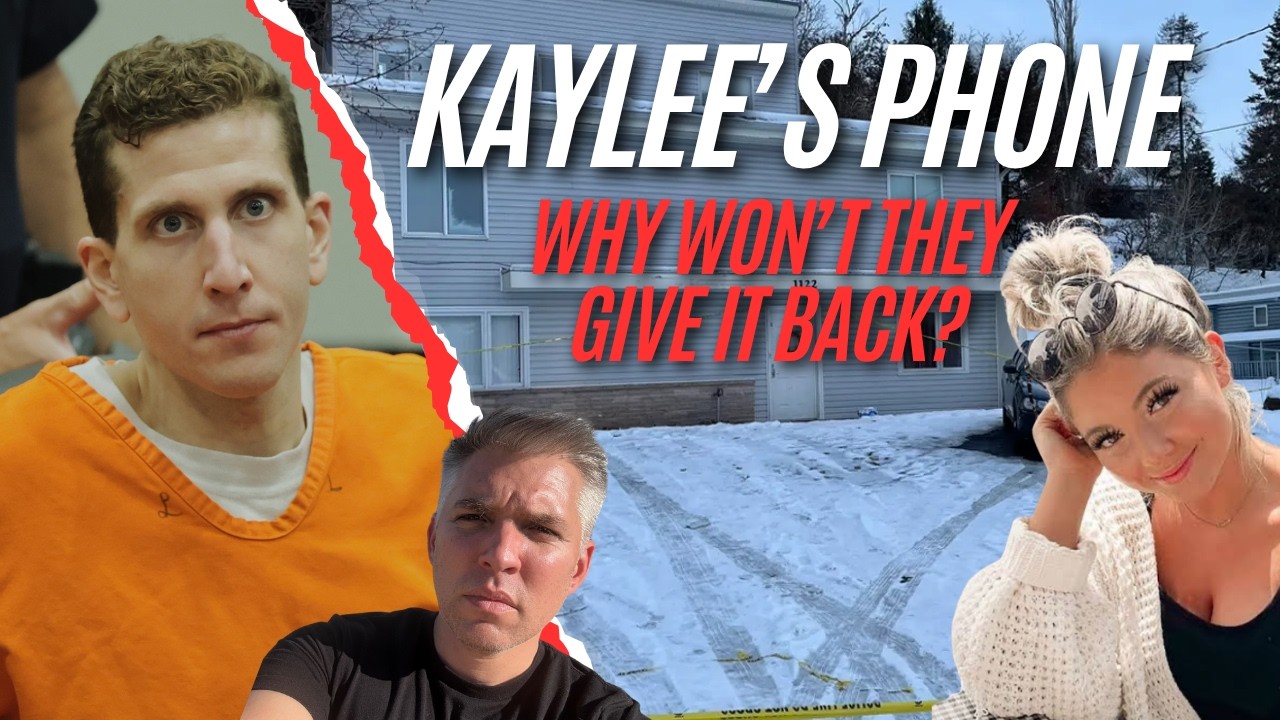
Kaylee Goncalves’ cellphone has reportedly still not been returned to her parents.
While the families of the other three victims have received their loved ones’ phones, Kaylee’s family says investigators continue trying to unlock hers, even after Bryan Kohberger pleaded guilty to the four killings.
The explanation has left her father, Steve Goncalves, and family attorney Shannon Gray asking a question that has become increasingly difficult for them to ignore.
Why are authorities still trying to access the phone, and why can’t the family have it back?
In an interview with journalist Brian Entin, the family revealed new details about the phone’s reported transfer to a police department in Washington, the limited amount of data recovered, and a public records request that could potentially expose private information belonging to all four victims.
The dispute comes as Kohberger pursues post-conviction relief and seeks to challenge the guilty plea that resolved the criminal case.
His family has also released a statement expressing continued support for his legal efforts, while attorneys have raised questions about his ability to understand the consequences of his plea.
Together, these developments have created a complicated new chapter in a case many believed was approaching its conclusion.
For Kaylee’s parents, however, the immediate concern is more personal.
They want the photographs, videos, messages, and memories that may still be stored on their daughter’s phone.
And they want to understand why recovering those memories has become another legal battle.
The Phone That Never Came Home
According to Shannon Gray, investigators collected the cellphones belonging to Kaylee Goncalves, Madison Mogen, Xana Kernodle, and Ethan Chapin during the investigation into the November 2022 killings.
The devices were reportedly sent to the Walla Walla Police Department in Washington, where specialized technology was used to recover their contents.
Gray said investigators successfully extracted substantial amounts of data from three devices.
The figures he provided were approximately 125 gigabytes from Xana’s phone, 89 gigabytes from Ethan’s, and 98 gigabytes from Madison’s.
Kaylee’s device presented a different challenge.
According to the family’s account, investigators recovered only about 18 gigabytes of information because the phone remained locked.
The full contents were therefore inaccessible.
Gray said the other three phones were eventually returned to their respective families.
Kaylee’s was not.
The family says authorities continue attempting to unlock it.
That explanation has become a source of growing frustration.
Steve Goncalves believes investigators have already had sufficient time to examine the evidence and should return the device.
He also questions whether continuing the effort serves a meaningful purpose now that Kohberger has entered a guilty plea.
The family has not received a definitive return date, according to the interview.
Instead, Gray says they may need to seek a court order.
Investigators Are Reportedly Still Trying to Break the Passcode
One of the interview’s most striking claims concerns the method allegedly being used to access Kaylee’s phone.
Steve Goncalves says investigators are attempting to recover the passcode through a brute-force process.
In general terms, brute-force methods involve systematically testing possible combinations until the correct credentials are identified.
However, modern smartphones use security measures designed to restrict or prevent repeated unauthorized attempts.
The transcript does not establish what forensic equipment is being used, how the process operates, or whether it can realistically bypass the device’s protections.
Steve nevertheless says the family was told that the effort could continue for years.
He argues that authorities should consider alternative methods of recovering Kaylee’s personal information.
During the interview, he mentions her laptop and Apple Watch as possible sources of assistance.
Whether those devices could actually provide access depends on their configuration, account security, and available authentication mechanisms.
The interview does not independently establish that either method would work.
For the family, the broader issue is not simply technical.
It is the continued retention of a device that carries enormous emotional significance.
Kaylee’s phone may contain photographs and videos from the final months, weeks, and days of her life.
Those memories are irreplaceable.
The family says it wants the opportunity to recover them rather than wait indefinitely for investigators to complete an uncertain technical process.
What Was Recovered From Kaylee’s Phone?
Steve Goncalves says the approximately 18 gigabytes reportedly recovered from the phone did not provide the organized collection of personal memories the family had hoped to receive.
He describes the material as a mixture of thumbnails, internet-related images, and other fragmented files.
The interview does not include an independent forensic inventory of the recovered data.
It also does not establish precisely which photographs, messages, or other records remain inaccessible.
That uncertainty matters.
Investigators may possess some information without having recovered the complete contents of the device.
Similarly, the existence of recovered files does not necessarily establish that the device has been fully unlocked.
Steve says the family has not been given a copy of the material that investigators already obtained.
For him, that has added another layer of frustration.
Even partial access could potentially preserve memories that might otherwise remain unavailable.
The family’s position is that the phone should be returned or that reasonable arrangements should be made to provide access to its contents.
A Public Records Request Creates a Second Privacy Battle
The dispute over Kaylee’s phone is complicated by another development.
According to Gray, someone submitted a public records request to the Walla Walla Police Department seeking information extracted from the victims’ phones.
The request reportedly concerns material from all four devices.
That possibility alarms the family.
Phones can contain intensely private information, including personal photographs, private messages, contact details, browsing histories, and communications involving people who had no connection to a criminal investigation.
Gray argues that becoming a victim of a crime should not automatically make someone’s private digital life available for public examination.
He says the families are considering legal action to prevent inappropriate disclosure.
The interview describes a potential injunction aimed at protecting the extracted information.
An injunction could allow a court to examine the dispute before sensitive material is released.
However, a public records request does not automatically mean every requested file must be disclosed.
Washington’s public records laws contain exemptions and procedures for reviewing sensitive information.
The legal treatment of the requested records would depend on their contents, applicable exemptions, and any court rulings.
Gray acknowledges that the police department would have to review the material rather than simply release everything without examination.
Still, he fears the privacy risks are substantial.
Once personal material enters public circulation, controlling its further distribution can become extremely difficult.
Why Was the Evidence Sent to Washington?
The family’s attorney says the phones were transferred to the Walla Walla Police Department because that agency possessed technology capable of extracting information.
The explanation raises additional questions for the family.
Why was an agency outside Idaho selected?
Who authorized the transfer?
What agreements governed the handling of the recovered information?
And what safeguards were established to protect private records?
The interview does not provide the original evidence-transfer documents or interagency agreements.
It therefore cannot establish whether the decision was improper.
Law enforcement agencies routinely collaborate across jurisdictions and share specialized forensic resources.
Nevertheless, Gray and Steve say they were unaware of the transfer until the public records issue emerged.
They argue that the families should have received clearer information about where the devices and extracted data were being held.
Their concern extends beyond the phones.
Steve also says some of Kaylee’s other electronic devices have not been returned.
The interview does not establish the current location or evidentiary status of those items.
For the family, however, the uncertainty reinforces the feeling that important personal belongings remain outside their control.
Is the Phone Still Being Examined Because Investigators Want More Answers?
Perhaps the most controversial portion of the interview concerns the reason investigators reportedly continue trying to unlock Kaylee’s phone.
Steve Goncalves suggests prosecutors may be looking for additional information connecting Kohberger to one of the victims.
He refers to communications that he says indicate authorities want to address rumors and unanswered questions surrounding the case.
The interview does not include the full correspondence.
Nor does it contain an official statement from prosecutors confirming that establishing a previously unknown connection is the reason for retaining the phone.
That distinction is essential.
The family’s interpretation is an allegation about investigative priorities, not proof of a hidden connection or an undisclosed investigative discovery.
Gray questions what practical difference further information would make after Kohberger’s guilty plea.
He argues that whether investigators found additional communications or found nothing, the original criminal judgment would remain unchanged.
But the legal situation is more complicated than that.
Post-conviction proceedings, evidence-retention obligations, and potential future litigation can affect decisions about preserving or examining evidence.
Whether those considerations justify continued retention of Kaylee’s phone is a separate question.
The interview establishes that the family strongly disputes the necessity of keeping the device.
It does not establish that authorities are concealing information or acting for an improper purpose.
Bryan Kohberger’s Attempt to Challenge His Guilty Plea
The phone controversy has emerged alongside another major legal development.
Kohberger is reportedly seeking to withdraw or otherwise challenge the guilty plea that resolved the criminal prosecution.
In the interview, Brian Entin explains that Kohberger has pursued post-conviction relief and requested a change of judge.
A hearing is discussed as part of the ongoing proceedings.
Kohberger’s guilty plea represented a major turning point in the case.
It eliminated the need for a trial in which prosecutors would have presented their evidence to a jury.
The plea also carried significant legal consequences.
A defendant seeking to undo a guilty plea after judgment generally faces substantial procedural and legal obstacles.
Courts examine whether the plea was entered voluntarily, knowingly, and intelligently, along with any properly raised constitutional or procedural claims.
The mere filing of a petition does not establish that the original plea was invalid.
Gray expresses confidence that Kohberger’s efforts will fail.
He points to the procedures ordinarily followed when a judge accepts a guilty plea, including questions about the defendant’s understanding and willingness to admit guilt.
However, Gray’s prediction is not a judicial determination.
The outcome will depend on the claims, evidence, and applicable law.
Kohberger’s Family Releases a Statement Supporting His Legal Efforts
The interview also discusses a statement attributed to Kohberger’s family.
According to the transcript, the family expressed sympathy for the victims and their relatives while reaffirming support for Kohberger’s pursuit of post-conviction relief.
The statement emphasizes the family’s desire for a complete understanding of the case.
It also suggests that unresolved questions should be addressed through further legal proceedings.
The family’s position is controversial because Kohberger previously admitted guilt.
Their support for additional litigation does not itself invalidate that admission.
Nor does it establish that the case was improperly resolved.
It does, however, demonstrate that the legal dispute remains active from the defense’s perspective.
For the victims’ families, renewed proceedings can mean additional uncertainty and public attention.
The interview reflects that tension throughout.
Steve Goncalves and Gray repeatedly express frustration that the case continues generating new motions and disputes rather than allowing the families to move forward.
Questions About Kohberger’s Understanding of the Plea
Another development discussed in the transcript involves documents reportedly obtained by Fox News Digital.
According to Entin’s account, attorneys previously raised concerns about Kohberger’s ability to rationally understand court proceedings and make consequential decisions.
The interview presents this as potentially relevant to his attempt to challenge the plea.
But such language requires careful interpretation.
Concerns about a defendant’s legal understanding do not automatically establish incompetence.
Nor does academic achievement conclusively establish legal competency.
Competency and the validity of a guilty plea are legal questions assessed under specific standards.
They cannot be resolved simply by pointing to a person’s education or courtroom behavior.
Kohberger’s doctoral studies in criminology are mentioned in the interview as a reason the reporter finds the argument difficult to accept.
That observation is commentary rather than a legal finding.
Any challenge based on his mental condition or understanding would require examination of the relevant evidence.
Until a court rules, the claim remains contested.
A New York Attorney Joins the Legal Discussion
The interview also addresses the involvement of New York attorney Jason Goldman.
Entin asks whether the attorney’s participation could affect Kohberger’s efforts.
Steve Goncalves expresses skepticism and questions the attorney’s motivations.
Gray avoids making a detailed personal accusation.
Instead, he says the family’s legal representatives have spent years following the case and remain confident that the guilty plea will stand.
The interview does not establish Goldman’s complete role, compensation arrangements, or authorization to appear in Idaho proceedings.
Attorneys licensed in one state may sometimes participate in cases elsewhere through applicable court procedures.
The presence of an outside attorney is not, by itself, evidence of misconduct or an improper motive.
What matters legally is the substance of the claims presented and whether they satisfy the governing standards.
The Fight Over Unredacted Crime Scene Photographs
Beyond the phone and plea disputes, the interview highlights another sensitive issue.
Authorities reportedly became aware of a potential unauthorized release of unredacted crime scene photographs.
According to the transcript, the Latah County Prosecutor’s Office, Moscow Police Department, and Idaho State Police expressed concern about the possibility that sensitive images had been provided to journalists or online commentators.
Such material can expose victims and their families to additional distress.
The interview includes comments attributed to Kaylee’s mother, Kristi Goncalves, condemning anyone who might circulate graphic images for attention, hostility, or personal gain.
The concern is not simply whether the images are authentic.
It is whether people entrusted with sensitive evidence have protected the privacy and dignity of those affected.
The transcript does not establish who may have obtained the photographs or whether any particular person improperly disclosed them.
Those questions would require a separate investigation.
The family’s position is clear: private images of victims should not become entertainment for online audiences.
Why the Goncalves Family Believes the Plea Agreement Left Questions Unanswered
Steve Goncalves repeatedly criticizes the way the prosecution resolved the case.
He believes the plea negotiations should have produced more information.
During the interview, he argues that prosecutors could have sought additional disclosures as part of the agreement.
His comments reflect the family’s frustration with questions they believe remain unresolved.
But the transcript does not establish what information Kohberger possessed beyond his admissions, what concessions prosecutors requested, or what negotiations occurred privately.
Those details cannot be reconstructed from the family’s criticism alone.
Plea agreements involve difficult choices.
They can provide certainty, avoid a lengthy trial, and establish a binding criminal judgment.
They may also leave victims’ relatives feeling that important questions were never answered publicly.
For the Goncalves family, the continued dispute over Kaylee’s phone has become part of that larger dissatisfaction.
They expected the conclusion of the criminal case to bring greater clarity.
Instead, they say they are still fighting for access to their daughter’s belongings.
The Emotional Cost of Another Legal Fight
The most personal moment in the interview comes when Gray explains why the family wants the phone.
It contains pieces of Kaylee’s life that cannot be recreated.
There may be photographs the family has never seen.
There may be videos of ordinary moments, conversations with friends, or memories from the months before her death.
For investigators, a cellphone can be an evidence source.
For a grieving parent, it can be a collection of irreplaceable memories.
Those two realities are not always easy to reconcile.
Law enforcement may have legitimate reasons to preserve evidence.
Families may have equally compelling reasons to seek the return of personal property.
The challenge is determining when continued retention is justified and whether less restrictive alternatives are available.
Gray says he has discussed the issue with prosecutors and believes a court motion may be necessary.
He also indicates that the family would consider further legal action if an initial request were denied.
No final judicial ruling resolving the phone dispute is established in the supplied interview.
What Happens Next in the Kohberger Case?
The coming developments may involve several separate legal proceedings.
Kohberger’s effort to challenge his guilty plea will continue through the courts.
The family may seek judicial intervention to recover Kaylee’s phone.
A separate dispute could arise over the public records request submitted in Washington.
Authorities may also investigate the potential unauthorized distribution of sensitive crime scene images.
Each issue has its own legal standards and possible outcomes.
The success or failure of one proceeding does not automatically determine the others.
For example, Kohberger’s post-conviction challenge does not establish that investigators must retain every personal item indefinitely.
Likewise, the family’s request for the phone does not automatically override legitimate evidence-preservation requirements.
The public records issue presents yet another question: how to balance transparency with the privacy of victims and people whose information was collected during an investigation.
These are questions for courts and relevant authorities to resolve.
Four Years Later, One Family Is Still Waiting
The University of Idaho killings shocked the country in November 2022.
Kaylee Goncalves, Madison Mogen, Xana Kernodle, and Ethan Chapin became the center of a national tragedy.
The investigation, arrest, court proceedings, and guilty plea generated enormous public attention.
But for the victims’ relatives, the case has never been only about legal documents or courtroom decisions.
It has been about losing people they loved.
The dispute over Kaylee’s cellphone illustrates how a seemingly ordinary possession can become extraordinarily important after a tragedy.
To outsiders, it may appear to be another unresolved evidence question.
To her family, it represents a connection to a daughter whose life ended far too soon.
Steve Goncalves wants the phone returned.
Shannon Gray believes the family has legal arguments worth pursuing.
Authorities, according to the interview, continue seeking access to the device.
And the possibility of sensitive information being released through public records procedures has created an additional source of concern.
There is no verified evidence in the transcript that Kaylee’s phone contains a hidden revelation about Kohberger.
There is also no established finding that officials are deliberately withholding the device to conceal information.
What the interview does reveal is a family increasingly frustrated by the lack of resolution.
Nearly four years after the killings, Kaylee’s parents are still waiting for something that once belonged to their daughter.
Not a new trial.
Not another headline.
Not another round of speculation.
They want her phone—and the memories that may still be inside it.
Whether the courts will order its return, whether investigators will successfully unlock it, and whether the family’s privacy concerns will be resolved remain unanswered questions.
For now, the case has entered another chapter.
And for the Goncalves family, the fight to recover one of Kaylee’s most personal belongings is far from over.


