BEHIND THE GATED GATES OF HICKORY HILL: Inside Ethel Kennedy’s Chaotic, Unfiltered, and Shocking Household Management
Few estates in American political lore carry the mythological, glamorous weight of Hickory Hill, the sprawling McLean, Virginia sanctuary where Robert F. and Ethel Kennedy raised their massive brood of eleven children. To the outside world, the sprawling colonial mansion was painted by the media as a vibrant, noble citadel of youthful idealism, intellectual rigor, and tireless public service. Yet, behind the manicured lawns, championship tennis courts, and high-profile political gatherings, the internal reality of running the household was far wilder, unhinged, and at times far nastier than the sanitized public myth suggests. Far from an orderly sanctuary of American royalty, Hickory Hill operated as an anarchic, high-stakes pressure cooker where a fierce matriarch presided over a domain defined by controlled chaos, casual cruelty, and a profound detachment from conventional societal boundaries.
At the center of this swirling tempest was Ethel Kennedy herself. Raised in the hyper-competitive, ultra-wealthy Skakel household of Greenwich, Connecticut, Ethel imported an absolute, take-no-prisoners ethos into her marriage. Where Robert F. Kennedy was often introspective, burdened by political stress, and prone to melancholy, Ethel was an unyielding force of nature who demanded absolute physical and emotional toughness from everyone in her orbit—including her children, guests, and domestic staff. Under her reign, Hickory Hill was designed not as a comforting home, but as an athletic training ground where weakness was openly mocked. Household lore, memoirs from former staff, and accounts from those inside the inner circle reveal an environment where bullying among the children was not merely tolerated but encouraged as character-building, and where guests who could not keep up with the grueling, chaotic pace of family touch football games or biting family humor were ruthlessly iced out.
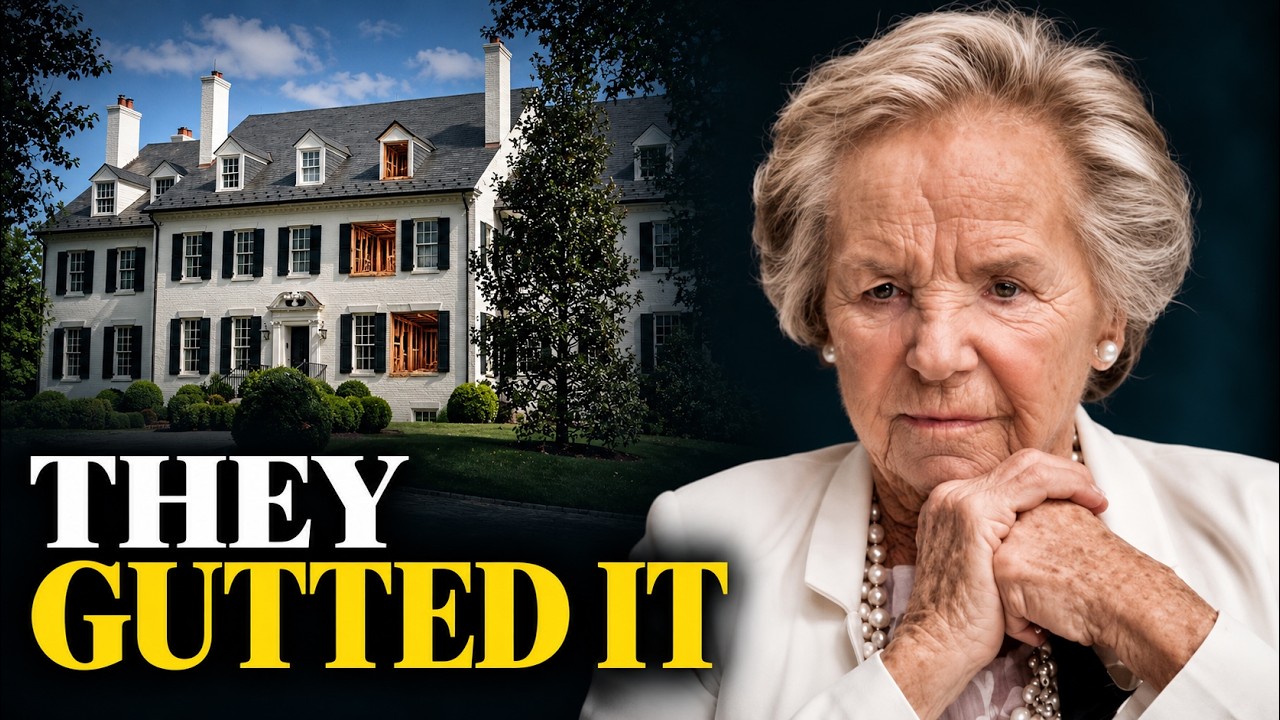
The chaos extended far beyond interpersonal friction and into the very operational core of the estate. For decades, Hickory Hill was notorious for its revolving door of overworked, underpaid, and frequently traumatized domestic staff. Nannies, housekeepers, cooks, and groundskeepers were subjected to Ethel’s blistering perfectionism and mercurial moods. According to various biographical accounts and staff recollections, workers were expected to anticipate the unpredictable demands of a chaotic household of eleven children, where practical jokes played by the Kennedy kids—ranging from hidden pets to deliberate property destruction—were brushed aside by the matriarch with a dismissive laugh. Service workers who pushed back against mistreatment or delayed compensation found themselves abruptly dismissed, leaving behind a trail of quiet resentment in local Virginia communities that otherwise fawned over the Kennedy name.
Furthermore, the physical state of the mansion itself often mirrored the chaotic, unfiltered energy of its occupants. While the public image of Hickory Hill was polished for magazine spreads, the interior was frequently a battleground of destruction. The children treated the historic estate like a permanent adventure park, keeping exotic pets—including a notorious menagerie of hawks, snakes, skunks, and horses—that roamed freely, leaving behind a trail of neglect, mess, and occasional danger. Local neighbors and municipal authorities occasionally clashed with the property over loose animals, noise complaints, and zoning violations, only to find themselves stonewalled by the impenetrable shield of Kennedy legal power and political influence.
Ultimately, the dark reality behind Hickory Hill’s glamorous facade exposes the deep contradictions of the Kennedy mythos. Ethel Kennedy’s uncompromising household management was a double-edged sword: it forged a resilient, fiercely loyal family capable of surviving unimaginable tragedies, but it also created an environment of emotional coldness, entitlement, and domestic tyranny. To pull back the curtain on Ethel’s private domain is to realize that the legendary estate was never a peaceful home, but rather a chaotic kingdom ruled by an iron-willed queen who demanded that everyone bend or break to her unyielding standards.


