The banging came from the back door of the emergency room shortly before 4 a.m.
Nurse Crystal Beck was working the night shift at Pender’s small emergency department when she and her coworkers heard it.
The hospital had a main public entrance where patients entered the waiting room, checked in and waited for triage.
But this noise was coming from somewhere else.
The ambulance entrance.
That door was monitored by a camera.
When the emergency-room staff checked the feed, Beck said they saw two men outside.
One of them was carrying a child.
The little girl was unresponsive.
Staff immediately opened the door.
The men came inside.
The child was rushed directly into one of the hospital’s two trauma rooms.
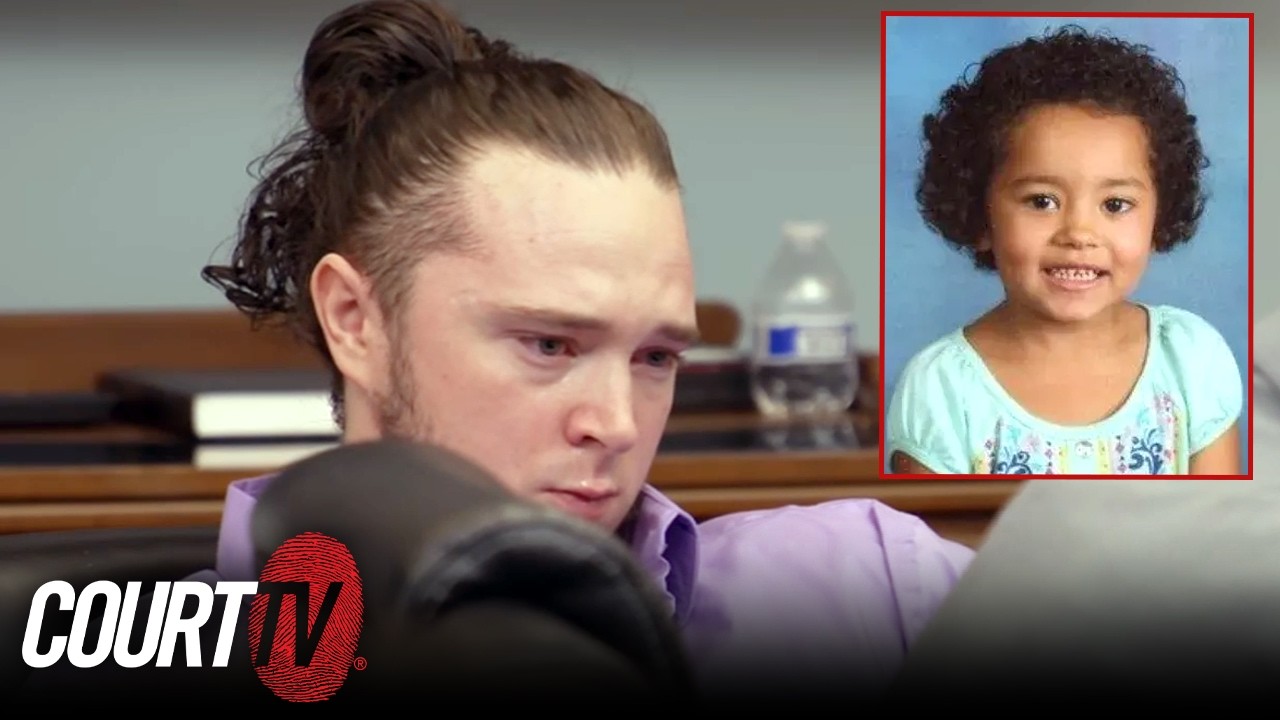
Her name was Payton Fields.
She was five years old.
And when Beck first saw her, she said Payton was wearing only soiled underwear.
Within minutes, the medical team would discover something else.
Something around the little girl’s neck that would make Beck pick up the phone and contact authorities.
Pender was not a sprawling medical center.
Beck described it to the jury as a small facility.
There was one main nurses’ station with several computers.
Eleven beds.
Two trauma bays reserved for more critical patients.
That small size meant that when an emergency arrived, much of the available staff could converge on the same room almost immediately.
That is what happened with Payton.
Beck remembered working alongside another nurse, an emergency-room technician, a unit clerk or registrar and the physician on duty, Dr. McGrath.
Once Payton was placed on the trauma bed, the staff moved quickly.
They connected her to monitors.
They checked her vital signs.
They began assessing her condition.
At first, Beck said she did not immediately notice an injury.
The most urgent problem was obvious without one.
Payton was unresponsive.
Her breathing was labored.
She was limp.
This was not a child crying, fighting the nurses or thrashing around the trauma bed.
According to Beck, Payton never thrashed.
She showed very little movement even when exposed to painful stimuli.
There was some twitching around her eyes.
Her arms and legs were slightly turned inward.
Beck identified that positioning as “posturing.”
The medical team needed to stabilize her airway.
That became the immediate priority.
They worked to establish IV or other vascular access so medication could be administered.
They collected laboratory samples.
They prepared to place a breathing tube.
Payton was intubated.
But Pender was never supposed to be her final destination.
The small emergency department did not have the pediatric intensive-care resources the five-year-old needed.
The plan was stabilization followed by transfer to a larger hospital with a pediatric ICU.
While everyone worked around the bed, Beck looked toward Dr. McGrath.
Then she looked back at Payton.
That was when she noticed the child’s neck.
There was bruising around it.
That observation changed the situation.
The staff was no longer dealing only with a critically ill five-year-old whose cause of collapse had not yet been established.
They now had an injury that raised concern about what might have happened before she reached the hospital.
Beck was a nurse.
That came with another responsibility.
If she suspected that a child might have been harmed, she did not have to investigate the case herself.
She did not have to determine who was responsible.
She did not have to prove abuse.
Her responsibility was to report the concern so the appropriate agencies could investigate.
That distinction became important when prosecutors asked why she called 911.
“As a nurse, you’re an obligated reporter,” Beck explained.
Her role was to protect children by reporting suspicious circumstances.
It was not her job to decide the ultimate explanation.
Because it was outside normal business hours, Beck contacted 911.
The call itself would later be played for the jury.
Her words captured what the emergency-room staff believed they were confronting in real time.
She identified herself as Crystal from the emergency room.
She asked for the on-call contact for child protective services.
The dispatcher asked whether this was an existing case or something new.
Beck explained.
There was a five-year-old child.
She had been brought into the emergency department.
She had been intubated.
She was being transferred to a larger hospital.
The cause was unknown.
Then Beck described the reason she was concerned.
What she was seeing, she said, strongly appeared to be strangulation marks on the child’s neck.
That phrase was significant.
But it needs to be understood correctly.
Beck was reporting a medical concern based on what she observed.
She was not delivering a final forensic conclusion.
At that moment, she did not know the complete explanation for Payton’s condition.
The 911 call itself described the etiology as unknown.
What Beck knew was that the child was critically ill and that the appearance of her neck was concerning enough that child protective services and law enforcement needed to be notified.
The dispatcher began gathering information.
Where had the child come from?
Beck supplied the home address she had been given.
There was also discussion about which law-enforcement agency should handle the report because Payton was being transferred to another jurisdiction for specialized care.
Beck provided contact information for the nurse who would be receiving Payton.
The dispatcher said DSS would be contacted.
A deputy would also become involved.
At that point, the emergency-room staff had done more than stabilize a child.
They had triggered a child-protection response.
And the evidence of why they did so was not limited to Beck’s memory years later.
There was surveillance footage.
There was the recorded 911 call.
And there were medical records created during Payton’s treatment.
All three became evidence.
Prosecutors first showed Beck surveillance video from the hospital.
She identified the location visible in the recording.
It was the emergency-room entrance near the ambulance bay.
Then prosecutors focused on the young man visible carrying the child.
Was that the person Beck remembered bringing Payton inside?
Yes.
The video provided the jury with a visual record of the beginning of the emergency-room response.
But the medical records provided something different.
They preserved what Beck documented about Payton’s physical condition.
During her testimony, prosecutors directed Beck to page nine.
They asked whether she had recorded an observation concerning Payton’s neck.
She said she had.
Then she read the entry to the jury.
“Petechial rash noted to entire face and neck with a darker rash and bruise appearing around the patient’s neck collar line.”
That note matters because it moves the neck observation beyond a recollection offered from the witness stand.
It was documented in the medical record.
There was petechial rash involving Payton’s face and neck.
There was a darker area around the neck’s collar line.
And Beck documented bruising there.
The testimony does not, by itself, establish who caused those findings.
It does not establish the complete mechanism that produced them.
And Beck herself made clear that determining what happened was not her role.
But it establishes what emergency personnel say they encountered when Payton arrived.
A five-year-old girl.
Unresponsive.
Labored breathing.
Minimal response to painful stimulation.
Abnormal posturing.
Soiled underwear.
And visible findings around her neck concerning enough that a nurse contacted authorities while the child was being transferred for intensive pediatric care.
The sequence began only minutes earlier with banging against a hospital door.
Beck and her coworkers had been sitting near the nurses’ station during the early-morning shift.
Then the sound came from the ambulance entrance.
They checked the camera.
Two men were outside.
One was holding a limp child.
The emergency-room staff opened the door.
Payton was carried inside.
From that moment, the priorities came rapidly.
Airway.
Breathing.
Circulation.
IV access.
Medication.
Laboratory testing.
Intubation.
Transfer.
But while those clinical steps were happening, another concern was emerging.
The marks around Payton’s neck did not look ordinary to Beck.
That is why the 911 call is such an important part of the testimony.
It captures the concern before years of courtroom arguments could shape anyone’s memory of the case.
Beck was speaking while Payton’s medical emergency was still unfolding.
She did not tell the dispatcher that she knew exactly what had happened.
She said the etiology was unknown.
Then she described what the marks strongly appeared to resemble.
That combination is critical.
Uncertainty about cause.
Concern about possible strangulation.
Both existed at the same time.
The staff’s job was not to solve the case inside the emergency room.
It was to keep Payton alive long enough to get her to the pediatric specialists who could provide the level of care she needed.
And according to Beck, that was always the plan.
Pender was too small to keep her.
The emergency department could stabilize.
It could intubate.
It could obtain initial laboratory specimens.
It could document injuries.
It could report suspicious findings.
Then Payton needed to go.
Beck also testified about one specific piece of laboratory evidence.
Urine.
Prosecutors asked whether she collected a urine sample from Payton while treating her.
She said yes.
How many?
One.
Would that have been documented?
Yes.
The significance of that sample was not established in the testimony provided here.
Nothing in this excerpt tells the jury what later testing found.
Nothing here establishes that a second sample was taken at Pender.
Beck’s testimony was simply that she collected one urine sample and that the collection would have been documented in the medical records.
That seemingly small detail may matter because criminal trials are often built from precisely these kinds of records.
Who collected what?
When?
Where?
How many samples existed?
What was documented contemporaneously?
What was transferred with the patient?
Those questions can become important later.
But Beck’s testimony in this excerpt remains focused on the first hours.
The moment Payton entered the emergency room.
What she looked like.
How she responded.
What the staff did.
And why Beck believed authorities needed to know.
The prosecution also took care to authenticate the evidence surrounding her account.
The surveillance footage was introduced.
The 911 recording was introduced.
The medical records were admitted.
Beck recognized the recording because she had listened to it and confirmed it was the call she made.
She testified that it had not been altered, modified or deleted from what she remembered.
Then the jury heard her voice from that morning.
That creates two versions of the same witness.
Crystal Beck on the witness stand, looking backward.
And Crystal Beck on the telephone while the emergency was still happening.
Years apart.
Same central concern.
A five-year-old had arrived unconscious.
She had been intubated.
She was being transferred.
And something about her neck required immediate reporting.
The medical record adds the third layer.
Petechiae.
Rash.
Bruising.
Collar line.
Those observations gave the jury physical details to consider rather than relying solely on general phrases like “something looked wrong.”
But they also create a responsibility for anyone describing the case publicly.
Medical findings are not automatically proof of criminal responsibility.
A bruise can be evidence.
Petechiae can be evidence.
A nurse’s concern can be evidence.
A 911 call can be evidence.
Surveillance footage can be evidence.
None of those items alone identifies the person responsible.
That determination belongs to the broader investigation and ultimately, in a criminal prosecution, to the jury applying the evidence and the judge’s instructions.
Beck understood that distinction before the case ever reached the courtroom.
“It’s not our duty to make the decision,” she explained.
That may be one of the most important sentences in her testimony.
She saw enough to report.
She did not claim the authority to decide.
Her obligation was to make sure somebody investigated.
So she called.
By then, Payton’s condition was grave enough that she was already intubated and headed toward a pediatric ICU.
The five-year-old had arrived only a short time earlier.
Carried through the ambulance entrance.
Limp.
Barely responsive.
With labored breathing.
The emergency staff had immediately begun trying to stabilize her.
Then Beck saw the neck.
Years later, sitting in court, prosecutors asked her to return to that morning and describe exactly what she had documented.
She turned to the medical record.
And read the words she had written.
A petechial rash across the face and neck.
A darker rash.
A bruise around the collar line.
The jury did not have to rely only on what Beck remembered seeing years later.
The concern had been recorded while Payton was still fighting for her life.
And before 4 a.m. that morning, it had already been serious enough for a nurse to make the call that would bring authorities into the case.


