The sun slides behind the jagged ridgeline west of the sprawling fire base. The blood-red dirt of the hill slowly turns brown, then fades into a cold, terrifying gray.
The year is 1969. A weary soldier trudges over to the nearest fortified bunker. Under one arm, he clutches a folded poncho liner. His other hand grips a loaded rifle.
On the bunker roof, he shakes the faded liner out, smoothing it perfectly flat over the coarse bags. The deadly rifle goes down within immediate reach on his right side.
His heavy steel helmet drops to his left side. He lies back, muddy combat boots still tightly laced. He turns his head, staring straight into the endless, terrifying razor wire.
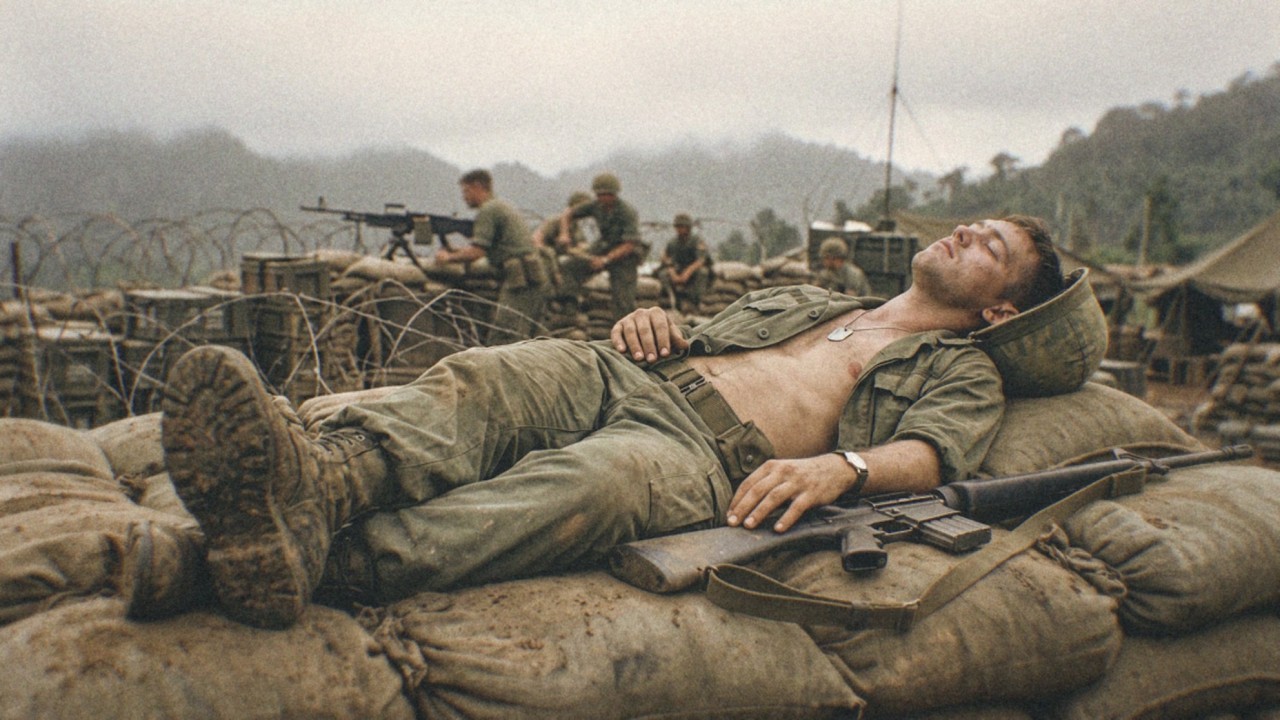
Down the fortified line, on roof after roof, other exhausted men are doing the exact same thing. No commanding officer ever ordered this. No official field manual ever described it.
Yet, on remote hilltops from the steaming Mekong Delta to the bloody DMZ, men did this night after night. They blatantly ignored the polished brass sitting safely in air-conditioned rooms.
A military fire support base always came with useless paperwork for the heavy guns and perimeter wire. What that precious paperwork completely left out was how to actually survive there.
The terrifying weeks between major operations inside a ring of bulldozed earth were brutal. With the invisible enemy lurking in the dark trees, men filled that deadly gap themselves daily.
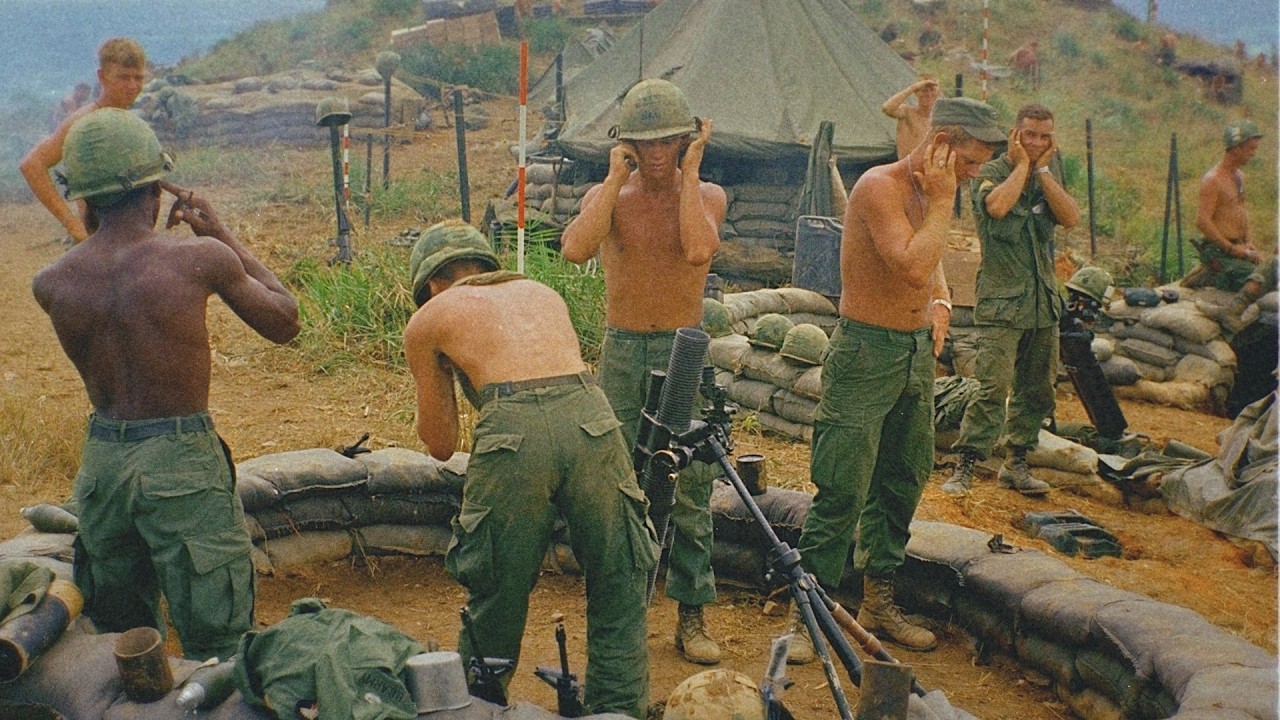
They created their own ruthless laws, one desperate rule at a time. Every single unwritten rule had a profound reason. Some of those chilling reasons were paid for in blood.
The arrogant brass won’t tell you these dark secrets, but the traumatized survivors remember. Here are nine unspoken rules of the dirt, exposing the horrific reality of deep jungle warfare.
Number Nine: Fill the Bags. A terrified new man arrived on a fire base exactly the same way the mail did. He climbed blindly out of a hastily hovering helicopter.
The loud chopper barely touched the blood-soaked ground. The kid wore clean fatigues, stiff new combat boots, and carried a heavy duffel bag. Nobody had even asked his name yet.
A hardened veteran immediately shoved a rusty shovel into his shaking hands. He pointed silently at a massive pile of empty sandbags. That was the only welcome you ever got.
The heavy bags came bundled in massive bales. Early in the brutal war, they were cheap cotton. Later came woven plastic, then thick acrylic that could survive the damp rot.
Empty, a standard bag was roughly the size of a pillowcase. The useless field manual estimated three hundred of them were required for a single, heavily fortified shallow fighting bunker.
A massive defensive pit for one of the heavy artillery guns took fifteen thousand bags. The agonizing rhythm barely changed from one violent end of the country to the other.
The official fortification manual arrogantly stated to fill a bag roughly three-quarters full. Never fill it to the absolute top. Tuck corners under and heavily turn the weak seams inward.
What the precious manual deliberately omitted was exactly who filled them. On a lot of remote, isolated bases, the harsh answer was incredibly simple and universally understood by every soldier.
The new guy. Everybody eventually filled sandbags, but the fresh cherry filled them first and longest. Nobody ever pretended otherwise, and nobody cared if his soft hands bled completely raw.
Nobody bothered to explain to him why it genuinely mattered. He violently found out during the first monsoon. Cheap cotton bags rotted completely away in just a few short months.
The agonizing sandbags taught him the absolute first true thing about a fire base. Nothing on that cursed hill protected you that you had not dug and carried yourself daily.
Number Eight: Crush It Then Bury It. A remote fire base inevitably produced massive garbage. But this vulnerable town sat completely exposed on a bare hilltop surrounded by deadly enemies.
Its unseen, ruthless neighbors intensely watched absolutely everything it carelessly threw away. Anything that could possibly burn was quickly incinerated, including the morning waste from the primitive wooden latrine barrels.
Before an empty metal ration can ever went into the filthy trash pit, it went violently under a heavy combat boot heel. Tidy camps were utterly meaningless to your survival.
An intact, empty ration can was a deadly weapon patiently waiting to be hastily assembled. The invisible enemy watched, waited, and retrieved our careless trash to brutally murder our boys.
Pull the pin on an explosive grenade. Slide it perfectly into a discarded can just wide enough to forcefully hold the metal lever down. Tie it tightly to a hidden tripwire.
When a careless man’s leg inevitably snagged the unseen wire, the deadly grenade instantly slid out of the can. In mere seconds, a deafening explosion ended a young soldier’s life.
The arrogant brass eventually admitted a horrific truth. They estimated an astonishing ninety percent of the deadly material in enemy booby traps was originally American in origin and carelessly discarded.
The enemy’s incredibly effective supply line started directly in the careless American trash pile. So, every piece of garbage was cautiously handled exactly like highly explosive, volatile live combat ammunition.
The second horrific reason possessed four scurrying legs. An open pit completely full of rotting food scraps brought massive rats. They brazenly invaded dark bunkers where exhausted men attempted sleep.
Filthy rats carry infected fleas, and those fleas violently carry the bubonic plague. So, every single evening, a thick layer of fresh dirt violently went over the disgusting refuse sump.
Number Seven: Stay Off the Skyline. Twice a single day, at first and last light, the entire anxious firebase came violently awake. Dawn and dusk were the absolute deadliest hours.
The rigid manual called it skylining. The hardened grunts treated avoiding it as an absolute, unbreakable law of nature. You moved carefully along the safe inside of the dirt berm.
When the fading sun sits on the distant horizon, the glowing sky behind a hilltop is dangerously bright. Anything standing upright becomes a sharp target for unseen, ruthless jungle snipers.
Number Six: Freeze. Nighttime artificial light usually came from the thundering mortar pit. An illumination round climbed high into the sky, violently ripping open a blinding, terrifying magnesium parachute flare.
The rigid rule completely contradicts human instinct. If the blinding light catches you violently exposed, you instantly freeze. You stay perfectly frozen until the burning flare completely dies out forever.
The reason is the human eye’s terrifying biology. At night, the exact center of vision goes blind. The sensitive edges rapidly take over, constantly hunting for sudden, desperate physical movement.
A man perfectly frozen in that harsh light is just a stump. A man who violently panics and moves instantly becomes the primary target for every unseen sniper rifle waiting.
Number Five: The Listening Post. Every tense evening, three terrified men quietly walked out into the pitch-black jungle. They moved completely outside the protective razor wire, feeling utterly isolated alone.
If the invisible enemy was quietly moving up for a massive midnight slaughter, this vulnerable listening post had to hear it first. The dark rules were chillingly absolute and unbreakable.
No talking, moving, or smoking. To check in, the radio operator whispered for status. The man in the muddy grass merely pressed his handset button twice, sending terrifying static bursts.
Number Four: Nobody Walks the Wire. After sunset, the defensive perimeter completely belonged to hidden explosives. There were trip flares and deadly claymore mines silently waiting for a wrong step.
The absolute rule was brutally enforced. A man carelessly moving along the wire was guaranteed to trigger blinding flares. Panicked bunkers would instantly open fire, violently slaughtering their own friend.
Secret passwords were completely useless if a frantic man triggered a tripwire in the pitch black. The tragic massacre at Firebase Mary Ann proved exactly what happens when perimeters fail.
Number Three: The Mad Minute. Without warning, every single deadly weapon on the perimeter opened fire simultaneously into the dark jungle. Rifles, heavy machine guns, and loud grenade launchers roared.
The clueless brass claimed it was vital reconnaissance by fire. The violent reality was raw psychological dominance. The deafening roar terrifies anyone hiding silently in the bloody, overgrown jungle grass.
Streams of bright red tracer rounds aggressively skipped off the dirt, climbing violently into the sky at insane angles. The overwhelming, chaotic noise hit the human body like solid brick.
Number Two: Two Sounds. A firebase constantly hammered the jungle with massive artillery. Outgoing fire violently shook the heavy bunker walls all night. The exhausted men eventually learned to sleep.
But incoming enemy mortar fire possessed a completely different, chilling shape in the ear. A faint, hollow thump in the dark distance started a deadly, terrifying countdown to total destruction.
Outgoing artillery was merely annoying noise you casually slept through. Incoming explosives had you violently diving to the filthy floor before your frantic brain even realized you were fully awake.
Number One: Sleep on Top. The ultimate rebellion against the polished generals. Fortified bunkers were heavily designed to keep a man alive. But exhausted men blatantly refused to use them.
The dark bunkers were suffocatingly hot, horribly damp, and completely infested with massive rats. Inside, there was zero fresh air and absolutely no view of the impending, violent enemy attack.
Grunts intentionally chose to sleep violently exposed on the sandbag roof. They desperately traded solid physical armor for the vital ability to see. Sight meant crucial seconds of early warning.
On top of the bunker, you could still observe the terrifying trip flares popping off. You could witness the entire chaotic defensive line aggressively light up during the mad minute.
The dark inside was where you violently rushed only when it was entirely too late to look. Everyone sleeping on that vulnerable roof profoundly understood the deadly, unforgiving ultimate price.
Sometimes an enraged commander strictly ordered everyone to sleep inside the damp holes. That foolish order usually lasted only a few tense nights before the chaotic roofs were completely full again.
When the dreaded, hollow thump echoed from the jungle, the exposed man had mere seconds. He violently rolled off the roof, plunging blindly into the dark bunker to survive explosions.
That is exactly why they brutally slept with their combat boots fully laced. The official field manuals were written by safe men. The unwritten rules were forged in innocent blood.
The horrific things experienced on those bloody hills permanently scarred their hearing and their minds. The VA eventually recognized some of this profound damage, but the deep psychological wounds bleed.
Did you survive the brutal terror of a remote Vietnam firebase? What unspoken rule kept you breathing? Share your chaotic story below. The forgotten truth desperately demands violent, public exposure.


