Millions of viewers tuned in every week to watch Tim Taylor destroy another household project, argue with his wife, and receive surprisingly thoughtful advice from a neighbor whose face remained hidden behind a fence.
The show appeared effortless, a comfortable family comedy built around recognizable domestic problems and an unforgettable cast.
Behind the scenes, however, its success created extraordinary financial opportunities, complicated contract negotiations, and personal challenges that continued long after the final episode aired.
Some performers became wealthy enough to abandon Hollywood altogether.
Others built successful second careers in television, publishing, or production.
One actor died only four years after the series ended.
Several former child stars faced the difficult transition from national celebrity to adulthood, with very different outcomes.
And when ABC wanted another season, a proposed payday worth tens of millions of dollars was not enough to keep the show alive.
The story of Home Improvement is therefore about more than television salaries.
It is about the financial rewards of a hit sitcom, the limitations of celebrity wealth estimates, and the personal decisions that shaped the cast’s lives.
It is also a reminder that the largest figures circulating online are not necessarily the most reliable.
The transcript accompanying this retrospective assigns exact salaries, residual payments, syndication shares, and present-day fortunes to nine performers.
Some of its broad claims reflect well-documented events.
Others involve private financial information that has not been publicly substantiated.
For that reason, the figures should be understood as reported estimates rather than audited accounts.
A celebrity’s estimated net worth is not the same as the amount of money earned during a television career.
Taxes, management fees, investments, property values, business losses, and personal spending all affect the difference.
Residuals and syndication income are particularly difficult to calculate without access to individual contracts.
With those distinctions in mind, the financial history of Home Improvement remains remarkable.
The series premiered on ABC on September 17, 1991.
Created by Matt Williams, Carmen Finestra, and David McFadzean, it was built around the comedic personality of Tim Allen.
Allen played Tim Taylor, a Detroit-area television host whose enthusiasm for power tools regularly exceeded his practical abilities.
Tim’s fictional program, Tool Time, provided a second comedic setting within the larger sitcom.
At home, he lived with his wife Jill and their three sons, Brad, Randy, and Mark.
His best friend and television co-host, Al Borland, supplied the practical knowledge that Tim frequently lacked.
Their neighbor Wilson offered philosophical guidance while keeping part of his face hidden from the audience.
The combination produced a sitcom that could appeal to adults and children without relying entirely on one performer.
Allen’s physical comedy and recognizable personality attracted viewers.
But the supporting cast gave the series emotional depth, continuity, and the relationships necessary for a long-running family comedy.
The show ultimately completed eight seasons and 204 episodes, ending on May 25, 1999.
Its success made it one of ABC’s defining programs of the decade.
That success also created opportunities for performers whose careers had been comparatively modest before joining the cast.
One of the most recognizable early supporting players was Pamela Anderson.
Before becoming internationally famous through Baywatch, Anderson appeared on Home Improvement as Lisa, the original Tool Time assistant.
Born on July 1, 1967, in Ladysmith, British Columbia, Anderson entered entertainment through modeling and advertising.
Her early public recognition included a Labatt beer promotion and appearances in Playboy.
When she joined Home Improvement, she was still establishing herself as a television performer.
Lisa’s role was comparatively small, but Anderson’s appearance helped make the fictional Tool Time program memorable.
The character was associated with the show’s recurring introduction to demonstrations and workshop segments.
Anderson appeared during the early seasons before leaving for a more prominent opportunity.
Her move to Baywatch became one of the most consequential career decisions made by a supporting actor on the sitcom.
Playing C. J. Parker transformed her into an international celebrity.
The red swimsuit, beach setting, and enormous global audience made Anderson one of the most recognizable entertainment personalities of the 1990s.
Her fame eventually extended far beyond television.
She appeared in films, pursued producing opportunities, and remained a major figure in celebrity journalism.
Her career also included the action film Barb Wire and the television series V.I.P.
Decades later, she received renewed attention through documentary work, publishing, and acclaimed dramatic performances.
Her Broadway appearance as Roxie Hart in Chicago demonstrated a willingness to explore roles beyond the image that had originally made her famous.
Anderson’s personal life also attracted extensive media attention, often overshadowing her professional accomplishments.
Her marriages, financial decisions, and public relationships became recurring subjects of entertainment coverage.
Yet her career illustrates how a small role on a successful sitcom can become the beginning of a much larger entertainment business.
The supplied transcript estimates that Anderson earned approximately $300,000 from Home Improvement, including salary and residuals.
It also assigns her a present-day net worth of approximately $20 million.
Those figures should not be presented as verified contractual totals.
Her individual episode payments, residual arrangements, and complete financial position are not publicly documented in sufficient detail to confirm them.
What can be established is that Home Improvement preceded the television role that made Anderson internationally famous.
Her later career became financially and culturally significant on a scale far beyond her brief appearance as Lisa.
The transcript also mentions a serious allegation involving Tim Allen.
In her memoir, Anderson alleged that Allen exposed himself to her during an early encounter on the show’s set.
Allen denied the allegation.
The accusation and denial are part of the public record, but the available information does not establish the alleged incident as an independently verified fact.
That distinction matters when discussing personal allegations involving identifiable individuals.
Anderson’s departure created an opening for another performer who would become closely associated with the sitcom.
Debbe Dunning eventually took over the role of Tool Time assistant as Heidi Keppert.
Born on July 11, 1966, Dunning entered entertainment through modeling, commercials, and television appearances.
She had already appeared on Home Improvement in a different guest role before becoming Heidi.
Her arrival helped maintain the familiar structure of the fictional home-improvement program.
Heidi’s introductions became a recurring part of the show’s identity.
Dunning brought confidence and comedic timing to a role that could easily have remained purely decorative.
Although the character was not central to the Taylor family’s major storylines, she became a recognizable member of the ensemble.
Her appearances extended across much of the series’ remaining run.
The transcript claims Dunning earned approximately $3.5 million through salary, syndication payments, and residuals.
It also estimates her present-day fortune at approximately $1 million.
Those precise totals are not supported by publicly available contract documentation in the supplied material.
The claim that she received specific back-end syndication payments is especially difficult to confirm.
A performer appearing regularly on a successful network sitcom could earn substantial compensation.
But that general fact does not establish a particular ownership interest or residual amount.
Dunning’s later career included television appearances and hosting work.
She became associated with projects involving ranch life and outdoor activities, reflecting interests beyond conventional Hollywood acting.
Her post-sitcom career was less visible than Anderson’s, but it demonstrated another way a television performer could continue working after a long-running series ended.
The difference between the two women’s public careers also illustrates the limits of comparing estimated fortunes.
One became a global celebrity through a second television franchise.
The other remained associated primarily with the sitcom that introduced her to a national audience.
Their professional paths were different, and financial estimates alone cannot explain their personal choices.
The financial story becomes more complicated when examining the actors who played the Taylor children.
For young performers, a successful sitcom could provide substantial earnings before adulthood.
But it could also create unusual pressure involving education, parental authority, personal identity, and the loss of privacy.
Taran Noah Smith played Mark Taylor, the youngest of Tim and Jill’s three sons.
Born on April 8, 1984, Smith was only a child when the series began.
He grew up in front of television cameras during eight seasons of national exposure.
His character developed from the family’s youngest child into a teenager with increasingly independent interests.
The transformation reflected the natural aging of the performer and the show’s effort to keep its family storylines recognizable.
By the time Home Improvement ended, Smith had spent much of his childhood working in television.
He subsequently stepped away from acting.
His decision became a notable example of a former child performer choosing a life outside Hollywood.
Smith later explained that acting had not been a career he had independently selected at such a young age.
That perspective complicated the assumption that a successful child star would naturally want to remain in entertainment.
The transcript assigns Smith total Home Improvement earnings of approximately $8.5 million.
It also claims that he earned specific amounts through syndication and residual payments.
Those numbers cannot be verified from the supplied source.
His financial circumstances did, however, become the subject of public attention.
As a young adult, Smith was involved in a dispute with his parents concerning control of money associated with his acting career.
The disagreement attracted tabloid coverage and contributed to a broader discussion about the financial rights of child performers.
Smith also attracted attention through his marriage to Heidi Van Pelt.
Their age difference and his youth made the relationship a frequent subject of entertainment reporting.
The couple later divorced.
Smith pursued business interests outside acting, including an organic vegan food venture.
The business reflected his attempt to develop an identity separate from the sitcom that had made him famous.
He also became associated with technical and humanitarian work.
His later interests included underwater projects and disaster-relief activities.
Those choices represented a substantial departure from the conventional trajectory expected of a successful television child actor.
The transcript refers to a 2012 arrest involving driving under the influence and marijuana-related allegations.
The episode received public coverage and became part of the scrutiny surrounding his post-Hollywood life.
But it should not be used to reduce his adult identity to a single legal incident.
Nor should his estimated current wealth be treated as a definitive measure of his success or failure.
The transcript places his fortune at approximately $300,000.
That figure is an unverified estimate rather than a documented accounting of his assets.
Smith’s story is more meaningfully understood as an example of the difficulty of growing up inside an entertainment career chosen during childhood.
He earned national recognition before reaching adulthood.
Then he made the unusual decision to leave the profession that had defined his early life.
His experience raises questions about financial protection, family relationships, and the personal costs of child stardom.
Another former child performer faced a very different series of difficulties.
Zachery Ty Bryan played Brad Taylor, the oldest of the three brothers.
Born on October 9, 1981, Bryan joined the sitcom as a young actor and remained a central part of the family ensemble.
Brad’s storylines frequently involved sports, school, dating, and the complications of adolescence.
His athletic interests became an important part of the character.
The show allowed Bryan to grow from a child performer into a teenager while maintaining a familiar role for viewers.
After the series ended, he continued acting.
His credits included appearances in television dramas and films, including The Fast and the Furious: Tokyo Drift.
He later became involved in film production.
His producing work included independent projects that attracted critical attention.
But his adult life also became associated with repeated legal controversies.
Public reporting has documented arrests and legal proceedings involving domestic violence allegations and impaired driving.
Those incidents require careful description because arrests, charges, guilty pleas, and convictions are not interchangeable.
The transcript presents a dramatic account of repeated legal problems and financial decline.
It also alleges involvement in a fraudulent agricultural-technology investment scheme.
Such allegations should not be treated as established criminal findings without supporting records.
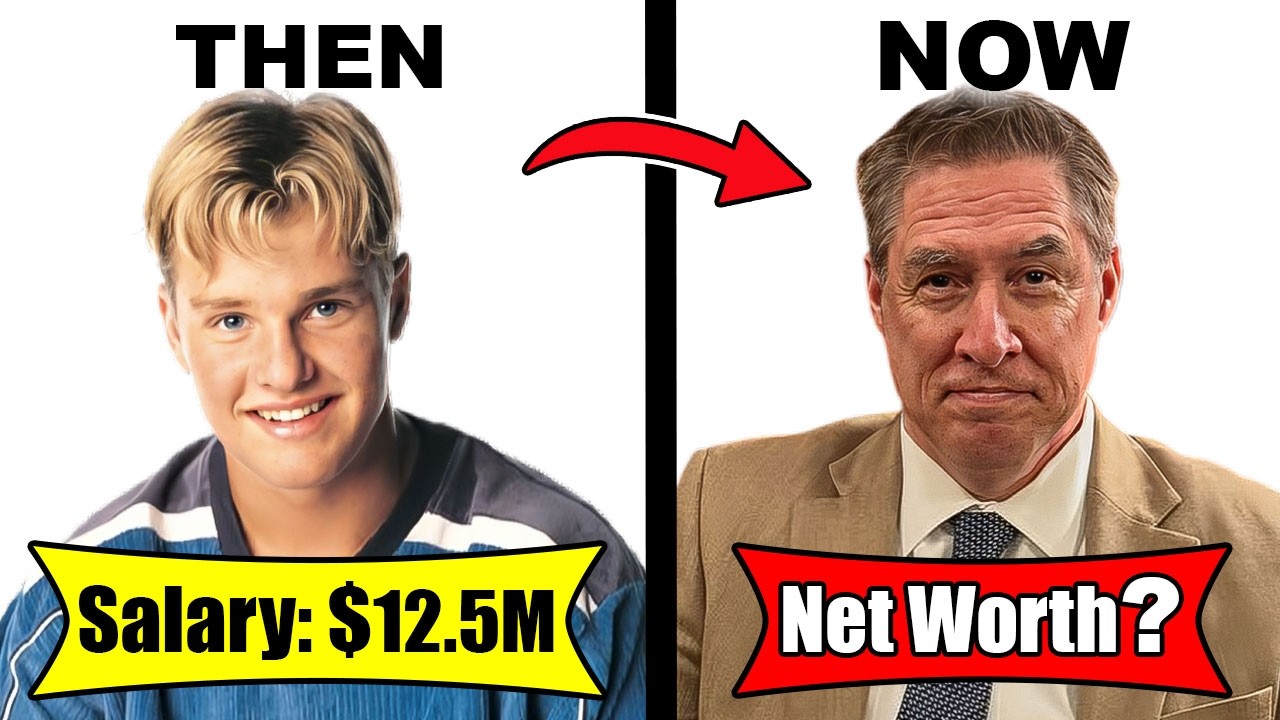
The transcript claims Bryan earned approximately $12.5 million from Home Improvement.
It estimates his present-day net worth at approximately $500,000.
Neither figure is supported by the contractual or financial documentation necessary for a reliable calculation.
Even when an entertainer experiences well-documented legal problems, those events do not establish the exact size of a personal fortune.
Legal fees, settlements, property ownership, business investments, and ongoing income can all affect financial circumstances.
Without access to those records, assigning a precise current net worth would be speculative.
Bryan’s experience nevertheless illustrates the vulnerability of performers who become famous at a young age.
Television success does not guarantee a stable adult career.
Nor does early financial opportunity eliminate the consequences of later personal decisions.
His history also shows why celebrity retrospectives must distinguish documented events from sensational explanations.
The most famous of the three Taylor brothers followed another path.
Jonathan Taylor Thomas played Randy Taylor, the middle son.
Born on September 8, 1981, Thomas became one of the most recognizable teenage actors of the 1990s.
His character combined intelligence, sarcasm, and a talent for challenging his father’s assumptions.
The role gave Thomas opportunities to demonstrate comic timing alongside experienced adult performers.
His popularity extended beyond the sitcom.
Teen magazines featured his photographs, and young fans followed his career with extraordinary enthusiasm.
He became one of the defining teenage celebrities of the decade.
In 1994, Thomas voiced young Simba in Disney’s animated film The Lion King.
The film became a major commercial and cultural success.
His performance introduced his voice to an enormous international audience.
Additional film roles followed, including Tom and Huck and I’ll Be Home for Christmas.
By the late 1990s, Thomas possessed opportunities in both television and film.
But he also wanted to pursue education and a life outside constant celebrity attention.
He left Home Improvement before its final season concluded.
The decision attracted considerable attention because Randy had become one of the show’s most popular characters.
His departure required the writers to explain the character’s absence through an educational opportunity abroad.
Thomas did not return for the series finale.
The decision contributed to reported tensions surrounding the show’s final years.
Tim Allen publicly questioned aspects of Thomas’s explanation for leaving television while continuing to accept film work.
But the disagreement should not be exaggerated into evidence of a permanent personal feud.
Thomas later appeared in Allen’s sitcom Last Man Standing, demonstrating that their professional relationship did not end with the original series.
After Home Improvement, Thomas pursued higher education.
He studied at Harvard University and spent time at the University of St Andrews in Scotland.
He later graduated from Columbia University.
His educational path reflected an interest in experiences outside the entertainment industry.
Although he occasionally returned to acting and directing, he largely avoided the level of publicity that had surrounded his teenage career.
The transcript estimates his Home Improvement earnings at approximately $12.5 million.
It also assigns him a current net worth of approximately $12 million.
Those figures remain estimates rather than verified financial totals.
The claim that he accumulated wealth through specific conservative real-estate investments is likewise unsupported by the supplied evidence.
What can be established is that Thomas deliberately reduced his public acting commitments.
His career demonstrates that financial success and personal satisfaction do not necessarily require continued visibility.
For a former teenage celebrity, the freedom to choose privacy may itself represent a meaningful achievement.
The sitcom’s adult supporting cast faced different opportunities and challenges.
Richard Karn played Al Borland, Tim Taylor’s patient and practical Tool Time co-host.
Born on February 17, 1956, Karn was an experienced performer who had not yet achieved major television fame.
His casting became one of the show’s most fortunate developments.
The role was originally associated with actor Stephen Tobolowsky, whose scheduling commitments prevented him from continuing with the project.
Karn ultimately joined the series and established a memorable partnership with Allen.
Al Borland’s understated delivery provided an essential contrast to Tim Taylor’s exaggerated confidence.
Where Tim frequently rushed into a project without considering the consequences, Al supplied practical knowledge and common sense.
Their exchanges became a central part of the show’s humor.
Al’s flannel shirts, beard, and familiar mannerisms helped make him one of the most recognizable supporting characters on television.
The character also possessed an emotional life beyond the workshop.
Storylines explored his relationships, insecurities, and professional aspirations.
Karn’s performance gave Al warmth and individuality.
The chemistry between Allen and Karn helped sustain the fictional Tool Time segments throughout the series.
The transcript claims Karn eventually earned $150,000 per episode.
It estimates his total compensation from the show at approximately $15 million.
Those figures are not independently verified in the supplied material.
Similarly, the claim that Allen personally negotiated a specific salary increase for Karn requires more reliable sourcing before being presented as established fact.
What is clear is that Karn became a major supporting performer on one of television’s most successful sitcoms.
After Home Improvement, he continued working in entertainment.
He hosted Family Feud from 2002 to 2006, introducing himself to another generation of television viewers.
He also appeared in films and television projects.
His association with home improvement and practical projects continued through later programs.
In 2021, Karn reunited with Allen for Assembly Required, a competition series involving builders and inventors.
The reunion appealed to viewers who remembered the original Tool Time partnership.
It also demonstrated the continuing commercial value of the chemistry established during the 1990s.
The transcript places Karn’s present-day fortune at approximately $10 million.
That estimate should not be mistaken for a confirmed financial statement.
His career, however, clearly extended beyond the sitcom and included substantial hosting and acting opportunities.
Karn’s story illustrates how a supporting performer can turn a successful television role into a durable entertainment career.
Another supporting actor became famous for an unusual reason.
Earl Hindman played Wilson Wilson Jr., the Taylor family’s thoughtful neighbor.
Born on October 20, 1942, Hindman had worked extensively as an actor before joining Home Improvement.
His credits included film roles and a long association with the daytime drama Ryan’s Hope.
Wilson’s defining visual characteristic was that the lower portion of his face was usually hidden.
The running joke involved fences, plants, objects, and camera angles that prevented viewers from seeing his full face.
The device became one of the show’s most recognizable traditions.
But Wilson was much more than a visual gag.
He offered Tim advice drawn from literature, philosophy, history, and personal experience.
His conversations often provided the emotional resolution to the episode’s central conflict.
Tim would misunderstand part of Wilson’s explanation before eventually recognizing the lesson.
Hindman’s calm delivery made the character credible despite the deliberately absurd visual premise.
Wilson became a source of reassurance for both Tim and the audience.
His advice balanced the sitcom’s physical comedy with a recurring theme of emotional growth.
The character also demonstrated the importance of an experienced actor who could command attention without conventional facial expression.
Hindman relied on voice, timing, posture, and subtle movement to create a memorable performance.
His work remains one of the show’s most distinctive achievements.
The transcript claims Hindman earned approximately $15.5 million through salary, syndication, and residuals.
It also estimates his estate at approximately $4 million at the time of his death.
Those exact financial figures are not established by the supplied material.
Hindman died on December 29, 2003, from lung cancer.
He was sixty-one years old.
His death occurred less than five years after Home Improvement ended.
For fans, it meant that one of the show’s most beloved supporting performers would never participate in a future reunion.
The character of Wilson remains closely associated with his understated performance.
His legacy demonstrates that a television actor does not need constant visual exposure to become unforgettable.
The show’s emotional center, however, depended heavily on the actress who played Jill Taylor.
Patricia Richardson portrayed Tim’s wife throughout the series.
Born on February 23, 1951, Richardson had worked in television and theater before joining Home Improvement.
Her casting became crucial to the sitcom’s success.
Frances Fisher had originally been selected to play Jill.
But the production changed direction before the series began its regular run.
Richardson joined the cast and established a convincing relationship with Allen.
Her performance prevented Jill from becoming merely the sensible wife reacting to her husband’s mistakes.
She gave the character intelligence, humor, frustration, warmth, and a recognizable personal identity.
Jill challenged Tim’s assumptions and frequently exposed the weaknesses in his arguments.
She also made mistakes, experienced professional uncertainty, and confronted the demands of parenting.
The character became increasingly complex as the series progressed.
Richardson’s comic timing allowed her to compete directly with Allen’s larger-than-life performance.
Their scenes worked because the marriage contained genuine affection beneath the arguments.
Viewers could recognize familiar domestic tensions without losing sympathy for either character.
Jill’s presence helped make Home Improvement more than a series of jokes about tools and masculine incompetence.
She provided the emotional balance necessary for a family sitcom.
Richardson also became one of the show’s most important negotiating figures during its final years.
By the late 1990s, the program remained commercially valuable.
ABC and Disney had strong financial reasons to consider continuing it.
But the performers had spent eight seasons working on the series.
The demands of production, personal commitments, and creative exhaustion affected decisions about its future.
Richardson has publicly discussed her reluctance to continue under the proposed circumstances.
Her concerns included the show’s creative direction, family responsibilities, and the terms of a potential new agreement.
The most widely repeated financial figures involve an offer of approximately $50 million to Tim Allen and $25 million to Richardson for another season.
Those reported amounts became central to accounts of the sitcom’s conclusion.
Richardson declined to continue.
Allen also did not proceed with a ninth season.
The result was the end of Home Improvement after eight seasons.
The transcript presents the dispute as a simple confrontation in which Richardson demanded salary equality and destroyed Allen’s enormous payday.
That description is too narrow.
Richardson’s own accounts have emphasized concerns extending beyond compensation alone.
The decision involved personal priorities, the production’s future, and whether another season was worth the demands it would impose.
The reported $50 million and $25 million offers are significant, but they should not be confused with money the performers actually received.
An unaccepted offer is not earned income.
Nor does the rejection of a lucrative contract necessarily demonstrate financial irresponsibility.
For Richardson, the decision represented a judgment about the value of continuing the series.
Her refusal helped bring one of the decade’s most successful sitcoms to an end.
But describing her as the sole person responsible ignores the broader circumstances surrounding the production.
The transcript estimates Richardson earned approximately $45 million during the show’s run.
It also places her current fortune at approximately $20 million.
Those exact figures are not verified by the supplied evidence.
Her compensation undoubtedly increased as the show became successful, but private contracts are not available to establish the complete total.
After the sitcom ended, Richardson continued acting.
She starred in the medical drama Strong Medicine and appeared in other television projects.
Her credits included The West Wing and additional dramatic roles.
She also became involved in professional issues affecting performers.
Her later career demonstrated that leaving a highly paid sitcom did not mean abandoning acting.
She continued pursuing work that interested her while maintaining a connection to the show’s legacy.
Richardson has also spoken openly about the circumstances surrounding Home Improvement and the challenges of working in television.
Her perspective is particularly important because financial retrospectives often treat actors as passive recipients of contracts.
In reality, performers make decisions involving family life, creative satisfaction, workload, and professional identity.
The largest offer is not always the one they choose.
That lesson becomes even more striking when examining the career of the show’s leading man.
Tim Allen was born on June 13, 1953, in Denver, Colorado.
Before becoming a television star, he developed his comedic style through stand-up performances.
His humor often centered on masculinity, tools, machinery, and the contradictions of modern domestic life.
Those themes became the foundation of Home Improvement.
But Allen’s life before television fame included serious legal trouble.
In 1978, he was arrested in connection with cocaine trafficking.
He pleaded guilty to a federal drug offense and served approximately twenty-eight months in prison.
The experience became part of his public biography as his entertainment career developed.
The transcript claims Disney executives concealed the conviction to protect the sitcom.
That assertion is not established by the supplied evidence.
Allen’s criminal history has been publicly discussed for decades.
His subsequent success is better understood through the development of his stand-up career and the commercial appeal of his television persona.
By the early 1990s, Allen had become a recognizable comedian with material suited to a family sitcom.
Home Improvement transformed that appeal into a major network success.
His character, Tim Taylor, was enthusiastic, competitive, and frequently convinced that more power would solve almost any problem.
The character’s familiar grunt became one of the show’s defining comic trademarks.
Allen’s performance combined physical comedy with the frustrations of a husband and father who did not always understand his family.
The character could be foolish without becoming entirely unsympathetic.
That balance helped attract a broad audience.
Allen also benefited from the strength of the supporting cast.
Richardson gave his character an intelligent and emotionally credible partner.
Karn provided the perfect professional foil.
Hindman supplied the wisdom that Tim lacked.
The three young actors created the family relationships necessary for the show’s domestic storylines.
The success belonged to the ensemble, even though Allen remained its central star.
By 1994, his career had reached an extraordinary level.
He was associated with one of America’s highest-rated television programs.
His film The Santa Clause became a major box-office success.
His comedy book Don’t Stand Too Close to a Naked Man also became a bestseller.
The combination of television, film, and publishing success made him one of the entertainment industry’s most valuable personalities.
He subsequently became the voice of Buzz Lightyear in Pixar’s Toy Story.
The animated film premiered in 1995 and launched one of the most successful franchises in modern animation.
Allen’s performance introduced him to another enormous audience.
Buzz Lightyear became one of Disney and Pixar’s most recognizable characters.
The franchise continued generating films, merchandise, and cultural attention for decades.
Allen also appeared in additional films and television productions.
His work included the Santa Clause sequels and the sitcom Last Man Standing.
The latter series premiered in 2011 and continued for nine seasons, ending in 2021.
Its success demonstrated that Allen could anchor another long-running television comedy.
His later projects continued drawing on themes of family relationships, masculinity, and generational change.
He also maintained interests in automobiles and mechanical subjects, reflecting the persona associated with his early comedy.
The transcript claims Allen earned approximately $150 million from Home Improvement.
It divides that amount into $80 million in salary, $50 million in syndication participation, and $20 million in residuals.
It also claims he held a fifteen-percent back-end ownership arrangement.
Those figures cannot be accepted as established facts without reliable contract documentation.
Reports have placed Allen among the highest-paid television performers of the late 1990s.
A frequently cited figure is approximately $1.25 million per episode during the final season.
That reported salary illustrates the enormous value attached to a successful network sitcom.
But it does not independently verify the transcript’s complete $150 million calculation.
The distinction is especially important when discussing syndication.
Successful sitcoms can generate revenue for decades through reruns, licensing agreements, and distribution arrangements.
But individual performers do not automatically receive a fixed percentage of all syndication revenue.
Their payments depend on contracts, union agreements, negotiated participation, and other legal arrangements.
Residuals also vary according to distribution format and contractual terms.
Therefore, adding speculative syndication and residual figures to a reported salary does not produce a reliable earnings total.
The transcript estimates Allen’s present-day net worth at approximately $100 million.
That amount is widely repeated in celebrity finance coverage, but it remains an estimate.
The public does not have a complete inventory of his investments, liabilities, property holdings, taxes, or contractual income.
His sustained career clearly created substantial earning opportunities.
But a precise fortune cannot be verified through publicly available entertainment reporting alone.
Allen’s experience nevertheless represents one of the most successful transitions from stand-up comedy to television stardom.
He became the central performer in a long-running sitcom, developed a successful film career, and later returned to television with another major series.
His career also demonstrates how the financial rewards of entertainment can extend beyond the program that first creates fame.
The economic story of Home Improvement is therefore broader than a single actor’s salary.
The series emerged during a period when successful network television programs could attract enormous audiences.
Before streaming fragmented viewing habits, a major sitcom could become a shared weekly experience for millions of households.
Advertisers valued that attention.
Networks competed to retain successful programs.
Studios recognized the long-term value of reruns and international distribution.
As a result, leading performers gained negotiating power as their programs became more profitable.
The largest stars could demand salaries that would have seemed extraordinary only a few years earlier.
Supporting performers also benefited, although their contractual arrangements varied.
Child actors faced additional complications because their early careers were managed through adults.
Those differences help explain why the cast members’ financial outcomes cannot be compared through simple salary rankings.
Their careers began at different ages.
They held different positions within the production.
Some remained for all eight seasons, while others left earlier.
Some developed major film careers, while others pursued private lives or different professions.
Their contracts were negotiated under different circumstances.
And their later financial decisions involved information that is largely unavailable to the public.
The transcript’s dramatic presentation of precise fortunes creates an impression of certainty that the evidence does not support.
A figure such as $12.5 million in total earnings appears authoritative because it is specific.
But specificity is not the same as verification.
Without contracts, payment records, or reliable financial disclosures, such totals remain speculative.
The same problem applies to claims about exact amounts lost through divorce, taxes, legal fees, or unsuccessful investments.
Those factors can affect wealth, but their financial impact cannot be calculated without supporting evidence.
The stories of former child actors are particularly vulnerable to misleading comparisons.
A performer who leaves Hollywood may appear financially unsuccessful when compared with someone who continues earning large entertainment salaries.
But that comparison overlooks the value of personal autonomy.
Taran Noah Smith chose a life outside acting.
Jonathan Taylor Thomas pursued education and limited public visibility.
Their decisions reflected different priorities from those of performers who continued seeking major roles.
Neither path can be judged solely through an estimated net worth.
Similarly, legal controversies should not become substitutes for accurate financial reporting.
Zachery Ty Bryan’s documented legal difficulties are relevant to his public biography.
But they do not establish the precise amount of money he possesses.
Pamela Anderson’s celebrity and business ventures are significant.
Yet her complete earnings from Home Improvement cannot be reconstructed through unsupported episode-by-episode calculations.
Richard Karn’s successful hosting career demonstrates professional continuity.
It does not prove a particular investment portfolio or exact financial position.
Earl Hindman’s enduring television legacy is established through his performance.
His estate’s value is a separate question requiring different evidence.
Patricia Richardson’s decision to reject another season is historically significant.
It should not be reduced to a claim that she personally destroyed a payday belonging to someone else.
And Tim Allen’s commercial success is unmistakable without assigning him unverified syndication percentages.
The broader lesson concerns the difference between entertainment history and celebrity wealth mythology.
Television history can establish casting decisions, production dates, career developments, public controversies, and major contractual negotiations.
Financial history requires more specific evidence.
Reported salaries may be reliable when supported by contemporaneous industry publications.
But estimates of residuals, ownership stakes, and present-day assets require additional documentation.
When that documentation is missing, responsible reporting should acknowledge the uncertainty.
The cast’s later lives also reveal the changing nature of fame.
During the 1990s, the performers appeared in millions of American homes every week.
Their characters became familiar enough that audiences sometimes confused fictional relationships with real ones.
Tim Allen was associated with Tim Taylor’s love of machinery.
Richard Karn became inseparable from Al Borland’s practical competence.
Earl Hindman was remembered through Wilson’s hidden face.
Patricia Richardson became closely identified with Jill’s intelligence and patience.
The young actors were remembered as the Taylor brothers long after reaching adulthood.
That familiarity could provide professional opportunities.
But it could also make reinvention difficult.
Audiences often wanted performers to remain recognizable versions of the characters they had played.
Some actors embraced those associations.
Others deliberately moved away from them.
The results varied widely.
The show’s final episode in May 1999 brought those fictional relationships to a conclusion.
The Taylor family faced another transition, and the series ended after eight seasons of remarkable commercial success.
The decision not to continue was unusual because the program remained valuable.
But successful television does not continue indefinitely simply because another season could generate revenue.
Creative fatigue, personal responsibilities, contract negotiations, and changing professional priorities can outweigh even enormous offers.
The reported ninth-season negotiations remain among the most memorable financial stories associated with the sitcom.
The possibility of a $50 million agreement for Allen and a $25 million agreement for Richardson illustrates how valuable the show had become.
But the decision to end it also demonstrated the limits of financial incentives.
The performers had already spent much of the decade producing the series.
Their lives and priorities had changed.
Continuing would have required another substantial commitment.
Richardson chose not to make that commitment.
The show ended, leaving behind a complete eight-season run that continued attracting viewers through reruns.
Its legacy remains connected to the chemistry of the original ensemble.
The humor often depended on Tim’s mistakes, but the emotional resolutions required Jill, Al, Wilson, and the children.
That balance helped distinguish Home Improvement from sitcoms built almost entirely around a single comedian.
It also explains why the supporting cast remains important to discussions of the show’s success.
Without Richardson’s performance, the Taylor marriage would have lacked much of its credibility.
Without Karn, the Tool Time segments would have lost their essential comic contrast.
Without Hindman, the series would have lacked its distinctive source of wisdom.
Without the young actors, the family storylines would have been far less effective.
And without the recurring supporting performers, the show’s fictional world would have felt less complete.
The ensemble created a recognizable environment that audiences returned to week after week.
That achievement cannot be measured through net worth rankings alone.
By 2026, the performers have followed different paths.
Pamela Anderson has experienced renewed attention through acting and public reflection on her earlier celebrity.
Debbe Dunning remains remembered as one of the show’s familiar supporting personalities.
Taran Noah Smith has largely left acting behind.
Zachery Ty Bryan’s later life has included serious legal controversies.
Jonathan Taylor Thomas has maintained a comparatively private existence.
Richard Karn has continued working in television and reunited professionally with Allen.
Earl Hindman remains the cast member whose death most directly changed the possibility of a complete reunion.
Patricia Richardson continues to be recognized for her contribution to the sitcom’s emotional credibility.
And Tim Allen remains associated with several successful entertainment franchises beyond Home Improvement.
Their experiences show that the end of a hit television series is not the end of the story for its performers.
Some find new opportunities.
Some pursue privacy.
Some experience serious difficulties.
Others build careers that remain connected to the characters audiences remember.
The financial outcomes are equally varied, although exact comparisons remain uncertain.
The most important distinction is between documented professional achievement and speculative celebrity accounting.
The transcript’s multimillion-dollar totals create a dramatic narrative of winners and losers.
But the real history is more complicated.
The cast members did not begin with equal opportunities, earn identical compensation, or pursue the same goals.
Their lives after the show cannot be reduced to a competition over who retained the largest fortune.
The most striking financial episode remains the proposed ninth season.
The reported offers were enormous by the standards of television at the time.
Yet the series still ended.
That decision reveals something important about the relationship between money and professional satisfaction.
An actor can be offered an extraordinary amount and still decide that continuing is not worthwhile.
A former child star can abandon a profitable profession and pursue another life.
A supporting performer can find lasting recognition without becoming the industry’s highest-paid star.
And an entertainer can achieve enormous commercial success while remaining subject to the personal consequences of earlier choices.
Home Improvement became a defining television program because it combined accessible comedy with recognizable family relationships.
Its performers benefited from that success in different ways.
Some gained wealth, some gained professional opportunities, and others gained the freedom to choose a different direction.
The show’s financial legacy is remarkable even without accepting every sensational figure attached to it.
Its cultural legacy is more enduring.
For eight seasons, audiences watched a fictional family navigate the frustrations and pleasures of everyday life.
The characters made mistakes, argued, reconciled, and learned lessons that remained familiar to viewers.
Behind those performances were real people whose careers and circumstances continued changing after the cameras stopped.
The sitcom made them famous.
But fame did not determine everything that followed.
And the story of Home Improvement ultimately proves that a television fortune, however large, is only one part of what happens when a successful show comes to an end.


