In the summer of 1953, two young women were becoming part of America’s most ambitious political family.
One was Jacqueline Bouvier, an elegant and intellectually curious woman preparing to marry Senator John F. Kennedy.
The other was Ethel Skakel Kennedy, the energetic wife of his younger brother, Robert F. Kennedy.
They were close in age, connected through marriage, and destined to experience some of the twentieth century’s greatest political tragedies.
Yet their personalities could hardly have been more different.
Jackie valued privacy, refinement, independence, and the ability to maintain control over her public image.
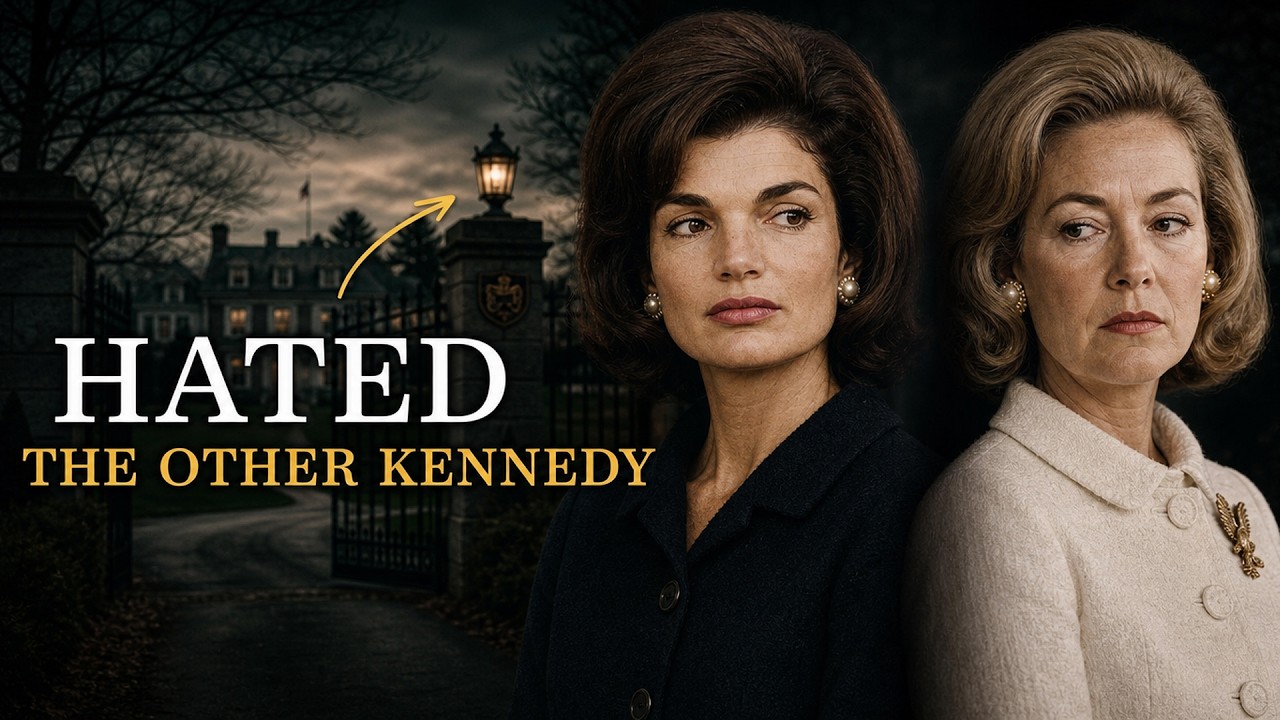
Ethel embraced competition, crowded family gatherings, practical political work, and an intensely social approach to everyday life.
Both women would become internationally recognized members of the Kennedy family.
Both would lose their husbands to assassination.
Both would spend decades living under the enormous shadow of the Kennedy name.
But their relationship would never develop into the easy friendship that outsiders might have expected.
Biographers have described tensions, disagreements, and contrasting attitudes toward family loyalty.
Popular accounts sometimes transform those differences into a bitter personal feud.
The surviving evidence, however, supports a more complicated story than the claim that the two women simply hated each other.
Their lives reveal competing ideas about marriage, motherhood, independence, political responsibility, and survival after devastating loss.
To understand their differences, it is necessary to examine the very different worlds in which they grew up.
Jacqueline Lee Bouvier was born on July 28, 1929, in Southampton, New York.
Her father, John Vernou Bouvier III, was a stockbroker whose charm and expensive tastes became part of his public reputation.
Her mother, Janet Lee Bouvier, came from a financially successful family with Irish-American roots.
Jackie’s childhood unfolded within a socially prominent environment associated with equestrian sports, fashionable gatherings, and prestigious schools.
But the family’s outward elegance concealed considerable instability.
Her parents experienced serious marital difficulties, and their relationship eventually ended in divorce.
The separation became final in 1940, when Jackie was still a child.
For a young girl growing up in a world that emphasized social respectability, the breakdown was significant.
The experience exposed her to the difference between an impressive public appearance and an unhappy private relationship.
Later interpretations often connect her lifelong concern for privacy with the instability she witnessed during childhood.
Such interpretations are plausible, although the precise psychological effects cannot be established from public records alone.
Jackie maintained affection for her father despite the difficulties surrounding her parents’ marriage.
She also developed a strong sense of personal identity through education, literature, art, and languages.
Her mother later married Hugh D. Auchincloss Jr., connecting the family to another wealthy and socially established household.
Jackie subsequently spent time in environments associated with the traditional American upper class.
She attended Miss Porter’s School and later studied at Vassar College.
Her education also included time in France, where she developed an enduring appreciation for European culture.
She eventually graduated from George Washington University.
By early adulthood, she possessed sophisticated cultural interests and an unusually strong command of French.
Her enthusiasm for literature, painting, architecture, and history distinguished her from many conventional political spouses.
She was also a skilled equestrian and had enjoyed competitive riding since childhood.
Jackie was not physically timid or incapable of participating in demanding activities.
But her preferred forms of recreation differed from the loud, highly competitive team games associated with the Kennedy household.
She valued intellectual conversation and opportunities to spend time away from constant social activity.
Those preferences would later influence her approach to family life and public responsibility.
Ethel Skakel’s upbringing followed a different pattern.
She was born on April 11, 1928, in Chicago, Illinois.
Her father, George Skakel, became wealthy through the Great Lakes Carbon Corporation.
The family’s prosperity provided considerable financial security and access to a privileged lifestyle.
Ethel grew up in a large household that eventually settled in Greenwich, Connecticut.
She was one of seven children, surrounded by siblings whose personalities contributed to a lively domestic environment.
Sports, practical jokes, social gatherings, and competition were important features of family life.
Ethel developed a direct, enthusiastic personality that suited those surroundings.
She was comfortable in crowded rooms and participated readily in physical activities.
Her Catholic faith also became an important element of her identity.
She attended Manhattanville College of the Sacred Heart, where she became acquainted with Jean Kennedy.
Through that friendship, she met Jean’s brother Robert.
Robert Kennedy was already part of a family whose political ambitions were becoming increasingly visible.
Ethel and Robert developed a relationship and married on June 17, 1950.
She was twenty-two years old.
The marriage connected her to a household that resembled her own in several important respects.
The Kennedys valued sports, political argument, family loyalty, and energetic participation in group activities.
Their gatherings frequently involved sailing, football, swimming, and lively conversations.
Ethel appeared comfortable with the competitive atmosphere.
She shared Robert’s enthusiasm for physical activity and embraced the extended family’s social traditions.
Her willingness to participate helped establish her position within the Kennedy household.
By the time Jackie began spending significant time with the family, Ethel was already familiar with its routines.
That difference in timing mattered.
Ethel had entered the family in 1950 and developed relationships before Jackie’s marriage three years later.
Jackie encountered an established social environment with expectations that did not necessarily match her preferences.
The Kennedy family’s summer compound at Hyannis Port became an important setting for those differences.
Located on Cape Cod, the property served as a gathering place for several generations of relatives.
Joseph P. Kennedy Sr. and Rose Fitzgerald Kennedy presided over a household organized around family tradition and public ambition.
Their children and grandchildren participated in activities that often became informal competitions.
Touch football games were especially associated with the family’s energetic approach to recreation.
Sailing and swimming also occupied important places in summer life.
The atmosphere could be exhilarating for people who enjoyed constant interaction.
But visitors who preferred quiet or privacy sometimes found it overwhelming.
Jackie appreciated sailing and outdoor activities, yet she also valued reading, drawing, and spending time alone.
Ethel appeared more comfortable with the competitive games and boisterous family exchanges.
Those differences were not necessarily evidence of personal hostility.
They reflected distinct preferences about how to spend time and how to participate in family gatherings.
But within a household where enthusiasm and competitiveness were highly valued, quiet independence could be misunderstood.
Jackie’s reserved manner sometimes appeared aloof to people who expected immediate familiarity.
Ethel’s exuberance could seem intrusive to someone who preferred more carefully defined personal boundaries.
Biographical accounts have suggested that each woman occasionally found the other’s behavior difficult.
Some recollections describe Ethel viewing Jackie as excessively formal or socially distant.
Others portray Jackie as finding Ethel’s energy and household atmosphere exhausting.
Such observations should be treated as accounts of interpersonal friction rather than definitive proof of lasting hatred.
The two women also occupied different positions within the family’s developing political structure.
Ethel was married to Robert, whose work increasingly centered on his brother’s political ambitions.
Jackie was preparing to marry John, who already held a seat in the United States Senate.
Their husbands were close brothers, but their public responsibilities were not identical.
John was becoming the family’s most visible political candidate.
Robert increasingly served as an organizer, adviser, and trusted political operative.
Those roles affected the responsibilities expected of their wives.
Jackie would become a highly visible public figure whose appearance and personal style attracted national attention.
Ethel would become an energetic campaign participant and political partner closely involved in Robert’s work.
The distinction became increasingly apparent during the 1950s.
Jackie and John married on September 12, 1953, in Newport, Rhode Island.
The wedding was a major social occasion that attracted considerable publicity.
It brought together prominent political figures, family friends, and members of fashionable society.
Jackie’s marriage placed her inside a family with extraordinary ambitions and deeply established expectations.
She entered that environment while maintaining interests and habits developed before meeting John.
Her enthusiasm for literature, travel, and the arts remained central to her identity.
She also preferred a degree of privacy that could be difficult to preserve within the Kennedy family’s social world.
Ethel, meanwhile, was building a large family with Robert.
Their first child, Kathleen, was born in 1951.
Additional children followed over the next several years.
The couple eventually had eleven children, with their youngest born after Robert’s assassination.
Their household at Hickory Hill in McLean, Virginia, became famous for its activity and informality.
Children, relatives, political associates, friends, and visitors frequently moved through the property.
The house reflected Robert and Ethel’s commitment to family life and political engagement.
It also reflected their comfort with noise, activity, and spontaneous social interaction.
For some visitors, Hickory Hill represented warmth and vitality.
For others, the atmosphere could feel overwhelming.
Jackie’s own approach to domestic life was different.
She sought to create spaces where her children could enjoy privacy despite their father’s political prominence.
Her appreciation for art and history also influenced the homes she occupied.
Those preferences became especially visible during her years in the White House.
But even before the presidency, Jackie and Ethel represented contrasting versions of life within the same political family.
Their differences extended to how they managed personal difficulties.
Jackie experienced serious reproductive losses during her marriage to John.
In 1956, she delivered a stillborn daughter, Arabella.
The loss occurred during a period when John was traveling abroad.
Later accounts of the episode have examined the strain that his absence placed on their marriage.
Jackie also experienced a miscarriage before the birth of her daughter Caroline.
Caroline was born in November 1957, bringing joy after earlier disappointments.
John F. Kennedy Jr. followed in November 1960.
The couple later experienced another devastating loss when their infant son Patrick died in August 1963.
These experiences profoundly shaped Jackie’s life.
But she generally resisted turning private suffering into a subject of public discussion.
Her preference for discretion reflected both personal temperament and the social expectations of her era.
Ethel experienced motherhood under different circumstances.
She gave birth repeatedly while participating in political campaigns and maintaining an exceptionally active household.
Her public identity became closely associated with her large family and energetic approach to domestic responsibilities.
The two women’s different experiences should not be interpreted as evidence that either valued motherhood more deeply.
They faced different medical circumstances, personal preferences, and practical responsibilities.
Their public behavior reflected those differences.
But the Kennedy family’s growing political prominence made comparisons increasingly difficult to avoid.
In 1960, John Kennedy launched his successful campaign for the presidency.
The election transformed Jackie and Ethel into nationally visible political figures.
Jackie was pregnant with John Jr. during much of the campaign.
Her pregnancy affected her ability to travel extensively.
Nevertheless, she contributed through interviews, correspondence, and a newspaper column titled Campaign Wife.
She also used her linguistic abilities and cultural interests to connect with audiences.
Her public appearances attracted attention that extended beyond political issues.
Reporters and voters became fascinated by her clothing, manners, education, and personal style.
She represented a new kind of political spouse in an era increasingly influenced by television.
Her image was carefully managed, but that management required intelligence and substantial effort.
Jackie understood that public fascination could support her husband’s campaign while threatening her own privacy.
She attempted to balance those competing demands.
Ethel participated in the campaign through more direct organizational activity.
She attended events, supported campaign workers, and helped sustain enthusiasm among political supporters.
Her energetic personality suited the demands of repeated public appearances.
She was comfortable greeting crowds and participating in the practical work of electoral politics.
Her contribution was significant, even when it attracted less national publicity than Jackie’s appearances.
The distinction reflected the different roles occupied by their husbands and the public’s fascination with the future first lady.
It did not establish that one woman’s work was more valuable than the other’s.
But the unequal attention could contribute to tension within a family where political visibility mattered enormously.
John Kennedy won the presidential election in November 1960.
His victory changed the lives of both women.
Jackie became the youngest first lady in nearly eighty years.
Ethel became the sister-in-law of the president and the wife of Robert Kennedy, who was appointed attorney general.
The brothers occupied positions at the center of national power.
Their wives faced new demands involving security, public appearances, and the expectations of a presidential family.
Jackie approached the White House with a distinctive vision.
She wanted to preserve its historical significance and improve the presentation of its furnishings and artwork.
Her restoration project became one of the most celebrated achievements of her time as first lady.
She worked with historians, designers, and preservation specialists to create a more historically informed interior.
The televised White House tour in February 1962 introduced millions of Americans to her work.
Her calm presentation and knowledge of history strengthened her national reputation.
Jackie became an international cultural figure whose influence extended beyond conventional political responsibilities.
Ethel’s life remained centered on Robert’s work and their growing family.
As attorney general, Robert became one of the administration’s most influential officials.
He played important roles in civil rights enforcement, organized crime investigations, and national security discussions.
Ethel supported him while managing a demanding household.
Hickory Hill became a gathering place for political associates and family friends.
The house’s atmosphere contrasted with the more carefully controlled public spaces associated with Jackie.
Those differences reflected the women’s personalities and the responsibilities attached to their positions.
They also revealed contrasting approaches to political life.
Jackie used cultural diplomacy, historical preservation, and personal presentation to shape public perceptions.
Ethel participated in the more informal world of campaigning, family networks, and political organization.
Both contributed to the Kennedy administration’s broader social environment.
But their contributions operated through different methods.
Their relationship during these years was complicated by the intense attention surrounding the presidential family.
Jackie’s international popularity made her one of the most photographed women in the world.
Her clothing and public appearances received extraordinary coverage.
Ethel was also prominent, but her identity remained more closely connected to Robert and their household.
The contrast created different pressures.
Jackie struggled to preserve personal independence within a role that made privacy increasingly difficult.
Ethel embraced a highly visible family identity while maintaining an active political partnership.
Neither approach guaranteed emotional security.
Both women were living within a family whose public achievements concealed significant private tensions.
Those tensions became secondary on November 22, 1963.
President John F. Kennedy was assassinated in Dallas, Texas.
The event devastated the country and permanently transformed the Kennedy family.
Jackie was seated beside her husband when he was shot.
She experienced the assassination directly, under circumstances that became part of national historical memory.
Her composure during the aftermath attracted extraordinary attention.
She remained in her bloodstained clothing during the return to Washington and the presidential transition.
Her actions became powerful symbols of national mourning.
But they also represented the immediate responses of a woman who had witnessed her husband’s violent death.
The public often interpreted her behavior through ideals of dignity and courage.
Such interpretations did not capture the full emotional consequences of the experience.
Jackie was thirty-four years old and the mother of two young children.
She now faced the responsibility of raising Caroline and John Jr. without their father.
Her private life had become inseparable from the nation’s grief.
Robert Kennedy was also profoundly affected by his brother’s assassination.
The brothers had developed an exceptionally close political and personal relationship.
Robert’s grief influenced his subsequent career and his evolving political interests.
Ethel remained beside him as he confronted the loss.
She continued managing their household and supporting his work.
Their home remained active, although the family’s emotional circumstances had changed dramatically.
Jackie and Ethel were now connected by a tragedy that affected both households.
But they experienced it from different positions.
Jackie had lost her husband and become a national symbol of bereavement.
Ethel had lost her brother-in-law while supporting a husband devastated by the death of his closest political partner.
The distinction shaped their subsequent choices.
Jackie sought greater privacy and attempted to establish a life outside the White House.
She moved with her children and eventually settled in New York.
Her decisions reflected the difficulty of living under constant public scrutiny.
Ethel remained at Hickory Hill and continued participating in Robert’s political activities.
Their lives began moving along different paths.
Jackie increasingly focused on protecting her children from the consequences of their father’s fame.
Ethel continued supporting Robert as he considered his future in public service.
The two women remained connected through family relationships, but their daily responsibilities diverged.
Robert won election to the United States Senate from New York in 1964.
His political career developed during a period of profound national change.
He became increasingly involved in issues concerning poverty, racial inequality, and opposition to the Vietnam War.
Ethel participated actively in his public life.
She attended events and supported his efforts to build relationships with voters.
Her enthusiasm and loyalty remained important features of their partnership.
By 1968, Robert had decided to seek the Democratic presidential nomination.
The campaign placed the Kennedy family at the center of another national political struggle.
Ethel was pregnant with their eleventh child.
Nevertheless, she remained involved in campaign activities.
Her presence reflected the close connection between her personal identity and her husband’s political work.
Jackie’s position was more complicated.
She had already experienced the assassination of one presidential husband.
The prospect of another Kennedy seeking the presidency carried obvious emotional significance.
Accounts of her involvement in Robert’s campaign vary.
She did not occupy the same visible campaigning role as Ethel.
But it would be misleading to conclude that limited public involvement demonstrated indifference toward Robert or his family.
Jackie had reasons to fear the dangers associated with political prominence.
Her concern for her children’s security remained central to her decisions.
The two women therefore approached the campaign from different emotional circumstances.
Ethel saw Robert’s candidacy as an extension of his public commitments.
Jackie viewed national politics through the experience of having already lost her husband to assassination.
Those perspectives could coexist without either being inherently disloyal.
But the differences reinforced the distance between their approaches to Kennedy family life.
On June 5, 1968, Robert Kennedy won the California Democratic presidential primary.
He addressed supporters at the Ambassador Hotel in Los Angeles.
Shortly afterward, he was shot while moving through a kitchen passageway.
Ethel was present and rushed to her wounded husband.
Photographs captured her kneeling beside him during the chaotic aftermath.
Robert was taken to the hospital, where doctors attempted to save his life.
He died on June 6, 1968, at the age of forty-two.
The assassination left Ethel a widow with ten children and another child on the way.
It also devastated Jackie, who had now lost both her husband and his brother to political violence.
The tragedy transformed the relationship between the two women once again.
Ethel became the surviving spouse of another assassinated Kennedy political leader.
Jackie confronted renewed memories of the violence that had ended her own marriage.
Both participated in the funeral observances.
Robert’s funeral Mass took place at St. Patrick’s Cathedral in New York.
His body was then transported by train to Washington for burial at Arlington National Cemetery.
The journey became a powerful moment of national mourning.
Crowds gathered along the railway to pay their respects.
Jackie and Ethel were part of the family confronting the loss.
The event placed both women before cameras during an intensely personal moment.
Jackie’s presence attracted significant attention because of her extraordinary international fame.
She had already become a symbol of the Kennedy family’s tragedies.
But claims that Ethel resented Jackie for attracting photographers during Robert’s funeral require careful qualification.
The supplied narrative presents that interpretation, yet it does not establish a specific contemporaneous statement from Ethel confirming it.
Public photographs cannot reveal what either woman privately felt about the distribution of media attention.
The funeral was first and foremost a moment of devastating family grief.
Any account of rivalry should avoid turning that suffering into an unsupported competition.
Ethel faced an uncertain future as the mother of a large family.
Jackie continued trying to protect her children from the dangers and publicity surrounding the Kennedy name.
Their circumstances were different, but both had experienced extraordinary losses.
Four months later, Jackie made a decision that shocked much of the American public.
On October 20, 1968, she married Greek shipping magnate Aristotle Onassis.
The marriage took place on the Greek island of Skorpios.
Onassis was one of the world’s wealthiest businessmen and possessed resources capable of providing substantial privacy and security.
Jackie’s decision attracted intense public scrutiny.
Many Americans had come to regard her as the permanent widow of President Kennedy.
Her remarriage challenged an image that the public had constructed around her life.
Newspapers debated the marriage, and religious commentators expressed objections.
But Jackie had never agreed to surrender her right to make personal decisions.
She was thirty-nine years old and responsible for two children whose father had been assassinated.
Her desire for security and independence deserves consideration alongside the public controversy.
The marriage also created a contrast with Ethel’s circumstances.
Ethel remained a widow and continued raising Robert’s children.
She gave birth to their youngest daughter, Rory, in December 1968.
Her family responsibilities were immense.
Jackie entered a new marriage with a wealthy international businessman.
The two women now occupied dramatically different positions.
Later accounts have sometimes portrayed Ethel as deeply critical of Jackie’s decision.
But the precise extent of her private objections is difficult to establish without reliable contemporary documentation.
Public silence does not prove approval, resentment, or hostility.
It simply limits what historians can state with confidence.
The available record supports the conclusion that Jackie and Ethel followed different paths after their husbands’ deaths.
It does not justify assigning every choice to jealousy or personal animosity.
Jackie’s marriage to Onassis did not end the public fascination surrounding her.
Photographers continued following her in New York, Greece, and other locations.
Her efforts to maintain privacy frequently collided with the commercial demands of celebrity journalism.
One of the most persistent photographers was Ron Galella.
His pursuit of Jackie eventually became the subject of legal proceedings and restrictions.
The dispute illustrated the extraordinary difficulties she faced in controlling access to her personal life.
Her wealth provided security, but it could not completely protect her from unwanted attention.
The public continued treating her movements, clothing, and relationships as matters of general interest.
Ethel’s experience of widowhood was different.
She remained closely associated with Robert Kennedy’s political legacy.
Her children continued growing up within the extended Kennedy family.
Hickory Hill remained an important gathering place for relatives, friends, and political associates.
Ethel supported charitable initiatives and organizations connected to her husband’s work.
Her public identity increasingly involved preserving his memory and promoting causes associated with his political career.
Those efforts eventually became a major part of her life.
The Robert F. Kennedy organization, later known as Robert F. Kennedy Human Rights, developed into an important institution.
Its work reflected commitments to civil rights, social justice, and international human rights.
Ethel’s involvement helped maintain the public significance of Robert’s legacy.
She also participated in fundraising events and activities designed to support the organization.
Her continuing work demonstrated a form of loyalty expressed through public service and institutional continuity.
Jackie developed a different relationship with the Kennedy legacy.
She remained committed to preserving the historical importance of her husband’s presidency.
Her role in shaping public memory of John Kennedy had begun immediately after his assassination.
She supported efforts to protect important records, artifacts, and the historical interpretation of his administration.
But she did not devote her entire adult life to public commemorations.
She also sought professional independence and opportunities outside her identity as a presidential widow.
The difference became increasingly visible during the 1970s.
Aristotle Onassis died in March 1975.
Jackie returned to a life centered primarily in New York.
She began working in publishing, first at Viking Press and later at Doubleday.
Her career surprised observers who had viewed her mainly through fashion, marriage, and political celebrity.
She developed a reputation as an engaged editor with serious literary interests.
Her work involved authors, manuscripts, publishing decisions, and the demanding practical responsibilities of the profession.
She contributed to books involving history, art, culture, and other subjects.
The career reflected interests she had possessed long before entering the Kennedy family.
It also allowed her to establish an identity based on professional achievement.
For Jackie, publishing provided a measure of independence that public life had often denied her.
Her colleagues came to recognize her knowledge, judgment, and commitment to the work.
She remained famous, but her professional activities offered a different source of personal satisfaction.
Ethel continued following another path.
She remained associated with Hickory Hill and the extended Kennedy family.
Her life involved raising children, maintaining family connections, and supporting organizations associated with Robert.
She participated in charitable events and helped sustain public attention toward the causes he had championed.
The contrast between their lives became increasingly pronounced.
Jackie emphasized private independence, professional work, and carefully managed public appearances.
Ethel maintained a more openly family-centered and politically engaged public identity.
Neither approach was inherently superior.
Both reflected the circumstances, personalities, and commitments of women who had endured extraordinary loss.
Yet their differences made sustained personal closeness less likely.
They lived in different environments and organized their lives around different priorities.
Family gatherings brought them together occasionally, but their daily routines rarely overlapped.
Some biographical accounts describe continuing friction or mutual criticism.
Such accounts can offer useful insight, particularly when supported by identifiable interviews or correspondence.
But retrospective recollections also require caution.
Memories can change over time, and people close to famous families may interpret events through personal loyalties.
A single reported remark cannot establish the emotional quality of a relationship spanning decades.
Nor can occasional disagreements prove that two individuals maintained a continuous feud.
The available history suggests distance and contrasting personalities more clearly than an uninterrupted campaign of hostility.
Their relationship also developed within a family where personal and political identities were unusually intertwined.
The Kennedy name represented public service, national tragedy, family loyalty, and enormous media attention.
Different relatives understood their responsibilities toward that legacy in different ways.
For Ethel, continuing Robert’s public commitments was a natural extension of their marriage.
For Jackie, preserving John’s historical significance did not require abandoning her own independent life.
Both positions were understandable.
But they could generate different expectations about family participation and public visibility.
Ethel’s large household remained deeply connected to Kennedy political culture.
Jackie increasingly sought to establish boundaries around her children and private relationships.
Those choices may have created misunderstandings.
Yet the distinction should not be exaggerated into a moral contest between devotion and selfishness.
Jackie’s pursuit of privacy did not erase her commitment to her husband’s memory.
Ethel’s public dedication did not mean she lacked an independent personality or private interests.
Each woman combined family loyalty with individual preferences in ways shaped by her experiences.
Their children also grew up under very different circumstances.
Jackie raised Caroline and John Jr. while attempting to limit the intrusion of public attention.
Both children experienced the extraordinary visibility associated with their father’s presidency and assassination.
Caroline eventually became a lawyer, author, and diplomat.
John Jr. pursued law and publishing before dying in a plane crash in July 1999.
His death represented another devastating tragedy for the Kennedy family.
Jackie did not live to experience that loss.
Ethel raised eleven children whose lives followed a wide variety of professional and personal paths.
Some entered politics, public service, activism, and other prominent careers.
Others experienced serious personal difficulties and tragedies.
The family’s history included addiction, accidents, and premature deaths.
But those outcomes should not be attributed simplistically to Ethel’s parenting or Robert’s assassination.
Individual lives are shaped by many factors, including personal circumstances, medical conditions, opportunity, and chance.
The assassination undoubtedly transformed the family’s environment.
Yet the precise relationship between that loss and each child’s later experiences cannot be established through broad generalizations.
The same caution applies to comparisons between Jackie’s children and Ethel’s.
Differences in family size, financial resources, public visibility, and individual circumstances make simple judgments unreliable.
Both mothers faced responsibilities that would have been demanding under any conditions.
Both also confronted the additional burden of raising children associated with internationally recognized political figures.
Their efforts deserve examination without treating the lives of their children as evidence in a personal rivalry.
During the 1980s and early 1990s, Jackie continued her publishing career and maintained a relatively private personal life.
She developed a long-term relationship with financier Maurice Tempelsman.
Their companionship became an important part of her later years.
Jackie remained associated with New York’s cultural and social world while avoiding unnecessary public appearances.
Her professional work allowed her to participate in projects that reflected her intellectual interests.
She also continued supporting the preservation of historical and cultural institutions.
Ethel remained active in charitable and political causes.
She helped organize fundraising activities and supported efforts connected to Robert Kennedy’s legacy.
Her public commitments reflected decades of experience within political campaigns and family organizations.
She also continued participating in Kennedy family events and commemorations.
The two women were no longer young sisters-in-law adapting to life at Hyannis Port.
They had become independent historical figures with decades of distinct experiences.
Their earlier differences remained part of the story, but they no longer defined the entirety of either life.
Jackie’s later years were marked by growing respect for her professional accomplishments and cultural influence.
She had helped redefine the role of first lady through historical preservation and international cultural diplomacy.
She had also demonstrated that a former first lady could build a substantial professional career outside politics.
Her personal style continued influencing fashion and public perceptions of elegance.
But her significance extended beyond clothing and photographs.
She had shaped how Americans understood the White House as a historic residence.
She had contributed to the preservation of her husband’s presidential legacy.
And she had maintained a degree of personal independence despite extraordinary public pressure.
Ethel’s legacy developed through different forms of service.
She helped sustain an organization devoted to human rights and social justice.
She raised a large family under difficult circumstances and remained closely associated with Robert’s public commitments.
Her life demonstrated endurance, political engagement, and a strong commitment to family continuity.
Those achievements did not depend on comparisons with Jackie.
They reflected Ethel’s own values and decades of sustained work.
In January 1994, Jackie was diagnosed with non-Hodgkin lymphoma.
The illness progressed rapidly.
She died on May 19, 1994, at the age of sixty-four.
Her death prompted widespread mourning and renewed reflection on her extraordinary public life.
She was buried beside President John F. Kennedy at Arlington National Cemetery.
Members of the extended Kennedy family attended the funeral observances.
Ethel was among those who paid their respects.
The occasion marked the end of a relationship that had stretched across four decades of family history.
It also underscored the shared experiences connecting the two women despite their differences.
Both had married into the Kennedy family during the early years of its national rise.
Both had supported husbands who became central figures in American political history.
Both had witnessed the devastating consequences of political violence.
And both had spent years negotiating the demands of a famous family name.
But their lives had unfolded according to different priorities.
Jackie pursued privacy, cultural interests, and professional independence.
Ethel emphasized family participation, political engagement, and the preservation of Robert’s legacy.
Their contrasting choices became the foundation of later stories describing a rivalry.
Yet a rivalry requires more than different personalities and occasional disagreements.
It requires evidence of sustained competition or hostility.
The surviving public record does not establish every private feeling either woman held toward the other.
Much of the most dramatic material comes from retrospective accounts, reported conversations, and interpretations offered by biographers.
Those sources can illuminate tensions, but they cannot provide complete access to private motives.
The claim that Jackie hated Ethel therefore exceeds what can be established with confidence.
The reverse claim, that Ethel maintained an enduring hatred of Jackie, is similarly difficult to prove.
What can be examined more securely are their different approaches to family life and public responsibility.
Jackie valued control over personal information because public exposure had repeatedly intruded upon her life.
Ethel embraced a more openly social and politically involved existence.
Jackie’s childhood had included parental divorce and financial instability behind an elegant public appearance.
Ethel grew up within a wealthy, energetic household that encouraged competition and participation.
Jackie developed a professional identity involving publishing, history, and cultural preservation.
Ethel built much of her public life around political organizing, charitable work, and the memory of her husband.
Their different experiences made misunderstandings possible.
But those differences also reveal the variety of roles women could occupy within a political family.
The Kennedy dynasty was often presented as a unified institution governed by common traditions.
In reality, its members possessed distinct personalities, interests, and ideas about responsibility.
Women entering the family faced especially complicated expectations.
They were expected to support political ambitions, maintain family relationships, and appear composed under public scrutiny.
At the same time, they confronted personal circumstances that could not always be reconciled with those expectations.
Jackie and Ethel responded in different ways.
Jackie attempted to preserve a protected private world within an environment of constant attention.
Ethel participated more directly in the family’s collective activities and political commitments.
Their choices reflected personal convictions rather than a simple division between loyalty and independence.
Both women experienced the limits of those strategies.
Jackie’s efforts to maintain privacy could not prevent photographers from pursuing her.
Ethel’s commitment to family and political service could not protect her from devastating personal loss.
Neither approach offered complete control over events.
Their lives also demonstrate how public narratives can distort the experiences of famous women.
Jackie was frequently reduced to her appearance, elegance, and marriages.
Ethel was often portrayed primarily through motherhood, enthusiasm, and her husband’s political legacy.
Those descriptions captured recognizable aspects of their lives while overlooking substantial individual achievements.
Jackie was an educated woman with serious intellectual and professional interests.
Ethel was an experienced political participant whose charitable work extended across decades.
Their accomplishments deserve recognition independently of their husbands and independently of one another.
The tendency to frame their relationship as a feud can obscure that reality.
It transforms two complex historical figures into opposing characters in a family drama.
It also encourages speculation about jealousy, resentment, and private conversations that cannot always be verified.
The more revealing story concerns the pressures created by political fame and the different ways individuals respond to them.
The Kennedy family offered remarkable opportunities and extraordinary visibility.
It also demanded participation in traditions that did not suit every personality.
Jackie sometimes resisted those expectations.
Ethel often embraced them.
Their different responses became more pronounced after the assassinations that transformed their lives.
But neither woman possessed a complete solution to the challenges she faced.
Jackie’s remarriage brought financial security and renewed public controversy.
Ethel’s widowhood brought enormous family responsibilities and a lifelong commitment to Robert’s memory.
Their subsequent careers demonstrated different forms of independence.
Jackie established herself in publishing.
Ethel sustained charitable and political organizations.
Both continued influencing American public life long after their husbands’ deaths.
Their stories therefore belong within the broader history of women navigating public expectations during the twentieth century.
They lived during a period when political wives were often expected to subordinate personal ambitions to their husbands’ careers.
Jackie challenged those expectations through her later professional work and determination to maintain privacy.
Ethel exercised influence through family networks, campaigns, and nonprofit leadership.
Both approaches required skill and persistence.
Their differences may have limited their personal closeness, but they also reveal the complexity of women’s roles within political institutions.
The history of their relationship should therefore resist the temptation to identify a single villain.
Jackie was not wrong to value solitude or protect her children from publicity.
Ethel was not wrong to enjoy large gatherings or devote herself to Robert’s political causes.
They simply approached life from different backgrounds and with different priorities.
The difficulty emerged when those approaches collided within the same family.
At Hyannis Port, the contrast was visible through recreation, conversation, and household routines.
During political campaigns, it appeared through different forms of participation.
After the assassinations, it became apparent through contrasting responses to widowhood and public responsibility.
Over time, their lives separated into distinct social and professional worlds.
Yet family relationships continued connecting them.
They attended important gatherings, shared historical experiences, and remained associated with the same extraordinary political legacy.
That connection was never entirely erased by personal differences.
The final chapter of Ethel’s life also deserves accurate historical context.
Unlike the outdated claim in the supplied transcript that she was still living in her nineties, Ethel Kennedy died on October 10, 2024.
She was ninety-six years old.
Her death brought renewed attention to her long involvement in human rights advocacy and Kennedy family history.
It also marked the passing of one of the last major figures closely associated with the family’s political rise during the 1950s and 1960s.
By then, Jackie had been gone for more than thirty years.
Both women had become subjects of biographies, documentaries, historical studies, and public fascination.
Their contrasting personalities remained a recurring theme in accounts of the Kennedy dynasty.
But the most responsible interpretation recognizes the limits of what outsiders can know.
Photographs may show two women standing apart at a family gathering.
They cannot establish what either woman privately thought about the other.
A reported disagreement may reveal tension.
It does not necessarily prove decades of hatred.
A decision to pursue a different life after widowhood may reflect personal priorities rather than rejection of family loyalty.
Those distinctions matter because the Kennedy family’s fame has repeatedly encouraged exaggerated interpretations of private events.
The women at the center of these stories were real individuals, not simply symbols of opposing personalities.
They experienced grief, responsibility, ambition, frustration, and moments of profound uncertainty.
Their choices deserve to be understood within the circumstances in which they were made.
Jackie Kennedy’s legacy includes cultural preservation, professional independence, and an extraordinary effort to protect personal privacy.
Ethel Kennedy’s legacy includes political engagement, human rights advocacy, and decades of dedication to her husband’s public commitments.
Both women contributed significantly to the history of the Kennedy family.
Their differences were real, and accounts of friction should not be dismissed automatically.
But the available evidence does not require the conclusion that their relationship was defined entirely by hatred.
It suggests something more recognizable and more human.
Two women entered the same powerful family with different expectations about how life should be lived.
They discovered that shared relatives and shared tragedies did not necessarily produce shared personalities.
They supported different political and personal responsibilities while confronting intense public scrutiny.
And they ultimately built lives that reflected their own convictions.
The story of Jackie and Ethel Kennedy is therefore not simply about rivalry.
It is about the difficulty of preserving individuality inside a family that expected loyalty, participation, and public composure.
It is about two widows who endured devastating losses and chose different ways to continue living.
It is also about the danger of mistaking public images for complete personal histories.
Jackie became a symbol of elegance and carefully guarded privacy.
Ethel became a symbol of energy, family devotion, and sustained political commitment.
Neither image captured everything about the woman behind it.
Their relationship was shaped by contrasts that began long before either entered the Kennedy family.
Those contrasts continued through presidential campaigns, assassinations, remarriage, motherhood, and professional life.
Yet their shared history remained inseparable from the extraordinary political era they had witnessed.
What happened between Jackie and Ethel Kennedy was not a simple contest between two women seeking the same position.
It was a complicated relationship between individuals who understood family, loyalty, and personal freedom in different ways.
Their differences may have prevented genuine closeness.
But their lives reveal far more than the familiar language of jealousy and feud.
They reveal the enormous personal cost of belonging to a family whose private experiences became part of American history.
And they remind us that surviving tragedy does not require everyone to survive it in the same way.


