On an ordinary morning in a Santa Monica apartment, two young women discovered an unexpected visitor sleeping in their bathtub. The stranger had attended a party the previous night, and neither woman could quite explain how he had ended up there.
That simple misunderstanding became the beginning of one of the most successful sitcoms in American television history.
When Three’s Company premiered on ABC on March 15, 1977, few could have predicted that a comedy about three roommates sharing an apartment would become a cultural phenomenon.
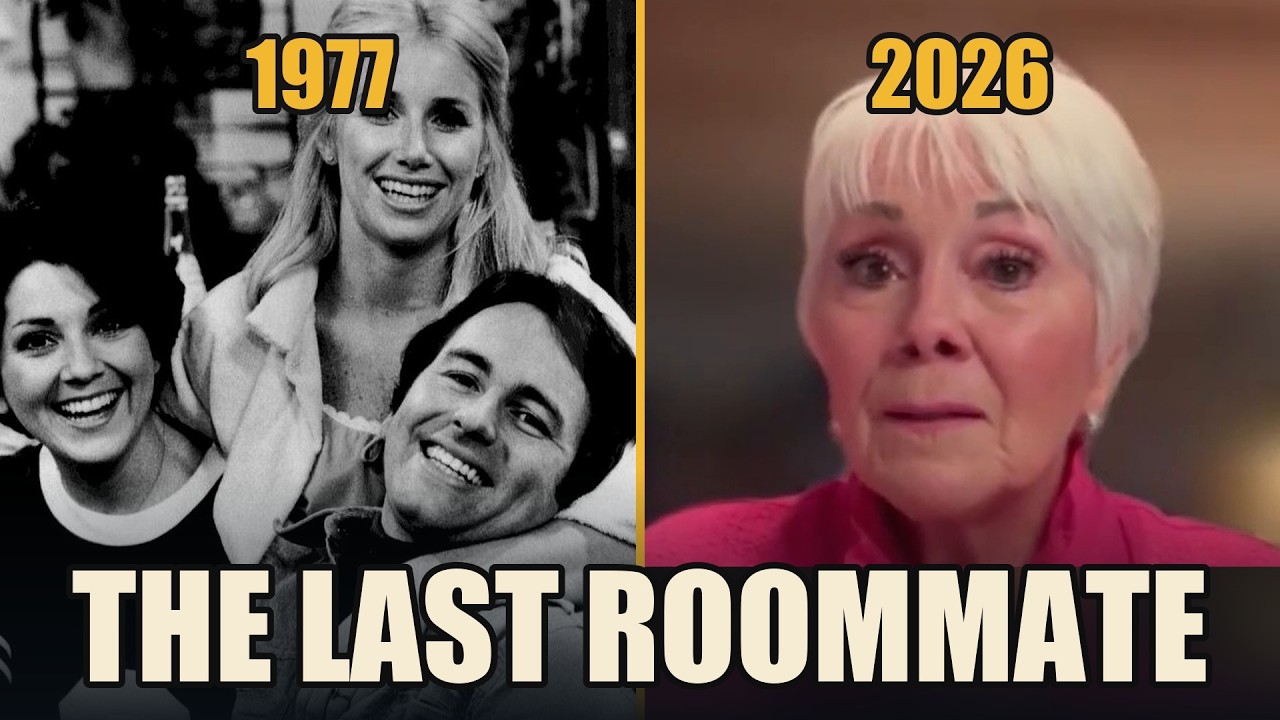
The original cast featured John Ritter as Jack Tripper, Joyce DeWitt as Janet Wood, and Suzanne Somers as Chrissy Snow.
Their unusual living arrangement created endless opportunities for mistaken identities, romantic confusion, overheard conversations, and perfectly timed physical comedy.
To satisfy their conservative landlord, Jack pretended to be gay, allowing him to live with two women in an era when the situation was considered socially controversial.
What followed was a television comedy built almost entirely around misunderstandings.
The sitcom became one of ABC’s biggest successes and remained a popular fixture of American television for eight seasons.
Its influence continued through decades of reruns.
But behind the laughter were contract disputes, unexpected departures, fractured friendships, personal reinventions, and heartbreaking losses.
John Ritter died suddenly in 2003, leaving an enormous void in the entertainment industry.
Suzanne Somers passed away in 2023, two decades after her former co-star.
The original landlords, Norman Fell and Audra Lindley, died in the late 1990s. Their successor, comedy legend Don Knotts, died in 2006.
Today, only four of the nine major performers featured in this retrospective are still alive: Joyce DeWitt, Richard Kline, Priscilla Barnes, and Jenilee Harrison.
As Three’s Company approaches its fiftieth anniversary in March 2027, a special tribute is preparing to bring its most famous episode back to the stage.
On November 2, 2026, the John Ritter Foundation for Aortic Health will begin an anniversary celebration with a live reading at Joe’s Pub in New York City. Joyce DeWitt and Amy Yasbeck will co-host, while Richard Kline will return as narrator.
The event promises to reconnect audiences with the comedy that made John Ritter a television legend.
John Ritter as Jack Tripper
1948–2003 | Died at 54
John Ritter became the heart of Three’s Company through his portrayal of Jack Tripper, the charming, accident-prone chef who frequently found himself trapped in increasingly ridiculous situations.
Born on September 17, 1948, in Burbank, California, Ritter was twenty-eight when the sitcom premiered.
His father was Tex Ritter, the celebrated singing cowboy and actor whose entertainment career made him a familiar name across America.
John grew up surrounded by Hollywood but developed his own distinctive approach to performance.
Before Three’s Company, he studied acting at the University of Southern California and began building a television career.
One of his most recognizable early roles was Reverend Matthew Fordwick on The Waltons.
That character introduced him to family audiences as a sincere young minister.
But Jack Tripper revealed an entirely different side of his talent.
Ritter possessed extraordinary physical coordination and a willingness to make himself look ridiculous.
He could fall over furniture, tumble through doorways, collide with objects, and turn simple movements into elaborate comic routines.
His facial expressions became equally important.
A startled glance or delayed reaction could transform an ordinary misunderstanding into an unforgettable scene.
Ritter’s performance helped distinguish Three’s Company from other sitcoms of the era.
Jack was frequently dishonest about his circumstances, but he was rarely malicious.
His schemes usually developed because he wanted to avoid disappointing someone, protect his roommates, or escape an embarrassing situation.
That combination of good intentions and terrible decisions made him easy to love.
Ritter also developed a strong working relationship with Joyce DeWitt and Suzanne Somers.
Their chemistry helped establish the rhythm of the series.
As the show became more popular, Ritter’s reputation as one of television’s finest physical comedians continued growing.
In 1984, he won both an Emmy Award and a Golden Globe for his work on Three’s Company.
The same year, the original series ended.
But Ritter’s career continued.
He starred in the spin-off Three’s a Crowd and appeared in films including Problem Child, Sling Blade, and Bad Santa.
He also became familiar to younger audiences as the voice of Clifford in Clifford the Big Red Dog.
In 2002, Ritter returned to major sitcom success with 8 Simple Rules for Dating My Teenage Daughter.
The series introduced him to another generation as a loving but frequently overwhelmed father.
Then, on September 11, 2003, tragedy struck.
While working on 8 Simple Rules, Ritter became seriously ill and was taken to the hospital.
His symptoms were initially associated with a cardiac emergency.
Doctors subsequently discovered an aortic dissection, a life-threatening tear in the body’s main artery.
Ritter died that evening.
He was fifty-four.
His sudden passing devastated his family, colleagues, and audiences.
His wife, actress Amy Yasbeck, subsequently established the John Ritter Foundation for Aortic Health.
The organization has worked to improve awareness of thoracic aortic disease and encourage earlier recognition of potentially dangerous symptoms.
In September 2026, Ritter would have celebrated his seventy-eighth birthday.
His legacy continues through his performances, his children, and the foundation dedicated to preventing similar tragedies.
For generations of viewers, Jack Tripper remains one of television’s most lovable comic characters.
Joyce DeWitt as Janet Wood
Born April 23, 1949 | Age 77
Joyce DeWitt portrayed Janet Wood, the intelligent and practical roommate who frequently struggled to keep Jack and Chrissy out of trouble.
Janet was responsible, outspoken, and determined to maintain some order in their chaotic apartment.
Yet she was hardly immune to misunderstandings herself.
Her relationships, romantic disappointments, and occasional emotional outbursts gave the character complexity beyond her sensible reputation.
Born in Wheeling, West Virginia, DeWitt grew up in Speedway, Indiana.
She developed an interest in acting during childhood and eventually pursued theater studies.
She earned a degree from Ball State University before continuing her education at the University of California, Los Angeles.
DeWitt joined Three’s Company before the final version of its pilot was produced.
Her performance became essential to the show’s success.
While Ritter provided much of the physical comedy, DeWitt often supplied the grounded reactions that made his outrageous situations even funnier.
She and Ritter developed an unusually effective comic partnership.
DeWitt later recalled how naturally they communicated while performing.
Their physical movements and reactions often seemed synchronized without extensive discussion.
But her experience on the sitcom was not always easy.
Suzanne Somers’ salary dispute created serious tensions during the early 1980s.
After Somers departed, DeWitt and her former co-star remained estranged for many years.
When Three’s Company ended in 1984, DeWitt decided to step away from regular television work.
She initially expected the break to last only a few months.
Instead, it developed into a lengthy absence from mainstream Hollywood.
DeWitt later explained that she had become uncomfortable with aspects of the entertainment industry and wanted to pursue a different personal direction.
She studied spirituality, traveled, and returned gradually to theater.
Her later work included stage productions rather than another long-running television sitcom.
She also became involved in charitable activities, particularly efforts addressing hunger and homelessness.
In 2012, DeWitt reunited with Suzanne Somers for an emotional conversation on Somers’ online program Breaking Through.
The meeting ended more than three decades of distance between the former co-stars.
They discussed their time on Three’s Company, the difficulties surrounding Somers’ departure, and their memories of John Ritter.
The reconciliation became one of the most meaningful moments in the show’s later history.
Following Somers’ death in 2023, DeWitt remained the sole surviving member of the original three-roommate ensemble.
In 2026, she continued participating in events honoring Ritter.
She is scheduled to co-host the November 2 anniversary tribute in New York alongside Amy Yasbeck.
At seventy-seven, DeWitt remains a living connection to the original apartment where the comedy began.
Suzanne Somers as Chrissy Snow
1946–2023 | Died at 76
Suzanne Somers portrayed Christmas “Chrissy” Snow, the cheerful blonde whose innocent misunderstandings became central to Three’s Company.
Born on October 16, 1946, in San Bruno, California, Somers was thirty when the series premiered.
Her early life included difficult family circumstances.
She married young, became a mother, and worked to establish financial independence while pursuing opportunities in entertainment.
Somers appeared in advertisements and small television roles before gaining wider attention.
Her memorable appearance in American Graffiti helped increase her visibility.
She later attracted the attention of television executives while appearing on The Tonight Show.
When she was cast as Chrissy Snow, she transformed the character into one of the most recognizable personalities in American sitcom history.
Chrissy was sweet, cheerful, frequently confused, and often unaware that her remarks sounded unintentionally suggestive.
Somers’ comic timing helped make the character enormously popular.
Her chemistry with John Ritter and Joyce DeWitt became central to the show’s early success.
But as the sitcom’s ratings rose, serious disagreements developed behind the scenes.
In 1980, Somers sought a substantial salary increase.
Contemporary and later accounts describe her requesting approximately $150,000 per episode and a share of profits, compared with her reported salary of around $30,000.
Her representatives argued that her contribution justified compensation closer to that of the show’s highest-paid star.
The producers refused the proposed arrangement.
The dispute became one of television’s most widely discussed contract controversies.
Somers was increasingly separated from regular production.
During her final appearances, Chrissy was said to be visiting family in Fresno.
She appeared in brief telephone conversations recorded separately from the principal cast.
Her departure became permanent in 1981.
The controversy damaged her relationships with Ritter and DeWitt and significantly affected her immediate television career.
Somers later described the experience as devastating.
Yet her professional story did not end there.
She returned to television with She’s the Sheriff and later achieved major success as Carol Foster-Lambert on Step by Step.
That sitcom ran for seven seasons and reintroduced Somers to family audiences.
She also developed a highly successful business career.
Her advertisements for the ThighMaster became an iconic part of 1990s television.
She wrote numerous books, performed in Las Vegas, and built a public identity around wellness, fitness, and entrepreneurship.
Her personal relationships eventually found a measure of reconciliation.
Somers later recalled receiving an unexpected phone call from John Ritter in 2003.
According to her account, Ritter wanted to put their old disagreements behind them.
They discussed the possibility of working together again.
But Ritter died only weeks later.
Somers would later describe their final conversation as a deeply meaningful moment.
In 2012, she reunited publicly with Joyce DeWitt.
The two women spoke about their estrangement and acknowledged how much time had passed.
Somers had been diagnosed with breast cancer in 2000 and experienced further health complications in subsequent years.
In 2023, her cancer returned.
She died on October 15, 2023, at her home in Palm Springs.
Her death came just one day before her seventy-seventh birthday.
In October 2026, Somers would have turned eighty.
For millions of viewers, Chrissy Snow remains one of the characters who defined the golden age of American television comedy.
Norman Fell as Stanley Roper
1924–1998 | Died at 74
Norman Fell portrayed Stanley Roper, the suspicious landlord who constantly worried about what was happening inside Jack, Janet, and Chrissy’s apartment.
Stanley was cheap, sarcastic, easily irritated, and frequently convinced that his tenants were hiding something.
Fell became famous for his ability to deliver a joke and then glance directly toward the camera, almost as though he were sharing a private secret with the audience.
The technique made his expressions nearly as memorable as his dialogue.
Born on March 24, 1924, in Philadelphia, Fell served in the military during World War II before pursuing acting.
He later studied drama and built an extensive career in film and television.
Before Three’s Company, audiences had seen him in The Graduate, where he portrayed another suspicious landlord.
On the sitcom, his relationship with Audra Lindley’s Helen Roper became one of the most popular supporting elements.
Stanley’s attempts to avoid his wife’s romantic attention generated countless jokes.
But the couple’s constant disagreements concealed a recognizable form of affection.
Their popularity eventually convinced ABC to develop a spin-off.
In 1979, Fell and Lindley left Three’s Company to star in The Ropers.
Fell was reportedly reluctant to leave the successful original series.
He negotiated a contractual provision intended to allow the actors to return if the new program failed within a specified period.
Unfortunately, The Ropers lasted slightly beyond that contractual window before cancellation.
The opportunity to return to the original cast did not materialize.
Fell later expressed disappointment with the circumstances, believing he had lost his place on a major hit.
Nevertheless, he continued acting in television and film.
He died on December 14, 1998, following a diagnosis of multiple myeloma.
He was seventy-four.
Today, Stanley Roper remains one of classic television’s most memorable landlords.
Audra Lindley as Helen Roper
1918–1997 | Died at 79
Audra Lindley portrayed Helen Roper, the outspoken wife whose romantic frustrations frequently became the center of domestic comedy.
Where Stanley avoided intimacy, Helen openly complained about his lack of affection.
Her flirtatious remarks and sarcastic observations helped make the couple’s marriage one of the show’s funniest recurring relationships.
Born on September 24, 1918, in Los Angeles, Lindley grew up in a family connected to entertainment.
She developed her acting career through theater before moving into television.
During the 1960s and 1970s, she became familiar to daytime drama audiences through her performance on Another World.
When Three’s Company premiered, Lindley brought decades of professional experience to the role of Helen.
She developed excellent comic chemistry with Norman Fell.
Helen could be demanding, sentimental, impatient, and unexpectedly sympathetic.
Her relationship with Stanley offered a different perspective on romance from the younger roommates upstairs.
In 1979, Lindley joined Fell in the spin-off The Ropers.
Although the program did not match the original’s success, their performances continued attracting loyal viewers.
After its cancellation, Lindley returned to guest acting.
Her later credits included a memorable role as Cybill Shepherd’s mother on Cybill.
She remained active professionally until near the end of her life.
Lindley died on October 16, 1997, from complications of leukemia.
She was seventy-nine.
Her death preceded Norman Fell’s by a little more than a year.
For generations of sitcom viewers, Stanley and Helen Roper remain inseparable, even though their fictional marriage was filled with constant arguments.
Don Knotts as Ralph Furley
1924–2006 | Died at 81
When Norman Fell and Audra Lindley departed Three’s Company, the producers needed a new landlord capable of generating comedy alongside the established roommates.
They found one of television’s greatest comic performers.
Don Knotts joined the series in 1979 as Ralph Furley.
His character was flamboyant, energetic, insecure, and convinced that women found him irresistible.
With brightly colored leisure suits, exaggerated confidence, and nervous physical mannerisms, Furley immediately established a distinct personality.
Knotts was already a television legend.
Born on July 21, 1924, in Morgantown, West Virginia, he had overcome a difficult childhood before pursuing entertainment.
He served in the military during World War II and performed comedy for service members.
His breakthrough came as Deputy Barney Fife on The Andy Griffith Show.
The role earned him five Emmy Awards and made him one of American television’s most beloved comedians.
Barney Fife was anxious, self-important, and constantly trying to prove his authority.
Those qualities became recognizable parts of Knotts’ comic identity.
But Ralph Furley was not simply another version of Barney.
Furley possessed a greater interest in romance, fashion, and presenting himself as sophisticated.
His attempts to impress women frequently ended in embarrassment.
Knotts became an essential part of Three’s Company during its later seasons.
His chemistry with John Ritter worked especially well because both actors understood exaggerated physical comedy.
After the sitcom ended, Knotts continued acting.
He appeared in various films and reunited professionally with Andy Griffith during later projects.
He also voiced Mayor Turkey Lurkey in Disney’s Chicken Little.
Knotts died on February 24, 2006, following complications associated with lung cancer.
He was eighty-one.
His passing marked the loss of one of television’s most admired comic performers.
For Three’s Company fans, Ralph Furley remains an unforgettable replacement for the Ropers, proving that a major cast change could introduce a character just as entertaining as those who came before.
Richard Kline as Larry Dallas
Born April 29, 1944 | Age 82
Richard Kline portrayed Larry Dallas, Jack Tripper’s charming but frequently dishonest upstairs neighbor.
Larry was a used-car salesman whose romantic adventures regularly created trouble.
He loved parties, pursued women enthusiastically, and often encouraged Jack to make questionable decisions.
But beneath his exaggerated personality was a loyal friend.
Kline’s performance helped give Jack an important male companion outside the apartment.
Born in Queens, New York, Kline studied theater and earned a master’s degree from Northwestern University.
Before becoming an actor, he served in the United States Army during the Vietnam War.
He later pursued stage work and appeared in productions connected to New York’s professional theater community.
Larry became one of Three’s Company’s most recognizable recurring characters.
Kline’s comic timing worked particularly well with Ritter.
Their characters frequently found themselves caught in misunderstandings involving romantic relationships and elaborate excuses.
Larry also holds a special distinction within the franchise.
Apart from Jack, he was one of the few characters to appear across Three’s Company and its associated spin-offs, The Ropers and Three’s a Crowd.
After the original sitcom ended, Kline continued acting in theater and television.
He toured in productions of Wicked and appeared on Broadway in Waitress.
He also remained closely connected to memories of John Ritter.
Kline frequently praised his former co-star’s talent and generosity.
In September 2024, he participated in a charity event supporting the John Ritter Foundation, briefly returning to his famous television character.
His connection to the show’s legacy has continued.
On November 2, 2026, Kline is scheduled to serve as narrator during a live reading of the original Three’s Company pilot in New York City.
The event will celebrate the show’s upcoming fiftieth anniversary while raising funds for aortic health awareness.
At eighty-two, Kline remains one of the four surviving principal performers featured in this retrospective.
Jenilee Harrison as Cindy Snow
Born June 12, 1958 | Age 68
Jenilee Harrison faced a difficult challenge when she joined Three’s Company.
She was replacing one of television’s most popular female performers during a major behind-the-scenes controversy.
Harrison portrayed Cindy Snow, Chrissy’s younger cousin.
Cindy was cheerful, attractive, physically clumsy, and frequently unaware of the chaos she created.
Her arrival in 1980 allowed the producers to maintain some of the character dynamics associated with Chrissy while introducing a new personality.
Born on June 12, 1958, in California, Harrison was twenty-two when she joined the show.
Before acting, she had worked as a cheerleader for the Los Angeles Rams.
Her athletic background suited Cindy’s exaggerated physical comedy.
But the transition into a major sitcom was not easy.
Harrison was relatively inexperienced compared with her established co-stars.
The producers eventually reduced Cindy’s appearances as the series prepared to introduce another permanent roommate.
The character moved away to attend college, allowing her occasional visits before disappearing from the regular cast.
Harrison’s television career continued.
In 1984, she joined the long-running drama Dallas as Jamie Ewing.
The role introduced her to a different audience and gave her an opportunity to work in a more dramatic setting.
After leaving regular acting, Harrison became interested in real estate, animals, farming, and motorsports.
She eventually pursued a quieter life away from Hollywood.
Her interests in animal care and rural living became important parts of her public identity.
Harrison has also maintained connections with former Three’s Company colleagues through reunions and fan events.
At sixty-eight in 2026, she remains associated with Cindy Snow, the character who entered one of television’s most successful comedies during its most turbulent period.
Priscilla Barnes as Terri Alden
Born December 7, 1955 | Age 70
Priscilla Barnes joined Three’s Company in 1981 as Terri Alden, the roommate who replaced Cindy Snow.
Unlike Chrissy and Cindy, Terri was a professional nurse.
She was intelligent, independent, sophisticated, and less prone to the exaggerated misunderstandings that defined her predecessors.
Her arrival changed the chemistry of the apartment.
The writers increasingly emphasized Jack’s comic behavior while allowing Terri and Janet to react with greater confidence.
Barnes had previously auditioned for a role connected to the series before eventually receiving the opportunity to join the cast.
Born at Fort Dix, New Jersey, she grew up in a military family.
Before her major television success, she worked as a performer and appeared in film and television guest roles.
Her early professional opportunities included an appearance on Columbo.
Although Three’s Company brought Barnes national recognition, she later described her experience on the series as difficult.
She spoke publicly about tensions on the set and frustration with aspects of the production environment.
Nevertheless, Barnes consistently expressed affection and respect for John Ritter.
Following the show’s conclusion, she continued building a varied acting career.
She appeared in the James Bond film Licence to Kill and later in Mallrats.
Her television work included a recurring role on Jane the Virgin, where she portrayed Magda.
That character introduced Barnes to younger audiences unfamiliar with her earlier sitcom career.
In 2024, Barnes participated in a John Ritter Foundation event featuring performances connected to Three’s Company.
She also appeared at fan conventions alongside surviving cast members.
In an unexpected detail revealed during a 2025 reunion, Barnes and Joyce DeWitt shared an apartment for several months after Three’s Company ended.
Their friendship continued beyond the fictional apartment audiences remembered.
As of October 2026, Barnes is seventy and will turn seventy-one in December.
She remains an important part of the series’ final years, remembered for bringing intelligence and understated humor to Terri Alden.
The Four Surviving Stars of Three’s Company in 2026
Nearly fifty years after the show’s debut, four of the nine major performers remain alive.
Each represents a different chapter of the sitcom’s history.
DeWitt was present from its earliest episodes and remained until the finale.
Kline portrayed Jack’s closest male friend through much of the series.
Harrison joined during the difficult transition following Somers’ departure.
Barnes brought the final roommate lineup together.
Together, these surviving performers preserve an important connection to one of the most successful television comedies of its era.
Five Beloved Performers Who Are No Longer With Us
The deaths of these performers gradually transformed Three’s Company from a familiar contemporary sitcom into an important piece of television history.
Ritter’s sudden passing was especially devastating because he remained professionally active and had recently achieved renewed sitcom success.
Somers’ death twenty years later brought renewed attention to the original trio and the conflicts that had once divided them.
Fell, Lindley, and Knotts are remembered for providing some of the show’s funniest supporting performances.
Their characters remain essential to the series’ nostalgic appeal.
The Salary Dispute That Changed Three’s Company Forever
One of the most controversial chapters in the sitcom’s history began in 1980.
Suzanne Somers believed that her contribution to the show’s success justified a significant salary increase.
But her negotiations escalated into a dispute with the network and production company.
The disagreement damaged relationships behind the scenes and eventually ended her time as Chrissy Snow.
The producers responded by introducing new roommates.
First came Cindy Snow, portrayed by Jenilee Harrison.
Then Priscilla Barnes joined as Terri Alden.
Although the show continued successfully, the original chemistry among Ritter, DeWitt, and Somers was never recreated in precisely the same form.
The salary dispute also became part of a broader conversation about how television performers were compensated.
Somers later argued that women were treated unfairly in contract negotiations, while other participants disputed aspects of her account.
The controversy remains complicated because accounts differ about contractual obligations, negotiating tactics, and responsibility for the eventual breakdown.
But the personal consequences were undeniable.
Former colleagues stopped communicating.
Friendships ended.
And audiences lost the original trio that had made the sitcom famous.
Their eventual reconciliation gave the story a more compassionate conclusion.
Somers’ reported conversation with Ritter in 2003 helped resolve years of distance.
Her 2012 reunion with DeWitt brought another emotional chapter to a close.
Although the three performers never reunited for a complete new production, the memories of their friendship outlasted the disagreement.
November 2, 2026: Three’s Company Returns to the Stage
As the sitcom approaches its fiftieth anniversary in March 2027, the John Ritter Foundation for Aortic Health is organizing a special celebration.
The event, titled Evening From the Heart, is scheduled for Monday, November 2, 2026, at Joe’s Pub in New York City.
Rather than attempting to replace the original series with a conventional television revival, the program will feature a live reading of its original pilot.
Joyce DeWitt and Amy Yasbeck, Ritter’s widow, will co-host.
Actor Jason Biggs will portray Jack Tripper.
Christine Taylor will read Chrissy Snow, Bellamy Young will portray Janet Wood, Richard Kind will play Stanley Roper, and Susie Essman will appear as Helen Roper.
Original cast member Richard Kline will serve as narrator.
The event will launch a mult-city anniversary tour, with proceeds supporting the foundation’s work in aortic disease awareness and education.
For DeWitt, the performance offers an opportunity to revisit the comedy that defined a major part of her career.
For Yasbeck, the event carries an additional purpose.
It celebrates her late husband’s talent while supporting efforts intended to prevent other families from experiencing similar medical tragedies.
The original show began with a young man unexpectedly discovered in a bathtub.
Nearly fifty years later, that same opening scene will become the centerpiece of a tribute to the actor who transformed it into television history.
Why Three’s Company Remains One of America’s Most Beloved Sitcoms
When Three’s Company premiered in 1977, the idea of an unmarried man sharing an apartment with two women was still considered provocative by some television audiences.
The writers transformed that premise into a seemingly endless source of comedy.
But the show’s popularity depended on much more than its controversial setup.
It was built around exceptional performers who understood comic timing.
John Ritter’s physical comedy gave the series its defining energy.
Joyce DeWitt provided intelligence and quick reactions.
Suzanne Somers created an instantly recognizable character through exaggerated innocence.
Richard Kline added another layer of romantic mischief.
Norman Fell and Audra Lindley brought the frustrations of marriage into a comedy focused on younger adults.
Don Knotts introduced a completely different landlord personality.
Jenilee Harrison and Priscilla Barnes helped the sitcom survive major changes to its original cast.
Together, they created characters who felt like familiar neighbors.
The jokes were frequently silly.
The misunderstandings were often ridiculous.
And many storylines depended on someone overhearing half a conversation and immediately reaching the wrong conclusion.
But that predictability became part of the pleasure.
Viewers knew Jack would eventually embarrass himself.
They knew Janet would become frustrated.
They knew the landlord would arrive at the worst possible moment.
And they knew that after twenty minutes of escalating confusion, the roommates would somehow remain friends.
That simple formula helped make Three’s Company one of the defining comedies of its era.
The Legacy of John Ritter and the Apartment That Never Disappeared
Nearly fifty years after the first episode, the apartment at 201 still feels familiar.
Jack is still trying to explain a situation that sounds much worse than it really is.
Janet is still searching for a sensible solution.
Chrissy is still saying something unintentionally hilarious.
Larry is still encouraging trouble.
And the landlord is still convinced that something suspicious is happening upstairs.
The actors who created those moments have grown older or passed away.
Only four principal performers remain to share memories firsthand.
But television has preserved their work.
Audiences can still revisit the misunderstandings, the physical comedy, the friendships, and the performances that made the sitcom famous.
The upcoming anniversary celebration also shows how entertainment can create a legacy beyond laughter.
John Ritter’s work continues reaching audiences through reruns and recordings.
The foundation established in his name now uses that affection to support education and awareness concerning a potentially fatal cardiovascular condition.
What began as a comedy about three roommates has therefore become part of a much larger story about friendship, professional ambition, reconciliation, loss, and remembrance.
For viewers who watched the series during its original run, Three’s Company remains a reminder of evenings spent laughing with family.
For younger audiences, it offers an introduction to one of the greatest physical comedians in television history.
And for the surviving cast, the coming fiftieth anniversary provides another opportunity to celebrate the friendship and creative work that brought them together.
The apartment doors may have closed in 1984, but the laughter never really stopped. Almost fifty years later, Three’s Company remains a tribute to the performers who proved that the simplest misunderstandings could create some of television’s most unforgettable moments.


