In February 2014, eighteen-year-old Kendall Jenner stepped onto the runway at Marc Jacobs’ New York Fashion Week show, unaware that the moment would ignite a debate that would follow her career for years.
Inside the Lexington Avenue Armory, enormous white clouds surrounded the models as they presented the designer’s Fall 2014 collection. Jenner’s appearance generated immediate attention, not only because of the clothes but because of her surname.
She was already famous.
Millions had watched her grow up on Keeping Up with the Kardashians, the reality series that transformed her family into one of the world’s most recognizable entertainment dynasties.
But the fashion industry operated according to a different set of traditions.
The established supermodel narrative usually began with an unknown teenager discovered by a scout, followed by years of auditions, rejection, exhausting travel, and poorly paid assignments.
Jenner had arrived with an audience already waiting.
To some designers, that made her an exciting symbol of fashion’s future.
To some working models, it raised uncomfortable questions about privilege and opportunity.
The controversy intensified as she appeared on the runways of Chanel, Givenchy, Fendi, and Balmain.
Then came major advertising contracts, a coveted Vogue cover, and recognition as the world’s highest-paid model.
By 2017, Forbes estimated that Jenner had earned $22 million in a year.
Yet commercial success did not silence criticism.
Her involvement in the disastrous Fyre Festival promotion and a widely condemned Pepsi advertisement exposed the risks of celebrity influence.
In 2018, an interview with Love magazine created another backlash after models interpreted her remarks as dismissive of their profession.
And in 2021, Jenner revealed something audiences had rarely seen behind her controlled public image: years of anxiety and frightening panic attacks.
The result is a more complicated story than either her supporters or critics sometimes acknowledge.
It is the story of a young woman whose family fame helped reshape the modeling business, whose words and professional decisions attracted legitimate scrutiny, and whose personal experiences demonstrated that extraordinary privilege does not eliminate emotional vulnerability.
From Calabasas to the Runway: The Name Everyone Already Knew
Kendall Nicole Jenner was born on November 3, 1995, in Los Angeles, California.
She grew up in an exceptionally wealthy and highly visible family.
Her parents, Kris Jenner and Caitlyn Jenner, became central figures in a television phenomenon that exposed their family life to an enormous audience.
When Keeping Up with the Kardashians premiered in 2007, Kendall was still a child.
The show followed the family’s relationships, disagreements, business activities, and personal milestones.
As the series became more successful, Kendall and her younger sister Kylie developed public identities of their own.
But Kendall’s principal ambition was not to become another reality television personality.
She wanted to model.
She began pursuing professional opportunities as a teenager, eventually signing with established agencies and entering the fashion industry.
Her connection to the Kardashian-Jenner family immediately made her unusual.
Other aspiring models often struggled simply to attract the attention of casting directors.
Kendall already possessed national recognition.
That advantage brought opportunities, but also skepticism.
She later argued that being associated with a reality television family sometimes made it harder for her to be taken seriously in high fashion.
The claim became a recurring source of disagreement.
Critics pointed to the publicity, professional connections, and financial security she already enjoyed.
Jenner emphasized the difficulty of convincing designers to look beyond her television background.
Both arguments revealed something about the changing industry.
Fashion was entering an era when a model’s audience could become as commercially valuable as her ability to present clothing.
The Marc Jacobs Show That Changed Her Career
The Marc Jacobs show in February 2014 became one of the defining moments of Jenner’s early career.
The presentation was theatrical, with white clouds creating an unusual setting inside the Lexington Avenue Armory.
Jenner appeared in a sheer top, cropped trousers, and flat shoes.
Her appearance attracted extensive media attention.
She had previously worked as a model, but this show represented an important breakthrough into the highest levels of the fashion industry.
Stylist Katie Grand played a significant role in the production.
Grand, an influential figure in international fashion, was associated with major runway presentations and editorial projects.
Her connection to Jenner would become significant again four years later.
For the moment, however, the attention centered on the young reality star who had entered an elite designer’s runway show.
Supporters saw evidence that Jenner possessed the appearance and professional ability required by major fashion houses.
Critics questioned whether another model without her family connections would have received the same opportunity.
The debate was not easily resolved.
Marc Jacobs had chosen her, and the choice carried professional weight.
But casting decisions also existed within a growing commercial environment in which publicity and social media reach were becoming increasingly important.
Jenner’s career was beginning at the intersection of those two forces.
Chanel, Givenchy, and the Fashion Establishment
Following her Marc Jacobs breakthrough, Jenner became increasingly visible on prestigious European runways.
She appeared in shows associated with Riccardo Tisci at Givenchy and Karl Lagerfeld at Chanel.
During Paris Fashion Week in March 2014, Chanel presented one of its most memorable runway concepts.
Lagerfeld transformed the Grand Palais into an elaborate supermarket.
Shelves displayed Chanel-branded products, and models moved through the installation as though shopping.
The presentation attracted enormous attention for its creativity and theatrical scale.
Jenner was among the models included in the show.
She also appeared in presentations for Fendi and Balmain during her rapid rise.
These engagements provided substantial professional credibility.
The fashion houses involved were among the industry’s most influential institutions.
Their decisions suggested that Jenner’s appeal extended beyond reality television.
But her success also intensified discussions about the opportunities available to less-famous models.
Established designers could benefit from Jenner’s large audience.
Fashion editors could generate enormous attention by featuring her.
And brands could reach consumers who might otherwise have little interest in traditional runway coverage.
Jenner was becoming part of a significant transformation in the business of modeling.
The Rise of the Instagram Supermodel
Before social media transformed fashion marketing, models were often selected primarily for their appearance, runway performance, editorial potential, and ability to represent a brand.
Public recognition usually followed professional success.
By the mid-2010s, that relationship was changing.
A model could attract millions of followers before receiving major fashion contracts.
Brands began recognizing the commercial value of direct access to those audiences.
A single social media post could generate attention across multiple countries.
That influence gave already-famous personalities a competitive advantage.
In September 2014, American Vogue featured a generation of models associated with the growing importance of social media.
The so-called Instagirl era reflected the industry’s evolving priorities.
Jenner became one of its most recognizable representatives.
Her professional value was no longer measured only by runway bookings or magazine covers.
It also involved her ability to influence consumers directly.
This development created significant opportunities for fashion houses.
But it also raised questions about fairness.
Models who did not possess famous families or enormous followings continued attending castings and competing for limited opportunities.
They might work dozens of shows during a season simply to establish professional recognition.
Jenner’s extraordinary visibility represented an entirely different starting point.
The resulting resentment was not necessarily directed at her personally.
It reflected a broader disagreement about what the industry should reward.
Estée Lauder and the Power of Celebrity Reach
In November 2014, Estée Lauder announced Kendall Jenner as a new face of the company.
The decision marked another major achievement.
Estée Lauder was one of the most established names in the global beauty industry.
Its advertising campaigns traditionally relied on carefully selected models and actresses capable of representing long-term brand identity.
Jenner brought a powerful additional advantage.
Her large social media audience offered immediate access to younger consumers.
The announcement demonstrated how rapidly the relationship between celebrity and modeling was changing.
A young woman who had only recently entered major runway shows was now representing a globally recognized beauty company.
The contract also helped establish Jenner as more than a temporary fashion curiosity.
She was becoming a valuable commercial figure.
Her success attracted additional campaigns and professional opportunities.
Calvin Klein, Adidas, and other brands would become important parts of her business portfolio.
By combining fashion credibility with enormous public recognition, Jenner helped define the economic model of the modern celebrity supermodel.
Victoria’s Secret and the Arrival of a New Generation
In November 2015, Jenner walked in the Victoria’s Secret Fashion Show.
The annual presentation had become one of the most widely recognized fashion events in popular entertainment.
Its models were often promoted as international celebrities.
The show combined lingerie, elaborate costumes, musical performances, and highly theatrical staging.
For Jenner, participating represented another significant career milestone.
Her friend and fellow model Gigi Hadid also appeared in the show.
Both women belonged to a generation whose public recognition had developed partly outside traditional modeling channels.
Their presence illustrated the show’s evolving relationship with celebrity culture.
The event brought Jenner before a mass television audience.
Her appearance helped reinforce the perception that she had moved beyond reality television into mainstream fashion success.
But the question of how she had reached that position remained controversial.
To supporters, her casting demonstrated genuine professional demand.
To critics, it showed that famous names were becoming increasingly valuable in a business where many less-established models struggled for recognition.
Jenner’s career was now too successful to dismiss as a brief publicity stunt.
Whether that success had been achieved on equal terms remained a separate debate.
The 2016 Vogue Cover That Cemented Her Status
In August 2016, Kendall Jenner appeared on the cover of American Vogue‘s September issue.
The September issue traditionally holds special significance within the fashion publishing calendar.
It is associated with major advertising campaigns, new collections, and the industry’s presentation of seasonal trends.
Jenner’s appearance as the cover star represented a remarkable achievement.
She was photographed by Mert Alas and Marcus Piggott.
At twenty, she had entered the most recognizable tier of fashion modeling.
Her image now appeared in major campaigns, international fashion magazines, and prestigious runway presentations.
The reality television teenager who had once faced skepticism from casting directors was being presented as a central figure in contemporary fashion.
For her supporters, the cover appeared to settle the debate.
For critics, it raised another question.
Was fashion celebrating exceptional modeling ability, or acknowledging the influence of celebrity and social media?
The answer was not necessarily one or the other.
Jenner’s career was built in an industry where artistic decisions, commercial interests, and public attention increasingly overlapped.
Her success represented that transformation more clearly than almost anyone else’s.
The Darker Side of Fame: A Trespasser Outside Her Home
As Kendall Jenner’s professional profile rose, public attention increasingly extended beyond her career.
In August 2016, an unsettling incident occurred at her home in the Hollywood Hills.
A man entered her property without permission, prompting Jenner to contact the police.
The experience frightened her.
In October 2016, a Los Angeles jury found the man guilty of trespassing but acquitted him of a misdemeanor stalking charge. <Cite ref=”turn235482search8″/>
The legal outcome distinguished the proven offense from the more serious allegation.
For Jenner, however, the experience raised broader questions about personal security.
Millions of people recognized her face and followed her activities online.
The enormous audience that made her commercially valuable also complicated her ability to maintain privacy.
Most followers were ordinary fans.
But even a small number of unwanted personal encounters could make life difficult.
Her career required constant public visibility, while her personal circumstances increasingly demanded security and boundaries.
That contradiction would become an important part of her relationship with fame.
The Fyre Festival Scandal: When Celebrity Influence Became a Liability
In January 2017, Jenner promoted an upcoming luxury music event called Fyre Festival.
The promotional campaign promised an exclusive experience in the Bahamas.
Advertising featured glamorous locations, fashionable celebrities, and the appearance of extraordinary wealth.
Social media influencers helped generate excitement.
Jenner’s enormous audience made her an attractive promotional partner.
The event, however, became one of the most notorious failures in modern festival history.
When attendees arrived in April 2017, the promised luxury accommodations and services were largely unavailable.
The event collapsed amid organizational failures and allegations of fraud.
Founder Billy McFarland was subsequently convicted in connection with the fraudulent scheme.
Jenner did not organize the festival.
But her promotional involvement attracted scrutiny.
A bankruptcy trustee later sought to recover payments made to celebrities and influencers who had advertised the event.
Court documents reported that Jenner received $275,000 for her promotional social media post, a figure different from the $250,000 stated in some retellings.
In May 2020, she agreed to a $90,000 settlement.
The agreement did not amount to an admission that she had participated in the underlying fraud. <Cite refs={[“turn113414search1″,”turn113414search3”]}/>
Nevertheless, the controversy became an important lesson about celebrity endorsements.
A famous person can lend credibility to a product or event without personally controlling its operations.
But audiences may interpret an endorsement as a signal that the promised experience has been carefully evaluated.
When the promises collapse, the public figure who helped promote them can suffer reputational consequences.
For Jenner, Fyre Festival became one of the earliest major examples of the potential risks associated with her enormous influence.
April 2017: The Pepsi Advertisement That Became a Public Relations Disaster
Only months after the Fyre Festival promotion, Jenner became involved in another major controversy.
On April 4, 2017, Pepsi released an advertisement featuring the model.
The commercial showed Jenner participating in a fashion photo shoot.
As a protest march moved through the street nearby, she abandoned the shoot and joined the crowd.
At the advertisement’s climax, she approached a police officer and handed him a can of Pepsi.
The officer smiled.
The crowd celebrated.
The intended message appeared to involve unity, peace, and shared understanding.
But many viewers interpreted the advertisement very differently.
At a time when real political demonstrations were confronting serious questions about racial justice and police conduct, critics argued that the commercial trivialized protest movements.
They objected to the implication that a soft drink could resolve tensions rooted in longstanding social conflict.
The criticism spread rapidly.
Bernice King, daughter of Martin Luther King Jr., responded with a photograph of her father confronting police during a civil rights demonstration.
Her sarcastic response became one of the controversy’s most widely shared reactions.
On April 5, Pepsi withdrew the advertisement.
The company acknowledged that the campaign had failed to communicate its intended message and apologized publicly.
It also apologized to Jenner for placing her in the situation. <Cite refs={[“turn235482search0″,”turn235482search1”]}/>
The incident became a widely discussed example of the risks involved when commercial advertising borrows imagery associated with social movements.
Jenner was the most recognizable person in the commercial, but the creative decisions belonged to a larger advertising production.
That distinction did not prevent her from becoming the public face of the controversy.
Months later, she discussed the backlash on her family’s television program.
She became emotional while reflecting on the criticism and the effect it had on her confidence.
For a young woman accustomed to having her image carefully managed, the experience demonstrated how quickly public admiration could turn into widespread condemnation.
From Controversy to $22 Million: The Highest-Paid Model in the World
Despite the criticism surrounding Pepsi and Fyre Festival, Jenner’s commercial career continued growing.
In November 2017, Forbes named her the world’s highest-paid model.
The publication estimated that she had earned $22 million during its reporting period.
The ranking ended Gisele Bündchen’s fifteen-year run at the top.
Jenner repeated the achievement in 2018, when Forbes estimated her annual earnings at $22.5 million. <Cite refs={[“turn235482search6″,”turn235482search5”]}/>
Those figures reflected several income sources.
Major fashion and beauty contracts contributed substantially.
So did endorsements, commercial partnerships, and business activities associated with her public identity.
The numbers demonstrated the extraordinary value of her celebrity.
But they did not establish that she was the world’s most technically accomplished runway model.
The highest-paid ranking measured estimated earnings, not artistic ability or professional respect.
That distinction became increasingly important.
For supporters, her income showed that brands recognized her value.
For critics, the rankings demonstrated how celebrity and social media had changed the definition of modeling success.
Jenner could earn substantial amounts without maintaining the exhausting runway schedule expected of many less-established models.
What seemed like professional freedom to her was viewed by some colleagues as a luxury unavailable to most people in the industry.
That disagreement would explode into public view the following year.
August 2018: The Interview That Infuriated the Modeling Industry
In August 2018, Love magazine published an interview with Jenner.
The issue included photographs by Alasdair McLellan and editorial work associated with Katie Grand.
Grand’s involvement created an unusual connection to Jenner’s early career.
She had worked on the Marc Jacobs show that introduced Jenner to a wider high-fashion audience in 2014.
Now, four years later, an interview published in Grand’s magazine was about to generate one of Jenner’s most damaging professional controversies.
During the conversation, Jenner discussed how selectively she approached runway bookings.
She said that she had not followed the kind of schedule involving approximately thirty shows per season that other models sometimes worked.
The most controversial portion was the dismissive way she appeared to refer to those colleagues.
When Love shared the quotation on social media, the reaction was immediate.
Numerous models argued that Jenner’s remarks demonstrated a lack of understanding of the industry’s financial realities.
Many working models had little choice about accepting demanding schedules.
They needed the income, exposure, and professional connections that runway work could provide.
Skipping a major fashion season might be manageable for someone with lucrative campaigns and substantial family wealth.
For an emerging model, doing so could threaten an entire career.
The backlash was not limited to anonymous internet commentators.
Established industry figures and working runway models responded publicly. <Cite refs={[“turn113414search2″,”turn113414search4″,”turn113414search6”]}/>
Why Other Models Were So Angry
The criticism reflected frustrations that extended far beyond one interview.
For many professional models, fashion month is physically and financially demanding.
A busy runway season can involve numerous castings, fittings, travel arrangements, and shows across New York, London, Milan, and Paris.
The working conditions are not always glamorous.
Models may spend hours waiting for brief casting appointments.
They may travel frequently while managing uncertain income and agency expenses.
Some runway opportunities pay relatively little compared with major advertising contracts.
But they can be essential for establishing professional credibility.
Daria Strokous, a successful Russian model, responded to Jenner’s remarks by emphasizing the dedication required to build a modeling career.
Other models, including Peyton Knight and Jac Jagaciak, also criticized the comments.
Their reactions highlighted the difference between having the financial freedom to reject assignments and needing to accept work to survive professionally.
For critics, Jenner’s wording appeared to overlook that distinction.
Her defenders argued that she was discussing personal career choices, not intentionally insulting other women.
But the controversy exposed a longstanding tension within the fashion business.
Models do not all begin with equal resources.
Some enter the industry with wealthy families and established celebrity networks.
Others leave home as teenagers and rely on uncertain bookings to support themselves.
Both groups may work hard.
But their opportunities to choose, negotiate, or refuse assignments can differ considerably.
That was the issue at the center of the backlash.
Kendall Jenner Responds to the Criticism
As the controversy intensified, Jenner responded publicly.
She said her remarks had been taken out of context and did not reflect her respect for other models.
She acknowledged the demanding nature of their work, including travel, lack of sleep, separation from family, and pressure on physical and emotional well-being.
Her clarification attempted to distinguish her personal career decisions from criticism of colleagues.
Some observers accepted the explanation.
Others believed the original wording still reflected a privileged perspective.
The disagreement remained unresolved. <Cite refs={[“turn113414search10″,”turn113414search14”]}/>
But the event had a lasting impact on public discussions of Jenner’s career.
It brought together years of frustration involving celebrity influence, family connections, fashion marketing, and unequal professional opportunities.
One sentence had become a symbol of a much broader industry debate.
For Jenner, it also demonstrated how an interview could overwhelm years of professional achievements.
The controversy was not evidence that she had never worked hard.
Nor did her professional success invalidate other models’ concerns.
Both realities existed simultaneously.
She had built a lucrative modeling career.
She had also benefited from advantages that many peers did not possess.
The Anxiety Behind Her Controlled Public Image
In May 2021, Jenner participated in Vogue‘s Open Minded video series.
The project focused on anxiety and mental health.
For Jenner, it offered an opportunity to discuss experiences that were largely invisible in fashion photographs.
She described struggling with anxiety from childhood.
During periods of intense stress, she experienced frightening physical symptoms associated with panic attacks.
Some episodes made her feel that she was facing a medical emergency.
She discussed problems involving breathing, numbness, and overwhelming fear.
Jenner also connected some of her difficulties to periods of heavy professional demands.
The public response was mixed.
Supporters appreciated her willingness to discuss anxiety openly.
Some critics emphasized that her wealth and privileged circumstances made her situation different from that of many ordinary people.
But psychological symptoms do not depend exclusively on financial status.
Anxiety can affect people across different social and economic circumstances.
Jenner’s disclosures did not erase the advantages she had enjoyed.
They did, however, complicate the assumption that her calm appearance reflected an equally calm internal experience. <Cite refs={[“turn113414search0″,”turn113414search19”]}/>
Her public image had often been interpreted as cold, distant, or uninterested.
The interviews provided another possible perspective.
A controlled expression may coexist with substantial anxiety.
Yet it would also be speculative to attribute every runway expression or professional decision to her mental health.
The more responsible conclusion is that her public appearance did not reveal the full complexity of her personal experience.
Learning to Set Boundaries
As Jenner moved through her twenties, she increasingly discussed changing her relationship with work.
She described earlier periods when her schedule felt excessive.
Travel, constant professional expectations, and limited personal time had contributed to dissatisfaction.
She eventually began reducing certain commitments and becoming more selective.
That decision reflected a broader interest in maintaining boundaries.
The connection to her controversial 2018 comments is complicated.
Jenner’s desire to work fewer shows may have reflected genuine personal needs.
But the ability to turn down assignments was still a privilege unavailable to many other models.
Those points are not mutually exclusive.
An individual can have legitimate reasons for reducing work while also possessing advantages that make such a decision easier.
Jenner’s story became more understandable when viewed through both perspectives.
She had access to unusual professional freedom.
She also experienced personal difficulties that fame and money did not automatically resolve.
In 2024, she spoke again to Vogue about her experiences with anxiety.
She described making progress in understanding the condition and learning how to manage periods of uncertainty.
The interview presented a more mature view of the challenges she had encountered during her earlier career. <Cite refs={[“turn113414search16″,”turn113414search21”]}/>
The Met Gala and a Changing Public Identity
Fashion remained central to Jenner’s public identity.
She continued appearing at major events, including the annual Met Gala.
In 2017, she attended wearing a revealing La Perla gown covered with intricate decorative details.
The appearance generated headlines and considerable discussion.
Four years later, at the 2021 Met Gala, she wore a sheer Givenchy gown inspired by classic Hollywood glamour.
The design referenced Audrey Hepburn’s appearance in My Fair Lady.
The two looks illustrated both continuity and change.
Jenner remained interested in dramatic fashion.
But her presentation had become more established and confident.
The young reality television personality who had entered major runway shows in 2014 was now a familiar participant in fashion’s most prestigious events.
Her career had survived several public controversies.
And she had become more open about the challenges she experienced away from the cameras.
Did Fashion Judge Kendall Jenner Fairly?
The debate surrounding Kendall Jenner has never been only about one person.
It reflects a larger transformation in how fashion creates and rewards celebrity.
Traditional runway success once depended heavily on agency relationships, editorials, casting directors, designers, and professional reputation.
Social media introduced another measure of value.
A model with an enormous audience could offer brands immediate commercial reach.
Jenner entered the industry at exactly the moment when that value was becoming increasingly important.
Her family’s fame helped create unusual opportunities.
But influential designers still chose to work with her.
Major corporations continued signing contracts.
And her career extended well beyond the brief period many skeptics initially predicted.
It is reasonable to recognize those professional achievements.
It is equally reasonable to question how unequal starting conditions affect opportunities in fashion.
The two positions do not cancel one another.
The 2018 Love controversy demonstrated how easily those discussions could become personal.
Jenner’s remarks offended models who believed their work had been dismissed.
Her subsequent explanation suggested that she had not intended to criticize their dedication.
The disagreement illustrated different experiences within the same profession.
One group saw the freedom to choose assignments as a sign of success.
Another saw it as a privilege that concealed the realities of ordinary modeling work.
Both perspectives reveal something important about the modern industry.
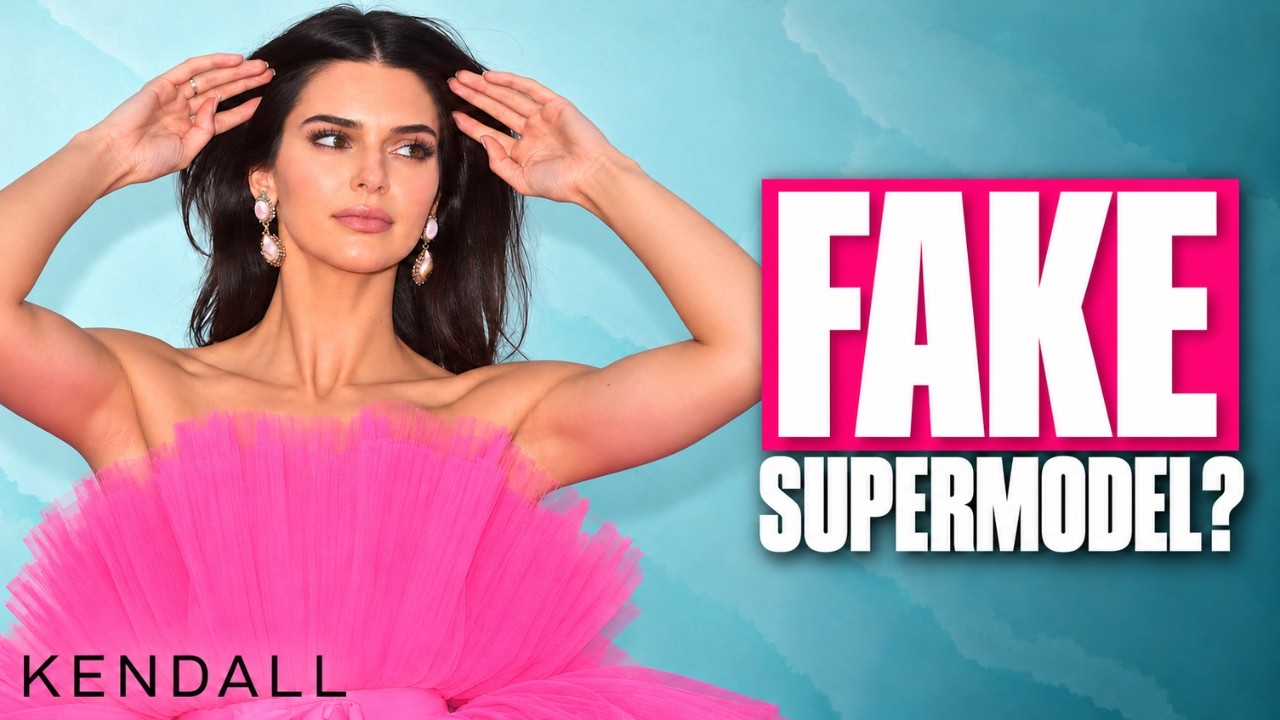
Beyond the “Fake Supermodel” Label
The term “fake supermodel” became part of the criticism directed at Jenner.
But it was never an objective professional classification.
It reflected disagreement about what makes a model legitimate.
For some observers, legitimacy required emerging through traditional casting channels and demonstrating consistent runway skill.
For others, commercial success and selection by influential designers were sufficient evidence of professional standing.
Jenner’s career challenged that distinction.
She possessed traditional high-fashion credentials and an enormous celebrity audience.
Her achievements cannot be explained by either factor alone.
The Marc Jacobs show introduced her to a different professional environment.
Chanel, Givenchy, and other fashion houses provided major opportunities.
Estée Lauder and Calvin Klein demonstrated her commercial value.
The Vogue cover reinforced her cultural importance.
And the Forbes rankings confirmed the scale of her earnings.
Those accomplishments remain part of the historical record.
So do the controversies.
The Fyre Festival promotion demonstrated the risks of paid endorsements.
The Pepsi advertisement became an example of unsuccessful corporate engagement with protest imagery.
And the Love interview exposed resentment over privilege and unequal working conditions.
Her later conversations about anxiety added another dimension to the story.
None of those facts requires ignoring the others.
The Price of Being Famous Before You Begin
Kendall Jenner was never an ordinary unknown teenager entering the modeling industry.
Her surname made that impossible.
She arrived with extraordinary visibility, financial security, and connections to one of the most powerful celebrity families in entertainment.
Those advantages mattered.
But they also created expectations that differed from those imposed on less-famous models.
Every runway appearance was scrutinized.
Every major contract generated debate.
And every controversial statement became an opportunity to reassess whether she deserved her success.
Her professional identity developed under almost continuous public observation.
That does not make her circumstances equivalent to those of models who faced greater economic insecurity.
It does help explain why her career became such a visible battleground over changing industry values.
By the time she publicly discussed anxiety in 2021, she had already spent years navigating a business that evaluated her appearance for a living and an audience that evaluated her legitimacy.
Her disclosures did not settle the fashion industry’s arguments.
They reminded the public that even a highly recognizable person has a private experience that cannot be determined from photographs.
The Woman Behind the Famous Face
More than a decade after her breakthrough, Kendall Jenner remains a significant figure in the history of modern fashion.
Her early success coincided with the rise of social media as a commercial force.
Her contracts showed how valuable an established digital audience could become.
Her controversies exposed the responsibilities associated with that influence.
And her statements about anxiety challenged the assumption that a controlled public image means a person is untouched by distress.
She has never represented a simple success story.
Her opportunities were extraordinary.
Her achievements were substantial.
Her mistakes attracted intense criticism.
And her personal experiences were more complicated than the image presented on a runway.
The most useful way to understand her career is neither to dismiss it as entirely manufactured nor to treat every criticism as unfair.
It is to recognize how celebrity, commerce, talent, privilege, and personal vulnerability came together during a period of enormous change in fashion.
Kendall Jenner did not enter the modeling industry as a blank canvas. She entered with one of the most recognizable names in entertainment—and became one of the clearest examples of how that industry was changing.
The arguments about her career may continue.
But the larger story reaches beyond a single model.
It asks what success means in a profession where appearance, influence, opportunity, and public judgment have become almost impossible to separate.


