When Cleopatra premiered in 1963, Hollywood had rarely witnessed anything so spectacular. Monumental sets, thousands of elaborate costumes, immense Roman armies, and some of the world’s most celebrated actors combined to create a historical epic that would become legendary for both its artistic ambition and its troubled production.
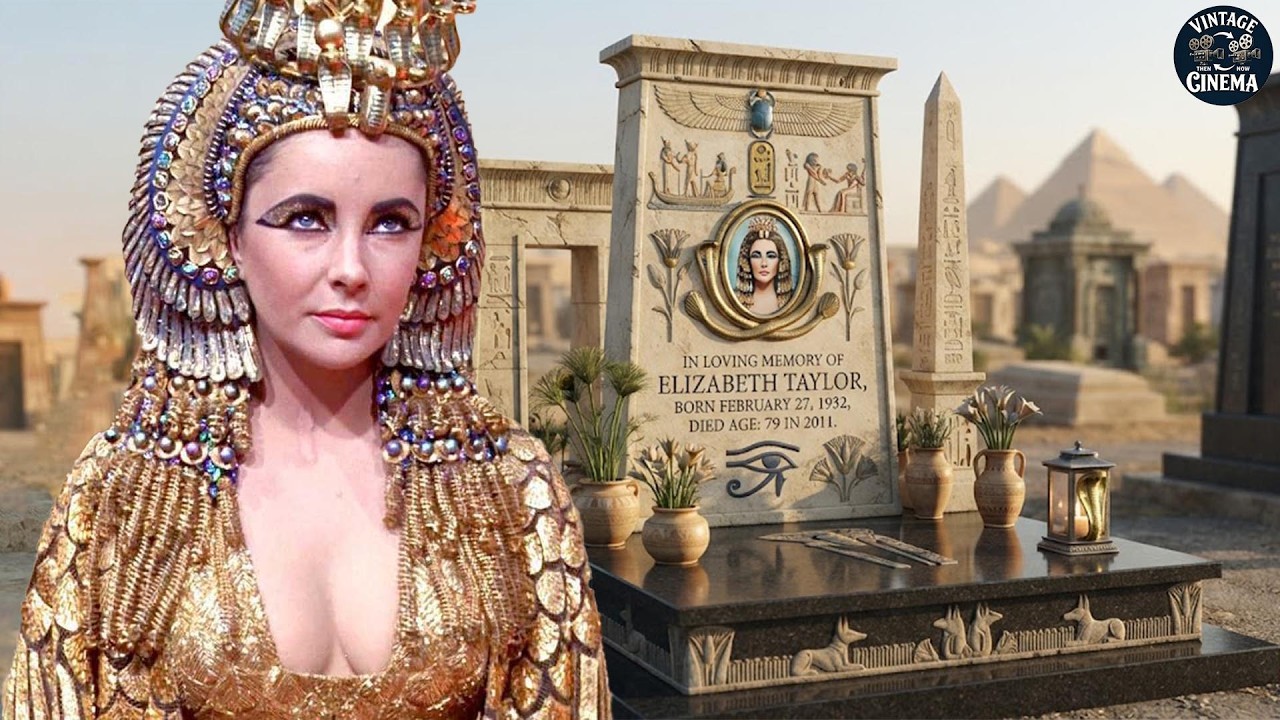
At the center stood Elizabeth Taylor, whose portrayal of Egypt’s famous queen transformed her into an even greater international sensation. Beside her were Richard Burton as Mark Antony and Rex Harrison as Julius Caesar, two commanding performers whose characters shaped the destiny of the ancient Mediterranean world.
But more than six decades later, another story has emerged behind those unforgettable images.
Many of the actors who brought Cleopatra to life have passed away. Some enjoyed extraordinary careers that continued for decades after the film. Others became icons of British television, Hollywood cinema, and classical theater. A few appeared in only small roles, yet their performances helped create one of the most ambitious productions in movie history.
From Elizabeth Taylor’s legendary screen presence to Roddy McDowall’s chilling portrayal of Octavian, the cast represented an extraordinary collection of international talent.
Their careers extended across generations, genres, and continents.
Here is a look back at 20 performers from Cleopatra, their unforgettable roles, and the remarkable legacies they left behind.
1. Andrew Keir — Agrippa
Born April 3, 1926 | Died October 5, 1997 | Age 71
Andrew Keir was 37 when he portrayed Agrippa, the experienced Roman commander involved in the political and military struggles surrounding Mark Antony.
Agrippa was not a character defined by extravagant speeches or elaborate romantic scenes.
Instead, he represented military discipline, practical judgment, and the hard realities of Roman power.
Keir brought physical authority to the role.
His commanding presence made him believable as a soldier accustomed to making decisions that could determine the fate of entire armies.
While Cleopatra and Antony pursued a passionate political alliance, figures such as Agrippa represented the military forces shaping the conflict around them.
Keir was already an established Scottish actor when he joined the production.
He had developed a career across theater, film, and television.
His later work included the science-fiction classic Quatermass and the Pit, which became one of his most recognizable performances.
He also appeared in numerous historical and dramatic productions.
Keir d.i.e.d in October 1997 at age 71.
Although Agrippa was not one of the film’s central characters, his presence helped make the Roman military world feel authentic.
2. Kenneth Haigh — Marcus Junius Brutus
Born March 25, 1931 | Died February 4, 2018 | Age 86
Kenneth Haigh was 32 when he portrayed Marcus Junius Brutus, one of the Roman senators involved in the conspiracy against Julius Caesar.
Brutus played a crucial role in the film’s political turning point.
As Caesar’s influence expanded, powerful Roman figures began fearing that he intended to destroy the republic and establish himself as a monarch.
Haigh portrayed Brutus with restraint.
Rather than presenting him as a theatrical villain, he emphasized the political tensions surrounding Caesar’s rise.
That approach made the conspiracy feel like the result of conflicting loyalties and ambitions.
Haigh was already an acclaimed stage actor before appearing in Cleopatra.
He had become famous for originating the role of Jimmy Porter in John Osborne’s Look Back in Anger.
His stage experience brought intensity and intelligence to his screen performances.
In Cleopatra, Brutus becomes central to the assassination of Caesar.
The event destroys Cleopatra’s political security in Rome and redirects the story toward Antony and Octavian.
Haigh d.i.e.d in February 2018 at age 86.
His portrayal of Brutus remains a small but important part of the film’s sweeping historical narrative.
3. Cesare Danova — Apollodorus
Born March 1, 1926 | Died March 19, 1992 | Age 66
Cesare Danova was 37 when he portrayed Apollodorus, a loyal member of Cleopatra’s inner circle.
Apollodorus represented devotion to the Egyptian queen at a time when political alliances could change without warning.
He moved between Cleopatra’s private world and the larger political conflicts involving Rome.
Danova portrayed the character with elegance and composure.
His performance helped establish the importance of trusted advisers and attendants within Cleopatra’s court.
Born in Italy, Danova had already developed a successful career in European cinema.
He later worked extensively in American film and television.
His polished appearance and confident delivery made him well suited to historical dramas and sophisticated supporting roles.
In Cleopatra, Apollodorus remained close to the queen as her political circumstances changed.
His loyalty contrasted with the betrayals and rivalries surrounding Caesar, Antony, and Octavian.
Danova d.i.e.d from a heart attack in March 1992 at age 66.
His portrayal of Apollodorus remains a reminder that the film’s enormous historical conflicts were supported by characters whose greatest strength was personal loyalty.
4. Hume Cronyn — Sosigenes
Born July 18, 1911 | Died June 15, 2003 | Age 91
Hume Cronyn was 51 when he portrayed Sosigenes, a learned adviser associated with Cleopatra’s court.
Unlike the soldiers and political leaders surrounding the queen, Sosigenes represented intellectual influence.
His authority came through knowledge, observation, and counsel.
Cronyn’s measured performance made the character believable as a trusted adviser.
He brought a quiet intelligence to scenes dominated by enormous sets and powerful personalities.
By 1963, Cronyn was already a distinguished stage and screen performer.
He had received an Academy Award nomination for The Seventh Cross.
His career also included extensive theatrical work and a celebrated professional partnership with his wife, actress Jessica Tandy.
Together, they became one of the most respected acting couples in American entertainment.
Cronyn continued working for decades after Cleopatra.
He appeared in films including Cocoon and Batteries Not Included.
He d.i.e.d in June 2003 at age 91.
His portrayal of Sosigenes demonstrated that intellectual authority could be just as compelling as military power.
5. Pamela Brown — The High Priestess
Born July 8, 1917 | Died September 19, 1975 | Age 58
Pamela Brown was 45 when she appeared as the High Priestess.
Her character represented the religious traditions and ceremonial authority surrounding Cleopatra’s rule.
In a film dominated by armies, political ambition, and royal spectacle, the High Priestess introduced another dimension of Egyptian power.
Cleopatra was not simply a political ruler.
Her public image was closely connected to religious symbolism and ancient traditions.
Brown brought dignity and restraint to the role.
Her theatrical experience allowed her to create a sense of authority without competing with Elizabeth Taylor’s central performance.
Before Cleopatra, Brown had established herself as a respected British actress.
She received an Academy Award nomination for Lust for Life.
Her work included numerous stage and screen productions.
Brown d.i.e.d from pancreatic cancer in September 1975 at age 58.
Although her appearance in Cleopatra was brief, she helped establish the ceremonial atmosphere that made the Egyptian court so visually distinctive.
6. George Cole — Flavius
Born April 22, 1925 | Died August 5, 2015 | Age 90
George Cole was 38 when he portrayed Flavius.
The character belonged to the supporting Roman world surrounding Caesar, Antony, and Octavian.
His presence contributed to the film’s depiction of an enormous political and military society.
Cole was already an experienced British actor.
He had worked in comedy, drama, and character roles for years before joining the production.
His ability to create believable personalities within limited screen time made him valuable to large ensemble films.
After Cleopatra, Cole continued building a remarkably successful career.
He eventually became especially famous as Arthur Daley in the British television series Minder.
That performance introduced him to a new generation of viewers.
Cole’s professional life extended across more than seven decades.
He d.i.e.d in August 2015 at age 90.
Although Flavius was a relatively small role, Cleopatra became one chapter in an extraordinary acting career.
7. Francesca Annis — Iras
Born May 14, 1945 | Age 81 in October 2026
Francesca Annis was only 18 when she portrayed Iras, one of Cleopatra’s devoted attendants.
The role placed her alongside Elizabeth Taylor during one of Hollywood’s most ambitious productions.
Iras belonged to the intimate circle surrounding the Egyptian queen.
While Caesar, Antony, and Octavian struggled for control of the Roman world, she witnessed Cleopatra’s personal triumphs and tragedies.
Annis brought youthful grace and quiet loyalty to the character.
Her presence became especially important during the film’s final movement.
As Cleopatra’s political power collapsed, her attendants remained close.
Their loyalty provided an emotional contrast to the betrayals and rivalries that had shaped the larger story.
For Annis, Cleopatra was an early step in a distinguished career.
She later became widely recognized for her work in British theater, film, and television.
Her performances included major classical roles and acclaimed dramatic productions.
By 2026, Annis had enjoyed a career spanning more than six decades.
Her portrayal of Iras remains a memorable early appearance in one of cinema’s most famous historical epics.
8. Roddy McDowall — Octavian
Born September 17, 1928 | Died October 3, 1998 | Age 70
Roddy McDowall was 34 when he portrayed Octavian, the calculating Roman leader who would eventually become Augustus, Rome’s first emperor.
Octavian was one of the film’s most formidable characters.
Unlike Antony, who was increasingly influenced by passion and personal ambition, Octavian relied on discipline, patience, and political strategy.
McDowall portrayed him with chilling restraint.
His quiet confidence made him especially dangerous.
After Caesar’s assassination, Octavian joined Antony and Lepidus in a new ruling alliance.
But cooperation gradually turned into rivalry.
Antony’s relationship with Cleopatra gave Octavian an opportunity to strengthen his political position.
Their conflict eventually culminated in the Battle of Actium.
McDowall’s performance made Octavian’s eventual victory feel like the result of careful calculation.
He was already an experienced performer, having begun acting as a child.
His later career included the Planet of the Apes franchise and numerous film and television productions.
McDowall d.i.e.d from lung cancer in October 1998 at age 70.
His portrayal of Octavian remains one of Cleopatra‘s most memorable supporting performances.
9. Rex Harrison — Julius Caesar
Born March 5, 1908 | Died June 2, 1990 | Age 82
Rex Harrison was 55 when he portrayed Julius Caesar.
His performance gave the legendary Roman leader a combination of authority, intelligence, confidence, and unexpected vulnerability.
Caesar entered Alexandria as one of the most powerful men in the ancient world.
But his encounter with Cleopatra soon became more than a political negotiation.
Harrison portrayed Caesar as a man who recognized the Egyptian queen’s intelligence and ambition.
Their relationship developed into a political and personal alliance.
Caesar helped Cleopatra regain her throne.
They also had a son, Caesarion.
Later, Cleopatra traveled to Rome, where Caesar’s increasing power created fear among members of the Roman Senate.
Harrison’s performance was among the film’s most critically acclaimed.
He received an Academy Award nomination for Best Actor.
Already a celebrated performer, Harrison later became internationally famous for portraying Professor Henry Higgins in My Fair Lady.
He won the Academy Award for Best Actor for that performance.
In Cleopatra, Caesar’s assassination became the decisive event separating the film’s two major romantic and political stories.
Harrison d.i.e.d from pancreatic cancer in June 1990 at age 82.
His portrayal of Caesar remains one of the defining performances of the epic.
10. Martin Landau — Rufio
Born June 20, 1928 | Died July 15, 2017 | Age 89
Martin Landau was 34 when he portrayed Rufio, a Roman military officer associated with Antony’s forces.
Rufio represented the practical realities of warfare.
While Antony became increasingly entangled in his relationship with Cleopatra, Rufio remained focused on military discipline and strategy.
Landau gave the character a firm, controlled presence.
His performance helped contrast the emotional decisions of powerful leaders with the responsibilities of the soldiers serving them.
At the time, Landau was still relatively early in his screen career.
His greatest fame would come later.
He became widely recognized through the television series Mission: Impossible and Space: 1999.
His later film performances earned multiple Academy Award nominations.
In 1995, he won the Academy Award for Best Supporting Actor for portraying Bela Lugosi in Ed Wood.
Landau d.i.e.d in July 2017 at age 89.
His role in Cleopatra remains an early example of the disciplined screen presence that would define much of his career.
11. Grégoire Aslan — Pothinus
Born March 28, 1908 | Died January 8, 1982 | Age 73
Grégoire Aslan was 55 when he portrayed Pothinus, a powerful official connected to the court of Ptolemy XIII.
Pothinus belonged to the faction opposing Cleopatra’s claim to the Egyptian throne.
Rather than relying on personal military strength, he operated through influence, manipulation, and political calculation.
Aslan portrayed the character with controlled menace.
His performance reflected the dangers of palace politics, where loyalty could shift rapidly and a single decision could determine who controlled the kingdom.
Born in Constantinople, Aslan developed an international acting career.
He became known for portraying sophisticated authority figures and antagonists.
In Cleopatra, Pothinus helped establish the political crisis confronting the queen before Caesar’s arrival.
His opposition created the conditions for the alliance between Cleopatra and the Roman leader.
Aslan d.i.e.d in January 1982 at age 73.
Although his character disappeared before the film’s later events, Pothinus played an important role in establishing the conflict that launched Cleopatra’s rise.
12. Richard Burton — Mark Antony
Born November 10, 1925 | Died August 5, 1984 | Age 58
Richard Burton was 37 when he portrayed Mark Antony, the Roman general whose relationship with Cleopatra became one of cinema’s most famous romances.
Burton brought extraordinary vocal power and emotional intensity to the role.
His Antony was confident, ambitious, and capable of commanding armies.
But beneath that strength was a man increasingly vulnerable to love, pride, and political rivalry.
After Caesar’s assassination, Antony became one of Rome’s most powerful leaders.
His alliance with Cleopatra gradually developed into a passionate relationship.
But their ambitions placed them in direct conflict with Octavian.
The resulting struggle culminated in a devastating military defeat at Actium.
Antony’s authority collapsed.
False news that Cleopatra had d.i.e.d contributed to his tragic final decision.
Mortally wounded, he was brought to Cleopatra and d.i.e.d in her presence.
Burton’s performance gave the character’s downfall emotional weight.
But his real-life relationship with Elizabeth Taylor became almost as famous as the film itself.
Their romance began during production and generated enormous international publicity.
They subsequently married, divorced, remarried, and divorced again.
The relationship became one of Hollywood’s most widely discussed love stories.
Burton continued appearing in major films, including Who’s Afraid of Virginia Woolf? and The Spy Who Came in from the Cold.
He d.i.e.d in August 1984 at age 58 after a cerebral hemorrhage.
His portrayal of Antony remains inseparable from both the film’s tragic romance and the extraordinary off-screen relationship that surrounded its production.
13. Martin Benson — Ramos
Born August 10, 1918 | Died February 28, 2010 | Age 91
Martin Benson was 44 when he portrayed Ramos.
The character belonged to the supporting Egyptian world surrounding Cleopatra’s court.
Although his role was relatively limited, Benson contributed to the film’s enormous international ensemble.
He was already an experienced character actor by the early 1960s.
His screen presence suited historical dramas and productions requiring distinctive supporting performers.
Before Cleopatra, Benson had appeared as Kralahome in The King and I.
He later became recognizable to James Bond fans through his appearance in Goldfinger.
His career also included numerous television and theatrical roles.
Benson d.i.e.d in February 2010 at age 91.
His work in Cleopatra demonstrates how the film depended on experienced performers even in its smaller roles.
14. Herbert Berghof — Theodotos
Born September 13, 1909 | Died November 5, 1990 | Age 81
Herbert Berghof was 53 when he portrayed Theodotos, an adviser associated with the Egyptian court of Ptolemy XIII.
The character operated within the dangerous political conflict surrounding Cleopatra’s return to power.
Theodotos belonged to a world where advisers could influence rulers while remaining vulnerable to sudden changes in authority.
Berghof brought an austere intelligence to the role.
His character was connected to the political consequences of Pompey’s arrival in Egypt after his defeat by Caesar.
Pompey’s assassination was intended to satisfy Caesar but instead became a source of outrage.
That decision helped expose the instability of the Egyptian court.
Berghof was born in Austria and later emigrated to the United States.
He developed a distinguished career as an actor, director, and acting teacher.
His contributions to theatrical education became an important part of his professional legacy.
Berghof d.i.e.d in November 1990 at age 81.
His portrayal of Theodotos helped establish the atmosphere of calculation and danger surrounding Cleopatra’s struggle for the throne.
15. John Cairney — Phoebus
Born February 16, 1930 | Died September 6, 2023 | Age 93
John Cairney was 33 when he appeared as Phoebus.
His role was relatively small, but he contributed to the extensive ensemble surrounding Cleopatra’s court.
The production required numerous experienced performers to populate its palaces, political gatherings, and public ceremonies.
Cairney was among those actors.
Born in Scotland, he had already developed a career in theater and film.
He appeared in A Night to Remember, the acclaimed 1958 film dramatizing the sinking of the Titanic.
He later became especially recognized for his one-man performances portraying Scottish poet Robert Burns.
His career included extensive theatrical work and television appearances.
Cairney d.i.e.d in September 2023 at age 93.
His appearance in Cleopatra remains one chapter in a distinguished Scottish acting career.
16. Jacqueline Chan — Lotus
Born July 31, 1939 | Age 87 in October 2026
Jacqueline Chan was 23 when she appeared as Lotus, a member of Cleopatra’s royal household.
The character belonged to the private world surrounding the Egyptian queen.
Although Lotus was not central to the political story, her presence helped create the atmosphere of luxury and ceremony within Cleopatra’s court.
Chan was born in Trinidad and came from a family of Chinese heritage.
She developed a varied career across British theater, film, and television.
Her professional journey unfolded during a period when performers of Asian heritage faced limited opportunities in Western entertainment.
Appearing in Cleopatra placed her within one of Hollywood’s largest international ensembles.
The production brought together actors from numerous countries and theatrical traditions.
By 2026, Chan was among the surviving performers associated with the film.
Her role as Lotus remains part of the elaborate visual world that helped make Cleopatra famous.
17. Michael Hordern — Cicero
Born October 3, 1911 | Died May 2, 1995 | Age 83
Michael Hordern was 51 when he portrayed Cicero, one of ancient Rome’s most famous statesmen and orators.
Cicero represented the political traditions of the Roman Republic.
His authority came through rhetoric, intellectual influence, and public life rather than battlefield command.
Hordern’s measured delivery made him an ideal performer for the role.
His distinguished theatrical background gave Cicero the dignity expected of a major Roman political figure.
By the early 1960s, Hordern had become one of Britain’s most respected character actors.
His career extended across classical theater, film, television, and voice performance.
In Cleopatra, Cicero appeared during a period when the Roman Republic was being transformed by the ambitions of Caesar and his successors.
Caesar’s assassination did not restore political stability.
Instead, it opened the way for another struggle involving Antony and Octavian.
Hordern d.i.e.d in May 1995 at age 83.
His portrayal of Cicero helped establish the political and intellectual world surrounding the film’s central characters.
18. Isabel Cooley — Charmian
Born July 20, 1932 | Died January 3, 2000 | Age 67
Isabel Cooley was 30 when she portrayed Charmian, one of Cleopatra’s closest attendants.
Charmian’s importance became especially clear during the final stages of the story.
As Cleopatra’s political ambitions collapsed, her loyal attendants remained beside her.
Cooley portrayed Charmian with quiet dignity.
Unlike the generals and politicians competing for power, Charmian’s defining quality was devotion.
She witnessed Cleopatra’s triumphs, her relationship with Antony, and the destruction of the political alliance they attempted to build.
The role became especially emotional near the conclusion.
After Antony’s d.e.a.t.h and Octavian’s victory, Cleopatra faced the prospect of humiliation as a captive.
She chose d.e.a.t.h instead.
Charmian and Iras remained with her during the final moments.
For Cooley, Cleopatra was an important early screen appearance.
She later continued working in entertainment.
Cooley d.i.e.d in January 2000 at age 67.
Her portrayal of Charmian remains memorable because it represents loyalty when political power has disappeared.
19. Elizabeth Taylor — Cleopatra
Born February 27, 1932 | Died March 23, 2011 | Age 79
Elizabeth Taylor was 31 when Cleopatra premiered in 1963.
Few performances in Hollywood history have become so closely associated with an actor’s public image.
Taylor’s Cleopatra was glamorous, intelligent, ambitious, and politically calculating.
She understood the power of spectacle.
Her elaborate costumes, magnificent entrances, and carefully controlled public appearances were not simply decorative.
They helped establish the queen’s authority.
Taylor’s performance portrayed Cleopatra as a ruler determined to protect Egypt’s independence.
Her alliance with Julius Caesar offered political security.
After Caesar’s assassination, her relationship with Mark Antony became both a passionate romance and a dangerous political partnership.
Their ambitions eventually placed them against Octavian.
The conflict culminated in defeat.
With Antony gone and Egypt conquered, Cleopatra chose d.e.a.t.h rather than humiliation.
Taylor brought vulnerability to a character often remembered primarily for beauty and power.
But the production also transformed her real life.
She became the first actress widely reported to receive a $1 million salary for a film.
The troubled production attracted extraordinary publicity because of delays, financial problems, and its enormous scale.
Her romance with Richard Burton created an international sensation.
Their relationship became one of Hollywood’s most famous love stories.
Taylor had already won an Academy Award before Cleopatra.
She later won a second for Who’s Afraid of Virginia Woolf?.
Beyond acting, she became an influential humanitarian and advocate for HIV/AIDS awareness and research.
She d.i.e.d from congestive heart failure in March 2011 at age 79.
Her portrayal of Cleopatra remains one of cinema’s most recognizable images.
The Egyptian queen and the Hollywood superstar became permanently linked in popular culture.
The Extraordinary Production That Nearly Changed Hollywood Forever
Cleopatra was not an ordinary film production.
It became one of the most expensive and troubled undertakings in Hollywood history.
The project experienced significant delays, changes in personnel, and major financial pressures.
Its enormous sets and elaborate costumes demanded extraordinary resources.
The production moved through different locations as its challenges intensified.
Elizabeth Taylor’s health problems contributed to delays.
The film’s scale continued expanding.
Its final version ran for more than four hours.
When the film reached theaters in 1963, audiences witnessed a spectacle unlike almost anything previously attempted.
Massive Roman processions, Egyptian palaces, elaborate costumes, and enormous military sequences filled the screen.
But the film’s reputation was shaped by more than its visuals.
The off-screen relationship between Taylor and Burton attracted international attention.
Their romance became a major publicity phenomenon.
It also created controversy at a time when both performers were married to other people.
The public fascination surrounding the relationship became inseparable from the film itself.
Yet beneath the production difficulties stood a remarkable ensemble of accomplished actors.
Rex Harrison brought intellectual authority to Caesar.
Richard Burton gave Antony emotional intensity.
Roddy McDowall made Octavian a calculating political opponent.
Martin Landau, Hume Cronyn, Pamela Brown, and numerous supporting performers contributed to the historical world.
Their performances helped transform the production’s visual ambition into a dramatic narrative.
The Cast Members We’ve Lost
More than six decades after the film’s release, many of its performers are no longer alive.
Richard Burton d.i.e.d in 1984 at age 58.
Rex Harrison passed away in 1990 at age 82.
Elizabeth Taylor d.i.e.d in 2011 at age 79.
Roddy McDowall passed away in 1998 at age 70.
Martin Landau d.i.e.d in 2017 at age 89.
Hume Cronyn passed away in 2003 at age 91.
George Cole d.i.e.d in 2015 at age 90.
John Cairney passed away in 2023 at age 93.
Pamela Brown, Cesare Danova, Andrew Keir, Kenneth Haigh, Grégoire Aslan, Herbert Berghof, Martin Benson, Michael Hordern, and Isabel Cooley are also among the performers remembered through their work in the film.
Their careers followed remarkably different paths.
Some became internationally famous leading actors.
Others built distinguished theatrical careers.
Several became beloved television personalities.
A few remained best known for their supporting roles.
But together, they helped create one of the largest and most memorable ensembles in historical cinema.
Why Cleopatra Still Fascinates Audiences
The enduring appeal of Cleopatra comes from its combination of spectacle, political ambition, romance, and tragedy.
The story begins with a queen fighting to reclaim her throne.
Her alliance with Caesar transforms her political position.
But his assassination destroys the security she has gained.
Her relationship with Antony offers another opportunity to challenge Roman power.
Yet their ambitions eventually bring them into conflict with Octavian.
The result is a story in which personal relationships and political decisions become inseparable.
The film also explores the limits of power.
Caesar appears almost invincible before his assassination.
Antony commands armies but cannot escape the consequences of political defeat.
Cleopatra possesses extraordinary wealth and influence, yet cannot prevent the collapse of her kingdom.
Octavian achieves victory through discipline and calculation.
Those contrasts give the film a dramatic foundation beyond its enormous visual scale.
The performances remain central to that achievement.
Taylor’s Cleopatra combines confidence with vulnerability.
Burton’s Antony becomes increasingly tragic.
Harrison’s Caesar demonstrates intelligence and authority.
McDowall’s Octavian represents a colder, more calculating form of ambition.
Together, they create a story about the rise and fall of powerful individuals whose decisions change history.
A Legacy Beyond the Screen
The influence of Cleopatra extends beyond its original theatrical release.
The film became a symbol of Hollywood’s willingness to pursue extraordinary spectacle.
Its production difficulties also demonstrated the financial dangers of uncontrolled budgets.
For Elizabeth Taylor, it reinforced her position as one of the world’s most famous actresses.
For Richard Burton, it became a defining moment in both his professional and personal life.
For Rex Harrison, it added another acclaimed performance to an already distinguished career.
For Roddy McDowall, it provided one of his most memorable supporting roles.
And for younger performers such as Francesca Annis, it offered an opportunity to work alongside established international stars.
The film also preserved the work of numerous character actors whose names may not be immediately familiar to modern audiences.
Their contributions remain essential to the production’s sense of scale.
Without them, the palaces, military councils, political gatherings, and royal ceremonies would have lacked the human detail required to make the world believable.
Remembering the Legends of Cleopatra
More than 60 years after Cleopatra premiered, its images remain extraordinary.
Elizabeth Taylor’s jeweled costumes and dramatic entrances continue to symbolize Hollywood glamour.
Richard Burton’s powerful voice remains inseparable from Mark Antony.
Rex Harrison’s commanding performance continues to define the film’s portrayal of Julius Caesar.
Roddy McDowall’s restrained Octavian remains one of its most memorable antagonists.
The actors who brought these characters to life came from different generations and theatrical traditions.
Some achieved international superstardom.
Others became respected character performers.
Many have passed away.
Yet their work remains preserved in one of cinema’s most ambitious historical epics.
The stars have aged, many are gone, and Hollywood has changed beyond recognition since 1963. But the grandeur of Cleopatra remains. Its legendary cast created more than a historical spectacle—they left behind a cinematic monument to ambition, love, betrayal, and the extraordinary power of storytelling.


