Harry Truman Mourned John F. Kennedy as Assassination Reopened America’s Deepest Presidential Wounds in Dallas
Harry S. Truman was living far from the center of presidential power when gunfire in Dallas changed the United States forever.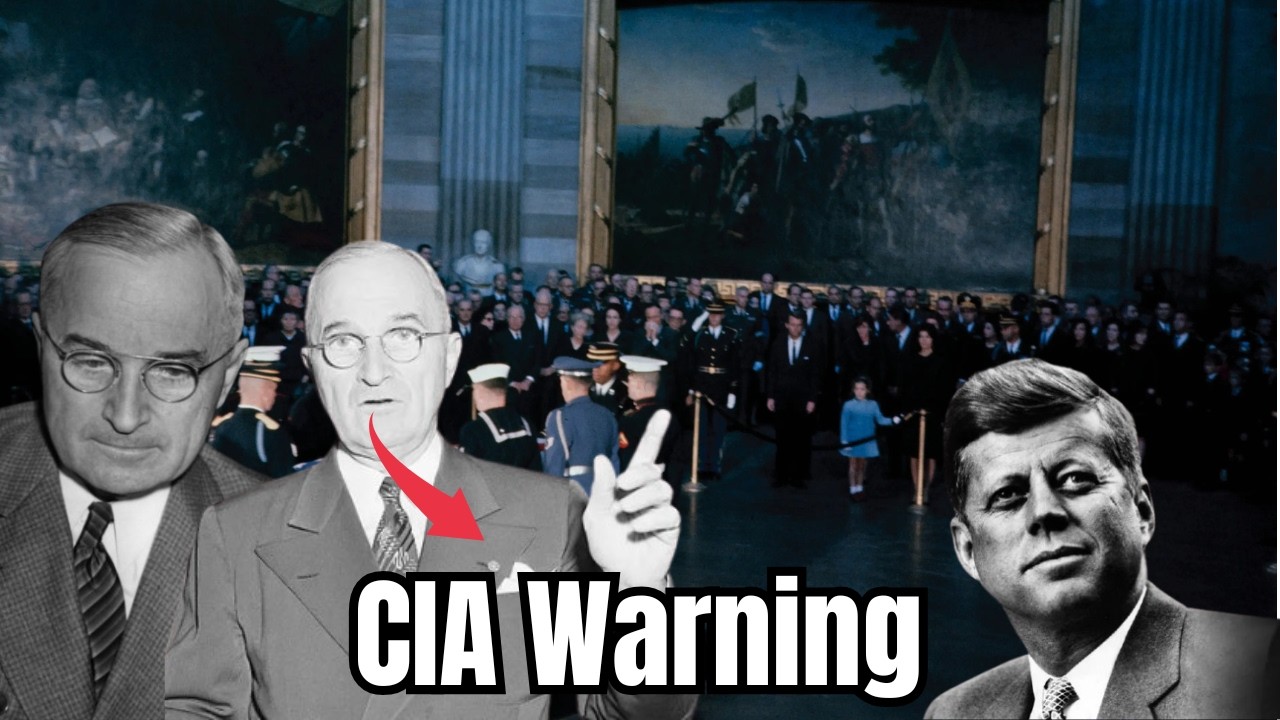
On November 22, 1963, former President Truman was back in Independence, Missouri, years removed from the White House and approaching his eightieth birthday.
John F. Kennedy, meanwhile, was traveling through Texas as the thirty-fifth president of the United States.
Shortly after noon in Dallas, Kennedy’s motorcade entered Dealey Plaza.
Shots struck the president while he rode in an open limousine alongside First Lady Jacqueline Kennedy.
Kennedy was taken to Parkland Memorial Hospital, where doctors pronounced him dead at 1 p.m. Central Standard Time.
The assassination stunned the country.
It also deeply affected one of the few living Americans who understood the emotional burden of occupying the presidency better than almost anyone else.
Truman had experienced political hatred.
He had experienced threats.
He had survived an assassination attempt himself.
Now he watched another president, younger by more than thirty years, murdered in public.
Historical evidence strongly supports the image of Truman as deeply shaken by Kennedy’s death.
But dramatic modern claims about secret reaction cables, hidden journal entries, or previously unknown private warnings require much greater caution.
The best documented evidence comes not from a mysterious newly released diary, but from people who were physically beside Truman during the days following Kennedy’s assassination.
David H. Stowe, a longtime Truman associate, later gave an oral-history interview preserved by the Harry S. Truman Presidential Library.
Stowe was with Truman in Washington during Kennedy’s funeral period.
His description is remarkably direct.
He remembered Truman as “visibly shaken” by the assassination and profoundly saddened.
As the weekend continued, Stowe said he had the impression that he had never seen Truman so upset.
That account provides something more valuable than an anonymous claim about a secret cable.
It comes from someone who personally observed Truman during one of the most difficult weekends in modern American political history.
Truman traveled to Washington shortly after Kennedy’s death.
President Lyndon B. Johnson invited him to stay at Blair House rather than a hotel.
According to Stowe, Truman spent considerable time with Johnson after arriving.
The former president then participated in the national mourning surrounding Kennedy’s coffin at the Capitol.
The emotional cost was visible.
Stowe recalled Truman returning from the Capitol exhausted.
He had eaten very little.
During lunch afterward, those around him noticed that he was barely touching his food.
For a man famous for bluntness, stamina, routine, and emotional discipline, those observations were significant.
Truman had lived through war, political defeat, nuclear decisions, labor unrest, the Korean conflict, and relentless attacks from opponents.
Yet Kennedy’s murder appeared to strike him differently.
Part of the reason may have been personal.
Truman and Kennedy belonged to different Democratic generations, but they were not strangers.
Kennedy had entered Congress while Truman was president.
Later, during the 1960 presidential campaign, Truman initially expressed doubts about Kennedy’s youth and experience.
Their political relationship was sometimes complicated.
Yet after Kennedy won the Democratic nomination, Truman supported him.
Oral histories preserved by the Truman Library describe moments during the campaign when Kennedy clearly sought Truman’s support and publicly embraced the former president’s importance to the party.
One remembered encounter captured that relationship particularly well.
When Kennedy encountered Truman at a political event, he reportedly made his way directly toward him and spoke privately into his ear while the crowd reacted enthusiastically.
Those present remembered the moment as an unmistakable display of goodwill.
By November 1963, therefore, Kennedy was not merely an abstract officeholder to Truman.
He was a younger president Truman had watched rise.
He was a fellow Democrat.
Most importantly, he was another man carrying the unique burden of an office Truman understood intimately.
Kennedy’s assassination also reopened a frightening subject from Truman’s own presidency.
On November 1, 1950, two Puerto Rican nationalists, Oscar Collazo and Griselio Torresola, attacked Blair House while Truman was living there during White House renovations.
A fierce gunfight followed.
White House Police Officer Leslie Coffelt was mortally wounded.
Torresola was killed.
Collazo survived.
Truman himself was inside the building.
Former Truman adviser Charles S. Murphy later remembered that Truman remained extraordinarily calm about the threat to his own life.
Murphy said Truman’s strongest emotional reaction centered on the officer who had been killed rather than on the danger he personally faced.
Thirteen years later, Kennedy was not spared.
The contrast could hardly have escaped Truman.
One president had survived an attack.
Another had been murdered in broad daylight.
Kennedy’s death therefore confronted Truman with an especially grim truth about presidential power.
The office carried ceremony, authority, and prestige.
It also carried vulnerability.
Kennedy’s assassination immediately became a national trauma precisely because the violence occurred so publicly.
The president was not hidden inside the White House.
He was riding through an American city, surrounded by crowds, when the shots were fired.
The National Archives’ historical record describes Kennedy traveling through Dallas in an open limousine after morning rain gave way to clearer skies.
The motorcade route had been publicized beforehand.
Secret Service agents followed directly behind the presidential limousine, yet the attack still succeeded.
The later House Select Committee on Assassinations concluded that Kennedy’s murder exposed serious weaknesses in presidential protection.
Investigators found that Secret Service preparations had not adequately anticipated a concealed sniper attack along the motorcade route.
For Truman, who had once stood exposed on train platforms during whistle-stop campaigning and routinely moved through crowds in ways later presidents could not, Kennedy’s death represented a frightening shift.
The American presidency suddenly looked more exposed than powerful.
The shock extended far beyond political circles.
Around the country, Americans stopped work.
Television networks abandoned normal programming.
Churches opened their doors.
Crowds gathered around radios and television sets.
International leaders sent condolences.
The National Archives later described the assassination as an event that shocked and saddened people throughout the United States and around the world.
Truman belonged to that grieving public.
But he also carried memories unavailable to ordinary citizens.
He knew what presidential decisions felt like from inside the Oval Office.
He knew the isolation.
He knew the hatred political decisions could generate.
And he knew how rapidly a president could move from being a symbol of immense power to becoming physically vulnerable.
Truman’s trip to Washington after Kennedy’s assassination provides perhaps the clearest evidence of how heavily the event affected him.
Stowe recalled that Truman abandoned an earlier plan to attend church on Sunday because arrangements were being made for him to participate in the ceremonies at the Capitol.
He went to the Rotunda, where Kennedy’s body lay in state.
The experience appeared emotionally exhausting.
Kennedy’s funeral became one of the defining public spectacles of the twentieth century.
Jacqueline Kennedy walked in the procession.
World leaders gathered in Washington.
Americans watched as the murdered president was carried through the capital.
For Truman, the ritual was also a confrontation with the continuity of presidential history.
He had succeeded Franklin D. Roosevelt after Roosevelt died suddenly in 1945.
Lyndon Johnson had now succeeded Kennedy under far more violent circumstances.
In each case, the Constitution demanded immediate continuity even while the nation was still grieving.
Johnson took the presidential oath aboard Air Force One in Dallas only hours after Kennedy’s death.
The transfer of power had to occur before the country had emotionally processed the murder.
The National Archives has described the extraordinary uncertainty surrounding how rapidly Johnson needed to assume presidential authority after the assassination.
Truman understood that problem personally.
When Roosevelt died on April 12, 1945, Truman suddenly inherited the presidency during the final stages of World War II.
He had not expected to become commander in chief that day.
Neither had Johnson on November 22, 1963.
That parallel likely gave Truman a particular understanding of what Johnson faced.
Stowe’s account says Truman spent considerable time with the new president after arriving in Washington.
The old president could offer something few others could.
He knew what it meant to inherit the presidency unexpectedly during national crisis.
He also understood why continuity mattered.
Kennedy’s assassination threatened more than one life.
Political murder attacks the legitimacy and stability of constitutional government.
Truman had repeatedly spoken throughout his career about the importance of democratic institutions surviving pressure, fear, violence, and external threats.
Years before Dallas, he argued that America would periodically face moments testing its self-control, patriotism, and faith in democratic institutions.
Those older words gained haunting relevance after Kennedy’s murder.
Yet it is important not to transform that historical connection into invented prophecy.
There is no need to claim Truman secretly predicted a coming era of presidential assassinations.
The historical evidence is powerful without embellishment.
Truman saw Kennedy’s death.
He was devastated.
He traveled to Washington.
He mourned publicly.
He supported the constitutional transition.
And eyewitness testimony from his associates indicates the assassination affected him unusually deeply.
That is enough.
The claim that there are “unredacted personal reaction cables” revealing some hidden Truman response is much harder to substantiate.
Truman certainly left behind an enormous archival record.
His presidential library contains correspondence, oral histories, papers, photographs, public statements, and records from his post-presidential years.
But no credible evidence reviewed here establishes a newly uncovered cache of secret cables containing the dramatic private reaction promised in the viral claim.
The phrase itself raises questions.
Truman was a retired former president living in Independence.
He was not commanding an executive communications system in the way a sitting president would.
He communicated with political figures, former aides, friends, and government officials, but any alleged “reaction cable” would need to be identified by archive collection, date, sender, recipient, and provenance.
The same caution applies to supposed private journal entries.
Truman was famous for writing.
His diaries, letters, memoranda, and personal reflections are valuable historical sources.
But simply invoking the words “private journal” does not authenticate a specific quotation.
A genuine entry should be traceable to a manuscript collection or archival catalog.
Without that evidence, dramatic claims about hidden writings should not be presented as fact.
Fortunately, there is no shortage of genuine evidence describing Truman’s reaction.
The Stowe oral history is particularly valuable because it captures physical details.
Truman was visibly shaken.
He was deeply saddened.
He appeared more emotionally disturbed than Stowe remembered seeing him before.
His appetite was affected.
The Capitol ceremonies exhausted him.
These are small human details.
They reveal more than a sensational anonymous document ever could.
Kennedy’s death also came at a moment when political violence was becoming increasingly central to American life.
Five years later, Martin Luther King Jr. would be assassinated.
Two months afterward, Robert F. Kennedy would be shot in Los Angeles.
Journalists who had been present in Dallas later described the cumulative horror of covering these killings.
An archival document released through the National Archives recalls reporters reacting with anger that America seemed to be surpassing its own grim history of killing political leaders.
Truman did not live to see every later crisis.
He died in 1972.
But Kennedy’s assassination already confronted him with the possibility that political violence was becoming embedded in modern American public life.
That possibility would have been especially unsettling for a man whose presidency had been defined partly by the defense of democratic government against violent extremism abroad.
Truman believed institutions mattered precisely because individual leaders were temporary.
Presidents came and went.
Elections changed power.
Parties won and lost.
But constitutional government had to survive.
Kennedy’s murder tested that principle in the most brutal way possible.
The assassin could kill a president.
He could not be allowed to kill the presidency.
That was why Johnson’s succession mattered.
It was why Congress continued functioning.
It was why former presidents including Truman traveled to Washington.
And it was why Kennedy’s funeral became not only a family tragedy but a national constitutional ritual.
The United States had lost its president.
It had not lost its government.
Truman’s presence embodied that continuity.
He had once occupied the same office.
He had once carried the nuclear codes of an earlier age.
He had once made decisions affecting millions of lives.
Now he stood as an elderly former president mourning a younger successor.
There was something profoundly symbolic in that image.
The American presidency stretched backward through generations.
Kennedy’s assassination had violently removed one man from that chain.
But others gathered to affirm that the chain itself would continue.
That does not reduce the tragedy.
Stowe’s recollection makes clear that Truman was not emotionally detached.
He was shaken.
He was saddened.
He struggled visibly through the ceremonies.
The man famous for saying “The Buck Stops Here” could not simply treat Kennedy’s murder as another political event.
It was personal.
It was historical.
And it was a reminder that holding the presidency offered no immunity from the darkest forms of American violence.
More than six decades later, Kennedy’s assassination remains one of the most studied events in United States history.
Government investigations, archival releases, witness accounts, photographs, films, and declassified documents continue to attract intense interest.
That attention can illuminate history.
It can also create an environment in which unsupported “secret documents” are easily attached to genuine events.
Truman’s reaction is a good example of why historical evidence should remain central.
There is no need for a mysterious ten-second recording.
There is no need for an anonymous cable.
There is no need for a newly discovered diary warning of national doom.
The authenticated testimony is already moving.
A close associate watched Harry Truman during Kennedy’s funeral weekend and remembered a former president visibly broken by what had happened.
Truman went to Washington.
He spent time with Lyndon Johnson.
He joined the country in mourning Kennedy.
He went to the Capitol.
He returned emotionally drained.
And those around him understood that Dallas had struck the old president with unusual force.
The historical record therefore supports the heart of the story.
Harry S. Truman was deeply affected by John F. Kennedy’s assassination.
He understood the danger surrounding the presidency from personal experience.
He grieved a younger president whose career had been violently cut short.
And his reaction reflected something larger than partisan loyalty.
Kennedy’s murder represented an attack on an institution Truman had spent his life defending.
What the record does not currently establish is the viral promise of secret “unredacted personal reaction cables” or previously hidden journal passages containing dramatic revelations.
Those claims require documentary evidence before they can be treated as genuine.
The verified history is powerful enough.
On November 22, 1963, gunfire in Dallas ended John F. Kennedy’s presidency.
Within days, Harry Truman—the former president who had survived an assassination attempt of his own—stood in Washington visibly shaken, mourning another American leader lost to political violence.
The old statesman had spent decades believing democratic institutions could survive war, extremism, fear, and hatred.
Kennedy’s murder tested that faith again.
And according to the people beside him, few events ever seemed to wound Harry Truman more deeply.


