Robert F. Kennedy had been assassinated in 1968, leaving his pregnant wife responsible for an extraordinary family legacy.
For fifty-six years, Ethel remained unmarried, preserving a surname associated with American political power and considerable wealth.
Yet the familiar question about why she refused divorce begins with a fundamental misunderstanding of the historical record.
There is no established evidence that Robert and Ethel Kennedy formally contemplated divorce during their eighteen-year marriage.
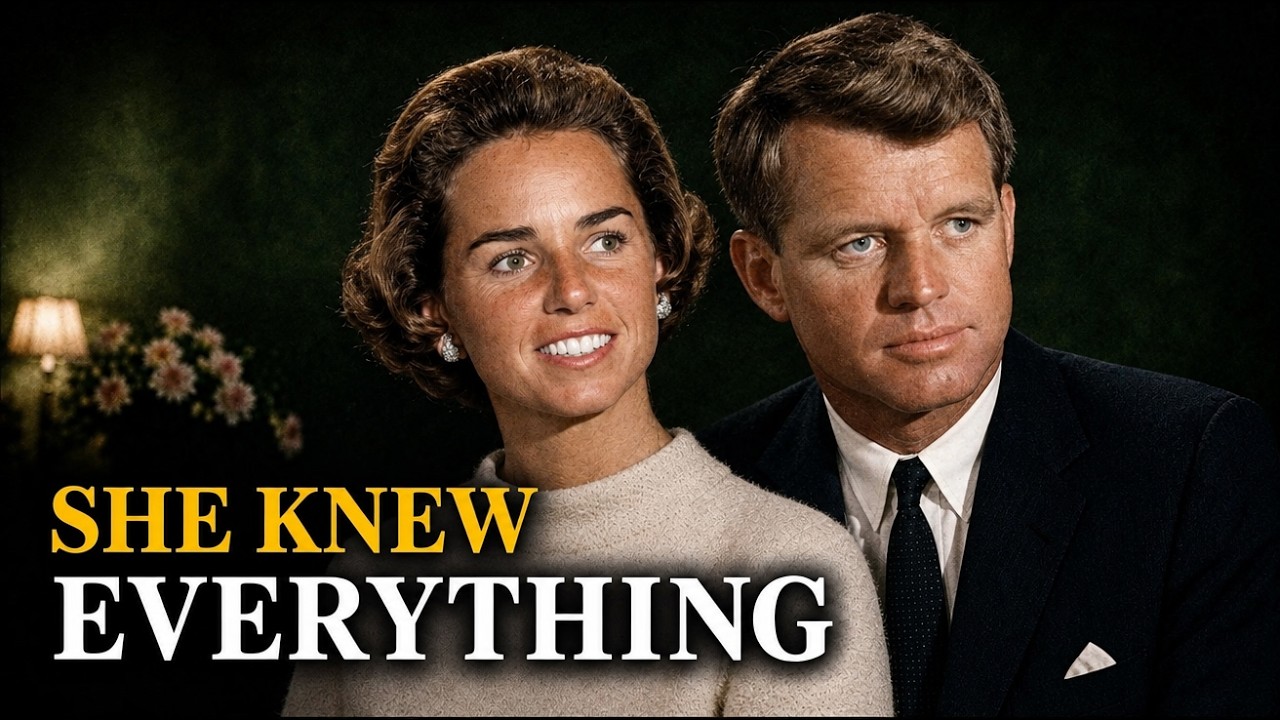
No verified settlement proposal, separation agreement, or divorce proceeding establishes that she rejected an actual opportunity to leave.
The more revealing question concerns how wealth, religion, family institutions, and political influence shaped her enduring public identity.
Her experience illuminates the economic structures supporting America’s political dynasties and the complicated ownership of historical reputations.
Unlike many women portrayed as financially dependent spouses, Ethel entered marriage with substantial resources from her own family.
Her father, George Skakel, built a successful industrial enterprise connected to carbon products and petroleum-related manufacturing activities.
That fortune placed the Skakel family among affluent American households long before Ethel joined the politically prominent Kennedys.
Understanding this financial independence is essential because it challenges simplistic explanations of her marriage as an economic necessity.
Her decision to remain within the Kennedy family cannot reasonably be attributed solely to an inability to support herself.
Instead, the available evidence points toward religious conviction, personal attachment, political partnership, and deeply interconnected family responsibilities.
The story also demonstrates how inherited wealth can provide security while creating complicated relationships between ownership and control.
Ethel Skakel was born in Chicago in April 1928, during an era of extraordinary American industrial expansion and concentration.
Her family’s prosperity originated in businesses serving essential manufacturing processes rather than glamorous consumer markets or financial speculation.
Great Lakes Carbon developed commercial interests connected to petroleum coke and carbon materials used across important industrial applications.
These products occupied specialized positions within industrial supply chains, illustrating how substantial fortunes could emerge outside household-name industries.
The Skakel family’s wealth was associated with privately held business interests, whose valuations were less transparent than public equities.
That distinction matters when comparing the Skakel and Kennedy fortunes because precise historical net worth estimates remain uncertain.
Private business ownership can generate substantial cash flow without providing the continuous market valuations available for listed corporations.
The family’s financial position nevertheless supported an affluent lifestyle, including extensive property holdings and access to private transportation.
Their Greenwich, Connecticut, residence reflected the economic privileges available to successful industrial families during the mid-twentieth century.
Ethel therefore entered adulthood with financial advantages that extended beyond the social opportunities associated with an elite upbringing.
Her family’s resources also provided connections to established business networks and institutions serving wealthy Northeastern American households.
Those networks formed part of the broader environment in which political families cultivated influence and organized their activities.
The Kennedy family represented a different but equally significant combination of private wealth, political ambition, and social organization.
Joseph P. Kennedy Sr. had accumulated substantial assets through business investments and other commercial activities before his children entered politics.
The family’s financial resources supported campaigns, education, travel, property ownership, and an extensive network of political relationships.
Such advantages did not guarantee electoral success, but they provided organizational capacity unavailable to many competing political families.
The Kennedy fortune also involved trusts and family-managed arrangements that complicated distinctions between individual wealth and collective resources.
These structures are important because access to financial benefits does not necessarily mean direct control over underlying assets.
A beneficiary may receive distributions while trustees or designated managers retain authority over investment decisions and administrative arrangements.
That separation between economic benefit and legal control can influence family relationships, spending decisions, and long-term financial independence.
The source describes Kennedy family trusts established before Ethel’s marriage, although their precise terms require independent documentary examination.
It also portrays family financial administration as centralized, with expenditures reviewed through established private management arrangements and procedures.
Those details suggest an important distinction between living within a wealthy household and personally directing its financial resources.
Ethel’s independent family background likely strengthened her position, but it did not eliminate the complexities of Kennedy financial arrangements.
Her marriage therefore united two prosperous families whose wealth originated in different businesses and supported different public ambitions.
Their relationship began through social connections involving Kennedy relatives and the educational institutions attended by young affluent Catholic women.
Ethel developed a friendship with Jean Kennedy, helping establish her connection to Robert Kennedy and his extended family.
Accounts of their courtship sometimes suggest Robert initially showed interest in Ethel’s older sister, although details remain disputed.
Such recollections provide historical color but cannot establish the private motivations that ultimately shaped their romantic relationship conclusively.
What is firmly established is that Ethel and Robert married in Greenwich, Connecticut, on June 17, 1950.
Their wedding joined two families possessing significant financial resources, strong Catholic traditions, and extensive social connections across America.
The marriage also began a political partnership that would become increasingly important as Robert’s public career developed further.
Robert Kennedy initially lacked the national recognition enjoyed by his older brother John, whose political ambitions were advancing.
His professional path included legal training, government service, and increasingly influential roles within the Kennedy family’s political operations.
Ethel’s outgoing personality complemented her husband’s more intense public manner, according to numerous recollections from family associates later.
Their partnership combined domestic responsibilities with political campaigning, fundraising relationships, and social activities supporting the family’s ambitions.
That arrangement reflected the gender expectations of mid-century American political life, when spouses frequently performed essential unpaid organizational labor.
The financial value of such work rarely appeared in campaign accounts or conventional measures of household economic production.
Nevertheless, organizing receptions, maintaining relationships, and hosting political gatherings could materially influence a candidate’s public standing and connections.
Ethel participated in John Kennedy’s successful 1952 Senate campaign while Robert helped manage the demanding electoral operation itself.
The campaign defeated Republican incumbent Henry Cabot Lodge Jr., establishing John Kennedy as a rising national Democratic figure.
Family members organized social events and voter outreach activities that complemented conventional campaign advertising and political organization efforts.
Ethel’s participation demonstrated how political families could mobilize domestic networks as instruments of electoral influence and public engagement.
These activities also illustrate the interaction between private wealth and democratic competition during an era of expensive campaigning.
Affluent political families could sustain extensive travel, hospitality, and organizational activity without depending entirely on outside fundraising efforts.
Their advantages extended beyond direct financial contributions into relationships, personal time, and the availability of unpaid family labor.
For Ethel, such involvement became an important component of her identity and partnership with Robert Kennedy throughout marriage.
Her household responsibilities expanded rapidly as the couple welcomed children while Robert assumed increasingly demanding professional and political roles.
Ultimately, they had eleven children, creating substantial logistical requirements even within a family possessing extraordinary financial resources available.
The scale of that household required staff, property management, transportation, education planning, and continuous coordination of family activities.
Those responsibilities constituted a significant managerial undertaking, although their economic value was rarely recognized as formal professional work.
In 1957, Robert and Ethel acquired Hickory Hill, the Virginia estate previously owned by John and Jacqueline Kennedy.
The property became a center of family life, political discussion, and social gatherings involving influential Washington figures regularly.
Its extensive grounds accommodated children, animals, entertaining, and the informal meetings that became associated with Kennedy political culture.
Hickory Hill’s importance extended beyond residential comfort because its hospitality helped cultivate relationships across government and intellectual circles.
Politicians, journalists, academics, and lawyers attended gatherings that blended personal friendship with discussion of public policy and government.
Such events could facilitate informal exchanges outside the structured procedures of congressional hearings and formal administrative meetings regularly.
The property therefore functioned simultaneously as a family residence and an important social asset within Washington’s political environment.
Ethel managed much of that activity, providing an organizational contribution distinct from Robert’s government responsibilities and electoral work.
The financial structure supporting the household remains relevant because prestigious properties involve substantial recurring operating and maintenance expenses.
Large estates require continuous expenditures on staffing, repairs, utilities, transportation, insurance, and the upkeep of surrounding grounds annually.
Those costs can create dependencies even when household members possess significant personal wealth and valuable inherited financial interests.
The source suggests that Kennedy family financial arrangements helped sustain Hickory Hill’s unusually active domestic and social operations.
However, exact ownership rights, trust distributions, and household financing cannot be reconstructed conclusively from the transcript alone provided.
The broader principle remains clear: household management and legal ownership represent different forms of economic authority and control.
Ethel exercised substantial influence over domestic arrangements while family financial structures operated through separate institutional and administrative channels.
That distinction complicates claims that she either controlled the entire family fortune or lacked meaningful financial independence altogether.
Both interpretations would oversimplify the relationships between inherited wealth, marital assets, family trusts, and individual decision-making authority involved.
Religion provided another powerful influence on the couple’s marriage and the expectations surrounding family life and personal commitments.
Ethel was raised within a devout Catholic environment and attended schools closely associated with the church’s educational traditions.
Her religious identity remained prominent throughout adulthood, influencing public service, family responsibilities, and her understanding of marriage itself.
Catholic teaching regards a valid sacramental marriage as indissoluble, although civil divorce and ecclesiastical annulment are distinct concepts.
A civil divorce may terminate a legal marriage without necessarily changing its status under Catholic sacramental doctrine itself.
An annulment, by contrast, concerns whether a valid sacramental marriage existed from the beginning under applicable church rules.
These distinctions matter because religious objections to divorce cannot automatically establish that someone faced an actual divorce decision.
The available historical account does not document Ethel considering separation or rejecting a specific proposal to dissolve her marriage.
Her faith provides context for understanding her commitments, but it does not establish private motivations beyond surviving evidence alone.
The couple’s public partnership also complicates narratives portraying their marriage primarily through alleged infidelity or concealed personal humiliation.
Several sensational accounts have made claims about Robert Kennedy’s private relationships, often relying on disputed or anonymous testimony.
Those allegations should not be treated as established facts merely because they appeared in commercially successful biographical publications.
The transcript distinguishes between documented family relationships and speculative claims that lack sufficiently reliable contemporary supporting evidence altogether.
This distinction is especially important when allegations concern deceased individuals who cannot respond directly to disputed accounts themselves.
Historical analysis requires evaluating source quality, corroboration, chronology, and potential incentives influencing the testimony of later witnesses.
The available material does not establish that Robert Kennedy maintained a documented pattern of affairs requiring Ethel’s forgiveness.
Nor does it establish that she contemplated divorce because of misconduct or other serious problems within the marriage.
Consequently, the title’s implied conflict cannot responsibly serve as the foundation for a factual account of their relationship.
A more substantiated interpretation examines the partnership they visibly maintained throughout Robert Kennedy’s developing public career and responsibilities.
When John Kennedy became president in 1961, Robert assumed the influential position of United States attorney general thereafter.
His appointment placed him near the center of federal decision-making during an unusually dangerous period of Cold War confrontation.
Robert participated in discussions involving Cuba, civil rights, organized crime, and other major issues facing the administration nationally.
His close relationship with President Kennedy gave him influence extending beyond the conventional responsibilities of the Justice Department itself.
Ethel continued managing family life and political hospitality while her husband devoted extraordinary attention to federal government affairs.
Their responsibilities were different, but both contributed to the political organization surrounding the Kennedy administration and family network.
The assassination of President Kennedy in November 1963 transformed that arrangement and the family’s position in American politics.
Robert lost his brother, closest political partner, and the president whose administration had defined his recent professional responsibilities.
The tragedy also changed Ethel’s public role because Robert increasingly became associated with preserving his brother’s political legacy.
Jacqueline Kennedy and Robert shared profound grief, leading to frequent public appearances and considerable attention from contemporary observers.
Some later publications interpreted their emotional closeness as evidence of a romantic relationship, but reliable documentation remains insufficient.
Their shared mourning is historically established, while more sensational claims require evidence that the supplied material does not provide.
Ethel’s marriage continued through this difficult period as Robert reconsidered his future outside his brother’s administration and influence.
He resigned as attorney general in September 1964 and pursued election to the United States Senate from New York.
His campaign required substantial organizational effort, extensive travel, and a public presentation distinct from his earlier executive role.
Ethel participated actively, reinforcing the political partnership that had developed throughout their marriage and earlier family campaigns together.
Robert won the election, creating an independent political platform and renewing speculation about his future presidential ambitions nationally.
His Senate career increasingly emphasized poverty, racial inequality, economic opportunity, and the social consequences of government policy decisions.
Those priorities carried substantial economic implications, particularly for communities excluded from the benefits of postwar American prosperity historically.
During the 1960s, the United States experienced strong economic expansion alongside persistent inequalities in employment, income, and opportunity.
The broader economy benefited from industrial production, technological investment, rising household consumption, and expanding federal government expenditures nationally.
Yet aggregate growth figures concealed severe deprivation in certain rural communities and disadvantaged urban neighborhoods across America.
Robert Kennedy’s visits to impoverished areas helped focus public attention on conditions overlooked by conventional measures of prosperity.
His travels through Mississippi and Appalachia highlighted malnutrition, inadequate housing, unemployment, and the limitations of existing assistance programs.
These observations informed his political advocacy and contributed to his evolving understanding of economic inequality and social policy.
Ethel frequently accompanied political activities, supporting the campaign’s public presence and relationships with communities seeking greater economic opportunity.
Their partnership therefore became associated with issues extending beyond family reputation into debates about economic justice and development.
Robert’s work in Brooklyn’s Bedford-Stuyvesant neighborhood demonstrated an interest in combining private investment with community development initiatives locally.
The Bedford Stuyvesant Restoration Corporation emerged from efforts to attract resources and strengthen economic opportunity within disadvantaged neighborhoods.
Such initiatives reflected broader debates about whether public spending alone could address persistent poverty and urban economic exclusion.
They also emphasized the potential contribution of private capital, local institutions, and community participation to neighborhood revitalization.
These concerns remain familiar to contemporary analysts evaluating economic mobility, investment access, and disparities in regional development outcomes.
Robert Kennedy’s political approach increasingly connected national economic performance with the lived experiences of families facing structural disadvantage.
His presidential campaign in 1968 built upon those themes while confronting the Vietnam War and divisions within Democratic politics.
Ethel supported the campaign while pregnant with their eleventh child, continuing the demanding public role she had established.
The campaign combined traditional electoral organization with highly visible appearances among supporters seeking political and social change nationally.
Crowds frequently surrounded Robert Kennedy, creating security concerns that would later acquire tragic historical significance for his family.
On June 4, 1968, he won California’s Democratic presidential primary and addressed supporters at the Ambassador Hotel.
Shortly after midnight, as he moved through a hotel pantry, an assassin opened fire at close range there.
Ethel reached her wounded husband amid the confusion, attempting to protect him from the surrounding crowd and commotion.
Photographs from the scene became among the most enduring images of the violence that marked American politics.
Robert Kennedy died on June 6, 1968, at forty-two, leaving Ethel widowed with ten children and another expected.
The assassination ended their marriage after eighteen years and transformed Ethel’s responsibilities almost overnight in profoundly personal ways.
She faced immediate family obligations alongside public expectations that she would preserve her husband’s memory and political ideals.
Their youngest child, Rory Kennedy, was born in December 1968, several months after her father’s death in California.
Ethel never remarried, a decision often presented as the ultimate expression of loyalty to her deceased husband afterward.
But remarriage and divorce are fundamentally different questions because death had already legally ended the original marriage in 1968.
Her subsequent decisions concerned widowhood, family identity, religious commitments, and the preservation of a political legacy over decades.
The financial implications were substantial because Robert Kennedy’s public identity had become associated with institutions, philanthropy, and historical memory.
Ethel helped establish and support organizations intended to continue his commitment to human rights and social justice initiatives.
The Robert F. Kennedy Memorial, later associated with Robert F. Kennedy Human Rights, became central to that mission.
Such institutions require fundraising, administration, public relationships, and long-term financial planning to sustain programs across multiple decades successfully.
Philanthropic organizations also depend upon credibility, donor confidence, and governance structures capable of preserving their stated missions over time.
Ethel’s public association with Robert Kennedy provided considerable recognition, but maintaining institutional activity required more than symbolic visibility.
Her participation helped connect donors, public figures, activists, and organizations pursuing causes associated with her husband’s political work.
The resulting network demonstrates how prominent family names can function as intangible assets supporting philanthropic fundraising and influence.
Unlike conventional financial assets, reputational capital cannot be valued reliably through daily trading prices or published market quotations.
Its practical importance becomes visible through donor participation, institutional longevity, public recognition, and access to influential networks worldwide.
The foundation’s journalism awards and human rights initiatives helped maintain Robert Kennedy’s association with accountability and public service.
Such programs also encouraged continuing attention to issues involving poverty, civil liberties, and government responsibility for vulnerable communities.
Their existence represented substantive institutional activity rather than merely a ceremonial effort to preserve a famous political surname.
Nevertheless, historians must distinguish the organizations’ documented achievements from speculation about Ethel’s private motives in supporting them.
The transcript interprets her institutional work as a deliberate effort to control her husband’s historical reputation over time.
That interpretation is plausible as analysis, but direct evidence of an overarching private strategy remains more limited historically.
Public advocacy, charitable administration, and selective participation in interviews do not automatically establish an intention to suppress alternative histories.
A widow may protect family privacy while also sincerely supporting the causes associated with a deceased spouse’s work.
Those motivations can coexist without requiring a single explanation for every decision made across fifty-six years of widowhood.
Ethel’s approach to interviews and personal memoirs has nevertheless attracted considerable interest among biographers studying the Kennedy family.
She did not publish a comprehensive personal memoir explaining the marriage or documenting her private experiences in detail.
Her relative silence left researchers dependent on public records, interviews with associates, family materials, and authorized biographical accounts instead.
The availability of archival documents also influenced which aspects of Robert Kennedy’s career historians could examine independently over time.
Some family-related collections contained access restrictions, although specific conditions and decisions require examination of individual archival agreements themselves.
Restricted access can limit historical research, but it does not automatically demonstrate that documents were intentionally concealed improperly.
Archives frequently impose restrictions involving privacy, donor agreements, classified information, and the protection of living individuals’ interests legally.
Evaluating the Kennedy papers therefore requires distinguishing ordinary archival administration from documented attempts to shape historical interpretation deliberately.
The source argues that Ethel exercised substantial influence over access to materials associated with her husband’s career and legacy.
However, its broader claims about comprehensive control over historical narratives exceed what can be established from the transcript alone.
Authorized biographers received varying degrees of cooperation, while other researchers worked through publicly available collections and interviews independently.
Arthur Schlesinger Jr.’s biography benefited from his close association with the Kennedy family and extensive historical knowledge personally.
Later biographers, including Evan Thomas and Larry Tye, examined Robert Kennedy through different sources and interpretive approaches historically.
Their work illustrates how access, methodology, and authorial perspective can influence biographies without necessarily invalidating earlier research conclusions.
The historical record evolves as documents become available, witnesses provide testimony, and scholars reassess previously accepted interpretations over time.
Ethel’s public silence therefore represents one feature of a broader process through which political reputations develop across generations.
Her own life continued through considerable personal tragedy, including the deaths of two sons during her long widowhood.
David Kennedy died in 1984, while Michael Kennedy died in a skiing accident in 1997 in Colorado.
These losses imposed profound emotional burdens on a family already shaped by political assassination and public scrutiny over decades.
Other family controversies attracted extensive media attention, often placing Ethel’s private responsibilities within an unforgiving public spotlight again.
Such events complicate romantic portrayals of the Kennedy household as an uninterrupted symbol of wealth, security, and happiness.
Inherited wealth can provide material protection without preventing addiction, accidents, family conflict, or the consequences of personal tragedy.
The family’s experiences demonstrate that financial resources and political prominence do not eliminate vulnerability to profound human suffering.
They also highlight the difficulty of maintaining personal privacy when family identity carries national political and cultural significance.
Hickory Hill remained closely associated with Ethel’s life for decades after Robert Kennedy’s assassination and burial at Arlington.
Eventually, the estate was offered for sale, reflecting a major change in the family’s longstanding residential arrangements there.
The transcript describes substantial reductions from the initial asking price before a sale was completed around 2010 eventually.
Property transactions involving historic estates can reveal the difference between symbolic prestige and actual real estate market demand.
A famous residence may command attention without attracting buyers willing to assume significant renovation and maintenance expenses immediately.
Large properties also face valuation challenges involving specialized features, limited comparable sales, and substantial ongoing operating costs annually.
The sale illustrates how even prominent family assets remain subject to ordinary economic constraints and changing buyer preferences.
Historical importance may enhance a property’s appeal, but it cannot guarantee liquidity at an owner’s preferred asking price.
Ethel subsequently spent more time in other Kennedy family residences, maintaining connections with relatives and longstanding community relationships.
Her later years also included continuing participation in human rights advocacy and public activities associated with philanthropy nationally.
In 2014, President Barack Obama awarded her the Presidential Medal of Freedom, recognizing her humanitarian contributions and service.
The honor reflected a public career extending far beyond her original responsibilities as a political spouse and mother.
Her charitable work connected the Kennedy legacy with contemporary issues involving justice, opportunity, and international human rights advocacy.
Those activities complicate descriptions that reduce her identity exclusively to widowhood or membership in a wealthy political dynasty.
She had become an independent public figure, even while continuing to identify strongly with Robert Kennedy’s political legacy.
The distinction matters because public recognition can arise from both inherited associations and personally sustained institutional work afterward.
Ethel’s influence was inseparable from her husband’s name, but her decades of participation required continued commitment and effort.
The source also describes her involvement in protests and advocacy concerning immigration, gun policy, and other public issues.
These activities suggest that her later public life remained politically engaged rather than confined to commemorating past events alone.
Her family’s political differences became more visible during the twenty-first century, especially around Robert F. Kennedy Jr.
Disagreements concerning vaccination policy and presidential politics placed some relatives on opposing sides of significant public controversies nationally.
Ethel generally avoided extensive public commentary on those disagreements, consistent with her longstanding reluctance to discuss family conflicts.
That silence should not be treated as definitive evidence of endorsement, opposition, or a carefully coordinated political strategy.
Public figures may withhold comment for numerous reasons, including privacy, family relationships, personal judgment, and media concerns alike.
Interpreting silence requires caution because the absence of a statement cannot reliably establish a person’s private beliefs alone.
The same principle applies to Ethel’s decision not to describe the assassination extensively in filmed interviews afterward publicly.
Her daughter Rory Kennedy explored the family’s history in the 2012 documentary titled Ethel, featuring personal interviews throughout.
The film presented memories of family life, political campaigns, and the complicated experiences surrounding Robert Kennedy’s public career.
When the conversation approached the assassination, Ethel declined to discuss the event in detail before the camera there.
That response is understandable given the extraordinary trauma she experienced while pregnant and witnessing her husband’s fatal injuries.
It may also reflect a broader preference for privacy, but the documentary cannot establish a comprehensive historical strategy alone.
Researchers should avoid transforming a survivor’s refusal to revisit trauma into proof of calculated manipulation of public memory.
Her silence leaves unanswered questions, yet unanswered questions are not themselves evidence supporting speculative explanations of marital history.
The documentary nevertheless reveals the lasting emotional significance of Robert Kennedy’s death for his wife and children alike.
It also demonstrates the challenges facing descendants who seek to document family history while respecting intensely personal boundaries.
For financial and institutional analysis, Ethel’s experience offers a distinctive example of wealth supporting intergenerational public influence over time.
The Skakel and Kennedy fortunes provided resources that helped sustain family activities, philanthropy, and extensive political networks nationally.
Trust arrangements and family offices illustrate how affluent households separate asset ownership from administrative and beneficiary responsibilities legally.
These structures can support continuity across generations, although their effectiveness depends on governance, investment performance, and family relationships.
They can also create tensions when beneficiaries possess social influence without corresponding control over underlying financial assets directly.
The historical account suggests such complexities existed around the Kennedy family’s administration of inherited resources and household expenditures.
However, precise financial conclusions require trust documents, property records, and verified accounting information beyond the supplied narrative itself.
No reliable portfolio valuation, asset allocation, or investment return series is provided for the family’s holdings during marriage.
Consequently, assigning specific investment performance to Ethel’s personal decisions would be unsupported by the available historical evidence here.
The family’s wealth should instead be understood as background infrastructure supporting political activity and long-term institutional development efforts.
The same caution applies to comparing Kennedy family assets with contemporary public market benchmarks or investment portfolios today.
The S&P 500, Dow Jones Industrial Average, and Nasdaq Composite measure traded securities rather than private dynastic wealth directly.
Their movements cannot establish the value of privately held family trusts or historical philanthropic influence without additional information.
Similarly, contemporary Treasury yields and Federal Reserve policy do not explain Ethel’s marital decisions during the 1950s directly.
Monetary conditions can influence asset values, borrowing costs, and household wealth, but private motivations require separate evidence altogether.
The 1950s and 1960s operated under different monetary arrangements, including the international Bretton Woods exchange rate system.
Inflation, interest rates, and economic growth influenced wealthy households, although their effects varied with asset composition and financing.
The transcript does not provide sufficient financial records to calculate how those conditions affected Ethel’s personal wealth specifically.
A responsible economic interpretation therefore emphasizes institutional structure and financial independence rather than invented returns or valuations here.
Her family’s industrial origins also illustrate how fortunes accumulated through specialized businesses can support influence far beyond commerce.
The Skakel enterprise generated resources that helped provide education, mobility, social access, and long-term family financial security initially.
Marriage connected those resources to another family whose ambitions centered increasingly on national politics and public service careers.
The resulting network combined private capital, political relationships, and charitable institutions in ways difficult to measure economically precisely.
Such combinations remain relevant when examining the role of wealthy families in philanthropy, elections, and public policy today.
Institutional investors studying family-controlled enterprises often emphasize governance, succession planning, liquidity, and the separation of economic interests.
Those principles provide a useful analytical framework for understanding the structures surrounding prominent political families across multiple generations historically.
Yet the Kennedy experience also demonstrates that reputation, personal relationships, and public responsibility can matter beyond financial ownership.
Ethel’s later role involved maintaining institutions and relationships that could not be reduced to conventional balance sheet assets.
Her decision never to remarry remained personal, even as it carried obvious consequences for public identity and family continuity.
It preserved her association with Robert Kennedy, but that outcome does not prove it was her primary motivation throughout.
Her Catholic faith, affection for her husband, children, and established life all provide relevant historical context for consideration.
No single explanation can be verified conclusively because she left relatively limited direct testimony about those private choices herself.
The available evidence is stronger concerning her public actions than the unspoken intentions that later commentators assign to them.
She raised a large family, supported charitable organizations, participated in advocacy, and remained closely associated with Kennedy history.
Those activities continued through periods of changing economic conditions, political upheaval, and personal loss across several decades afterward.
They established a substantial public legacy independent of any unsupported narrative about rejecting divorce or tolerating marital betrayal.
The comparison with Jacqueline Kennedy illustrates how different widows navigated public identity after the deaths of political husbands.
Jacqueline remarried in 1968 and pursued professional interests, including a later career in publishing and editorial work thereafter.
Ethel remained unmarried and devoted considerable public attention to causes associated with Robert Kennedy’s political philosophy and ideals.
Those choices reflected different lives and circumstances, not necessarily competing strategies for maximizing status or financial advantage personally.
A remarriage could have changed Ethel’s social identity, but claims about its precise financial consequences remain speculative without documentation.
Similarly, continuing to use the Kennedy surname does not establish that she prioritized public standing above personal attachment.
The economic value of a famous name can be substantial, but its emotional significance cannot be measured financially alone.
Ethel’s life illustrates how these dimensions can coexist within a single person’s public and private experience over decades.
When she died on October 10, 2024, at ninety-six, tributes emphasized her humanitarian work and enduring Kennedy connections.
She had outlived Robert Kennedy by more than half a century, witnessing profound changes in American politics and society.
Her death closed a chapter linking the early Kennedy political dynasty with contemporary debates about public service and influence.
The marriage itself had lasted eighteen years, while her widowhood extended across fifty-six years of changing national history.
That contrast helps explain why her identity remained associated with a husband who died relatively young and unexpectedly.
But it should not obscure the independent work she performed or the personal challenges she faced afterward alone.
The strongest historical conclusion is also the simplest: no documented divorce proposal establishes that Ethel Kennedy refused one.
Her continuing unmarried status after 1968 represents widowhood, not evidence of a rejected separation during the marriage itself.
The more meaningful questions concern religious commitment, family wealth, political partnership, and the responsibilities created by inherited prominence.
Those questions connect personal history with broader economic themes involving ownership, philanthropy, institutional governance, and intergenerational influence today.
They also reveal why sensational headlines can obscure the underlying evidence by presenting speculation as established private history.
For historians, the challenge is distinguishing documented conduct from interpretations of motives that cannot be independently verified conclusively.
For financial analysts, the lesson involves recognizing that wealth provides options without determining how individuals choose among them.
Ethel possessed material advantages unavailable to most American women of her generation, including access to substantial family resources.
Those advantages did not eliminate religious obligations, emotional attachments, family responsibilities, or the pressures of political visibility entirely.
Her marriage developed within a network where private wealth and public ambition reinforced one another through institutions and relationships.
Her widowhood transformed those relationships, leaving her responsible for children and involved in preserving important philanthropic organizations afterward.
The resulting legacy cannot accurately be described as a simple story of financial dependence or strategic marital endurance.
It is better understood as a complex intersection of personal devotion, inherited resources, institutional influence, and historical circumstance.
Ethel Kennedy never needed to refuse a documented divorce to become one of America’s most enduring political widows.
Her actual life offers a more substantial story about wealth, loyalty, public service, and the limits of historical certainty.
The financial resources surrounding her provided security, but the choices she made cannot be explained by money alone.
Her public identity remained connected to Robert Kennedy because their marriage, family, and political work had become deeply intertwined.
Whether she privately understood that continuity as duty, love, faith, or something more complicated cannot be conclusively determined today.
What can be established is the scale of her subsequent commitment to family, philanthropy, and public advocacy over decades.
That documented record deserves greater attention than an unsupported suggestion that she rejected a divorce that never materialized.
The lasting significance of Ethel Kennedy’s story lies not in a secret separation, but in an extraordinary public life.
It reveals how American political families transform private wealth into institutions, and how individuals sustain legacies beyond financial inheritance.
Above all, it demonstrates that historical truth often emerges from rejecting a dramatic premise rather than elaborating upon it.


