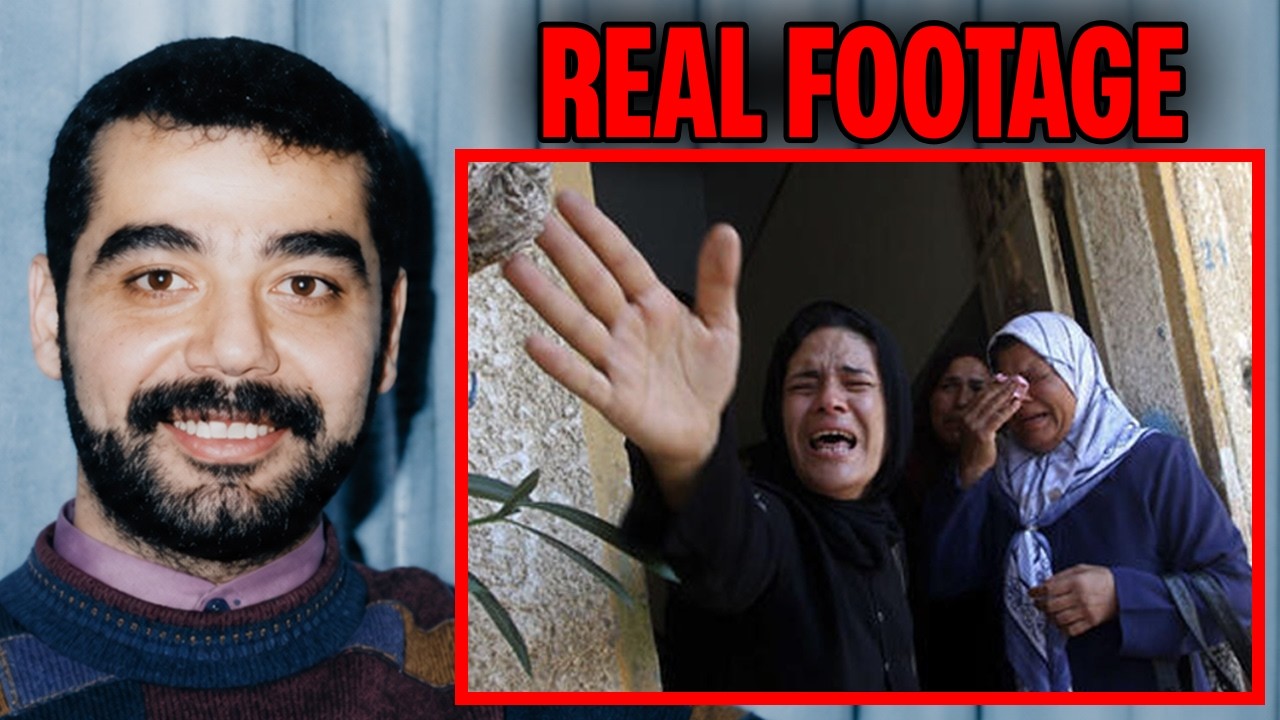
In October 2000, reports emerged from Iraq describing women executed publicly after accusations that had never been tested.
The killings exposed a terrifying reality beneath Saddam Hussein’s government, where powerful security organizations could operate beyond meaningful accountability.
At the center of international allegations stood Uday Hussein, Saddam’s eldest son and an increasingly notorious figure.

His reputation extended beyond personal brutality into a network of political influence, intimidation, and armed enforcement throughout Iraq.
For women accused of violating official morality standards, the consequences could become immediate, irreversible, and devastating for families.
The most disturbing aspect was not simply the violence, but the apparent absence of legitimate judicial proceedings.
Human rights organizations documented executions carried out by members of the Fedayeen Saddam, a militia associated with Uday.
Some victims were reportedly killed outside their homes, transforming residential neighborhoods into places of fear and public humiliation.
These reports challenged the government’s claim that its campaign represented lawful action against prostitution and other offenses.
They also revealed how accusations of immoral behavior could become instruments of political persecution and personal revenge.
To understand these atrocities, it is necessary to examine the extraordinary power accumulated by Saddam Hussein’s eldest son.
That power developed within a political system where loyalty to the ruling family frequently outweighed independent legal authority.
Uday Hussein was born on June 18, 1964, into the family that would eventually dominate Iraq’s political landscape.
His father, Saddam Hussein, became Iraq’s president in 1979 after consolidating influence within the ruling Ba’ath Party.
His mother, Sajida Talfah, belonged to the extended family network that helped shape Saddam’s earliest political relationships.
Growing up within this privileged environment gave Uday opportunities unavailable to the overwhelming majority of Iraqi children.
Luxury, political connections, and access to powerful officials surrounded him long before he occupied any significant public position.
Yet the protections surrounding Saddam’s family also created conditions in which serious misconduct could escape ordinary consequences.
Iraq was already governed through an extensive security apparatus that restricted political opposition and discouraged criticism of powerful individuals.
Opponents could face surveillance, imprisonment, torture, or execution, while independent institutions possessed little authority against the presidential circle.
Within this system, Uday’s position as the president’s son became a formidable source of personal and institutional influence.
His public career expanded rapidly during the 1980s, particularly through positions connected with sports, young people, and state media.
In 1984, he became chairman of the Iraqi Olympic Committee, giving him enormous influence over competitive athletics nationwide.
He subsequently assumed leadership of Iraqi soccer administration, extending his reach into one of the country’s most popular activities.
These appointments were especially significant because sports carried enormous symbolic importance for Saddam Hussein’s government and national prestige.
Athletes represented Iraq internationally, while official sporting organizations remained closely connected to the broader political structure of government.
Under Uday’s leadership, former athletes described a system where disappointing results could invite punishment rather than professional assessment.
Accounts from defectors included detention, beatings, physical humiliation, and other forms of coercion against athletes and sporting officials.
Such allegations illustrated the broader danger of institutions placed under individuals whose authority lacked effective independent oversight.
For Uday, athletic administration also provided visibility, influence, access to resources, and opportunities to reward politically loyal associates.
His growing reputation became inseparable from an incident that occurred during a presidential gathering in October 1988.
Uday killed Kamel Hana Gegeo, a trusted presidential aide, during an episode that caused embarrassment within Saddam’s inner circle.
Accounts differed regarding the immediate circumstances, although the killing was widely associated with tensions surrounding Saddam’s personal relationships.
The incident demonstrated how disputes inside the ruling family could escalate into lethal violence involving people serving the president.
Saddam reportedly ordered punitive measures against his son, including detention and a period spent outside Iraq afterward.
Nevertheless, Uday eventually resumed his influential position, reinforcing widespread perceptions that the presidential family enjoyed exceptional protection.
For ordinary Iraqis, the episode highlighted a fundamental difference between the consequences facing political elites and everyone else.
A killing involving a powerful presidential relative did not produce the kind of transparent accountability expected under independent law.
As the 1990s approached, Iraq entered a period of profound economic, political, and social upheaval following regional conflict.
In August 1990, Saddam ordered the invasion of Kuwait, setting the stage for an international military confrontation with Iraq.
The American-led coalition expelled Iraqi forces from Kuwait in 1991, leaving the country weakened and internationally isolated afterward.
International sanctions placed additional pressure on Iraq’s economy, affecting public services, household finances, and access to essential goods.
The resulting hardship transformed daily life for millions, although responsibility for suffering involved both governmental policies and sanctions.
Families who had previously enjoyed professional stability increasingly confronted unemployment, shortages, declining purchasing power, and uncertain futures.
Women were particularly affected because economic deterioration undermined educational opportunities, employment prospects, and family independence across Iraqi society.
These pressures interacted with political repression, producing an environment in which vulnerable people had fewer options for protection.
The decline was especially striking when compared with earlier decades of expanding educational participation among many urban Iraqi women.
Iraq had developed substantial public education and professional employment opportunities, although women’s experiences varied across class and region.
Female doctors, teachers, engineers, students, and public employees had contributed significantly to the country’s development before economic conditions deteriorated.
Those achievements existed alongside authoritarian government, meaning educational advancement had never guaranteed political freedom or personal security.
During the 1990s, the weakening economy made it increasingly difficult for families to preserve earlier living standards.
At the same time, Saddam’s government pursued policies emphasizing religious observance and conservative social behavior as political priorities.
The Faith Campaign, launched during the 1990s, reflected efforts to strengthen the regime’s legitimacy among religious constituencies.
Its consequences included changing expectations surrounding public behavior, personal appearance, and the government’s relationship with religious authority.
These changes did not affect every community identically, but they altered the political environment surrounding women’s everyday choices.
Conservative rhetoric could become particularly dangerous when implemented through security organizations possessing sweeping powers and weak accountability mechanisms.
The greatest threat emerged when accusations about personal morality were treated as sufficient justification for extraordinary state violence.
Uday’s influence expanded through his association with the Fedayeen Saddam, a paramilitary organization dedicated to protecting the regime.
The organization developed during the mid-1990s and became closely identified with the presidential family and its security priorities.
Unlike ordinary civilian institutions, such forces operated within a political culture that prioritized loyalty and intimidation over transparency.
Their involvement in policing perceived immoral behavior created opportunities for arbitrary detention, humiliation, violence, and extrajudicial punishment.
An accusation could carry devastating consequences when armed men possessed the practical ability to impose punishment without meaningful review.
Women already experiencing economic insecurity faced additional risks whenever allegations became tools for settling private or political disputes.
The resulting climate encouraged silence because complaining against powerful individuals could expose victims and relatives to further retaliation.
Reports also described Uday pursuing women through coercive methods, although the precise scale of these allegations remains difficult to establish.
Journalists and defectors described unwanted approaches, intimidation, and allegations of abduction involving women encountered in ordinary social settings.
Weddings, educational institutions, and public gatherings appeared repeatedly in accounts describing anxiety about encounters with Uday’s associates.
However, individual stories require careful evaluation because repeated allegations do not establish every detail of a particular incident.
The broader pattern of coercion nevertheless fits the documented environment of intimidation surrounding prominent members of Saddam’s government.
Under such conditions, families could reasonably fear that resisting an influential official might endanger their wider household.
The absence of trusted legal remedies made the threat more severe, particularly for women confronting politically connected men.
Even when allegations never resulted in prosecution, their circulation revealed widespread distrust toward institutions expected to protect citizens.
Women faced a particularly painful contradiction between official promises of social progress and the realities of authoritarian power.
Public participation remained essential to professional advancement, yet visibility could create additional exposure to harassment or coercive attention.
Such fear cannot be measured precisely through anecdotes, and Iraq’s social changes had many overlapping causes throughout this period.
Economic hardship, conservative social pressures, political repression, and international isolation all contributed to shrinking opportunities for ordinary citizens.
Nevertheless, the documented conduct of regime security organizations gave families substantial reasons to question their personal safety daily.
The most horrifying consequences became internationally visible when human rights organizations reported killings during the final months of 2000.
In November, Amnesty International warned that women accused of prostitution had reportedly been publicly beheaded in several Iraqi locations.
Its initial reporting identified a campaign involving women and men accused of prostitution-related activities, with potentially numerous additional victims.
The organization expressed concern that further arrests and executions could follow unless the authorities ended the reported practices.
These were not allegations that first emerged after Saddam’s government collapsed, when investigators gained broader access to witnesses.
They were being documented while the regime remained in power, when obtaining independent testimony involved extraordinary practical dangers.
That timing matters because it establishes that credible international concern existed before the American-led invasion of Iraq in 2003.
The allegations centered on killings carried out without judicial process, fundamentally separating them from legitimate criminal adjudication procedures.
Even when a government criminalizes an activity, accusations cannot ethically justify executions imposed without evidence and independent review.
Amnesty described members of the Fedayeen Saddam using swords to execute victims in front of their homes.
Some incidents reportedly occurred while Ba’ath Party representatives and other official observers were present at the execution sites.
The involvement of regime personnel suggested that these acts extended beyond isolated private violence committed by individual offenders.
They instead reflected a pattern of armed enforcement occurring within structures linked directly to the country’s authoritarian government.
One particularly significant allegation involved an Iraqi physician whose reported execution raised serious questions about the campaign’s motives.
Dr. Najat Mohammad Haydar, an obstetrician, was reportedly executed after being accused of prostitution during the October campaign.
Amnesty reported information suggesting she had criticized corruption within health services before becoming a target of state authorities.
Her case illustrated why investigators questioned whether morality accusations sometimes concealed political punishment or personal retaliation against critics.
The accusation itself could damage a woman’s reputation, making public defense extraordinarily difficult even before physical punishment occurred.
In an environment without independent legal protection, a stigmatizing allegation could effectively silence both victims and their relatives.
Other reported victims included women killed in Mosul, demonstrating that the executions were not confined to Baghdad alone.
The campaign consequently raised concerns about coordinated practices spanning multiple locations within areas controlled by the Iraqi government.
Reports described relatives witnessing killings, adding another layer of psychological suffering to the already devastating loss of life.
Public execution also communicated an unmistakable warning to neighbors, transforming punishment into an instrument of collective intimidation and fear.
The violence extended beyond women accused of prostitution, with men suspected of facilitating such activities also reportedly executed.
These distinctions matter because the campaign targeted categories of alleged behavior rather than following transparent, individualized judicial determinations.
Some victims may have been accused of ordinary criminal offenses, while others were reportedly targeted for unrelated political reasons.
Without reliable court records, determining the complete circumstances surrounding every death remains exceptionally difficult for later historical investigators.
The underlying injustice, however, does not depend on proving the innocence of every individual accused by the authorities.
Executing people without fair proceedings violates fundamental protections regardless of whether an underlying allegation might otherwise warrant investigation.
International concern intensified as additional information emerged about torture, extrajudicial executions, and systematic intimidation across Saddam’s Iraq.
Amnesty’s reporting in 2001 described continued torture and a pervasive climate of fear affecting political prisoners and civilians.
The organization also documented methods of physical punishment that demonstrated how deeply coercive practices had penetrated official institutions.
Beheadings formed one particularly shocking element within a broader landscape of state violence against people considered politically vulnerable.
American government human rights assessments subsequently described substantial numbers of women reportedly killed through the paramilitary enforcement campaign.
A 2003 State Department assessment alleged that more than 200 women had been publicly beheaded throughout Iraq.
A later government report referred to at least 130 women allegedly killed between June 2000 and April 2001.
These figures reflect different reporting periods and evidentiary approaches, rather than a single universally verified count of victims.
The precise number remains uncertain because access was restricted, documentation incomplete, and many witnesses understandably feared retaliation afterward.
What independent observers could establish was the existence of serious allegations supported by multiple reports from that period.
The repeated accounts showed that accusations of prostitution had become associated with exceptionally brutal and frequently extrajudicial punishments.
The reported targeting of women for political reasons further undermined official explanations presenting the operation as ordinary law enforcement.
In November 2001, Iraq’s Revolutionary Command Council introduced new death penalty provisions covering several offenses, including prostitution itself.
That legal development did not retrospectively justify earlier killings, nor did it establish that previous victims received fair trials.
The timing also complicated official claims that earlier executions had followed established criminal laws and legitimate judicial procedures.
Human rights concerns consequently involved both the killings themselves and the government’s wider transformation of criminal punishment policies.
For women living under these conditions, the distinction between accusation, arrest, and punishment could become dangerously blurred overnight.
A neighbor’s allegation, an official’s hostility, or a politically motivated complaint could suddenly generate fear of catastrophic consequences.
Yet historians must distinguish documented patterns from dramatic individual narratives whose underlying evidence has not been independently established.
Descriptions of every woman being vulnerable to identical treatment oversimplify differences among neighborhoods, institutions, and personal circumstances nationwide.
The larger truth remains disturbing without suggesting that every family experienced exactly the same incidents or restrictions.
State violence created uncertainty, and uncertainty itself became a powerful mechanism for controlling behavior across civilian communities daily.
When people cannot predict which conduct authorities will punish, they may restrict ordinary activities beyond any explicit prohibition.
For women, those restrictions could influence educational choices, social interactions, professional ambitions, and decisions about public appearance daily.
Families sometimes responded by withdrawing from activities they believed might expose daughters to unwanted attention or political danger.
Still, assigning particular enrollment declines or marriage patterns exclusively to Uday would exceed the available historical evidence today.
The economic consequences of sanctions and shifting social expectations must remain part of any responsible explanation of change.
Researchers studying Iraqi women have emphasized how warfare, authoritarianism, economic collapse, and state policies interacted across successive decades.
This broader perspective avoids reducing an entire nation’s experience to the brutality of a single member of its leadership.
Uday’s actions were significant, but his influence depended upon an existing political system designed to resist meaningful accountability.
The ruling family’s authority existed because state institutions, security organizations, and political hierarchies concentrated power in their hands.
Officials who might otherwise have intervened lacked independence or faced serious consequences for challenging members of the presidential circle.
Such institutional weakness allowed allegations to accumulate without producing investigations capable of protecting victims or punishing influential perpetrators.
Meanwhile, the government’s information controls restricted domestic reporting and discouraged independent scrutiny of abuses associated with ruling elites.
Uday also became associated with media enterprises, including the newspaper Babel, strengthening his public profile within Iraq’s information system.
Media influence mattered because publicity could support powerful figures while critics faced restrictions on expressing competing accounts publicly.
The combination of political power, armed loyalists, and controlled information created formidable obstacles for vulnerable individuals seeking protection.
Outside Iraq, human rights investigators faced their own difficulties interpreting evidence emerging through defectors, opposition organizations, and witnesses.
Political exiles sometimes possessed important firsthand knowledge, but their accounts also required verification through independent supporting information whenever possible.
The existence of political motives among informants did not automatically invalidate their testimony or erase documented patterns of abuse.
Likewise, government denials could not substitute for transparent investigations capable of independently determining what happened to the victims.
Human rights organizations therefore compared available testimonies, identified recurring details, and documented abuses despite restricted access inside Iraq.
Their conclusions helped establish an evidentiary record that survived beyond the disappearance of the institutions responsible for repression.
The reported campaign became an example of how state-sponsored humiliation could reinforce fear far beyond immediately targeted individuals themselves.
A public killing did not simply eliminate its victim; it threatened witnesses with an unforgettable demonstration of uncontrolled authority.
The surrounding community learned that officials might act violently without meaningful legal restraints or opportunities for independent appeal.
Such knowledge could discourage criticism, encourage compliance, and leave families unwilling to speak openly about their losses afterward.
Victims’ relatives might also confront social stigma stemming from accusations deliberately attached to those selected for punishment publicly.
That stigma could survive long after the political system responsible for spreading it had disappeared from power entirely.
For survivors, justice required more than identifying perpetrators; it also involved restoring dignity and challenging damaging official accusations.
Yet the prospect of accountability remained remote while Saddam Hussein’s government retained control of Iraq’s courts and security.
The situation changed dramatically in March 2003 when American and coalition forces invaded Iraq to overthrow Saddam’s government.
Baghdad fell in April, ending the central regime’s ability to govern through its established security and political structures.
The collapse opened opportunities for journalists, researchers, and survivors to investigate abuses previously concealed by official intimidation campaigns.
Investigators confronted missing records, traumatized witnesses, damaged institutions, and the immense practical difficulties of documenting systematic crimes afterward.
Some people remained reluctant to discuss sexual violence because public disclosure could expose them to renewed stigma or danger.
Others had fled their homes, lost relatives, or experienced years of displacement that complicated efforts to reconstruct events.
The disappearance of the regime did not automatically produce reliable information about every alleged offense committed under its authority.
Nonetheless, earlier human rights documentation provided investigators with important starting points for examining the country’s record of repression.
Uday himself did not survive long enough to face a criminal trial examining these allegations in public proceedings afterward.
On July 22, 2003, American forces confronted Uday and his younger brother Qusay at a residence in Mosul.
A prolonged firefight followed, and both brothers were killed during the military operation carried out against the residence.
Uday was 39 years old when he died, ending any realistic possibility of prosecuting him personally for alleged abuses.
His death represented the disappearance of a notorious figure, but it could not automatically establish the truth of every accusation.
Nor did it provide survivors with courtroom testimony, public cross-examination, or comprehensive judicial findings about their individual experiences afterward.
Many questions surrounding responsibility consequently remained unresolved, even as the broader nature of Saddam’s repression became increasingly documented.
The Fedayeen Saddam’s role in the executions highlighted the dangers of armed organizations operating outside independent democratic oversight.
Its behavior demonstrated how political loyalty could replace legal standards, allowing accusations to become punishments without credible examination.
The consequences extended beyond the individuals killed, reaching relatives, witnesses, communities, and people who feared becoming future targets.
These patterns were particularly harmful because they weaponized social expectations about women’s behavior against those lacking institutional protection.
An allegation concerning sexuality could function simultaneously as personal humiliation, political intimidation, and justification for extreme violence afterward.
The historical record also demands recognizing that Iraqi women were never merely passive figures within this authoritarian society.
They worked, studied, raised families, maintained professional organizations, and pursued opportunities despite repeated wars and economic disruptions throughout Iraq.
Many also resisted repression through private solidarity, professional commitment, survival strategies, and later efforts to document personal experiences.
Their resilience should not obscure the gravity of the violations, but it remains essential to understanding this history.
The suffering they endured cannot be reduced to sensational imagery or the violent reputation of a single individual.
It belonged to a larger history involving institutionalized fear, impunity, discriminatory enforcement, and the erosion of legal protection.
The historical significance of the executions lies partly in their documented occurrence before the collapse of Saddam’s government.
They were not merely rumors assembled retrospectively by political opponents seeking to explain or justify a change of power.
Contemporary human rights organizations had already warned about unlawful killings while the responsible regime still controlled the country.
Their reporting made clear that international observers possessed information about brutal punishments despite severe restrictions on independent investigation.
At the same time, the surviving record does not establish every dramatic claim about Uday’s personal activities nationwide.
Responsible historical analysis must separate corroborated executions from allegations about particular encounters whose details remain impossible to verify.
That distinction protects the integrity of the investigation while respecting victims who deserve accurate remembrance rather than embellished storytelling.
The government’s own structures made comprehensive reconstruction difficult by discouraging complaints and shielding politically powerful individuals from investigation.
The resulting uncertainty is itself part of the story, revealing the lasting consequences of repression for historical accountability.
For affected families, official documents could never fully convey the fear accompanying an accusation or unexpected security visit.
Nor can statistics capture the personal costs of lost relatives, interrupted education, shattered trust, and forced silence afterward.
The deaths also raised enduring questions about international responsibility when governments repeatedly receive credible warnings about systematic human rights violations.
Documentation can expose atrocities, but meaningful protection requires institutions capable of investigating allegations and restricting abusive political power.
In Saddam’s Iraq, those safeguards were profoundly compromised because the ruling family operated above ordinary standards of accountability.
Uday Hussein became one of the most infamous examples of the dangers created by that concentration of unchecked authority.
His association with the Fedayeen Saddam connected allegations of personal brutality to documented patterns of organized state repression.
The executions of women accused of prostitution remain among the most disturbing examples of those practices from 2000 onward.
Their significance lies not in lurid descriptions, but in the destruction of due process and fundamental human dignity.
The victims deserved legal protection, independent investigation, and recognition as individuals rather than the stigmatizing labels attached to them.
Their families deserved answers that could not depend upon the discretion of officials connected to the ruling regime.
The collapse of Saddam’s government ended Uday’s power, but it did not erase the suffering his era produced.
What remains is a warning about institutions that allow powerful people to transform accusation into punishment without judicial accountability.
Iraq’s women endured many interconnected hardships, and their history demands attention beyond the reputation of Saddam’s eldest son.
Remembering those publicly executed means confronting both the documented brutality and the wider political system that enabled it.
The enduring lesson is unmistakable: whenever authority escapes accountability, the most vulnerable can pay the ultimate price.


