THE SMURL HAUNTING: The Pennsylvania Family Who Claimed a Demonic Presence Followed Them Beyond Their Own Home
For thirteen years, Jack and Janet Smurl insisted that something terrifying had invaded their Pennsylvania home, turning an ordinary family life into a nightmare that they said followed them from their bedrooms to the woods, resisted religious intervention, and left them searching for answers that never fully arrived.
Their story began in 1973, when the couple moved into a duplex on Chase Street in West Pittston, Pennsylvania, hoping to build a stable life for themselves and their four daughters, far from the extraordinary events that would eventually make their family internationally known.
The house seemed practical and welcoming, particularly because Jack’s parents, John and Mary Smurl, would occupy the other half of the duplex, allowing the two generations to share meals, responsibilities, and the ordinary comforts of family life.
Nothing about the arrangement suggested that the property would eventually become associated with one of America’s most controversial alleged hauntings.
Then strange things reportedly began happening, and the family’s explanations grew increasingly difficult to reconcile with the experiences they said they were enduring.
A mysterious stain appeared on the carpet and returned after cleaning, appliances allegedly malfunctioned without an identifiable cause, pipes developed unexplained problems, and an unpleasant odor moved through rooms before disappearing whenever the family tried to locate its source.
At first, the Smurls reportedly treated the incidents as ordinary household problems, the kind of inconveniences that could occur in an aging building and eventually be resolved through repairs.
But the disturbances allegedly continued, becoming more unsettling as unexplained noises, temperature changes, and frightening nighttime experiences entered the family’s daily routine.
What began as a series of strange occurrences would eventually become a story involving paranormal investigators Ed and Lorraine Warren, Catholic priests, public controversy, and two reported exorcisms.
The Smurls would maintain that they had experienced something far more disturbing than the familiar image of a ghost drifting through a hallway or moving an object across a room.
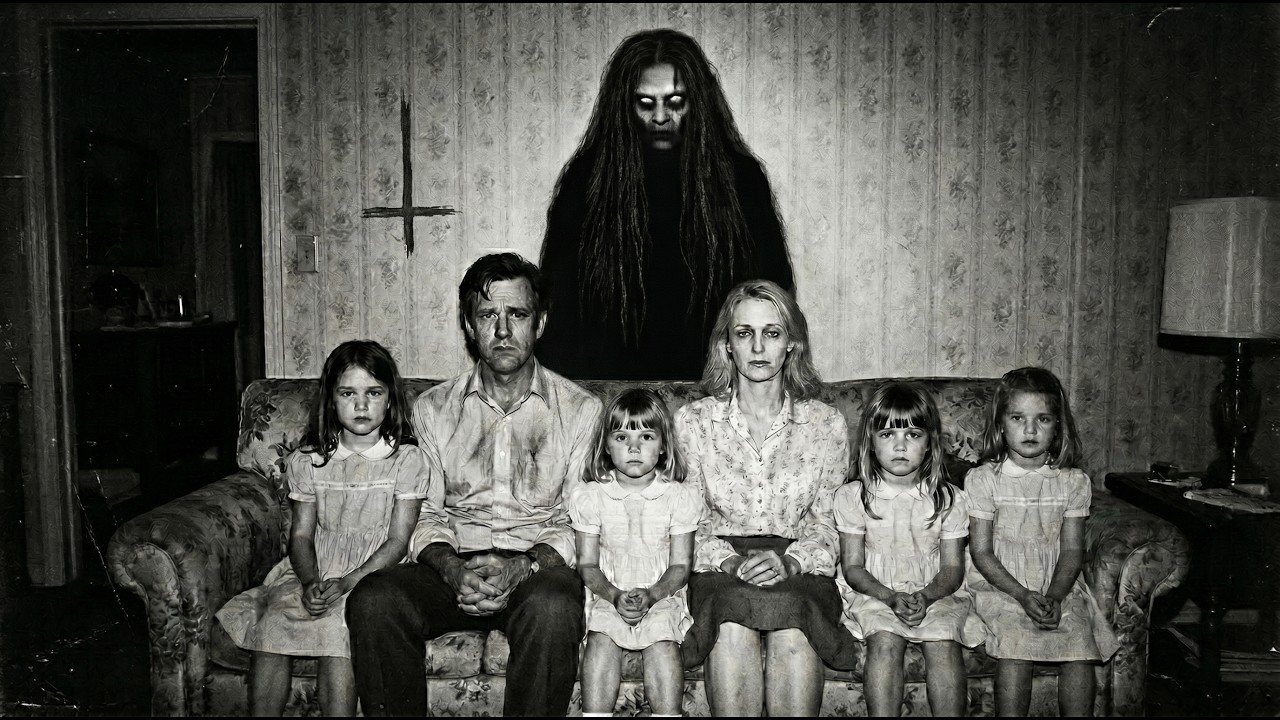
They described a presence that appeared to interact with them physically, frightened their children, and seemed to follow them when they attempted to escape the house.
Their account attracted national attention in 1986, transforming a private family crisis into a public debate about paranormal claims, religious belief, and the difficulty of establishing what really happened inside a home.
Yet the central mystery remains unresolved.
The experiences described by the Smurls were reported by the family and repeated by investigators who supported their interpretation, but the claim that a demon physically attacked them was never established through conclusive scientific evidence.
That distinction does not diminish the seriousness of the fear they described or the importance of understanding their story accurately.
It does, however, separate what the family said happened from the supernatural explanation they believed best accounted for it.
And the most unsettling part of the Smurl case may be that, even after the family moved away, the story never acquired the clean ending that so many haunting narratives promise.
An Ordinary Family and the First Signs of Trouble
In 1973, Jack and Janet Smurl were building a life that revolved around work, family responsibilities, and raising their four daughters: Shannon, Carolyn, and twins Heather and Dawn.
Jack was described in the family’s account as a practical man, while Janet was deeply committed to her Catholic faith and the upbringing of their children.
The decision to purchase the duplex made practical sense because Jack’s parents could live nearby, creating a shared family environment in which the generations could support one another.
For the first few years, the home reportedly offered the stability they wanted.
Then, according to their later account, unexplained incidents began appearing around 1974.
A dark stain reportedly appeared on a carpet despite attempts to clean it, while a television set allegedly caught fire under circumstances the family could not explain.
Plumbing problems followed, accompanied by an odor that the family described as resembling something decaying inside the walls.
The incidents were individually ambiguous, but the Smurls came to believe that their accumulation pointed toward something more troubling than a series of unrelated household failures.
The family also reported strange noises, including footsteps that seemed to move alongside them through hallways, stopping when they stopped and resuming when they continued walking.
They described rhythmic sounds coming from walls, noises that allegedly resembled breathing or chanting and became particularly disturbing during the night.
According to their testimony, the sounds appeared to shift position when Jack attempted to locate their source.
The family also reported seeing a woman dressed in black who appeared in different parts of the house before disappearing.
These accounts were not independently established as supernatural events, and the precise causes of the reported noises and visual experiences remain uncertain.
Nevertheless, they formed the foundation of the story the Smurls would later share with investigators and journalists.
For the family, the most distressing development was not any single stain, smell, or unexplained noise, but the growing belief that their home no longer felt safe.
Their daughters reportedly began waking in terror, describing frightening nighttime experiences that left their parents struggling to understand what was happening.
The adults could offer reassurance, pray with the children, and investigate the house, but according to their account, none of those measures brought lasting relief.
The property that had been purchased to provide security was becoming associated with uncertainty and fear.
And as the years passed, the Smurls increasingly believed that whatever they were experiencing was not going away on its own.
Jack and Janet Describe Experiences That Became Increasingly Physical
The Smurls’ account became more alarming when they began describing incidents that appeared to involve direct physical contact.
Jack reportedly experienced episodes of waking unable to move, lying in bed while feeling an oppressive weight on his chest.
Such episodes resemble descriptions commonly associated with sleep paralysis, a recognized sleep phenomenon that can involve temporary immobility and frightening sensations of another presence.
However, the Smurls interpreted Jack’s experiences within the wider context of what they believed was happening throughout the house.
Their account also included claims that Jack was thrown from his bed on more than one occasion, although the circumstances were not independently established as evidence of a supernatural cause.
Janet reportedly described waking with scratches and marks that she believed had appeared during the night.
The family said they documented some of the injuries, and the photographs later became part of the material associated with the case.
Even when physical marks can be photographed, however, a photograph alone cannot determine how an injury occurred or establish that an unseen entity caused it.
The Smurls believed the incidents were connected, and their interpretation became increasingly frightening as they described the disturbances as more frequent and more aggressive.
They also reported sudden temperature changes, unexplained odors, and other household occurrences that appeared to happen without warning.
According to their narrative, the events seemed to intensify during particular religious periods, including Lent and Christmas, a pattern they interpreted as evidence that the presence was reacting to their Catholic faith.
That interpretation became central to the family’s understanding of the situation.
Rather than seeing the incidents as unrelated experiences, the Smurls came to believe they were facing an intelligent presence that was deliberately targeting them.
One of the most disturbing claims involved an alleged sexual assault against Jack, which was later discussed by Ed Warren in interviews about the case.
Warren interpreted the reported incident through the language of demonology, describing it as the work of a succubus.
That was the investigator’s supernatural interpretation, not a conclusion established through independent forensic evidence.
The claim nevertheless became one of the most widely discussed aspects of the Smurl case because it suggested that the family believed the alleged presence could cross the boundary between frightening appearances and deeply personal physical experiences.
For Jack and Janet, the reported incidents were no longer simply strange things happening in an old house.
They believed their bodies, their sleep, and their sense of personal safety were being threatened.
And the possibility that the experiences might continue indefinitely made the situation increasingly difficult to endure.
Why the Smurls Turned to Ed and Lorraine Warren
Before the case attracted national attention, the Smurls reportedly sought assistance through their Catholic community.
Janet’s faith was an important part of her life, and the family initially turned toward prayer and religious guidance rather than public attention.
According to their account, a priest prayed with them and blessed the house, but the disturbances they described continued.
Janet began keeping a journal of the incidents, recording dates, times, and descriptions of what she believed had happened.
The journal became an important part of the family’s account because it provided a chronological record of the experiences they wanted others to take seriously.
A detailed journal can help establish when someone reported an event and how their description develops over time, although it cannot independently establish the cause of every recorded incident.
Through their local religious connections, the Smurls eventually came into contact with Ed and Lorraine Warren, paranormal investigators already known for their involvement in high-profile haunting cases.
Ed Warren described himself as a demonologist, while Lorraine Warren claimed to possess clairvoyant abilities that allowed her to perceive supernatural presences.
The couple had built a reputation around investigations that blended witness interviews, religious interpretations, and claims of paranormal activity.
They arrived at the Smurl home in January 1986, according to the account of the case.
The Warrens interviewed family members, examined the property, and reviewed the incidents the Smurls had recorded.
Lorraine later described feeling an oppressive atmosphere around the house, interpreting it as a sign that something was actively present rather than simply lingering in the building.
The Warrens ultimately concluded that the family was dealing with demonic activity.
They reportedly believed multiple entities were involved, with one dominant presence that they thought was attached to the family rather than exclusively to the property.
This distinction had serious implications for the Smurls.
If the problem were confined to the building, moving away might appear to offer a straightforward solution.
If the entity were attached to the family, as the Warrens believed, leaving the house would not necessarily end the reported experiences.
That interpretation shaped the advice they gave and the subsequent search for religious intervention.
The Warrens recommended an exorcism, but obtaining formal approval through the Catholic Church was not immediate.
Church authorities generally approach formal exorcisms cautiously, requiring appropriate assessment and authorization rather than simply accepting the claims of a family or paranormal investigator.
As the process continued, the Smurls remained convinced that the incidents were continuing.
The delay increased their frustration, particularly because they believed their children were being exposed to frightening experiences that they could not adequately explain or prevent.
For the family, the question had shifted from identifying what was happening to finding someone who could make it stop.
The First Exorcism and the Failure to Find Lasting Relief
In March 1986, a priest named Father Robert McKenna reportedly performed an exorcism connected with the Smurl case.
McKenna was associated with a traditionalist Catholic movement outside the ordinary diocesan structure, and his involvement was distinct from a later intervention arranged through diocesan authorities.
The ritual reportedly involved the traditional Latin rite, holy water, religious objects, and extended prayers intended to confront what the participants believed was demonic activity.
According to the account later shared by the Warrens, McKenna believed he encountered resistance during the ritual.
That description reflected his reported interpretation of the experience, rather than independently verifiable proof that a supernatural entity was present.
The family subsequently said the disturbances resumed after the ritual.
For the Smurls, that continuation was deeply discouraging because they had turned to religious intervention in the hope that it would finally bring relief.
If the house had contained an ordinary problem, repairs or relocation might have been enough.
If the family’s experiences were caused by a medical, psychological, environmental, or other identifiable factor, different forms of investigation and support might have helped explain them.
But the Smurls had come to believe they were facing something spiritual, and the apparent failure of the first exorcism left them searching for another answer.
The family’s story was becoming more difficult to keep private.
The Warrens continued to support their interpretation, and the search for further religious intervention moved forward.
Meanwhile, the Smurls described incidents that they believed were increasingly aggressive, including scratches, sudden temperature changes, disturbing odors, and frightening experiences involving their children.
Their reports created a growing sense of urgency.
Yet even at this stage, the available account did not provide conclusive independent evidence establishing that the alleged injuries and household disturbances were caused by a demon.
The difference between the family’s certainty and the limits of what outsiders could verify would become an important feature of the controversy that followed.
For the Smurls, the events were personal experiences that had changed their lives.
For observers, the challenge was determining what had happened, which elements could be corroborated, and whether the supernatural explanation offered by the family and the Warrens was justified.
That disagreement would follow the case long after the family left West Pittston.
The Camping Trip That Became a Turning Point
By the summer of 1986, the Smurls reportedly felt exhausted and desperate for a break from the disturbances they associated with their home.
They decided to leave the property temporarily and take their daughters camping in the Pocono Mountains.
The trip represented an attempt to recover a sense of ordinary family life by placing physical distance between themselves and the house on Chase Street.
Away from the building, the family could hope to sleep more comfortably, enjoy the outdoors, and discover whether the experiences would diminish.
According to their account, the first day or two brought something approaching peace.
Then the family reported hearing sounds resembling the noises they associated with the house.
They also described a dark figure moving among the trees near their campsite, while the frightening experiences they had hoped to escape allegedly returned.
The Smurls interpreted these events as evidence that the presence had followed them.
Other campers were said to have noticed a dark figure, although the details and independent corroboration of those reports remain uncertain.
The family eventually returned home, believing that their attempt to escape had failed.
This episode became particularly significant in the story because it strengthened the Smurls’ conviction that the problem was not confined to the physical structure of their house.
For Janet, the experience reportedly created a painful spiritual crisis.
She had spent years praying and seeking religious assistance, yet she believed the suffering of her family was continuing despite those efforts.
The account describes her as feeling abandoned by God, even while she continued to identify strongly with her Catholic faith.
That distinction matters because spiritual doubt does not necessarily mean the loss of belief.
For some religious people, periods of profound distress can intensify questions about suffering, protection, and why prayers appear to go unanswered.
Janet’s reported struggle gave the case an emotional dimension that extended beyond its supernatural claims.
It was no longer simply a story about strange noises or frightening appearances.
It was also the story of a mother who believed she had exhausted the remedies available to her while trying to protect her children.
The family’s camping trip became a turning point because it reinforced their belief that leaving the property would not be enough.
It also helped push the Smurls toward a decision that would transform the case from a private ordeal into a national controversy.
The Smurl Haunting Goes Public
In August 1986, the Smurls reportedly began speaking publicly about their experiences, believing that greater attention might persuade church authorities to provide further assistance.
The decision carried considerable risks.
A family claiming that a demon had attacked them could expect sympathy from some people, but it could also face skepticism, ridicule, and intrusive attention.
The story began circulating through local news coverage before attracting a wider audience.
As interest grew, reporters and curious visitors reportedly gathered outside the Chase Street property, transforming the family’s home into a public spectacle.
The increased attention created a new challenge for the Smurls.
They were no longer dealing only with the incidents they described inside the house; they also had to navigate public scrutiny, questions about their credibility, and the pressure of explaining deeply personal experiences to strangers.
The attention also intensified the debate about whether the case represented genuine paranormal activity, mistaken interpretation, or a combination of factors that had not been adequately investigated.
The local Catholic diocese eventually arranged another exorcism, this time involving a priest with diocesan authorization.
Father Richard Voy reportedly performed the second ritual inside the house in September 1986, with Lorraine Warren present.
According to the account shared by the Warrens, Lorraine described extreme temperature changes and disturbing sounds during the prayers.
Father Voy completed the ritual, and the family hoped that the intervention would finally bring an end to their ordeal.
Yet Janet reportedly experienced further scratches later that day.
The continuation of the reported incidents meant that the second exorcism did not produce the immediate resolution the family had hoped for.
However, the story also records a gradual decrease in the intensity and frequency of the disturbances during the weeks that followed.
Objects reportedly moved less often, physical attacks became less frequent, and temperature fluctuations were said to become less extreme.
The reasons for this reported change remain uncertain.
The Warrens attributed it to the religious interventions, while other interpretations might consider changes in the family’s circumstances, heightened observation, the effects of public attention, or the possibility that some incidents had ordinary explanations.
The available account does not establish which explanation, if any, accounts for the reported decline.
By early 1987, the family was said to be sleeping through the night more frequently.
But the experience had already left a lasting mark on their lives, and the decision to leave the house was becoming increasingly difficult to avoid.
A Family Leaves the House Behind
In 1987, the Smurls placed the Chase Street property on the market, ending their long residence in the duplex associated with the alleged haunting.
The decision was not presented as a triumphant conclusion or a dramatic final confrontation.
Instead, the family left the property and eventually relocated permanently to Wilkes-Barre in 1988.
After years of reporting frightening experiences, they were attempting to establish a new life away from the building that had become the center of their distress.
Their departure did not resolve every question surrounding the case.
If the events had been caused by a supernatural entity, the family’s account raised the possibility that it had left with them, as the Warrens had feared.
If the incidents were connected to the house or to environmental conditions, moving away might have removed some of the circumstances that contributed to the experiences.
If other factors were involved, the move could still have provided a fresh start without establishing precisely what had happened.
The distinction is important because leaving the property demonstrated the family’s decision to move on, not proof that a demon had been present.
The house subsequently changed hands, and the supplied account identifies later occupants who reportedly experienced no comparable disturbances.
One later resident, Deborah Owens, was said to have told a local newspaper that she had experienced nothing unusual.
That account complicates the suggestion that the building itself remained continuously affected by an active haunting.
It does not independently establish what the Smurls experienced, but it shows that later occupants did not necessarily report the same problems.
The property’s reputation nevertheless became part of its history, making the address recognizable to people who followed the case.
For the Smurls, the move marked the end of their direct association with the house as a place of daily life.
It did not end the public discussion of their experiences.
The Book, the Film, and the Lasting Controversy
In 1988, Jack and Janet Smurl published their account in a book titled The Haunting, helping bring their story to a broader audience.
In 1991, the case was adapted into a television film, introducing the alleged events to viewers who had not followed the original news coverage.
The growing attention placed the Smurls within a larger cultural fascination with hauntings, demonic possession, and investigations that attempted to explain frightening experiences through supernatural beliefs.
Ed and Lorraine Warren were already well known to audiences interested in paranormal cases, and their involvement helped connect the Smurl story with other high-profile investigations.
But increased exposure also made skepticism unavoidable.
The claims involved extraordinary events, including physical attacks by an unseen presence and religious rituals that allegedly encountered resistance.
Extraordinary claims require reliable evidence if they are to be established as fact, and the public record associated with the Smurl case does not provide conclusive scientific confirmation of a demonic cause.
The family’s consistent account remains important historical testimony about what they said they experienced, but consistency alone cannot prove that every reported event occurred exactly as described or that the proposed supernatural explanation was correct.
A person can sincerely report a frightening experience while being mistaken about its cause.
Likewise, the absence of a confirmed supernatural explanation does not establish that every experience was invented.
A careful examination must leave room for uncertainty rather than treating belief or disbelief as a substitute for evidence.
The Smurls maintained their account over the years, according to the narrative, and did not publicly withdraw their central claims.
Their children also described lasting effects associated with growing up amid the reported disturbances.
Heather, who later became a nun, reportedly interpreted the childhood experiences through her religious faith, while Shannon described difficulties involving sleep and heightened vigilance.
Those statements offer insight into how the family understood its past, although they do not independently establish the existence of a supernatural entity.
The case continued to attract interest precisely because it combined intensely personal testimony with claims that could not be conclusively resolved.
Jack and Janet Smurl’s Final Years
Jack Smurl died on June 22, 2017, following a long battle with diabetes, according to the supplied account.
He had spent decades associated with a story that attracted both devoted believers and determined skeptics, and he reportedly maintained his account of the events at the West Pittston home.
Janet continued discussing the case after her husband’s death, describing the experiences that she believed had transformed her family’s life.
She reportedly presented the story as a painful chapter that had never been fully understood by outsiders, maintaining that her obligation was to describe what she remembered rather than persuade every listener to agree with her interpretation.
Janet died on January 10, 2026, according to the supplied transcript.
Her death brought another chapter of the family’s story to a close, but it did not settle the central questions surrounding the alleged haunting.
The family’s account remained part of the public record, alongside the books, interviews, news reports, and paranormal interpretations that had kept the case alive.
The years between the original incidents and the later retellings also introduced a challenge common to historical testimony: memories can remain vivid while still being affected by time, repeated discussion, and changing interpretations.
That does not mean the Smurls were necessarily dishonest, nor does it establish that their experiences had a supernatural cause.
It means that historical accounts must be considered alongside the limits of memory and the absence of conclusive independent evidence.
For those who believe the family, the case remains a powerful account of endurance under circumstances they consider inexplicable.
For skeptics, it illustrates why frightening personal experiences must be distinguished from proof of paranormal activity.
Both perspectives recognize that the story became deeply important to the people who lived through it.
What Really Happened on Chase Street?
The Smurl haunting offers no universally accepted explanation for the experiences Jack and Janet described.
There is no conclusive scientific finding establishing that a demon occupied the property, physically attacked the family, or followed them to the Pocono Mountains.
Nor does the available account resolve every reported incident through a single ordinary explanation.
The family’s testimony, the involvement of the Warrens, the reported exorcisms, and the publicity surrounding the case form a significant part of its history, but each must be understood according to what it can actually establish.
The Smurls said they experienced frightening noises, strange odors, sudden temperature changes, injuries, and encounters they interpreted as supernatural.
The Warrens accepted that interpretation and described the case in explicitly demonic terms.
Religious intervention followed, and the family eventually left the property, while later occupants reportedly did not experience the same disturbances.
Those are the principal elements of the story as it was told.
What remains uncertain is the cause of the reported events and whether the family’s supernatural interpretation accurately explains them.
That uncertainty is not a weakness to be concealed; it is the central fact that has allowed the Smurl case to remain controversial.
The story cannot be reduced to a simple declaration that a demon was conclusively proven to exist, because the evidence does not support that conclusion.
It also cannot be responsibly reduced to a claim that every experience was fabricated, because the available material does not establish that either.
The most accurate account preserves the distinction between the family’s reported experiences, the Warrens’ interpretation, the public reaction, and the questions that remain unanswered.
Ultimately, the Smurl haunting is both a paranormal controversy and a story about a family that believed its home had become unsafe, sought help through its faith and community, endured years of fear, and finally chose to leave.
Whether readers accept the supernatural explanation or not, the family’s account reveals how frightening and isolating an unexplained experience can become when the people living through it feel that ordinary solutions have failed.
The case also demonstrates how quickly private distress can become a public spectacle once cameras, reporters, and curious strangers arrive at a family’s front door.
The Smurls left Chase Street, but the story followed them into books, television, and decades of debate.
And the final question remains the one that no retelling can definitively answer: were Jack and Janet Smurl confronting a supernatural presence, or were they trying to understand a series of frightening experiences whose causes remained beyond their grasp?
The house still stands, the family’s account remains part of the haunting’s history, and the evidence has never produced a universally accepted answer. For the Smurls, the ordeal was real in its impact. What caused it remains the mystery.


