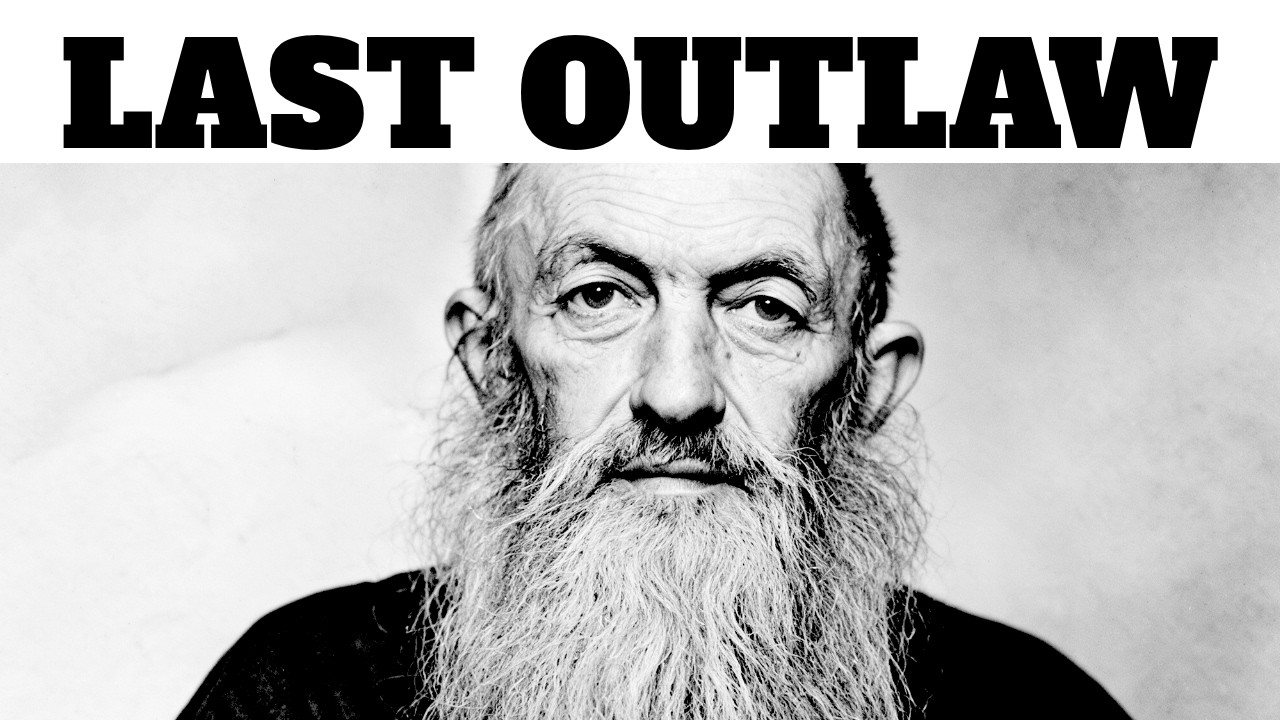
The letter finally arrived in March 2009.
For decades, Marvin “Popcorn” Sutton had survived revenue agents, county courts, probation orders, undercover investigations, and his own refusal to stop making illegal whiskey.
Now the game was over.
He had been sentenced to eighteen months in federal prison.
The Bureau of Prisons had chosen where he would serve it.
South Georgia.
Hundreds of miles from the Smoky Mountains.
Hundreds of miles from the cold mountain branches where he had learned to make liquor.
According to his wife, Pam, Sutton was supposed to report within days.
He never did.
On March 16, 2009, Pam returned to their property near Parrottsville, Tennessee, and found her husband dead inside a car.
He was sixty-two.
Authorities said the death appeared to be caused by carbon monoxide poisoning.
There was no shootout.
No final chase through the mountains.
No federal agents surrounding the house.
No dramatic last stand worthy of the outlaw legend he had spent years creating.
Just a car.
A Tennessee yard.
A federal reporting date.
And a man who never entered the prison cell waiting for him.
That ending turned Popcorn Sutton into something larger than a moonshiner.
To admirers, he became the last outlaw of Appalachia.
A man who would rather die on his own land than surrender the final piece of his freedom.
But the complete story is more complicated.
Because Popcorn Sutton was not simply an innocent mountain craftsman crushed by an evil government.
He was also a repeat offender.
A convicted felon.
A man with a serious violent conviction.
A commercial-scale illegal distiller.
And a felon who continued possessing firearms despite knowing federal law prohibited it.
His tragedy came from the collision between those realities.
America celebrated the world Popcorn represented.
Then prosecuted him for continuing to live inside it.
Before Popcorn Sutton Was an Outlaw, He Was Marvin Sutton
He was born October 5, 1946, near Maggie Valley, North Carolina.
His family came from the mountain communities of Haywood County.
The economy there was not the America of factories, suburbs, and salaried careers.
Families farmed.
Traded.
Worked odd jobs.
Made do.
His mother churned butter from the family cow and traded it for groceries.
Cash was limited.
Self-sufficiency mattered.
And moonshine had existed in those mountains long before Marvin Sutton was born.
His father made liquor.
His grandfather had made liquor.
The lesson was economic before it was rebellious.
Corn was bulky.
Heavy.
Cheap.
Turn that corn into whiskey and suddenly the same crop became compact, transportable, and dramatically more valuable.
For poor Appalachian farmers, distilling was not merely about getting drunk.
It converted agriculture into cash.
The federal government had taxed distilled spirits since the eighteenth century.
Mountain communities had resisted those taxes almost as long.
Sutton inherited both traditions.
Making liquor.
And distrusting the people who wanted to tax it.
The Government Was Already Part of His Family Memory
The transcript places Sutton’s childhood against another major transformation of Appalachia.
The creation of Great Smoky Mountains National Park.
Communities in valleys such as Cataloochee were displaced as land was purchased for the park during the twentieth century.
President Franklin Roosevelt dedicated the park in 1940.
Sutton was born six years later.
Whether that history directly caused his later hatred of federal authority cannot be proven.
But it formed part of the cultural world around him.
Mountain families had watched land occupied for generations become part of something larger than themselves.
To outsiders, it became protected wilderness.
To people forced to leave, the story could feel very different.
That tension matters because Popcorn’s later legend depended heavily on one idea:
The mountain belonged to the people who had survived there before government paperwork arrived.
He Learned Whiskey Like Another Child Learned a Trade
Sutton learned distilling young.
Not merely drinking.
Craft.
Corn preparation.
Mash.
Fermentation.
Water.
Fire.
Temperature.
Proof.
Secrecy.
His education happened in the woods.
He learned which water sources were useful.
How to manage smoke.
How to keep a still hidden.
How to judge whiskey through experience rather than instruments.
According to the source, by roughly twenty years old he was making liquor full time.
That became the contradiction governing his entire life.
The skill he knew best was illegal unless performed inside an elaborate regulated system.
He could either abandon what his family had taught him.
Or become a criminal by continuing it.
Sutton chose the second option.
Again.
And again.
And again.
Then Marvin Became “Popcorn”
The nickname came from a story perfectly suited to the personality he later sold to tourists.
According to the account, Sutton once put money into a popcorn machine.
Nothing came out.
So he smashed the machine with a pool cue.
The story traveled.
The nickname remained.
Marvin Sutton became Popcorn Sutton.
The story contains two qualities that would define his public identity.
Temper.
And theater.
Popcorn knew how to make people remember him.
Decades later, that talent would turn an obscure mountain bootlegger into perhaps the most famous American moonshiner of his generation.
It would also help make anonymity impossible.
The Law Started Catching Him Early
By the mid-1970s, Sutton had already been convicted of selling untaxed liquor.
The pattern established itself.
Make whiskey.
Get caught.
Pay a fine.
Serve probation.
Return home.
Make whiskey again.
To many neighbors, moonshining was not morally equivalent to robbery or violent crime.
It was breaking tax and alcohol laws.
The courts might punish it.
The local culture did not necessarily condemn it.
Then came a more consequential conviction.
In 1980, Sutton became a convicted felon.
That changed more than his criminal record.
Federal law generally prohibits felons from possessing firearms.
In a mountain culture where firearms were ordinary household tools, that restriction mattered enormously.
From that point forward, a pistol that might have been legally unremarkable for another resident could expose Sutton to serious federal charges.
Almost three decades later, that distinction became central to the case that finally threatened to imprison him.
The Legend Leaves Out 1985
There is another part of Sutton’s history that cannot be erased if the goal is biography rather than mythology.
In 1985, the source says Sutton was convicted in North Carolina of felony assault with a deadly weapon with intent to kill.
He received a three-year sentence.
That conviction destroys the easiest version of Popcorn Sutton.
He was not simply a harmless old man making traditional corn liquor.
There was violence in his past.
The man remembered for jokes, overalls, copper stills, and mountain sayings could also frighten people.
The story works only when both versions remain visible.
The craftsman.
And the dangerous man.
Then He Did Something Almost No Successful Moonshiner Should Do
He became famous.
For generations, moonshiners survived through invisibility.
Do not attract attention.
Do not show strangers the still.
Do not explain the process publicly.
Do not let outsiders know where you work.
Sutton eventually violated nearly every one of those rules.
In 1999, he self-published Me and My Likker, recounting his life and describing his traditional craft.
Tourists bought it.
Then filmmaker Neal Hutcheson encountered him while documenting Appalachian speech.
Hutcheson saw more than a caricature.
He saw a disappearing culture.
Sutton appeared in Mountain Talk and later became the central figure in This Is the Last Dam Run of Likker I’ll Ever Make, commonly known as The Last One.
The cameras recorded him building a still and making whiskey in extraordinary detail.
The man whose craft depended on secrecy was now preserving that craft for television.
Fame Gave Him Something the Law Never Had
Respect.
Not merely attention.
Respect.
For much of his life, official institutions had known Sutton primarily through arrests, prosecutions, and court records.
The filmmakers treated him as someone who knew something important.
A craftsman.
A cultural witness.
A survivor from an older Appalachia.
He clearly understood how entertaining he could be.
He cursed.
Joked.
Performed.
Played the eccentric mountain outlaw.
But beneath the act was genuine technical knowledge.
The camera validated the thing he had spent decades being punished for doing.
That mattered.
And it created the central paradox of his later life.
America Put His Still in a Museum
John Rice Irwin, founder of the Museum of Appalachia in Tennessee, asked Sutton to construct a still for display.
There was one rule.
Run water through it.
Not whiskey.
Think about the contradiction.
The object itself was heritage.
The skill required to build it was heritage.
The man who knew how to operate it was heritage.
But using that same object to produce untaxed liquor remained illegal.
The culture could be displayed.
Celebrated.
Photographed.
Preserved.
Just not practiced outside the legal licensing structure.
That tension sits at the center of Popcorn Sutton’s story.
By Then, However, Popcorn Was Not Simply Preserving Tradition
This is where romantic accounts usually become dishonest.
Sutton’s later operation was large.
The federal investigation described hundreds of gallons of liquor.
Stills with capacities measured in hundreds of gallons.
Storage facilities.
Commercial transactions.
Weapons.
This was not an elderly man making one nostalgic batch behind the cabin for personal use.
It was business.
Traditional business, perhaps.
But business nevertheless.
That distinction mattered enormously to federal prosecutors.
It Started Again With a Fire
On April 24, 2007, a fire broke out on Sutton’s Tennessee property.
Firefighters arrived.
The blaze was controlled.
Then authorities began asking questions.
What responders observed later became part of the federal account of the case.
Nothing dramatic happened immediately.
Months passed.
Sutton continued living his ordinary life.
Then, early in 2008, a stranger appeared wanting whiskey.
He was not a tourist.
He was an undercover Tennessee Alcoholic Beverage Commission agent.
Popcorn Sold to the Wrong Customer
The agent slowly established contact.
Sutton trusted him.
And started selling.
On February 14, 2008, according to the source, Sutton sold roughly one hundred gallons of moonshine to the undercover agent.
The price was around fifty dollars per gallon.
About five thousand dollars.
That same day, Sutton showed the agent a .380-caliber pistol.
That was crucial.
Because Sutton was already a convicted felon.
The investigation continued.
More visits.
More liquor.
More evidence.
In March, Sutton showed agents hundreds of gallons in storage.
Then he took them to a barn containing enormous stills.
The source says authorities ultimately located close to 1,700 gallons of moonshine between Tennessee and North Carolina locations.
By that point, there was very little ambiguity left.
The Man Famous for Bragging Finally Bragged to Federal Evidence
Sutton’s public personality worked against him.
He enjoyed telling people what he could do.
He had spent years demonstrating the craft on camera.
Now he was talking to undercover investigators.
Showing them stills.
Showing them liquor.
Showing them guns.
The same theatrical confidence that made tourists love Popcorn Sutton made an investigator’s job easier.
That is the dark irony of fame.
The old moonshiner survived because nobody knew where he was.
The celebrity moonshiner was impossible to hide.
In April 2008, He Pleaded Guilty
Sutton did not fight the essential allegations through a long trial.
He pleaded guilty.
The counts included illegally producing distilled spirits and possessing firearms as a convicted felon.
His lawyers raised his age.
His health.
His ties to the community.
And ordinary residents began sending petitions asking the judge for mercy.
The petitions mattered emotionally.
Legally, they could not erase the record.
Sutton had previous convictions.
He was already on probation when the new offenses occurred.
The judge saw recurrence rather than one final mistake.
The Cancer Story Became Part of the Myth
Reports frequently said Sutton was dying from cancer.
The transcript treats that claim carefully.
His widow Pam later said he had not actually been diagnosed with cancer.
He was unwell.
His precise medical condition was part of sentencing discussion.
But the simplistic story of a terminally ill cancer patient being dragged toward prison is not clearly supported by the record used here.
That distinction matters.
The tragedy does not need invented illness.
Sutton was sixty-two.
He had medical problems.
And he clearly feared incarceration.
Those facts are sufficient.
The Judge Gave Him 18 Months
U.S. District Judge Ronnie Greer considered the case.
He considered Sutton’s age.
Medical records.
The petitions.
The criminal history.
The size of the operation.
The firearm offense.
And perhaps most importantly, the fact that previous punishment had repeatedly failed to stop Sutton.
The judge reportedly considered a longer sentence.
Instead, he imposed eighteen months.
The bottom of the applicable guideline range according to the source.
Three years of supervised release would follow.
The judge also allowed Sutton to self-report rather than immediately sending him into custody.
That detail complicates claims that a vindictive judge deliberately crushed him.
The record supplied here portrays the judge as applying a lawful sentence while trying to stay near the minimum he believed justified.
Popcorn Went Home Wearing an Electronic Monitor
For someone whose identity depended on mobility, secrecy, woods, cars, stills, and back roads, home confinement carried symbolic weight.
He could not simply disappear into the mountains.
He could not legally return to the still.
He could not possess firearms.
He could not drink alcohol.
He had an electronic monitor attached to him.
And he waited.
That waiting may have been worse than the courtroom.
The sentence had been announced.
But prison had not begun.
Every morning he remained at home knowing another institution was deciding where he would soon live.
Then the letter arrived.
South Georgia.
Medium-security federal prison.
Report soon.
On March 16, 2009, the Story Ended
Pam Sutton came home.
Her husband was dead inside a car.
The transcript says investigators believed carbon monoxide poisoning was responsible.
Later accounts generally treated the death as suicide.
He left no public last statement explaining his decision.
That absence matters.
Nobody can climb inside his final thoughts.
Nobody can say with certainty that only one motive explains what happened.
Fear of prison may have been central.
Health may have mattered.
Loss of independence may have mattered.
Identity may have mattered.
The expectation of leaving Appalachia for confinement hundreds of miles away may have mattered.
The headline says he “chose death over federal prison.”
That is a reasonable shorthand for the sequence of events.
It should not be mistaken for a surviving written explanation from Sutton himself.
His Widow Blamed the Federal Government
Pam Sutton publicly expressed anger.
She attributed responsibility for her husband’s death to the government.
That reaction is understandable from a grieving spouse.
It is also not the same thing as a legal finding that federal officials caused his death.
The investigation was lawful according to the supplied record.
The undercover agent did his job.
The ATF built the case.
The magistrate imposed conditions.
The federal judge imposed a legal sentence.
There is no corrupt conspiracy required to explain what happened.
That is what makes the story so uncomfortable.
Nobody inside the system had to break the rules for the ending to be tragic.
Popcorn Was Not Innocent
Any serious account must say this plainly.
He knew moonshine production was illegal.
He did it anyway.
Repeatedly.
He sold commercial quantities.
He continued after previous convictions.
He violated probation.
He possessed firearms despite his felony status.
He had a serious violent conviction in his past.
He understood law enforcement had pursued him before.
He kept going.
The legend often turns that stubbornness into heroism.
Legally, it is recidivism.
Both descriptions refer to the same behavior viewed from different moral worlds.
But America Was Already Turning Him Into Heritage
This is where the story becomes much stranger than a routine federal prosecution.
Television celebrated him.
Documentaries preserved him.
Museums displayed his work.
Tourists visited him.
Journalists described him as the last real moonshiner.
People treated his knowledge as a surviving fragment of Appalachian culture.
Then another arm of society said:
That thing you are famous for doing is still a federal crime.
Neither message was technically inconsistent.
One celebrated culture.
The other enforced law.
But for the person living between those messages, the contradiction must have been enormous.
The Year He Died, Legal Moonshine Was Beginning to Boom
The irony became almost cruel.
Tennessee began expanding legal distilling opportunities around the period of Sutton’s death.
Within years, “moonshine” became a major tourist product.
Walk into Gatlinburg or Pigeon Forge and you can see what happened.
Mason jars.
Bright labels.
Tasting rooms.
Flavored spirits.
Souvenir merchandise.
The aesthetics of illegal liquor became retail entertainment.
Television programs later transformed moonshining into popular reality programming.
The culture became profitable.
The outlaw became branding.
Then Popcorn Sutton’s Own Name Appeared on Legal Whiskey
After his death, a legal brand carrying his name emerged.
Now the same image associated with federal moonshine prosecution could appear on a bottle sold legally.
Tax paid.
Permits obtained.
Labels approved.
Commercial distribution.
That contrast is almost too perfect.
The illegal mason jar that helped send Marvin Sutton toward federal prison had no tax stamp or authorized closure.
The later legal bottle with Popcorn Sutton’s identity on it existed because it had every required permission.
Same cultural story.
Different paperwork.
One criminalized.
One commercialized.
Was He Really “The Last Outlaw”?
Not literally.
Illegal distilling did not die with Sutton.
It still exists.
So do people who violate federal alcohol law.
But Sutton represented something culturally unusual.
He belonged to the generation that could plausibly claim direct inheritance from old Appalachian subsistence distilling.
Then he survived long enough to watch that hidden tradition become entertainment.
He moved through three identities.
Moonshiner.
Celebrity.
Brand.
That transformation is what makes his life more interesting than the simple outlaw myth.
He Was Also Responsible for Creating the Legend
Popcorn Sutton was not a passive victim of romanticization.
He knew exactly what audiences wanted.
The beard.
The overalls.
The hat.
The old language.
The profanity.
The Model A Ford.
The defiance.
The jokes.
He amplified all of it.
He wrote a book.
Appeared on camera.
Demonstrated the craft.
Talked openly.
Invited people into the character.
That character eventually became inseparable from the man.
And once that happened, he could not simply disappear back into the mountains.
Fame Was His Greatest Success and His Greatest Mistake
A traditional moonshiner survives by being unknown.
Sutton achieved immortality by becoming recognizable.
Those goals are incompatible.
The documentaries gave him dignity.
They preserved his knowledge.
They made thousands of people care about him.
But fame also destroyed the possibility of invisibility.
The man who once measured skill by how long authorities failed to discover his still had eventually become the easiest moonshiner in America to identify.
The law no longer needed to ask:
Who is making this?
Everybody knew.
The Final Tragedy Is Not That the Government “Killed” Popcorn Sutton
The source itself refuses that easy answer.
The judge did not murder him.
The agents did not murder him.
The law did not physically force his final act.
And saying Sutton simply “chose freedom” romanticizes a suicide into frontier mythology.
The real story is sadder.
A man built his entire identity around something society treated simultaneously as crime and heritage.
He repeatedly broke the law.
The state repeatedly gave him another chance.
He repeatedly returned to the still.
Eventually the punishment became one thing he apparently could not accept:
Prison.
Maybe That Is Why the Mountain Remembered Him Differently
To federal court, Marvin Sutton was a repeat offender.
To tourists, Popcorn Sutton was entertainment.
To filmmakers, he was a cultural witness.
To neighbors, he was part of the landscape.
To his family, he was something more complicated still.
His daughter later wrote about the father behind the legend.
His funeral drew crowds and musicians.
Some relatives reportedly disliked the spectacle.
They wanted a family burial.
The public wanted the final chapter of an outlaw legend.
Even in death, Marvin Sutton and Popcorn Sutton were not quite the same person.
The Jar Tells the Whole Story
Imagine two containers.
The first is a plain mason jar.
No federal closure.
No tax stamp.
No legal label.
Popcorn Sutton carries it across his Tennessee yard and hands it to an undercover buyer.
That jar becomes evidence.
Now imagine another bottle years later.
Professional label.
Legal distillery.
Federal compliance.
Tax paid.
Popcorn Sutton’s name printed across the front.
That bottle becomes merchandise.
The difference is not mountain tradition.
The difference is permission.
That may be the perfect symbol of his life.
America did not reject moonshine.
It legalized, packaged, taxed, branded, and sold the image.
What it rejected was Popcorn Sutton’s insistence on doing it outside that system.
He Never Served the Sentence
Eighteen months.
That was all.
Not twenty years.
Not life.
Not some secret punishment.
Eighteen months.
Yet to a sixty-two-year-old man whose entire identity depended on living by his own rules in his own mountains, those eighteen months may have looked larger than the rest of his life.
So the prison cell remained empty.
The old moonshiner stayed in Tennessee.
And Popcorn Sutton became exactly what the American imagination had always wanted him to be:
An outlaw who never surrendered.
But history should resist making the ending too beautiful.
He did not ride into the sunset.
He died alone inside a car while his wife was away.
That is not freedom.
It is tragedy.
The legend says Popcorn Sutton chose death over prison.
The record gives us something harder:
A stubborn, talented, violent, funny, deeply flawed man spent his whole life refusing to stop doing the one thing he understood best.
America eventually decided that thing belonged in museums, television shows, tourist shops, and legal bottles.
But when Marvin Sutton himself kept doing it without permission, the law still called him what it had always called him.
A criminal.
And just before the government could close a federal prison door behind him, Popcorn Sutton closed the story himself.


