A fictional court judgment involving Meghan Markle triggers an extraordinary royal controversy, placing Prince Harry and King Charles under pressure.
What begins as a dispute over a charitable event develops into a confrontation about identity, authority, and family belonging.
At the center stands a sponsorship agreement allegedly promising official royal endorsement that the event never actually possessed.
The fictional judgment requires the organizer to correct misleading materials and repay money received under disputed sponsorship arrangements.
Yet the ruling’s most consequential effect emerges outside the courtroom, where Meghan confronts her professional use of HRH.
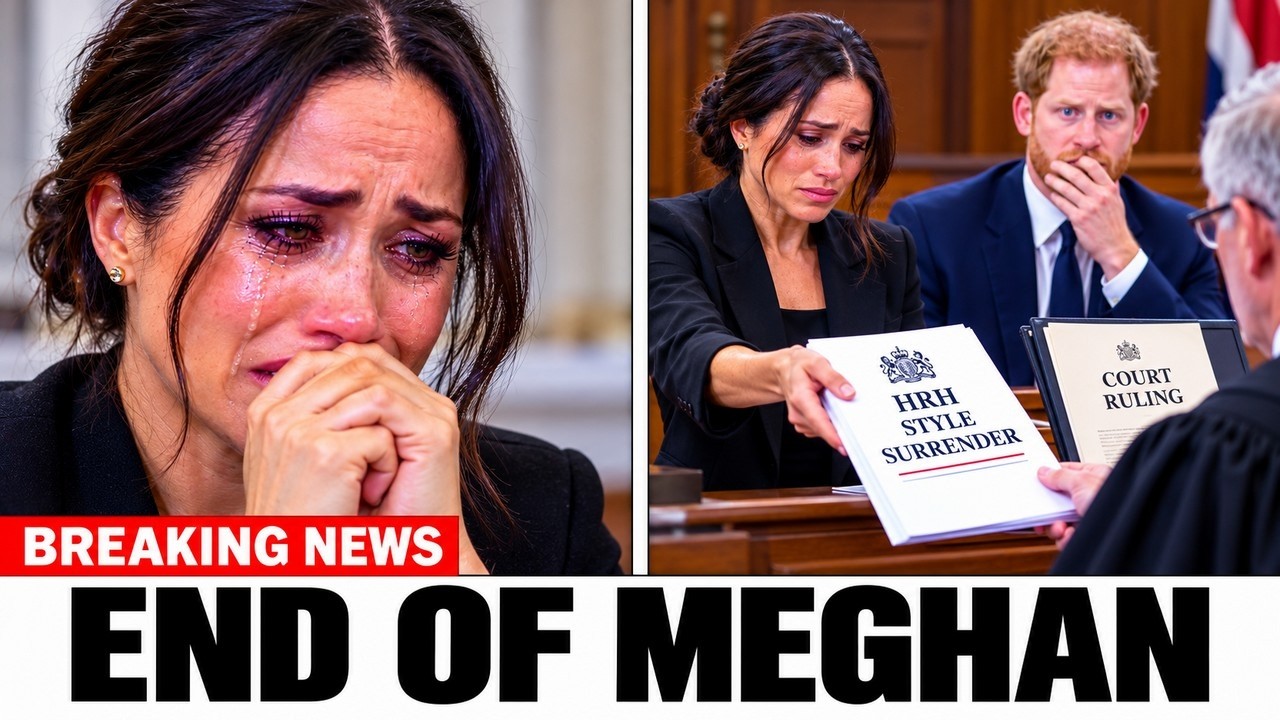
The three letters represent Her Royal Highness, a formal style associated with senior members of Britain’s royal family.
Meghan’s imagined decision concerns whether her office should continue using that style in its future professional communications.
Crucially, the fictional ruling does not remove her royal status or independently revoke any legally recognized title.
Instead, Meghan voluntarily instructs her office to discontinue using HRH on materials within its direct administrative control.
That distinction becomes central to a family dispute involving Harry’s lingering hopes of reconciliation with his father.
For Meghan, abandoning the style represents a necessary boundary between independent professional work and royal institutional authority.
For Harry, the decision threatens another symbolic connection to the family and traditions he once considered inseparable.
Their conflicting interpretations transform a straightforward administrative instruction into an emotionally charged confrontation about their shared future.
The fictional crisis begins when a civil judgment arrives electronically at a private London townhouse on Monday morning.
Meghan initially expects a ruling addressing the Harbor Lights benefit, a charitable event whose sponsorship arrangements became disputed.
The court instead delivers findings that expose how organizers presented her private attendance as official royal patronage.
That distinction matters because personal participation does not automatically constitute endorsement by the monarchy or its representatives.
The event’s promotional materials allegedly suggested that royal approval accompanied Meghan’s participation, despite lacking documented palace authorization.
According to the fictional judgment, a sponsor had committed funding partly because of the promised institutional association.
When the promised endorsement could not be substantiated, the sponsor challenged the agreement and demanded repayment from organizers.
The organizer disputed responsibility, arguing that disclaimers and subsequent explanations adequately clarified the nature of Meghan’s involvement.
The fictional court rejected that position, concluding that the published materials had failed to reflect the actual arrangement.
The judgment therefore required corrective communications and repayment under the disputed sponsorship agreement, resolving the central financial disagreement.
Although the legal dispute concerned sponsorship representations, its implications extended into Meghan’s professional identity and public communications.
She recognized that continuing to use HRH could invite further misunderstandings about connections between private work and monarchy.
At 9:15 that morning, the fictional narrative places a signed administrative instruction on her desk before Harry.
The document directs her office to stop using the royal style across future invitations, biographies, and correspondence.
It contains no stated expiration date, making the decision appear permanent rather than a temporary communications adjustment.
Harry examines the wording and immediately searches for language permitting reconsideration after the public controversy eventually subsides.
He finds none, recognizing that Meghan has made a deliberate choice extending beyond the immediate sponsorship dispute.
The instruction does not affect historical documents or materials outside her office’s control, preserving important administrative distinctions.
Nevertheless, its practical consequences are substantial because future professional communications will present Meghan without the familiar style.
For Harry, those changes evoke memories of his departure from senior royal duties and subsequent family disagreements.
The absence of HRH appears to symbolize another closing door between his present life and royal upbringing.
Meghan sees the same document differently, regarding it as a means of preventing future ambiguity about institutional endorsement.
Her concern is not whether the style once mattered, but whether continuing its use serves her present responsibilities.
The disagreement reveals that identical symbols can carry profoundly different meanings within a marriage shaped by public controversy.
Harry interprets the instruction through his relationship with the monarchy, while Meghan focuses upon professional autonomy and clarity.
Neither initially recognizes how strongly the other’s interpretation influences their reaction to the decision already made.
The fictional narrative then introduces an older document that complicates the question of responsibility for the event controversy.
Meghan produces a marked proof of the Harbor Lights program, containing handwritten corrections prepared before its publication.
The document demonstrates that concerns about the claimed royal endorsement had emerged well before the sponsorship dispute reached court.
Six weeks earlier, Meghan and Harry had reviewed promotional materials while organizers faced an approaching printing deadline.
The program carried the HRH style above Meghan’s name and described the event as enjoying official patronage.
That language suggested formal support from the royal household, rather than merely the attendance of a private individual.
Meghan recognized the problem and marked the wording for correction, specifying that her participation was strictly personal.
Her handwritten amendment attempted to distinguish charitable involvement from the institutional authority associated with official royal endorsement.
Harry also understood the distinction and believed that removing the misleading language would adequately protect everyone involved.
The organizer subsequently offered reassurance that an additional disclaimer would explain the nature of Meghan’s attendance clearly.
Facing the printing deadline, the couple accepted that explanation rather than demanding an immediate suspension of production.
Their decision reflected confidence that the organizer would implement the correction without jeopardizing the planned charitable event.
However, the fictional email record later revealed that the final production materials retained the disputed endorsement claim.
The handwritten amendment did not appear in the published program, despite having been provided before the printing deadline.
The organizer apparently considered the additional disclaimer sufficient to address any misunderstanding created by the original wording.
The sponsor disagreed because the commercial agreement had been based upon a specific promise of official royal support.
From the sponsor’s perspective, contradictory language could not substitute for an endorsement that had never been formally authorized.
That disagreement eventually developed into litigation over representations, contractual expectations, and the financial consequences of misleading sponsorship materials.
The fictional judgment identifies the organizer’s responsibility while recognizing that Meghan had challenged the wording before publication.
Her marked proof therefore becomes important evidence distinguishing her original intentions from the organizer’s final promotional claims.
Yet the document cannot undo the consequences of materials already distributed or promises made through the sponsorship agreement.
That limitation creates a painful contradiction between being able to explain an error and preventing its consequences.
Harry regards the corrected proof as evidence capable of defending Meghan against accusations arising from the sponsorship dispute.
He believes releasing the document could establish that she attempted to prevent the misleading endorsement from appearing.
Meghan accepts its evidentiary value but questions whether another public defense will resolve the recurring identity problem.
She has become exhausted by repeated arguments about what her name and royal connections may legitimately represent.
The court judgment offers clarity about one event, but cannot determine how future organizers might interpret her identity.
Her administrative instruction addresses that broader concern by removing a style capable of encouraging confusion in promotional materials.
Harry fears that abandoning the style permanently might weaken any remaining possibility of closer relations with his family.
Meghan worries that retaining it for his emotional reassurance would place responsibility for reconciliation upon her professional decisions.
Their disagreement becomes increasingly personal as both recognize that the sponsorship controversy has exposed an older unresolved tension.
Harry acknowledges that he associates the royal style with a family connection he has never entirely relinquished.
He sees its continued availability as evidence that some institutional and emotional possibilities might remain open for reconciliation.
Meghan understands that hope, but resists allowing her working identity to become responsible for preserving it indefinitely.
The distinction is particularly important because the couple’s professional arrangements and private family relationships are not identical.
An administrative choice about invitations cannot independently determine whether Charles will speak to his son or pursue reconciliation.
Nevertheless, Harry initially struggles to separate those matters because the symbolic consequences feel greater than their legal significance.
The fictional dispute intensifies when Meghan reveals that she drafted a possible public statement before receiving the judgment.
Harry interprets that preparation as evidence that she anticipated surrendering the style without consulting him sufficiently beforehand.
Meghan explains that drafting language early allowed her to consider the decision without the pressure of immediate publicity.
She distinguishes preparation from final commitment, arguing that thoughtful planning should not automatically be treated as betrayal.
Her explanation does not erase Harry’s hurt, but it clarifies why she wanted control over the announcement.
The fictional narrative then shifts toward Buckingham Palace, where Charles receives documents concerning the court ruling and decision.
The king is presented with a proposed statement explaining that the disputed benefit lacked official royal endorsement.
He also receives confirmation that Meghan intends to discontinue the HRH style within materials controlled by her office.
The palace faces a narrower question than the one confronting Harry and Meghan inside their private household.
It must clarify whether royal institutional support existed, without pretending to control an unrelated civil sponsorship dispute.
Charles understands that the monarchy cannot rewrite the judgment or determine how Meghan administers her independent professional communications.
He also recognizes that official wording could unintentionally suggest a broader family rejection than the evidence supports.
The fictional palace draft initially contains language connecting Meghan’s decision with a supposed breakdown of family trust.
Charles hesitates because such wording would transform an administrative clarification into a judgment about deeply personal relationships.
William participates in the discussion, emphasizing that public communications must distinguish private attendance from official royal endorsement.
His concern reflects the possibility that future organizers might similarly misunderstand the authority implied by royal connections.
He believes the palace should communicate boundaries clearly enough to prevent another sponsorship controversy involving unsupported institutional claims.
However, William also recognizes that accusing Meghan of damaging family trust exceeds the scope of the judgment.
The fictional court did not determine the quality of royal relationships or assign responsibility for personal estrangement.
Its findings concerned the event’s sponsorship representations and the financial obligations arising from those particular promotional materials.
Charles therefore removes the broader accusation, preserving factual clarification without making the statement unnecessarily personal or punitive.
William accepts the revision because it maintains institutional precision while avoiding claims unsupported by the legal proceedings.
The resulting fictional palace response confirms that the Harbor Lights benefit did not receive official royal endorsement.
It separately acknowledges Meghan’s decision concerning the future use of HRH within her own professional materials.
These statements address different responsibilities without presenting the palace as the authority behind Meghan’s voluntary administrative instruction.
That distinction becomes particularly important because headlines may otherwise portray the decision as an involuntary removal of status.
The fictional narrative repeatedly emphasizes that voluntary non-use and legal revocation are fundamentally different constitutional concepts.
A person’s decision to omit a royal style from correspondence does not automatically extinguish the underlying legal position.
Similarly, a civil dispute involving an event organizer would not ordinarily authorize a court to revoke royal status.
The dramatic premise therefore depends upon personal and administrative consequences rather than an actual constitutional removal process.
Charles remains concerned that his official response might be interpreted as another rejection of Harry and Meghan.
The king receives a separate personal message from his son requesting conversation rather than intervention in the dispute.
Harry does not ask Charles to overturn the judgment or restore any official royal position through special treatment.
Instead, he seeks an opportunity to speak as a family member outside the formal machinery of palace communications.
That request forces Charles to distinguish his responsibilities as sovereign from his personal obligations as Harry’s father.
He cannot change the sponsorship ruling, but he can choose whether to respond to a private appeal.
The fictional king eventually agrees to a conversation after the public statements have been released and clarified.
His decision creates an opportunity for reconciliation without requiring the monarchy to compromise its stated institutional boundaries.
Meanwhile, Meghan’s office begins implementing the signed instruction through ordinary administrative changes across its professional materials.
An assistant opens an existing correspondence template and removes the royal style from Meghan’s displayed name.
The adjustment takes only moments, yet its emotional significance becomes immediately apparent to both Meghan and Harry.
Three letters disappear from the document, leaving the remaining information arranged as though nothing consequential has occurred.
For Meghan, the moment confirms that a carefully considered decision can still carry a sense of loss.
For Harry, it demonstrates that the change is no longer merely a statement awaiting public approval or discussion.
The instruction has become operational, affecting correspondence, speaker biographies, invitations, and other documents controlled by Meghan’s office.
Historical records remain unchanged because the decision concerns future usage rather than an attempt to rewrite earlier events.
That limitation preserves the distinction between acknowledging the past and determining how a professional identity will appear.
Harry watches the changes without asking his wife to reverse them, recognizing the importance of her autonomy.
Meghan notices his sadness but no longer interprets every expression of grief as opposition to her decision.
Their reactions suggest that accepting another person’s choice does not require pretending that its consequences are painless.
The fictional organizer subsequently issues a correction acknowledging that the published program failed to incorporate Meghan’s handwritten amendment.
The statement confirms that she had challenged the unsupported endorsement claim before the disputed materials reached publication.
The correction helps clarify responsibility, although it cannot restore the funding arrangements that supported the original benefit.
The sponsor withdraws its financial package, and the planned charitable event is canceled after funding collapses.
Volunteers, donors, and organizers consequently face disappointment unrelated to the personal dispute between Harry and Meghan.
The fictional cancellation demonstrates how inaccurate sponsorship representations can affect people beyond the immediate contracting parties involved.
Charitable projects depend upon credibility, reliable commitments, and clear communication concerning the sources of institutional support.
When promotional claims become contested, financial consequences may extend beyond the organization responsible for issuing the materials.
Harry recognizes those wider effects and understands why Meghan wants to prevent similar misunderstandings in future engagements.
Meghan also acknowledges the disappointment associated with the canceled benefit, despite having warned against the misleading wording.
Neither can restore the original event simply by demonstrating that its promotional materials should have been corrected.
The fictional court ruling resolves the financial dispute, but it cannot reverse the disruption already experienced.
The organizer accepts the judgment and begins processing repayment to the sponsor under the imagined legal outcome.
Corrective materials are distributed to recipients who previously received the program containing the unsupported endorsement language.
Those administrative steps close the sponsorship dispute while leaving Meghan’s separate professional decision fully intact and operative.
The distinction becomes central to the couple’s final negotiations over the wording of their public statement.
Harry wants the corrected proof included so readers can understand that Meghan objected before the program appeared.
Meghan agrees, provided the explanation does not suggest that she is reconsidering the instruction concerning HRH.
She wants the announcement to clarify responsibility without transforming her professional boundary into another unresolved public debate.
The couple therefore revises the statement to distinguish the organizer’s mistake from Meghan’s independent administrative decision.
They also remove language suggesting that discontinuing the style represents a rejection of every royal family relationship.
That revision matters because an office’s communication practices cannot determine the emotional meaning of an entire marriage.
Nor can they conclusively establish whether reconciliation with relatives remains possible after years of strained family relations.
Harry accepts that his hopes concerning Charles must be addressed directly rather than through Meghan’s professional identity.
Meghan acknowledges that preparing the statement independently caused Harry to feel excluded from an emotionally significant transition.
She apologizes for the way the decision was communicated without withdrawing her right to make it herself.
Harry likewise admits that he initially asked for reconsideration partly because the decision threatened his reconciliation hopes.
He recognizes that such a request placed responsibility for his family uncertainty upon Meghan’s professional choices.
His acknowledgment changes the emotional atmosphere because it separates marital support from agreement about every symbolic consequence.
The fictional conversation becomes less confrontational as both begin identifying what they can reasonably ask of each other.
Meghan needs confidence that her husband will respect decisions concerning her independent work and public presentation.
Harry needs space to acknowledge his complicated relationship with royal traditions without making his wife responsible for preserving them.
Their compromise allows both concerns to exist without treating one person’s emotional needs as controlling the other’s decisions.
The revised announcement is scheduled for release the following morning, alongside the corrected program and organizer’s clarification.
Charles’s palace response will follow, addressing official endorsement without expanding into judgments about private family relationships.
The timing creates a moment of suspense because the documents will soon become available for public interpretation.
Neither Meghan nor Harry can control every headline, commentary segment, or reaction that follows their carefully worded explanation.
They can only ensure that their own statement accurately distinguishes the legal dispute from the administrative decision.
The fictional announcement appears at eight o’clock the next morning, attracting immediate attention because of its royal implications.
Headlines focus upon Meghan’s abandonment of HRH, often compressing the underlying sponsorship controversy into a dramatic personal narrative.
Some observers interpret the decision as another defeat in the couple’s difficult relationship with the monarchy.
Others regard it as a deliberate attempt to establish boundaries between independent work and institutional royal authority.
The fictional public response reflects how symbolic decisions can generate interpretations far beyond their immediate administrative scope.
Meghan watches coverage and feels the familiar impulse to challenge every incomplete or misleading characterization of her actions.
However, the corrected proof and organizer’s statement provide an evidentiary record that readers can examine for themselves.
She decides against issuing another immediate response, recognizing that endless clarification cannot guarantee universal agreement or understanding.
The palace publishes its narrower acknowledgment, confirming the absence of official endorsement without presenting Meghan’s decision as compulsory.
Charles declines to authorize additional commentary, allowing the factual distinctions to remain clear without unnecessary public escalation.
William supports that restraint because institutional authority is strengthened through precision rather than personal accusations or inflammatory language.
The fictional court judgment, organizer’s correction, and Meghan’s office instruction now occupy separate roles in the narrative.
One resolves financial responsibility, another corrects promotional representations, and the third determines future professional communication practices.
Confusing those functions would distort the meaning of the dispute and exaggerate the palace’s constitutional involvement.
The public announcement therefore marks a conclusion to the sponsorship controversy rather than a verified removal of royal status.
Yet the most important unresolved issue concerns the relationship between Harry and Charles after the statements appear.
Harry has requested a private conversation that does not depend upon restoring an official role or disputed style.
Charles has agreed to respond, creating a possibility for personal contact independent of the sponsorship judgment’s outcome.
Their fictional telephone conversation begins without demands concerning Meghan’s decision or the wording of palace communications.
Harry explains that he is seeking contact as a son rather than requesting institutional intervention from the monarch.
Charles acknowledges the distinction, allowing their discussion to move beyond the documents that prompted the immediate controversy.
The narrative does not portray their exchange as an instant resolution of years of difficult family relationships.
Instead, it emphasizes the significance of speaking without demanding concessions that neither person is prepared to make.
Harry does not ask his father to challenge Meghan’s decision, and Charles does not attempt to reverse it.
Their conversation establishes that personal reconciliation need not depend upon the restoration of ceremonial language or status.
When Harry returns to Meghan, he confirms that the discussion involved no request to change her instruction.
She experiences relief because he has finally separated his relationship with Charles from her professional identity choices.
Their marriage emerges from the fictional confrontation with a clearer understanding of boundaries and emotional responsibility.
Meghan prepares another invitation using the revised template, confirming that the administrative change remains in effect.
Harry accepts the document without searching for the familiar royal style or asking whether it might return.
The gesture symbolizes a shift from treating ceremonial language as protection toward valuing their shared independent future.
Meanwhile, Charles and William review the completed palace response and agree that further public commentary is unnecessary.
The monarchy has clarified its institutional position without attempting to determine the outcome of private family conversations.
The organizer has accepted responsibility for the disputed promotional materials and complied with the fictional repayment judgment.
The sponsor receives the required repayment, while the canceled benefit remains a reminder of the controversy’s wider consequences.
Meghan’s office continues using revised professional materials, and historical records remain unaffected by the prospective administrative instruction.
The fictional resolution therefore separates three questions that public discussion initially treated as a single royal confrontation.
The court addresses contractual responsibility, the palace addresses institutional endorsement, and Meghan determines her office’s professional presentation.
Harry and Charles separately confront the personal consequences of estrangement without using those institutional decisions as leverage.
That separation provides the narrative’s central resolution, although it does not erase the sadness accompanying Meghan’s choice.
The story illustrates how symbols associated with status can acquire emotional meanings beyond their formal constitutional functions.
For Harry, HRH represents a connection to family history, identity, and possibilities he has struggled to relinquish.
For Meghan, its continued professional use represents uncertainty about boundaries between private activities and official royal endorsement.
Neither interpretation necessarily invalidates the other, but allowing either to dominate would undermine their mutual understanding.
The fictional dispute also raises questions about sponsorship accountability when charitable activities involve individuals associated with prominent institutions.
Organizations seeking financial support must distinguish personal participation from formal endorsements that require explicit institutional authorization.
Failure to maintain that distinction can create contractual disputes, reputational damage, and financial consequences for charitable projects.
Clear promotional language and documented approval procedures are therefore essential when sponsorship agreements rely upon institutional affiliations.
The Harbor Lights controversy dramatizes those risks through a fabricated legal dispute rather than an actual reported judgment.
Its emotional dimensions extend beyond contractual obligations because the disputed materials implicate a highly recognizable royal identity.
Nevertheless, the source repeatedly identifies the proceedings and private conversations as fictional, requiring careful treatment of its claims.
There is no verified evidence in the supplied narrative that Meghan has recently surrendered HRH through a court ruling.
The imagined judgment concerns a fabricated benefit, and its legal consequences should not be mistaken for established events.
Similarly, the conversations involving Charles, William, Harry, and Meghan are narrative devices rather than authenticated private records.
The distinction is especially important because sensational headlines can make fictional constitutional scenarios appear to describe breaking news.
The actual meaning of a royal style cannot be determined solely by the language of an entertainment script.
Nor can an ordinary sponsorship judgment independently establish the legal removal of a person’s royal style or status.
Meghan’s fictional decision is therefore best understood as voluntary non-use within specified professional materials, not formal revocation.
That interpretation preserves the narrative’s emotional premise without presenting invented constitutional developments as verified historical facts.
The story ultimately portrays a couple confronting different forms of loss while learning to respect independent decisions.
Harry accepts that family reconciliation must be pursued directly rather than preserved through Meghan’s use of ceremonial language.
Meghan recognizes his attachment to royal history without allowing that attachment to dictate her professional communications indefinitely.
Charles responds as a father while maintaining the institutional distinction between personal attendance and official royal endorsement.
William supports factual precision without endorsing unnecessary criticism that could deepen an already difficult family relationship.
The fictional outcome offers no sweeping royal reunion, no constitutional upheaval, and no dramatic reversal of legal authority.
Instead, it ends with clearer responsibilities, an accepted court judgment, corrected sponsorship materials, and a private family conversation.
The disputed letters disappear from Meghan’s future office communications, but their absence does not define her marriage.
Harry’s relationship with his father remains complicated, although the fictional conversation creates space for further personal understanding.
The monarchy retains its institutional boundaries while avoiding the claim that Meghan’s administrative choice constitutes compulsory punishment.
Ultimately, the imagined HRH surrender becomes a story about distinguishing identity from status and affection from authority.
Its central lesson is that clarity sometimes requires relinquishing symbols without surrendering the relationships they once appeared to represent.
The alleged royal bombshell remains fictional, but its exploration of trust, responsibility, and belonging gives the narrative resonance.
Meghan closes the file, Harry remains beside her, and their imagined future no longer depends upon three letters.


