Jacqueline Kennedy and Aristotle Onassis: The Marriage Behind the Famous Wedding Photograph
The wedding photograph remains one of the most recognizable images of the 20th century: Jacqueline Kennedy standing beside Aristotle Onassis on his private Greek island, dressed as the widow of an assassinated president and newly married to one of the world’s wealthiest men. For decades, the image has been presented as a story of rescue, suggesting that a grieving woman found security and comfort in the arms of a powerful protector.
But the marriage behind that photograph was far more complicated. Accounts from biographers describe a relationship shaped by fear, financial negotiations, divided loyalties, personal humiliation, and a bitter dispute over an enormous inheritance. What began as a source of protection for Jacqueline eventually became a deeply strained union, ending only with Onassis’s death in 1975.
Long before their wedding shocked the world, Jacqueline and Onassis had known each other through the overlapping social circles of wealth, politics, and European high society. Their paths crossed at gatherings and diplomatic functions on both sides of the Atlantic throughout the early 1960s, gradually developing into a friendship that became especially significant during one of the most painful periods of Jacqueline’s life.
In August 1963, her newborn son Patrick died just days after being born prematurely. The loss devastated Jacqueline, leaving her in profound grief at a time when the pressures of her position as First Lady already made ordinary privacy almost impossible. Onassis, who had become acquainted with the Kennedy family through mutual friends, invited her aboard his enormous private yacht for a Mediterranean cruise.
The invitation offered something she desperately needed: distance from the public attention that followed her everywhere. Away from Washington and the relentless demands of the White House, she could spend time in relative privacy, surrounded by people who were not constantly watching her every movement. Onassis provided companionship and discretion during a period when very few people could offer her both.
Their friendship took on greater significance after November 1963, when President John F. Kennedy was assassinated in Dallas. The photographs of Jacqueline during the funeral became defining images of the decade, establishing her in the public imagination as a symbol of dignity and resilience amid extraordinary grief.
Onassis remained a quiet presence in her life during the years that followed. He could offer a degree of privacy, wealth, and protection that had become increasingly difficult for Jacqueline to find. Yet another tragedy would soon make those advantages seem more urgent than ever.
In June 1968, Robert Kennedy was assassinated in Los Angeles while campaigning for president. His death devastated Jacqueline, who had relied heavily on her brother-in-law since her husband’s murder. According to accounts of the period, she became increasingly afraid that her children might also be in danger because of their connection to the Kennedy family.
Those fears were rooted in a series of devastating events that had already transformed her life. She reportedly believed that her family was being systematically targeted, while the security available to her and her children seemed inadequate to the threats they might face. The prospect of raising her children under constant public scrutiny and potential danger became increasingly frightening.
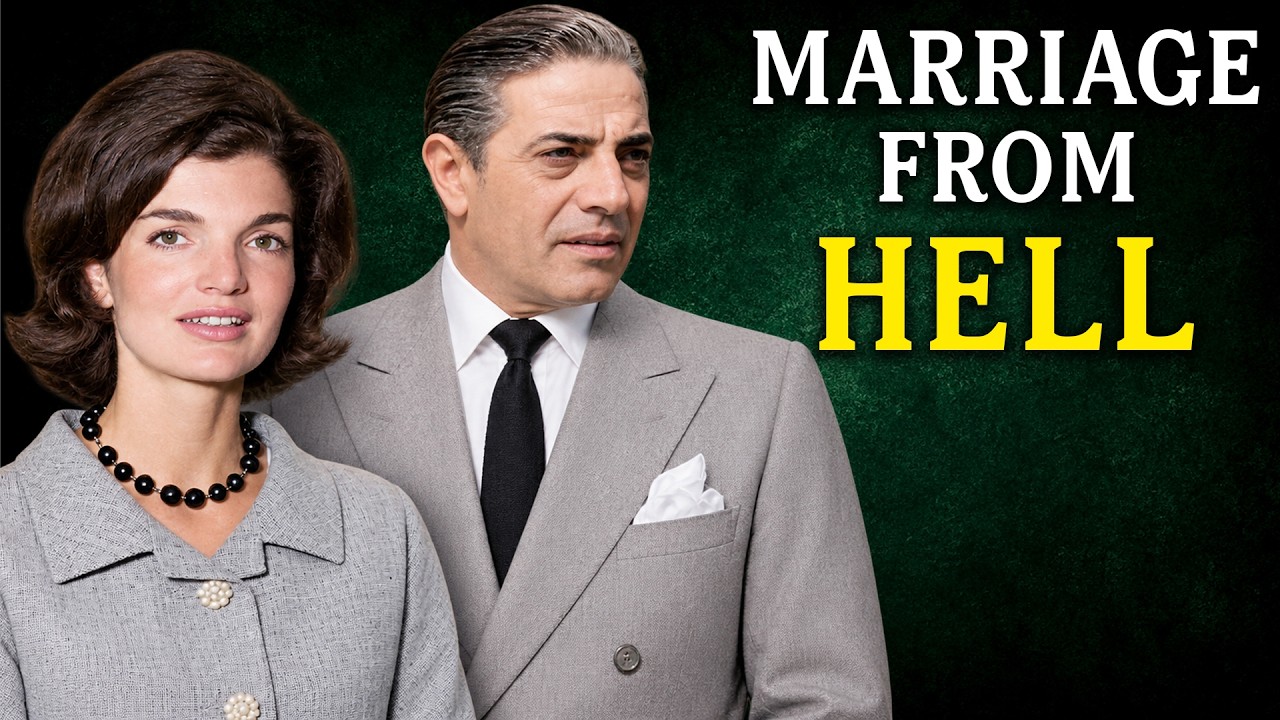
Four months after Robert Kennedy’s death, Jacqueline married Onassis. Some biographers have interpreted the speed of the decision as evidence that security, rather than romantic excitement alone, played a central role. Onassis possessed the resources to provide a level of private protection that few people could afford, and that promise offered something Jacqueline had come to value enormously.
The arrangements surrounding their marriage reflected those practical concerns. Rather than relying on a conventional engagement and wedding agreement, the couple reportedly negotiated an extensive prenuptial contract containing between 170 and 173 separate provisions. The document addressed financial arrangements, expectations about married life, potential divorce terms, and guarantees concerning Jacqueline’s safety and that of her children.
The agreement reportedly included provisions governing how much time the couple would spend together and what financial consequences would follow if either chose to end the marriage. Its level of detail made it appear less like a traditional romantic agreement and more like a carefully negotiated business arrangement.
Security was reportedly among Jacqueline’s most important conditions. Onassis agreed to provide around-the-clock protection for her and her children, offering a long-term safeguard against the dangers she feared after the assassinations of John and Robert Kennedy.
The financial provisions were equally substantial. If Onassis initiated a divorce, Jacqueline was reportedly entitled to receive $20 million. If she chose to leave, she would still receive a considerable settlement, although a smaller one. The agreement also guaranteed her an annual income after his death, reportedly around $200,000, along with ownership of certain properties.
These terms suggested that both parties understood the practical dimensions of their decision. Whatever affection existed between them, neither entered the marriage without considering the financial and personal consequences of a possible separation.
On October 20, 1968, Jacqueline Kennedy married Aristotle Onassis in a private ceremony on Skorpios, his privately owned island in the Ionian Sea. Heavy security and secrecy kept much of the world’s press away from the ceremony, but news of the wedding quickly spread across the globe.
The announcement produced an immediate reaction in the United States. Some Americans viewed the marriage as an uncomfortable departure from the image of the grieving presidential widow, believing that becoming the wife of a controversial foreign businessman somehow diminished the memory of John Kennedy. Others were fascinated by the extraordinary wealth and private world of her new husband.
Onassis was almost the opposite of the public-service figure associated with the Kennedy name. His shipping empire, private island, and enormous yacht represented a world of wealth and influence that seemed distant from the political traditions of the American presidency. Newspapers and gossip columnists rushed to investigate the couple’s relationship, speculating about how their friendship had become romantic and what their marriage would mean for Jacqueline’s future.
The union also raised questions within the Catholic Church because Onassis had previously been married and his first wife, Tina, was still alive. Jacqueline had been raised in a devout Catholic family and continued to identify closely with her faith, making the controversy personally significant. Although the concerns were eventually set aside by church officials, the debate added another layer of attention to an already intensely scrutinized marriage.
Jacqueline soon became known internationally as Jackie O, a nickname that followed her for the rest of her life. Photographers pursued her relentlessly, turning ordinary outings into opportunities for intrusive photographs. The attention became so aggressive that she eventually obtained a restraining order against one particularly persistent photographer.
Yet while the public was fascinated by the apparent glamour of the new marriage, another woman remained central to Onassis’s private life.
Years before meeting Jacqueline, Onassis had begun a passionate relationship with celebrated opera singer Maria Callas. Their affair began in 1959, when both were still married to other people, after they met during a lavish cruise aboard his yacht. The voyage included prominent guests such as Winston Churchill and became one of the most talked-about social events of the decade.
Onassis and Callas continued their relationship for years, becoming one of Europe’s most recognizable couples. Their romance attracted extensive attention, with the wealthy shipping magnate and internationally celebrated singer frequently appearing together at opera houses, casinos, and private gatherings.
When Onassis married Jacqueline in 1968, many assumed his relationship with Callas had ended. According to several biographers and accounts from people close to the couple, however, he resumed visiting the singer not long after his honeymoon. His connection with Callas reportedly continued even as he presented himself publicly as Jacqueline’s husband.
The relationship was said to be an open secret within parts of Onassis’s social circle. Jacqueline, meanwhile, continued appearing beside him at official functions and society events, maintaining the composed public image that had become familiar throughout her years in the Kennedy family.
Singer Carly Simon, who later wrote about her friendship with Jacqueline, described the emotional strain of watching her friend endure Onassis’s infidelity. The accounts portray a woman who continued projecting calm and dignity in public while facing another painful betrayal in her private life.
Onassis’s attachment to Callas reportedly remained intense even after his relationship with Jacqueline had deteriorated. According to later accounts, he once appeared at Callas’s residence in Paris and, when initially refused entry, stood outside whistling toward her window in an attempt to attract her attention. He was also said to have threatened to drive his car through her front door if she continued refusing to see him.
These stories reveal a complicated emotional dynamic. The man who had married Jacqueline in a ceremony watched by the world apparently remained deeply attached to the woman he had loved for years before their marriage.
Jacqueline also faced an embarrassing intrusion into her own past. In February 1970, approximately a year and a half after the wedding, a collection of personal letters she had written to Roswell Gilpatric suddenly appeared at a public auction.
Gilpatric, a former Deputy Secretary of Defense, had reportedly maintained a romantic connection with Jacqueline before her marriage to Onassis. One letter, written aboard Onassis’s yacht, explained why she had not yet told Gilpatric about her plans to marry the shipping magnate.
The appearance of the correspondence at auction raised questions about how private letters had entered the public market. Some observers wondered whether they had been deliberately released to embarrass Jacqueline or damage her marriage, while others suspected that the letters had simply become valuable commodities because of the enormous public interest in her private life.
No definitive explanation for their appearance was established in the accounts described by biographers. Whatever the circumstances, the episode exposed another part of Jacqueline’s personal history to public scrutiny and added to the pressure surrounding her marriage.
The most devastating turning point came in January 1973, when Onassis’s only son and intended heir, Alexander, was involved in a catastrophic plane crash at Athens Airport. The 24-year-old had been practicing takeoffs and landings in a small aircraft when the accident occurred. He suffered severe injuries and died the following day.
Alexander’s death shattered Onassis. His son had been expected to inherit and eventually oversee the shipping empire that his father had spent decades building. With his death, Onassis lost not only a beloved child but also the future successor around whom much of his business legacy had been organized.
According to biographers, his grief gradually turned into resentment directed at Jacqueline. Rather than seeking comfort from his wife, he reportedly began telling friends and associates that she had brought misfortune into his life. Some accounts describe him calling her a witch and suggesting that she carried a curse.
The accusations were reportedly disturbing to people around him, particularly because Onassis had previously been known for his hard-headed approach to business and practical matters. His reaction appeared to reflect the depth of his grief rather than any evidence of wrongdoing by Jacqueline.
But the effect on their marriage was severe. The generosity and protection that had characterized the earlier years gave way to increasing distance, resentment, and emotional coldness. Although they remained legally married and continued maintaining a public appearance of partnership, their private relationship had become deeply strained.
Money also became a source of conflict. Onassis reportedly provided Jacqueline with a monthly allowance worth tens of thousands of dollars, but he increasingly complained about what he considered her extravagant spending. At one point, he allegedly reduced the allowance by approximately one-third.
The reduction was a small but revealing indication of how their relationship had changed. The man who had once promised lifelong security was now reportedly using financial support as a way to express frustration and exert greater control over his wife.
As Onassis’s health deteriorated, his desire to end the marriage became more serious. According to biographer Arianna Stassinopoulos’s account of Maria Callas’s life, he increasingly viewed his marriage to Jacqueline as a betrayal of the woman he had always truly loved.
He reportedly hired a private investigator to follow Jacqueline, hoping to gather evidence of infidelity that could be used in divorce proceedings. He also retained New York attorney Roy Cohn, whose reputation for aggressive legal tactics made him a formidable choice for a potentially explosive separation.
According to Stassinopoulos’s account, Onassis wanted more than a straightforward divorce. He reportedly instructed Cohn to make the proceedings as humiliating and painful for Jacqueline as possible. The reported request suggested that the resentment within the marriage had reached a level far removed from the protective partnership the couple had presented to the world in 1968.
Had the proceedings gone forward, Jacqueline could have faced another prolonged public examination of her private life. The security and privacy that had helped motivate the marriage would have been replaced by a bitter legal battle, with the possibility of damaging personal details becoming public.
Onassis, however, never completed the plan. His health had been declining for years, and he had been diagnosed with myasthenia gravis, a disorder that causes progressive muscle weakness. The condition increasingly affected his physical abilities, and his final months were marked by serious deterioration.
Accounts of his illness describe doctors having to tape his eyelids open because of the weakness affecting his facial muscles. He traveled to Paris for treatment and remained close to Maria Callas during his final weeks, rather than spending that time with Jacqueline.
Aristotle Onassis died on March 15, 1975, at the American Hospital in Paris. He was 69. By then, his will had reportedly been revised in ways that reduced Jacqueline’s inheritance, setting the stage for another conflict after his death.
The battle over his fortune soon became a dispute between Jacqueline and Onassis’s surviving daughter, Christina. She inherited the overwhelming majority of his shipping fortune and retained lawyers to examine the prenuptial agreement her father had negotiated with Jacqueline.
The agreement had been designed to establish financial protections and clarify what would happen if the marriage ended. Instead, it became the central document in a prolonged dispute over how much Jacqueline was entitled to receive.
Christina had reportedly never fully accepted her father’s second wife, and accounts of the family describe tensions between Jacqueline and her stepchildren throughout the marriage. Alexander had also reportedly viewed her with suspicion, while Christina’s relationship with Jacqueline remained difficult.
After Onassis’s death, those tensions became part of a legal struggle that lasted approximately two years. The dispute attracted continuing public interest because of the identities involved: the widow of an assassinated American president and the daughter of one of the world’s wealthiest businessmen.
In 1977, the two sides finally reached a settlement. Jacqueline agreed to accept a reported $26 million in exchange for giving up any further claims against the Onassis estate.
The amount represented a substantial fortune, but it was considerably less than the total wealth left behind by her husband. It was also reportedly below what she might have received under the original financial arrangements had Onassis not revised his will and taken steps to reduce her inheritance.
Following his death, Jacqueline described Onassis as someone who had rescued her during a period when her life was engulfed by shadows. Her public words were measured, revealing little about the private conflicts that had shaped the final years of their marriage.
She subsequently turned to Maurice Tempelsman, a Belgian-American diamond merchant, for help managing and investing her settlement. According to accounts of their financial arrangement, Tempelsman helped grow her fortune substantially over the following decade. He also became her closest and most enduring companion for the remainder of her life.
Their relationship offered a contrast to the volatility that had characterized her marriage to Onassis. It was a quieter partnership, built around consistency and companionship rather than the extraordinary wealth, divided loyalties, and bitter disputes that had marked her second marriage.
Looking back, the story of Jacqueline Kennedy and Aristotle Onassis cannot easily be reduced to either a fairy tale of rescue or a cynical arrangement between two people using one another. Their marriage appears to have contained genuine affection and companionship, particularly during its earlier years, while also being shaped by practical concerns from the beginning.
Jacqueline had experienced devastating losses and feared for the safety of her children. Onassis offered resources, privacy, and protection at a time when those things seemed essential. The detailed prenuptial agreement reflected the seriousness of those concerns, even as it exposed the transactional foundations of their union.
But the marriage also involved reported infidelity, personal humiliation, financial disagreements, and a bitter deterioration after Alexander’s death. The divorce Onassis reportedly planned, and the inheritance dispute that followed his own death, revealed just how far the relationship had moved from the promise represented by the wedding photograph.
None of this necessarily erases the comfort the two may have found in one another during the earlier years. Onassis could be generous and protective, while Jacqueline could value the privacy and stability he provided. Yet the same relationship that offered her a refuge from public danger eventually became another difficult chapter in a life already marked by extraordinary tragedy.
Decades later, Jacqueline Kennedy Onassis remains admired for her intelligence, poise, and resilience. Her second marriage, however, deserves to be remembered as more than a glamorous photograph or a simple story of a wealthy man rescuing a grieving widow.
Behind the public image was a complicated partnership involving love, fear, money, loyalty, and grief. It was a marriage that began with promises of protection, but ended with a bitter inheritance battle and a collection of unanswered questions about what had happened behind closed doors.
The fuller story does not fit neatly into either the romantic mythology or the purely cynical interpretation. It is considerably more human, and more troubling, than either version suggests.
If you enjoyed this story, please like and subscribe to our channel for more fascinating accounts of the hidden lives behind history’s most famous photographs.


