In the American Wild West, imprisonment could mean far more than losing freedom behind a locked iron door.
For thousands of prisoners, it meant enduring extreme temperatures, overcrowded cells, dangerous illnesses, and the constant threat of violence.
Three institutions became enduring symbols of that unsettling period: Fort Smith, Yuma Territorial Prison, and Montana Territorial Prison.
Their walls witnessed executions, desperate escape attempts, harsh punishments, and conflicts that exposed the limitations of frontier justice.
Some prisoners entered as notorious outlaws, while others were ordinary offenders caught within an unforgiving criminal justice system.
Behind the popular legends existed a disturbing reality shaped by federal expansion, territorial politics, and changing attitudes toward punishment.
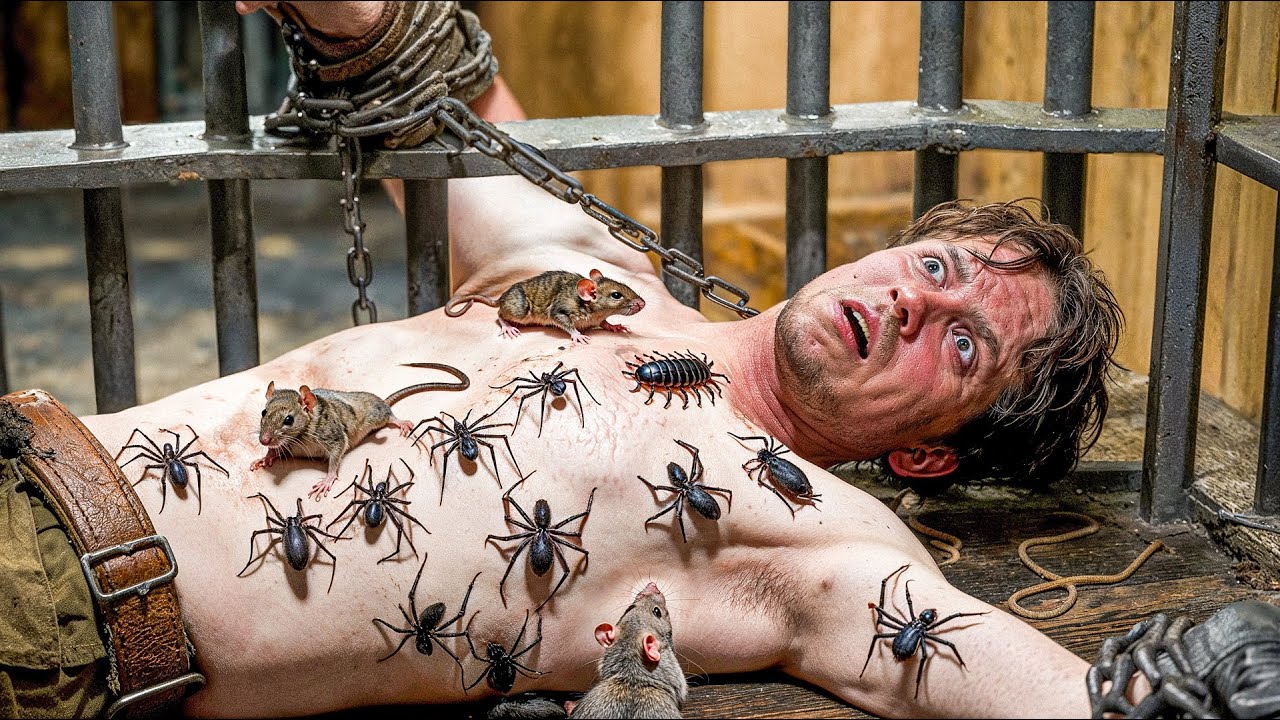
The surviving records reveal suffering, but they also challenge sensational stories repeated as established history without supporting documentation.
Even the most famous tales contain mistakes, invented quotations, and dramatic details that cannot survive examination against official records.
The actual history is no less compelling, because these institutions reflected the contradictions of the rapidly expanding American frontier.
They promised civilization through law while confining people under conditions that sometimes challenged the meaning of justice itself.
In Arkansas, Fort Smith became the center of an extraordinary federal legal system extending into Indian Territory.
In Arizona, Yuma Territorial Prison confronted the challenges of maintaining confinement in an unforgiving desert environment.
And in Montana, a prison built during the territorial era remained operational until the final decades of the twentieth century.
Together, these places reveal how punishment evolved across America, and why their darkest chapters continue provoking fascination.
Their stories begin beside two rivers in Arkansas, where the federal government confronted an immense and difficult jurisdiction.
The settlement of Fort Smith developed near the confluence of the Arkansas and Poteau rivers during westward expansion.
The United States established its first military fortification there in 1817, creating an important position along the frontier.
A second fort followed during the nineteenth century, providing structures that later became associated with federal law enforcement.
In 1872, the United States District Court for the Western District of Arkansas occupied the former military buildings.
Its jurisdiction extended into Indian Territory, an enormous region encompassing much of what eventually became Oklahoma.
The court encountered violence associated with criminal activity, political instability, territorial disputes, and federal jurisdictional conflicts.
Those circumstances placed considerable pressure upon judges, marshals, jailers, and other officials responsible for enforcing federal law.
But the popular portrayal of Indian Territory as simply lawless overlooks the governments and legal systems of Native nations.
Tribal authorities maintained their own institutions while federal jurisdiction operated through complicated legal boundaries and unequal political relationships.
The resulting system created tensions over authority, sovereignty, prosecution, and the treatment of people living across the territory.
In 1875, Isaac Charles Parker arrived in Fort Smith to preside over one of America’s busiest federal courts.
His jurisdiction initially extended across approximately seventy-four thousand square miles, requiring extraordinary administrative and investigative efforts.
Over twenty-one years, Parker presided over more than thirteen thousand cases involving offenses of widely varying severity.
His judicial career eventually became synonymous with the gallows, earning him the enduring nickname of the Hanging Judge.
Yet the historical record portrays a more complicated man than the uncompromising executioner found in popular Western legends.
Parker believed in strict enforcement of federal law, but he also supported rehabilitation and certain judicial reforms.
His most controversial sentences were influenced by federal statutes requiring capital punishment following convictions for particular serious offenses.
During his tenure, he sentenced 160 people to death, including four women, according to National Park Service records.
Seventy-nine men were actually executed during his years on the bench, while other sentences were overturned or commuted.
Across the federal court’s entire execution history at Fort Smith, eighty-six men were hanged between 1873 and 1896.
Those figures remain horrifying, but they also illustrate why distinguishing judicial sentences from completed executions matters.
Dịch vụ Vườn Quốc gia Hoa Kỳ+2
The courthouse became inseparable from the nearby jail, where prisoners awaited trials, sentences, appeals, or transportation elsewhere.
One section earned the ominous nickname Hell on the Border because of its dangerous and unsanitary conditions.
The notorious facility was originally housed in the basement of the former military barracks, rather than a modern cellblock.
According to the National Park Service, the primitive jail consisted of two large cells holding many prisoners together.
Each could accommodate dozens of men, creating severe problems involving sanitation, ventilation, disease, and the supervision of inmates.
The environment was especially troubling because people awaiting trial could be confined alongside prisoners accused of serious violence.
Ordinary confinement became a struggle with overcrowding, inadequate facilities, and the uncertainty of an unpredictable federal judicial process.
A journalist named Anna Dawes visited in 1885 and brought renewed public attention to the jail’s conditions.
Her reporting helped persuade Congress that the existing facility required replacement rather than another temporary adjustment.
Construction of a newer jail followed, and prisoners were relocated in 1888 after years of harsh confinement.
The sequence demonstrates that public criticism could influence federal policy even during an era associated with severe punishment.
It also corrects the impression that one unchanging stone prison operated throughout Fort Smith’s entire notorious history.
Dịch vụ Vườn Quốc gia Hoa Kỳ
The nearby gallows became the most recognizable symbol of Parker’s courtroom and the federal government’s punitive authority.
Its structure stood within the former fort grounds, where condemned men confronted the final consequences of their convictions.
The gallows could accommodate multiple executions, creating scenes that attracted attention far beyond the immediate community.
On September 3, 1875, six men were executed together during the first hanging conducted under Parker’s tenure.
The condemned were Edmund Campbell, Daniel Evans, Samuel Fooy, Smoker Mankiller, James Moore, and William Whittington.
Their convictions involved separate murders, although public memory gradually transformed them into characters within one collective tragedy.
Thousands gathered to witness the execution, illustrating the disturbing public spectacle surrounding capital punishment during that period.
The National Park Service estimates that approximately five thousand people attended the September execution.
Later federal executions became less publicly accessible, changing the spectacle without eliminating the severity of the punishment.
The gallows became a continuing reminder that the court possessed the authority to impose death.
But Parker himself did not personally supervise these executions, despite persistent legends claiming he watched every hanging.
The United States Marshal was responsible for execution procedures, while Parker’s judicial role concerned sentencing and trials.
That distinction complicates the familiar image of a judge personally directing every moment of a condemned prisoner’s death.
Cơ Quan Công Viên Quốc Gia Mỹ+2
One of Fort Smith’s most notorious defendants was Crawford Goldsby, the young outlaw remembered as Cherokee Bill.
His criminal activities in Indian Territory brought him into direct confrontation with federal authorities during the 1890s.
Goldsby became associated with robberies and killings, acquiring a reputation that spread through regional newspapers and popular accounts.
He was convicted in connection with the murder of Ernest Melton, who died during a store robbery.
While awaiting the outcome of an appeal, Goldsby attempted a violent escape from the federal jail.
On July 26, 1895, he obtained a smuggled pistol and confronted guard Lawrence Keating during the nightly lockdown.
Goldsby shot and killed Keating, adding another murder to an already serious series of criminal proceedings.
His attempted escape failed, and the courts subsequently upheld the judgment that would bring him to the gallows.
On March 17, 1896, Goldsby was executed at Fort Smith before a large crowd of spectators.
The National Park Service preserves his reported final remark expressing resignation about the day of his death.
He was only twenty, a detail that remains striking amid the legends surrounding his violent criminal career.
His execution became one of the final dramatic episodes in the history of Parker’s federal court.
Cơ Quan Công Viên Quốc Gia Mỹ
Another figure associated with Fort Smith was Belle Starr, whose reputation eventually earned her the title Bandit Queen.
Her life unfolded within the complicated criminal networks and frontier communities of Arkansas, Texas, and Indian Territory.
Starr faced federal prosecution over horse theft and served a prison sentence during the 1880s.
Her notoriety grew through newspaper coverage, sensational storytelling, and later portrayals that frequently exaggerated her criminal importance.
She was murdered in 1889, leaving an unresolved case that contributed further to her enduring mystique.
Accounts of elaborate private cells, Shakespeare readings, and memorable conversations with marshals require stronger evidence than colorful retellings.
Historical writing must distinguish the documented imprisonment of famous defendants from fictionalized scenes added by later storytellers.
That distinction applies equally to stories about prisoners who supposedly escaped through elaborate tunnels or concealed weapons.
Some escape attempts were genuine, while others have accumulated dramatic additions impossible to verify from surviving records.
The most important surviving details remain the court documents, contemporary reporting, and materials preserved by federal historians.
Fort Smith also depended upon deputy marshals who traveled enormous distances to locate and arrest criminal suspects.
Among the most celebrated was Bass Reeves, a formerly enslaved man who became an exceptional frontier law enforcement officer.
Reeves served for decades in Indian Territory, developing a reputation for determination, adaptability, and remarkable investigative persistence.
His documented career involved numerous arrests and dangerous journeys through regions where law enforcement resources were limited.
Stories about his disguises and ability to capture fugitives reflect the extraordinary reputation he earned among contemporaries.
However, some quotations attributed to Reeves in popular narratives lack reliable contemporary documentation and should remain unverified.
One particularly obvious error involves attributing nineteenth-century testimony to novelist Charles Portis, who was born in 1933.
Portis later wrote True Grit, but he could not have served as a deputy marshal during Parker’s lifetime.
Such anachronisms expose how quickly colorful frontier storytelling can become detached from genuine historical evidence.
The real careers of Reeves and his fellow marshals remain extraordinary without invented eyewitnesses or fabricated quotations.
Fort Smith’s significance eventually declined as federal jurisdiction over Indian Territory underwent major changes during the 1890s.
Parker’s court lost its Indian Territory jurisdiction in September 1896, ending the institution’s distinctive frontier role.
Parker died on November 17 of that year, closing a judicial career dominated by both controversy and reform.
Today, the preserved courtroom, jail exhibits, and reconstructed gallows invite visitors to confront that complicated legacy.
Cơ Quan Công Viên Quốc Gia Mỹ+1
Far southwest of Arkansas, another notorious prison opened beside the Colorado River in the Arizona Territory.
Yuma Territorial Prison began receiving inmates on July 1, 1876, decades before Arizona achieved statehood.
Its location stood near the meeting of the Colorado and Gila rivers, surrounded by formidable desert conditions.
The first prisoners entered cells that had been constructed through inmate labor, establishing an unsettling institutional tradition.
Prisoners were helping build the very structure designed to prevent them from escaping their confinement.
Over the following thirty-three years, the institution housed 3,069 prisoners convicted of offenses ranging from theft to murder.
The prison population included women as well as men, reflecting the varied communities of the developing territory.
Its buildings eventually became symbols of severe punishment, although the prison also introduced certain surprisingly modern facilities.
Yuma developed access to electricity, running water, and educational resources uncommon in many comparable frontier institutions.
Those improvements created a striking contrast with the oppressive heat and restrictions experienced by prisoners inside their cells.
During summer, the desert environment could make confinement intensely uncomfortable, particularly where ventilation remained inadequate.
The thick walls provided security but could also trap heat, contributing to conditions remembered for their physical severity.
Inmates faced confinement under circumstances where temperatures and isolation formed part of the everyday experience of punishment.
The institution’s reputation therefore combined harsh physical conditions with technological and administrative innovations that appeared relatively advanced.
That contradiction explains why some contemporary observers considered Yuma unusually progressive despite its fearsome nickname and environment.
yumacountyaz.gov+1
One of the most famous prisoners associated with Yuma was Pearl Hart, whose criminal career attracted international attention.
Hart participated in a stagecoach robbery in 1899, becoming one of the West’s most widely publicized female outlaws.
Newspapers portrayed her through sensational descriptions, creating an image that sometimes overshadowed the actual circumstances of her conviction.
Her story reflected the public fascination surrounding women who challenged expectations about respectable behavior and criminal activity.
Yuma also incarcerated people convicted of offenses that reveal changing attitudes about morality, immigration, and territorial authority.
The prison’s records include crimes ranging from violent assault to property offenses and activities criminalized through contemporary legislation.
Those differences remind modern readers that incarceration did not always reflect the same legal standards operating today.
The population was shaped by territorial politics, social inequality, and the expanding reach of American criminal institutions.
Daily life inside the prison required prisoners to navigate crowded quarters, rigid schedules, and constant supervision.
The shared cells reduced privacy while creating opportunities for conflict among individuals serving widely different sentences.
Prison administrators also developed educational and vocational activities, reflecting a belief that confinement could sometimes support rehabilitation.
Libraries and work assignments offered limited alternatives to the monotony of imprisonment, although participation remained controlled by authorities.
Such programs existed alongside disciplinary practices that could be severe, isolating, and psychologically exhausting.
One of Yuma’s most notorious spaces was the Dark Cell, a punishment chamber associated with solitary confinement.
Its reputation rested upon the deprivation of ordinary light, movement, and social contact during disciplinary confinement.
The cell became a powerful symbol of the prison’s harsher practices and remains a notable historical attraction.
Descriptions of insects, extreme darkness, and prolonged punishment appear frequently in accounts of the institution’s history.
However, exact prisoner quotations and dramatic diaries require verification before being presented as genuine historical testimony.
The surviving structure provides meaningful evidence of disciplinary practices without relying upon every sensational anecdote attached to it.
Stories concerning escape attempts also became important features of Yuma’s reputation throughout its operational history.
The prison’s location beside the rivers and within the desert created unusual challenges for anyone attempting freedom.
An escapee might leave the walls successfully yet still confront heat, difficult terrain, and pursuit by authorities.
Local historical records identify twenty-six prisoners who escaped custody, although most escapes occurred outside the walls.
Only two successfully escaped directly from inside the fortified prison, according to the Yuma County historical summary.
This differs from accounts claiming twenty-nine successful breakouts, illustrating how even apparently precise statistics can become distorted.
The difference matters because escape totals depend upon whether departures occurred from cells, work details, or other locations.
Dramatic legends about improvised tools and elaborate secret tunnels should therefore be distinguished from documented escape records.
yumacountyaz.gov
The institution also witnessed numerous deaths, although its records challenge the idea that execution dominated its history.
Yuma County records report 111 deaths during the prison’s operation, with tuberculosis accounting for many of them.
Unlike Fort Smith’s federal gallows, Yuma Territorial Prison did not conduct capital punishment executions within the institution.
That distinction changes the meaning of its grim reputation, placing disease and confinement above organized execution.
Overcrowding, illness, and inadequate medical knowledge remained significant challenges for nineteenth-century prisons throughout the American Southwest.
Prisoners could receive treatment through institutional medical facilities, but contemporary medicine lacked many modern diagnostic and therapeutic capabilities.
Tuberculosis presented a particularly serious threat in crowded environments where airborne infection could spread among vulnerable populations.
The presence of a prison hospital did not eliminate these dangers or guarantee effective treatment for every inmate.
Still, administrators introduced measures intended to improve cleanliness and reduce some of the risks associated with confinement.
Those practices demonstrate that prison history cannot be accurately understood through cruelty alone, without examining reform efforts.
Yuma eventually developed a complicated relationship with the surrounding settlement, contributing labor and infrastructure to its growing community.
The prison’s electrical facilities became especially notable because electricity reached the institution during a period of rapid technological change.
Its educational activities and library also reflected growing interest in developing rehabilitation alongside traditional methods of punishment.
But the institution remained physically demanding, and available space became increasingly inadequate as the inmate population changed.
By the early twentieth century, officials recognized the need for a larger and more modern correctional facility.
The prison closed in 1909, ending thirty-three years of confinement within the riverside complex.
Its surviving structures subsequently served other purposes, including educational use during a later chapter of Yuma’s development.
Today, the site operates as a state historic park, preserving buildings and exhibits associated with territorial imprisonment.
Visitors can explore remnants of the institution while considering the lives of prisoners whose experiences varied enormously.
The historical importance lies not simply in its dark reputation, but in the contradictions of confinement and reform.
Yuma promised modern administration while retaining punitive practices that contemporary visitors may find deeply disturbing.
Its story demonstrates how a prison could be considered innovative and oppressive at the same time.
The desert setting intensified those contradictions, making the ordinary struggle of confinement inseparable from environmental hardship.
Library of Congress+1
Farther north, Montana Territorial Prison developed a history extending well beyond the period usually associated with the Wild West.
The institution opened in Deer Lodge on July 2, 1871, when Montana was still a federal territory.
Its first buildings were relatively modest, reflecting limited financial resources and the challenges of frontier construction.
The original complex expanded repeatedly as the region’s population grew and authorities confronted rising correctional demands.
Unlike Fort Smith and Yuma, the Deer Lodge prison remained operational into the final decades of the twentieth century.
This extraordinary longevity made the institution a witness to changing ideas about crime, punishment, labor, and rehabilitation.
Its buildings evolved from early territorial confinement toward a much larger complex with specialized units and extensive facilities.
Prisoners helped construct important structures, creating another example of incarcerated labor shaping the prison’s physical environment.
Stone walls, towers, workshops, and cellblocks eventually formed the imposing architectural landscape preserved at the historic site.
The distinctive surrounding wall was built through convict labor during 1893, according to the prison museum.
Its locally quarried stone created an intimidating appearance resembling a fortress more than an ordinary government building.
A later brick cellblock opened in 1912, demonstrating the institution’s continual expansion and administrative transformation.
These structures would remain central to confinement for generations of prisoners entering the complex under very different circumstances.
Old Prison Museum+1
Frank Conley became one of the most influential figures in the prison’s history during the late nineteenth century.
Serving as warden from 1890 until 1921, he supervised major changes involving construction, labor, and institutional organization.
His administration expanded prison industries and employed incarcerated people in projects benefiting the surrounding region.
Those projects included roads, logging operations, ranching, and the construction of buildings connected to community development.
The work reflected contemporary beliefs that manual labor could produce discipline while reducing the public cost of imprisonment.
But forced or tightly controlled labor also raised difficult questions about exploitation, safety, and prisoners’ rights.
The resulting structures became visible reminders of how incarceration influenced the economic and physical development of Montana communities.
Some residents benefited from the work, while prisoners performed demanding tasks under the authority of the correctional system.
Their contribution illustrates why the history of prison labor cannot be separated from broader economic and political developments.
Industrial programs continued evolving as the institution adapted to changing expectations during the twentieth century.
Agricultural activities, workshop production, and maintenance operations formed part of the prison’s internal economic system.
Such programs could provide practical skills, but they also reinforced institutional dependence upon incarcerated labor.
The balance between vocational development and compulsory productivity remained a persistent question throughout the history of American corrections.
Within the walls, prisoners encountered a rigid environment shaped by security procedures, disciplinary authority, and limited personal freedom.
The prison included restrictive cells designed to isolate individuals considered dangerous or disruptive by officials.
These spaces embodied a penal philosophy in which separation and deprivation remained important tools of institutional control.
Isolation could produce intense psychological strain, particularly when prisoners faced darkness, silence, and restricted human interaction.
The museum today preserves areas demonstrating the difficult conditions experienced inside maximum-security portions of the institution.
Visitors can examine the physical environment without relying upon unverified diaries describing every sensation endured by inmates.
The architecture itself offers a powerful reminder of the distance between institutional authority and individual freedom.
However, the most consequential chapter of Deer Lodge’s history unfolded not during the frontier era, but in 1959.
In April of that year, prisoners launched an uprising that became one of Montana’s most notorious correctional crises.
The rebellion occurred within an institution already affected by overcrowding, insufficient resources, and deteriorating facilities.
Deputy Warden Ted Rothe was killed during the violence, while staff members and inmates were taken hostage.
The standoff continued for approximately thirty-six hours, creating a terrifying confrontation between prisoners and state authorities.
Ultimately, around two hundred National Guardsmen and highway patrol officers participated in operations that ended the rebellion.
The uprising exposed serious problems within the institution and became an important turning point in Montana’s correctional history.
It demonstrated how an aging prison could become increasingly dangerous when institutional conditions and grievances remained unresolved.
The events also illustrated the extraordinary risks faced by prisoners, correctional employees, and others during organized violence.
For families outside the walls, the crisis transformed routine imprisonment into a period of fear and uncertainty.
The official museum identifies this uprising as a turning point in the development of corrections within Montana.
Its historical significance therefore extends beyond the dramatic violence to questions about institutional management and reform.
Old Prison Museum+1
The prison continued operating for another two decades, despite the longstanding problems exposed by the uprising.
Eventually, the state transferred prisoners to newer facilities, ending the old complex’s role as an active correctional institution.
By 1979, the historic buildings had been emptied of prisoners and entered a different phase of public use.
They became a preserved museum complex, allowing visitors to examine a physical record of more than a century.
The site now includes exhibits addressing incarceration, law enforcement, regional history, and the broader development of Montana.
Its preserved cellblocks and fortified walls remain unsettling reminders of how correctional institutions changed across generations.
Museum interpretation also confronts the challenge of separating documented incidents from popular legends about notorious prisoners.
Stories involving dramatic escapes, hidden tunnels, mysterious deaths, and supernatural occurrences attract considerable visitor interest.
But fascination should not be confused with proof, particularly when claims involve precise quotations or unidentified archival documents.
The original transcript includes numerous named inmates, supposed diaries, and detailed escape stories lacking reliable independent confirmation.
One especially troubling claim places Harvey Logan, known as Kid Curry, inside the Deer Lodge prison.
His documented criminal history does not support treating the described baseball-game escape from this facility as established fact.
The prison’s authentic history already contains extraordinary incidents without relying upon incompatible biographies or unsupported eyewitness accounts.
Likewise, accounts of specific execution totals, secret prisoner economies, and elaborate inventions need verification against reliable records.
A compelling historical article becomes stronger when uncertain details are identified rather than converted into unquestionable fact.
The surviving institutions offer enough documented hardship, courage, violence, and reform to sustain public fascination.
Fort Smith reveals the extraordinary reach of federal justice and the controversial role of mandatory capital punishment.
Yuma demonstrates the contradictions of desert imprisonment, where progressive facilities coexisted with intensely restrictive physical conditions.
Montana reveals the long evolution of incarceration through industrial labor, overcrowding, violent unrest, and eventual institutional closure.
Each site also illustrates the danger of allowing dramatic folklore to replace the experiences of real historical individuals.
The people confined within these walls were not merely characters designed for entertaining stories about the American frontier.
They included offenders, defendants awaiting judgment, marginalized individuals, and prisoners experiencing radically different legal circumstances.
Their lives were affected by laws, political authority, economic conditions, and institutions whose decisions could become irreversible.
Some endured imprisonment under conditions modern observers would regard as dangerously inadequate or deeply unjust.
Others committed serious offenses, leaving victims whose suffering must remain part of the historical account.
A responsible understanding of these prisons recognizes both the consequences of crime and the responsibilities of government punishment.
The American frontier was never simply a battleground between courageous lawmen and ruthless outlaws.
It was also a region where institutions struggled to impose authority across complicated communities and contested territories.
Inside its prisons, those struggles became visible through overcrowding, disease, labor systems, public executions, and demands for reform.
Today, visitors encounter preserved doors, stone walls, and cellblocks that reveal the physical reality behind legendary reputations.
The structures remain silent, but their documented histories expose a past far more complicated than popular mythology suggests.
The Wild West promised opportunity and freedom, yet it also created institutions capable of extraordinary restriction and suffering.
And behind the iron bars, the real struggle was not merely survival, but the meaning of justice itself.


