Along one of ancient Rome’s busiest roads, thousands of captured rebels reportedly faced a punishment designed to terrorize generations.
Their deaths followed a rebellion that had threatened the foundations of one of history’s most powerful civilizations.
The victims had challenged a system that transformed human beings into property, labor, wealth, and public entertainment.
For Roman authorities, their rebellion represented more than disobedience; it threatened an economy built upon human captivity.
The punishment revealed an uncomfortable contradiction at the center of Roman civilization: extraordinary achievements existed alongside extraordinary cruelty.
Rome produced remarkable architecture, sophisticated laws, extensive transportation networks, and cultural traditions that influenced civilizations for centuries.
Yet much of its prosperity depended upon people denied the freedom and legal protections enjoyed by privileged citizens.
The lives of enslaved Romans varied enormously, but their fundamental vulnerability remained inseparable from their owners’ power.
Some worked inside magnificent homes, while others endured dangerous mines, brutal agricultural labor, and violent public spectacles.
A fortunate minority eventually obtained freedom, accumulated wealth, or established families whose descendants enjoyed greater social opportunities.
However, exceptional success stories cannot erase the fundamental violence sustaining an institution that treated human autonomy as transferable property.
Understanding Roman slavery requires examining its everyday operations alongside the spectacular punishments that exposed its most disturbing characteristics.
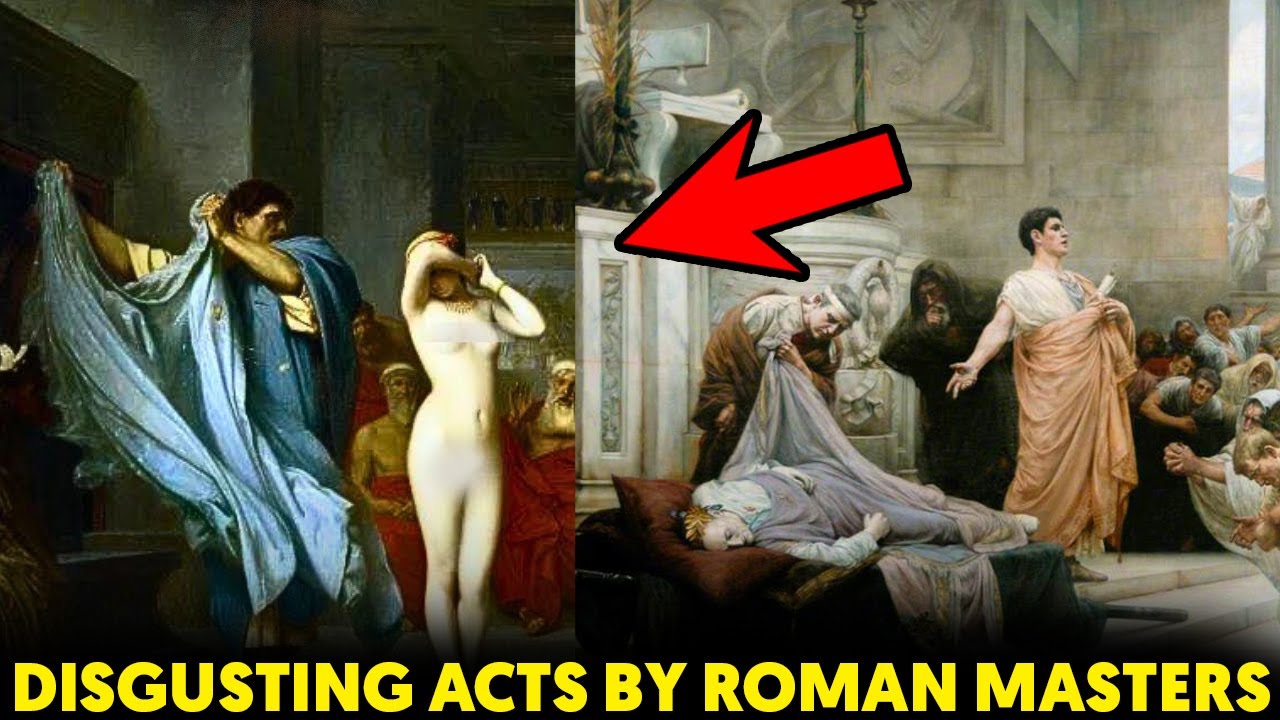
The first brutal reality was the enormous scale of slavery within Roman society and its expanding territories.
As Roman armies conquered neighboring communities, military victories frequently produced prisoners who could be sold into permanent captivity.
Those captured included soldiers, civilians, women, children, and individuals whose previous social standing offered little protection against enslavement.
People who had possessed homes, occupations, communities, and personal identities could suddenly become commodities in distant Roman markets.
Their capture was not merely a military consequence; it represented the destruction of established relationships and personal independence.
Enslavement also occurred through piracy, trading networks, birth into enslaved families, and certain legally recognized circumstances.
Children born to enslaved mothers generally inherited enslaved status, allowing the institution to reproduce itself across successive generations.
This meant Roman slavery continued through mechanisms extending far beyond the immediate consequences of military conquest and warfare.
Historians cannot establish one universally reliable percentage for enslaved people throughout every period of Roman imperial history.
Nevertheless, scholarly estimates suggest enslaved populations represented a substantial proportion of inhabitants in parts of Roman Italy.
Their presence influenced domestic life, agricultural production, commerce, construction, education, transportation, and numerous other economic activities.
Slavery was therefore not an isolated institution operating outside ordinary society; it was woven into daily Roman existence.
The second disturbing reality involved the legal authority slaveholders exercised over the people they considered personal property.
Roman legal traditions recognized enslaved individuals primarily through their relationship to owners rather than through independent civic rights.
Although laws and practices evolved over centuries, enslaved people remained fundamentally vulnerable to decisions made without their consent.
An owner could sell an enslaved worker, transfer that person elsewhere, or separate established family relationships through commercial transactions.
Such transactions could transform the lives of parents and children without considering their wishes, emotional attachments, or futures.
A slaveholder’s financial interests frequently mattered more under Roman law than the personal welfare of those being bought.
The treatment of enslaved people consequently depended heavily upon circumstances, individual owners, occupations, and changing legal restrictions.
Some owners provided adequate food, housing, and opportunities for advancement because maintaining productive workers served their economic interests.
Others relied upon intimidation, physical punishment, confinement, and deliberate humiliation to reinforce their dominance over vulnerable people.
These differences did not eliminate the fundamental imbalance between someone possessing recognized freedom and someone legally owned.
Even relatively comfortable household conditions could disappear when ownership changed or when an owner’s behavior suddenly became abusive.
The possibility of sale remained especially threatening because it could destroy personal connections established over many difficult years.
A third brutal reality was the dangerous environment confronting enslaved workers assigned to mines and other demanding industries.
Roman mining supplied valuable metals needed for construction, currency, tools, infrastructure, and the empire’s commercial and military ambitions.
Extracting these resources demanded exhausting physical labor, often performed in environments offering limited protection from occupational hazards.
Workers could encounter collapsing passages, poor ventilation, contaminated surroundings, and prolonged exposure to dangerous minerals and dust.
Lead mining and processing created particularly serious health risks, although ancient understanding of toxic exposure differed from modern science.
Not every mining worker was enslaved, and conditions varied considerably across regions, employers, industries, and historical periods.
Nevertheless, forced labor in dangerous extraction operations represented one of the harshest experiences available within Roman slavery.
Physical exhaustion, injuries, inadequate nourishment, and limited medical attention could combine to make survival especially difficult.
The human suffering behind valuable resources rarely appeared prominently in celebrations of Roman engineering or imperial prosperity.
Magnificent buildings and practical technologies depended upon supply chains that could include people working under coercive conditions.
This contrast demonstrates how remarkable technical achievements can coexist with institutions causing profound and systematic human suffering.
Agricultural slavery formed another essential part of Rome’s economy, especially on estates producing crops for commercial markets.
Enslaved laborers cultivated fields, maintained equipment, tended animals, and performed demanding seasonal work under managerial supervision.
Some agricultural workers lived within household arrangements, while others experienced harsher systems of discipline and restricted movement.
Ancient agricultural writers discussed productivity, supervision, punishment, and the practical management of enslaved workers as economic concerns.
Their discussions reveal how easily human lives could become calculations involving efficiency, obedience, costs, and expected returns.
Chains and confinement were among the disciplinary measures associated with certain enslaved workers, although their prevalence remains debated.
Modern historians caution against assuming every Roman plantation operated according to identical practices or conditions across centuries.
The surviving evidence instead reveals a complicated institution whose cruelty could operate through many different organizational arrangements.
A fourth disturbing reality involved the systematic use of physical punishment to maintain authority over enslaved populations.
Beatings, whipping, restraints, and other punishments appear in Roman literary, legal, and historical discussions of slavery.
Such violence could punish perceived disobedience, discourage escape, or communicate an owner’s authority to other enslaved workers.
The possibility of punishment also functioned psychologically, shaping decisions even when no immediate violence was being inflicted.
For an enslaved person, refusing an order could carry consequences far more serious than ordinary workplace disagreement.
The severity of disciplinary practices varied, and Roman attitudes toward excessive cruelty were not entirely uniform.
Some ancient thinkers criticized harsh treatment, suggesting that enslaved people deserved humane consideration despite their subordinate status.
Yet appeals for better treatment usually operated within a society that continued to accept human ownership.
Seneca, the Roman philosopher, argued that enslaved people deserved recognition as fellow human beings rather than mere instruments.
His arguments challenged particular attitudes toward treatment without amounting to a modern demand for universal emancipation.
Such tensions reveal that Romans could recognize moral problems within slavery while continuing to defend its existence.
The fifth brutal reality was the threat of crucifixion, a punishment closely associated with humiliation and public terror.
Roman authorities used crucifixion against various condemned individuals, including enslaved people and those perceived as dangerous rebels.
The punishment subjected victims to prolonged suffering while transforming their bodies into highly visible warnings against resistance.
Crucifixion practices varied, and historical descriptions do not establish one standardized method followed during every Roman execution.
Victims could experience extreme physical trauma, exposure, dehydration, exhaustion, and respiratory difficulties during the process of dying.
The purpose extended beyond ending an individual life; public display communicated the consequences of challenging established authority.
For enslaved communities, the threat could make escape or collective resistance appear terrifyingly dangerous, even when conditions were unbearable.
That threat became especially significant during one of the most famous slave rebellions in the ancient world.
In 73 BCE, Spartacus and other gladiators escaped from a training establishment located at Capua in Italy.
Their initial escape developed into a much larger conflict as additional enslaved people and other followers joined.
Spartacus demonstrated considerable military ability, and his forces defeated several Roman opponents during the rebellion’s early stages.
The uprising became a serious challenge to Roman authority, forcing political leaders to commit increasingly substantial military resources.
Its participants were not necessarily united by identical backgrounds, objectives, or expectations concerning their possible futures.
Some may have wanted escape from Italy, while others pursued plunder, resistance, or more ambitious military objectives.
Ancient accounts differ regarding important decisions, making it difficult to reconstruct every strategic intention with complete confidence.
Nevertheless, the rebellion demonstrated that people considered powerless property could organize, fight, and threaten Rome’s military establishment.
The Roman commander Marcus Licinius Crassus eventually assumed responsibility for crushing the uprising and restoring government control.
After prolonged fighting, Roman forces defeated Spartacus and his followers in 71 BCE, ending the rebellion’s resistance.
Ancient accounts describe Spartacus dying in battle, although his body was reportedly never conclusively identified afterward.
The fate of thousands of surviving prisoners became one of Roman history’s most enduring examples of calculated brutality.
According to the ancient historian Appian, approximately six thousand captured rebels were crucified along the Appian Way.
This important road connected Rome with southern Italy, making the executions visible to travelers moving through Roman territory.
The punishment transformed a major transportation route into an extended display of what happened to defeated opponents.
Its scale communicated the Roman state’s determination to prevent another rebellion threatening the existing social and economic order.
The episode also revealed how punishment could become political theater, intended to influence entire populations through fear.
For enslaved observers, the message was unmistakable: rebellion could carry consequences extending far beyond the battlefield itself.
Yet the Appian Way executions did not eliminate slavery or the underlying conditions that had inspired resistance.
Rome continued depending upon enslaved labor while maintaining institutions capable of enforcing obedience through coercion and punishment.
The sixth disturbing reality involved public entertainment that sometimes transformed human suffering into a spectacle for spectators.
Roman amphitheaters hosted gladiatorial combat, animal hunts, staged performances, and executions under different circumstances and historical periods.
These events reflected a complex culture involving religious traditions, political patronage, public generosity, competition, and displays of power.
Not every arena event involved enslaved victims, and gladiators themselves came from several different legal and social backgrounds.
Some gladiators were enslaved, while others were condemned criminals or free volunteers accepting the profession’s dangers.
Nevertheless, enslaved individuals played significant roles within the entertainment economy, sometimes without meaningful choice over their participation.
Gladiators trained in specialized schools where instructors developed fighting techniques, physical conditioning, and recognizable combat styles.
Successful performers could become popular celebrities, attracting admiration from spectators fascinated by courage, skill, and personal reputation.
Their popularity, however, did not guarantee personal freedom or remove the authority exercised by owners and managers.
An admired enslaved fighter could remain legally subordinate despite receiving public attention and occasionally valuable material rewards.
The contradiction was striking: someone celebrated for exceptional bravery might still lack control over basic personal decisions.
Some gladiators eventually received release from compulsory fighting, while others remained trapped within dangerous professional circumstances.
The wooden training sword known as the rudis could symbolize discharge from gladiatorial service under particular conditions.
Such distinctions mattered because release from fighting did not always automatically mean the same thing as legal emancipation.
Beyond gladiatorial matches, Roman arenas also staged executions designed to display punishment before assembled audiences.
Some condemned individuals faced wild animals, while others appeared in elaborate performances involving mythological or historical themes.
The execution practice known as damnatio ad bestias involved condemning certain prisoners to death through encounters with animals.
These spectacles exposed the disturbing intersection of legal punishment, public entertainment, imperial authority, and cultural expectations.
Roman audiences were not necessarily unanimous in their reactions, and individual attitudes toward violent performances could differ.
Nevertheless, public executions occupied recognized places within entertainment programs, revealing an unsettling acceptance of institutional violence.
The seventh brutal reality concerned sexual exploitation, particularly the vulnerability of enslaved women and young people.
Roman slavery placed individuals in relationships where owners possessed enormous authority over their bodies, movements, and daily circumstances.
That imbalance made meaningful consent extremely difficult, especially when resistance could provoke punishment or threaten continued survival.
Enslaved women could face sexual coercion within households, commercial establishments, and other environments structured around unequal power.
Male enslaved individuals were also vulnerable to exploitation, demonstrating that abuse was not confined to one gender.
Roman society often judged sexual conduct through distinctions involving status, citizenship, and authority rather than modern equality.
An enslaved person’s legal position could therefore expose them to conduct that would be evaluated differently involving citizens.
The existence of prostitution in Roman cities also created commercial settings where some enslaved people experienced sexual exploitation.
Not everyone engaged in prostitution was enslaved, and surviving evidence does not support treating all establishments identically.
However, ownership and coercion could profoundly shape the circumstances of those lacking the ability to refuse participation.
Ancient literary references, legal discussions, and inscriptions provide evidence of these practices, although individual experiences remain difficult to reconstruct.
One especially disturbing dimension involved the status of children born to women who were legally enslaved.
Under Roman legal principles, a child’s enslaved or free status generally followed the legal status of their mother.
Consequently, childbirth could increase an owner’s enslaved household without any purchase from a conventional slave market.
This reality gave human reproduction an economic significance shaped by property ownership and inherited legal status.
Some owners might encourage childbirth because additional enslaved children could eventually contribute labor or possess commercial value.
Yet historians must distinguish documented legal incentives from unsupported claims about universal, organized systems of forced reproduction.
The available evidence reveals profound exploitation without establishing that every Roman household employed identical reproductive practices.
For enslaved mothers, the potential separation of children and uncertainty surrounding their futures created additional vulnerabilities.
An owner could make decisions affecting entire families while recognizing those relationships differently from legally protected citizen marriages.
This made family stability dependent upon circumstances that enslaved individuals often possessed little power to influence.
The eighth disturbing reality involved the deliberate restriction of freedom even among highly educated and talented enslaved individuals.
Roman households sometimes employed enslaved teachers, secretaries, accountants, physicians, and administrators whose expertise was valuable to wealthy owners.
Greek education carried considerable prestige in Roman elite society, creating demand for tutors familiar with Greek literature.
Some enslaved educators possessed intellectual abilities that exceeded those of the people exercising legal control over them.
Their knowledge could provide a degree of practical influence within households without granting equal social standing.
A teacher might shape a wealthy child’s education while remaining unable to determine the conditions of personal employment.
Similarly, skilled administrators could manage substantial financial responsibilities while technically lacking ownership over their own legal identities.
The contradiction was especially visible when educated enslaved workers helped manage institutions that continued denying them independence.
Household roles sometimes offered opportunities for improved living conditions, accumulated savings, or eventual release from slavery.
Nevertheless, these opportunities depended upon arrangements that could change when owners died, sold property, or revised decisions.
Roman authors frequently described relationships between masters and slaves through expectations of loyalty, usefulness, and obedience.
Such expectations could reward exceptional service while reinforcing the assumption that freedom remained something owners could grant.
The ninth brutal reality was the uncertainty surrounding emancipation and the continuing inequalities faced by formerly enslaved people.
Roman slavery differed from some later systems because legal manumission became an established and sometimes common social practice.
Owners could free enslaved individuals through formal procedures, wills, or other methods recognized under particular Roman laws.
Some enslaved people accumulated funds through arrangements allowing them to purchase freedom or negotiate their release.
Others received freedom because of personal relationships, loyal service, business arrangements, or decisions made by their owners.
Formal manumission could confer Roman citizenship upon qualifying individuals, although legal restrictions depended upon circumstances and historical period.
This created possibilities for social advancement that distinguish Roman slavery from a simple model of permanent hereditary captivity.
Yet the possibility of emancipation should not obscure the suffering experienced by those who never obtained it.
Freedom often arrived only after years of compulsory labor, dependence, uncertainty, and exposure to potential mistreatment.
Furthermore, formerly enslaved people frequently maintained legal and social obligations toward those who had previously owned them.
A former master could become a patron, preserving relationships of dependence even after formal ownership had ended.
Freed people could establish businesses, marry, raise families, and participate economically within Roman communities under applicable laws.
Some achieved impressive prosperity, particularly through commerce, skilled occupations, and connections developed during their earlier service.
Roman inscriptions preserve evidence of freed individuals commemorating family relationships, occupations, achievements, and their newly established identities.
These records reveal personal aspirations extending beyond the narrow roles assigned to enslaved people by wealthy households.
However, social prejudice could continue affecting freed individuals despite their formal legal transformation and economic accomplishments.
Their children sometimes enjoyed opportunities unavailable to their parents, illustrating how emancipation could reshape subsequent generations.
This gradual possibility of advancement coexisted with the immediate realities of violence, family separation, and coerced labor.
Understanding this contradiction requires resisting both romantic portrayals of Roman freedom and excessively simplified accounts of universal experiences.
Roman slavery operated across an enormous geographical area and persisted through centuries of institutional and cultural transformation.
Conditions differed between the Roman Republic and later imperial periods, while legal protections and restrictions changed over time.
A household worker in Rome might experience circumstances very different from an agricultural laborer in provincial territory.
Likewise, skilled urban administrators could encounter opportunities unavailable to captives assigned dangerous extraction or punitive labor.
These differences help explain why enslaved people responded to their situations through varying strategies and individual decisions.
Some pursued opportunities within existing arrangements, while others attempted escape, resisted authority, or participated in organized uprisings.
Survival could require difficult compromises that should not be confused with genuine acceptance of slavery’s underlying legitimacy.
For individuals threatened with violence, compliance could represent a practical response to danger rather than freely chosen loyalty.
The history of Spartacus demonstrates what happened when collective resistance became powerful enough to challenge Roman military authority.
His rebellion inspired later generations because it exposed vulnerabilities within a system that otherwise appeared overwhelmingly dominant.
Yet its eventual defeat also illustrated the extraordinary resources Rome could mobilize against people demanding escape from enslavement.
The mass crucifixions following the rebellion remained a grim warning embedded within the empire’s historical memory.
That episode also highlights the limitations of interpreting Roman civilization exclusively through its celebrated monuments and military victories.
Roads, aqueducts, temples, theaters, and magnificent urban spaces represent genuine accomplishments worthy of serious historical examination.
However, studying their construction and operation also requires acknowledging the compulsory labor sustaining important portions of Roman society.
The grandeur of ancient Rome was not separate from slavery; the two frequently existed within connected economic structures.
This does not mean every Roman building was constructed exclusively by enslaved workers or every citizen owned slaves.
Free laborers, soldiers, contractors, and other participants also contributed substantially to the empire’s infrastructure and economic production.
Accurate history recognizes these distinctions while examining the pervasive influence of slavery across numerous sectors of Roman life.
Another important distinction concerns popular misconceptions surrounding Roman naval vessels and the people responsible for rowing them.
Stories frequently depict Roman warships propelled entirely by enslaved rowers permanently chained to benches beneath their decks.
However, evidence indicates Roman military fleets often relied upon trained free personnel rather than exclusively enslaved galley crews.
Compulsory rowing existed in different maritime contexts, but simplified portrayals can distort actual Roman naval organization and recruitment.
Likewise, descriptions of gladiators sometimes exaggerate their complete lack of agency while overlooking variations in legal status.
Historical accuracy does not diminish the institution’s cruelty; instead, it clarifies which forms of suffering are genuinely documented.
The same principle applies to dramatic stories about executions, punishment devices, and allegedly universal customs among slaveholders.
Ancient writers sometimes emphasized sensational incidents, particularly when criticizing political enemies or portraying moral decline among elites.
Their accounts remain valuable, but responsible interpretation requires considering literary purposes, historical context, and available corroborating evidence.
Archaeological discoveries can supplement written records through inscriptions, household remains, production sites, burial evidence, and surviving artifacts.
Nevertheless, identifying an individual’s enslaved status from material remains alone is often difficult without additional historical information.
Much surviving testimony was produced by educated elites, meaning enslaved perspectives are frequently filtered through powerful observers.
This imbalance creates substantial gaps in our knowledge of how ordinary enslaved people understood their own experiences.
We can reconstruct legal structures and economic roles more confidently than the private emotions of most individuals.
That limitation should encourage careful investigation rather than fictional accounts disguised as firsthand evidence about forgotten lives.
The emotional consequences of slavery remain evident through the documented possibilities of separation, punishment, exploitation, and uncertain freedom.
Roman families who benefited from enslaved labor could participate in these institutions without questioning their basic legitimacy.
Meanwhile, the enslaved population contained people from different regions, languages, backgrounds, and cultural traditions across the Mediterranean.
Their labor connected conquered territories with Roman markets, wealthy households, agricultural estates, and expanding urban populations.
The system transformed military domination into economic advantage while reinforcing social divisions through law and established custom.
As Rome’s political circumstances changed, slavery adapted rather than disappearing through any single reform or military defeat.
Later legal developments introduced certain restrictions and protections, but the institution continued throughout much of Roman antiquity.
Christianity’s eventual expansion did not immediately abolish Roman slavery, despite contributing additional religious discussions concerning human relationships.
That historical reality complicates simplistic assumptions that one cultural or religious transformation suddenly ended centuries of human ownership.
Slavery’s decline and transformation occurred unevenly through interacting political, economic, legal, demographic, and social developments.
For modern audiences, the most troubling lesson concerns how easily ordinary institutions can normalize profound inequalities between people.
Romans could admire personal courage, intellectual achievement, family loyalty, and public virtue while sustaining the ownership of human beings.
Their society celebrated freedom as a prized civic identity but denied that same freedom to enormous numbers.
Spartacus exposed this contradiction by transforming the desire for liberty into an organized challenge against established authority.
His defeat did not erase the importance of the questions raised by those who followed him into rebellion.
The executions along the Appian Way demonstrated the lengths Roman authorities would pursue to defend their social order.
Yet the surviving stories of freed people also demonstrate that enslaved individuals continually sought opportunities beyond imposed limitations.
Their experiences cannot be reduced to suffering alone, because personal resilience, relationships, ambitions, and accomplishments also mattered.
Still, acknowledging resilience must never become an excuse for minimizing the violence that made such resilience necessary.
The nine realities of Roman slavery reveal a civilization capable of extraordinary sophistication alongside systematic violations of human dignity.
Its history becomes clearer when the voices missing from imperial celebrations receive attention alongside emperors, generals, and monuments.
Ultimately, ancient Rome’s most disturbing contradiction was not that cruelty existed, but that cruelty became part of ordinary life.
And the prisoners crucified after Spartacus fell remain a powerful reminder of the terrifying price imposed upon resistance.


