Dolly Parton and Kenny Rogers Shared a Profound Bond, but the Viral “Final-Days Promise” Audio Is Unverified
Dolly Parton and Kenny Rogers shared one of country music’s most enduring friendships.
That part of the story requires no exaggeration.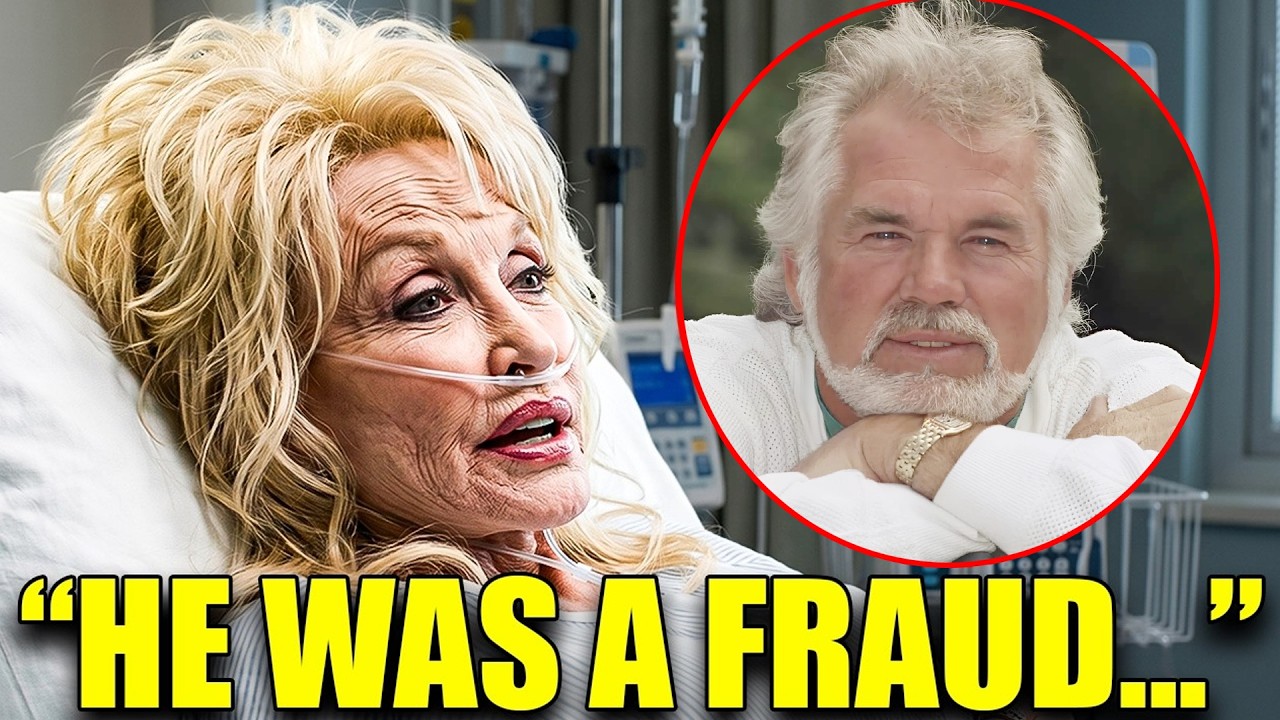
Their voices became permanently linked through “Islands in the Stream.”
Their friendship stretched across decades.
They recorded together repeatedly.
They toured together.
They joked publicly about romance rumors.
And long after their most commercially successful years as a duo, they continued describing one another with unmistakable affection.
What is not established is the newest viral claim that Parton secretly spent Rogers’ final days discussing a private promise concerning their legacy.
There is no authenticated ten-second studio recording supporting that story.
There is no verified memorial transcript revealing such a promise.
There is no credible current report identifying an agreement the two supposedly swore to “take to the grave.”
And the known timeline surrounding Rogers’ death makes the suggestion of an emotional final bedside encounter especially doubtful.
Kenny Rogers died on March 20, 2020.
He was 81.
His family said he died peacefully at home from natural causes while receiving hospice care and surrounded by relatives.
Dolly was not publicly identified as being there.
In fact, her own tribute the following morning strongly indicates that she learned of his death only afterward.
Parton said she woke up, turned on television while checking news about the coronavirus pandemic and learned that Rogers had died.
That statement is important.
It does not prove Dolly and Kenny had no private communication before his death.
Old friends can speak by phone.
Messages can be exchanged privately.
Families do not publish every conversation.
But it directly undermines the implication that Dolly personally shared Rogers’ final moments and has only now revealed what happened there.
Her immediate reaction was public.
She recorded an emotional video tribute.
Parton said she loved Kenny deeply and described him as both a wonderful man and a true friend.
She held up a photograph of them together while speaking.
She became visibly emotional.
Her grief was not hidden.
That tribute remains one of the strongest pieces of evidence about how she processed his death.
There was no reference to a final secret promise.
There was no claim that the two had recently made a pact.
There was no mention of an unfinished legacy project that had to remain buried.
Instead, Dolly spoke about friendship, loss, faith and love.
Those themes were consistent with how she had talked about Kenny for decades.
Their bond began professionally.
“Islands in the Stream” was released in 1983 and became one of the defining duets of modern country-pop.
The collaboration was almost accidental.
Rogers later recalled struggling to make the song work before someone suggested they needed Dolly.
Parton happened to be nearby at the recording studio.
Once she entered and began singing, Rogers said the track immediately developed a new personality.
The chemistry became impossible to ignore.
“Islands in the Stream” was followed by additional collaborations.
They recorded “Real Love.”
They worked together on the Christmas album Once Upon a Christmas.
They performed extensively.
They appeared in television specials.
And over time, the partnership became something audiences expected whenever either performer appeared publicly.
Dolly herself joked about that expectation.
Before Rogers’ 2017 farewell celebration, she described him as almost a family member.
She said they had been friends for more than thirty years and had created musical magic together.
She acknowledged that fans had come to expect Kenny whenever they saw Dolly and Dolly whenever they saw Kenny.
Those remarks reveal the scale of the friendship far better than an anonymous ten-second clip.
Their relationship was emotionally intimate without being romantic.
For years, fans speculated that the obvious chemistry between them must have reflected a secret affair.
Both consistently denied it.
In a 2013 interview, Dolly said romance never crossed the line because she valued their friendship too much.
She joked that becoming romantically involved would have ruined what they already possessed.
Rogers played along with the teasing.
Their public exchanges became part of the charm.
That history makes the phrase “rumors and unyielding loyalty” broadly grounded.
The pair dealt with romantic speculation for decades.
But they repeatedly described their bond as friendship.
Nothing credible has emerged showing a hidden romantic relationship.
Nothing credible has emerged showing a late-life confession changing that account.
One of their most poignant documented exchanges occurred years before Rogers died.
In 2013, they recorded “You Can’t Make Old Friends.”
The song itself was an unusually fitting meditation on aging, friendship and the possibility of losing someone who had shared one’s history.
During that session, Rogers later recalled looking up and realizing Dolly was no longer at her microphone.
She had walked over to him.
She put her arms around his neck.
Then she told him she did not think she could ever sing at his funeral.
Rogers responded with humor, joking that she was apparently assuming he would die first.
That moment is real.
It is also remarkably close to the emotional territory the viral story is trying to occupy.
There was a genuine conversation about death.
There was genuine emotional intimacy.
There was even a remark about what Dolly would—or would not—do after Kenny died.
But it happened in 2013.
It was publicly recounted years before his death.
It was not a secret final-days pact.
That distinction matters.
Old interviews are often repackaged into new “deathbed confession” narratives because the emotional material already exists.
A producer can take a real quote about death, remove the original date and present it as though it occurred days before someone died.
That transforms history without inventing every component from nothing.
The 2013 exchange appears particularly vulnerable to that treatment.
It contains friendship.
It contains mortality.
It contains a recording studio.
It contains tears or at least emotional intimacy.
And it contains a promise-like statement.
But the actual context is well established.
It was tied to “You Can’t Make Old Friends.”
It was not a secret final bedside meeting.
The pair’s last public stage appearance together is also clearly documented.
On October 25, 2017, Dolly joined Rogers at Nashville’s Bridgestone Arena for All In for the Gambler: Kenny Rogers’ Farewell Concert Celebration.
The event was explicitly promoted beforehand as the final time the two would perform together.
Dolly acknowledged that the occasion would be emotional.
She said their love for one another would not disappear simply because Kenny was leaving the stage.
That language was public months before the concert.
It was not leaked.
The final appearance became an intentional goodbye to their performing partnership.
That is far more significant historically than a supposed anonymous recording surfacing years later.
Rogers had already decided to retire from touring.
His health increasingly limited his career.
The 2017 event therefore carried genuine finality.
When Dolly and Kenny stood together on that stage, they knew it represented an ending.
Their goodbye did not require a secret deathbed conversation to acquire emotional weight.
Their final performance was itself a public farewell.
Three years later, Rogers died.
Dolly’s immediate tribute made clear how deeply that death affected her.
She said she had lost a large part of her heart with him.
She spoke about faith.
She wished him peace.
And she told him she would always love him.
That tribute was emotional enough that describing Dolly as “holding back tears” would be accurate in relation to that particular video.
But it was not leaked studio audio.
Dolly released it herself.
That distinction is important because the viral caption appears to convert a known public emotional recording into a secret archival revelation.
Nothing in the current evidence supports that framing.
Dolly continued speaking publicly about Rogers after his death.
In 2023, when previously unreleased Kenny Rogers material appeared on the posthumous album Life Is Like a Song, a previously unheard recording featuring Dolly renewed interest in their partnership.
Parton said she missed Rogers tremendously.
She described him as especially dear to her and said she never became tired of hearing the two of them sing together.
Again, these comments were not hidden.
They were public reflections.
They showed continuing grief.
They showed continuing affection.
But they did not reveal a secret promise.
The existence of that 2023 posthumous duet is another plausible source for modern rumors.
When an artist dies, previously unreleased recordings naturally create speculation about what else might exist.
A lost duet can quickly become a supposed hidden vault.
A private demo becomes a “secret message.”
An archival interview becomes a “confession.”
That process is common in celebrity legacy stories.
But actual archival releases require provenance.
The 2023 Kenny Rogers material had provenance.
It belonged to a known posthumous project.
The estate and label identified it.
Journalists could trace the recording.
A mysterious ten-second 2026 “studio debrief” requires the same standard.
Who recorded it?
When?
At which studio?
Who was present?
Was Dolly speaking about Kenny?
Was the recording made before or after his death?
Is it part of a known interview archive?
Who owns the master?
Has Rogers’ estate authenticated it?
Has Dolly’s team authenticated it?
No credible current source answers those questions.
That makes the clip unverified.
The timing of the new claim creates another problem.
Dolly Parton herself died on August 25, 2026.
Her team announced afterward that she had been working on numerous projects almost until the end of her life and that previously planned material would continue to be released under a long-term legacy roadmap.
Therefore, it is possible for genuinely new Dolly material to appear after her death.
That possibility must not be confused with confirmation of this particular claim.
An archival interview can be released posthumously.
A prerecorded video can debut after death.
A song can emerge from a vault.
Dolly’s new Nashville museum even contains prerecorded “Dolly-grams” created to narrate parts of her life story.
But no current reporting identifies one of those recordings as a previously secret Kenny Rogers confession.
The latest posthumous coverage of Dolly focuses on her museum, her estate, unreleased projects and memories shared by people who knew her.
It does not report a newly authenticated tape revealing an agreement with Rogers to conceal some pivotal piece of their shared legacy.
That absence is important because such a discovery would be major country-music news.
“Islands in the Stream” remains one of the most recognizable duets in American popular music.
A credible secret promise between the singers would attract widespread attention.
Major music publications would pursue it.
Rogers’ family would likely be asked about it.
Dolly’s management would face authentication questions.
No comparable reporting has surfaced.
The phrase “emotional last moments together before his passing” is especially misleading.
The last clearly documented public performance together occurred in 2017.
Rogers died in 2020.
Dolly’s own immediate death tribute says she learned the news the following morning through television coverage.
That does not establish what their last private interaction actually was.
There may have been calls or messages after 2017.
But it means there is no basis to portray Dolly as physically present in Rogers’ final hours.
His family said he died surrounded by family.
The available reliable record does not place Parton at his bedside.
That should remain the factual boundary.
Another genuine emotional layer is the song “You Can’t Make Old Friends.”
Its title almost became a summary of their relationship.
Rogers and Parton had accumulated decades of shared history that could not simply be recreated with another duet partner.
The Washington Post highlighted Rogers’ memory of Dolly telling him she could not sing at his funeral during the recording.
That remark became even more poignant after Rogers died.
But its poignancy comes partly from the fact that it was made years earlier.
It captured two older friends confronting mortality while still able to joke about it.
Turning it into a hidden final-days pledge actually weakens the historical meaning.
Their real friendship did not need a deathbed twist.
Dolly’s public comments after Rogers’ death also consistently focused on gratitude rather than secrecy.
She remembered the years they spent together.
She remembered their music.
She remembered him as a person.
She spoke openly about missing him.
That pattern continued through 2023.
There is no known shift in which she suddenly claimed the public had misunderstood their relationship.
There is no known revelation that they were hiding a major musical secret.
And there is no authenticated interview in which she says they promised to bury part of their legacy.
The viral claim is especially vague about what this “pivotal piece” supposedly was.
Was it an unreleased song?
A romantic secret?
A songwriting agreement?
A master recording?
A hidden collaboration?
A private letter?
A decision about “Islands in the Stream”?
The caption does not say.
That vagueness is useful for engagement.
It allows audiences to imagine something larger than whatever evidence actually exists.
A genuine historical claim should be specific.
If there is an unreleased recording, identify it.
If there is a contract, cite it.
If there is a promise, provide the complete context.
If there is a transcript, identify the interview.
None of those anchors appears here.
The “memorial interview transcripts” are likewise unverified.
Dolly did give many interviews discussing Kenny after his death.
Those interviews are publicly searchable.
She spoke with major publications.
She discussed missing him.
She discussed their collaborations.
But I found no evidence that an unredacted secret memorial transcript has recently surfaced.
There is an additional irony in the promise to “take something to the grave.”
Both artists are now dead.
Kenny died in 2020.
Dolly died in 2026.
If a meaningful secret had truly been deliberately buried by both of them, authentication would now depend on estates, archives, surviving collaborators or written records.
That makes provenance even more important.
Neither artist can clarify a manipulated recording.
Neither can dispute a false transcript.
Posthumous celebrity stories therefore require stronger evidence, not weaker evidence.
Modern audio technology makes this especially important.
Short voice clips can be edited dramatically.
They can be removed from context.
They can be reconstructed from older interviews.
They can be digitally altered.
Without an identified source and full recording, ten seconds of apparent speech cannot reliably establish a new historical fact.
The best-known audio and video related to Dolly’s grief for Kenny remains her own 2020 tribute.
That video is public.
It shows her emotional.
It shows her holding their photograph.
It shows her struggling with loss.
It needs no anonymous “leak.”
Likewise, the best-documented late-career goodbye between them is their 2017 farewell performance.
That event was public.
Both artists discussed its emotional significance beforehand.
Dolly explicitly described Kenny as family.
Kenny described their decades of collaborations and laughter as some of the extraordinary moments of his career.
And the most poignant studio conversation remains the 2013 “You Can’t Make Old Friends” session.
That story was told publicly.
Dolly wrapped her arms around Kenny and told him she could not sing at his funeral.
Kenny answered with a joke about which of them would die first.
Those three moments form a credible emotional arc.
2013: they confronted aging through music.
2017: they knowingly shared a final public performance.
2020: Dolly learned Kenny had died and publicly mourned him.
Nothing currently verified adds a secret deathbed pact between them.
The romance-rumor portion of their legacy is similarly straightforward.
The pair repeatedly denied being lovers.
Dolly said she valued Kenny too much as a friend to risk ruining that relationship.
The jokes continued because audiences enjoyed imagining the chemistry as romance.
But both remained consistent.
No posthumous evidence has overturned that account.
That matters because “unspoken promises” and secret legacy claims often become vehicles for reviving old romantic speculation.
The historical record supports deep affection.
It supports emotional intimacy.
It supports artistic chemistry.
It does not support a secret affair.
It also does not currently support a hidden final pact.
The current facts can therefore be separated clearly.
Dolly Parton and Kenny Rogers were close friends for decades.
Verified.
They recorded “Islands in the Stream” together in 1983.
Verified.
They recorded several other collaborations.
Verified.
They repeatedly denied having a romantic relationship.
Verified.
While recording “You Can’t Make Old Friends” in 2013, Dolly told Kenny she could never sing at his funeral.
Verified through Rogers’ later recollection.
They performed publicly together for the final time at Rogers’ 2017 farewell celebration.
Verified.
Rogers died in March 2020.
Verified.
Dolly publicly said she learned of his death the following morning from television news.
Verified through her own tribute.
She publicly mourned him and said she loved him deeply.
Verified.
In 2023, Dolly again said she missed Kenny and described him as particularly dear and special.
Verified in reporting surrounding Rogers’ posthumous material.
Dolly died on August 25, 2026.
Verified by her official team and current reporting.
Previously prepared Dolly projects continue to appear after her death.
Verified.
A newly released authenticated recording captures Dolly revealing an unknown deathbed promise she made with Rogers.
Not established.
Dolly was present for Rogers’ final moments.
Not established and inconsistent with the known public account of how she learned of his death.
A secret studio debrief records her revealing a pivotal legacy secret.
Not verified.
An “unredacted memorial transcript” proves such an agreement.
Not verified.
Rogers and Dolly deliberately agreed to take a specific unknown piece of their musical legacy to the grave.
No credible evidence currently supports that claim.
The real emotional story is already powerful.
Dolly and Kenny found musical chemistry almost by accident.
That chemistry became friendship.
The friendship lasted through decades of fame, touring and persistent romance rumors.
They grew older together.
They recorded a song about the rarity of old friends.
Dolly told Kenny she could not imagine singing at his funeral.
They eventually performed together for the last time in Nashville.
Three years later, Dolly woke up and learned he was gone.
She picked up their photograph, faced a camera and publicly said goodbye.
Years afterward, she was still saying how much she missed him.
And after Dolly’s own death in 2026, Rogers’ family and team joined the many people honoring her legacy.
That documented history contains loyalty, grief and extraordinary artistic chemistry.
What it does not presently contain is an authenticated secret final-days promise.
The friendship was real.
The grief was real.
The farewell was real.
The alleged leaked studio confession remains unverified.


